
You want a welder that fits a small garage without forcing you to give up power, process flexibility, or clean setup. This updated guide focuses on Miller welders that make sense for home garages, hobby shops, repair work, light fabrication, and serious small-shop use. The best choice depends on whether you need MIG, TIG, Stick, Flux-Cored, 120 V power, 240 V power, portability, or higher output for thicker steel.
This roundup is reader-supported. When you click through qualifying affiliate links, we may earn a referral commission at no extra cost to you.
Quick Verdict
Best overall: Miller Multimatic 220 if you want one portable machine for MIG, Flux-Cored, Stick, and AC/DC TIG.
Best value multiprocess pick: Miller Multimatic 215 if you want MIG, Flux-Cored, Stick, and DC TIG capability in a lighter 120/240 V package.
Best beginner-friendly MIG pick: Miller Millermatic 211 if you mainly weld mild steel and want simpler setup without paying for TIG features.
Best compact TIG/Stick pick: Miller Maxstar 161 STL if your garage work is focused on steel or stainless TIG and Stick welding.
Best high-output MIG pick: Miller Millermatic 252 if you have dedicated 208/240 V power, floor space, and heavier fabrication needs.
Top Picks
|
Category |
Product |
Score |
|---|---|---|
|
🏆 Best Overall |
92/100 |
|
|
🔰 Best Multiprocess Value |
90/100 |
|
|
💰 Best For Hobby MIG Welding |
85/100 |
|
|
🎯 Best Compact TIG/Stick |
78/100 |
|
|
💼 Best High-Output MIG |
82/100 |
[Amazon Products Picked for You]

3-in-1 Multi Process Welder: Designed to handle Gasless MIG welder, MMA, and Lift TIG perfectly, this 110V welding machine is a garage essential for home DIY and fast farm repairs.(Lift TIG Torch NOT included)

Powerful 6-in-1 Welding Machine: The multi-process 110V/220V dual-voltage MIG welder offers 6 functions: Gas MIG, Gasless Flux Core MIG, Spool Gun MIG, Lift TIG, Stick, and Spot Welding (TIG gun and spool gun not included). With up to a 250 Amp output, it can weld up to a 3/8" plate, making it suitable for a variety of welding tasks. It supports .023"/.030"/.035"/.040" solid/flux wire and .035" /.045" aluminum wire for MIG welding.

6-IN-1 Multifunctional Welder Machine: This 6-in-1 multi welder supports FLUX MIG, GAS MIG, PLASMA CUTTING, HF TIG, and STICK,SPOT welding, provide a comprehensive solution for a wide range of welding and cutting tasks, suitable for both home DIY and industrial projects.
How We Picked These Welders
You need a welder that matches how and where you work. We prioritized process fit, realistic garage power needs, duty cycle, portability, control simplicity, included accessories, spool gun compatibility, service support, and whether the machine solves a clear buyer problem without being too much tool for the space. We also removed duplicate or overly specialized entries that made the original comparison harder to use.
Before You Buy
- Check power first: 120 V is convenient but limits output. 240 V gives better performance on thicker material.
- Choose the right process: MIG is easiest for many repairs, TIG gives cleaner control, Stick is useful outdoors, and Flux-Cored helps when gas is not practical.
- Look beyond the machine: Budget for a helmet, gloves, jacket, clamps, shielding gas, wire, rods, tips, and a safe work surface.
- Plan ventilation: Garage welding needs clean airflow, fume control, and a clear fire-safe work area.
- Confirm accessories: Some listings bundle TIG kits or carts, while others sell those items separately.

You get the most flexible garage welder in this list. The Multimatic 220 covers MIG, Flux-Cored, Stick, and AC/DC TIG, so it is the strongest fit if your projects move between auto repair, farm repairs, metal art, brackets, stainless parts, and aluminum TIG work.
The color LCD, Auto-Set, and QuickTech features reduce setup guesswork. It also runs on common 120 V or 240 V power with the right plug, though full output and heavier work still favor a proper 240 V circuit. For a small garage, the main advantage is simple: one machine can replace several single-process units.
Best for: Buyers who want one premium welder that can grow with their skills.
Think twice if: You only need basic MIG repairs. In that case, the Millermatic 211 is simpler and usually easier to justify.
What People Say
Customers commonly praise the Multimatic 220 for its versatility and intuitive controls. Owners also point to solid build quality, dual-voltage convenience, and the included MIG and TIG accessories. A few users mention a learning curve with accessories such as a spool gun, so plan time for setup and practice.
Overall Sentiment: Positive

Use Cases
|
Situation |
How It Helps |
|---|---|
|
DIY Repairs |
You can patch brackets, fix fencing, repair light frames, and switch processes without changing machines. |
|
Small Fabrication Projects |
MIG handles speed, TIG gives cleaner control, and Stick helps with tougher repair jobs. |
|
Aluminum TIG Work |
AC/DC TIG support makes it a better aluminum TIG choice than DC-only TIG machines. |
|
Learning And Teaching |
The guided controls help beginners focus on technique while still giving experienced users room to fine-tune settings. |
Problem Solving
This welder solves the small-garage problem of owning too many machines. It saves floor space, reduces setup time, and gives you the widest process coverage in one portable unit.
Why You’ll Like It
- You can weld MIG, Flux-Cored, Stick, and AC/DC TIG with one machine
- Auto-Set, QuickTech, and the color LCD reduce setup confusion
- 120/240 V input helps it work in more garage setups
- It includes useful core accessories, though safety gear, gas, and some aluminum MIG accessories may still be separate
- It is a strong long-term pick if you expect your projects to become more varied
Check Product Details on Amazon

The Multimatic 215 is the best middle-ground option for many garage welders. It gives you MIG, Flux-Cored, Stick, and DC TIG capability in a lighter package than the Multimatic 220, while still offering Auto-Set support and dual-voltage input.
It is especially useful when you want one machine for repair work, brackets, bodywork practice, farm or trailer fixes, and light fabrication. The main limitation is TIG setup: depending on the listing or bundle, TIG accessories may be separate. It also does not offer AC TIG, so aluminum TIG buyers should look at the Multimatic 220 instead.
Best for: DIYers who want one flexible small-garage welder without stepping up to the premium 220.
Think twice if: You need AC TIG for aluminum or want the easiest single-process MIG machine.
What People Say
Buyers consistently mention solid build quality, reliable welds, and an interface that makes setup feel less intimidating. People appreciate the portability and Auto-Set features, while a few note that shipping inspection and accessory checks are important when the unit arrives.
Overall Sentiment: Positive

Use Cases
|
Situation |
How It Helps |
|---|---|
|
Quick Garage Repairs |
You can patch rust, tack brackets, and repair light steel without owning separate MIG and Stick machines. |
|
Auto Body And Fabrication |
Auto-Set helps you get close to useful settings faster when working with common garage materials. |
|
Farm, Ranch, Or Remote Jobs |
Dual-voltage input and generator compatibility make it easier to use in more locations when power is suitable. |
|
Small Shop Projects |
You can switch between Flux-Cored, MIG, Stick, and DC TIG for mixed repair and fabrication tasks. |
Problem Solving
This unit addresses the common small-garage problem of wanting multiple welding processes without filling the workspace with separate machines. It keeps the learning curve manageable while still giving you more room to grow than a basic MIG-only welder.
Why You’ll Like It
- You can switch between MIG, Flux-Cored, Stick, and DC TIG
- Auto-Set and Auto Spool Gun Detect help reduce setup time
- The 38 lb machine weight makes it easier to move than shop-grade units
- 120/240 V input works with common garage and shop circuits
- It is more affordable and compact than the Multimatic 220 for many users
Check Product Details on Amazon

If you mostly want simple, clean MIG welding in a small garage, the Millermatic 211 may be the easiest recommendation. It does not try to cover every process. Instead, it focuses on MIG and Flux-Cored welding with friendly setup features, dual-voltage input, and enough output for many home repair and fabrication jobs.
This is the better choice if you do not need TIG or Stick, want less menu complexity, and care more about quick setup than maximum flexibility. It is a practical fit for weekend restoration, brackets, trailers, farm repairs, and learning MIG technique.
Best for: Beginners and hobbyists who mainly weld steel with MIG or Flux-Cored wire.
Think twice if: You need TIG, Stick, or one machine for every process.
What People Say
You will notice reviewers consistently praise the weld quality and how quickly the machine gets you working, especially on 240 V. People also mention the convenience of Auto-Set and portability, while common upgrade notes include the ground clamp, lead length, and consumable preferences.
Overall Sentiment: Positive

Use Cases
|
Situation |
How It Helps |
|---|---|
|
Weekend Restoration |
Auto-Set and Smooth-Start help you get usable starts faster for bodywork, brackets, and repair patches. |
|
Mobile Repairs |
The 38 lb machine weight and MVP plug make it easier to move than larger shop welders. |
|
Learning To Weld |
Simple controls and stable arc behavior help you practice without being overwhelmed by process choices. |
|
Light Fabrication |
It handles common steel repair thicknesses well when matched with the right wire, gas, and power source. |
Problem Solving
This welder solves the “I just need a dependable MIG” problem. It keeps the setup simple, limits unnecessary features, and gives garage users a portable machine that can still step up from 120 V to 240 V when more output is needed.
Why You’ll Like It
- Dual-voltage inverter design works with 120 V or 240 V power
- Auto-Set and Smooth-Start simplify setup and arc starts
- Auto Spool Gun Detect helps when adding aluminum MIG capability with the right accessories
- Lightweight machine body is easier to move around a garage
- Fan-On-Demand helps reduce noise and dust intake
Check Product Details on Amazon

The Maxstar 161 STL is the focused pick for a garage where TIG control matters more than process variety. It is compact, easy to store, and best suited to steel and stainless TIG work, light repairs, and Stick welding when you do not need a wire-feed process.
The important limitation is aluminum TIG. Because this is a DC TIG/Stick machine, it is not the right choice if your main goal is conventional AC TIG aluminum work. Choose the Multimatic 220 instead if aluminum TIG is a major part of your project list.
Best for: Buyers who want a compact TIG/Stick machine for clean steel and stainless welds.
Think twice if: You need MIG, Flux-Cored, or AC TIG for aluminum.
What People Say
Owners commonly praise the arc quality and portability. Many note the convenience of dual-voltage use and strong everyday TIG performance for light fabrication and repair work. A minority of buyers report early issues or wish it shipped with more protection, so inspect the unit and confirm support options when it arrives.
Overall Sentiment: Positive

Use Cases
|
Situation |
How It Helps |
|---|---|
|
Quick Garage Repairs |
You can handle small steel repairs without storing a large wire-feed machine. |
|
Stainless And Thin Steel Work |
The focused TIG arc helps when control and bead appearance matter. |
|
Light Fabrication |
You can use TIG for cleaner joints and Stick for tougher outdoor or repair work. |
|
Portable Jobs |
The compact size makes it easy to move around the bench, garage, or job area. |
Problem Solving
This unit solves the need for a small, capable TIG/Stick welder without taking up much floor space. It is a smart second machine for garage users who already have MIG covered, or a first machine for TIG-focused steel and stainless projects.
Why You’ll Like It
- Compact TIG/Stick design is easy to store in a small garage
- Dual-voltage capability gives you more power-source flexibility
- Focused controls help you spend more time practicing weld technique
- Good choice for steel and stainless TIG work
- Stick capability adds repair versatility when TIG is not the best process
Check Product Details on Amazon
The Millermatic 252 is not the casual small-garage choice. It is a bigger, heavier MIG workhorse for buyers who already know they need more output, longer welds, and a dedicated 208/240 V setup.
If you restore vehicles, fabricate heavier brackets, work on farm equipment, or run short production jobs from a garage shop, the 252 gives you more headroom than lighter 120/240 V hobby machines. The tradeoff is simple: it needs space, the right circuit, and a more permanent place in your workflow.
Best for: Serious garage shops that mainly need MIG and Flux-Cored output for heavier mild steel.
Think twice if: You need portability, 120 V convenience, TIG, or a beginner-first setup.
What People Say
People commonly praise the Millermatic 252 for consistent welds and rugged shop performance. Owners also note that the wheeled frame helps with positioning, but the machine is still heavy and should be planned around before delivery.
Overall Sentiment: Positive

Use Cases
|
Situation |
How It Helps |
|---|---|
|
Heavy Repair Work |
Higher output and duty cycle help with thicker mild steel and longer welds. |
|
Auto Body And Restoration |
Consistent output helps produce repeatable MIG beads when set up correctly for the material. |
|
Small Fabrication Runs |
The stronger wire-feed setup and output range can reduce rework on repeat jobs. |
|
Dedicated Garage Shop |
Factory running gear helps position the machine, but you should still plan a stable home for it. |
Problem Solving
This welder fixes the limitation of underpowered MIG machines by giving you more amperage, stronger duty cycle, and thicker mild steel capability. It belongs in this roundup only as the high-output pick for a garage with the power and floor space to support it.
Why You’ll Like It
- High 30-300 A output range for heavier MIG work
- Strong rated output for longer welds and repeated shop tasks
- Factory running gear helps move a heavy unit around a garage shop
- Supports MIG and Flux-Cored processes
- Best fit when 120 V portability is less important than output and consistency
Check Product Details on Amazon
Related Guides
FAQ
Which Welder Should You Choose For A Small Garage?
Start with your main process. Choose the Multimatic 220 if you want the widest process range, including AC/DC TIG. Choose the Multimatic 215 if you want multiprocess flexibility but can skip AC TIG. Choose the Millermatic 211 if you mainly want easy MIG and Flux-Cored welding. Choose the Maxstar 161 STL if you want compact TIG/Stick for steel or stainless. Choose the Millermatic 252 only if you have the space, skill level, and 208/240 V power for a heavier MIG machine.
Can You Run These Welders On Household Power Or Generators?
Some machines in this guide support 120 V and 240 V input, but 120 V usually limits output and duty cycle. For thicker steel, longer welds, or full machine capability, a proper 240 V circuit is usually the better choice. If you plan to use a generator, check the machine manual and use a generator sized for the welder’s required output. Avoid long, undersized extension cords because voltage drop can hurt performance and safety.
Is MIG, TIG, Stick, Or Flux-Cored Better For Garage Welding?
MIG is often the easiest starting point for garage repairs and fabrication. Flux-Cored is useful outdoors or when shielding gas is not practical. TIG gives better control and cleaner weld appearance, especially on steel and stainless, but it takes more practice. Stick is useful for repair work, thicker material, and less-than-perfect surfaces. Multiprocess machines are best when you expect to use several of these processes.
What Safety Gear Do You Need Before Welding In A Garage?
Use an auto-darkening welding helmet, welding gloves, flame-resistant clothing, eye protection, and hearing protection when needed. Keep a fire extinguisher nearby, remove flammables from the work area, and use ventilation or fume extraction. Do not weld near fuel, solvents, paint fumes, or dust. Read the manual before setup, and confirm your outlet, breaker, plug, wire, gas, and polarity settings before striking an arc.
Should You Buy A Multiprocess Welder Or A MIG-Only Welder?
Buy a multiprocess welder if you want one machine that can handle changing projects and you are willing to learn more settings. Buy a MIG-only welder if your work is mostly steel repair, brackets, trailers, and hobby fabrication. MIG-only machines are often easier to learn, while multiprocess machines are more flexible long term.
Customer Favorites
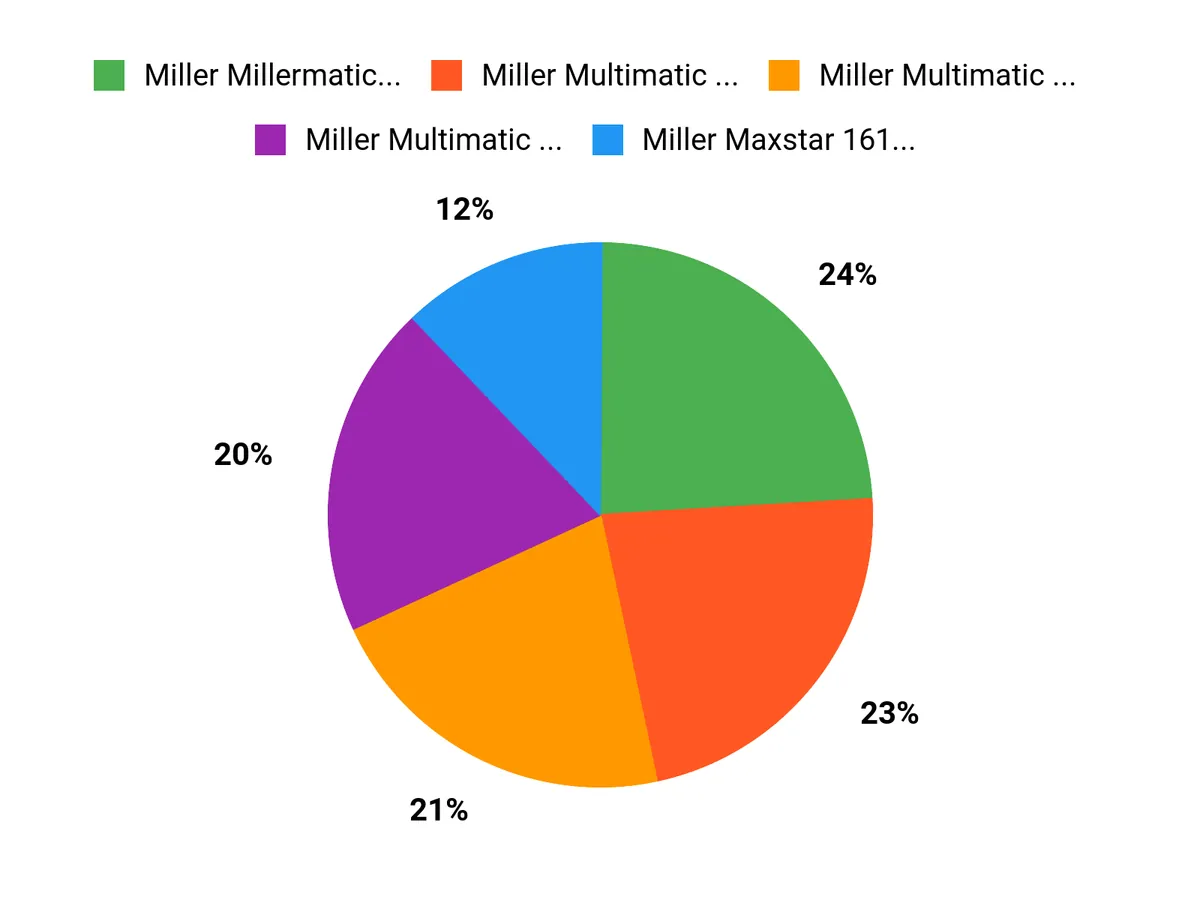
When choosing between the Miller Multimatic 220, Multimatic 215, and Maxstar 161 STL, focus on whether you need multiprocess versatility or a dedicated TIG/Stick unit. You will gravitate to the Multimatic models if you want MIG/TIG/Stick flexibility for varied garage jobs, and pick the Maxstar 161 STL if your work is TIG-focused and you value a compact, high-quality TIG performer.
Wrapping Up
For the widest small-garage capability, choose the Miller Multimatic 220. For a lighter and more affordable multiprocess option, choose the Multimatic 215. For a simpler MIG-first setup, choose the Millermatic 211. For compact TIG and Stick work, choose the Maxstar 161 STL. For a dedicated shop corner with 208/240 V power and heavier MIG needs, choose the Millermatic 252.
The right welder is the one that matches your power supply, materials, thickness range, and learning goals. Pick for the jobs you actually do most often, then budget for safety gear, consumables, gas, clamps, and a fire-safe work area.
| Product | Image | Best For | Welding Processes | Max Output Amps | Weight |
|---|---|---|---|---|---|
| Miller 907757 Multimatic 220 AC/DC Multiprocess Welder |
 |
Best overall multiprocess pick |
|
230 | 56 lbs |
| Miller 907693 Multimatic 215 Multiprocess Welder |
 |
Best multiprocess value |
|
230 | 38 lbs |
| Miller 907614 Millermatic 211 MIG Welder |
 |
Best easy MIG pick |
|
230 | 38 lbs |
| Miller Electric TIG Welder, Maxstar 161 STL Series |
 |
Best compact TIG/Stick pick |
|
160 | 13 lbs |
| Miller Millermatic 252 Electric MIG Welder |
 |
Best high-output MIG pick |
|
300 | 205 lbs |
This roundup is reader-supported. When you click through links we may earn a referral commission on qualifying purchases.
