
This Roundup is reader-supported. When you click through links we may earn a referral commission on qualifying purchases. As an Amazon Associate I earn from qualifying purchases.
You want welding gear that helps you win jobs, stay productive, and avoid downtime. For 2026, the right Miller welder can do more than join metal. It can expand the services you offer, speed up turnaround, and reduce wasted wire, shielding gas, and setup time.
This guide focuses on practical Miller welder choices for fabrication shops, mobile service work, maintenance crews, farm repairs, automotive work, and serious garage users. You can compare portability, welding process coverage, duty-cycle needs, input voltage, aluminum capability, setup features, and total cost of ownership. Pick a welder that fits the work you do most and you will get better consistency, fewer workflow delays, and more confidence on every job.
Quick Verdict
Best all-around portable pick: The Miller Multimatic 215 is the easiest recommendation if you want MIG, flux-cored, DC Stick, and DC TIG capability in a manageable 38 lb class machine. Confirm the exact package if you need TIG accessories included.
Best shop MIG workhorse: The Millermatic 252 makes the most sense when your shop needs steady MIG output for thicker material and longer weld sessions.
Best aluminum TIG flexibility: The Multimatic 220 AC/DC is the strongest choice here if AC TIG capability matters for aluminum work.
Top Picks
|
Category |
Product |
Best-Fit Score |
|---|---|---|
|
🏆 Best Multiprocess Portable |
90/100 |
|
|
💼 Best Shop Workhorse |
92/100 |
|
|
🎯 Best AC/DC Multiprocess |
88/100 |
|
|
⭐ Best 120V Garage MIG |
84/100 |
|
|
🚀 Best Advanced MRO Unit |
86/100 |
|
|
🔰 Best Lightweight TIG Specialist |
80/100 |
|
|
💰 Best Portable MIG Value |
86/100 |
How We Picked These Welders
You need welders that perform where you work. We focused on machines that deliver useful, measurable benefits for fabrication businesses and serious operators: process flexibility, power range, duty-cycle suitability, portability, mounting options, simple controls, input voltage flexibility, and compatibility with common accessories such as spool guns, torches, running gear, liners, drive rolls, and gas regulators.
We also considered how each machine fits real buyer intent. A small mobile repair business may care most about dual-voltage input and weight. A fabrication shop may care more about MIG output, duty cycle, and wire capacity. A shop that works with aluminum may need spool-gun support or true AC TIG. Those use cases shaped the labels and product order below.
Before You Buy
- Match the process first: MIG and flux-cored welding suit fast fabrication, TIG suits precision work, and stick helps with outdoor or less-than-perfect metal.
- Check your power: Confirm whether your shop has 120V, 240V, 208V, or higher-voltage service before you choose a machine.
- Plan for aluminum: Aluminum work may require AC TIG or a compatible spool gun depending on the machine, metal thickness, and finish expectations.
- Respect duty cycle: Choose more capacity than your longest regular weld session needs so you avoid heat-related downtime.
- Check the package: Torches, foot controls, spool guns, carts, shielding gas, wire, and TIG kits may vary by listing or package.
- Budget for consumables: Leads, clamps, torches, regulators, carts, liners, drive rolls, gas, wire, tips, nozzles, and PPE can affect total ownership cost.

You get a true do-it-all machine that is built to cover most jobs you will see in a small fabrication shop, farm shop, repair garage, or mobile setup. It handles MIG, flux-core, DC stick, and DC TIG, while spool-gun compatibility helps with light aluminum MIG work when you add the correct accessory.
The Multi-Voltage Plug setup and relatively light weight make it easier to move around the shop or run from suitable jobsite power. Auto-Set Elite and the color LCD simplify setup, so you spend less time adjusting settings and more time welding. For day-to-day repair, fabrication work, and occasional precision TIG jobs, this machine condenses several common welding needs into one compact package.
Why You’ll Like It
The main appeal is flexibility. When your work changes from brackets to body panels to small field repairs, this machine lets you change process without dedicating floor space to several welders.
Who Should Buy This
Choose it if you want one portable welder for mixed shop work, jobsite repair, farm work, and occasional DC TIG use on steel or stainless.
Who Should Avoid This
Skip it if your shop mainly runs long, high-output MIG welds every day. A heavier production MIG such as the Millermatic 252 will make more sense for that workload. Also skip it if aluminum AC TIG is a regular need, because the Multimatic 220 AC/DC is the better match.
What People Say
Buyer feedback often focuses on the machine’s versatility, straightforward setup, and helpful Auto-Set controls. Users also tend to like the portability and smooth wire feeding. A smaller group notes that package contents and accessories should be checked carefully when it arrives.
Overall Sentiment: Positive

Versatility
This unit shines when you need one welder to handle a range of work: auto body repairs, light fabrication, farm or field repairs, and occasional precision TIG work. You can swap between processes and materials quickly, and the spool-gun support makes light aluminum MIG jobs possible with the right accessory.
Problem Solving
It solves the classic workshop problem of juggling multiple machines by combining several processes into a single, portable package. Auto-Set and Auto Spool Gun Detect reduce setup time, while MVP power options let you work from common outlets or suitable jobsite power when your setup changes.
Key Benefits
- Multi-process capability: MIG, DC TIG, Stick, and flux-cored
- Portable 38 lb class design with 120/240V input flexibility
- Auto-Set Elite and Auto Spool Gun Detect for faster setup
- Smooth-Start and angled drive for cleaner, more consistent feeding
- Good fit for mixed repair, fabrication, farm, and garage work
Check Current Amazon Availability

This is a full-size shop MIG that feels built to work. You get a wide output window and a strong rated output, so everyday fabrication tasks and heavier structural work both fall into its comfort zone. The machine is heavy compared with compact portable welders, but its factory running gear makes moving it between benches easier.
If you want a rugged, no-nonsense, production-capable MIG that keeps up with longer runs and thicker material, this is one to consider seriously. It is less convenient for mobile work than the smaller multiprocess units, but it offers the kind of shop-first capacity that many businesses need for repeat jobs.
Why You’ll Like It
You will like the Millermatic 252 if your biggest frustration is stopping too often, fighting inconsistent output, or needing more MIG capacity than a compact portable machine can provide.
Who Should Buy This
Choose it for trailer repair, equipment repair, structural brackets, fabrication benches, and shops that weld thicker material often.
Who Should Avoid This
Skip it if you need one lightweight machine for travel, residential 120V outlets, TIG work, or frequent jobsite movement.
What People Say
Users tend to highlight the Millermatic 252’s solid build, reliable MIG arc, smooth starts, and confidence on thicker plate. The wheeled base and aluminum spool-gun compatibility also come up as useful shop features.
A few buyers mention service access or parts planning as a consideration, but the main appeal remains durable, professional-level MIG output.
Overall Sentiment: Positive

Versatility
You can lean on this unit for structural fabrication, small production runs, trailer and equipment repair, and shop projects that demand thicker welds. It is not a tiny portable for weekend tinkering, but if your day includes frequent heavier welds or longer duty-cycle demands, it adapts without fuss.
Problem Solving
It solves common shop headaches by delivering repeatable power and a duty cycle that keeps you welding rather than waiting. The wide amperage range and wire compatibility mean you can switch between thin bodywork and thicker brackets without changing machines, and the wheeled chassis helps you reposition the unit for different workstations.
Key Benefits
- Robust output and 60% duty-cycle rating for extended shop work
- Wide output range to tackle thin to thick material
- Works with common solid and flux-cored wire sizes
- Factory running gear supports shop mobility
- Good fit for production-style MIG work and heavier fabrication
Check Product Details on Amazon

If you want one machine that covers most jobs you will run into, this is the strongest all-process option in this list. The Multimatic 220 AC/DC lets you switch between MIG, flux-cored, stick, and TIG with minimal fuss, and its Auto-Set, Pro-Set, and QuickTech features take a lot of the guesswork out of setup.
It is built to move between the shop, a jobsite, or the farm thanks to its multi-voltage plug and compact footprint. The color display makes dialing in settings more approachable than many machines in its class. For everyday repairs, maintenance rounds, prototyping, and aluminum TIG work, you will appreciate how many functions are packed into one portable unit.
Why You’ll Like It
The AC/DC TIG capability is the main reason this model stands apart from simpler multiprocess machines. It gives you a wider process range when your shop handles steel, stainless, and aluminum jobs.
Who Should Buy This
Choose it if you want one serious multiprocess unit for repair, fabrication, maintenance, and aluminum TIG work.
Who Should Avoid This
Skip it if your shop only needs MIG or flux-core welding. A dedicated MIG unit may cost less, feel simpler, and offer a better fit for repetitive MIG-only work.
What People Say
Buyer feedback often praises the Multimatic’s flexibility and the ease of getting decent results quickly. Customers frequently mention helpful presets, stable arc control, and the convenience of switching processes without hunting for settings. A few users note accessory or setup details, so it is smart to inventory the package before your first job.
Overall Sentiment: Positive

Versatility
This machine adapts to a wide range of tasks: light fabrication, repairs, farm and ranch work, maintenance, training, and hobby projects all fall within its wheelhouse. You can use it for thin sheet metal to moderate plate thicknesses and choose AC TIG when aluminum precision matters.
It is not designed as a heavy-duty production welder, but for mixed-process shops or a single operator who needs to switch roles, it can save you from buying several separate machines.
Problem Solving
It fixes the common headache of juggling different machines by putting multiple processes into one package and making setup simpler with Auto-Set, QuickTech, and process recall. The automatic polarity detection and multi-voltage plug help speed up changeovers when your workflow changes.
Check package contents when it arrives, especially if you plan to start with TIG or spool-gun aluminum MIG right away.
Key Benefits
- True multi-process capability: MIG, FCAW, Stick, and TIG AC/DC in one unit
- User-friendly setup with Auto-Set, Pro-Set, and QuickTech
- 120V/240V compatibility for shop or suitable generator use
- Includes essential MIG and TIG accessories in common packages
- Best option here when aluminum TIG is a regular need
Check Current Amazon Availability

You get a compact, no-nonsense MIG machine that is built to make everyday welding easier. The Millermatic 142 uses Auto-Set so you select wire diameter and material thickness, then the machine helps find usable parameters. That is helpful when you want to move quickly between small jobs without spending extra time on trial-and-error settings.
It runs on 120V, so you can use it in a home garage, small shop, or training space without a large power upgrade. For routine auto repairs, light fabrication, maintenance work, or hobby projects where portability and straightforward setup matter, this is a solid pick.
Why You’ll Like It
The Millermatic 142 removes a lot of intimidation from MIG welding. It is a good fit when you want clean setup, simple controls, and a machine that does not demand a large shop power upgrade.
Who Should Buy This
Choose it for light fabrication, garage repair, metal art, small maintenance jobs, and users who want to stay with 120V input.
Who Should Avoid This
Skip it if you regularly weld thicker stock, run long sessions, need 240V headroom, or want TIG and stick processes in the same machine.
What People Say
Most positive feedback centers on easy setup, clean controls, and predictable light-duty MIG performance. People also like that it fits typical garage power. Some buyers recommend checking included small parts and accessories before starting a project.
Overall Sentiment: Positive

Versatility
This welder comfortably handles light fabrication, auto body repair, workshop projects, training, and general maintenance. It is aimed at thin to moderate material, and with the right setup it can handle thin aluminum MIG work.
It is not a heavy production unit, but for garages, schools, hobbyists, and small single-operator shops, it covers a lot of ground.
Problem Solving
It solves the common pain of dialing in settings by automating part of that step, reducing setup time and wasted material. The 120V input also helps when you do not have dedicated 240V power available.
Do a quick parts check on delivery to avoid delays from occasional missing components or listing-specific package differences.
Key Benefits
- Auto-Set helps remove guesswork and speeds setup
- 120V input makes it usable in many garages and small sites
- Good fit for light steel, stainless, and flux-cored work
- Compact design suits hobby, training, and small repair spaces
Check Product Details on Amazon

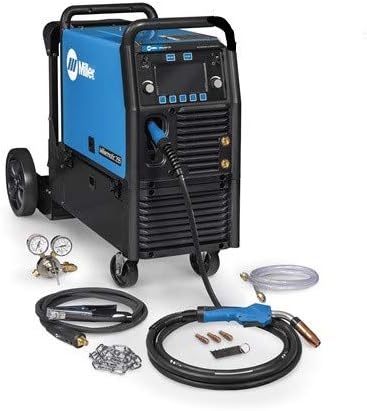
You are getting a full-feature multiprocess machine that is meant to simplify shop life for professional crews. The Multimatic 255 handles MIG, pulsed MIG, flux-cored, stick, and DC TIG, while broad input-voltage support helps it fit facilities with industrial power. It is not a simple garage welder, and that is the point.
The pulsed MIG mode helps reduce heat input and cleanup on appropriate jobs, while program mode lets you save favorite settings so setup is faster the next time. Running gear and carts can depend on the exact package, so check the Amazon listing before buying if mobility hardware matters.
For daily maintenance, fabrication touch-ups, education labs, light production, and on-site fixes, it is versatile. For special jobs where you need cleaner thin-metal welds or quick changeovers between processes, it is a strong option.
Why You’ll Like It
The biggest draw is workflow control. Saved programs, broad input compatibility, pulsed MIG, and professional setup features help busy crews reduce setup time and standardize repeat work.
Who Should Buy This
Choose it for maintenance departments, fleet shops, installers, fabrication programs, and light manufacturing teams that need process flexibility and industrial power compatibility.
Who Should Avoid This
Skip it if you only need a small garage welder or a basic 120V MIG machine. This model makes more sense when its advanced features will save real shop time.
What People Say
Feedback often praises the unit’s versatility and the convenience of program memory. Buyers who need advanced MIG and multiprocess workflow control tend to value the feature set. Common cautions center on cost, complexity, service planning, and making sure the exact package includes the accessories your shop expects.
Overall Sentiment: Mixed

Versatility
You can use this welder for everyday fabrication, maintenance, mobile service work, education, and specialty thin-metal jobs thanks to its multiprocess capabilities. It is set up to transition between stick, MIG, pulsed MIG, and DC TIG workflows, and the pulsed MIG mode makes it practical for jobs where heat control matters.
It is not a lightweight hobby unit, but for single-operator shops, installers, fleet maintenance crews, and training environments, it covers a broad set of tasks.
Problem Solving
It addresses common shop headaches like process changeovers, repeated setup work, and thin-metal heat control. Program memory helps crews return to preferred settings, and optional running gear can help with movement between work areas when the chosen package includes or supports it.
Plan for regular checks and confirm your local repair path if you rely on it heavily for business-critical uptime.
Key Benefits
- Professional multiprocess flexibility: MIG, Pulsed MIG, Stick, flux-cored, and DC TIG
- Broad 208-575V input compatibility for industrial environments
- Pulsed MIG can reduce heat input, distortion, and cleanup on suitable work
- Program mode saves and recalls favorite weld settings
- Good fit for MRO, light manufacturing, education, and fleet maintenance
Check Current Amazon Availability

You get a compact TIG/stick machine that is built for shop work and on-the-go repairs. It runs on 120/240V, puts out up to 160 A, and the 13 lb chassis makes it far easier to carry than most cart-based machines.
For steel, stainless, process pipe, light fabrication, and mobile maintenance, it is handy when you need something light enough to carry but more capable than a basic stick-only unit. If you value portability and straightforward DC TIG performance for single-operator work, this is one you will reach for often.
Why You’ll Like It
The 13 lb chassis is the standout benefit. When you need TIG or stick capability without dragging a heavy cart across the shop, this machine keeps the setup simple.
Who Should Buy This
Choose it for TIG-focused repair, stainless work, thin steel fabrication, process pipe, and mobile touch-up jobs where weight matters.
Who Should Avoid This
Skip it if you need MIG, flux-core, pulsed MIG, or one machine that handles every common fabrication process. Also skip it if you need AC TIG for aluminum, because the Multimatic 220 AC/DC is a better match for that work.
What People Say
People commonly like that it is lightweight yet capable. Users mention good arc control, easy transport, and the convenience of running from common shop power. On the flip side, buyers should plan for protective transport and confirm which TIG accessories are included with the exact package.
Overall Sentiment: Mixed

Versatility
You can use this for daily shop tasks, maintenance calls, and site repairs where you need DC TIG precision or a quick stick setup. It is well suited to thin steel, stainless work, process pipe, and small structural repairs.
Problem Solving
It solves common shop headaches like limited portability and inconsistent site power by being lightweight and accepting 120/240V. Its TIG and stick capability reduces tool swapping for steel and stainless tasks, and its output handles many thin-gauge and mid-thickness jobs.
Key Benefits
- Portable 13 lb chassis makes transport and jobsite moves easy
- Runs on 120/240V for flexible shop and site hookups
- DC TIG and Stick processes cover common steel and stainless repair tasks
- Max output of 160 A for a compact unit
- Good fit for mobile TIG touch-ups, process pipe, and stainless work
Check Product Details on Amazon

You get a versatile MIG/flux-core machine that is built to move with you. Depending on the exact version and package, the Millermatic 211 class gives you portable dual-voltage MIG performance for shop work, mobile repairs, and field jobs. Auto-Set and Auto Spool Gun Detect cut setup time, Smooth-Start helps keep starts cleaner, and the multi-voltage setup lets you run from 120V, 240V, or suitable jobsite power.
If you want a portable, user-friendly MIG that covers most light-to-medium shop and mobile jobs, this is one you will reach for often. It is a strong middle ground between the lighter 120V Millermatic 142 and the heavier shop-focused Millermatic 252.
Why You’ll Like It
The Millermatic 211 is easy to place in a shop because it balances portability, dual-voltage input, and straightforward MIG/flux-core performance without becoming too large for mobile work.
Who Should Buy This
Choose it for light-to-medium fabrication, automotive repair, farm repairs, maintenance, and field jobs where you need a manageable MIG/flux-core machine.
Who Should Avoid This
Skip it if you need TIG capability, AC TIG for aluminum, or a dedicated heavy production MIG for long daily welds.
What People Say
Customers often praise how easy it is to get decent welds quickly. Many mention Auto-Set and arc consistency as time-savers. People also like portability and dual-voltage flexibility for shop and field work.
Common gripes are mostly about consumables and accessories, such as ground clamp quality, lead length, and package-specific gun compatibility.
Overall Sentiment: Mixed

Versatility
You can use this every day for light-to-medium fabrication, automotive repairs, and shop projects. You can also pull it out for on-site fixes where portability matters. It runs solid wire with gas or flux-core for outdoor work, and with a compatible spool gun it is a practical option for light aluminum MIG tasks.
It is not intended as a continuous-duty production mill, but it covers a wide range of small-to-mid jobs.
Problem Solving
It solves setup headaches by automating settings and detecting spool guns so you waste less time dialing things in. The multi-voltage input and generator-friendly design let you work where power varies, and Smooth-Start plus thermal protection help reduce downtime from spatter and overheating.
For long-term reliability, plan to inspect the ground clamp, keep spare consumables on hand, and check whether the Amazon listing is for an older 211 package or a newer 211 PRO package.
Key Benefits
- Auto-Set speeds setup and reduces guesswork
- Auto Spool Gun Detect for quick spool-gun swaps
- Dual-voltage operation and generator-friendly use
- Smooth-Start for cleaner, low-spatter starts
- Good balance of portability, power, and MIG simplicity
Check Current Amazon Availability
How To Choose The Right Miller Welder
The best welder is not always the most powerful one. Your best choice depends on what you weld most often, where you weld, what power you have, and how much setup time you can afford. Use this section to narrow the list quickly.
Choose MIG Or Flux-Core For Speed
MIG and flux-core welding make sense for general fabrication, repair work, brackets, trailer projects, and repetitive shop tasks. If speed matters more than fine control, start with the Millermatic 252, Millermatic 211, or Millermatic 142.
Choose TIG For Precision
TIG gives you better control on thin material, stainless, and clean finish work. If TIG matters often, look at the Multimatic 220 AC/DC, Multimatic 215, or Maxstar 161 STL.
Choose AC TIG For Aluminum
If aluminum TIG is a regular part of your work, prioritize the Multimatic 220 AC/DC. For occasional light aluminum MIG, look for a compatible spool gun and confirm the machine, wire, gas, and drive-roll setup.
Choose Multiprocess For Job Variety
A multiprocess welder helps when your work changes from week to week. The Multimatic 215, Multimatic 220 AC/DC, and Multimatic 255 give you broader process coverage than a dedicated MIG or TIG-only machine.
Choose More Output For Production
If your shop welds thicker steel or runs long beads often, output and duty cycle should matter more than small size. That is where the Millermatic 252 stands out in this list.
Safety And Setup Note
Always match the welder, wire, gas, polarity, drive rolls, extension cords, generator size, and input power to the job before you start. Use proper PPE, keep ventilation in mind, and follow the machine manual for duty cycle, grounding, generator sizing, and material limits. A welder that is set up correctly usually performs better, lasts longer, and wastes fewer consumables.
Related Guides
FAQ
How Do I Choose The Right Welder For My Fabrication Shop?
You should start by matching the welding processes to the jobs you do most often. Match the machine to the work: MIG and flux-core for fast general fabrication, TIG for precision and thin materials, and stick for outdoor or less-than-perfect work. Consider the machine’s input options, output range, material thickness range, and duty cycle. If you move between jobs or use generators, look for multi-voltage capability and confirm generator sizing requirements before you rely on it in the field.
Portability and features like Auto-Set, Auto Spool Gun Detect, QuickTech, and saved programs can save setup time when you juggle different tasks. Drive roll quality, gun compatibility, liner choice, and consumable availability also matter for feed reliability. Finally, check serviceability and parts availability from the manufacturer or authorized dealers so you can minimize downtime when a repair or replacement part is needed.
What Maintenance And Setup Steps Will Keep Your Welder Reliable On Job Sites?
You will extend service life by doing simple pre-use checks: inspect cables, connectors, and the ground clamp, confirm gas flow and regulator seals, and clean vents and fan inlets to prevent overheating. Use the correct drive roll and liner for the wire you run and switch to a spool-gun or push-pull setup when welding aluminum if the machine requires it.
Respect the duty cycle: avoid prolonged heavy output without cooling and use thermal protection trip resets and proper ventilation to prevent damage. Keep a small kit of consumables and spares on hand, store machines in a dry place, and log service events so you catch repeating issues early.
Can A Multiprocess Welder Replace Dedicated Machines For Production Work?
Multiprocess machines give you versatility and are ideal if you need to handle a variety of jobs, troubleshoot on site, or run a small shop where space and budget are tight. They are not always a one-for-one substitute for heavy production equipment. You get convenience and quicker changeovers, yet dedicated machines often offer higher continuous duty cycles, greater output for long runs, and process-specific refinements that matter in full production.
If you want efficiency and capacity for high-volume welding, pair a multiprocess unit for flexibility with at least one production-grade welder for your core, repetitive tasks. That way, you do not compromise throughput or component consistency.
Which Welder Is Best If I Mostly Weld Aluminum?
Start by deciding how much aluminum work you actually do. If aluminum TIG is a regular part of your work, the Multimatic 220 AC/DC is the strongest fit in this roundup because AC TIG capability matters for many aluminum TIG jobs. If you only need occasional light aluminum MIG work, a machine with compatible spool-gun or push-pull support may be enough.
Is A 120V Welder Enough For A Small Shop?
A 120V welder can be enough for light repair, thinner material, hobby work, training, metal art, and small shop projects. The Millermatic 142 fits that kind of buyer well. If you expect thicker material, longer welds, or more demanding fabrication, a dual-voltage or higher-output machine gives you more headroom.
Should I Pick A Dedicated MIG Or A Multiprocess Welder?
Choose a dedicated MIG if your work is repetitive, fast, and mostly steel fabrication. Choose a multiprocess welder if your jobs change often and you need MIG, stick, TIG, or flux-core options in one package. The right answer depends on whether your biggest need is production speed or job flexibility.
Which Miller Welder Is Best For Mobile Repair?
For mobile repair, start with input flexibility, weight, and setup speed. The Multimatic 215 is the best portable multiprocess pick, while the Millermatic 211 is a strong portable MIG/flux-core option. If you need advanced MRO features and have the right power available, the Multimatic 255 is a better professional option.
Top Customer Picks
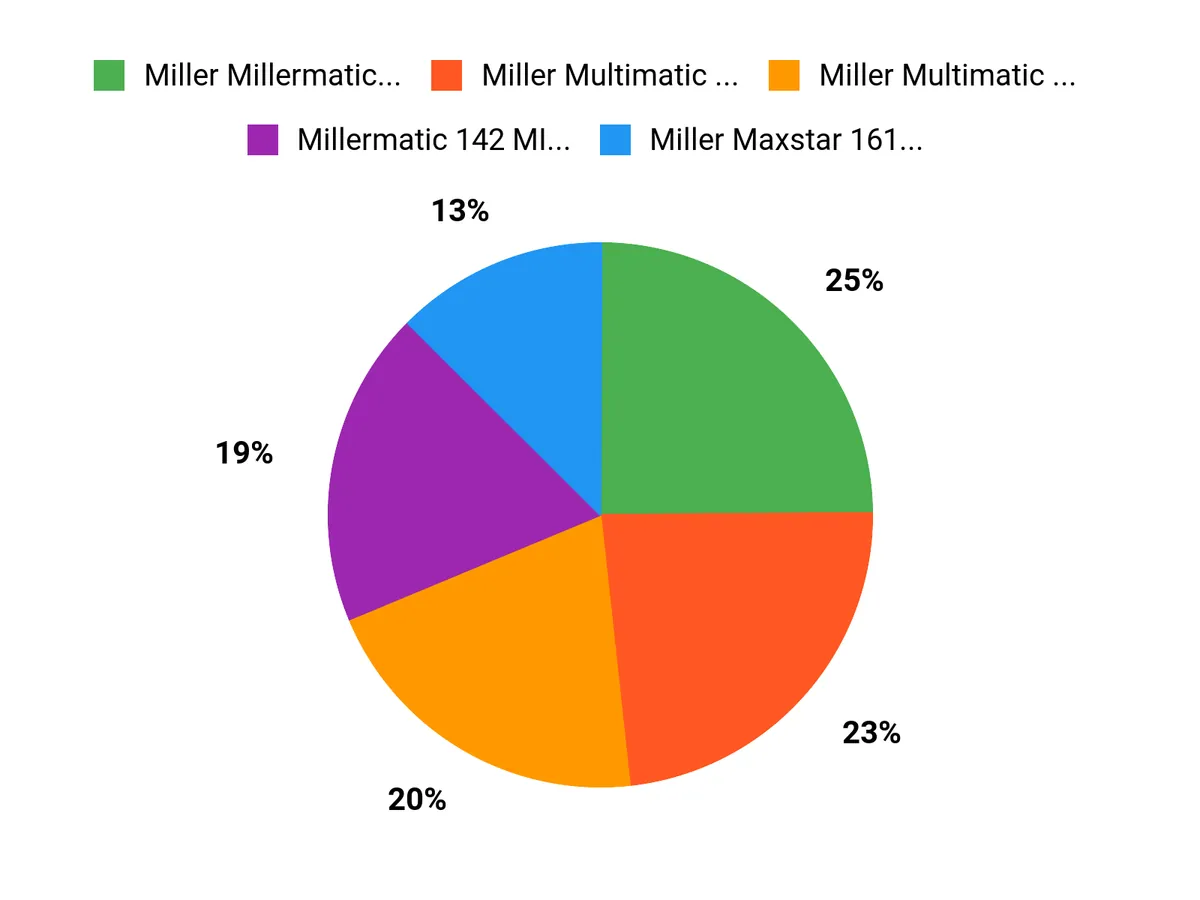
You will see customers choose among these Miller welders by weighing portability and multiprocess versatility against raw MIG power and aluminum capability. The Multimatic 215 is appealing for compact, jobsite-friendly multi-process use. The Multimatic 220 AC/DC is picked when you need AC TIG for aluminum plus broad process coverage. The Millermatic 252 is favored for sustained MIG output and heavy-duty shop production.
When you shop, prioritize duty cycle, what materials you will weld, whether aluminum is a frequent requirement, ease of setup, control layout, accessory compatibility, electrical service, and overall budget. Those factors quickly point you to the 215 for mobility, the 220 AC/DC for aluminum versatility, the 252 for thicker shop work, or the 211 for portable MIG value.
Wrapping Up
Choosing the right welder helps you do the work you bid on, consistently and profitably. If you need process flexibility and portability, the Multimatic 215 and 220 cover most jobsite needs.
If your shop needs a durable production MIG, the Millermatic 252 is geared toward steady shop work. For reliable 120V performance that is easy to use, the Millermatic 142 stands out for lighter work.
Pick a TIG-focused unit like the Maxstar 161 STL when precision steel or stainless work is a frequent task and low weight matters. Choose the Multimatic 255 when saved programs, pulsed MIG, broad input-voltage compatibility, and MRO-focused features matter. Finally, consider duty cycle, serviceability, package contents, and accessory compatibility so your investment keeps bringing in revenue over time.
Use these picks to match a machine to the projects you run most often and you will get more done with less downtime.
| Product | Image | Best Use | Input Voltage | Weight / Mobility | Welding Processes | Amazon Details |
|---|---|---|---|---|---|---|
| Miller Multimatic 215 Multiprocess Welder |
 |
Best portable multiprocess pick for mixed repair and fabrication work | 120V & 240V class | About 38 lbs |
|
Check Details |
| Miller Millermatic 252 Electric MIG Welder |
 |
Best shop workhorse for repeated MIG and flux-cored welding | 208V & 230/240V class | About 205 lb machine weight before cylinder/accessories |
|
Check Details |
| Miller 907757 Multimatic 220 AC/DC Multiprocess Welder |
 |
Best all-process option when AC TIG for aluminum matters | 120V & 240V class | About 56 lbs |
|
Check Details |
| Millermatic 142 MIG Welder |
 |
Best simple 120V MIG pick for light garage and training work | 120V class | Portable handle design |
|
Check Details |
| Miller 951767 Multimatic 255 Multiprocess Welder |
 |
Best advanced MRO and light-manufacturing multiprocess option | 208V – 575V class | Professional unit; cart/running gear can vary by package |
|
Check Details |
| Miller Maxstar 161 STL Series TIG Welder |
 |
Best lightweight DC TIG/stick pick for steel and stainless | 120V & 240V class | About 13 lbs |
|
Check Details |
| Miller 907614 Millermatic 211 MIG Welder |
 |
Best portable MIG value for light-to-medium work | 120V & 240V class | Portable class; verify exact listing/package weight |
|
Check Details |
This Roundup is reader-supported. When you click through links we may earn a referral commission on qualifying purchases.