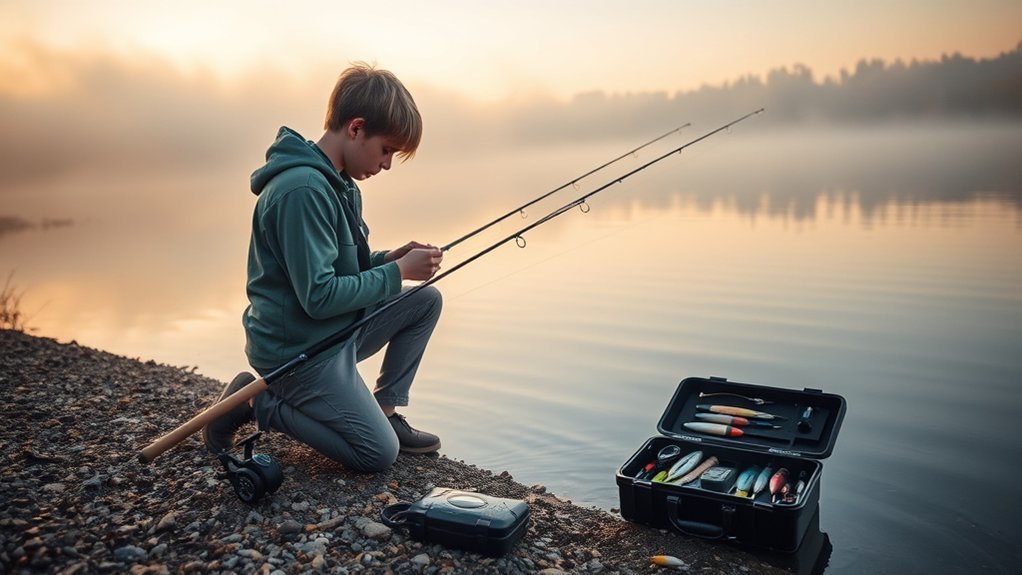
You do not need years of experience to enjoy carp fishing. With the right gear, simple rigs, safe fish handling, and a patient approach, you can learn the basics quickly and feel confident on your first trip. Carp are strong, cautious fish, so small details such as bait choice, quiet movement, and proper tackle can make a big difference.
Quick Answer
For beginner carp fishing, start with a sturdy rod, reliable reel, strong line, safe landing gear, and simple baits like sweet corn, bread, worms, pellets, or boilies. Fish quietly near cover, use a simple bottom rig or float setup, handle carp carefully, and always follow local fishing rules.
Key Takeaways
- Carp fishing is beginner-friendly when you use simple tackle, proven bait, and patient methods.
- Sweet corn, bread, worms, pellets, and boilies are reliable bait choices for new anglers.
- Carp often feed near reeds, lily pads, shallow margins, underwater features, and quiet areas with natural food.
- Safe handling matters. Use a landing net, wet hands, and a padded unhooking mat before releasing carp.
- Fishing rules vary by location, so always check license, season, bait, and catch-and-release requirements before you go.
At a Glance
| Time Required | A few hours for a short session, or a full day if you want more chances at a bite. |
| Difficulty | Beginner-friendly, but patience, quiet movement, and proper fish care are important. |
| Tools Needed | Rod, reel, line, hooks, weights, swivels, bait, landing net, unhooking mat, forceps, and a valid fishing license where required. |
| Cost | Low to moderate for a beginner setup, depending on rod quality, reel size, bait, and safety gear. |
Essential Gear for Carp Fishing
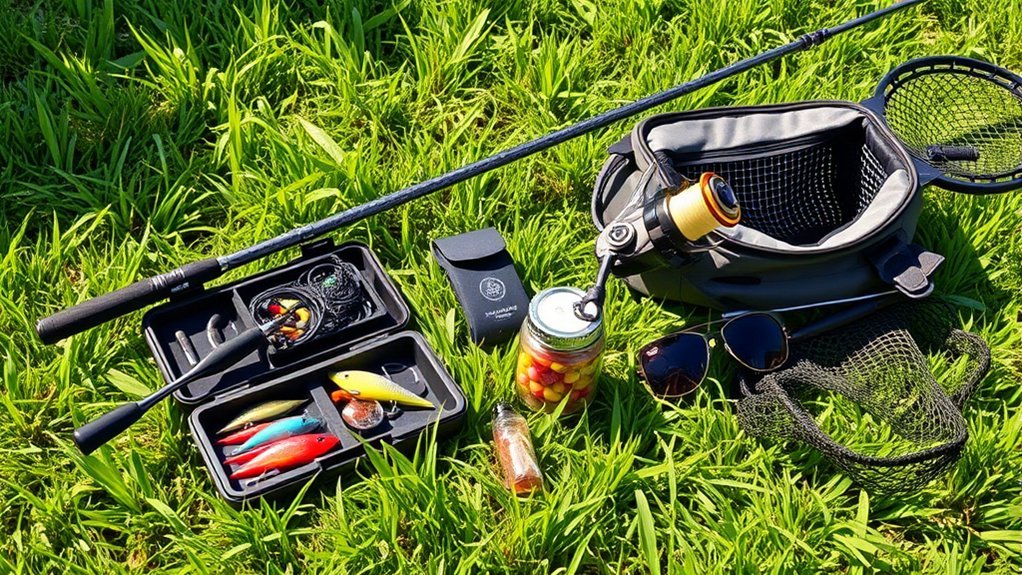
When gearing up for carp fishing, selecting the right equipment is vital for success. Start with quality carp fishing rods, like the S Max or S Mid, typically ranging from 12 to 13 feet. These rods provide the length and strength needed to cast well, control your rig, and target larger specimens effectively. A 12-foot rod is a practical starting point for many beginners because it balances casting distance with easy handling.
Pair your rod with sturdy fishing reels, such as the RR3000 or RR6000 fixed spool reels. Choose a reel with a smooth drag system because carp can make powerful runs after taking the bait. A poor drag can lead to snapped line, pulled hooks, or lost fish, especially when you hook a larger carp near weeds or snags.
Don’t overlook important terminal tackle, including robust hooks, weights, swivels, and fishing line, to adapt to various conditions. Beginners can start with a simple monofilament main line, barbless or micro-barbed hooks where allowed, and enough split shot or leads to keep the bait presented naturally. Always match your hook size and line strength to the venue, fish size, and local rules.
Stock a variety of carp baits, like boilies, corn, bread, worms, and flavored pellets, since experimentation can enhance your catch rate. Carp may prefer one bait one day and ignore it the next, so having two or three options helps you adapt. Finally, make sure you have a large landing net and a padded unhooking mat, like the Travel Unhooking Mat Max, to safely handle and protect the carp during catch-and-release. With the right gear in hand, you’re set for a safer and more successful outing.
Warning: Never lift a carp by the hook, line, gills, or tail. Support the fish with wet hands over a padded mat, keep it low to the ground, and return it to the water as soon as possible.
[Amazon Products Picked for You]

Hand Tied Hair Rigs For Carp Fishing: Hair rig is hand tied from the highest quality components to offer complete confidence in your end tackle. Forged from high-carbon steel, carp hooks super strong & durable. Ultra-sharp hook point ensures no-slip penetration. Carp rigs have been tied using a coated 15lb braid in gravel / brown colour. Built not to just catch, but to dominate!

HIGH QUALITY CARP HAIR RIG KIT: Made of high carbon steel, Dovesun carp hooks stay sharp while resisting bending, ensuring a solid hookset every time. The curved shank barb design penetrates quickly and holds firm. Finished with premium camouflage braided line that's tough, abrasion-resistant, and built to handle big fish. The ideal choice for anglers who demand reliable performance from their carp fishing gear.

High-Carbon Steel Hooks for Superior Strength:Our carp fishing rig features durable high-carbon steel fish hooks, designed to stay sharp and resist bending, ensuring a secure catch every time. Perfect for carp fishing equipment that demands reliability.
Carp Fishing Techniques
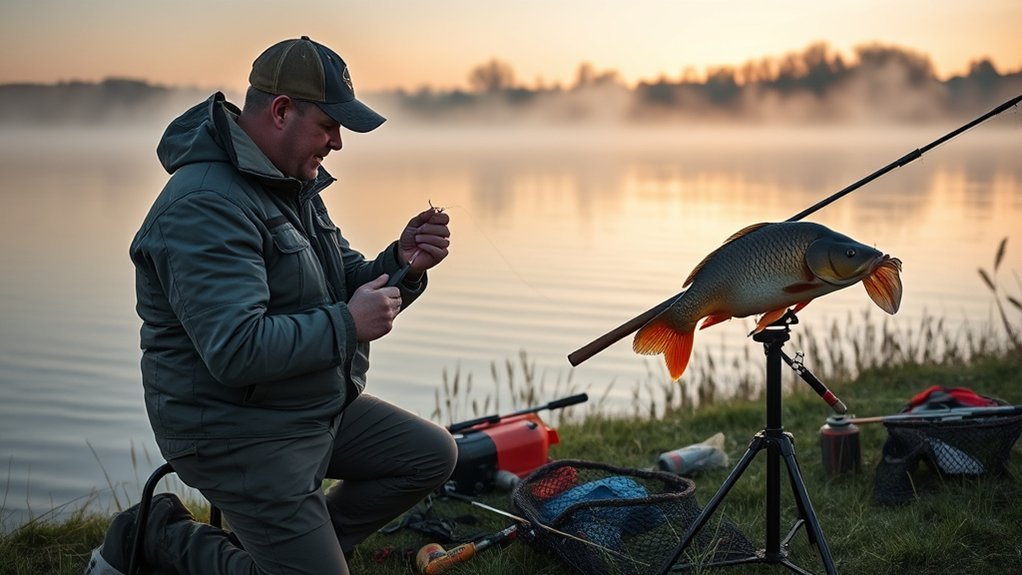
Carp fishing techniques are diverse, and each method offers unique advantages depending on the water, weather, depth, and carp behavior. Beginners do not need to learn every method at once. Start with one simple setup, understand how it works, and then add more techniques as your confidence grows.
Bottom fishing is often the easiest place to begin because carp spend much of their time feeding on or near the lakebed. Float fishing can also work well in shallow margins where you can watch the float and react to bites quickly. Surface fishing is exciting in warm weather, but it requires stealth because carp feeding on top can spook easily.
| Technique | Description |
|---|---|
| Ledgering | This method uses a bottom bait presentation, with hair-rigged boilies effectively attracting carp. |
| Feeder Fishing | A cage filled with ground bait creates a feeding area, enticing carp to the hook bait when cast. |
| Float Fishing | A simple setup with a float and weights, ideal for shallow waters and various situations. |
| Surface Fishing | Especially effective in summer, using bread or dog biscuits to bait and observe carp activity. |
| Artificial Bait | Works well with fly fishing rods, allowing experimentation with different baits like bread flies. |
[Amazon Products Picked for You]
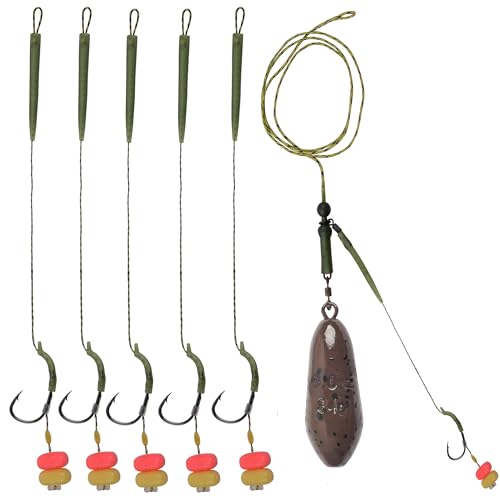
CARP RIGS KIT: JOGFFDE Carp fishing rigs setup includes 1 pre-rigged carp fishing rig set and 5 extra leader line rigs as spares. Ready to use for quick setup and works great. Save your time and quick setup

This carp fishing gear includes 10 pieces of carp fishing hair rigs. Each carp rig have a spring feeders and 2pcs steel barbed carp hook.

EXCELLENT CARP HOOK: Made of Telfon.Hair rigs complete with sharp barbed wide gape krank hooks, the sharp hooks usually grip safely in the lip of the fish. This makes it difficult for the fish to spit the hook.
Simple Beginner Rig
A basic running ledger rig is a sensible first setup for many carp anglers. Thread a weight or feeder onto your main line, add a bead to protect the knot, tie on a swivel, and attach a short hooklength with your baited hook. This setup lets the carp pick up the bait with less resistance, while the weight helps keep your presentation near the bottom.
The hair rig is another popular option because it places the bait just below the hook instead of directly on it. This can help the hook turn and take hold when a carp sucks in the bait. If you are new, practice tying rigs at home before you fish so you can set up faster and avoid weak knots on the bank.
Pro Tip: Before casting, test your rig in the shallow edge. You should see the bait sit naturally, the hook point stay clear, and the line run freely without tangles.
Best Baits for Carp
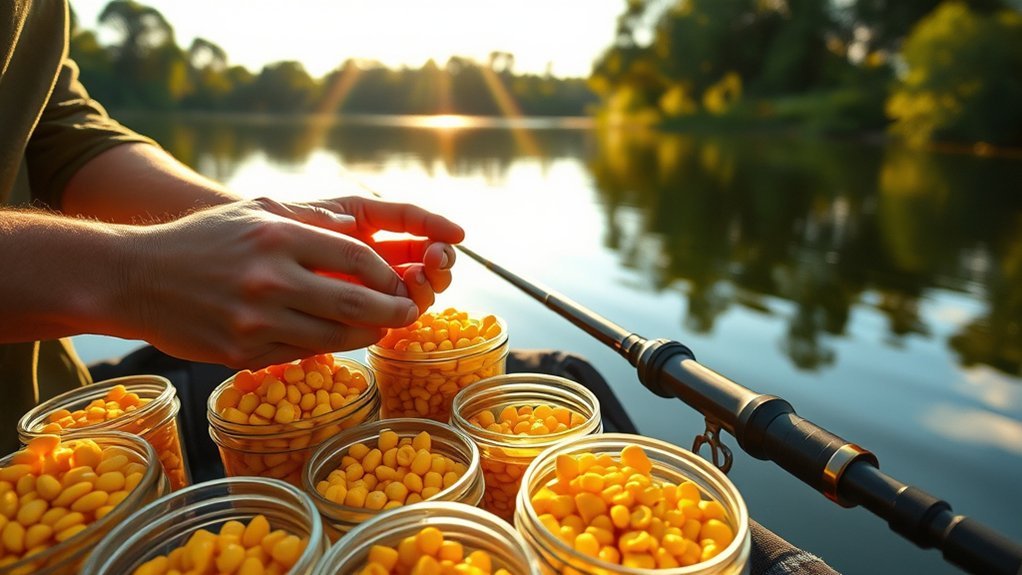
When targeting carp, understanding the best bait options is essential for success. Natural baits like sweet corn and bread can effectively attract carp, while artificial choices such as boilies offer versatility in flavor and presentation. By combining these approaches, you’ll increase your chances of enticing carp throughout different seasons and conditions.
Beginners should avoid overcomplicating bait choice. A small tin of sweet corn, a few slices of bread, some pellets, or a handful of boilies can be enough for a productive session. The key is to use bait carefully, watch for signs of feeding, and avoid filling the swim with too much food before carp arrive.
[Amazon Products Picked for You]
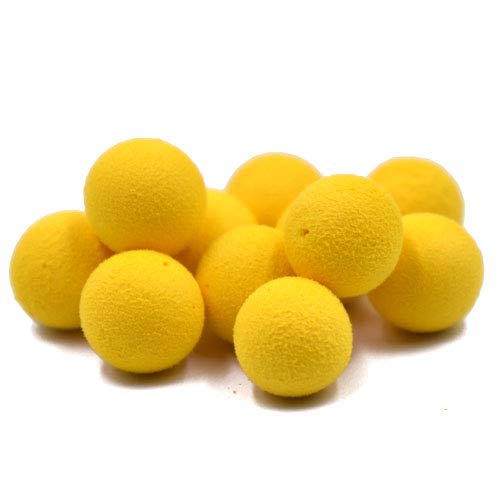

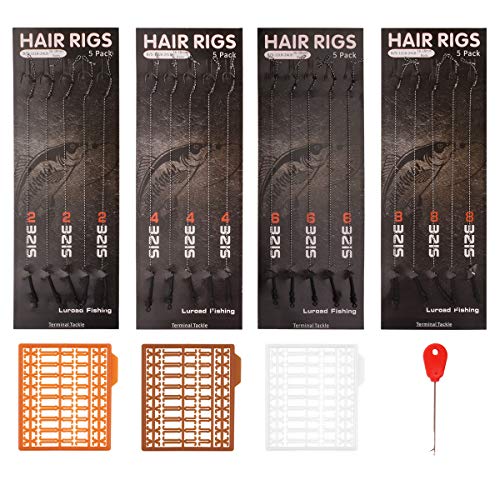
HOOK FEATURES: High carbon steel hook with teflon, anti-rust, can work long time. Hair rigs finished with sharp carp curved shank barb hooks, the sharp hooks usually grip safely in the lip of the fish. This makes it difficult for the fish to spit the hook.
Natural Bait Options
While exploring effective natural bait options for carp fishing, you’ll find that certain choices consistently yield impressive results. Sweet corn stands out, attracting carp with its vibrant color and sweet scent. It is easy to hook, affordable, and simple for beginners to use on float rigs, ledger rigs, or hair rigs.
Boilies, crafted from fishmeals and various enticing flavors, are a staple among carp anglers; sizes from 10mm to 24mm are available, with 15mm being ideal for beginners. Incorporating particles like tiger nuts and hemp seed can elevate your fishing experience, as these options are particularly appealing to larger carp. Use particle baits responsibly and follow venue rules, since some waters restrict nuts, seeds, or loose feed.
Additionally, nightcrawlers and worms provide a lively presentation that can draw in carp lurking in shallow waters. Bread can work well on the surface or pinched around the hook for short casts. Don’t hesitate to experiment with different colors and flavors, as carp preferences can change based on conditions, seasons, angling pressure, and available natural food.
Artificial Bait Choices
Artificial bait choices can greatly enhance your carp fishing success, especially in scenarios where natural food sources are limited or small fish keep stealing softer bait. Brightly colored artificial baits, like bread flies or dog biscuit imitations, can attract carp’s attention, particularly in murky waters or winter months.
Experimenting with different scents and textures, such as fruity or fishy options, improves catch rates because carp are often drawn to unique flavors. Incorporating buoyant baits allows for a “popped up” presentation, keeping your bait visible and above debris. This can help when the lakebed is weedy, silty, or covered with leaves.
Additionally, utilizing paired offerings, such as combining boilies with artificial corn, creates a more enticing setup that can increase your chances of success across various environments. Always adapt your approach to maximize your results in carp fishing. If you get line bites or see carp feeding but not hooking themselves, try a smaller bait, sharper hook, or shorter hooklength.
Finding Carp in Different Waters
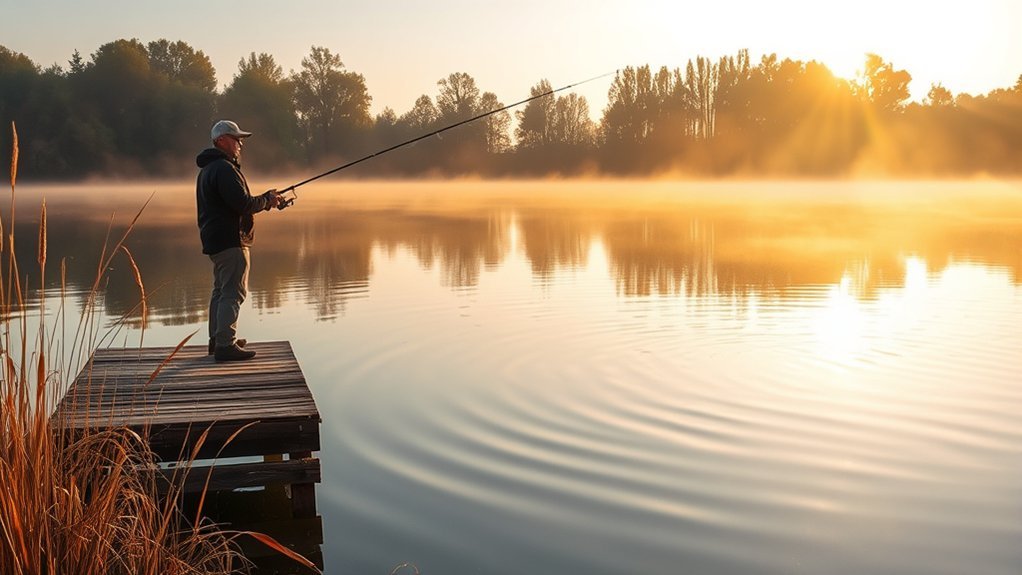
To find carp effectively, you need to understand the types of waters they inhabit and their seasonal behavior. In still freshwater bodies like lakes and ponds, look for shallow areas with cover such as reeds and lily pads, where carp feed actively during early mornings and late evenings. Adjust your approach based on the season, as carp tend to move to cooler waters in summer and can be found in shallower locations during mild winter spells.
Water Types Overview
Understanding the diverse water types where carp reside is essential for successful fishing. Carp thrive in still freshwater environments like local lakes, ponds, canals, reservoirs, and slow-moving rivers, where they find ample food sources and shelter. When selecting carp fishing venues, focus on clear signs of life, safe access, and areas with abundant vegetation, as these areas often host fish feeding activities.
Carp typically occupy shallow regions, especially near structures like reed beds and lily pads, which provide both cover and feeding grounds. On rivers and canals, look for slower bends, moored boats, marginal shelves, overhanging trees, and areas where food naturally collects. As you consider seasonal changes, remember that warmer months draw carp into shallower depths of water, while colder months may push them into deeper areas. By recognizing these patterns, you can effectively target carp in various water types for a fruitful fishing experience.
Seasonal Carp Behavior
As water temperatures rise in spring, carp become increasingly active, venturing into shallow areas to feed on emerging plant life and insects. Understanding seasonal patterns is essential for carp fishing for beginners. During summer, carp may retreat to cooler depths during the heat of the day but return to shallow areas at dawn and dusk. In autumn, they often feed aggressively to build energy before colder weather, particularly where natural food sources are abundant.
When winter arrives, their metabolism slows, making them less active and more cautious. They may hold in deeper water, sheltered spots, or any area with slightly warmer temperatures. Monitoring local water temperatures helps you identify the prime feeding times, especially when temperatures range between 50°F and 75°F (10°C to 24°C). Conditions still vary by region, so use temperature as a guide rather than a fixed rule.
| Season | Behavior | Ideal Depths |
|---|---|---|
| Spring | Active, feeding in shallow areas | Shallow areas |
| Summer | Cooler depths during the day | Shallow/evening |
| Autumn | Feeding aggressively | Shallow areas |
| Winter | Less active, congregating for safety | Deeper waters |
Ideal Habitat Features
Carp inhabit a variety of freshwater environments, and recognizing their preferred habitats is key to successful fishing. They thrive in still waters like lakes, ponds, and slow-moving rivers, favoring shallow areas with ample cover. Look for structures such as reeds, lily pads, snags, gravel patches, marginal shelves, and submerged vegetation that provide protection and abundant food sources.
During summer, carp are typically found in warmer water inlets, especially in nutrient-rich zones. Early mornings and late evenings are ideal feeding times, as carp come closer to the surface to forage for insects and plant matter. Keep an eye out for signs of carp activity, such as bubbles, cloudy water, rolling fish, surface disturbances, or jumping, to identify potential fishing spots where their presence is strong.
Safety Tips for Carp Fishing
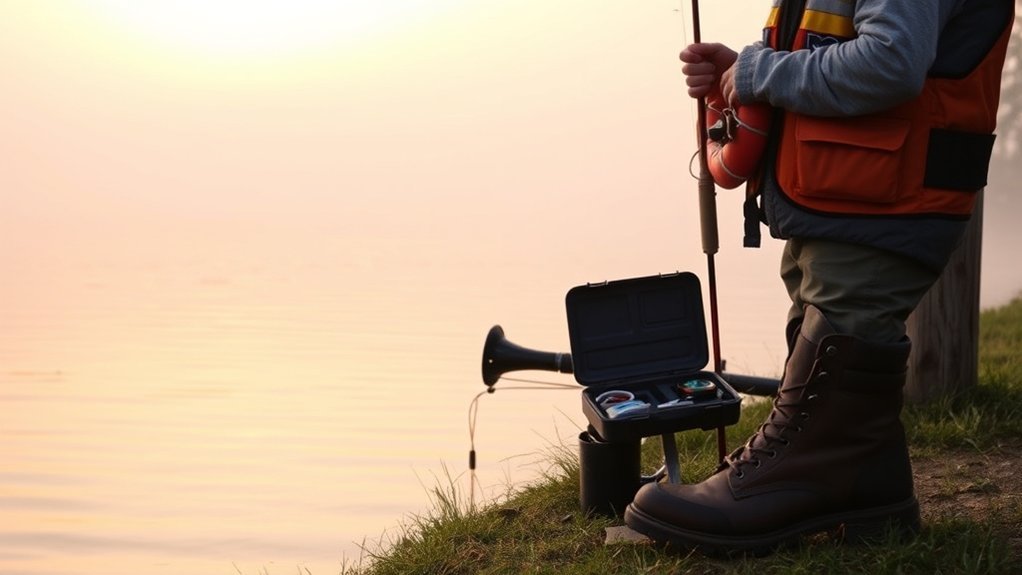
When venturing out to fish for carp, safety should always be a top priority to guarantee an enjoyable experience. Start by wearing appropriate footwear, like waterproof walking boots, to maintain stability near deep water. This helps you maintain your footing while reeling in fish and prevents accidents. Be cautious when moving quickly to the water’s edge; secure your footing to avoid slips.
If you’re fishing from a boat or near deep water, using a flotation device is crucial for enhancing safety during unexpected situations. Steer clear of ice-covered water, as varying thickness can lead to dangerous falls. Accidents can occur even on solid ground; consequently, carry antiseptic cream and dressings to treat any cuts or injuries sustained from bankside encounters. By following these safety tips, you’ll minimize risks and focus on enjoying your carp fishing experience.
Sun protection also matters during long sessions. Bring drinking water, sunscreen, a hat, and suitable layers for changing weather. Let someone know where you are fishing, especially if you visit quiet venues alone. Keep hooks, knives, baiting needles, and forceps stored safely so they do not injure you, children, pets, or wildlife.
Understanding Carp Species
Understanding the various species of carp is essential for successful fishing, since each type exhibits unique behaviors and habitat preferences. Common carp, including mirror carp, are known for their size and adaptability; mirror carp can exceed 20 lbs and feature distinct scale patterns. Common carp usually have a fuller covering of scales, while mirror carp have larger, irregular scale patterns.
Grass carp, on the smaller side in some waters, primarily feed on aquatic vegetation, making them a unique target for anglers interested in herbivorous species. In many locations, grass carp are managed differently from common carp, so check local rules before targeting or retaining them. Additionally, F1 carp, hybrids between common and mirror carp, have gained popularity due to their distinct characteristics and willingness to feed in commercial fisheries.
To effectively catch carp, you’ll need to choose the right carp fishing tackle tailored to the specific species you’re targeting. Knowing where each type thrives will greatly enhance your chances of success. By understanding their feeding habits and preferred environments, you’ll be better equipped to catch carp and enjoy a rewarding fishing experience.
Setting Up Your Fishing Spot
To maximize your chances of success in carp fishing, it’s crucial to set up your fishing spot thoughtfully. Start by choosing a location with clear water and plenty of cover, like reed beds or lilies, as these areas often attract the fish. Use a marker float to cast and identify the bottom type, locating any underwater features that may hold carp.
Once you’ve pinpointed your fishing spot, introduce a sensible amount of ground bait using a feeder, baiting spoon, or throwing stick. This will help draw carp to your hook bait without overfeeding them. Beginners should start with a small amount and add more only when fish are feeding confidently. Too much bait can fill the carp before they find your hook bait.
Verify your rig is properly presented, allowing the bait to sit on the bottom; popular rigs like the hair rig or method feeder rig are effective for this. Finally, approach your fishing spot quietly and stealthily to avoid spooking the naturally shy carp. Avoid heavy footsteps, loud bank noise, and repeated casting over the same fish. By setting up correctly, you’ll greatly increase your chances of a successful catch.
Note: Wind can push natural food into one side of a lake. If you see warm wind blowing into a bank, clouded water, bubbles, or rolling fish, that area may be worth trying first.
Common Mistakes to Avoid
While many anglers excitedly anticipate their carp fishing trips, they often overlook crucial aspects that can hinder their success. Avoiding these common mistakes will enhance your experience and effectiveness on the water:
Many anglers overlook key elements of carp fishing, which can impact their success on the water.
- Neglecting to obtain a fishing license: Fishing without the right license or permit can lead to fines, removal from the venue, or both.
- Using improper tackle and bait: A 12ft carp fishing rod with a test curve of 2.5lb to 3lb is useful for many beginner carp situations, though lighter or shorter rods may suit small ponds and close-range fishing.
- Choosing the wrong bait options: Experiment with boilies, corn, bread, pellets, and worms to find what attracts carp in your location.
- Ignoring fish safety: Wet your hands before handling fish and use a padded unhooking mat to help support their survival post-release.
- Lacking patience: Stay alert and remain at your fishing spot for longer periods to increase your chances of bites.
- Casting too often: Constant recasting can scare carp away from a quiet feeding area.
- Using blunt hooks: Check the hook point often, especially after catching weed, gravel, branches, or snags.
- Overfeeding the swim: Too much loose bait can fill the fish before they take your hook bait.
Environmental Considerations
As you venture into carp fishing, recognizing the environmental considerations is essential for both your success and the health of aquatic ecosystems. Practicing catch and release, especially for larger specimens over 10/15 lbs, helps support sustainable fishing where release is required or encouraged. Always stay informed about local regulations, including seasonal closures, protected areas, bait restrictions, and venue-specific rules designed to protect spawning fish.
Responsible fishing also means cleaning up litter and minimizing disturbance to natural habitats. Never leave line, hooks, plastic bait tubs, cans, or food wrappers on the bank. Discarded fishing line can harm birds, mammals, turtles, and other wildlife. If you see old line near your swim and can remove it safely, take it home and dispose of it properly.
| Environmental Action | Importance |
|---|---|
| Use eco-friendly tackle | Supports conservation efforts |
| Follow local regulations | Maintains ecosystem balance |
| Practice catch and release | Preserves carp populations |
Moreover, be aware of health risks like Leptospirosis from contaminated water. Cover cuts before fishing, wash your hands before eating, and clean any wounds after contact with lake or river water. By supporting conservation efforts, you contribute to long-term environmental sustainability, guaranteeing that carp fishing remains a viable activity for generations to come.
Resources for Learning More
To enhance your carp fishing skills, tap into various resources that cater to different learning styles. Fishing magazines and publications offer expert advice and current trends, while online learning platforms provide visual tutorials that clarify techniques. Joining community forums and groups allows you to connect with fellow anglers, sharing knowledge and experiences that can greatly boost your understanding of the sport.
Online Learning Platforms
When you’re enthusiastic to elevate your carp fishing skills, numerous online learning platforms can provide valuable insights and resources. These platforms are tailored for beginners, helping you master essential techniques, select the right gear, and connect with fellow anglers. Here are some key resources to explore:
- YouTube tutorials for expert advice on carp fishing techniques and baiting strategies.
- Carpfeed and Fisheries.co.uk for detailed information on fishing venues and regulations.
- Forums like carpforum.co.uk and carp.com to ask questions and share experiences with seasoned fishers.
- The American Carp Society for educational materials on sustainable fishing practices.
- Online articles from Anglers Mail and Total Carp featuring tips and gear reviews.
Utilizing these resources will enhance your carp fishing expertise effectively. When learning online, compare several sources and always check whether advice fits your local fishery rules. A baiting method or rig that works well on one venue may be restricted or less effective on another.
Fishing Magazines and Publications
Exploring fishing magazines and publications can greatly enhance your carp fishing knowledge and skills. Titles like Anglers Mail, Carp Fisherman, and Total Carp offer valuable tips and techniques tailored for carp fishing enthusiasts. For those seeking to investigate further, Carp World and Big Carp Magazine tackle advanced topics that can refine your strategies.
Additionally, resources such as Fisheries.co.uk provide critical information about fishing venues, rules, and conditions, enabling you to make informed decisions when planning your trips. By immersing yourself in these publications, you not only gain insights but also tap into a wealth of community discussions, ensuring a well-rounded understanding of carp fishing that benefits both novice and experienced anglers alike.
Community Forums and Groups
Community forums and groups serve as invaluable resources for anglers looking to deepen their carp fishing expertise. Engaging with these online communities lets you connect with experienced anglers and other beginners, allowing you to share insights and learn from each other’s experiences. Here are some resources to evaluate:
- Carpforum.co.uk: Join discussions and seek tips and advice.
- Facebook Groups: Like ‘Carping for Beginners’ for a supportive atmosphere.
- The Angling Trust: Stay informed on fishing regulations and events.
- YouTube Channels: Watch tutorials and gear reviews from seasoned anglers.
- Magazines: Read expert articles in ‘Anglers Mail’ and ‘Carp Fisherman’ for gear insights.
Utilizing these platforms will enhance your carp fishing skills and knowledge effectively. Just remember that advice from forums can be opinion-based, so test ideas carefully and prioritize fish welfare, safe rigs, and official venue guidance.
Related Guides
Frequently Asked Questions
What basics do I need for carp fishing?
You’ll need a fishing license where required, a sturdy carp rod, a suitable reel, strong monofilament line, hooks, weights, swivels, bait, a large landing net, forceps, and a padded unhooking mat. A simple tackle box with spare hooks, beads, leaders, and scissors will also help you handle common setup problems.
How do you carp fish as a beginner?
Choose still waters with cover, use a reliable rod and fixed spool reel, try simple baits like sweet corn or boilies, and fish near features such as reeds, lily pads, margins, or gravel spots. Start with a float rig, feeder rig, or simple ledger rig, then stay quiet and patient while watching for signs of feeding carp.
What is the best bait for carp for beginners?
The best bait for many beginners is sweet corn because it is bright, easy to use, affordable, and attractive to carp. Boilies can help when targeting larger fish, while bread, pellets, worms, and dough balls can work well in the right conditions. Carry more than one bait so you can adjust if carp ignore your first choice.
Is a 20lb line good for carp?
Yes, a 20lb line can be good for carp fishing, especially around snags, weeds, or larger fish. It offers strong abrasion resistance and helps control powerful runs. However, lighter line may be better for small ponds, clear water, or wary fish, so match your line strength to the venue and local conditions.
What time of day is best for carp fishing?
Early morning and late evening are often productive because carp may feed closer to the margins with less disturbance. Warm, cloudy, or breezy conditions can also help. During hot summer days, carp may move deeper or sit under cover, then return to shallower feeding areas when temperatures ease.
Do you need an unhooking mat for carp fishing?
Yes, an unhooking mat is strongly recommended and required on many carp waters. Carp can injure themselves if they flap on hard ground, stones, or dry grass. A padded mat protects the fish while you remove the hook, take a quick photo if allowed, and prepare for a safe release.
Sources
- GOV.UK Fishing Licences — supports the need to check fishing license requirements before fishing.
- GOV.UK Freshwater Rod Fishing Rules — supports checking local freshwater fishing rules, seasons, and restrictions.
- Angling Trust — supports responsible angling, fish care, and learning resources for anglers.
- U.S. Fish & Wildlife Service — supports the importance of protecting aquatic habitats and wildlife.
Conclusion
As you commence your carp fishing journey, remember the adage, “The early bird catches the worm.” Arriving at your fishing spot early gives you the advantage of quiet waters and active fish. By mastering the essential gear, techniques, and bait, and by being mindful of your surroundings, you’ll increase your chances of success.
Start simple, fish safely, and pay close attention to what the carp are doing. Watch the water, adjust your bait, avoid common mistakes, and treat every fish with care. Keep learning and adapting, and soon enough, you’ll find yourself reeling in those prized catches with confidence and skill. Happy fishing!