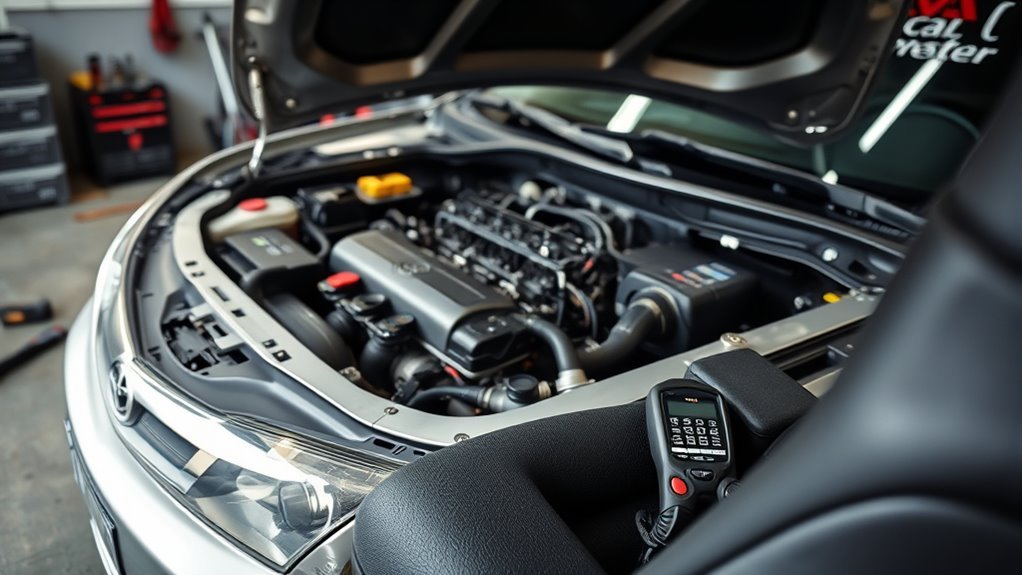
If your 2005 Toyota Camry won’t start, the first step is to identify what happens when you turn the key. A silent engine, repeated clicking, slow cranking, and normal cranking point to different problems. Checking the symptom before replacing parts can save time and prevent unnecessary repairs.
Quick Answer
A 2005 Toyota Camry that won’t start may have a discharged battery, poor electrical connection, faulty starter, fuel-delivery problem, ignition fault, or immobilizer issue. If the engine does not crank, begin with the battery and starter circuit. If it cranks normally but will not fire, investigate fuel, spark, sensor signals, and engine condition.
At a Glance
| Difficulty | Basic electrical checks are beginner-friendly; fuel and ignition circuit diagnosis requires technical knowledge. |
| Tools Needed | Multimeter, battery charger or booster, OBD-II scanner, and basic hand tools. Advanced checks require a spark tester and suitable fuel-pressure equipment. |
Common Reasons a 2005 Toyota Camry Won’t Start

The most useful starting clue is whether the engine actually turns when you twist the key. A no-crank problem usually involves the battery, cables, starter, or starter-control circuit. An engine that cranks normally but refuses to run needs a different set of tests.
Use the symptoms below to identify your starting point.
| What happens | Possible causes | First check |
|---|---|---|
| No dashboard lights or starter response | Dead battery, disconnected cable, poor ground, or power-supply fault | Battery voltage and terminals |
| Rapid clicking | Low battery voltage or excessive resistance in a cable | Battery condition under load |
| One click without cranking | Starter, solenoid, cable, or ground problem | Battery and starter connections |
| No crank, but dashboard lights work | Starter-control circuit, ignition switch, relay, or transmission safety switch | Starting position and starter command |
| Normal cranking, but engine does not start | Fuel, spark, immobilizer, sensor, or mechanical problem | Fuel level, spare key, and diagnostic codes |
| Starts with a jump but fails again later | Weak battery, charging fault, or unwanted battery drain | Battery load test and charging voltage |
These symptoms guide testing, but none confirms a failed component on its own. For example, a single click can occur with a bad starter or a poor battery connection.
Toyota’s 2005 Camry owner’s manual also separates slow or absent cranking from normal cranking without ignition.
Test the Battery, Cables, and Grounds
The battery and its connections should be checked before replacing a starter or ignition component. A battery can power the dashboard but still lack enough current to turn the engine.
Begin with a visual inspection, then measure voltage with a multimeter.
1. Inspect the Battery and Terminals
Look for white or green corrosion, loose clamps, damaged cables, and a swollen battery case.
Make sure the terminals fit tightly and that the battery is properly secured. Check the negative cable where it connects to the body and engine.
A poor ground can prevent the starter from receiving enough current, even when battery voltage appears normal.
Warning: Do not jump-start a frozen, leaking, or swollen battery. Keep sparks and flames away from the battery and fuel system. Use eye protection, follow the vehicle’s jump-starting instructions, and never bypass a clutch or park/neutral safety switch.
2. Measure Battery Voltage
Set the multimeter to DC voltage and touch the probes to the battery posts.
According to Interstate Batteries’ testing guidance, a charged automotive battery should measure approximately 12.6 volts or higher.
Use these readings as a basic screening guide.
- Approximately 12.6 volts: The battery has a healthy resting charge, although a load test may still be needed.
- Below 12.4 volts: Charge the battery and test it before drawing conclusions about the starter.
- Voltage drops sharply during cranking: The battery may be weak, discharged, or affected by an excessive electrical load.
Resting voltage alone cannot establish battery health. A proper load test checks whether the battery can deliver starting current.
3. Check the Charging System
If the Camry starts after a jump, measure voltage with the engine running.
A typical charging reading is approximately 13.7–14.7 volts, although operating conditions affect the result.
If the reading remains near resting battery voltage, investigate the alternator, drive belt, connections, and charging circuit.
A failing alternator usually causes a no-start indirectly by allowing the battery to discharge. It does not normally prevent a properly charged battery from operating the starter.
Check the Starter and Ignition Switch
If the battery is charged and the engine still will not crank, investigate the starter circuit. This includes the starter motor, solenoid, relay, ignition switch, and related wiring.
Do not replace the starter based on clicking alone. Confirm that it receives the required electrical supply and command.
Check the Starter Response
Listen carefully when turning the key to START.
- One click: The starter solenoid may engage without turning the motor.
- Rapid clicking: Battery voltage may be dropping too low to maintain starter engagement.
- No sound: The starter may not be receiving a command, or its internal components may have failed.
- Starter spins without turning the engine: The starter-drive mechanism may not be engaging the engine.
A technician can measure voltage at the starter’s main terminal and control terminal during a start attempt.
If the electrical supply and command are correct but the starter does not operate, the starter assembly becomes a stronger suspect.
Inspect the Ignition Switch and Relay
A worn ignition switch can interrupt the START signal. Damaged connectors or a failed starter relay can produce similar symptoms.
Check the relevant fuse and relay before replacing the switch. Use the vehicle’s wiring diagram to confirm which terminals should receive power.
Testing continuity and voltage under the correct conditions helps separate a failed switch from a broken wire or poor connection.
Starter replacement should follow electrical confirmation, especially on a high-mileage Camry where several aging components may produce similar symptoms.
Check Fuel Delivery and Pump Noise
If the starter turns the engine normally but the engine does not fire, fuel delivery becomes a priority. Begin by confirming that the tank contains enough gasoline.
Then check fuel-pump operation, electrical supply, and actual fuel pressure. Pump noise alone cannot confirm adequate pressure.
Can You Hear the Fuel Pump?
Some vehicles briefly run the fuel pump when the ignition is switched ON. However, that sound is not a dependable standalone test on this Camry.
The Toyota fuel-pump control circuit description explains how the engine computer activates the circuit-opening relay during cranking and maintains operation while the engine runs.
Therefore, silence with the key in ON does not automatically mean the pump is defective.
When pump operation is uncertain, a technician should verify the relevant fuse, relay, wiring, and electrical supply during the correct operating condition.
Test Fuel Pressure
Fuel pressure testing provides a more useful answer than simply listening for pump noise.
The Toyota repair procedure for the 2.4-liter engine specifies 44–50 psi (304–343 kPa) during its fuel-pressure test.
The factory fuel-pressure testing procedure also calls for checking pressure retention after the engine stops.
Use the appropriate engine-specific service procedure and test equipment. Fuel-system testing requires pressure control and protection against gasoline spray.
If pressure is below specification, possible causes include:
- A weak fuel pump.
- A restricted fuel filter or pump strainer.
- A faulty fuel-pressure regulator.
- Damaged fuel lines or poor pump electrical supply.
The pump and filter components are located within the fuel tank assembly. Toyota’s 2005 Camry fuel-pump service procedure describes access through the rear-seat service opening.
Do not replace the pump or internal filter until pressure and electrical testing identify the fault.
Test Spark Plugs and Ignition Coils
If fuel delivery is adequate but the engine still will not start, check ignition output. The spark plugs must receive properly timed electrical energy to ignite the air-fuel mixture.
A single failed plug or coil often causes a misfire rather than a complete no-start. If every cylinder lacks spark, investigate a shared power supply, control signal, or engine-speed sensor.
Spark Plug Check
Inspect spark plugs for heavy deposits, oil fouling, worn electrodes, cracked insulation, and incorrect gaps.
Signs of plug trouble can include rough idle, hesitation, hard starting, and misfire-related fault codes.
For a proper spark test:
- Switch off the ignition before disconnecting ignition components.
- Connect an approved spark tester according to its instructions.
- Keep the tester securely positioned away from fuel and moving components.
- Crank the engine and observe the tester.
- Compare the result with the applicable service procedure.
A visible spark confirms that the tested circuit is producing ignition output. It does not, by itself, establish that ignition timing and spark quality are correct under operating conditions.
Do not hold a spark plug or coil by hand during cranking. The ignition system produces dangerous high voltage.
Ignition Coil Testing
Inspect each ignition coil for cracks, damaged boots, corrosion, oil contamination, and loose connectors.
A technician can check the coil’s electrical supply, ground, and control signal, then compare results with the factory service information.
Resistance testing can identify some internal failures, but a normal resistance reading does not prove that a coil works correctly under load.
If one cylinder has a confirmed ignition problem, comparing its coil with a functioning cylinder can help isolate the fault. Replace a coil only after testing supports the diagnosis.
If all cylinders lack spark, investigate the shared ignition circuit and engine computer inputs before buying individual coils.
Scan for ECU and Sensor Codes
An OBD-II scanner can identify stored diagnostic trouble codes and provide useful engine data. This is especially valuable when the Camry cranks normally but will not start.
Check both stored and pending codes, then record them before clearing anything.
Which Codes Matter During a No-Start?
Different codes describe different types of faults. A code identifies the affected system, not necessarily the failed part.
- P0335: Crankshaft position sensor circuit. A missing engine-speed signal can interfere with ignition and fuel control.
- P0340: Camshaft position sensor circuit. Inspect the sensor, wiring, and related timing information.
- P0351–P0356: Ignition coil circuit faults, depending on engine configuration.
- P0300: Random or multiple-cylinder misfires. Investigate ignition, fuel, and mechanical causes.
- P0131: Oxygen sensor circuit low voltage. This code alone does not establish the cause of a complete no-start.
When available, examine engine RPM in live scanner data while cranking. An absent or implausible reading can direct attention toward the crankshaft position signal.
Also inspect the engine computer’s electrical supply if communication is unavailable. A scanner that cannot connect does not automatically mean the computer has failed.
What If There Are No Fault Codes?
A no-start can occur without a stored code. Some failures happen before the computer has enough operating information to identify a specific problem.
Continue with fuel-pressure, ignition, and electrical testing.
If the engine turns unusually fast or seems to have little compression, mechanical timing and engine compression also need inspection.
Record the test results and clear codes only after completing repairs. Then confirm that the engine starts reliably and the original symptoms do not return.
Manual vs Automatic Camry Start Problems
The 2005 Camry uses different starter safety arrangements depending on its transmission. A manual model requires clutch pedal engagement, while an automatic model uses transmission selector position.
These systems matter primarily when the engine does not crank.
Manual Start Checks
A manual-transmission Camry has a clutch-start safety device. The starter should not operate unless the clutch pedal is fully depressed.
If the engine remains silent:
- Apply the parking brake and select Neutral.
- Press the clutch pedal fully to the floor.
- Check whether the pedal reaches its normal travel.
- Inspect the clutch-start switch and its connector.
- Have the switch circuit tested for proper operation.
A worn switch, incorrect adjustment, or damaged pedal mechanism can prevent the starter command from reaching its destination.
This differs from a crank-no-start condition. Once the starter is turning the engine normally, the clutch-start switch is generally no longer the first suspect.
Automatic Start Checks
An automatic Camry uses a park/neutral starting safety circuit. It prevents starter operation when the selector is in a drive position.
If the engine will not crank in Park, apply the parking brake, hold the brake pedal, and try starting in Neutral.
If the engine starts in Neutral but not Park, the transmission range switch or selector adjustment may need attention.
The brake pedal should be held as part of the proper starting procedure, but the park/neutral circuit is the main transmission-related starter safeguard on this model.
Check the starter relay, fuses, wiring, and battery connections if changing the selector position makes no difference.
Never bypass the safety switch to make the vehicle start.
2005 Toyota Camry Specs to Know
The US-market 2005 Toyota Camry was available with three gasoline engine choices. Identifying the engine matters because ignition components, service procedures, and mechanical layouts differ.
All versions use front-wheel drive, but not every version has a four-cylinder engine or manual transmission.
Toyota’s 2005 Camry product brochure lists the following engine and transmission configurations.
| Engine | Power | Transmission |
|---|---|---|
| 2.4L four-cylinder | 160 hp | Five-speed manual or five-speed automatic |
| 3.0L V6 | 210 hp | Five-speed automatic |
| 3.3L V6, SE | 225 hp | Five-speed automatic |
For an accurate diagnosis, identify your engine before following component locations or testing instructions.
Even if your Camry has reached 267,000 miles, mileage alone does not establish why it refuses to start. Actual test results are more useful than assumptions about age.
Prevent Future No-Start Problems
Preventing another no-start begins with keeping the battery, charging system, ignition components, and fuel system in good condition.
Regular maintenance also helps identify developing problems before they leave you stranded.
Maintain the Battery and Charging System
Car batteries commonly last three to five years, depending on use and climate. Have an aging battery tested rather than waiting for a starting failure.
Keep the terminals clean, maintain secure connections, and investigate charging warning lights promptly.
If the car frequently sits unused, use an appropriate battery maintainer to reduce discharge.
Follow the Engine Maintenance Schedule
Replace spark plugs according to the applicable engine and emissions configuration.
Toyota’s 2005 scheduled maintenance guide includes spark plug replacement at 120,000 miles, with a 150,000-mile exception for specified Camry 2.4L PZEV versions.
The guide also identifies periodic inspection of fuel lines and connections. It does not establish a routine external fuel-filter replacement procedure for this Camry.
Use maintenance records to identify overdue work, especially on a car with an uncertain service history.
Address Early Warning Signs
Do not ignore slow cranking, intermittent starter response, rough starting, repeated stalling, or a charging warning lamp.
These symptoms can reveal a developing fault while the engine still operates.
Have a qualified technician inspect the car if basic checks do not identify the cause. This is especially important for fuel-pressure testing, high-voltage ignition work, and complicated electrical faults.
Key Takeaways
- A dashboard that lights up does not prove the battery can supply enough starter current.
- One click and rapid clicking suggest different electrical problems, but neither confirms a failed starter.
- Fuel-pump silence with the key in ON is not enough to diagnose pump failure.
- Manual and automatic Camrys use different starter safety circuits.
- A stored fault code identifies a system to investigate, not necessarily a component to replace.
Frequently Asked Questions
What Are the Possible Reasons Why My Toyota Camry Engine Won’t Start?
A Toyota Camry may fail to start because of a weak battery, poor electrical connection, starter failure, inadequate fuel delivery, ignition trouble, or an immobilizer fault. First determine whether the engine cranks. If it does not crank, investigate the starting circuit. If it cranks normally, check fuel, spark, and engine-control signals.
My 2005 Toyota Camry Won’t Start. What Could Be the Problem?
The problem depends on the starting symptom. Dim lights or repeated clicking suggest battery or cable trouble. A single click can indicate a starter or connection fault. If the engine turns normally without starting, check fuel delivery, ignition output, immobilizer operation, and stored diagnostic codes before replacing parts.
What Are the Reasons Why My Toyota Isn’t Cranking?
A Toyota that does not crank may have a discharged battery, corroded terminals, damaged cables, faulty starter, ignition switch problem, or failed starter-control circuit. A manual Camry may also have a clutch-start switch fault. An automatic model may have a park/neutral switch problem. Begin with battery and connection testing.
What Are the Most Common Problems With a 2005 Toyota Camry?
Age-related concerns on a 2005 Camry can include battery deterioration, worn starters, charging faults, ignition problems, oil leaks, suspension wear, and transmission complaints. These are possible maintenance issues, not guaranteed failures. For a no-start condition, diagnose the electrical and engine systems first rather than assuming mileage identifies the defective component.
Conclusion
If your 2005 Toyota Camry won’t start, begin by identifying whether the engine cranks. Check battery condition, cables, and starter operation before moving to fuel pressure, spark, and engine-control diagnostics. Test the clutch-start or park/neutral circuit when appropriate. A symptom-based diagnosis helps identify the actual fault and avoid unnecessary parts replacement.
Sources
- Toyota 2005 Camry Owner’s Manual: Starting procedures, battery checks, immobilizer operation, and emergency starting guidance.
- Interstate Batteries — Frequently Asked Questions: Battery voltage, charging voltage, battery care, and service life.
- Toyota Camry Fuel-Pump Control Circuit: Fuel-pump relay operation and engine-control signals.
- Toyota Camry Fuel-Pressure Testing Procedure: Factory pressure specifications and diagnostic procedure.
- Toyota Camry Fuel-Pump Service Procedure: Fuel-pump assembly, filter components, and access location.
- Toyota 2005 Camry Brochure: Engine options, horsepower, drivetrain, and transmission configurations.
- Toyota 2005 Scheduled Maintenance Guide: Scheduled maintenance and spark plug service requirements.
