Fishing in Hawaii can feel peaceful, exciting, and a little confusing if you are trying to understand the rules before you cast a line. The main question is not only how much a Hawaii fishing license costs, but also whether you need one for saltwater, freshwater, or a specific fishing area. This guide breaks down the license types, age rules, resident and non-resident costs, and where to buy the right license before your trip.
Quick Answer
Hawaii fishing license costs depend on where you fish and whether you are a resident. Freshwater licenses are required for most anglers over age 9, while saltwater licenses apply mainly to non-residents aged 15 and older. Residents generally pay lower freshwater fees, and some permits, such as the Wahiawa Reservoir entry permit, may be free but still required.
Key Takeaways
- Hawaii residents do not need a recreational saltwater fishing license, but they still need a freshwater license for lakes and reservoirs.
- Non-residents aged 15 and older must have a saltwater fishing license before fishing in Hawaii’s ocean waters.
- Freshwater fishing licenses are required for anglers over age 9, with different prices for residents, non-residents, minors, and seniors.
- Wahiawa Public Fishing Area requires a separate entry permit, even when the permit itself is free.
- You can usually buy Hawaii fishing licenses online or through authorized license agents across the islands.
Who Needs a Fishing License in Hawaii?

If you’re planning to cast your line in Hawaii’s beautiful waters, you need to know which license rules apply before you fish. The answer depends on whether you are fishing in saltwater or freshwater, whether you live in Hawaii, and how old you are.
Non-residents aged 15 and older must obtain a saltwater fishing license to fish in Hawaii’s ocean waters. This rule matters for visitors who plan to shore fish, fish from a boat, or take part in other recreational saltwater fishing activities.
Hawaii residents are exempt from needing a recreational saltwater license. However, that exemption does not mean residents can fish anywhere without checking the rules. Some areas, species, gear types, and freshwater locations may still have separate requirements.
For freshwater fishing, all anglers over age 9 need a Freshwater Game Fishing License if they want to fish in lakes and reservoirs, including places such as Wahiawa Reservoir. This applies to both residents and non-residents.
Minors under 9 can fish without a freshwater license as long as they are accompanied by an adult with a valid license. This rule makes family fishing easier, but the supervising adult still needs the correct license for the fishing location.
Additionally, military personnel may qualify for special license treatment. Active duty military members are often treated like residents for certain license purposes, which can lower the cost of freshwater fishing.
Note: License rules can change, and special fishing areas may have extra requirements. Always confirm the current rule for the exact island, waterbody, and fishing method before you go.
Familiarizing yourself with these fishing regulations helps you fish legally and enjoy Hawaii’s stunning aquatic offerings without unnecessary stress.
How Much Is a Hawaii Fishing License (Freshwater)?

If you’re planning to fish in Hawaii’s freshwater lakes and reservoirs, you’ll need a Freshwater Game Fishing License. This license is separate from Hawaii’s saltwater rules, so do not assume one type of fishing permission covers every place you want to fish.
The costs vary for residents and non-residents, with options tailored for age groups and trip length. Residents usually pay less, while visitors can choose annual or short-term freshwater licenses depending on how long they plan to fish.
Let’s break down what you can expect to pay and any special permits you might need.
[Amazon Products Picked for You]

Standard License Plate Dimensions: 12 x 6 inches. The stylish license plate frame fits your license plate and is waterproof and fade-resistant

Material:License Plate made of Stainless steel. Non-blocking and street legal, that won't block the upper and lower status and year labels, never having to worry about getting a ticket and wasting time

Product Material: Our license plate frame is made of premium quality aluminum, which ensures that the plate frame will never wear out. Corrosion resistant, Personalized Car Frame Can Perfect to Put on Your Front of Car,Decorate your car to make it look more beautiful and unique.
License Costs Overview
When it comes to fishing in Hawaii’s freshwater lakes and reservoirs, understanding the license costs is essential for every angler. The freshwater license is the main license you need for lake and reservoir fishing.
For Hawaii residents, a Freshwater Game Fishing License is affordable. Adult residents pay $6, minors aged 9 to 15 pay $4, and seniors aged 65 and older pay $1.
Non-resident anglers pay more for freshwater fishing. A non-resident annual freshwater license costs $26. If you’re just visiting, you can choose a 7-day license at $11 or a 30-day license at $21.
These lower short-term options can make sense if your trip is brief and you only plan to fish once or twice. If you visit often or plan an extended stay, the annual non-resident license may be the better value.
Resident vs. Non-Resident
Understanding the differences between resident and non-resident fishing licenses in Hawaii can help you budget for your fishing adventures.
If you’re a resident, a freshwater fishing license costs $6 for adults, $4 for minors aged 9 to 15, and $1 for seniors aged 65 and older. Minors under 9 can fish without a license if they’re with an adult who has one.
Non-residents, on the other hand, pay $26 for an annual license, with tourist options priced at $11 for 7 days and $21 for 30 days.
Notably, active duty military can purchase resident licenses regardless of their home state, making fishing in paradise more accessible for those serving the country.
Special Permits Required
Before you cast your line in Hawaii’s beautiful freshwater areas, you should know that a special entry permit is required to fish at Wahiawa Reservoir from public areas.
Luckily, obtaining this permit is simple, and you can get it for free either online or in person. The permit is separate from the freshwater fishing license, so you may need both.
Here’s what you need to know:
- The permit is mandatory for fishing at Wahiawa Reservoir from public fishing areas.
- You can fish without a freshwater license if you’re under 9, as long as an adult with a valid license accompanies you.
- Fishing license fees vary, with residents paying as little as $1 for seniors and $6 for adults.
Make sure you have your permit to enjoy freshwater fishing in this stunning locale.
Hawaii Fishing License Age
When you’re planning a fishing trip in Hawaii, knowing the age requirements for fishing licenses is essential. Hawaii’s age rules differ between saltwater and freshwater fishing, so check both before you make plans.
Non-residents aged 15 and older need a saltwater fishing license, while residents enjoy an exemption for recreational saltwater fishing. For freshwater fishing, kids over 9 must have a license, but those under 9 can fish alongside a licensed adult.
This makes it easier for families to enjoy the water together while still following the state’s license rules.
Age Requirements Explained
In Hawaii, age plays a crucial role in determining fishing license requirements. Whether you’re a resident or a non-resident, knowing the age requirements can help you plan your fishing adventures effectively.
Here’s a quick overview:
- Non-residents aged 15 and older need a saltwater fishing license.
- Residents are exempt from needing a recreational saltwater license.
- Minors under 9 can fish freshwater without a license if accompanied by a licensed adult.
For freshwater fishing, anyone over the age of 9 must obtain a license. Costs vary based on residency, with residents enjoying lower fees compared to non-residents.
Understanding these age requirements helps you stay compliant while enjoying the beautiful waters of Hawaii.
Resident vs. Non-Resident
Understanding the differences between resident and non-resident fishing licenses in Hawaii is key to planning your fishing trips.
Residents don’t need a saltwater fishing license, but if you’re a non-resident aged 15 or older, you’ll need to obtain one. For freshwater fishing, everyone over age 9 must have a fishing license, regardless of residency.
Resident freshwater fishing licenses cost $6 for adults and $4 for minors, while seniors pay $1. In contrast, non-resident freshwater licenses are priced at $26 annually.
If you’re visiting, you can also purchase temporary tourist licenses for $11 for 7 days or $21 for 30 days. You can usually purchase a license online to get started on your fishing adventures in Hawaii.
Minors Fishing Regulations
Fishing regulations for minors in Hawaii are designed to promote safety and responsible practices while allowing young anglers to enjoy the sport.
Here’s what you need to know:
- Minors under 9 don’t need a freshwater fishing license but must be accompanied by a licensed adult.
- Those aged 9 to 15 need a freshwater fishing license, costing $4 for residents and $26 for non-residents if buying an annual non-resident license.
- For saltwater fishing, residents are exempt from the recreational license requirement, but non-residents aged 15 and older must obtain a license.
These regulations help minors fish responsibly while enjoying time outdoors with family.
Fishing License Types in Hawaii
Anyone looking to cast a line in Hawaii’s beautiful waters needs to be aware of the various fishing license types available. The right license depends on the water you fish, your residency status, your age, and sometimes the species or area you plan to target.
If you’re a resident, you’ll need a Freshwater Game Fishing License for lakes and reservoirs. Non-residents aged 15 or older must obtain a saltwater fishing license for recreational ocean fishing. Additionally, if you’re interested in the Wahiawa Public Fishing Area, an entry permit is necessary.
Here’s a quick overview of the different fishing licenses:
| License Type | Resident Cost | Non-Resident Cost |
|---|---|---|
| Freshwater Fishing License (Adult) | $6 | $26 (annual) |
| Freshwater Fishing License (Minor) | $4 | $11 (7-day tourist) |
| Freshwater Fishing License (Senior) | $1 | $21 (30-day tourist) |
| Bottomfish Fishing Vessel Registration | N/A | N/A |
You can purchase these fishing licenses online or at authorized agents across the islands. Before buying, confirm whether you need a freshwater license, saltwater license, entry permit, or vessel registration.
[Amazon Products Picked for You]


Parking Decals Vertical License Plate Bracket Mount Driver Side Front
Measures approximately 12" W x 6" H * Made of embossed aluminum.
Hawaii Fishing License Cost

When planning your fishing adventure in Hawaii, it’s important to be informed about the costs associated with obtaining a fishing license. Prices vary by license type, residency, age, and duration.
Here’s a quick overview of the current pricing:
Planning a fishing trip in Hawaii? Check the license type first, because freshwater and saltwater rules use different age limits, fees, and exemptions.
- Resident Freshwater Fishing License: $6 for adults, $4 for minors, and $1 for seniors aged 65 and older.
- Non-Resident Freshwater Licenses: $26 annually, $11 for 7 days, and $21 for 30 days.
- Saltwater Fishing Licenses: Required for non-residents aged 15 and older, costing $20 for 1 day, $40 for a week, and $70 annually.
If you plan to fish in areas like the Wahiawa Public Fishing Area, remember that while permits are free, you’ll still need a valid fishing license if the license rule applies to your age and fishing activity.
Resident Fishing License Cost

If you’re a resident of Hawaii, you’ll find that obtaining a freshwater fishing license is quite affordable. The resident fishing license cost is $6 for adults, making it an easy investment for your recreational fishing adventures.
Minors aged 9 to 15 can get their licenses for $4, while seniors aged 65 and older pay $1. If you’re under 9, you can fish without an authorized freshwater fishing license as long as you’re accompanied by an adult with a valid license.
While the license primarily covers public fishing areas in lakes and reservoirs, remember that Hawaii residents are exempt from needing a marine recreational fishing license for saltwater fishing.
Although there are no lifetime licenses available, you can renew your fishing license annually, keeping you ready for every fishing season ahead.
Pro Tip: If you plan to fish both freshwater and saltwater, separate the rules in your notes. Hawaii residents may be exempt from recreational saltwater licensing, but freshwater lake and reservoir fishing still has license requirements.
Non-Resident Fishing License Cost
For those looking to cast their lines in Hawaii’s stunning waters, understanding the non-resident fishing license costs is essential. Visitors often need to budget for a license before they can fish legally.
Here’s what you need to know:
- Annual freshwater fishing license: $26
- 7-day tourist freshwater license: $11
- Saltwater fishing license: $20 for a day, $40 for a week
If you’re aged 15 or older, a non-resident fishing license is required for saltwater action. If you are freshwater fishing and you are over age 9, you need a freshwater license as well.
Active duty military personnel can skip the saltwater license requirement and can purchase resident freshwater licenses at a lower rate.
You can conveniently purchase any of these licenses online or at authorized fishing license agents across Hawaii. Keep your license accessible while fishing in case you need to show proof.
Remember, if you plan on fishing in freshwater, consider the additional entry permit options available to maximize your experience.
With the right license in hand, you’re all set to enjoy the incredible fishing opportunities Hawaii has to offer.
Special Fishing Licenses in Hawaii
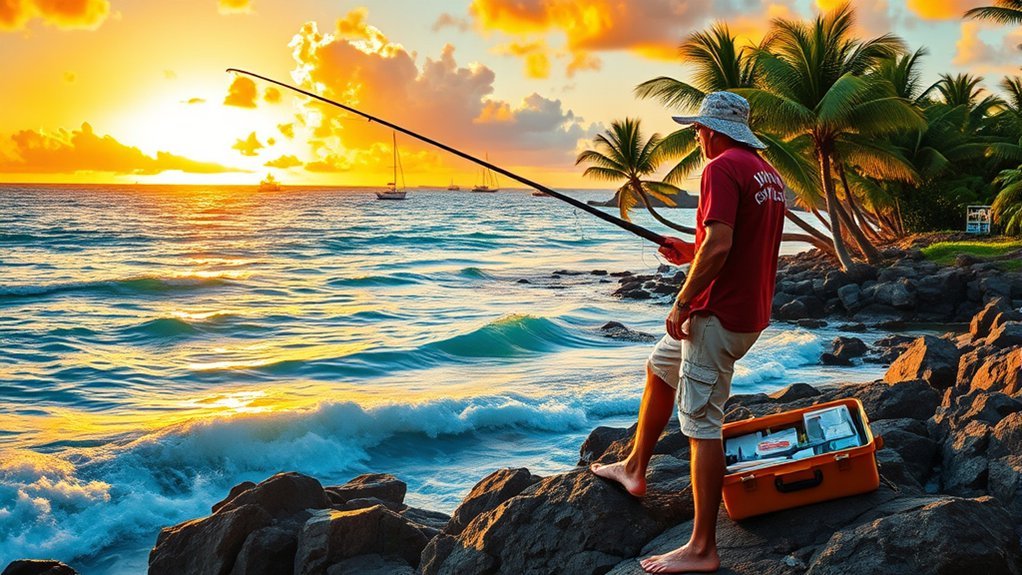
As you prepare for your fishing adventure in Hawaii, it’s important to be aware of the special fishing licenses, permits, and registrations required for different activities.
If you plan on fishing in lakes and reservoirs, you’ll need a Freshwater License, which costs $6 for residents and $26 for non-residents annually. Short-term non-resident freshwater licenses may also be available for visitors.
For those looking to target the Deep 7 bottom fish species, a special Bottomfish Fishing Vessel Registration is necessary. This requirement is tied to vessel-based fishing for specific bottomfish species rather than ordinary shore fishing.
Additionally, if you’re heading to the Wahiawa Public Fishing Area, don’t forget to grab your free permit to fish, which you can obtain online or in person.
Remember, anglers below the age of 9 can fish freshwater without a license when accompanied by a licensed adult, making it a great opportunity for family outings.
Finally, if you’re a military member, take advantage of lower resident license rates when eligible, even though Hawaii doesn’t offer lifetime fishing licenses. You’ll need to renew annually when you continue fishing in licensed areas.
Warning: A fishing license does not override area closures, size limits, bag limits, gear rules, protected species rules, or vessel registration requirements. Check the rules for the exact fishery before keeping any catch.
[Amazon Products Picked for You]

FISHING LICENSE HOLDER W/ZIP CLOSURE

Made of high-grade extremely durable, rust-free plastic 2-Hole frame. Use your existing screws from your plates. License plate is secured in the frame with its all-around groove that fits over your plate.

Material :High-Quality Metal Aluminum With High Gloss Stamped Metal License Plate.Lightweight, Waterproof,Anti-Rust And Very Durable.
Where Can I Buy a Hawaii Fishing License?

Wondering where to snag your Hawaii fishing license? You’ve got several convenient options to choose from, whether you prefer buying online or in person.
- Hawaii.gov portal: Purchase your fishing license online for ease and speed.
- Authorized agents: Visit local retailers, including Walmart, and other authorized agents across the islands like Kauai and Oahu.
- Wahiawa Public Fishing Area: Get a free permit either online or in person at authorized agents.
Before you head out, make certain to check for authorized vendors in your area to guarantee you’re purchasing the right fishing license or permit.
Be sure to verify authorized vendors in your area to ensure you obtain the correct fishing license or permit.
Whether you prefer the simplicity of online shopping or the personal touch of in-store assistance, Hawaii makes it easy for you to get your fishing license.
Don’t forget, if you’re planning to fish in the Wahiawa area, you can score a free permit, so take advantage of that opportunity.
Frequently Asked Questions
How much is a Hawaii fishing license?
A Hawaii fishing license varies by type and residency. Resident freshwater licenses cost less than non-resident licenses, while non-resident saltwater licenses have separate daily, weekly, and annual fees. Before heading out, check whether you are fishing freshwater or saltwater and whether you need an extra permit for the area.
What types of fishing require a license in Hawaii?
In Hawaii, freshwater fishing in lakes and reservoirs generally requires a Freshwater Game Fishing License for anglers over age 9. Non-residents aged 15 and older also need a saltwater fishing license for recreational ocean fishing. Commercial fishing, bottomfish vessel activity, and certain public fishing areas may have additional requirements.
Are there fishing license discounts in Hawaii?
Hawaii residents pay lower freshwater license rates than non-residents. Seniors also receive a reduced resident freshwater license fee, and active duty military personnel may qualify for resident license pricing. Youth rules also make fishing easier for young children when they are accompanied by a properly licensed adult.
Are fishing licenses cheaper at Walmart?
Walmart fishing licenses are not usually cheaper than other authorized license agents because license fees are set by the state. The benefit is convenience. You can often buy a license and fishing gear in one stop while staying compliant with Hawaii fishing regulations.
Do Hawaii residents need a saltwater fishing license?
Hawaii residents are generally exempt from the recreational saltwater fishing license requirement. That exemption does not remove other fishing rules, such as species limits, gear restrictions, protected-area rules, or freshwater license requirements.
Do kids need a fishing license in Hawaii?
For freshwater fishing, children under 9 can fish without a license when they are accompanied by a licensed adult. Minors aged 9 to 15 need a freshwater license. For saltwater fishing, non-residents aged 15 and older need a license, while residents are generally exempt.
Conclusion
In summary, understanding Hawaii fishing license prices comes down to three simple questions: where are you fishing, are you a resident, and how old are you? Residents pay low freshwater license fees and usually do not need a recreational saltwater license. Non-residents pay more and need a saltwater license once they reach age 15.
Before you fish, double-check whether your location requires a freshwater license, saltwater license, free entry permit, or special vessel registration. Once you have the right license in hand, you can focus less on paperwork and more on enjoying Hawaii’s shorelines, lakes, reservoirs, and unforgettable fishing views.