Last updated: September 11, 2026
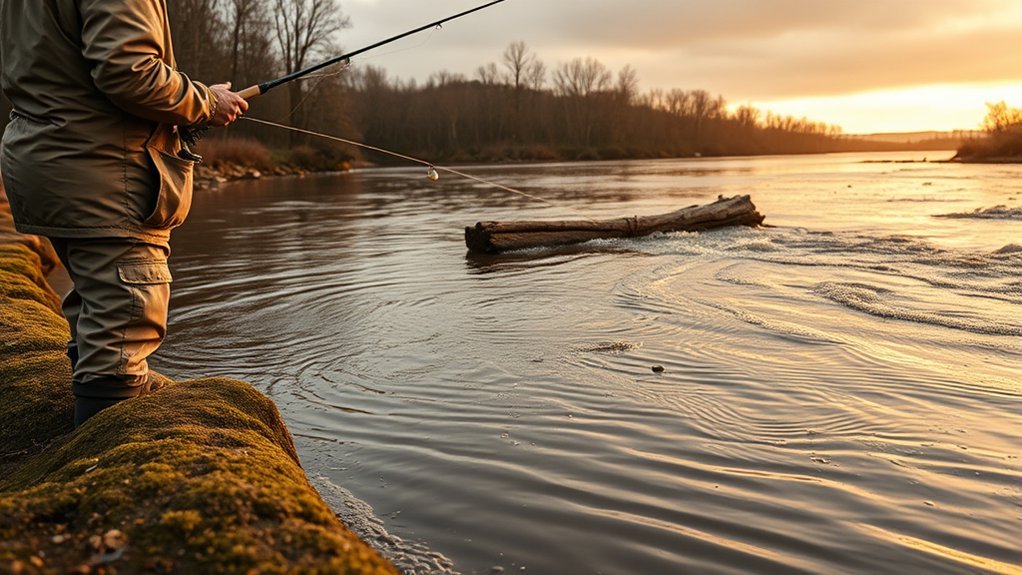
Muddy water shortens a bass’s visual range, but it does not stop bass from feeding. To catch bass in muddy water, make your lure easier to locate: fish close to cover, use vibration or water displacement, choose a bright or dark high-contrast color, and adjust retrieve speed to water temperature and fish activity. After heavy rain, also check shallow flooded cover, current seams, and the boundary between muddy and cleaner water before committing to one area.
Quick Answer
To catch bass in muddy water, start with a Colorado-blade spinnerbait, vibrating jig, squarebill crankbait, or dark jig. Put the lure close to shallow cover or a clean-to-dirty water edge. Use chartreuse, white, black, or black-and-blue as starting colors, then adjust your retrieve: slower in cold or inactive conditions and steadier or faster when warm, rising water has bass feeding aggressively.
Key Takeaways
- Target shallow cover, isolated objects, current seams, and dirty-to-clean water transitions.
- Use vibration, water displacement, rattles, or lure deflection to make the bait easier to locate.
- Start with bright or opaque colors such as chartreuse and white, or dark silhouettes such as black and black-and-blue.
- Do not automatically fish slowly; match retrieve speed to water temperature and bass activity.
Muddy Water Bass Fishing at a Glance
| Condition | Where to Start | Lure | Retrieve |
|---|---|---|---|
| Warm, rising muddy water | Flooded bushes, grass, shallow wood, inflows | Spinnerbait, vibrating jig, squarebill | Steady to moderately fast; contact cover |
| Cold muddy water | Protected cover, cleaner pockets, depth nearby | Jig, Texas rig, slow-rolled spinnerbait | Slow and deliberate |
| Bass chasing around shallow cover | Laydowns, riprap, docks, grass edges | Squarebill, spinnerbait, vibrating jig | Keep the bait moving and deflect it off cover |
| Fish located but not chasing | Individual stumps, bushes, dock posts, rock targets | Jig or Texas-rigged soft plastic | Pitch precisely, pause, and work the target slowly |
Where Should You Fish for Bass After Heavy Rain?
Start by reading what the rain changed. Muddy water alone does not tell you whether the bite will improve or decline. Water temperature, water level, current, and how quickly the lake changed all matter.
Warm, rising water can move bass into newly flooded shallow cover and create an aggressive bite. A sudden influx of colder muddy water can be much tougher. In that situation, check protected pockets, cleaner water nearby, and cover with access to slightly deeper water before assuming every muddy bank will hold active fish.
Also look for a clarity transition. Current seams, creek mouths, vegetation, protected coves, and the edge where darker water meets clearer water can concentrate fish or give bass a better feeding environment. Iowa Department of Natural Resources guidance specifically recommends looking for current seams or darker water that meets clear water when locating largemouth bass.
Safety note: After major rain, watch for stronger current, floating timber, unstable banks, submerged hazards, and unsafe boat ramps. Fishing conditions are never worth taking unnecessary flood-water risks.
[Amazon Products Picked for You]

Country Of Origin: Guatemala

Item Package Dimensions: 13.97 L X 10.668 W X 3.555 H (Cm)

LOW LIGHT SPINNERBAIT: The Strike King Rattlin’ Midnight Special Spinnerbait bass fishing lure covers all the low-light bases for bass fishing after dark and on overcast days. Each pack includes 1 lure only
Fish Tight to Cover
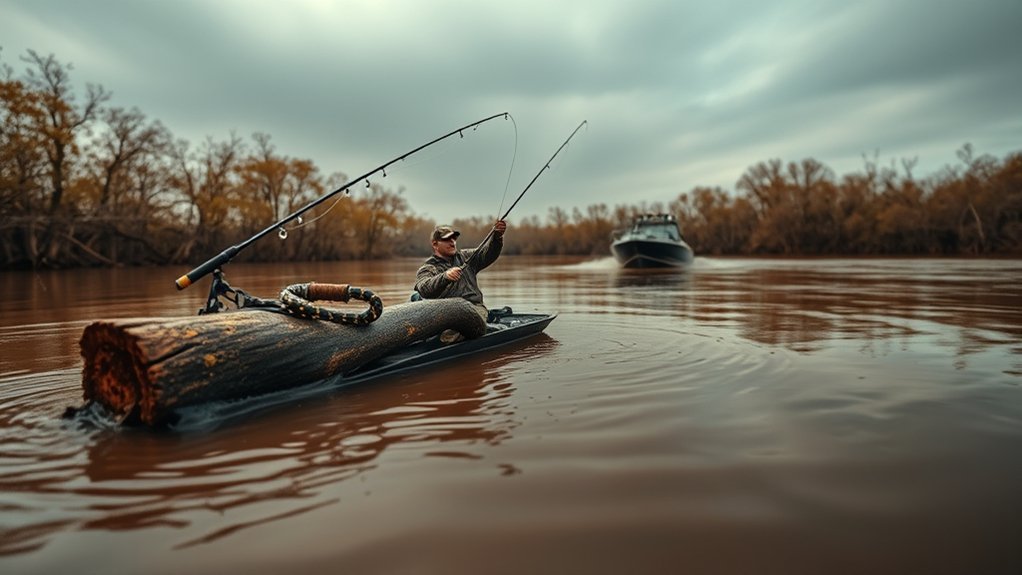
Bass often position close to physical cover when visibility drops. Start with laydowns, stumps, dock posts, rocks, flooded bushes, grass clumps, and other isolated targets. Instead of making long casts through empty water, put the lure beside or into the cover where a bass can detect it at short range.
In low visibility, a bass can use its lateral line to detect nearby water movement and vibration. That makes lure displacement and precise placement especially useful. A spinnerbait blade, vibrating jig, wobbling crankbait, or bulky jig trailer gives the fish more information than a small, subtle bait moving through open water.
Work current breaks and edges as well as obvious cover. If one shoreline is chocolate brown but a protected pocket or vegetation edge has slightly cleaner water, fish the transition instead of treating the entire lake as one uniform condition.
Pitch, flip, or make repeated contact casts to high-percentage targets. Change your angle or depth before abandoning a good piece of cover. One stump, laydown, grass clump, or dock corner can hold the fish even when nearby water looks identical.
[Amazon Products Picked for You]
Versatile lure that catches bass whether they're feeding or not

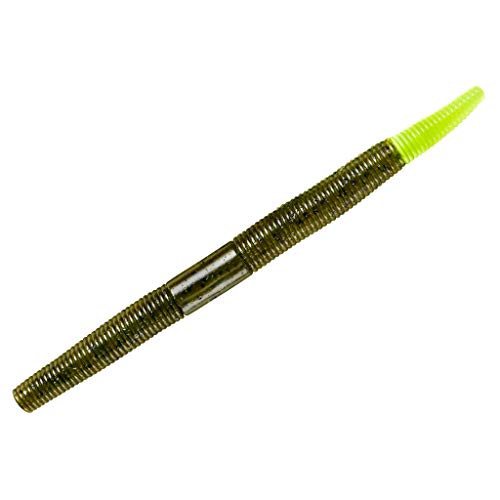
GREAT FISHING BAIT - The 5" Senko is a staple in the fishing world; The original soft-plastic stickbait is the #1 choice of anglers everywhere; The Senko has spawned thousands of imposters, but nothing beats the original soft stick bait

OUTSTANDING FISHING BAIT - The Zako fishing swimbait, designed exclusively for Yamamoto by B.A.S.S. Elite Series Pro Brett Hite, as his go-to chatterbait and jig trailer; the tight action of the tail perfectly mimics a bluegill
Make Some Noise With Your Baits
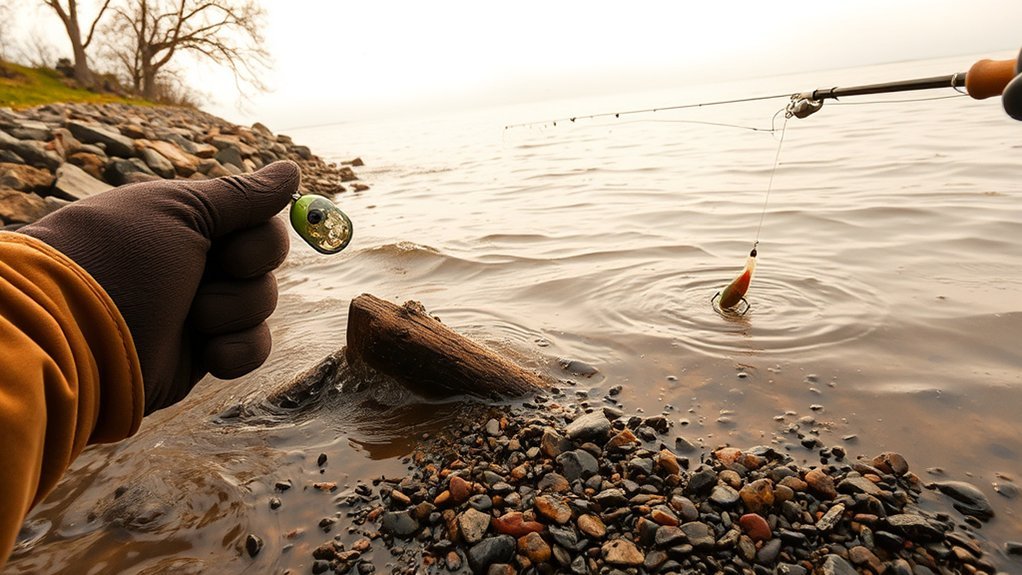
Muddy water reduces the distance at which bass can visually track a lure, so give them another way to locate it. Rattling crankbaits add sound, while Colorado-blade spinnerbaits, vibrating jigs, bulky plastics, and crankbaits that deflect off cover create strong water movement.
The distinction matters: a rattle creates an audible signal, while blade rotation, lure wobble, trailer movement, and contact with wood or rock create vibration and water displacement. You do not need maximum noise on every cast. You need a signal strong enough for the conditions.
Pro tip: Start with a lure that produces steady vibration, such as a Colorado-blade spinnerbait or vibrating jig. If fish follow, bump, or short-strike it without committing, change one variable at a time: speed, pause length, lure size, or sound.
Iowa Department of Natural Resources guidance recommends brighter lures and larger blades in stained or turbid water and notes that vibration and noise become increasingly important as turbidity rises. That supports using vibration as a starting strategy, but fish activity should still determine how aggressive your presentation becomes.
Choose Colors That Stand Out
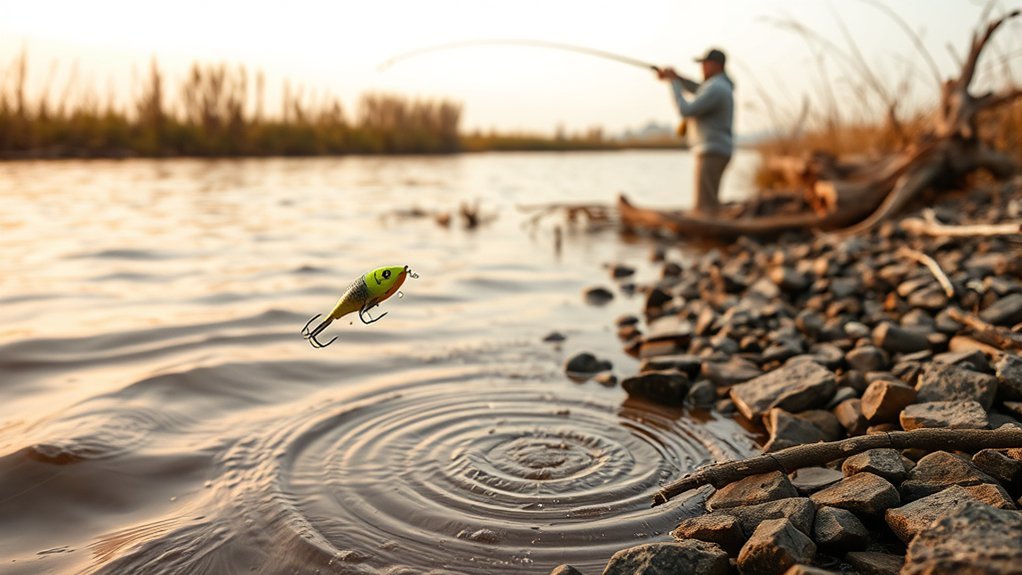
Choose color for contrast rather than trying to match subtle forage details that a bass may not see clearly. Bright or opaque colors such as chartreuse, white, and orange are useful starting points for moving baits. Black, black-and-blue, and other dark colors create a strong silhouette for jigs and slower presentations.
Bright and dark choices work for different reasons, so carry both. For example, try chartreuse-and-white on a spinnerbait or crankbait, then compare it with a dark jig or soft plastic around the same type of cover. Avoid changing lure type, depth, speed, and color all at once or you will not know which adjustment helped.
A two-tone pattern such as chartreuse with a dark back can combine a visible accent with a defined profile. The best choice still depends on available light, depth, sediment color, and the fish’s response that day.
Note: Treat color as a starting point, not a fixed muddy-water rule. Test one bright or opaque option and one dark silhouette at the depth you are actually fishing, then let bites decide.
[Amazon Products Picked for You]

BERKLEY POWERBAIT POWER WORM SOFT PLASTIC CURLY TAIL WORM: As iconic of a soft plastic worm as it gets, the Berkley PowerBait Power Worm is a classic ribbon-tail / curly style worm that is time tested and proven to put fish in the boat.

PREMIUM CRAW: The Strike King Rage Baby Bug bass fishing lure is a soft plastic craw with a unique and exclusive Rage tail design. Each pack includes 9 lures

Versatile lure that catches bass whether they're feeding or not
Match Retrieval Speed to Conditions
There is no single correct retrieve speed for muddy water. Start with a steady retrieve that keeps the lure working correctly, then change speed according to water temperature and fish activity.
In cold muddy water, bass may be less willing to chase, so slow-roll a spinnerbait, crawl a jig, or keep a Texas rig close to a specific target longer. In warmer water, especially when the level is rising and bass are feeding around flooded cover, a steady moving bait can help you find active fish quickly.
If you get short strikes or bumps, do not automatically speed up or slow down. Try a brief pause, a cover deflection, a slightly different cadence, or a slower second pass. Change one variable at a time until you find a repeatable pattern.
Iowa DNR similarly recommends beginning with slower presentations during early-spring conditions and increasing retrieve speed when bass are feeding aggressively. Temperature and activity level are better guides than muddy water alone.
Best Lures and Rigging for Muddy Water
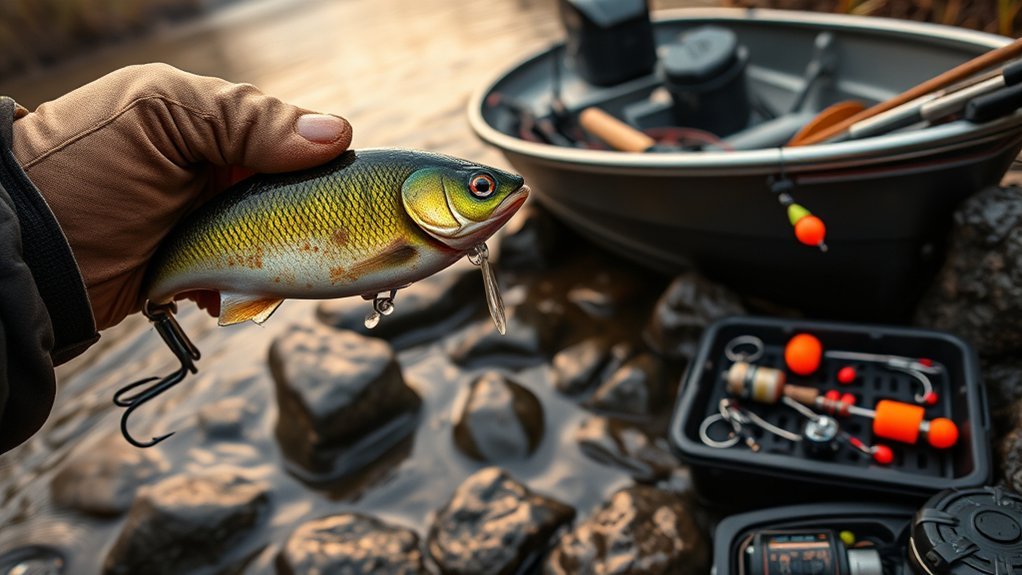
The best muddy-water lure is one that reaches the cover you are fishing and gives bass a clear signal through vibration, displacement, contrast, sound, or deflection. Start with these four categories rather than carrying an entirely different tackle box.
Colorado-Blade Spinnerbait
Use a spinnerbait when you want to cover shallow water while producing strong vibration. A large Colorado blade creates more thump than a narrow blade, making it a practical starting choice around flooded bushes, wood, riprap, and stained shorelines.
Squarebill Crankbait
A squarebill is useful around wood and rock because it can deflect off cover while maintaining a noticeable wobble. Make contact with the target when possible, then allow the lure to change direction or pause briefly before continuing the retrieve.
Vibrating Jig
A vibrating jig combines a moving-bait profile with continuous vibration and works well around shallow grass, flooded vegetation, and other cover where you can keep it moving without constant snagging. Use a contrasting skirt or trailer when visibility is especially poor.
Jig or Texas Rig
Switch to a jig or Texas-rigged soft plastic when you know where the fish are but moving baits stop producing. A bulky dark trailer creates a defined profile and water displacement, while precise pitching lets you keep the lure beside individual stumps, bushes, dock posts, or laydowns.
Rattles, beads, and other noise-making additions are optional tools rather than requirements. Add them when you need a stronger signal, but remove or reduce extra noise if fish are pressured or consistently refuse the presentation.
Treat Scent as a Secondary Tool
Scent can be an optional variable on soft plastics or jigs, but it should not replace good location, lure placement, vibration, or retrieve control. Bass still use multiple senses in muddy water, and reduced visibility does not mean their vision stops working.
Controlled feeding research on largemouth bass has found that some chemical attractants can influence feeding behavior. However, that does not prove that a commercial recreational lure scent will reliably increase catches in natural muddy-water conditions. If you use scent, treat it as a small test: apply it to one presentation while keeping your location, lure, and retrieve otherwise consistent.
Practical priority: First find bass, put the lure close enough for them to detect it, and create an appropriate vibration or profile. Test scent only after those fundamentals are covered.
Frequently Asked Questions
Why do black and blue lures work in muddy water?
Black and black-and-blue lures are useful because a dark, opaque bait can create a defined silhouette in low-visibility water. That does not make black-and-blue automatically best in every muddy lake. Compare it with a bright option such as chartreuse or white and let the fish determine which contrast works better under the current light, depth, and water color.
How does muddy water affect bass behavior?
Muddy water reduces visual range and can reduce the efficiency of sight-based feeding. Bass often become easier to target around shallow cover, isolated objects, current seams, or clarity transitions because those features give them defined places to position and ambush prey. The exact response also depends on temperature, water level, current, and how quickly the water became muddy.
Do I need to fish slower in muddy water?
No. Slow down when the water is cold, fish are inactive, or bass are holding tightly to individual targets. In warm or rising muddy water, active bass may respond well to a steady spinnerbait, vibrating jig, or crankbait. Start with a controlled retrieve and adjust according to actual strikes and follows.
What is the best lure for bass in muddy water?
A Colorado-blade spinnerbait is one of the best starting lures because it combines vibration, profile, and the ability to fish shallow cover efficiently. Squarebill crankbaits and vibrating jigs are strong moving-bait alternatives, while a dark jig or Texas rig is better when bass are holding tightly to a specific target and will not chase.
Do bass bite after heavy rain?
Yes, bass can bite after heavy rain, but the quality of the bite depends on what the storm changed. Warm, rising water can move fish shallow into newly flooded cover, while a sudden cold, muddy inflow can make fishing more difficult. Check water temperature, level, current, shallow cover, and nearby cleaner water instead of judging the bite from water color alone.
Where do bass go when the water turns muddy?
Start around shallow cover such as wood, grass, rock, dock posts, and flooded bushes, then check current seams and places where muddy water meets clearer water. Bass do not all move to one fixed depth, so use cover, light penetration, water temperature, and nearby depth changes to narrow the search.
Conclusion
Muddy water is a condition to read, not a reason to cancel the trip. Start by checking temperature, water level, cover, current, and clarity transitions. Then choose a lure that produces a strong, trackable signal: a Colorado-blade spinnerbait, vibrating jig, squarebill, jig, or Texas rig. Use bright or dark contrast, put the bait close to the fish, and change retrieve speed according to activity rather than following a one-speed rule. Once you find a combination of location, lure signal, and cadence that produces a bite, repeat that pattern on similar cover.