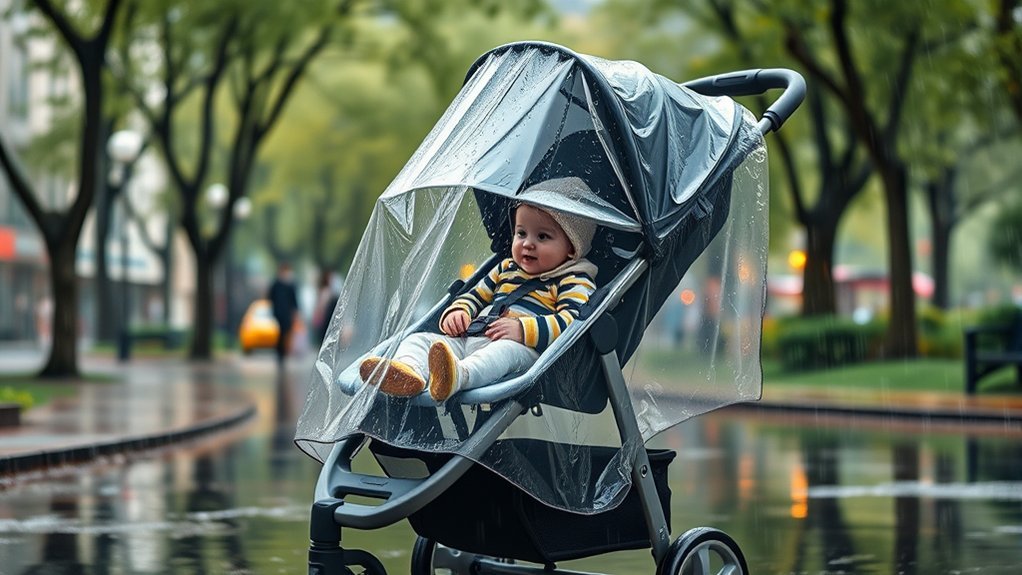
A stroller rain cover helps protect your child when rain, wind, snow, or sudden weather changes make outdoor trips harder. Most covers use clear, flexible material so you can still see your child, while fitted edges help block moisture from reaching the stroller seat. A good cover can make errands, walks, and travel more comfortable, but it must be used correctly. Proper fit, airflow, safe materials, and close supervision matter because a poorly fitted or poorly ventilated cover can trap heat, limit airflow, or make your child uncomfortable.
Quick Answer
A stroller rain cover is a clear protective cover that fits over a stroller to help shield your child from rain, wind, snow, insects, and some outdoor debris. Choose one with ventilation, a secure fit, and child-safe materials, then check your child often during use.
Key Takeaways
- A stroller rain cover helps keep your child dry and more comfortable during wet or windy outings.
- Ventilation is essential because enclosed covers can trap heat and reduce airflow.
- A secure fit prevents gaps, flapping, slipping, and stroller interference.
- Use rain covers for weather protection, not as a long-term enclosed space.
- Always monitor your child for overheating, fussiness, fogging, or breathing discomfort.
At a Glance
| Best For | Rainy walks, windy errands, light snow, travel days, and sudden weather changes |
| Key Features | Clear viewing panel, ventilation openings, secure fastening, water-resistant or waterproof material |
| Main Safety Check | Confirm airflow, avoid overheating, and check your child often while the cover is installed |
| Fit | Universal covers may fit many strollers, but stroller-specific covers usually offer better coverage |
Understanding the Purpose of Stroller Rain Covers
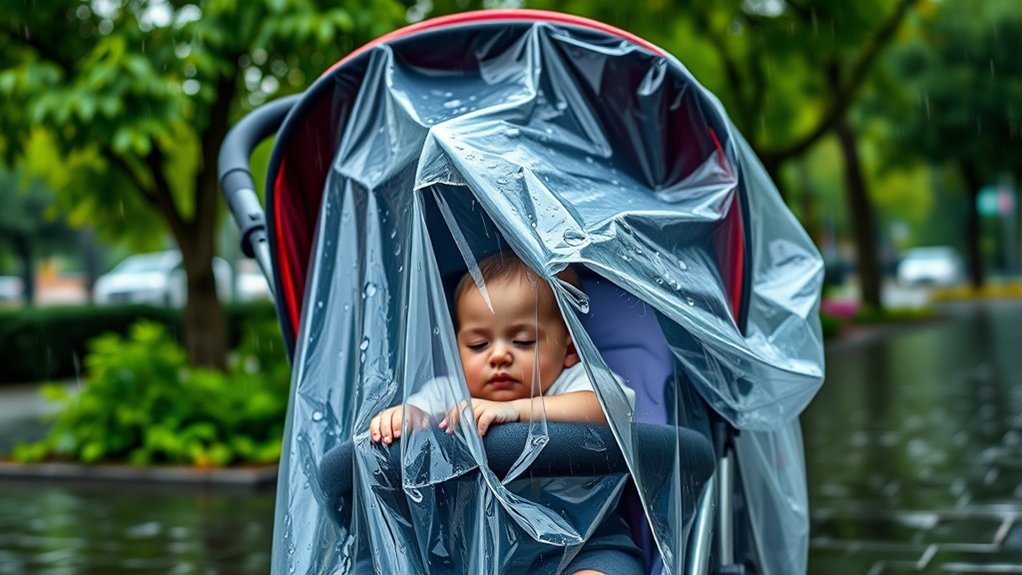
When you venture outdoors with your child, a stroller rain cover serves as an essential safeguard against unpredictable weather. These stroller accessories are designed to shield your little one from adverse conditions like rain, wind, and snow, helping create a more comfortable ride. Most covers use transparent plastic or clear flexible material, so you can maintain visibility and monitor your child while adding weather protection.
A rain cover also helps protect the stroller itself. By keeping the seat, straps, canopy, and basket drier, it can reduce moisture buildup and make cleanup easier after a wet outing. Some parents also use rain covers during travel because they help block splashes, wind gusts, and outdoor debris around busy sidewalks, parking lots, and public transit stops.
Many rain covers come equipped with ventilation openings or mesh panels, promoting airflow and reducing the risk of overheating. They may also act as a barrier against insects and offer UV protection when the product is specifically designed and labeled for that purpose. Additionally, a properly fitted rain cover helps keep the stroller dry, extending its lifespan and maintaining its functionality. By investing in this practical accessory, you’re ensuring a more enjoyable and worry-free experience for both you and your child during your outdoor adventures.
Warning: Never treat a rain cover as a sealed enclosure. Your child still needs steady airflow, frequent checks, and a comfortable temperature while the cover is in place.
Benefits of Using a Stroller Rain Cover
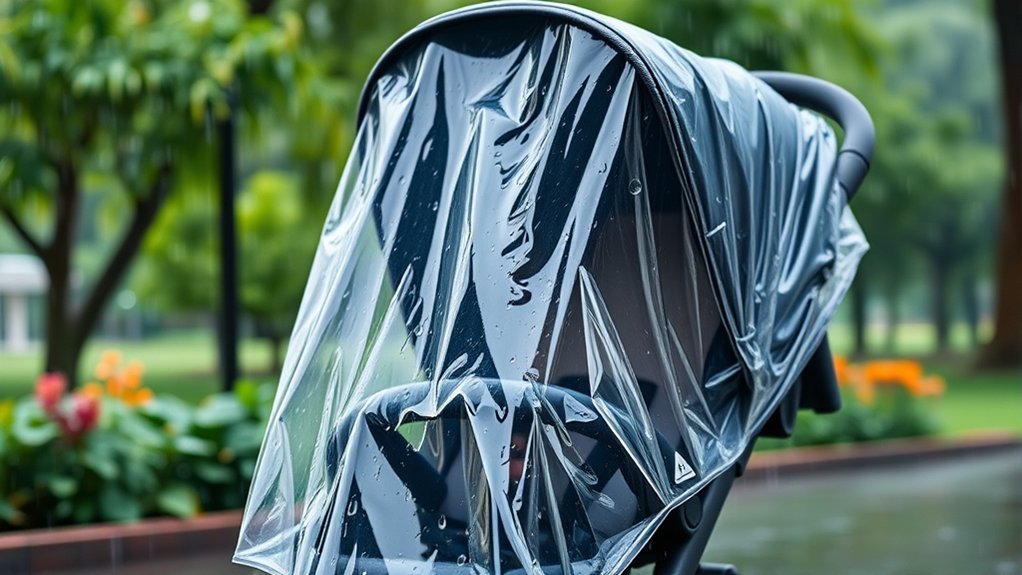
Stroller rain covers offer numerous benefits that enhance both safety and comfort for your child during outdoor outings. These covers provide essential weather protection, ensuring your little one stays dry and cozy in various conditions.
- Shields against rain, wind, and snow for a comfortable ride
- Acts as a barrier against pesky insects during summer outings
- Creates a snug environment that encourages napping and reduces distractions
- Provides UV protection for versatile use on sunny days when the product is labeled for UV blocking
- Helps keep the stroller seat, harness, and storage basket drier during wet errands
- Reduces exposure to splashes from puddles, sidewalks, and passing traffic
A rain cover can also give you more flexibility. Instead of canceling a short walk or rushing through errands, you can continue your outing with better protection. This is especially useful for school drop-offs, doctor visits, grocery trips, airport travel, and walks where shelter may not be nearby.
For babies and toddlers who dislike wind or light rain on their face, the cover may create a calmer ride. The clear panel lets them see out while blocking some of the uncomfortable weather around them. Still, comfort depends on temperature, airflow, and how long the cover stays on.
Types of Stroller Rain Covers
Stroller rain covers come in different styles, and the best choice depends on your stroller design and how often you use it. A stroller-specific cover usually fits the cleanest because it is shaped for a particular model. A universal cover may cost less and work with several stroller types, but it can leave gaps if the fit is loose.
- Universal rain covers: Designed to fit many standard strollers, though the fit can vary by handlebar, canopy, and seat shape.
- Stroller-specific covers: Made for one stroller brand or model, often giving better coverage and fewer loose areas.
- Jogging stroller covers: Usually larger and shaped for three-wheel strollers with bigger front canopies.
- Double stroller covers: Built for side-by-side or tandem strollers, with wider coverage and more attachment points.
- Travel stroller covers: Lightweight and compact, making them easier to fold into a diaper bag or stroller basket.
If you use a stroller with a bassinet, car seat adapter, or toddler seat, check whether the cover fits that exact setup. Some covers work only with the standard stroller seat and may not protect a car seat or carrycot correctly.
[Amazon Products Picked for You]

PREMIUM QUALITY: Boasting a food-grade EVA material and frosted PVC of half-clear part, IvyWind Stroller Rain Cover is odorless, soft and waterproof, ensuring both comfort and security; Utilize an enhanced 0.2mm thick EVA, offering unparalleled durability

ULTIMATE PROTECTION - Our high-quality stroller rain cover is designed to provide ultimate protection for your baby. Made with safe and resilient materials, including food-grade EVA, it shields your little one from rain, wind, snow, cold, and dust.
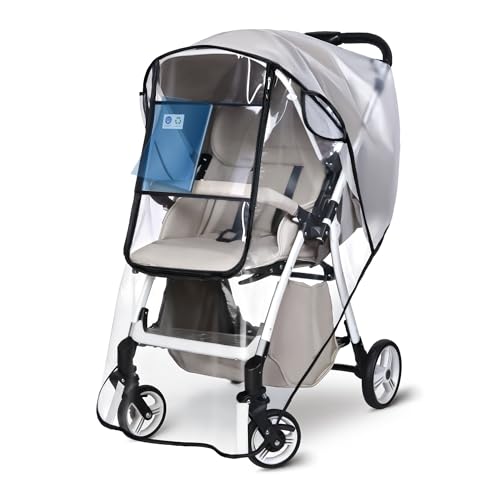
[Maximize Brightness and Clarity] Visually it is made of completely visible And special materials make it not easy to wrinkle, which maximizes brightness and clarity indoors or outdoors
What to Look for Before Buying One
The right stroller rain cover should protect your child without making the stroller harder or less safe to use. Focus on fit, airflow, materials, visibility, and easy access before you buy.
- Ventilation: Look for side vents, mesh panels, or airflow openings that do not sit directly against your child’s face.
- Secure attachment: Elastic edges, snaps, hook-and-loop straps, or ties help keep the cover from slipping or blowing loose.
- Clear visibility: A transparent front panel lets you see your child and lets your child look outside.
- Easy access: A front zipper or flap makes it easier to reach your child without removing the entire cover.
- Safe materials: Choose covers labeled non-toxic and free from strong chemical odors.
- Storage: A foldable design or storage pouch helps you carry the cover when the weather changes.
- Weather rating: Waterproof covers handle heavier rain better than water-resistant covers.
Pro Tip: Test the cover at home before your first rainy outing. Install it, open and close the access flap, fold the stroller if needed, and check whether the cover blocks brakes, wheels, or the handlebar.
[Amazon Products Picked for You]

Solves the Leakage Problem: Designed with a protected zipper track to prevent rain from seeping in, addressing the common issue of babies getting wet in traditional covers. The 0.2mm thick food-grade EVA material is odorless and durable, ensuring a dry and safe environment for your child during sudden downpours

MATERAL:The stroller rain cover are both made with high-quality materials for proper resilience,safe to child.Food Grade Materia EVA, safe to child. The plastic material is very smooth and soft to touch. Universal Stroller Rain Cover is a must-have item for parents to travel with their babies and give them the best care in a safe environment.

Seamless & Full Protection ·-· Our stroller rain cover is made of high-durability food-grade EVA material, thickened and tear-resistant, with seamless one-piece construction, providing complete protection against rain, wind, snow, and dust, giving your baby a 360° dry and comfortable space.
Safety Considerations for Rain Covers
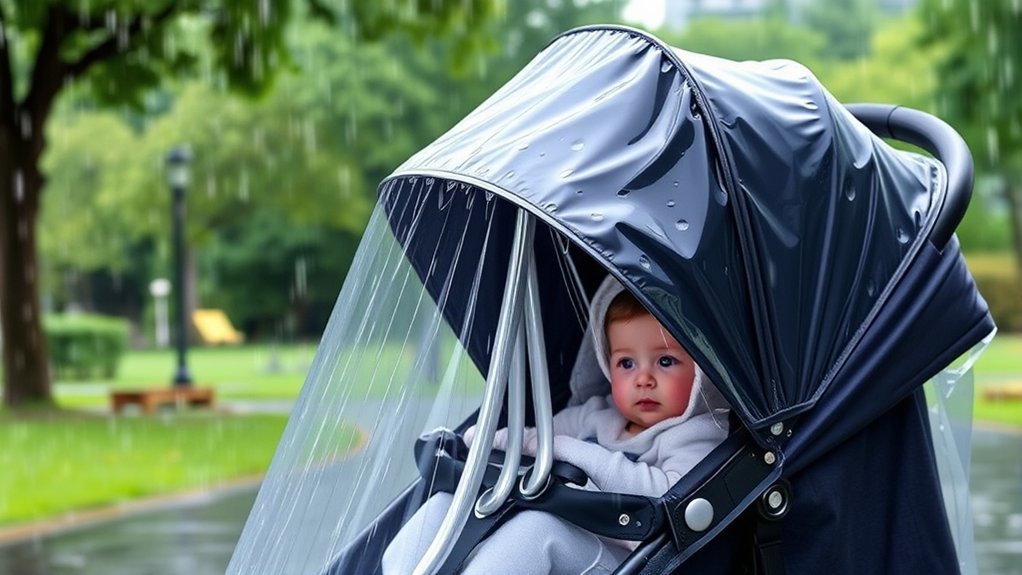
Safety is a top priority when using a rain cover for your child’s stroller. Verify the rain cover has proper ventilation features, like air circulation openings or mesh panels, to prevent overheating. A well-ventilated cover keeps your child more comfortable and safer during wet weather.
Material safety is also essential; choose rain covers made from non-toxic, BPA-free materials to reduce unwanted chemical exposure. Additionally, confirm the cover fits securely on the stroller to reduce slipping, loose fabric, and suffocation risks while providing adequate protection against the elements.
Regularly inspect the rain cover for any signs of wear and tear, as damaged covers can compromise safety. Look for cracked plastic, torn seams, broken zippers, missing fasteners, stretched elastic, or cloudy areas that limit visibility. Finally, always monitor your child for signs of discomfort or distress while using the rain cover, safeguarding their well-being. By following these guidelines, you can confidently use a stroller rain cover to protect your child from the rain without sacrificing safety.
Watch for sweating, flushed skin, unusual fussiness, fogging inside the cover, or your child trying to pull the cover away. These signs can mean the stroller is getting too warm or stuffy. Remove the cover when you enter a warm indoor space, car, bus, train, or sheltered area.
A rain cover should block weather, not airflow. The safest setup lets you see your child clearly and lets fresh air move through the stroller.
Practical Tips for Using Stroller Rain Covers
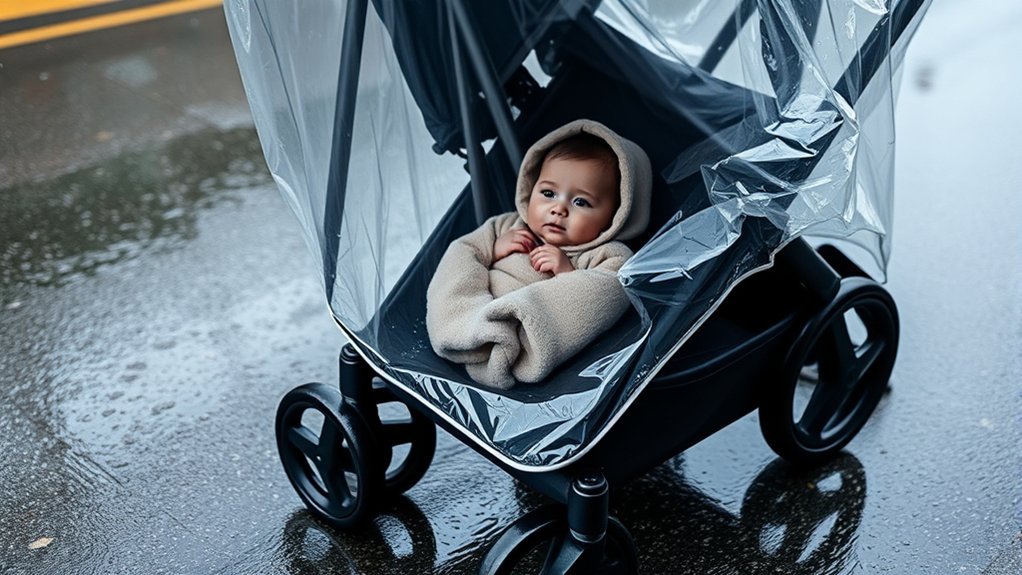
Using a rain cover effectively can enhance your child’s comfort and protection during inclement weather. Here are some practical tips to guarantee you get the most out of your stroller rain cover:
Using a rain cover can significantly improve your child’s comfort and safety in bad weather conditions.
- Choose breathable rain cover materials with mesh panels or air circulation openings to prevent overheating.
- Follow installation tips closely, guaranteeing the cover fits your stroller model for maximum protection against rain, wind, and snow.
- Inspect the cover regularly for wear and tear to avoid safety risks, like suffocation hazards.
- Monitor your child closely during use, especially if it’s prolonged, to guarantee they stay comfortable and safe.
- Remove the cover once you are indoors or under reliable shelter.
- Dry the cover before folding it away to help prevent mildew, odor, and cloudy plastic.
- Avoid letting loose cover material touch your child’s face, hands, or mouth.
Install the cover before the rain becomes heavy whenever possible. This keeps the stroller seat drier and prevents you from rushing the fit. If the cover uses straps or fasteners, secure them evenly so the cover does not pull to one side.
After each wet outing, shake off excess water, wipe the cover with a soft cloth, and leave it open to air dry. Do not store it damp in a tight pouch for long periods. Moisture trapped inside folded plastic can create odor and make the material look cloudy over time.
Note: A stroller rain cover should not replace warm clothing in cold weather. Dress your child for the temperature first, then use the cover as an outer weather barrier.
Common Mistakes to Avoid
Even a good rain cover can perform poorly when it is used the wrong way. Avoid these common mistakes to keep your child more comfortable and better protected.
- Using the cover in hot weather for too long: Clear plastic can trap warmth, especially in direct sun or humid conditions.
- Buying the wrong size: A loose cover can flap in the wind, while a tight cover may block airflow or stroller features.
- Blocking vents: Blankets, bags, or stroller accessories can cover mesh panels and reduce airflow.
- Leaving the cover on indoors: Remove it in shops, elevators, cars, buses, and other warm enclosed spaces.
- Ignoring stroller access: Make sure you can still reach the brake, handlebar, harness, and child quickly.
- Storing it wet: Damp storage can lead to odor, mildew, and material breakdown.
The biggest mistake is assuming the cover is safe simply because it fits. Fit matters, but airflow and supervision matter just as much. If your child seems uncomfortable, remove the cover and reassess the conditions.
Alternatives to Stroller Rain Covers
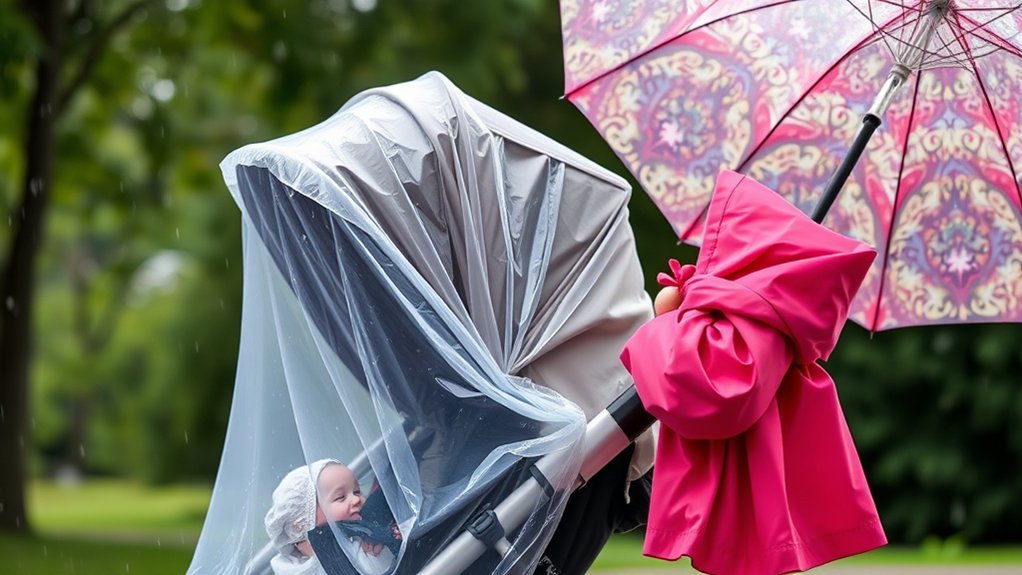
When the weather turns wet, you have several alternatives to contemplate that can keep your child dry and comfortable without relying solely on stroller rain covers. One effective choice is using poncho options for your child, which provide immediate protection while allowing for mobility. Umbrella usage can also be practical, offering coverage for both your child and the stroller, though it requires careful handling in windy conditions.
Additionally, seeking undercover spaces like awnings or indoor areas can shield your little one from heavy rain without needing a rain cover. Lightweight waterproof blankets or tarps serve as makeshift covers for short-term use, adding versatility to your rainy day outings. It’s wise to carry extra rain gear, such as rain jackets or hats, for unexpected weather changes, ensuring your child remains comfortable while exploring the outdoors.
You can also use the stroller canopy, a parent-held umbrella, or a weather-resistant footmuff depending on the season. However, avoid placing loose blankets over the stroller in a way that blocks airflow or prevents you from seeing your child. Clear visibility and ventilation remain important with any weather-protection method.
[Amazon Products Picked for You]

Fit for Nuna & Universal Compatibility: Our stroller rain cover is tailored to fit Nuna strollers perfectly, making it an essential nuna stroller cover. It also works as a universal stroller rain cover, Compatible with Graco stroller and most standard single strollers. The edges ensure a secure, snug fit that stays in place.

High Quality Material: IvyWind Double Stroller Rain Cover is made of food grade 0.2mm thickened EVA material, odorless, soft and more durable

The Poco Child Carrier Raincover helps keep your little one dry on the trail, featuring clear windows for children to see their surroundings
Related Guides
Frequently Asked Questions
Can stroller rain covers fit all stroller types and sizes?
Stroller rain covers aren’t universally compatible. You’ll need to check the cover dimensions and your stroller’s specifications for a proper fit. A stroller-specific cover usually fits better, while a universal cover may work if it fully covers the seat without blocking brakes, wheels, vents, or access points.
How do I clean and maintain a stroller rain cover?
Clean your stroller rain cover by wiping it with a damp cloth and mild soap. Rinse away soap residue, then let it air dry fully before folding or storing it. Avoid harsh cleaners, high heat, and long storage in direct sunlight because they can damage clear plastic.
Are stroller rain covers waterproof or just water-resistant?
Some stroller rain covers are waterproof, while others are water-resistant. Waterproof covers offer stronger protection in steady rain. Water-resistant covers can handle light rain or drizzle but may leak during longer or heavier exposure. Always check the product label before buying.
Can I use a rain cover during sunny weather?
You can use a rain cover during sunny weather only if it is designed for that purpose and has good ventilation. Clear covers can trap heat in direct sun, so check your child often and remove the cover if the stroller feels warm or stuffy.
Where can I purchase a stroller rain cover?
You can purchase a stroller rain cover from online retailers, baby gear stores, department stores, and some stroller brands. Before buying, compare the cover size, stroller compatibility, ventilation style, access opening, and care instructions.
Can I leave a stroller rain cover on all day?
No. A stroller rain cover is best for short-term weather protection. Remove it when the rain stops, when you move indoors, or when your child seems warm, sweaty, or uncomfortable. Long use can trap heat and reduce airflow.
Should a stroller rain cover have vents?
Yes. Ventilation openings, mesh panels, or side vents help air move through the stroller. Avoid covers that fully seal the stroller without airflow, especially during warm, humid, or sunny weather.
Conclusion
In conclusion, a stroller rain cover is an invaluable accessory for modern parents maneuvering unpredictable weather. It not only keeps your child dry and comfortable but can also protect against wind, splashes, insects, and harmful UV rays when the cover is specifically designed for that purpose. By considering safety tips and practical usage, you can guarantee your little one enjoys outdoor adventures, rain or shine. Just as a knight shields themselves from the elements, you too can safeguard your child with this essential gear.
The best rain cover is not just the clearest or most waterproof option. It is the one that fits your stroller securely, allows steady airflow, gives you quick access to your child, and folds away easily when the weather clears. Use it with close supervision, remove it when conditions improve, and keep it clean and dry between outings.
