
Using a stroller in cold weather can still be a pleasant way to get fresh air, run errands, or take a short winter walk with your baby. The key is to plan for warmth, airflow, visibility, and traction before you leave. With smart layering, stroller-safe accessories, and regular temperature checks, you can help your baby stay warm and comfortable while you move through chilly conditions.
Quick Answer
To use a stroller in cold weather, dress your baby in breathable layers, cover their head, hands, and feet, and use a stroller footmuff or weather shield for wind protection. Check the back of your baby’s neck often, avoid overheating, choose cleared paths, and keep outings shorter when temperatures drop.
Key Takeaways
- Use thin, breathable layers instead of one bulky outfit so you can adjust warmth as the weather changes.
- A footmuff, weather shield, warm hat, mittens, and insulated booties can make winter stroller walks safer and more comfortable.
- Check your baby’s neck, chest, hands, and feet often. Sweating, flushed skin, fussiness, or cold extremities mean it is time to adjust layers.
- Stick to plowed sidewalks, maintained park paths, and short routes when snow, ice, or strong wind makes pushing harder.
- Clean salt and slush from the stroller after winter outings to protect wheels, frames, straps, and folding joints.
At a Glance
| Time Required | 5 to 10 minutes to dress and check the stroller before leaving |
| Difficulty | Easy, with extra attention to layering, wind protection, and surface conditions |
| Tools Needed | Layered clothing, hat, mittens, warm socks, booties, footmuff, weather shield, blanket, and stroller with good traction |
| Cost | Low to moderate, depending on whether you already own winter stroller accessories |
Importance of Layering for Baby’s Comfort
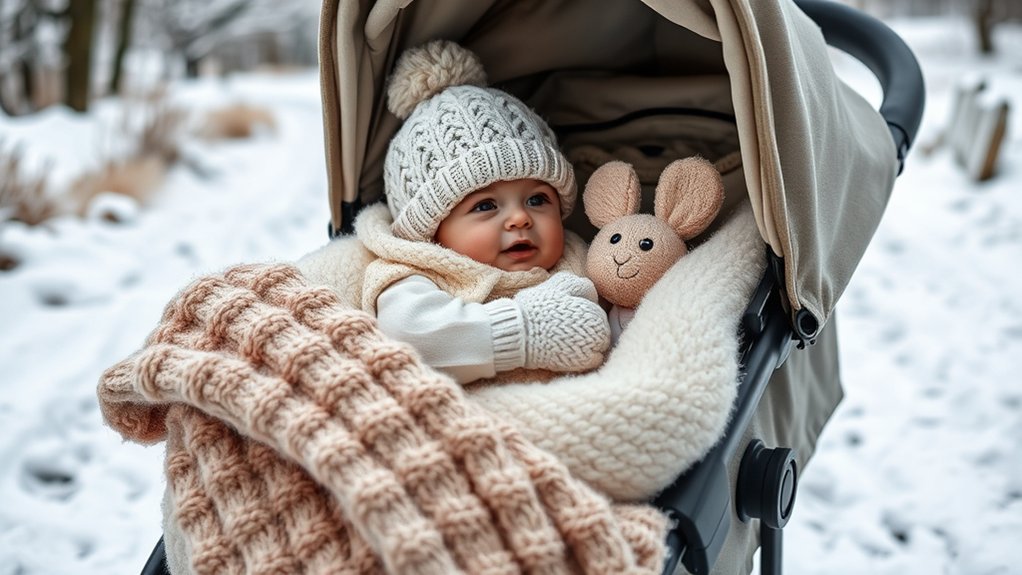
When you’re out in cold weather with your baby, layering is essential for keeping them comfortable and safe. Start with a moisture-wicking base layer, such as a thermal onesie or soft merino wool layer, to help keep your baby’s skin dry. This foundation helps regulate body temperature and reduces the chance of damp clothing making your baby colder.
Next, add a middle layer of fleece or insulated clothing. This layer traps warmth while still allowing some breathability. Finish with an outer layer that is windproof and water-resistant, such as a bunting suit, snowsuit, or winter jacket that works safely with your stroller harness.
Throughout your outing, regularly monitor your baby’s temperature by checking the back of their neck, chest, hands, and feet. Your baby should feel warm, not sweaty or clammy. Layering gives you the flexibility to remove or add clothing as conditions change, helping you enjoy winter stroller walks with more confidence.
Warning: Avoid bulky coats or thick snowsuits under a stroller harness if they stop the straps from fitting snugly. Buckle the harness close to your baby’s body, then add warmth over the top with a footmuff, blanket, or stroller cover.
Essential Winter Stroller Accessories
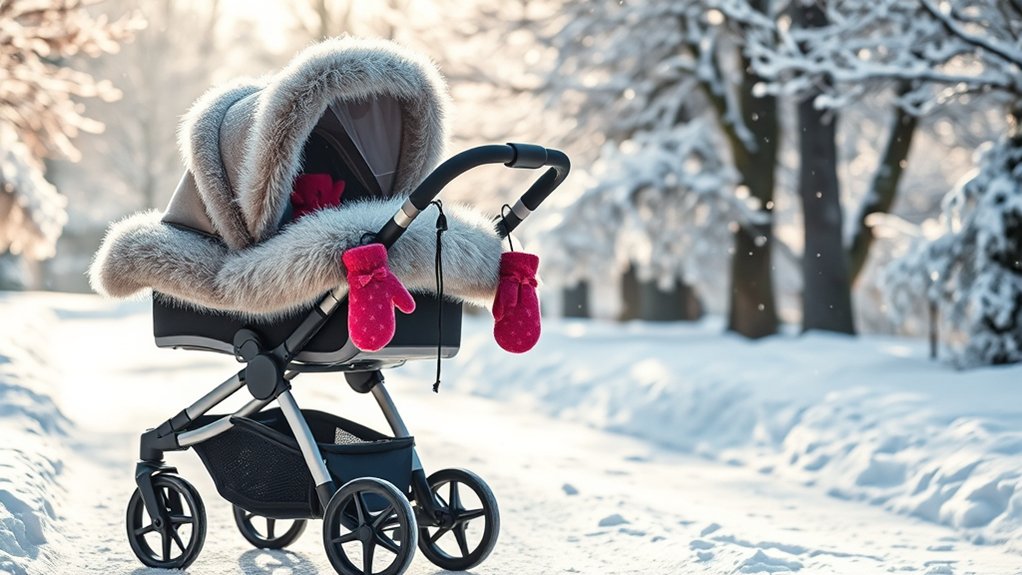
To keep your baby comfortable during winter outings, consider using a footmuff for extra warmth, as it provides a snug fit in the stroller. Weather shields can protect your little one from biting winds, cold drizzle, and light snow, creating a more pleasant ride. Don’t forget hand warmers or stroller gloves for yourself, especially if you plan to push the stroller for more than a few minutes.
The best winter stroller setup usually combines several small protections instead of relying on one heavy item. A warm hat, mittens, booties, footmuff, and ventilated weather shield work together to block wind while helping you avoid overheating.
Footmuffs for Extra Warmth
As temperatures drop, keeping your baby warm in the stroller becomes essential, and footmuffs serve as a critical accessory for this purpose. These cozy bunting bags offer insulation and feature openings for harness straps, helping you keep the harness secure while adding warmth. Here are four key points to reflect on when choosing a footmuff:
- Footmuff Materials: Look for fleece-lined or insulated options that provide comfort and warmth without feeling stiff.
- Footmuff Styles: Think about styles that can convert into winter liners by removing the front portion for versatility.
- Room for Movement: Make sure the footmuff allows enough room for your baby to move without being overly thick.
- Combination Use: Pair your footmuff with other winter accessories for enhanced protection against cold winds.
Choose a footmuff that matches your stroller model whenever possible. A secure fit reduces slipping, keeps the harness openings aligned, and prevents extra fabric from bunching near your baby’s face.
Weather Shields Protection
Weather shields are essential winter accessories that provide crucial protection against the elements, ensuring your baby stays warmer and drier during chilly outings. These covers block wind, rain, and snow while allowing for proper ventilation, creating a cozy environment. The clear, weather-resistant material maintains visibility without fully blocking your baby’s view.
For maximum weather shield benefits, follow these installation tips: make sure the shield fits snugly over the stroller and check for any gaps that might let in drafts. Many shields are easy to attach and remove, giving you quick access to your child. Pairing weather shields with footmuffs enhances insulation, offering even more comfort during those cold adventures. Always position the stroller away from harsh winds during breaks for added protection.
Note: A stroller weather shield should never seal the stroller completely. Your baby still needs fresh airflow, and you should be able to see their face clearly at all times.
Hand Warmers Convenience
Staying warm isn’t just about keeping your baby cozy; parents need to prioritize their own comfort too. Hand warmers are a fantastic solution for chilly outings, allowing you to enjoy your time outside without freezing fingers. Here are some tips for using hand warmers effectively:
- Choose hand warmer types: Opt for chemical or electric warmers based on your preferences.
- Strategic hand warmer placement: Keep them in stroller pockets or attach stroller mitts to the handle for instant warmth.
- Combine with other accessories: Use hand warmers alongside stroller gloves and footmuffs for maximum comfort.
- Regular use: Make hand warmers a part of your routine to enhance enjoyment during winter walks with your baby.
Stay cozy and enjoy the outdoors together, but keep loose hand warmers away from your baby’s skin and mouth. They are designed for adult use and can get too warm for a baby’s sensitive skin.
Keeping Baby’s Extremities Warm
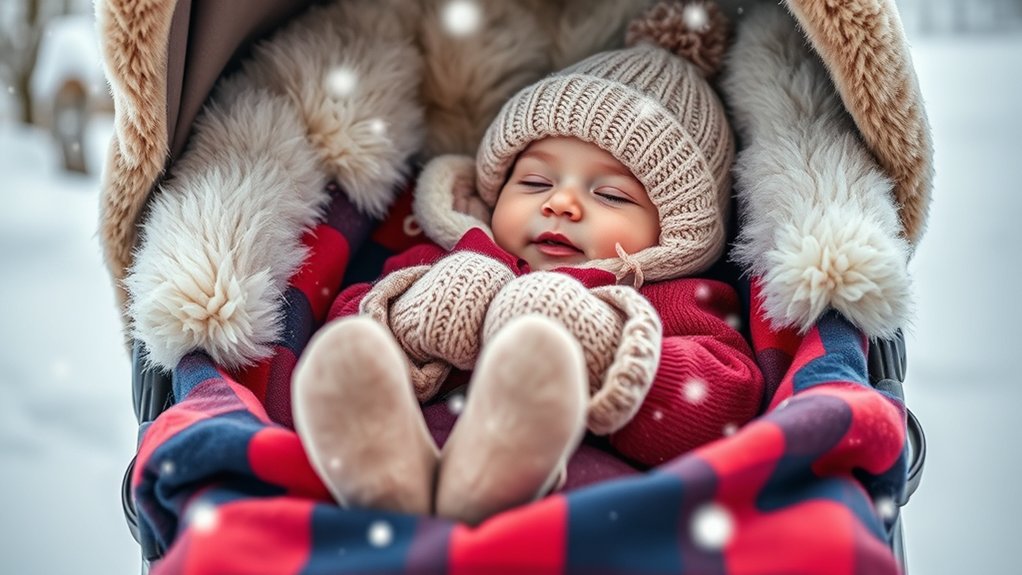
To keep your baby warm in cold weather, start with a snug-fitting hat that covers their ears, since exposed skin loses warmth quickly in wind and low temperatures. Pair it with mittens that have elastic cuffs to help them stay securely on. Don’t forget to layer thick socks under soft-soled booties for extra warmth on their tiny feet.
Hands and feet can feel cooler than the core, especially when your baby sits still in the stroller. Check them often, but use the back of the neck or chest as your main guide for overall warmth. If your baby’s body feels cold, head indoors or add a safe layer.
Essential Hat and Mittens
Keeping your baby warm during cold outings is essential, especially when it comes to their extremities. A well-chosen hat and mittens can make a significant difference in maintaining their comfort.
Here are some tips for selecting the right hat and mittens:
- Choose snug-fitting hats made from warm materials like wool or fleece that cover the ears to reduce heat loss.
- Opt for mittens over gloves; mittens keep fingers together, generating more warmth compared to separate compartments.
- Select mittens with elastic cuffs or adjustable closures to guarantee they stay securely on your baby’s hands.
- Regularly check your baby’s hands and feet for coldness and adjust their attire as needed to keep them cozy.
Bring a spare hat and extra mittens if you expect snow, drool, or damp weather. Wet accessories lose warmth quickly and can make your baby uncomfortable.
Layered Sock Strategies
When temperatures drop, ensuring your baby’s feet are warm is essential for their comfort during outings. Start with moisture-wicking sock materials as a base layer to help regulate temperature and prevent sweat buildup. For added warmth, consider using wool or fleece socks as a middle layer; these provide extra insulation without restricting movement.
Layer thick socks under soft-soled booties or waterproof shoes to keep those tiny feet insulated. Make sure to choose snug-fitting socks that won’t slip or bunch up, as this can create cold spots and discomfort. Regularly check your baby’s feet for warmth, and if you notice cold toes or fussiness, it might be time to adjust their layers for ideal comfort.
Cozy Booties Options
Finding the right cozy booties for your baby is essential for keeping their little feet warm during chilly outings. Here are some options to evaluate:
- Fleece Booties: Made from warm, insulating materials, they effectively retain heat.
- Waterproof Exteriors: These protect against snow and moisture while ensuring breathability.
- Adjustable Closures: Look for designs with elastic cuffs or adjustable closures for a snug fit that keeps out cold air.
- Soft-Soled Booties: Ideal for infants, they provide flexibility and comfort, allowing natural foot movement while offering warmth.
Choosing the right booties not only keeps your baby warm but also allows for quick adjustments, ensuring their feet stay cozy during every winter outing.
Shielding the Stroller From Harsh Weather

To guarantee your baby stays warm and dry during cold weather outings, it’s essential to shield the stroller from harsh elements. Start by using weather shields that effectively block wind, rain, and snow while supporting proper ventilation techniques. This balance allows your little one to remain cozy without overheating.
Extend the stroller canopy to provide maximum coverage against cold winds and low winter sun. During breaks, make sure to position the stroller away from direct wind to reduce exposure and maintain warmth. Clear, weather-resistant covers can also help trap some body heat, enhancing insulation inside the stroller.
Regularly check zippers and straps to guarantee they function properly, creating a secure environment for your baby in cold weather. By taking these precautions, you not only protect your child from the elements but also create a comfortable space that fosters their enjoyment of outdoor adventures.
Tips for Monitoring Baby’s Temperature
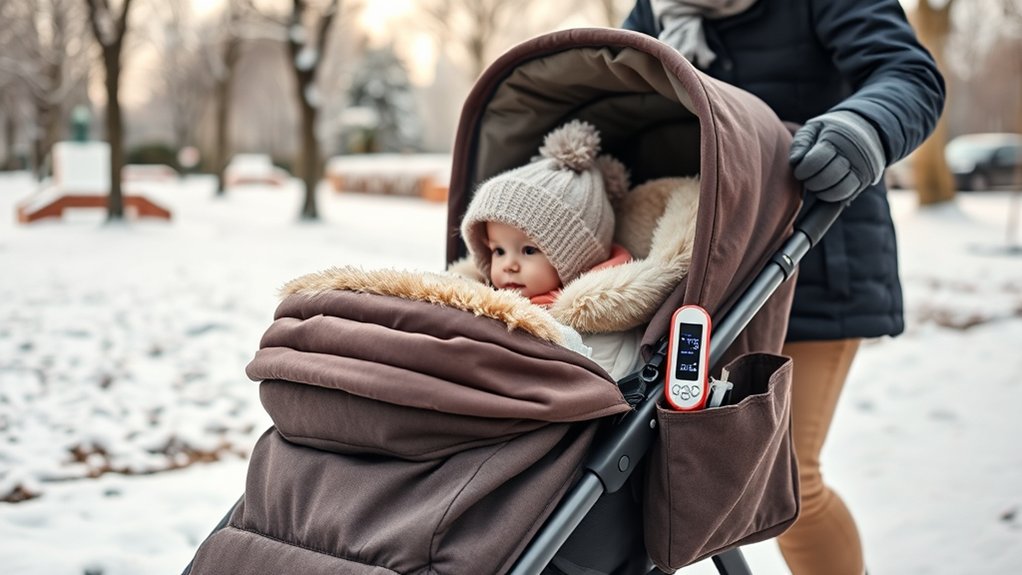
Even with all the precautions taken to shield your stroller, it’s crucial to monitor your baby’s temperature during cold weather outings. Regular temperature checks help guarantee your little one remains comfortable. Here are some tips to keep in mind:
- Feel the back of their neck or chest, and check their extremities to gauge if they’re too hot or cold.
- Watch for overheating signs, like sweating, flushed cheeks, damp hair, or fussiness, and adjust layers promptly.
- Dress your baby in breathable, moisture-wicking base layers to help regulate body temperature and reduce overheating.
- Plan outings during the warmest part of the day, usually late morning to early afternoon, to minimize exposure to extreme cold.
Also watch for signs that your baby may be too cold, such as unusual quietness, persistent crying, pale or cool skin, or very cold hands and feet. When in doubt, shorten the walk and head indoors to warm up.
Pro Tip: Check your baby before you feel cold yourself. Adults warm up while pushing the stroller, but babies sit still and can cool down faster in wind or shade.
Choosing the Right Stroller Features for Cold Weather
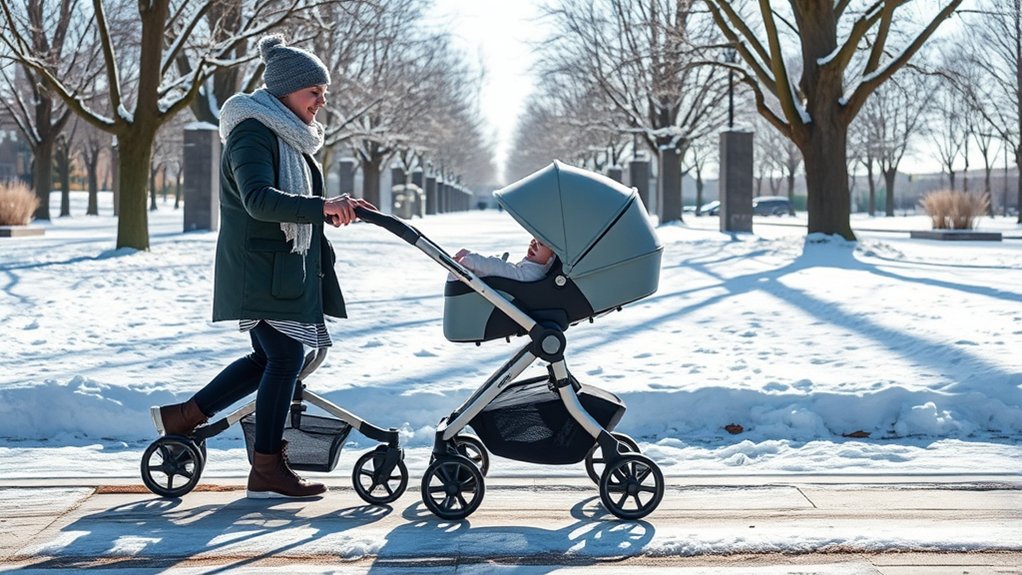
When choosing a stroller for cold weather, focus on essential features that enhance safety and comfort. Look for models with larger wheels and robust suspension systems to navigate snowy terrain more easily. Additionally, make certain the stroller includes weatherproof covers and insulation options to keep your little one warm and protected during outings.
Cold-weather performance depends on more than warmth. You also need reliable brakes, a stable frame, easy steering with gloves on, and enough storage space for spare layers. A stroller that works well on smooth summer sidewalks may feel harder to control on slush, snow, or cracked winter pavement.
Essential Stroller Features
Choosing the right stroller features for cold weather can make all the difference in keeping your baby comfortable and safe during winter outings. Here are four essential features to take into account:
- Trek-Friendly Wheels: Look for wheels at least 8 to 12 inches in diameter for better traction on snow and uneven paths.
- Enhanced Suspension: Confirm the stroller absorbs shocks from uneven terrain, providing a smoother ride.
- Weatherproof Covers: Opt for strollers with extendable sun canopies and rain covers to protect against wind, sleet, and snow.
- Compatibility for Footmuffs: Choose strollers that support footmuffs or bunting bags for added warmth and insulation.
Tire and Suspension Types
To guarantee your winter outings are smooth and comfortable, understanding tire and suspension types is vital. For cold weather, opt for strollers with larger, trek-friendly wheels measuring 8 to 12 inches in diameter. These tire types provide better traction on snow and uneven surfaces compared to smaller plastic wheels.
Air-filled rubber tires can also improve shock absorption and grip on slippery surfaces, which helps on winter paths. Additionally, enhanced suspension systems, such as all-wheel suspension, help smooth out bumps on uneven terrain. Remember to check tire pressure regularly; properly inflated tires greatly enhance traction and performance, ensuring you can navigate wintery paths with ease.
Weatherproofing and Covers
As temperatures drop, ensuring your stroller is equipped with effective weatherproofing features becomes vital for keeping your baby warm and dry. Here are some key features to take into account:
- Weatherproof Covers: Look for strollers with covers that shield against wind, snow, and rain.
- Extendable Canopies: Choose models with canopies that provide full coverage to trap some body heat while allowing ventilation.
- Built-in Footmuffs: Opt for strollers with footmuffs or bunting bags to cocoon your baby in warmth.
- Trek-friendly Wheels: Prioritize strollers with larger wheels and cushioned suspension to navigate slippery terrain effectively.
Using durable stroller materials and weatherproof fabrics enhances your stroller’s performance in harsh conditions. Regular maintenance is essential for ensuring these features function at their best.
Preparing for Winter Outings With Your Stroller
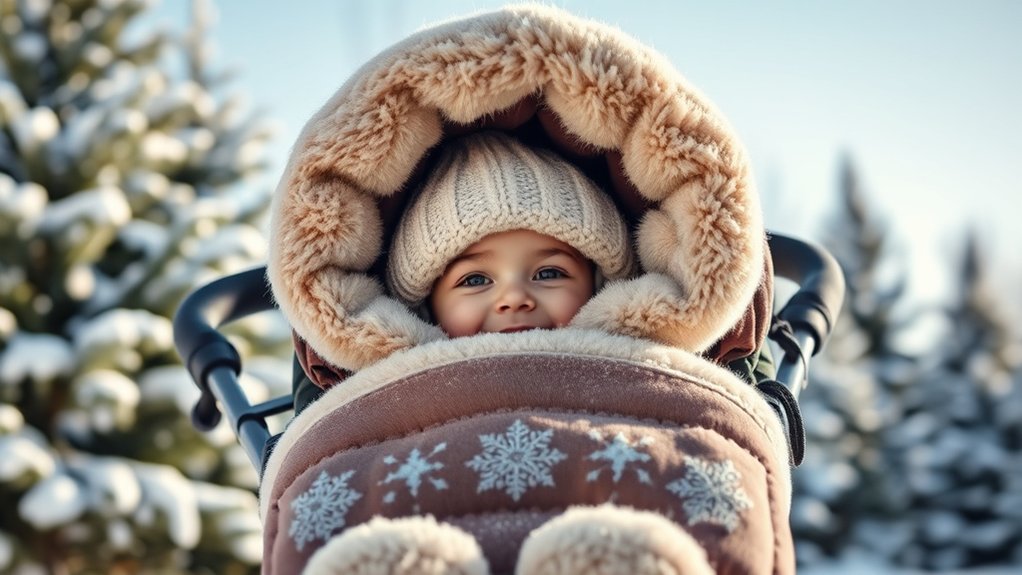
While winter outings can be enjoyable, preparing properly for them with your stroller is vital to keep your baby warm and safe. Start by dressing your baby in multiple layers, including moisture-wicking base layers, insulated middle layers, and waterproof or water-resistant outer layers. This will help maintain comfort in cold weather. Equip your stroller with essential accessories like a footmuff for extra insulation and a weather shield to protect against wind, rain, and snow.
Monitor your baby’s temperature frequently by checking the back of their neck to avoid overheating during long outings. Plan your outings during the warmest part of the day, typically late morning to early afternoon, for maximum comfort. Finally, pack extra clothing and emergency warming items, such as blankets and adult hand warmers, in your diaper bag. These precautions are vital for stroller safety and guarantee you’re ready for any sudden changes in temperature.
Winter Stroller Checklist Before You Leave
A quick checklist can prevent most cold-weather stroller problems before they start. Before heading outside, review these basics:
- Baby is layered safely: Base layer, warm middle layer, outer protection, hat, mittens, socks, and booties.
- Harness is snug: Straps sit close to the body without bulky padding underneath.
- Weather protection is ready: Footmuff, blanket, canopy, or ventilated shield is attached correctly.
- Route is safe: Sidewalks or trails are cleared, well lit, and not too icy.
- Supplies are packed: Extra mittens, socks, blanket, diaper supplies, feeding items, and your phone.
- Stroller is checked: Brakes work, wheels roll freely, tires are inflated if pneumatic, and folding locks are secure.
Recommended Trails and Activities for Winter Walks
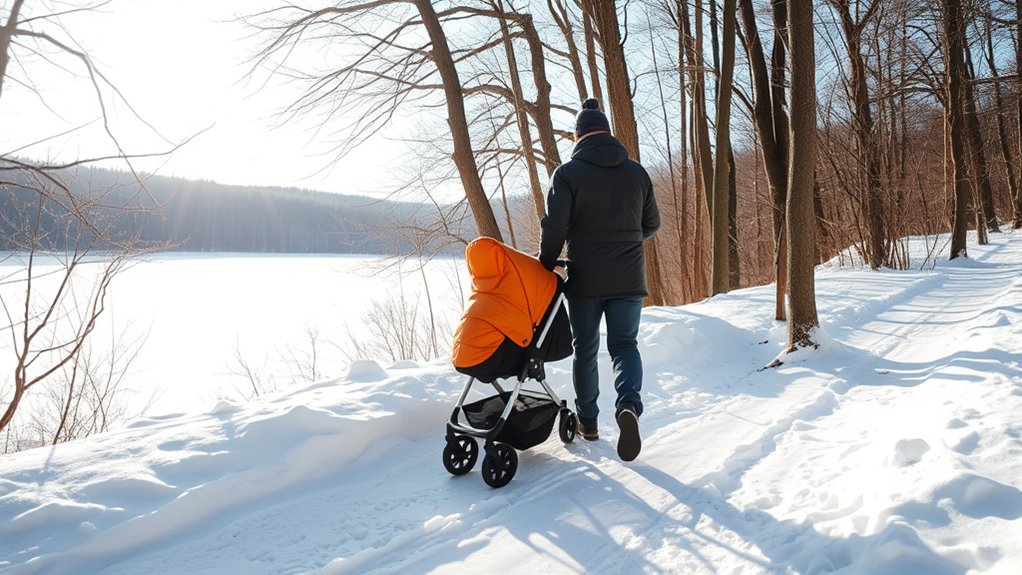
When selecting trails for winter walks with your stroller, prioritize lightly trafficked snowshoe paths, cleared sidewalks, paved park loops, or well-maintained roadside routes. These surfaces support stroller safety and make traversing snow much easier. Aim for small village trails or neighborhood routes that provide beautiful winter scenery while minimizing exposure to harsh weather conditions.
Here are some recommended activities to enhance your winter outings:
Short, well-planned winter walks can give you fresh air, gentle movement, and a calming change of scenery without pushing your baby past their comfort limit.
- Choose trails with packed or cleared snow to avoid difficulty pushing your stroller.
- Plan walks during daylight, ideally late morning to early afternoon, for warmer temperatures.
- Walk beside a partner who is snowshoeing or cross-country skiing if the route is stroller-safe and wide enough.
- Explore scenic parks that offer both paved paths and picturesque views.
Avoid steep icy paths, unplowed trails, narrow shoulders, and routes where cars may have trouble seeing you. If the stroller starts sliding or becomes hard to push, turn around before you get too far from home or your car.
Overcoming Hesitation to Get Outside in the Cold
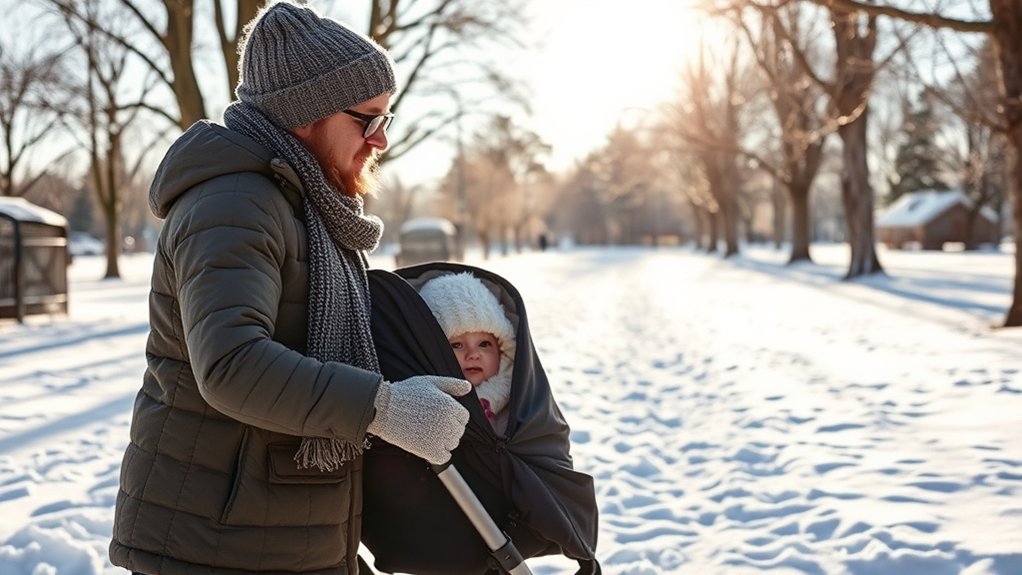
Finding the motivation to venture outside in cold weather can be challenging, especially with a little one in tow. However, embracing outdoor exploration can support both you and your baby when conditions are safe. Winter outings may improve your mood, add gentle movement to your day, and help your baby experience fresh air and new sights.
| Tips for Outdoor Exploration | Benefits | Baby Bonding Activities |
|---|---|---|
| Dress your baby in layers | Fresh air can improve mood | Go for a nature walk |
| Go out during warmest hours | Gentle physical exercise | Visit a local park |
| Use winter accessories | Helps regulate comfort | Enjoy a short stroller picnic |
| Plan short outings | Reduces hesitation | Explore winter scenery |
With the right preparation, such as layering your baby and equipping your stroller with winter accessories, you can confidently enjoy the outdoors. Remember, these moments are great for baby bonding and creating lasting memories.
Maintenance Tips for Cold Weather Stroller Usage
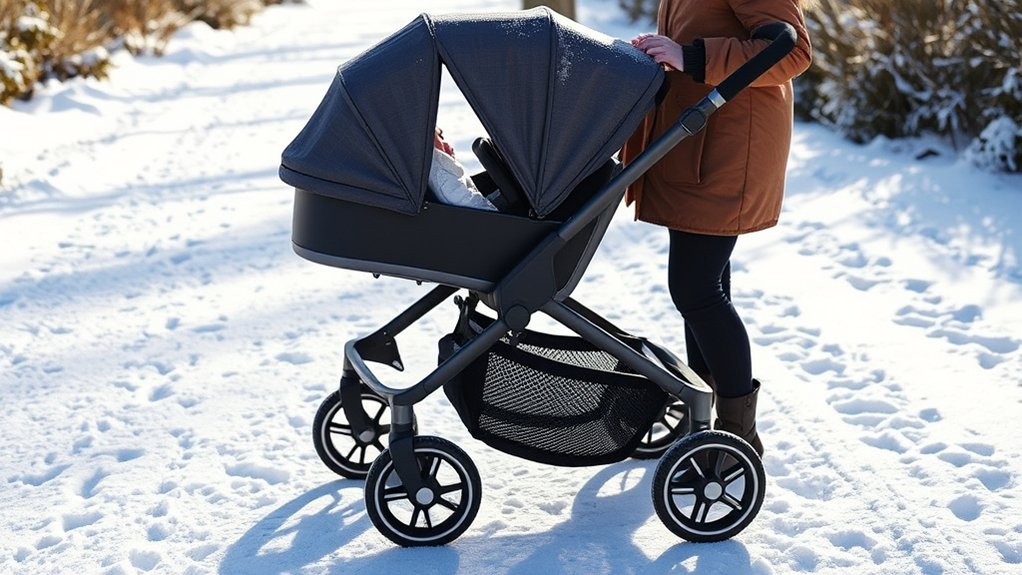
To guarantee your stroller performs well in cold weather, regular maintenance is essential. Taking these cold weather precautions will enhance stroller durability and guarantee a smooth ride for you and your little one.
- Lubricate the folding joints and latches every 1 to 2 months with silicone or Teflon spray to prevent stiffness caused by the cold.
- Inflate pneumatic tires monthly to maintain proper pressure and traction on snowy or icy surfaces.
- Rinse off road salt and slush from stroller components regularly to prevent corrosion and deterioration of parts.
- Clean the seat and handlebar periodically to maintain hygiene and appearance, especially after winter outings.
Additionally, store your stroller in a warm, dry place when not in use to avoid damage from freezing temperatures and moisture. Following these tips will keep your stroller in top shape for all your winter adventures!
When to Skip a Cold Weather Stroller Walk
Some winter days are better for indoor play, even if your baby has warm gear. Skip or shorten the outing if wind chills feel severe, sidewalks are icy, visibility is poor, or your baby seems unwell. Also avoid long stroller naps outside in very cold weather unless you have clear guidance from your child’s pediatrician.
You should also change plans if your stroller wheels cannot grip the surface. Slipping, tipping, or struggling to push the stroller increases risk for both you and your baby. A short walk around the block is often better than a long route that leaves you far from shelter.
Related Guides
Frequently Asked Questions
Can I use a regular stroller in extreme cold?
Yes, you can use a regular stroller in cold weather if the path is safe and the stroller handles the surface well. Add stroller insulation, a footmuff, a weather shield, and warm baby layers. In extreme cold, strong wind, or icy conditions, keep outings short or stay indoors.
How long can my baby stay outside in cold weather?
There is no single safe time for every baby because age, wind, clothing, humidity, and temperature all matter. Start with short outings, check your baby often, and head indoors if they feel cold, sweaty, fussy, unusually quiet, or uncomfortable.
What are signs my baby is too cold in the stroller?
Your baby may be too cold if their chest or neck feels cool, their hands or feet are icy, their skin looks pale, or they become unusually fussy or quiet. Move indoors, add a dry layer, and warm them gradually.
Can I use a blanket instead of a stroller cover?
You can use a blanket for added warmth, but make sure it stays away from your baby’s face and does not drag near the wheels. A fitted footmuff or stroller weather shield usually offers better wind protection and a more secure fit.
Are there specific stroller brands better suited for cold weather?
Some stroller brands offer models with larger wheels, strong suspension, fitted footmuffs, and weather shields, which can help in cold weather. Instead of choosing by brand alone, compare wheel size, brake quality, suspension, canopy coverage, accessory compatibility, and how well the stroller handles your local winter surfaces.
Should I cover my baby’s stroller with a plastic rain cover in winter?
A stroller rain or weather cover can help block wind, rain, and light snow, but it should allow airflow and let you see your baby clearly. Do not seal the stroller tightly, and check often for fogging, overheating, or poor ventilation.
What should I pack for a winter stroller walk?
Pack an extra hat, mittens, socks, a small blanket, diapers, wipes, feeding supplies, your phone, and adult hand warmers. If snow or slush is likely, bring a waterproof bag for wet clothing and check the stroller after the walk.
Conclusion
By dressing your baby in layers and using the right stroller accessories, you can guarantee a comfortable and safe winter outing. For example, Sarah, a new mom, bundled her baby in a fleece-lined footmuff and added a weather shield during their first snowy walk. She frequently checked her baby’s hands, feet, and neck, making sure they stayed warm without overheating.
With careful preparation and attention, you can confidently embrace the outdoors, turning cold days into enjoyable adventures for both you and your little one. Keep the route simple, watch the weather, and treat every winter walk as flexible. If your baby seems uncomfortable or the path feels unsafe, head inside and try again another day.
Sources
- HealthyChildren.org from the American Academy of Pediatrics — winter safety guidance for children.
- Centers for Disease Control and Prevention — cold-weather safety and prevention guidance.
- National Weather Service — cold weather, wind chill, and winter safety information.
- U.S. Consumer Product Safety Commission — stroller safety information for parents and caregivers.

