
When it comes to traveling with a stroller, you need more than a general idea of the rules. Airlines often let families check a stroller for free, but the exact limits for cabin storage, gate-checking, car seats, and family boarding can vary by carrier, aircraft, and airport. Understanding these guidelines before you fly helps you move through the airport smoothly, protect your gear, and avoid last-minute surprises at check-in or boarding.
Quick Answer
Most airlines let you check or gate-check a stroller for free, but cabin-size strollers must usually fold small enough to fit carry-on limits. For smoother travel, use a lightweight stroller, confirm your airline’s current policy before departure, label your gear, and bring a baby carrier as a backup.
Key Takeaways
- Most major airlines allow one stroller and often one car seat per child to be checked without counting against standard baggage allowance.
- Compact strollers may be allowed in the cabin only when they meet the airline’s carry-on size rules and storage space is available.
- Larger or heavier strollers are usually checked at the ticket counter or gate, depending on the airline and airport process.
- FAA-approved car seats are normally used only when your child has a purchased seat and the car seat fits the aircraft seat.
- A sling, wrap, or soft-structured carrier can save your trip if the stroller is delayed, gate-checked, or hard to use in crowded terminals.
At a Glance
| Best Stroller Type | Lightweight, compact-fold stroller or travel stroller |
| Check Before Flying | Airline stroller size limits, gate-check process, car seat rules, and family boarding policy |
| Backup Gear | Baby sling, wrap carrier, soft-structured carrier, luggage tag, and protective stroller bag |
| Main Goal | Use the stroller through the airport when allowed, then check or store it safely before boarding |
Common Challenges When Flying With Strollers
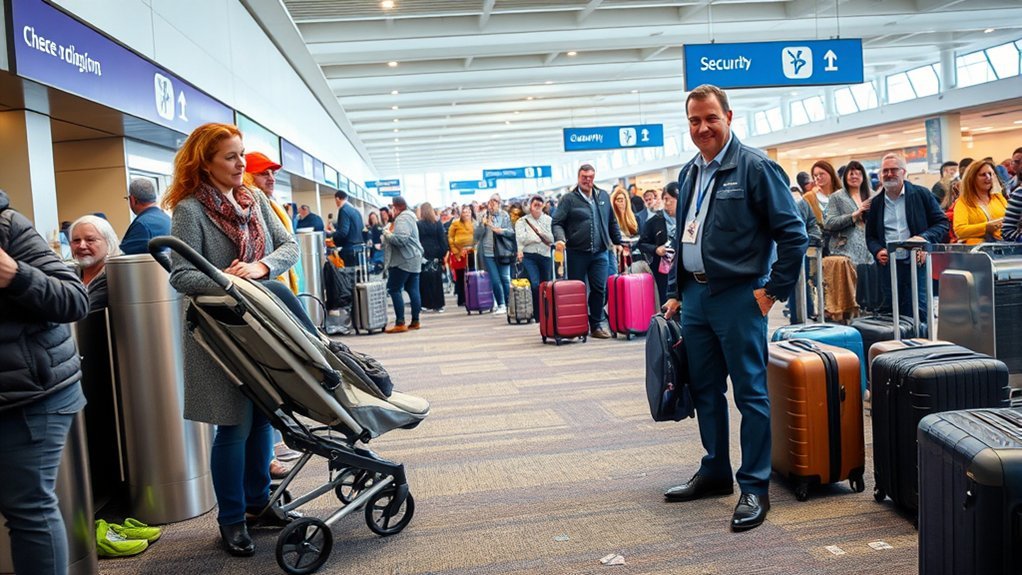
When you’re flying with a stroller, several common challenges can add stress to your travel experience.
First, you need to understand stroller safety, folded size limits, and your airline’s check-in process. Many airlines allow families to check one stroller per child for free, but the rules for bringing a stroller into the cabin are usually stricter. A compact travel stroller may be accepted as a carry-on only if it fits the airline’s carry-on size limits and there is enough overhead bin space.
If your stroller is larger, you’ll usually need to gate-check it or check it at the ticket counter. Gate-checking lets you use the stroller through security and most of the airport, then hand it over near the aircraft door or jet bridge before boarding.
Another challenge is timing. Security lines, long walks between terminals, delayed flights, and crowded boarding areas can make stroller use harder than expected. A stroller may also be returned at the jet bridge, baggage claim, or oversized baggage area depending on the airport and airline process.
Note: Airline stroller rules can change and may differ by route, aircraft, or airport. Always confirm your airline’s current stroller and car seat policy before you leave for the airport.
Having backup options like baby slings or carriers can provide hands-free relief, especially if your stroller must be checked earlier than expected. That way, you can keep your child close while managing boarding passes, bags, snacks, and security screening.
Essential Travel Gear
When you’re traveling with little ones, having the right gear can make all the difference.
Lightweight strollers, smart packing tips, and backup carrying options like baby slings can keep your journey smoother and less stressful.
Let’s explore how to choose essential travel gear that improves your airport experience without adding unnecessary bulk.
[Amazon Products Picked for You]

Automatically folds to a compact size with one-hand activation for multi-tasking families

Lightweight & Travel-Friendly Design - Weighing just 7.2 pounds, the Dream On Me Aero Travel Light Stroller makes traveling with your little one easier. Ideal for families on the go — great for vacations, city strolls, and quick errands.

LIGHTWEIGHT - A lightweight stroller makes any outing a little easier; The Ingenuity 3D Mini Convenience Stroller has a durable steel frame that weighs 11 pounds and has a full-sized seat, plus auto-lock, anti-shock front wheels and lockable rear wheels
Lightweight Stroller Recommendations
Choosing the right lightweight stroller can make your travel experience easier from curbside drop-off to boarding.
Travel-friendly strollers are usually lighter, easier to fold, and simpler to handle while you are also carrying a diaper bag or rolling suitcase. Many parents prefer compact models because they are easier to lift, store, and gate-check.
Here are some stroller options to contemplate:
- Mompush Lithe V2: Its compact fold and light weight make it a strong pick for air travel and quick airport movement.
- Chicco Bravo Quick-Fold: Integrated car seat compatibility can help with smooth shifts between car, airport, and destination.
- Summer Infant 3Dlite: This stroller combines affordability with useful travel features, making it a practical option for families who want value and convenience.
Before you go, double-check your airline’s stroller policies for size and weight compliance. Also measure your stroller after it is fully folded, including wheels, cup holders, snack trays, and handles.
With the right stroller, you’ll enjoy hassle-free journeys with your little one and reduce the chance of surprises at the boarding gate.
Essential Packing Tips
Packing smartly for air travel with a little one can make a major difference in your journey’s comfort and ease.
Start by choosing a lightweight, easy-to-fold stroller, like the Mompush Lithe V2, to streamline airport navigation. If you hope to bring the stroller on board, compare the folded size with your airline’s carry-on limits. Many airlines use standard carry-on-style limits, but exact dimensions can vary.
Keep important items in your hand luggage, such as snacks, toys, diapers, wipes, a change of clothes, pacifiers, bottles, and any comfort items your child uses during naps. Delays are easier to manage when you can reach these things without opening checked luggage.
Consider stroller accessories like a protective travel bag, a luggage tag, and an integrated car seat-stroller combination for smoother transitions.
Prioritize travel safety with proper equipment, secure straps, and clear labels. Being prepared for unexpected challenges helps you move through the airport with more confidence.
Pro Tip: Take a quick photo of your stroller before checking it. If it is damaged or delayed, the photo can help you describe the model, color, and condition more clearly.
Backup Carrying Options
Maneuvering crowded airports can be a challenge, especially with a little one in tow, but backup carrying options provide a practical solution.
These carriers keep your child close while allowing you to move with both hands free. They are especially helpful during security screening, boarding, baggage claim, and unexpected delays.
Here are a few options to contemplate for your travels:
- Baby slings: Lightweight and versatile, great for quick trips and short airport walks.
- Soft-structured carriers: Offer comfort and support for longer outings or long layovers.
- Wrap carriers: Provide a snug fit and can accommodate different body sizes when used correctly.
Choose a carrier that you have already practiced using before travel day. A brand-new carrier can feel confusing when you are tired, holding bags, and trying to board on time.
General Airline Policies for Strollers and Car Seats
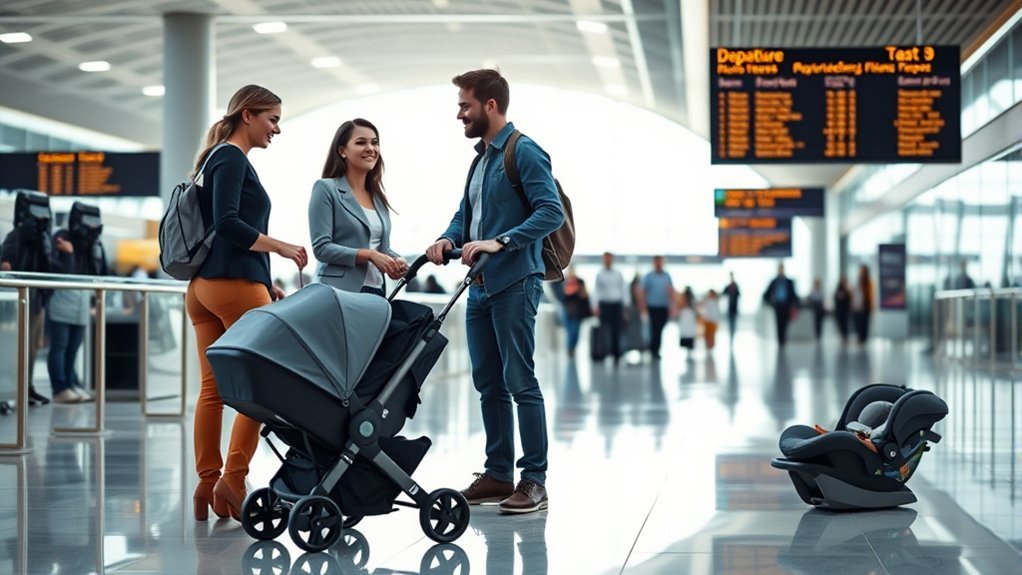
When you’re traveling with little ones, knowing the airline’s stroller and car seat policies can make your journey smoother.
Most airlines allow you to check one stroller and one car seat for free, but size limits, cabin storage rules, and gate-check procedures can vary. Always check the specific guidelines for your airline before your travel date.
Understanding these rules helps you pack smart and protects your child’s gear during your flight.
Airline-Specific Stroller Policies
Traveling with little ones can be a juggling act, especially when it comes to bringing along a stroller and car seat.
Understanding airline-specific stroller policies can ease your travel stress. Here’s what you need to know:
- Most airlines allow one stroller and one car seat per child to be checked free of charge.
- Smaller strollers can often be gate-checked, letting you use them until you board.
- Some very compact strollers may be accepted as cabin baggage when they meet carry-on limits.
- Always verify specific airline restrictions on stroller types, dimensions, and weight before you go.
Airlines like Delta and Southwest are commonly known for family-friendly stroller check options, while Alaska Airlines may allow compact strollers in overhead bins when they meet cabin baggage rules and space is available.
Do not assume every agent or airport handles strollers the same way. When possible, save the airline’s stroller policy page on your phone so you can reference it at check-in or the gate.
Size and Weight Limits
Understanding size and weight limits for strollers and car seats can greatly streamline your travel experience.
Most airlines allow you to gate-check or check in your stroller for free, and it usually won’t count against your baggage allowance. However, a stroller that is too large for cabin storage will normally need to be checked.
Some compact travel strollers are designed to fold close to common carry-on dimensions, such as 22 x 14 x 9 inches, but not every airline uses the same limit. Larger models, jogging strollers, double strollers, and bulky travel systems are more likely to be checked at the gate or ticket counter.
Car seats should be FAA-approved for aircraft use if you plan to install one on board. They must also fit the aircraft seat, and many are placed in a window seat so they do not block another passenger’s exit path.
Before your trip, review your specific airline’s policies, because size restrictions and allowances for stroller accessories can vary considerably between carriers.
Size and Weight Considerations
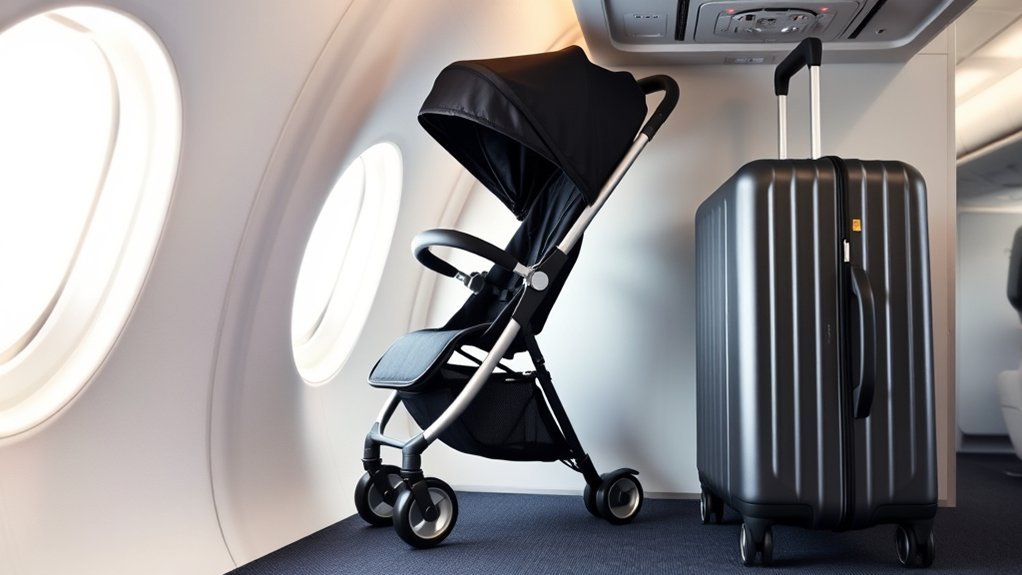
Maneuvering airline regulations for strollers can be tricky, especially since many airlines have specific size and weight limitations that you need to keep in mind.
To support a smooth travel experience, consider the following:
- Measure the stroller after it is fully folded, not while open.
- Remove detachable trays, cup holders, and accessories if they make the stroller too bulky.
- Lightweight, compact stroller types maximize convenience and compliance.
- Double strollers and jogging strollers are more likely to be checked because of their size.
Pre-travel verification of your stroller’s dimensions is essential, so check the airline’s size guide and compare it with your stroller’s folded measurements.
Remember, exceeding these travel regulations means you may have to check your stroller at the ticket counter instead of using it until boarding.
Choosing the right stroller type not only improves your travel experience but also keeps your family more flexible while maneuvering the airport.
Bringing Car Seats on Board: What You Need to Know
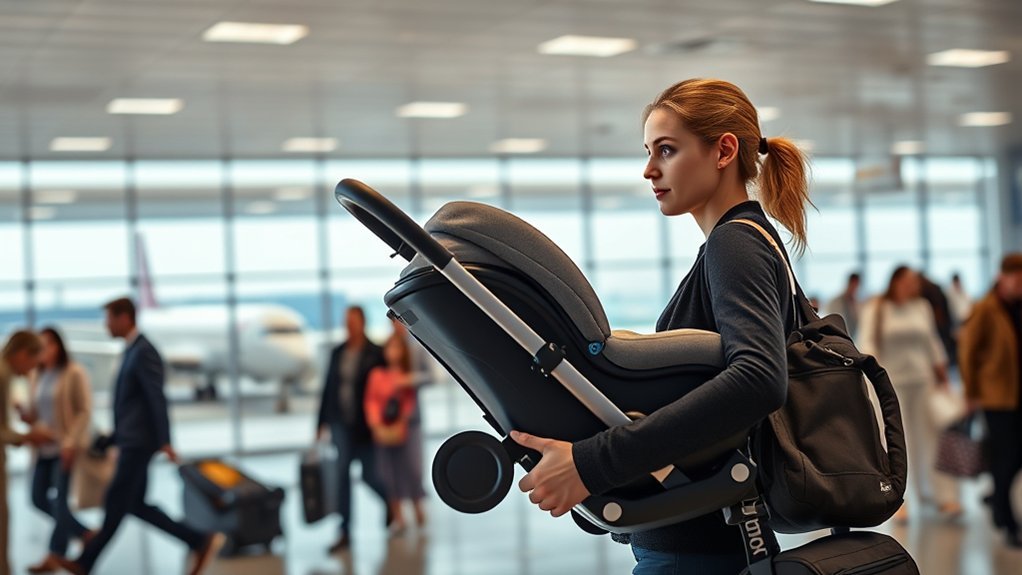
When planning to bring a car seat on board, it’s essential to know the airline’s regulations so you can avoid problems during boarding.
Most airlines allow you to bring a car seat if you’ve purchased a separate seat for your child, provided the seat is approved for aircraft use and fits within the airline’s seating requirements.
A car seat used on board should be approved for aircraft use, fit the aircraft seat, and be installed where it does not block another passenger from exiting.
To support car seat safety, install it in a suitable aircraft seat, often a window seat, so it does not obstruct the aisle or trap another passenger during an emergency.
Label your car seat with luggage tags and keep the aircraft approval label visible for easier boarding.
Some airlines also offer free gate-checking options, letting you use your car seat through the airport and check it just before boarding if you are not using it on the plane.
Warning: Never assume a car seat can be used on board without a purchased seat for your child. Lap infants do not have a separate aircraft seat for car seat installation.
[Amazon Products Picked for You]

MADE TO BE WITH YOU FOR YEARS The Safety 1st Ellaris Convertible Car Seat is a 3 in 1 car seat that adapts to your growing little one with 3 modes of use, making Ellaris car seats a key piece of your family for years to come

✈Usage Instructions: In addition to the car seat cart, two straps and two ratchet straps are included. It is recommended to use all of them to secure the car seat. Use one ratchet strap to fasten around the base, and the other to secure the backrest. If the backrest of the car seat is reclined or slanted, lift the latch, rotate the tow bar, and then fasten the strap

TRAVEL WITH LESS WORRY - Protects your car seat from airport dirt and handling while making family travel a little more manageable. Use to gate check when boarding the airplane.
Family Boarding Options: Making Travel Easier With Young Children
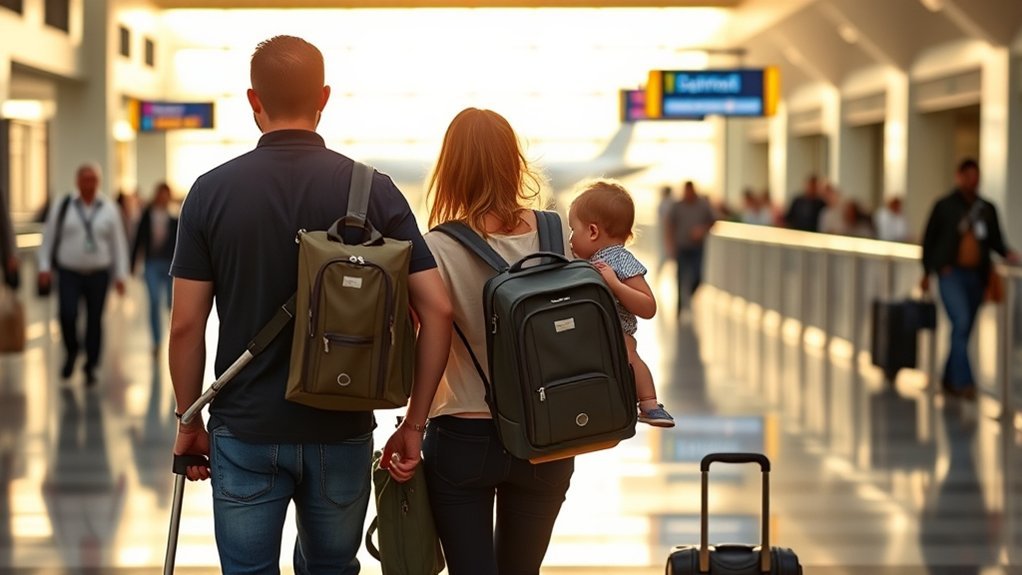
Traveling with young children can be a delightful adventure, but it often comes with its own set of challenges.
Family boarding options can greatly improve your travel experience by giving you more time to fold a stroller, install a car seat, store bags, and settle your child before general boarding becomes crowded.
Here’s how family boarding can help:
- Many airlines let families board after priority passengers but before general boarding.
- Arriving early and listening for announcements helps you use your family boarding privileges.
- Some airlines, like Southwest and United, have specific policies for families with young children.
Family boarding does not always mean first boarding, and the age cutoff can vary. Some airlines offer it for children under 2, while others may use a different age range or boarding group.
Check the policy in advance and ask the gate agent politely if you are unsure when to line up.
Travel Systems for Convenient Airport Navigation
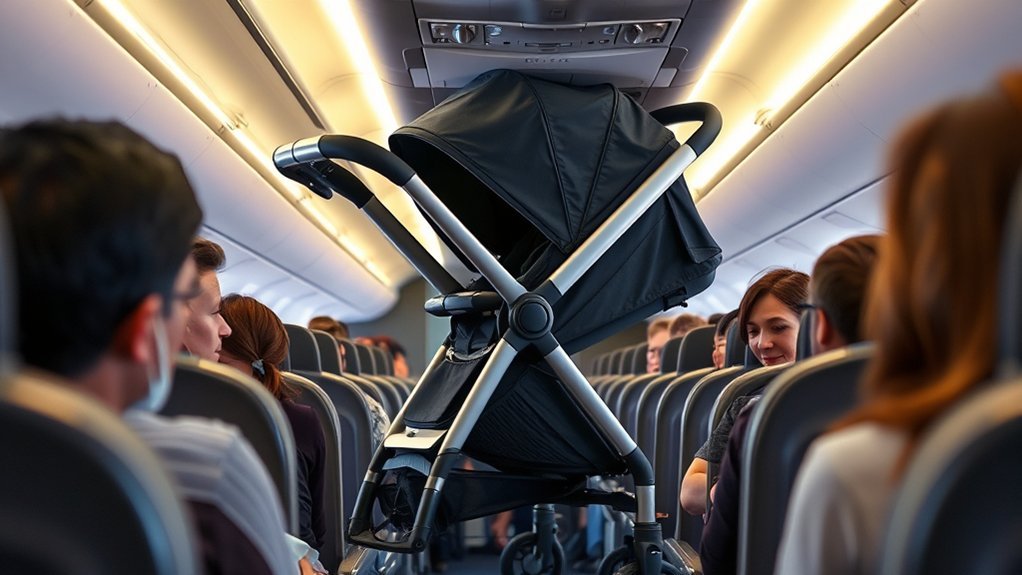
When you’re maneuvering busy airport terminals, a travel system can make your journey much smoother.
These integrated car seat and stroller combinations can improve convenience by letting you move a child from car to stroller without changing gear multiple times.
With features like quick-release mechanisms, you can shift from car to airport more easily, making travel with little ones more manageable.
[Amazon Products Picked for You]

3 strollers in 1: Infant Car Seat Carrier, Infant Pramette, and Toddler Stroller to stroll from infant to toddler

Versatile 3-in-1 Stroller: Transforms from an Infant Car Seat Carrier to Infant Pramette and then to Toddler Stroller

3 strollers in 1: Infant Car Seat Carrier, Infant Stroller, and Toddler Stroller to stroll from infant to toddler
Streamlined Travel Experience
Maneuvering an airport with a young child can feel overwhelming, but a well-designed travel system can transform that experience into a more manageable routine.
These systems enable efficient shifts from car to airport, making your journey smoother. Here’s how they simplify your travel:
- One-click mechanism: Quickly attach and detach the car seat from the stroller, saving you time.
- Lightweight design: Helps with airport navigation, security, and boarding.
- Compact folding: Makes gate-checking or storage easier, depending on airline rules and available space.
With a travel system, you can reduce the number of separate items you manage and focus on what matters most: keeping your child safe, calm, and comfortable.
However, travel systems are often bulkier than ultra-compact strollers. If you are flying alone with a child, test how quickly you can fold and lift the system before relying on it for airport travel.
Enhanced Safety Features
While maneuvering through busy airports, having a travel system that prioritizes safety can provide peace of mind for parents. These systems combine a stroller and a car seat, allowing smoother changes without disturbing your child.
Many travel systems include five-point harnesses, secure attachment points, parking brakes, and adjustable canopies. These features help keep your little one secure and comfortable during your journey.
Lightweight and compact models are easier to handle in crowded terminals. Travel systems with adjustable canopies can also shield your child from bright lights, sun exposure near windows, and mild weather during curbside drop-off.
With the ability to gate-check your stroller, you can often keep using it until the last moment before boarding, making travel smoother and less stressful for both you and your child.
Backup Options During Travel Delays
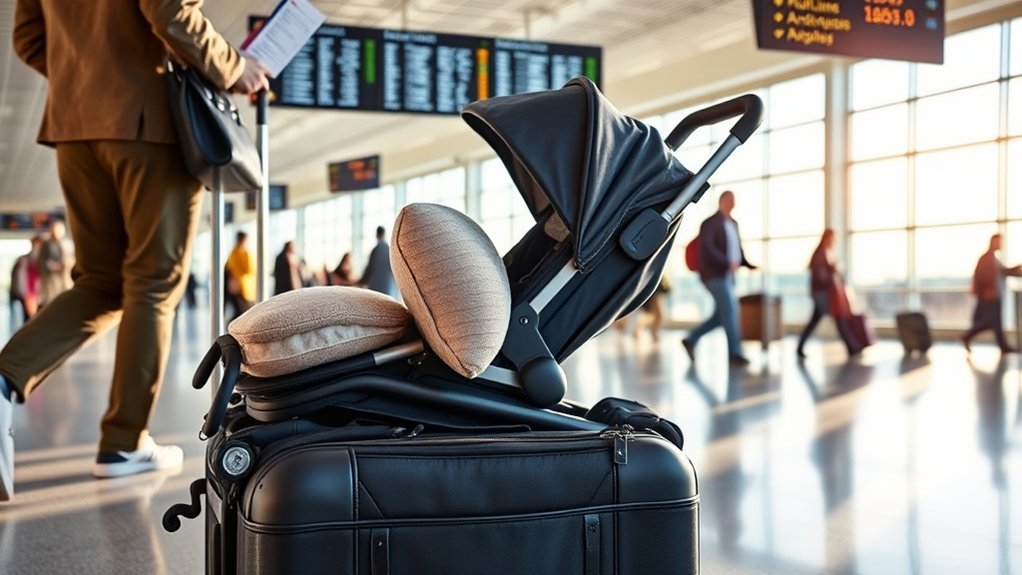
Unexpected travel delays can throw a wrench in your plans, but having backup carrying options can make all the difference. These alternatives keep your little ones close while you navigate bustling airports or endure long waiting times.
Consider these handy carrier options:
- Baby slings: Perfect for a quick and comfortable solution.
- Soft-structured carriers: Provide support and stability for longer durations.
- Wrap carriers: Offer versatility and a snug fit.
Lightweight and compact, these carriers fit more easily into your carry-on luggage than a second stroller or bulky accessory.
If your stroller gets delayed, damaged, or gate-checked, a backup option minimizes stress and lets you manage your travel experience effectively.
Also pack a few delay-ready essentials: extra diapers, wipes, snacks, a refillable water bottle, a small blanket, and a comfort toy. These items can help your child stay calmer during schedule changes.
Embrace the freedom to move, even during unforeseen interruptions, with the right carrier options by your side.
Examples of Airline Policies Regarding Strollers and Car Seats
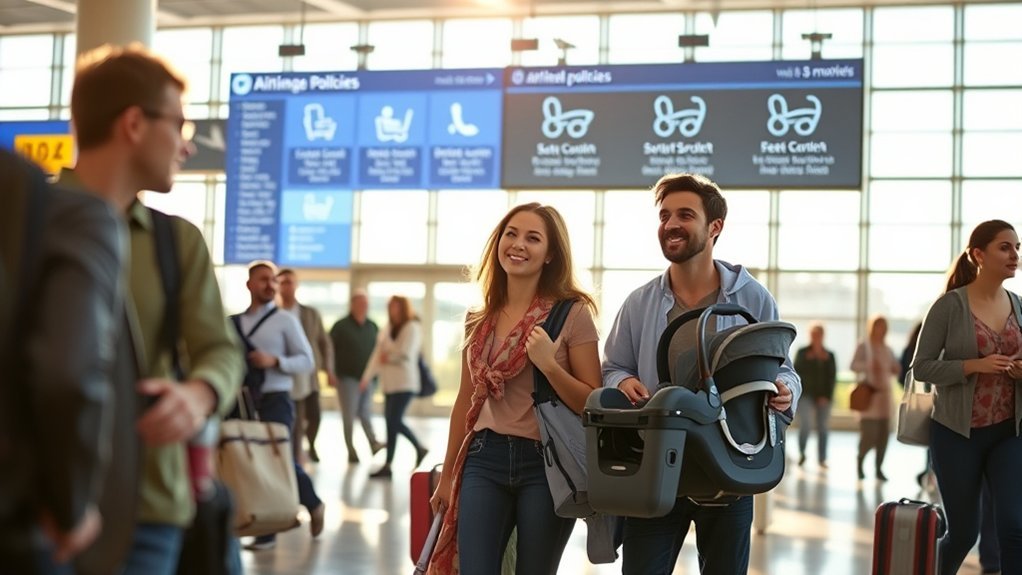
When it comes to traveling with children, understanding airline policies regarding strollers and car seats can save you a lot of hassle.
Most airlines let you check one stroller per child for free, and it often doesn’t count toward your standard baggage allowance. The details, however, can differ by airline.
For example, Delta commonly allows gate-checking for smaller strollers, while larger ones may need to be checked at the ticket counter.
In airline comparisons, Alaska Airlines is often family-friendly because it may let compact strollers fit in overhead bins when they meet size rules and space is available. It also commonly offers complimentary check-in for both strollers and car seats.
Southwest Airlines also provides free check-in for child gear and a family boarding process, making it convenient for families.
United Airlines supports your journey with stroller check options and priority boarding or family boarding options for families with young children, depending on the route and boarding process.
Because airline policies can be updated, treat examples as a planning guide, not a final rule. Your airline’s official policy should always be the source you follow before departure.
Tips for a Smooth Travel Experience With Strollers
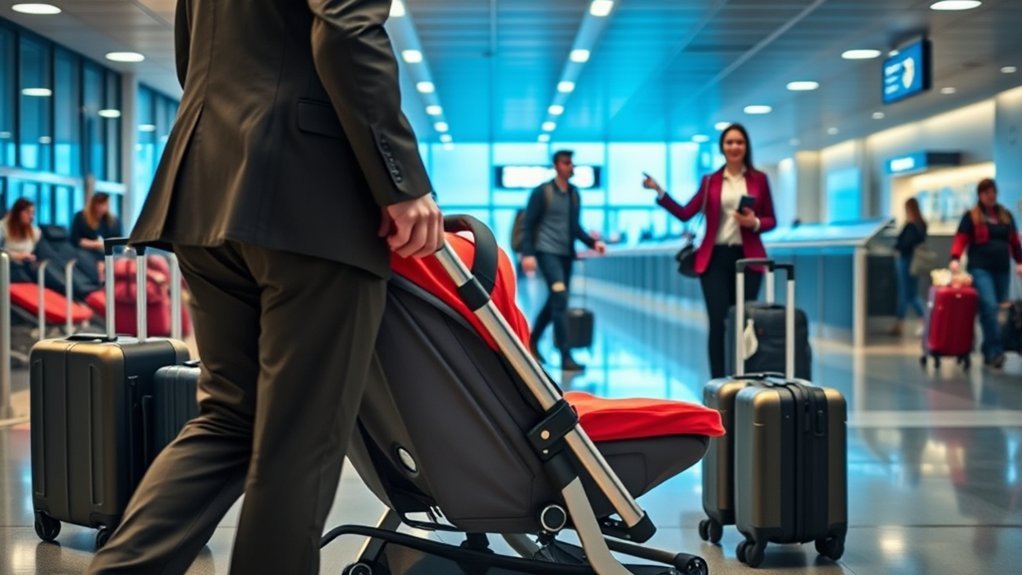
To support a smooth travel experience with your stroller, plan ahead and be aware of your airline’s specific policies.
Here are some travel tips to take into account:
- Choose lightweight stroller types: Opt for easily foldable strollers for hassle-free navigation through the airport.
- Know size limits: Verify your stroller meets your airline’s folded size and weight rules if you want to carry it on board.
- Get luggage tags at the gate: This helps streamline the boarding process and makes your stroller easier to identify.
- Use a protective bag: A stroller travel bag can reduce dirt, scuffs, and loose parts during handling.
- Arrive early: Extra time helps you handle check-in, security, gate tags, bathroom stops, and feeding breaks.
Before leaving home, practice folding the stroller with one hand while holding a bag. Airports move quickly, and you may need to collapse the stroller at security or boarding while managing your child and carry-ons.
It also helps to remove loose accessories before checking the stroller. Cup holders, snack trays, fans, hooks, and toys can break or fall off during handling.
Frequently Asked Questions
Can I use my stroller during layovers?
Yes, you can usually use your stroller during layovers if it was returned to you after your first flight. This can make airport connections easier and help your child rest between flights. If your stroller is checked through to your final destination, use a baby carrier as a backup.
What types of strollers are most airline-friendly?
Lightweight strollers, umbrella strollers, and compact travel strollers are usually the most airline-friendly. They are easier to fold, carry, gate-check, and store. The best choice is a stroller that folds quickly, weighs less, and fits your airline’s size rules.
Are there fees for checking strollers?
Most airlines do not charge a separate fee for checking a stroller for a child, and it usually does not count against your standard baggage allowance. Still, you should check your airline’s current policy because rules can vary by carrier and route.
Can I bring a double stroller on the plane?
You can usually travel with a double stroller, but most double strollers are too large for cabin storage. They are commonly gate-checked or checked at the ticket counter. Confirm your airline’s stroller dimensions before travel and arrive early to avoid delays.
How do I protect my stroller during travel?
Use a stroller travel bag or cover to protect it from dirt and handling damage. Remove loose accessories, fold the stroller securely, add a luggage tag with your contact information, and take a photo before checking it in case you need to report damage.
Do strollers go through airport security?
Yes. In most airports, strollers go through security screening. Smaller strollers may go through the X-ray machine when folded, while larger strollers may be inspected separately. Remove bags, toys, and loose items before screening to make the process faster.
Should I gate-check or ticket-counter check my stroller?
Gate-checking is usually better if you want to use the stroller through the airport. Ticket-counter check-in may be better for bulky strollers, double strollers, or travel systems you do not want to manage after check-in. Your airline may decide based on stroller size and airport rules.
Conclusion
Flying with a stroller can be both a blessing and a challenge. On one hand, it gives your little one comfort and familiarity during travel. On the other, managing airline policies, stroller size limits, gate-check tags, security screening, and family boarding can feel overwhelming.
The best approach is simple: choose a lightweight stroller when possible, confirm your airline’s current rules before your trip, label and protect your gear, and bring a baby carrier as a backup. With the right preparation, you can turn potential stress into seamless travel.
Your stroller is not just a piece of gear. It is a gateway to adventure, helping your child experience the world comfortably, one flight at a time.
