
Many parents underestimate the importance of proper stroller safety, often overlooking basic precautions that can prevent accidents. Buckling your child securely in a five-point harness, engaging the brake whenever the stroller is stationary, and checking the stroller before each outing all help reduce common risks. However, stroller safety goes beyond those basics. Understanding stroller features, safe folding habits, storage limits, recalls, and routine maintenance can make every walk safer and more comfortable for your child.
Quick Answer
To keep stroller rides safe, buckle your child into the harness every time, lock the brakes when stopped, avoid hanging heavy bags from the handle, keep fingers clear when folding, and inspect wheels, straps, locks, and recalls regularly. Use the stroller only within the manufacturer’s age, weight, and activity limits.
Key Takeaways
- Use the harness every ride, even for short walks or quick errands.
- Lock the brakes any time the stroller is stopped, especially near curbs, cars, stairs, ramps, or slopes.
- Keep bags, purses, and diaper bags out of the handle area unless the stroller maker says it is safe.
- Check the frame, wheels, brakes, straps, canopy, and folding locks before routine use.
- Register your stroller and check recall notices so you can act quickly if a safety issue appears.
At a Glance
| Time Required | 1 to 2 minutes before each outing for a quick safety check |
| Difficulty | Easy, but it requires consistency every time you use the stroller |
| Tools Needed | Stroller manual, clean cloth, mild soap, water, and a tire pump if your stroller uses air-filled tires |
| Cost | Usually free unless a worn strap, wheel, brake part, or accessory needs replacement |
Understanding Stroller Safety Features
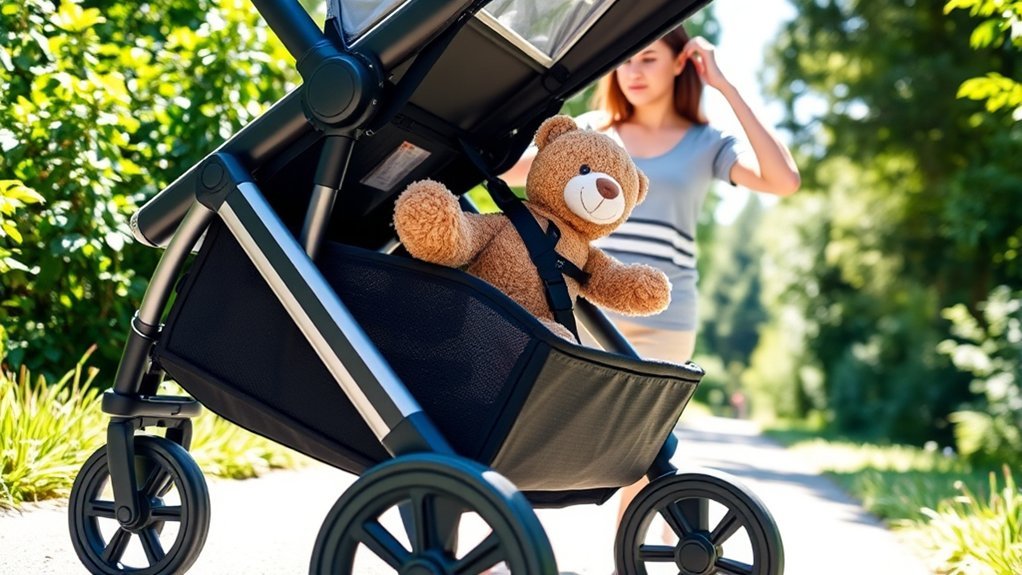
When it comes to stroller safety, understanding the essential features is important for protecting your child’s well-being. One key feature to check is the harness. A five-point harness system secures your child at the shoulders, waist, and between the legs, which helps prevent slipping, climbing, or sliding out during movement.
Next, look at the brake mechanisms. Choose a stroller with brakes that are easy to engage and strong enough to hold the stroller still when you stop. Brakes that lock both rear wheels can help reduce unintended movement, especially on inclines, uneven sidewalks, parking lots, or busy areas.
A wide base design can improve stability and reduce tipping risk. A secure locking system also matters because the frame should stay fully open once unfolded. If the stroller has a canopy, tray, adjustable seat, storage basket, or car seat attachment, each part should lock in place according to the manufacturer’s instructions.
Regularly inspect these safety features for wear and tear. Check the stroller’s manual for model-specific rules, including age limits, weight limits, recline positions, approved accessories, and cleaning instructions. By prioritizing these details, you can create a safer and more enjoyable ride for both you and your child.
Note: Strollers are not all built for the same use. A standard stroller, travel system, lightweight stroller, double stroller, and jogging stroller may each have different age, weight, terrain, folding, and attachment rules.
Essential Safety Practices When Using Strollers
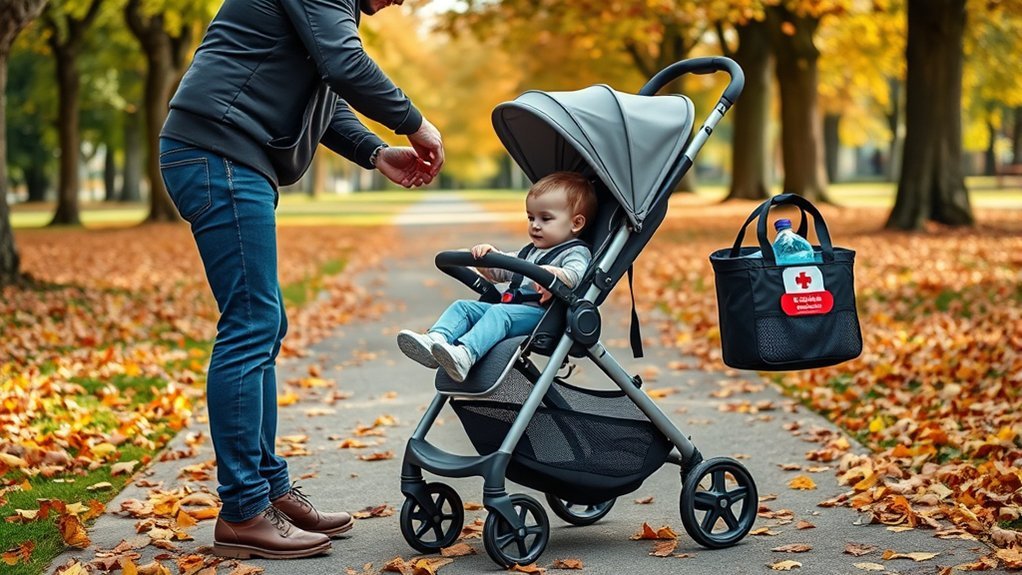
Guaranteeing your child’s safety during stroller rides involves implementing essential practices that keep them secure and comfortable. Start by buckling your child with a five-point harness to prevent slips or falls. Adjust the straps so they sit snugly without digging into your child’s body. A loose harness can let a child lean, twist, or climb into an unsafe position.
Always engage the brakes when the stroller is stationary, especially on inclines, near curbs, in parking lots, or while loading and unloading your child. Avoid hanging bags on the stroller handles because this can disrupt balance and lead to tipping. Use the storage basket only within the weight limit listed in the manual.
Regularly inspect your stroller for wear and tear, guaranteeing all parts work as intended. Never leave your child unattended, even for a moment, because strollers can roll, tip, fold, or move unexpectedly. Also avoid placing hot drinks in cup holders near your child, since bumps can cause spills and burns.
Here’s a quick reference to essential safety practices:
| Practice | Importance | Tips |
|---|---|---|
| Buckle with a harness | Keeps child securely seated | Check tightness before use |
| Engage brakes | Prevents rolling | Always use on slopes |
| Avoid hanging bags | Maintains balance | Use stroller accessories instead |
| Inspect regularly | Guarantees functionality | Look for damaged parts |
| Never leave unattended | Prevents accidents | Stay nearby at all times |
Warning: Do not use a stroller on stairs, escalators, or steep drop-offs. Remove your child first, then carry the stroller separately if you need to move through those areas.
Proper Stroller Storage and Maintenance
To keep your stroller in prime condition, it’s vital to store it properly and perform regular maintenance. Start by storing your stroller in a dry, clean area to prevent rust, mildew, and wear on its components. This helps guarantee it remains ready for future adventures.
Regular stroller inspections are essential. Check for signs of wear and tear, such as frayed straps, weak buckles, loose screws, sticky brakes, cracked wheels, damaged tires, bent frame parts, or a canopy that no longer locks properly. If anything feels loose or unsafe, stop using the stroller until you fix it according to the manufacturer’s instructions.
Make certain to follow the manufacturer’s guidelines regarding weight limits on the seat and storage basket. This helps maintain stability and prevents accidents. Keep the stroller’s manual handy for reference on specific maintenance practices and safety guidelines. Additionally, register your stroller with the manufacturer to receive important recall notifications and stay informed about safety issues.
Clean the seat fabric, harness, frame, wheels, and storage areas as directed in the manual. Avoid harsh chemicals unless the manufacturer allows them, since some cleaners can weaken fabric, plastic, or webbing. By investing time in stroller cleaning and routine checks, you’ll guarantee safe and enjoyable outings with your little one.
Folding and Unfolding Stroller Safely
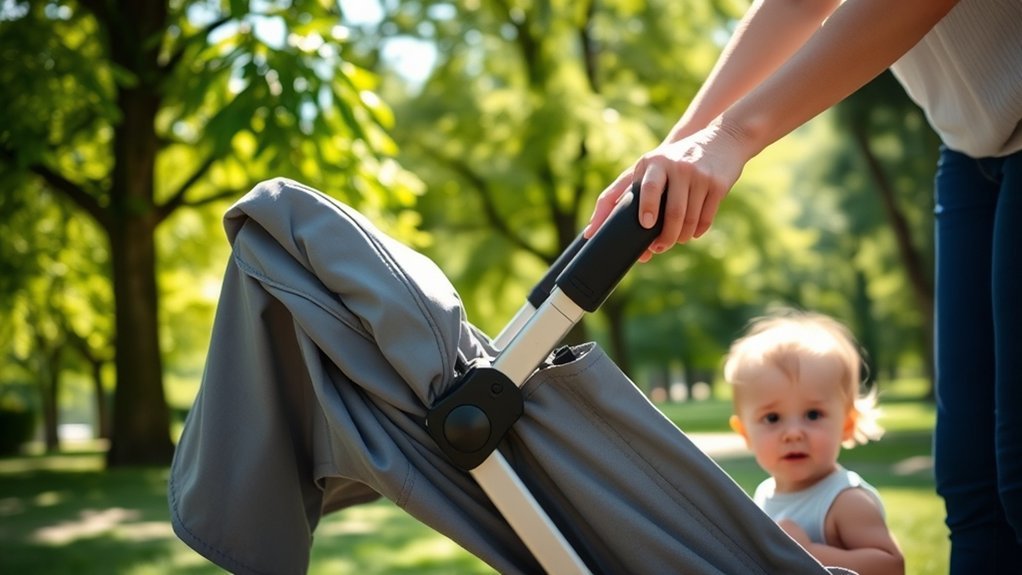
Folding and unfolding your stroller safely is essential for preventing accidents and injuries. Always make certain your child is at a safe distance before you operate the stroller mechanisms. Keep your fingers clear of hinges, joints, side locks, and folding points during the process to avoid painful pinching injuries.
Before placing your child inside, confirm that the stroller is securely locked in the open position. Listen for the lock to click, then gently press the frame to make sure it stays open. Avoid distractions by putting away your phone and focusing entirely on folding or unfolding the stroller.
Regularly check your hand placement before engaging the folding mechanisms to reduce the risk of injury. Do not let older siblings play with the release buttons, folding levers, or wheel locks. By following these safety precautions, you can confidently navigate the folding and unfolding process and enjoy outings without unnecessary worry.
Pro Tip: Practice folding and unfolding the stroller at home before using it in a parking lot, airport, bus stop, or crowded sidewalk. You will feel calmer and make fewer mistakes when you are in a hurry.
Keeping Your Child Comfortable and Safe
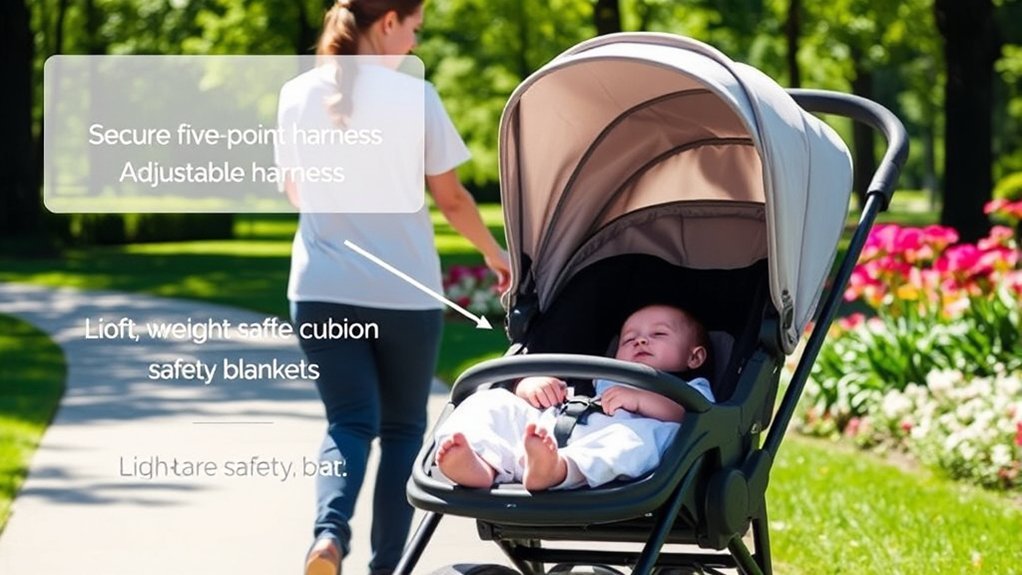
While enjoying stroller rides, prioritizing your child’s comfort and safety is essential. Start by securing your child with a five-point harness to prevent slips or injuries. Confirm you have stroller accessories like a UV protective canopy, which shields against direct sun exposure and helps regulate temperature.
Dress your child in lightweight, breathable fabrics during hot weather and layer clothing for warmth when it’s cold. Avoid covering the stroller with a thick blanket, since this can trap heat and reduce airflow. In warm weather, look for shade, take breaks, and check your child often for flushed skin, sweating, fussiness, or unusual sleepiness.
Regularly check the stroller’s safety features before each use, confirming everything functions properly. This proactive approach keeps your little one safe. Also, maintain awareness by minimizing distractions, like phone use, while pushing the stroller. Don’t forget about child hydration; bring water for older babies and toddlers when appropriate, especially on warmer days. By following these guidelines, you’ll create a comfortable and secure environment for your child during every stroller ride.
Safe Stroller Use by Age and Stage
Your child’s age and physical development should guide how you use the stroller. Newborns need a stroller seat that reclines enough to support the head, neck, and airway, or a compatible infant car seat attached exactly as the stroller maker directs. Babies who cannot sit steadily should not ride in an upright seat without proper support.
As your child grows, keep checking the weight and height limits. Toddlers may try to stand, lean out, unbuckle straps, or climb in and out by themselves. Keep the harness fastened, teach them to sit while the stroller moves, and park the stroller with the brakes locked before helping them get in or out.
For older children, watch the maximum weight limit closely. A stroller that feels smooth with a smaller baby can become harder to steer or stop with a heavier child. Extra weight also changes balance, especially when the storage basket is full.
Using Strollers Near Cars, Curbs, and Crowds
Stroller safety matters most in busy areas. In parking lots, keep the stroller close to your body and avoid standing behind vehicles that may back up. When crossing streets, stop at the curb, lock your attention on traffic, and keep the stroller slightly behind you until it is safe to cross.
At curbs, slow down and use both hands. Tip the stroller only as much as needed, and avoid sudden drops that can jolt your child or damage the frame. In crowded areas, keep your child’s hands inside the stroller and move slowly around doors, elevators, store aisles, and tight walkways.
A safe stroller ride starts before you leave home: buckle the harness, check the brakes, respect weight limits, and make sure the frame is locked open.
Jogging Stroller and Terrain Safety
Only use a stroller for jogging or running if the manufacturer clearly labels it for that activity. A jogging stroller usually has larger wheels, stronger suspension, a secure harness, a wrist strap, and better control on faster movement. A regular stroller is not designed for running, even if it rolls smoothly on sidewalks.
Before jogging, make sure your child meets the age and developmental guidance in the manual. Use the wrist strap, buckle the harness, lock or set the front wheel as directed, and avoid rough trails unless the stroller is designed for that terrain. Slow down on turns, wet surfaces, gravel, and slopes.
If you use the stroller on grass, packed dirt, park paths, or uneven sidewalks, inspect the wheels more often. Debris, worn tread, low tire pressure, or loose axles can affect steering and braking.
Stroller Recalls and Product Registration
Product registration helps you receive safety updates from the stroller manufacturer. If your stroller came with a registration card or online registration option, complete it soon after purchase. You should also keep the model name, model number, manufacture date, and purchase information in a place you can find quickly.
Check recall notices if you buy a used stroller, receive a hand-me-down, or notice a part that seems unsafe. If your stroller is recalled, stop using it until you understand the repair, replacement, refund, or safety instructions from the manufacturer. Do not try to create a homemade fix for a recalled safety part unless the manufacturer specifically provides that repair method.
Secondhand Stroller Safety Check
A used stroller can be convenient, but it deserves a careful safety review before your child rides in it. Confirm the stroller has all original parts, including the harness, buckle, brakes, wheels, locking latches, and any car seat adapters. Avoid using a stroller with missing labels, unknown model information, frame damage, or parts that do not lock securely.
Look for rust, cracks, exposed sharp edges, torn fabric, frayed straps, sticky buckles, and wheels that wobble or drag. Make sure the stroller opens and closes smoothly without collapsing unexpectedly. If you cannot confirm the model, manual, or recall status, choose a safer option.
Stroller Safety Checklist Before Each Walk
- Confirm the frame is fully open and locked.
- Buckle the five-point harness and adjust it snugly.
- Check that the brakes engage and release properly.
- Inspect wheels, tires, and axles for damage or debris.
- Keep heavy bags off the handlebar.
- Use only approved accessories and attachments.
- Keep hot drinks away from your child.
- Check weather protection, airflow, and your child’s comfort.
- Stay alert around traffic, curbs, stairs, escalators, and crowds.
Sources
- HealthyChildren.org from the American Academy of Pediatrics — stroller shopping and safety guidance for parents.
- U.S. Consumer Product Safety Commission Recalls — recall checks for strollers and other child products.
- U.S. Consumer Product Safety Commission Strollers and Carriages Guidance — stroller safety standards and product safety background.
- National Highway Traffic Safety Administration — child passenger safety guidance for car seats and travel systems.
Related Guides
Frequently Asked Questions
What Age Is Appropriate for a Child to Use a Stroller?
Many babies can ride in a stroller from birth only if the stroller supports a safe reclined position or uses a compatible infant car seat. An upright stroller seat is usually better once your baby has enough head and neck control. Always follow the stroller manual’s age, weight, and recline guidance.
Can I Use a Stroller for Jogging or Running?
Yes, but only use a stroller labeled for jogging or running. A jogging stroller should have features such as a secure harness, stable wheels, strong brakes, and a wrist strap. Follow the manufacturer’s age guidance before running with a baby, and avoid rough terrain unless the stroller is designed for it.
How Do I Choose the Right Stroller for My Needs?
Choose a stroller based on your child’s age, your daily terrain, storage needs, vehicle space, and how often you fold it. Look for a stable frame, easy brakes, a secure harness, smooth steering, clear weight limits, and a design that fits your routine.
Are There Strollers Suitable for More Than One Child?
Yes. Double strollers and tandem strollers are designed for two children. A side-by-side stroller can feel easier to access, while a tandem stroller may fit through narrow spaces more easily. Check each seat’s weight limit and use the harnesses for both children.
What Should I Do if My Stroller Gets Recalled?
If your stroller gets recalled, stop using it right away and follow the manufacturer’s recall instructions. The fix may involve a repair kit, replacement part, refund, or updated use guidance. Check the model number carefully so you know whether your exact stroller is affected.
Is It Safe to Hang a Diaper Bag on Stroller Handles?
It is safer not to hang heavy bags from stroller handles unless the manufacturer specifically allows it. Extra handle weight can make the stroller tip backward. Use the storage basket within its weight limit or carry the bag separately.
Should I Lock the Brakes Every Time the Stroller Stops?
Yes. Lock the brakes whenever the stroller is stopped, even on flat ground. This is especially important when loading or unloading your child, standing near traffic, waiting on a slope, or pausing near a curb.
Conclusion
In summary, keeping stroller rides safe is essential for your child’s well-being. By buckling them in securely, using the brake, respecting weight limits, and avoiding heavy bags on handles, you can prevent many common accidents. Regularly inspect your stroller, keep the manual nearby, register the product, and check recalls when needed.
Stay aware of your surroundings, much like a knight guarding their castle. With these practices, you can enjoy peaceful strolls while ensuring your little one is comfortable and secure. Remember, safety first makes every outing calmer, smoother, and more enjoyable.
