Yes, you can bring a Doona stroller on a plane. In the United States, Doona states that the Doona + and Doona X are FAA-certified for air travel, and the FAA recommends using an approved child restraint system (CRS) in a child’s own ticketed seat. If your baby is traveling as a lap infant, plan to gate-check or check the Doona unless your airline specifically permits it as cabin baggage. If you use the Doona as a car seat onboard, install the carrier according to its aircraft instructions and do not use the LATCH base on the aircraft.
Last updated: September 11, 2026. Reviewed against current Doona and FAA guidance.
Quick Answer
Yes. For U.S. travel, the Doona + and Doona X are FAA-certified for aircraft use as child restraints. The safest, most predictable setup is to buy your child a seat and use the Doona in car-seat mode according to the manufacturer’s aircraft instructions. If your child is a lap infant, gate-checking is usually the practical fallback. Airline rules still matter for seat location, aircraft restrictions, stroller handling, and international itineraries.
Key Takeaways
- For U.S. travel, Doona says the Doona + and Doona X are FAA-certified for aircraft use; international carrier rules can differ.
- Buying a separate seat is the only way to guarantee that a child under two can use an approved CRS during the flight, according to the FAA.
- A window seat is commonly preferred for a CRS because it is less likely to block another passenger’s path to the aisle.
- Do not assume the Doona will qualify for overhead-bin storage; if it is not being used in a ticketed aircraft seat, be prepared to gate-check or check it.
- Keep the aircraft-approval label visible and save the Doona aircraft guide plus your airline’s CRS policy on your phone.
At a Glance
| Best Option | Use the Doona in a ticketed aircraft seat when appropriate; otherwise plan to gate-check or check it. |
| Ticket Needed | Yes for guaranteed CRS use by a child under two; a purchased seat is the only way to guarantee it. |
| Seat Choice | Window seat is commonly preferred because it is less likely to block another passenger’s exit path. |
| Main Documents | Doona aircraft guide, visible approval label, airline CRS policy, booking details, and child travel documents when required. |
Contacting the Airline Before Your Flight
Before you head to the airport, confirm how your operating airline handles the Doona stroller and Doona car seat. For U.S. flights, the FAA says airlines must allow an approved, properly labeled CRS for an eligible child when it is installed correctly in an appropriate ticketed seat; the airline may still specify safe seat locations for the aircraft. International carriers can apply different rules, so check the operating carrier rather than relying only on the airline that sold the ticket.
Ask about seat-placement restrictions, premium-cabin limitations, exit-row rules, and whether the flight is operated by a partner airline. Also confirm where a gate-checked Doona will be returned after landing. Doona’s current U.S. safety guidance states that the Doona + and Doona X are FAA-certified for air travel.
Save a screenshot of the airline’s current stroller and CRS policy and keep the Doona user and aircraft-installation guides available offline. If staff question the restraint, the approval label on the seat and the manufacturer’s instructions are more useful than a general statement that the product is “travel friendly.”
Pro Tip: Ask about the exact flight and cabin: “I have a ticketed seat for my baby and an FAA-certified Doona infant car seat. Are there any seat-location or aircraft restrictions on this flight?” That wording separates CRS use from stroller-checking rules.
Understanding Ticket Requirements for Infants
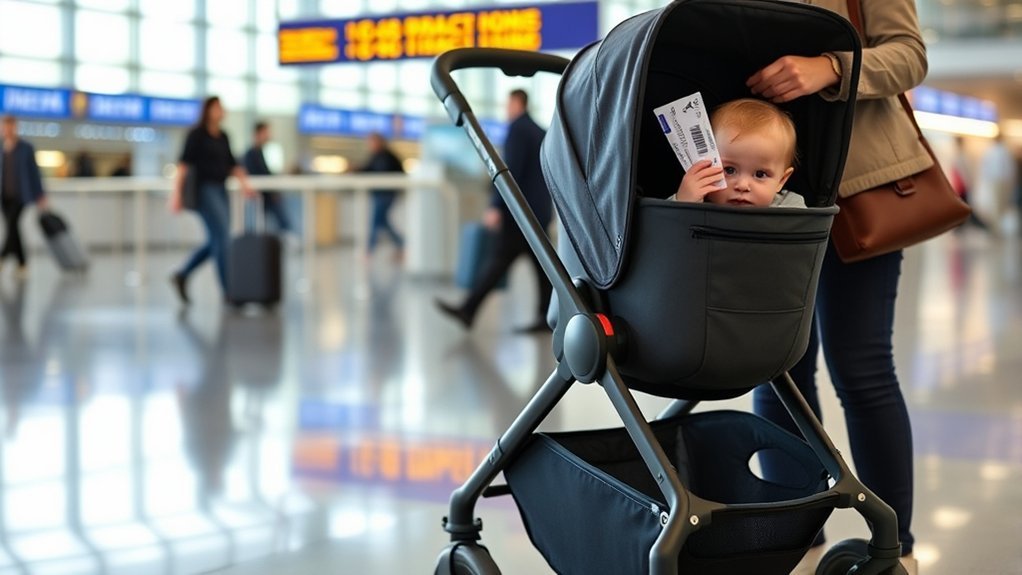
When traveling with an infant, understand the ticket policy before deciding how to use your Doona. Children under two can often travel as lap infants, but a lap-infant booking does not give the child a seat. The FAA says buying a ticket is the only way to guarantee that a child under two can use an approved CRS for the flight.
If you do not buy a seat, an airline may sometimes let you use an empty seat if one is available and the carrier assigns it to you, but you should not plan around that possibility. On a full flight, you will need to follow the airline’s check or gate-check process for the Doona if your child is traveling on your lap.
Do I Need to Buy a Seat for My Baby?
Children under two may often fly on a parent’s lap, but a lap-infant reservation does not reserve a place for the Doona. For guaranteed onboard use, book a separate seat for the child and install the Doona only if the child fits the restraint’s current model-specific limits and the seat is placed where the airline permits a CRS.
A separate seat also lets your child remain restrained during taxi, takeoff, landing, and turbulence when the CRS is properly installed. The FAA strongly recommends an approved CRS for children under two rather than holding them on a lap. Children age two and older require their own ticketed seat on U.S. airlines.
What Changes When a Child Turns Two?
For a child under two, a paid seat is the reliable choice if you want to use a Doona car seat throughout the flight. A lap infant may travel without a separate seat where airline rules allow, but that means the Doona cannot be installed unless the airline gives you an available seat.
For children two and older, a ticket is required, and they must occupy their own seat. If you still want to use an approved child restraint system for an older child, check your airline’s size, weight, and seat placement rules. The safest choice is to verify everything with the airline before your travel day.
When Is an Extra Seat Worth Buying?
A separate seat costs more, but it is the only way to guarantee that a child under two has a place for an approved CRS. It also gives you a predictable installation plan instead of hoping an empty seat remains available at boarding.
- Children under two often have the option to fly on a parent’s lap.
- A separate ticket is the only way to guarantee Doona car-seat use for a child under two.
- Airlines may set seat-location and aircraft-specific restrictions for child restraint systems.
- An extra seat can give both you and your baby more space during the flight.
- Saving the airline policy and Doona aircraft guide can help resolve questions at the gate.
Warning: A lap-infant booking does not guarantee a seat for the Doona. If the airline does not assign your child an empty seat, the Doona must be checked or gate-checked according to carrier policy.
Choosing the Right Seat for Your Doona
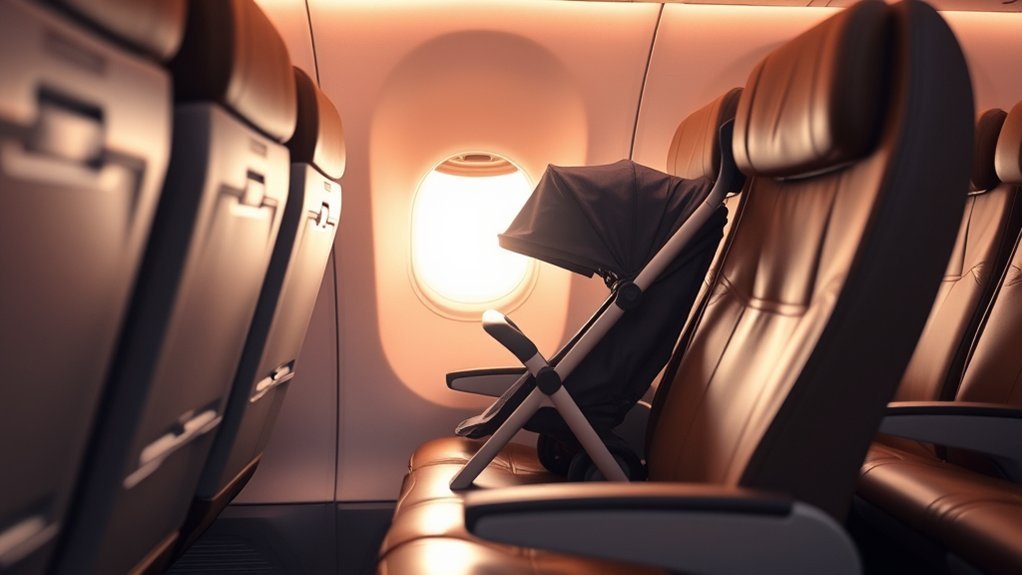
When traveling with your Doona, seat placement matters because a CRS cannot obstruct another passenger’s route to the aisle. A window seat is therefore commonly preferred. Some airlines allow other placements in certain cabin layouts, so follow the operating carrier’s instructions for your aircraft.
Do not select an exit row for a CRS, and check the airline’s rules for rows near exits, bulkheads, and premium seats. The FAA notes that if a ticketed, approved CRS does not fit one particular seat, the airline must accommodate it in another seat in the same class of service.
Why Is a Window Seat Usually Preferred?
Choosing a window seat for your Doona car seat can make travel smoother. It keeps the car seat away from the aisle, reduces the chance of blocking other passengers, and often meets airline placement rules for child restraint systems.
- Helps prevent aisle obstruction during boarding and in-flight movement.
- Matches the preferred CRS location on many U.S. carriers.
- Keeps the child restraint away from food carts and aisle traffic.
- Reduces the chance that the restraint blocks another passenger’s route to the aisle.
- Makes it easier for the parent in the next seat to reach the child.
Which Seat Locations Can Restrict a Car Seat?
Selecting the right seat for your Doona can affect both safety and convenience. A window seat is often the best choice because it keeps the car seat out of the aisle. An aisle seat may offer more parent movement, but it is usually not ideal for an installed car seat. A middle seat may be allowed in some aircraft layouts, but it can be less convenient.
Here’s a quick reference table to guide your decision:
| Seat Type | Safety Features | Accessibility Options |
|---|---|---|
| Window Seat | Keeps the CRS out of the aisle and usually avoids blocking another passenger’s exit path | Parent can sit beside the child and access the baby easily |
| Aisle Seat | Often restricted because the CRS can block passenger movement | Gives the parent more room to stand, but may not be allowed for car seats |
| Middle Seat | May be allowed when it does not block another passenger’s path; airline rules decide | Less convenient for parents and nearby passengers |
Confirm seat details with your airline before departure so you can avoid being moved at the gate or after boarding.
Should You Gate-Check a Doona or Bring It Onboard?
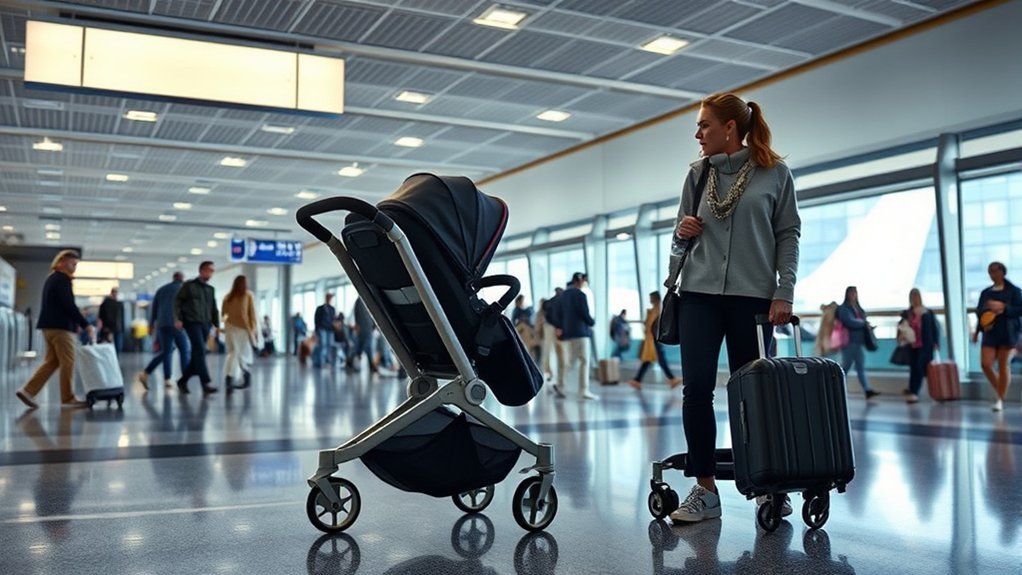
If your child is not using the Doona in a ticketed aircraft seat, gate checking is usually the simplest plan because you can use it as a stroller through most of the airport and hand it over near boarding. Exact handling varies by carrier, so get the gate-check tag before boarding begins and ask where the Doona will be returned after landing.
Bringing the Doona onboard as a stroller is different from bringing it onboard as an approved car seat. For in-seat use, retract the wheels and follow the Doona aircraft-installation instructions. For storage, do not assume it will fit an overhead bin; compare your exact Doona model’s folded dimensions with the operating airline’s cabin-bag limit before you travel.
- Gate checking may not require a travel bag, although a padded bag can help protect the Doona.
- Keep the wheels down while using it through the airport, then follow airline instructions at the gate.
- Do not rely on overhead-bin storage; cabin limits and bin dimensions vary by airline and aircraft.
- The Doona LATCH base is not used for aircraft installation; pack or check it only if you need it at your destination.
- Check your exact model’s folded dimensions and weight against the airline’s current stroller and carry-on rules.
Can the Doona Fit in an Airplane Overhead Bin?
Do not plan on overhead-bin storage unless your airline confirms it. The current U.S. Doona + measures 17.4 x 26 x 22.4 inches when folded and weighs 17.2 pounds. Even when the weight is within a carrier’s stroller limit, the folded dimensions may exceed standard carry-on limits. Your exact model and aircraft still matter, so treat overhead storage as an airline-specific exception rather than the default.
If you want a broader size comparison before you fly, see our guide to airplane stroller size limits.
What Happens at Airport Security With a Doona?
At a U.S. TSA checkpoint, child car seats are permitted in carry-on or checked baggage. Be ready to remove your child, retract or fold the Doona as directed, and send the seat through screening if it fits the equipment. If it is too large for the X-ray system, officers can screen it another way. Keep loose accessories in your bag so the Doona is easier to inspect and nothing is left behind.
For many families, gate checking creates the simplest balance: you keep the stroller through the airport, avoid carrying extra weight through the cabin, and collect it after the flight according to the airline’s gate-check process.
Note: A gate-check tag does not always mean jet-bridge return. Some airports send strollers to baggage claim or oversized baggage. Ask the gate agent where your Doona will be returned, especially on connections and international flights.
What Documents Should You Bring for a Doona?
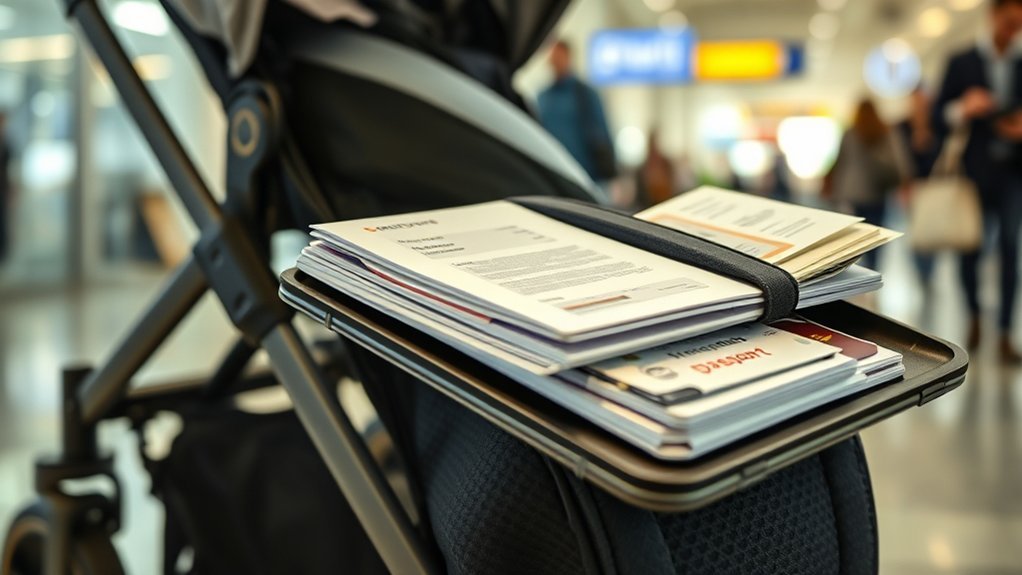
When traveling with your Doona stroller, keep the approval evidence easy to reach. The FAA tells travelers to confirm that a U.S.-standard CRS carries wording showing it is certified for use in motor vehicles and aircraft. Keep that label visible, and save the Doona aircraft guide offline in case a crew member asks how the seat is installed.
Also save your airline’s car seat policy, stroller-checking policy, and your child’s seat assignment. A screenshot is useful when Wi-Fi is poor or a codeshare flight is handled by a different operating carrier.
Your travel checklist should include your booking confirmation, infant ticket details, boarding passes, child identification documents if required for your trip, and any airline-specific forms. If you are flying internationally, check passport and entry requirements for your child well before departure.
Tips for Using a Doona Stroller on a Plane
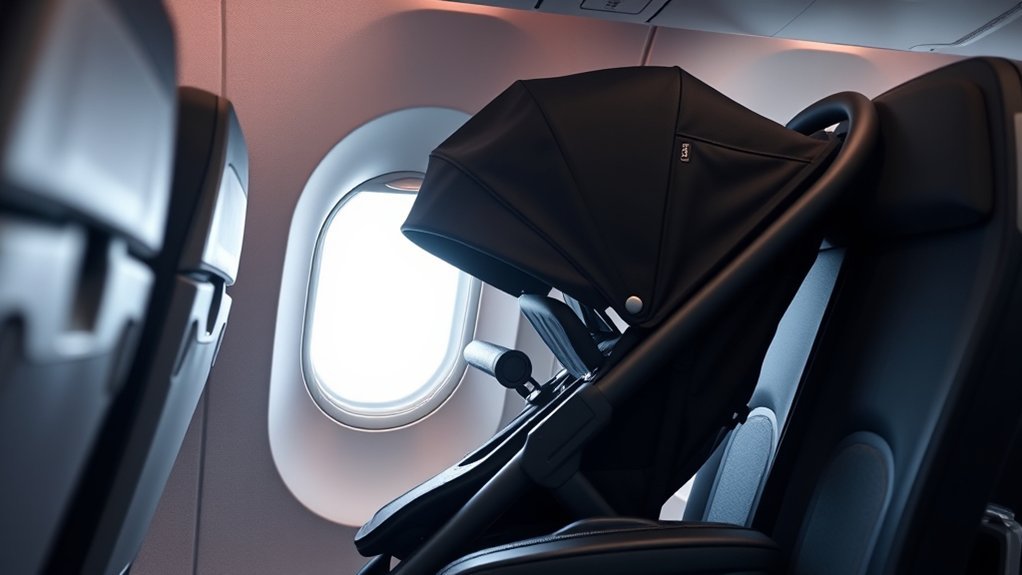
To make using the Doona easier on travel day, prepare before you reach the airport. Know whether you are gate-checking it, checking it at the ticket counter, or using the car seat onboard. Each choice changes what you need to do at check-in, security, and boarding.
- Contact the airline in advance to confirm policies for the Doona, infant tickets, and seat assignments.
- Buy a separate seat if you want guaranteed onboard CRS use for a child under two.
- Use gate-checking when you want stroller convenience in the airport but do not need the car seat during the flight.
- Consider a padded travel bag to reduce scratches and dirt during handling.
- Keep the Doona aircraft guide, approval label, and airline CRS policy easy to reach.
- Practice folding and unfolding the Doona before your trip so you can move quickly at security and the gate.
- Remove loose accessories before gate checking so nothing falls off during handling.
- Arrive early because traveling with baby gear usually takes extra time at check-in and security.
With these steps, your trip with the Doona can feel more organized and less stressful from curbside drop-off to arrival.
Frequently Asked Questions
Can I use the Doona as a car seat on the plane?
Yes, the current U.S. Doona + and Doona X are FAA-certified for aircraft use. For a child under two, buying a separate ticket is the only way to guarantee a seat for the CRS. Install the Doona according to its aircraft guide and follow the airline’s safe-seat placement rules.
Are there additional fees for bringing a Doona stroller?
Many airlines check or gate-check a stroller and car seat without a standard baggage fee, but allowances vary by carrier and itinerary. Check the operating airline’s current family-travel policy before departure.
How do I clean the Doona after air travel?
After flying, wipe the frame, wheels, and handle with a damp cloth and mild soap. For fabric areas, follow the Doona care instructions and avoid harsh cleaners. Let all parts dry fully before storing the stroller or using it again.
What happens if my Doona gets damaged during travel?
If your Doona is damaged during travel, report it to the airline before leaving the airport when possible. Take photos, keep baggage tags, and file a damage claim promptly. You can also check whether your travel insurance or credit card coverage applies.
Can I bring extra accessories for the Doona on the plane?
You can usually bring Doona accessories, but they must fit within your airline’s carry-on, personal item, or checked baggage limits. Remove loose accessories before gate checking so they do not get lost or damaged.
Should I check the Doona at the counter or at the gate?
Gate checking is often easier because you can use the Doona through the airport until boarding. Counter checking may be better if you want to move through the airport with a baby carrier instead or if the airline asks you to check larger baby gear earlier.
Do I need the Doona base on the airplane?
No. The Doona carrier is installed on an aircraft without the LATCH base. Follow the aircraft-installation guide for your exact model, and pack or check the base only if you need it for vehicle use at your destination.
Is the Doona FAA approved for airplane use?
Yes. Doona’s current U.S. guidance says the Doona + and Doona X are FAA-certified for air travel. Use the approval label and aircraft guide for your exact model, and install the seat according to the manufacturer’s instructions.
Can I use the Doona in an empty airplane seat if I did not buy one?
Possibly, if the airline assigns your child an available seat and permits the CRS there. Do not count on this. The FAA says buying a ticket is the only way to guarantee CRS use for a child under two.
Conclusion
You can bring a Doona stroller on a plane, but decide before travel whether you will use it as an onboard CRS or check it as baby gear. For U.S. travel, the Doona + and Doona X are FAA-certified, and a purchased seat is the only way to guarantee CRS use for a child under two. If you are not using it in a ticketed seat, plan for gate-checking or checked baggage rather than assuming it will fit in the cabin.
Before departure, check the operating airline’s seat-location and stroller rules, save the Doona aircraft guide, keep the approval label visible, and remove loose accessories before checking the seat. That preparation gives you a clear fallback whether the Doona stays with your child in the cabin or travels in the hold.