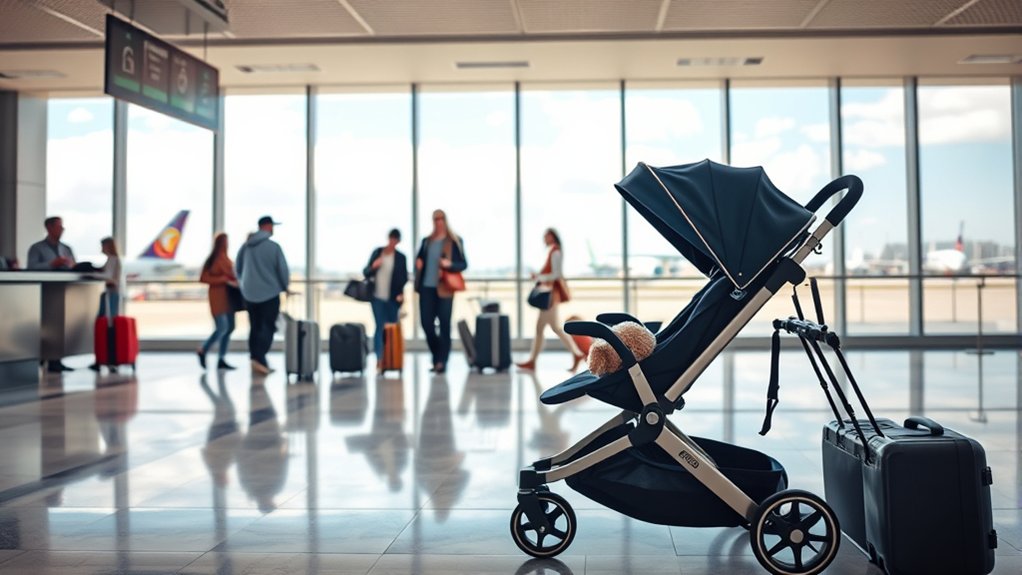
Traveling with a stroller can feel like maneuvering through a maze, especially when you consider the different airline policies, carry-on limits, gate-check rules, and airport security steps. Not every stroller is suitable for air travel, and understanding the restrictions before you leave home can save you from last-minute surprises at the airport. Lightweight and compact options are usually easier to fold, carry, and store, while larger models often need to be checked. So, how do you choose the right stroller for your journey? Let’s walk through the essentials so you can travel with more confidence.
Quick Answer
For air travel, choose a lightweight, collapsible stroller that is easy to fold, clearly labeled, and close to your airline’s carry-on or gate-check size rules. Compact travel strollers work best for airports, while bulky joggers and full-size models are usually better checked.
Key Takeaways
- Most airlines allow one stroller per child to be checked, but exact size and handling rules vary by airline.
- Compact, collapsible strollers are easier to move through airports and may qualify as carry-on items on some flights.
- Gate-checking lets you use the stroller until boarding, while ticket-counter checking may be better for bulky models.
- A padded travel bag, clear ID label, and early arrival can help prevent damage, delays, and mix-ups.
- Practice folding the stroller before your trip so security checks and boarding feel less stressful.
At a Glance
| Best Stroller Type | Lightweight, compact, and collapsible travel stroller |
| Best Airport Option | Gate-check if you want to use the stroller until boarding |
| Helpful Gear | Padded stroller bag, luggage tag, baby carrier, and small essentials pouch |
| Main Risk | Airline damage, size-limit issues, or needing to collect the stroller at baggage claim |
Understanding Airline Policies for Strollers
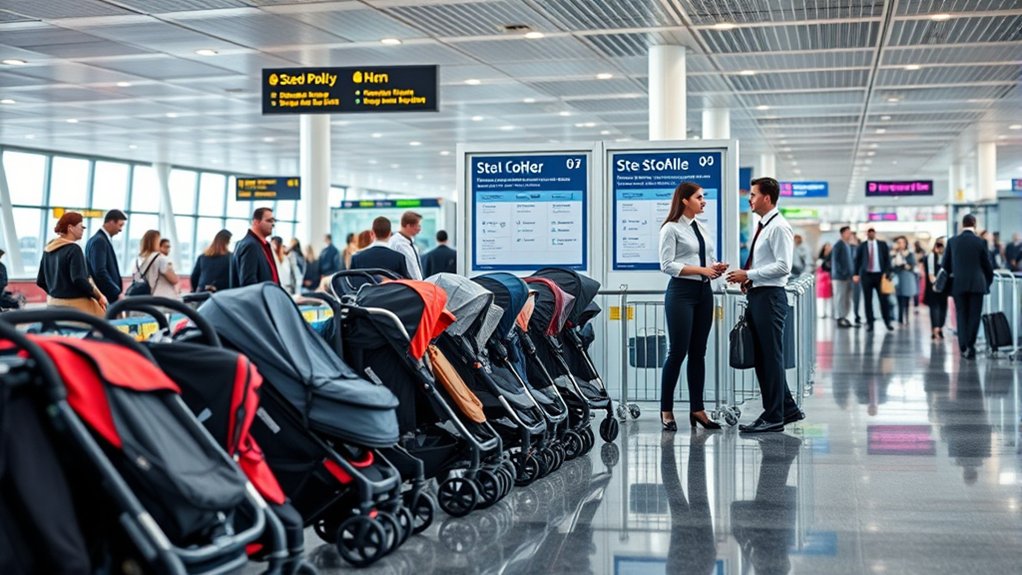
When planning to travel with your little one, understanding airline policies for strollers is essential. Each airline has specific regulations, including size and weight restrictions, so you’ll want to check these before your trip. Most airlines allow one stroller per child to be checked for free, and some even permit compact strollers as carry-ons if they meet the airline’s stroller size rules, often around 22 x 18 x 10 inches for very compact models.
Larger strollers, such as jogging strollers, double strollers, and bulky travel systems, typically need to be checked at the ticket counter or gate. Don’t forget to ask whether a complimentary plastic cover is available for gate-checked strollers to help protect them during transit. A plastic cover is useful for dust and dirt, but it may not protect the frame from rough handling, so a padded bag is better for expensive strollers.
To avoid any mishaps, clearly label your stroller with your name, phone number, email address, and destination airport. You can also place a second label inside the stroller bag in case the outside tag comes loose. This small step can make a big difference if your stroller is delayed, misplaced, or mixed up with another family’s stroller.
Note: Airline stroller rules can change by route, aircraft size, fare class, and airport staff instructions. Always check your airline’s current stroller policy before packing.
Choosing the Right Stroller for Air Travel
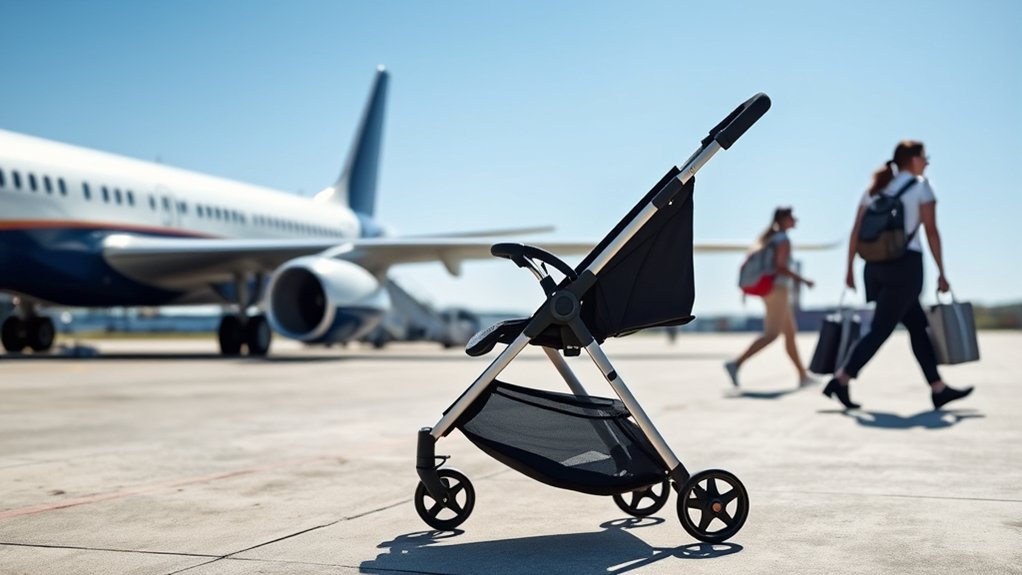
How do you choose the perfect stroller for air travel? The best option is usually the stroller that is easy to carry, folds quickly, fits your child safely, and meets your airline’s limits. Selecting the right stroller can greatly improve your travel comfort and reduce stress during check-in, security, boarding, and layovers.
Here are some key stroller features to keep in mind:
- Lightweight and compact design: Choose a stroller that is easy to fold, lift, and carry through airport terminals.
- Airline compliance: Verify your stroller meets the specific size and weight restrictions of your airline, usually not exceeding about 45 linear inches for compact travel models.
- Carry-on friendly fold: Smaller, collapsible strollers often fit as carry-ons on some airlines, while larger options may need to be checked.
- One-hand folding: A stroller that folds with one hand helps when you are holding your child, documents, or bags.
- Safe harness: A secure five-point harness helps keep your child stable while moving through crowded spaces.
- Storage basket: A small basket is useful for diapers, snacks, jackets, and travel documents, but avoid overloading it.
- Sun canopy: A good canopy helps when you are waiting near bright windows, walking outside the terminal, or exploring after arrival.
Always check your airline’s stroller policy, as rules can vary. With the right stroller, you’ll enjoy a smoother, more liberating travel experience with your little one by your side.
Packing and Protecting Your Stroller
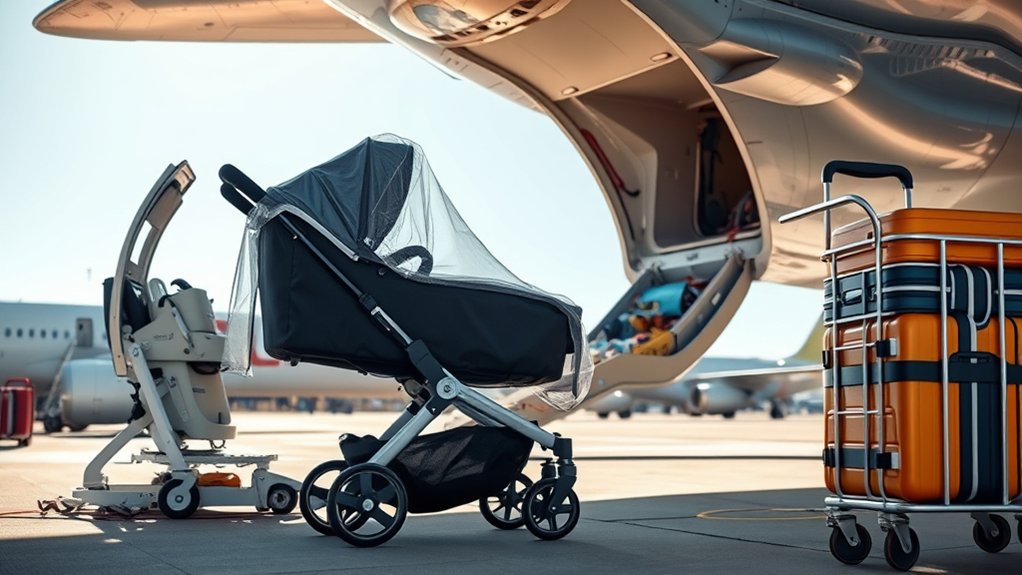
Properly packing and protecting your stroller can make all the difference in ensuring it arrives at your destination in one piece. Invest in padded travel bags for stroller protection, as airlines’ plastic covers often fall short. A fitted stroller travel bag can help protect wheels, fabric, handles, cup holders, and folding joints from scratches and dirt.
If your stroller is large, disassemble larger strollers by removing wheels, snack trays, parent consoles, bassinets, or loose accessories before checking it. This simplifies handling and helps meet airline size restrictions. Place small removable parts in a zippered pouch inside your luggage or inside the stroller bag so they do not get lost.
Don’t forget to label your stroller clearly with your name and contact information to prevent loss or mix-ups. Check your airline’s specific packing essentials and guidelines to avoid unexpected fees. Finally, consider using a lightweight or compact stroller for easier navigation through busy airports, making boarding and security checks a breeze. Your travel experience will be smoother, allowing you to focus on the adventure ahead.
Warning: Remove loose toys, clips, cup holders, fans, and stroller organizers before checking your stroller. These items can detach during handling and may not be covered if they are lost.
Gate-Checking vs. Checking in Your Stroller
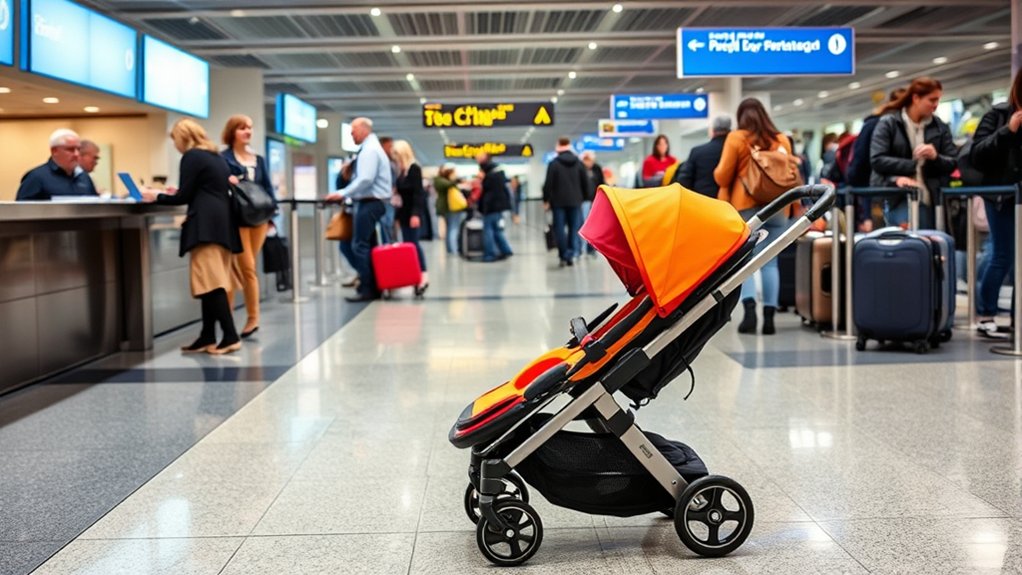
Choosing between gate-checking and checking in your stroller can greatly impact your travel experience. Gate-checking works well when you want to use your stroller through the airport, especially if your child gets tired easily or you have a long connection. Checking at the ticket counter can work better if the stroller is bulky, hard to fold, or not needed inside the airport.
Here are some key points to evaluate:
- Gate-checking advantages: You can keep your stroller until just before boarding, which adds convenience in the airport.
- Quick return: Gate-checked strollers are usually handed back at the aircraft door or jet bridge, making your arrival smoother.
- Size matters: Compact and lightweight strollers are easier to handle and more likely to comply with airline size restrictions.
- Ticket-counter checking: This can be simpler for heavy or oversized strollers, but you may need to carry your child through the airport afterward.
- Baggage claim delay: Larger checked strollers often need to be picked up at baggage claim, which can add unnecessary hassle after landing.
Confirm your airline’s policy on strollers before departure so you know whether your stroller will be returned at the aircraft door, the jet bridge, oversized baggage, or standard baggage claim.
Tips for Navigating Airports With a Stroller
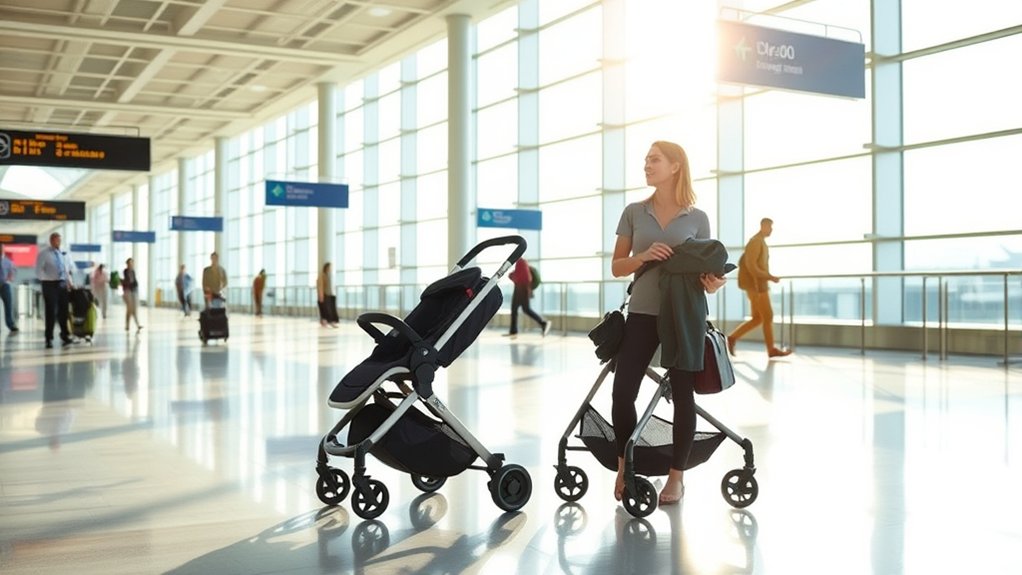
When you’re maneuvering the airport with a stroller, choosing a lightweight model can make all the difference in keeping your journey smooth. You’ll want to breeze through security checks, so pack your essentials strategically and consider using a baby carrier for your little one. Arriving early gives you the extra time you need to handle any unexpected challenges along the way.
Lightweight Gear Preference
Maneuvering busy airport terminals can feel overwhelming, but opting for lightweight gear makes the journey much smoother. When choosing a stroller, focus on the following:
- Select strollers under 15 lbs for easier handling.
- Look for compact, foldable designs that fit many airline carry-on size restrictions, such as 22 x 18 x 10 inches where accepted.
- Consider models that allow for one-hand folding to streamline transitions.
- Choose a stroller with a shoulder strap or carry handle if you expect stairs, shuttle buses, or long terminal walks.
- Use a small stroller organizer only inside the airport, then remove it before gate-checking.
Prioritizing lightweight materials doesn’t mean sacrificing stroller durability; many modern designs balance both for your convenience. A travel system combining a car seat and stroller can also simplify your airport experience, especially for infants. However, travel systems are often heavier, so compare convenience with how much you will need to lift and fold the stroller. Arriving early gives you extra time to navigate security and check-in while managing your gear effortlessly. Embrace this liberating approach, and enjoy your travels with ease.
Security Check Strategies
Maneuvering through security checks with a stroller can feel intimidating, but with a few smart strategies, you can streamline the process. First, remove any loose items or accessories from your stroller to avoid delays. Choose a collapsible model, as you’ll usually need to fold it for inspection at the security checkpoint.
If you have TSA PreCheck, use it when available because it can save time during screening. Be ready to lift your stroller through the metal detector or place it on the conveyor belt for screening if staff asks you to do so. Practicing folding and unfolding it beforehand can save precious minutes. Finally, arrive at the airport early to accommodate potential security checks and make your travel experience smoother.
Pro Tip: Keep boarding passes, passports, wipes, snacks, and one small toy in a separate pouch. That way, you do not need to dig through the stroller basket during security or boarding.
Benefits of Bringing Your Own Stroller
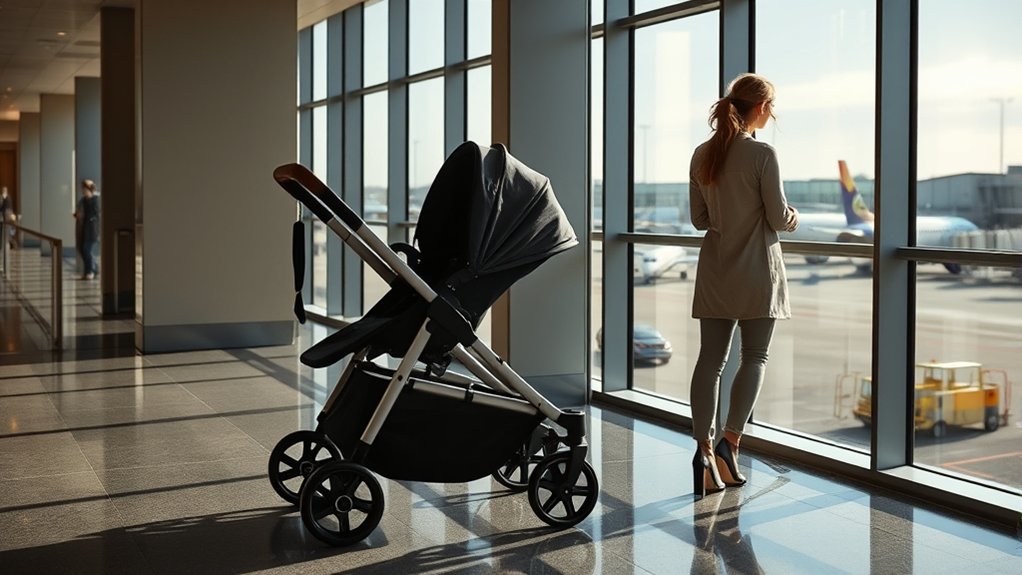
Bringing your own stroller on a plane offers numerous advantages that can greatly enhance your travel experience. With your personal stroller, you’ll benefit from:
- Stroller familiarity: Your child feels secure, which can reduce anxiety and irritability.
- Convenience: Maneuvering through busy airports becomes easier, allowing you to manage your luggage more comfortably.
- Safety: Your stroller’s cleanliness gives you more control compared to rental strollers.
- Resting space: Your child has a familiar place to sit during long lines, delays, and layovers.
- Destination comfort: You already have a stroller ready for hotels, sidewalks, theme parks, family visits, and sightseeing.
Travel comfort is essential, especially during long layovers or waiting in lines. Having a designated resting spot helps keep your little one calm and content. Plus, you eliminate uncertainties around rental availability and quality. By bringing your own stroller, you provide a reliable, familiar mode of transport that helps make your journey smoother and more enjoyable.
Recommendations for Travel-Friendly Strollers
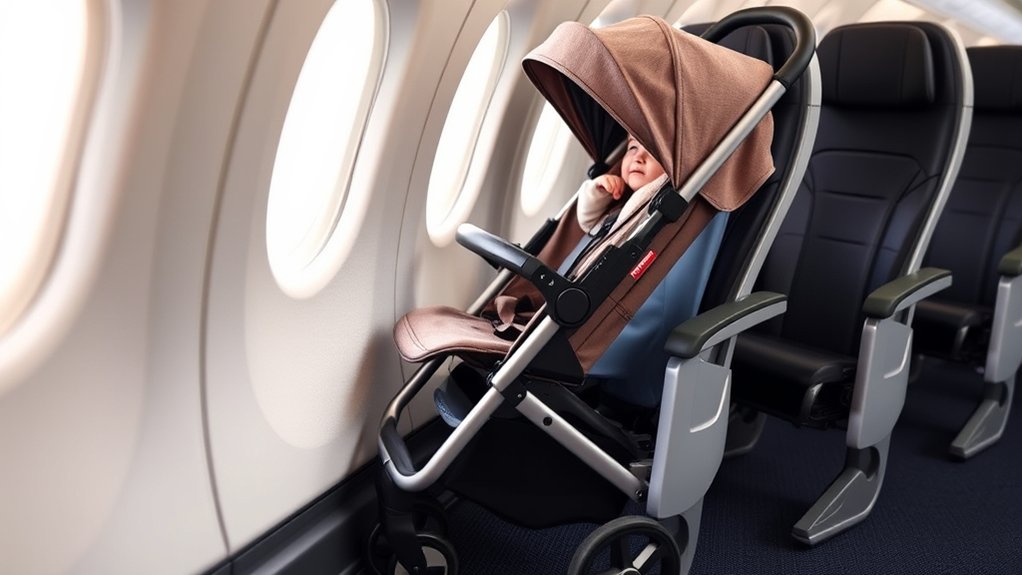
Choosing the right stroller can considerably enhance your travel experience, especially when flying. Look for travel-friendly options like the Babyzen YOYO2 or Cybex Libelle 2. These lightweight strollers, weighing under 15 lbs, feature a compact design and a one-hand fold mechanism, making airport navigation a breeze.
Many airlines accept collapsible strollers as carry-ons, as long as they fit within the airline’s allowed dimensions, often around 22 x 18 x 10 inches for compact models. Additionally, prioritize stroller features such as large storage baskets and UPF 50+ canopies for added comfort while exploring new destinations. To maintain your stroller’s integrity during transit, consider investing in a padded travel bag. This way, you can travel freely, knowing your essentials are safer and easier to manage.
Stroller Features That Matter Most for Flying
Not every stroller that works well at home works well at the airport. Before your trip, compare your stroller against the features that matter most during air travel.
- Folded size: A smaller folded size makes it easier to store, gate-check, or carry onto the plane if allowed.
- Weight: A stroller under 15 lbs is easier to lift into a car trunk, onto a shuttle, or through security.
- Fold speed: A quick fold helps when boarding lines move fast or staff asks you to collapse the stroller.
- Durable wheels: Strong wheels handle airport floors, parking lots, sidewalks, and hotel paths better.
- Recline: A reclining seat helps younger children nap during layovers or delays.
- Brake system: A simple foot brake keeps the stroller steady while waiting in lines.
- Canopy coverage: A larger canopy helps block bright terminal windows and sun at your destination.
Common Mistakes to Avoid When Flying With a Stroller
A little preparation can prevent many stroller-related travel problems. Avoid these common mistakes before and during your airport trip:
- Assuming all airlines have the same rules: Stroller size, weight, and return-location rules can differ.
- Leaving accessories attached: Cup holders, snack trays, hooks, and fans can break or disappear during handling.
- Forgetting to label the stroller: A clear label helps airline staff contact you if the stroller is misplaced.
- Using a stroller that is hard to fold: Complicated folds can slow you down at security and boarding.
- Overpacking the basket: You may need to empty the stroller quickly at security or before gate-checking.
- Skipping a travel bag: A bag helps protect fabric, wheels, and frames from dirt and scratches.
Frequently Asked Questions
Can I bring a non-collapsible stroller on a plane?
You usually can’t bring a non-collapsible stroller on a plane as a carry-on item. Airlines typically require carry-on strollers to fold small enough for cabin storage. A non-collapsible stroller will usually need to be checked at the ticket counter or possibly gate-checked, depending on the airline.
Are there age restrictions for children using strollers on planes?
There usually aren’t strict age restrictions for children using strollers in the airport, but you should prioritize child safety. Make sure your stroller suits your child’s age, weight, and height so they remain comfortable and secure during your trip.
What happens if my stroller gets damaged during travel?
If your stroller gets damaged during travel, report the damage to the airline before leaving the airport if possible. Ask for a written damage report and take photos of the stroller, baggage tag, and damaged areas. Some parents also consider stroller insurance or travel coverage for expensive models.
Can I use my stroller in the airport before boarding?
Yes, you can usually use your stroller in the airport before boarding. Many families use strollers through check-in, security, and the terminal, then gate-check them before entering the aircraft. Be ready to fold the stroller during security screening.
Is there a fee for checking in a stroller with my luggage?
Most airlines do not charge a standard baggage fee for checking a stroller for a child, but stroller policies vary. Always check your airline’s specific guidelines before you travel so you know whether your stroller can be checked free, gate-checked, or carried on.
Should I gate-check my stroller or check it at the ticket counter?
Gate-check your stroller if you want to use it through the airport and your stroller is light enough to handle near boarding. Check it at the ticket counter if it is bulky, heavy, or difficult to fold. For expensive strollers, use a padded travel bag either way.
Conclusion
To summarize, traveling with your stroller can be a breeze if you choose wisely. Picture yourself gliding through the airport like a jet-setter, your lightweight stroller in tow, effortlessly maneuvering through crowds. By understanding airline policies, selecting the right stroller, packing carefully, and preparing for security, you’ll help create a smooth journey for you and your little one.
The best stroller for flying is usually compact, easy to fold, clearly labeled, and protected in a travel bag. Embrace the adventure and enjoy the convenience of having your own stroller at your destination. It is more than baby gear; it is a travel companion that can make long airport days much easier.

