If you spend time in a home shop, a quality plasma cutter can change how fast and accurately you work. You can make cleaner cuts than you would with a grinder, save time on fabrication, and take on brackets, panels, art pieces, repairs, and small-shop projects with less rework. The right machine depends on your available power, compressor setup, material thickness, duty cycle needs, and how often you cut rusty, painted, or expanded metal.
Focus on duty cycle, pilot arc, voltage options, air supply, and real-world cutting control so the cutter matches your shop instead of forcing your shop to work around the cutter.
Quick Verdict
Best overall: ARCCAPTAIN Cut55 Prolux is the strongest all-around choice if you want modern controls, pilot arc, dual-voltage flexibility, and room to grow.
Best budget pick: S7 CUT50 is the practical low-cost option for DIY users who want more cutting ability than a grinder without paying for premium features.
Best for CNC or sensitive electronics: YESWELDER CUT-55DS PRO is the safer fit to consider when non-high-frequency start matters.
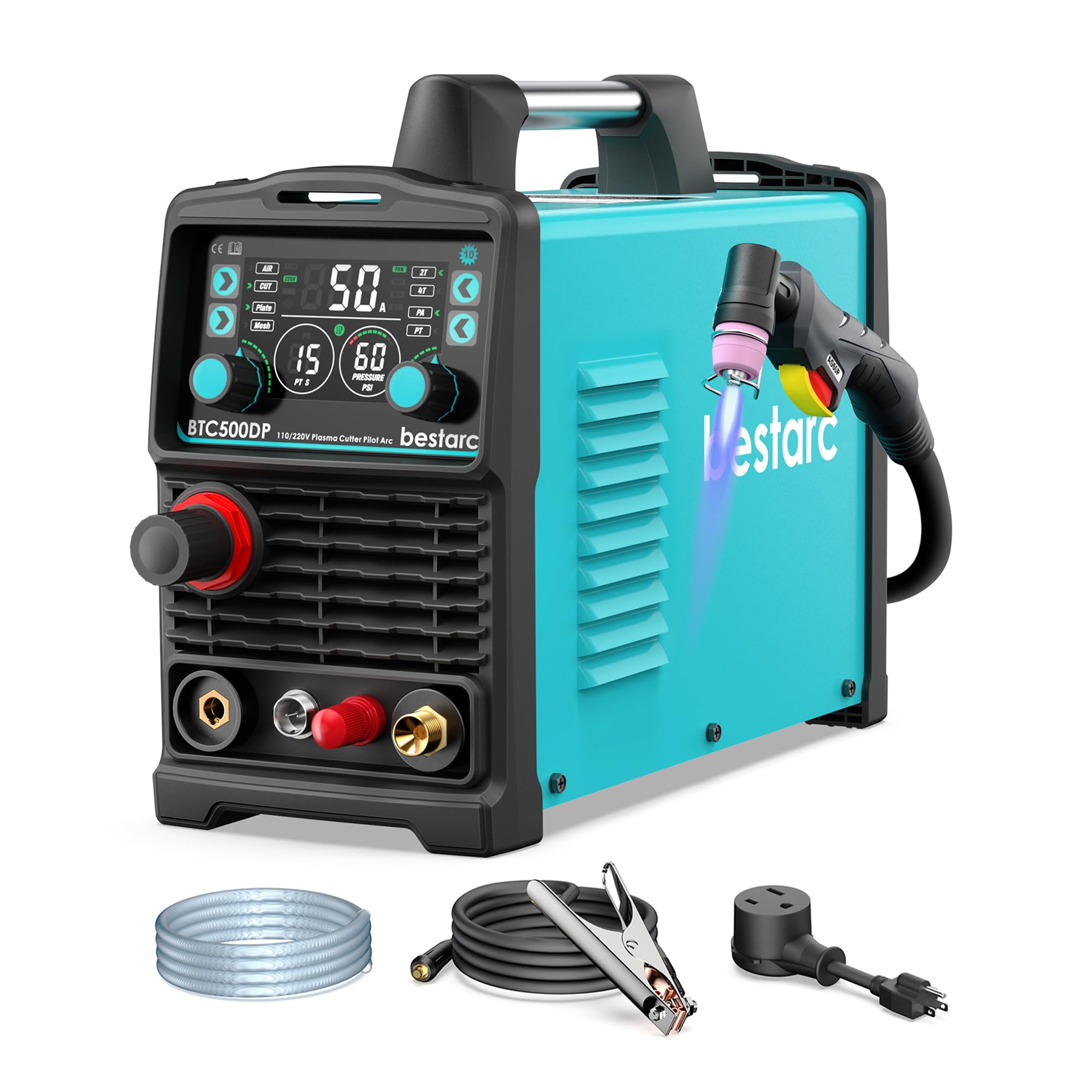
Best pilot-arc value: bestarc BTC500DP gives you a strong mix of pilot arc, LED controls, air sensing, and 110V/220V flexibility.
Top Picks
|
Category |
Product |
Score |
|---|---|---|
|
🏆 Best Overall |
93/100 |
|
|
💸 Best Budget |
80/100 |
|
|
🎯 Best for App Control |
92/100 |
|
|
🔰 Best Pilot Arc |
88/100 |
|
|
🚀 Best for Heavy DIY |
86/100 |
|
|
🔧 Best for CNC |
85/100 |
|
|
🎨 Most Versatile |
87/100 |
|
|
💼 Best for Auto Shops |
84/100 |
|
|
🏅 Best Premium Features |
90/100 |
|
|
💰 Best Value |
89/100 |
How We Picked
You want a cutter that matches your power and air setup, so we prioritized machines that support common home-shop voltages, offer useful cut capacity for DIY fabrication, and include features that make setup easier. We looked for dual-voltage options, pilot arc or non-touch starting, clear displays, air regulators or air-sensing features, portability, torch and ground-lead practicality, consumable availability, and buyer feedback about setup, cut quality, and reliability.
We also considered use-case fit. A budget buyer may prefer simple controls and low cost, while a CNC user may care more about non-high-frequency start. A small auto shop may value clean sheet-metal cuts, while a heavy DIY user may care more about 240V performance and longer duty cycle.
Before You Buy
- Check your power: 120V is convenient for light work, but 240V usually gives cleaner results on thicker material.
- Check your compressor: plasma cutters need dry, steady air. A weak compressor can make even a good cutter feel inconsistent.
- Look at clean cut, not just max cut: maximum thickness claims are usually slower and rougher than clean-cut ratings.
- Plan for consumables: keep spare tips, electrodes, cups, and swirl rings on hand if you cut often.
- Use proper protection: wear eye protection or a welding helmet, gloves, long sleeves, hearing protection, and work with good ventilation.
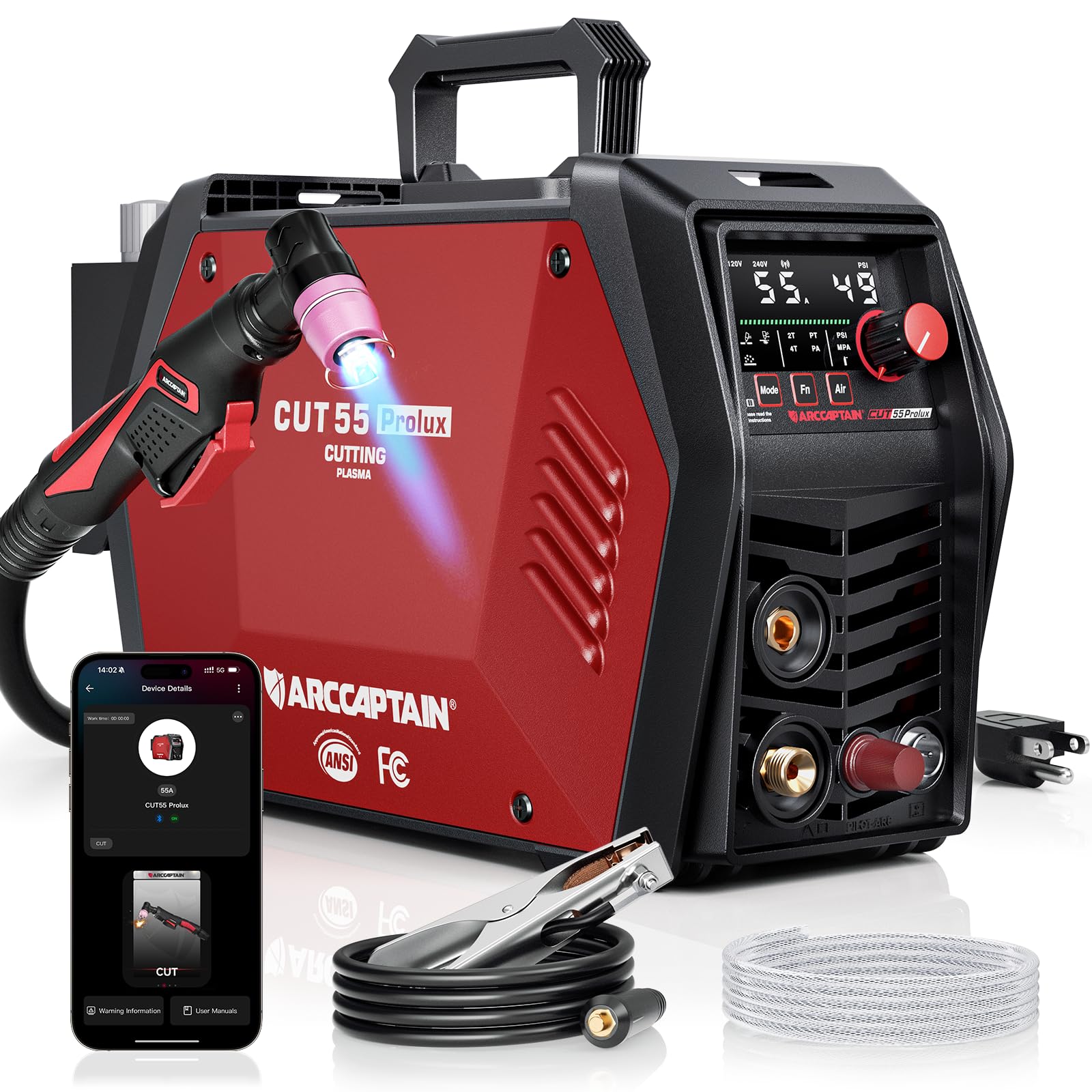
This is the best all-around pick if you want a plasma cutter that feels ready for a serious home shop. You can run it on household 120V for lighter trimming or switch to 240V when you need deeper cuts, and the non-touch pilot arc helps with rusty, painted, or expanded metal.
The app control and bright LED display make settings easier to monitor, while smart air pressure detection helps reduce guesswork during setup. It is still important to use dry air, check fittings on arrival, and keep consumables nearby, but this model gives you the best mix of power, features, and room to grow.
Who Should Buy This
Choose it if you want one cutter for garage repairs, metal art, sheet metal, brackets, and heavier weekend fabrication without jumping straight to industrial equipment.
Who Should Avoid This
Skip it if you only need occasional thin-sheet cutting and want the lowest possible price. A simpler budget model may be enough.
What People Say
Buyer feedback generally points to strong cutting ability for the size, useful pilot-arc performance, and convenient digital/app controls. Common cautions include checking air fittings and consumables during setup.
Overall Sentiment: Positive

When to Use It
|
Situation |
How It Helps |
|---|---|
|
Quick shop repairs |
Run on 120V for patch panels, brackets, and smaller automotive jobs. |
|
Art and detailed metalwork |
Pilot-arc and expanded-metal modes help with patterns, mesh, and shape cutting. |
|
Rusty or painted steel |
Non-touch pilot arc and rust-removal mode reduce prep time. |
|
Heavier fabrication sessions |
Switch to 240V for better performance on thicker stock. |
Ease of Use
|
Feature |
Ease Level |
|---|---|
|
Unboxing and first setup |
Moderate |
|
Selecting voltage and reading the LED display |
Easy |
|
Air hookup and fittings |
Moderate |
|
Starting cuts with pilot arc |
Easy |
|
Changing consumables and routine maintenance |
Moderate |
Key Benefits
- Non-touch pilot arc reduces the need to clean or scrape before every start
- Dual-voltage 120V/240V lets you use house circuits or shop power
- App control and LED display help with fast setting changes
- Smart air pressure detection helps warn when pressure is off
- Expanded metal and rust-removal modes save prep time
- Portable enough for moving around a garage but strong enough for heavier hobby use
If you want a no-nonsense plasma cutter for a home shop, this S7 CUT50 is the kind of tool you reach for when a grinder is too slow. It gives budget-focused DIYers dual-voltage flexibility, pilot-arc starting, and enough cutting power for common garage projects.
It is not the most polished option here, and you should inspect the ground lead, fittings, and consumables when it arrives. Still, it is a practical choice if you want more capability without paying for premium controls.
Who Should Buy This
Choose it if price is your main concern and you need a basic plasma cutter for brackets, patch panels, metal art, and occasional heavier cuts on 220V.
Who Should Avoid This
Skip it if you want refined controls, premium fittings, or the smoothest out-of-box setup.
What People Say
Users often like the cutting power for the price and the convenience of pilot arc. Common concerns include air leaks, short or thin cables, and the need to keep spare consumables nearby.
Overall Sentiment: Positive

When to Use It
|
Situation |
How It Helps |
|---|---|
|
Quick garage repairs |
Use 110V for brackets, patch panels, and small bodywork. |
|
Metal art |
Pilot-arc starts help with shape cutting and rougher stock. |
|
Rusty or painted materials |
The pilot arc reduces prep work before starting cuts. |
|
Heavier DIY cuts |
Switch to 220V for better output on thicker metal. |
Ease of Use
|
Feature |
Ease Level |
|---|---|
|
Unboxing and first setup |
Moderate |
|
Selecting voltage and plugging in |
Moderate |
|
Starting cuts with pilot arc |
Easy |
|
Air hookup and pressure adjustment |
Moderate |
|
Changing consumables |
Moderate |
Key Benefits
- Dual-voltage 110V/220V operation for light shop work and heavier cuts
- IGBT inverter and pilot arc help with painted or rusty surfaces
- Included air regulator and basic consumables help you get started
- Portable footprint for garage and job-site use
- Works with common metals when properly set up
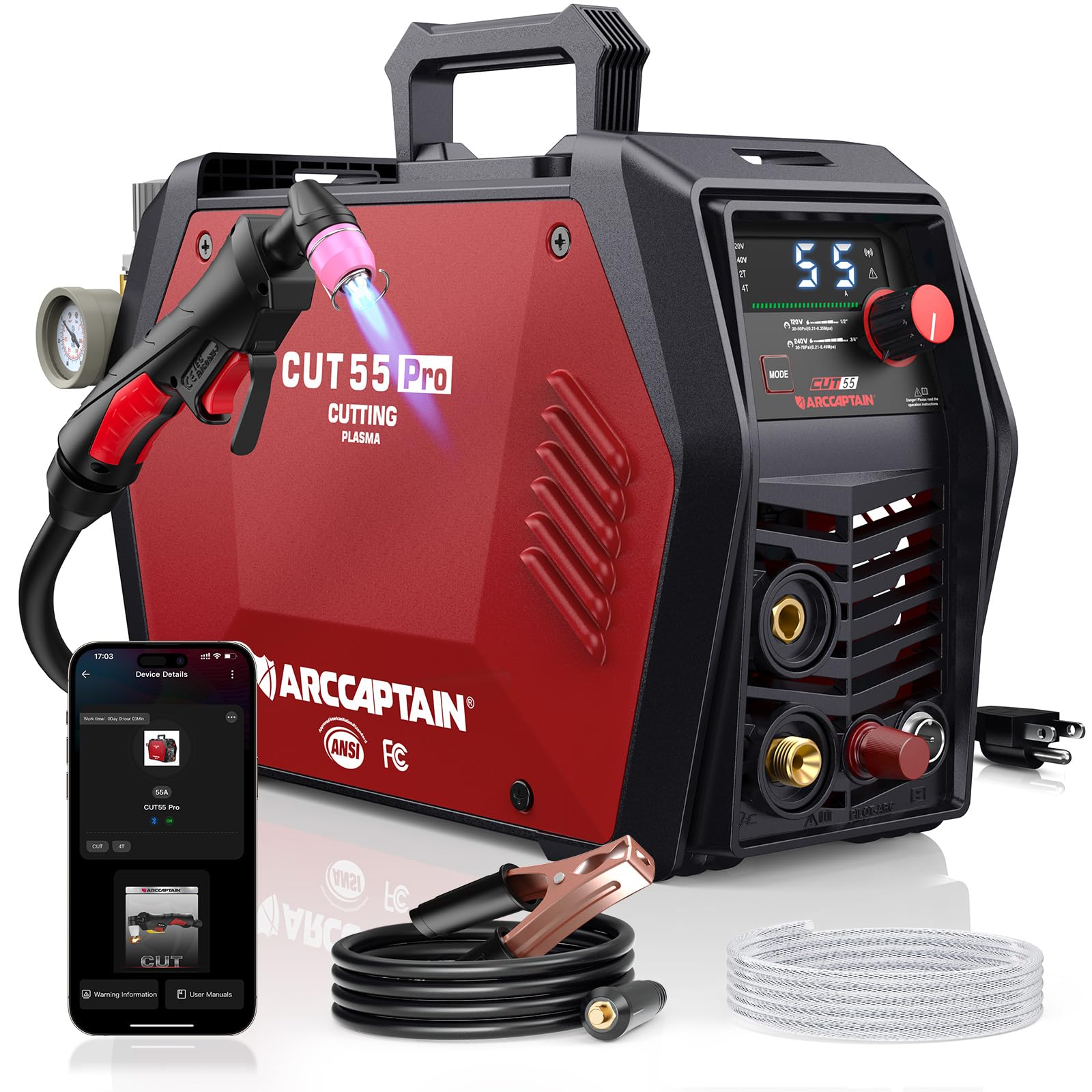
If you like digital control and want to adjust settings without constantly leaning over the machine, the CUT55 Pro is a smart upgrade. You can run it on 120V or 240V, use the app or LED display to tune settings, and rely on the non-touch pilot arc when stock is painted, rusty, or uneven.
The 2T/4T modes are useful for longer cuts, and the built-in regulator/filter helps simplify setup. For the best results, pair it with a capable compressor and dry air, especially when pushing the machine on thicker material.
Who Should Buy This
Choose it if you want modern controls, app support, and pilot-arc convenience for frequent garage or small-shop projects.
Who Should Avoid This
Skip it if you prefer simple knobs only or do not need app-based adjustments.
What People Say
Buyers often praise its cutting confidence on common home-shop metals, plus the app control, clear LED display, and fast setup. Common gripes include air fittings, setup learning curve, and occasional support or QC concerns.
Overall Sentiment: Positive

When to Use It
|
Situation |
How It Helps |
|---|---|
|
Everyday repairs |
Use 120V for panels, brackets, and exhaust pieces. |
|
Dirty or coated metal |
Non-touch pilot arc starts without scraping everything clean. |
|
Long cuts |
2T/4T modes help reduce trigger fatigue. |
|
Thicker material |
Switch to 240V for better cutting power and cleaner results. |
Ease of Use
|
Feature |
Ease Level |
|---|---|
|
Initial setup with regulator/filter |
Easy |
|
Adjusting settings by LED or app |
Easy |
|
Air hookup |
Moderate |
|
Switching voltage |
Moderate |
|
Torch handling |
Moderate |
Key Benefits
- 55A dual-voltage performance for 120V or 240V setups
- App control for easier adjustments and monitoring
- Non-touch pilot arc handles dirty or coated metal
- Large LED display and 2T/4T modes for easier operation
- Built-in air regulator and filter for faster setup
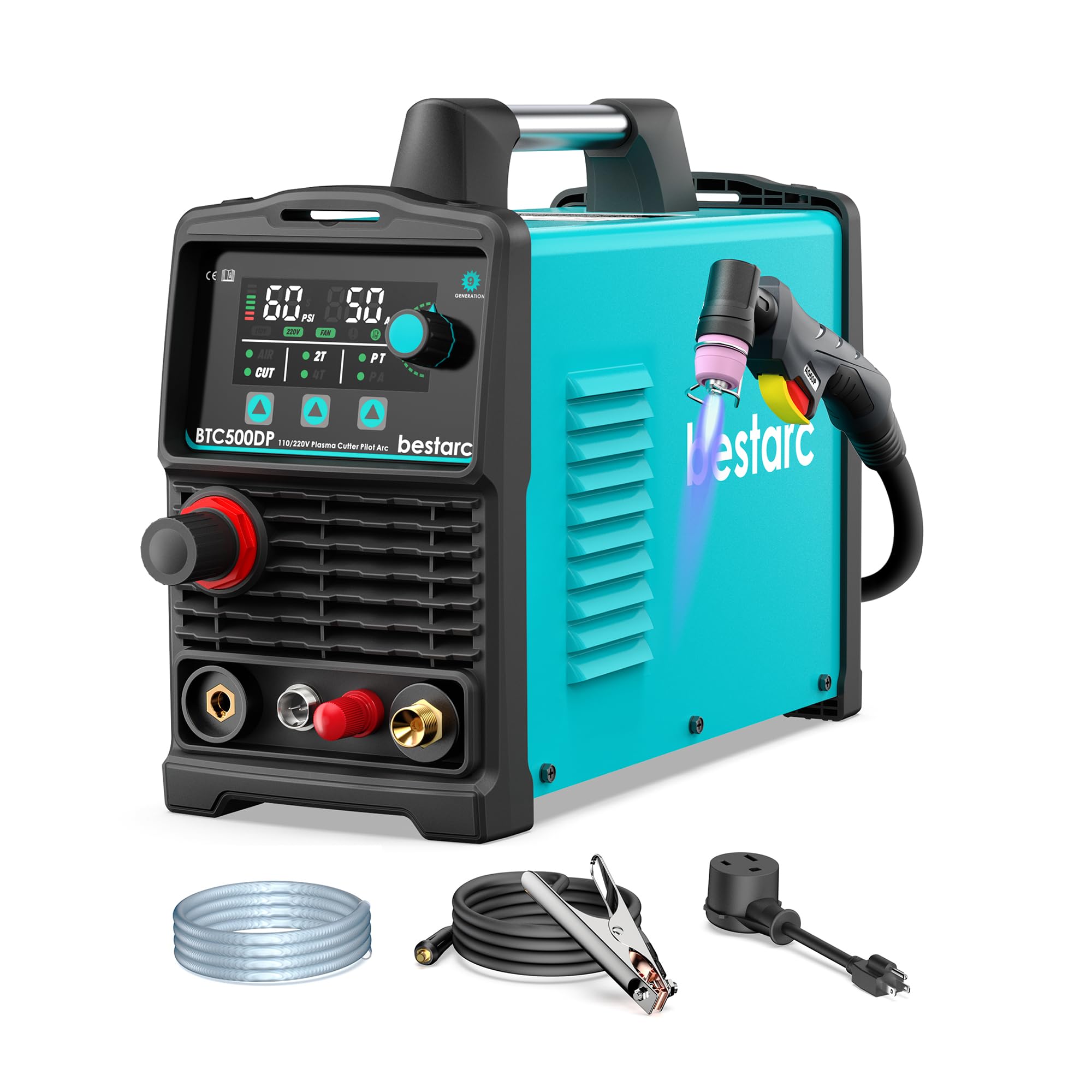
This bestarc unit is a strong fit if your main priority is pilot-arc convenience. It can start cuts on painted or rusty surfaces without dragging the tip, which saves prep time on repair work, farm projects, and metal art.
The LED and air sensor help with tuning, and the built-in filter/quick-connect setup makes it easier to get running. Like most hobby plasma cutters, it still depends heavily on dry air, a good ground, and correct travel speed.
Who Should Buy This
Choose it if you often cut imperfect stock and want a capable 110V/220V machine with useful front-panel feedback.
Who Should Avoid This
Skip it if your priority is app control or non-high-frequency CNC-focused starting.
What People Say
Users often praise its clean cutting for a compact machine, helpful pilot arc, and easy-to-read display. Some buyers mention a short learning curve for air settings and occasional air or QC issues.
Overall Sentiment: Positive

When to Use It
|
Situation |
How It Helps |
|---|---|
|
Routine garage repairs |
Run it on 110V to cut brackets, patch panels, and small parts. |
|
Painted or rusty metal |
Pilot arc starts without touching the surface. |
|
Repetitive work |
2T/4T modes and post-flow settings reduce fatigue and protect consumables. |
|
Occasional heavier cutting |
Use 220V for thicker stock and better cut quality. |
Ease of Use
|
Feature |
Ease Level |
|---|---|
|
Initial setup |
Easy |
|
Reading and adjusting LED settings |
Easy |
|
Air hookup and pressure tuning |
Moderate |
|
Switching voltage |
Moderate |
|
Torch handling and consumables |
Moderate |
Key Benefits
- 50A dual-voltage performance works on 110V or 220V outlets
- Pilot arc non-touch start handles rusted or painted metal
- Large LED display and air sensor for easier tuning
- Built-in air filter and quick-connect for faster setup
- 2T/4T and adjustable post-flow settings help longer cuts
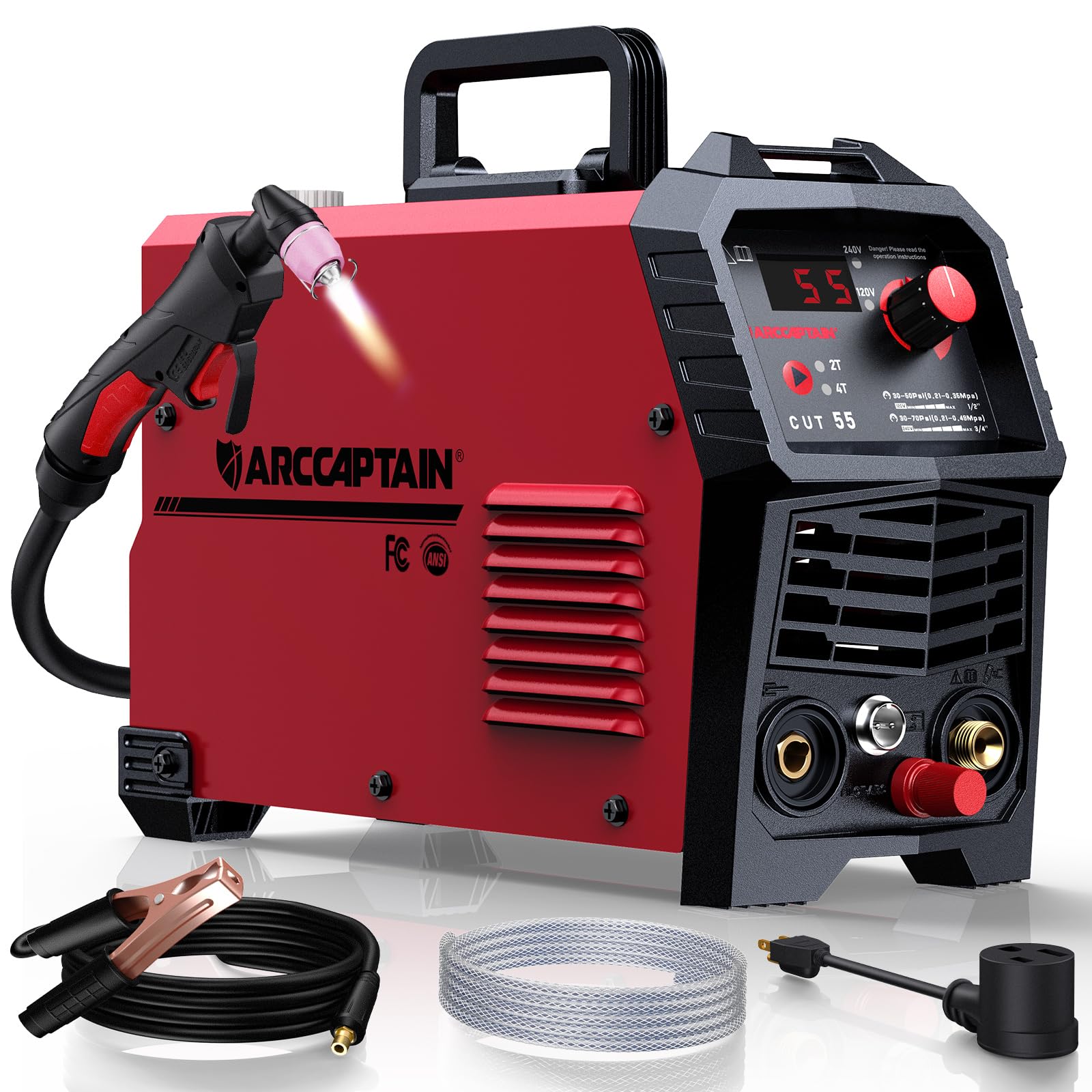
This ARCCAPTAIN model is a practical workhorse for DIY users who expect to cut more than thin sheet. It supports 120V for quick jobs and 240V for stronger cutting, while the non-touch pilot arc makes starts easier on rusty or painted metal.
The onboard regulator and filter make setup simpler, and the shoulder strap helps if you move around a garage, trailer, or farm shop. Plan on using a capable compressor because heavier cuts will demand steady airflow.
Who Should Buy This
Choose it if you want a portable but stronger DIY cutter for brackets, patch panels, thicker plate, and mixed shop repairs.
Who Should Avoid This
Skip it if you only cut very thin material or cannot provide enough compressor capacity.
What People Say
Users commonly mention clean cutting for everyday shop metals, easy pilot-arc starts, and good portability. Some note hose quality, air demand, or minor setup issues.
Overall Sentiment: Positive

When to Use It
|
Situation |
How It Helps |
|---|---|
|
Routine garage repairs |
Use 120V for small cuts without a dedicated shop setup. |
|
Painted or rusty metal |
The pilot arc starts without touching the surface. |
|
Portable jobs |
Lightweight design and shoulder strap make it easier to move. |
|
Occasional plate cutting |
Use 240V and higher amperage for tougher cuts. |
Ease of Use
|
Feature |
Ease Level |
|---|---|
|
Initial setup |
Easy |
|
Selecting voltage and basic controls |
Easy |
|
Air hookup and pressure tuning |
Moderate |
|
Switching between 120V and 240V |
Moderate |
|
Consumables and torch handling |
Moderate |
Key Benefits
- Non-touch pilot arc starts on painted or rusty surfaces
- Dual-voltage 120/240V flexibility for garage or shop use
- IGBT inverter supports steady cutting power
- 2T/4T modes make longer cuts easier
- Built-in air regulator and filter simplify setup
- Compact design with shoulder strap improves portability

This YESWELDER is a smart option if you want a compact cutter that can also work near electronics or CNC controls. The non-high-frequency blow-back start helps reduce interference concerns, while the non-touch pilot arc makes rough or painted stock easier to start.
The digital display shows key machine feedback, and the onboard regulator/filter helps shorten setup time. As with any plasma cutter, use dry air and check included fittings before serious work.
Who Should Buy This
Choose it if CNC compatibility, non-HF starting, and light professional shop flexibility matter to you.
Who Should Avoid This
Skip it if you only need a simple manual cutter and do not care about CNC-adjacent features.
What People Say
Feedback often highlights clean cutting for the size, helpful pilot arc, and a clear digital display. Some users swap air fittings or add better air drying for more consistent results.
Overall Sentiment: Positive

When to Use It
|
Situation |
How It Helps |
|---|---|
|
Quick shop repairs |
Use 120V for small panels, brackets, and trim cuts. |
|
Painted or rusty metal |
Non-touch pilot arc starts on imperfect stock. |
|
CNC or electronics nearby |
Non-high-frequency start helps reduce interference concerns. |
|
Mobile jobs |
Compact build makes it easier to move between work areas. |
Ease of Use
|
Feature |
Ease Level |
|---|---|
|
Initial unpacking and setup |
Easy |
|
Selecting voltage and reading display |
Easy |
|
Air hookup and fittings |
Moderate |
|
Torch handling on rough surfaces |
Easy |
|
Changing consumables |
Moderate |
Key Benefits
- Non-touch pilot arc cuts painted, rusty, or rough surfaces
- Non-high-frequency blow-back start helps around CNC or electronics
- Dual-voltage 110/220V flexibility
- LED display shows useful machine feedback
- Built-in regulator and filter speed setup
- IPT40 torch and 55A output suit hobby and light professional use
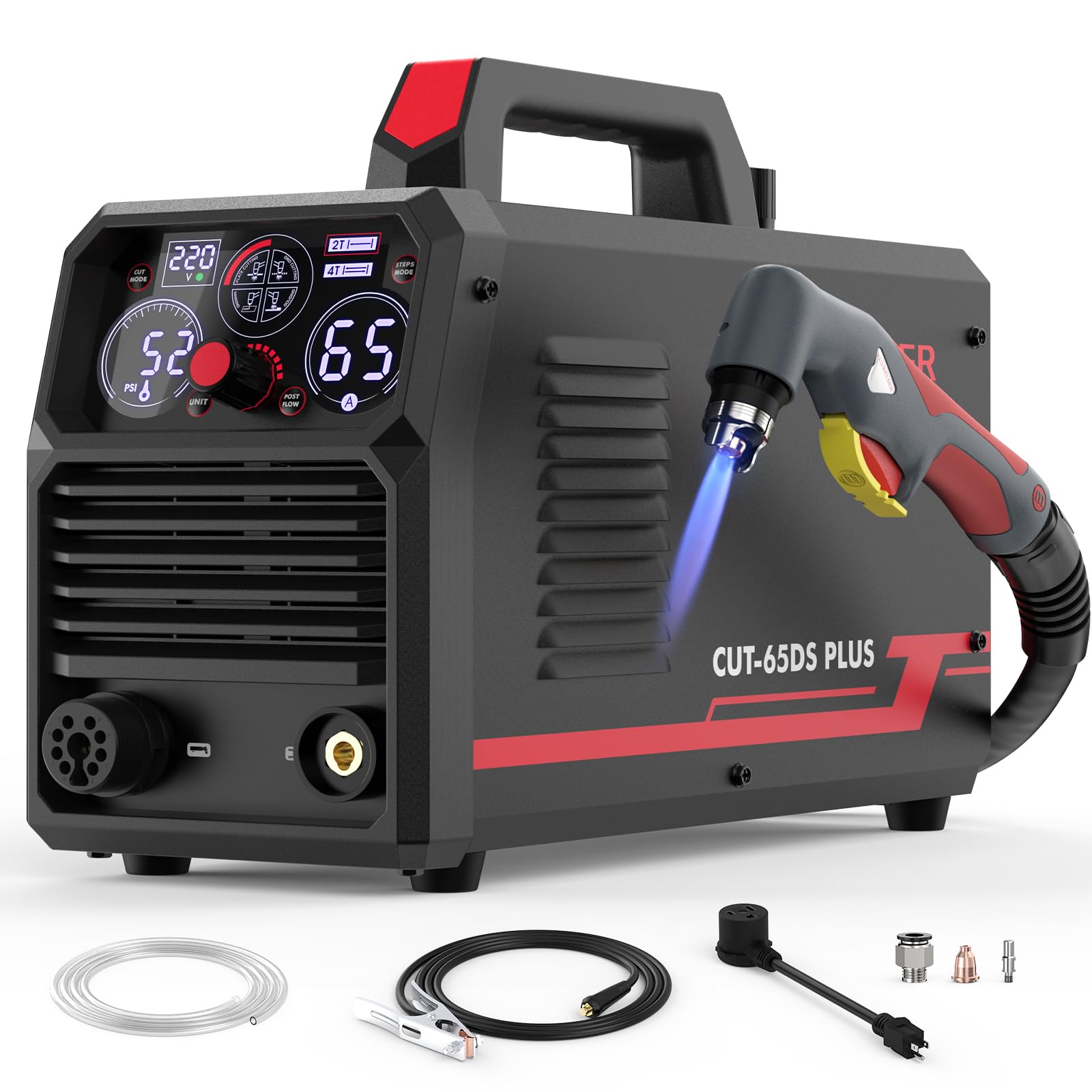
The YESWELDER CUT-65DS PLUS is the most versatile option in this guide because it goes beyond basic plate cutting. The 4-in-1 functionality gives you plate, grid, gouging, and marking modes, which can help if your projects range from repairs to heavier fabrication.
The 65A output gives it more headroom than many smaller DIY cutters, but that also means your power and air setup matter more. Use 220/240V and a capable compressor when you expect heavier cuts.
Who Should Buy This
Choose it if you want one machine for cutting, marking, grid work, and occasional gouging.
Who Should Avoid This
Skip it if you only need simple thin-metal cutting or want the easiest beginner setup.
What People Say
Buyers tend to like the cutting ability, pilot arc, and multi-mode flexibility. Common cautions include supplied fittings, regulator limits, and checking the unit carefully when it arrives.
Overall Sentiment: Positive

When to Use It
|
Situation |
How It Helps |
|---|---|
|
Small repairs |
Use 110/120V for quick trims and patch work. |
|
Painted or rusty stock |
Non-touch pilot arc helps start cuts without scraping. |
|
CNC-adjacent work |
Non-HF start helps reduce interference concerns. |
|
Heavier fabrication |
Use 220/240V and 65A capacity for tougher jobs. |
Ease of Use
|
Feature |
Ease Level |
|---|---|
|
Unboxing and setup |
Easy |
|
Selecting voltage and reading display |
Easy |
|
Air hookup and fittings |
Moderate |
|
Pilot-arc starting |
Easy |
|
Changing consumables |
Moderate |
Key Benefits
- Non-touch pilot arc for painted, rusty, or rough surfaces
- Non-high-frequency blow-back start for electronics-sensitive areas
- Dual-voltage 110/220V flexibility
- 65A output and IPT40 torch for bigger jobs
- Digital display shows air pressure, current, and error codes
- 4-in-1 modes for plate, grid, gouging, and marking
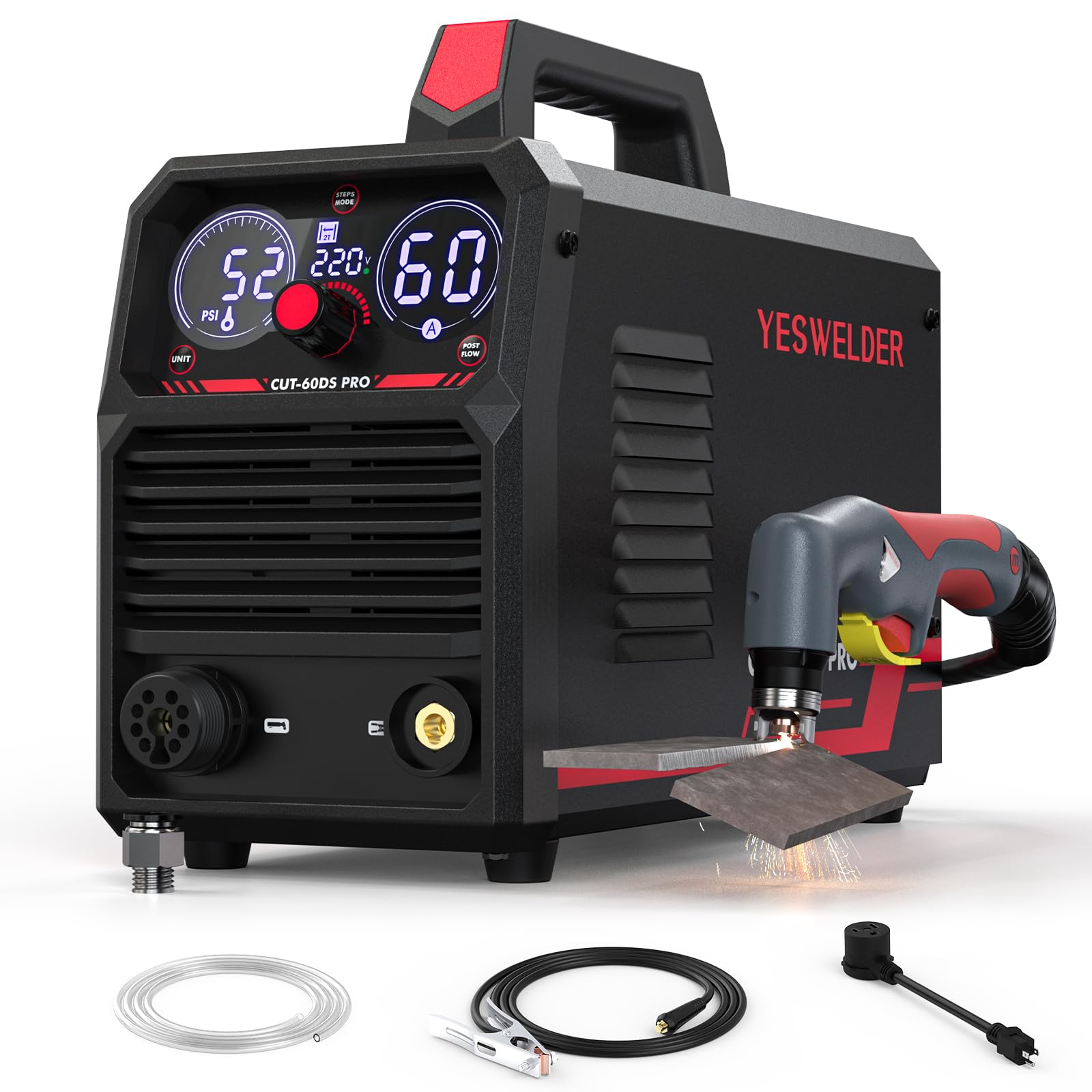
This YESWELDER model makes sense for auto shops and busy garages that need a flexible machine for brackets, patch panels, bodywork, and occasional heavier fabrication. It supports 110/120V and 220/240V operation, with non-touch pilot arc for imperfect metal and non-HF starting for electronics-sensitive environments.
The 60A output gives it more working room than smaller cutters, but you should still inspect the fittings and make sure your compressor can keep up during longer cuts.
Who Should Buy This
Choose it if you cut automotive metal, shop brackets, and mixed repair parts and want a stronger machine than a basic 50A unit.
Who Should Avoid This
Skip it if your projects are light and occasional, or if you do not have enough compressor capacity.
What People Say
Users tend to view it as powerful and versatile for hobbyists and small shops. Common notes include checking air fittings, the regulator gauge, and consumables when it arrives.
Overall Sentiment: Positive

When to Use It
|
Situation |
How It Helps |
|---|---|
|
Quick home repairs |
Use 110/120V for brackets, patch panels, and light cuts. |
|
Painted or rusty metal |
Pilot arc starts on imperfect surfaces. |
|
Working near electronics |
Non-HF start helps reduce interference concerns. |
|
Heavier shop jobs |
Use 220/240V and 60A capacity for stronger cutting. |
Ease of Use
|
Feature |
Ease Level |
|---|---|
|
Unboxing and first setup |
Easy |
|
Choosing voltage and reading display |
Easy |
|
Air hookup and regulator fittings |
Moderate |
|
Torch handling and pilot-arc starts |
Easy |
|
Changing consumables |
Moderate |
Key Benefits
- Non-touch pilot arc for easier starts on rough surfaces
- Non-high-frequency blow-back start helps near electronics
- Dual-voltage 110/220V support
- 60A output with IPT40 torch for stronger cutting
- Digital display supports faster tuning
- Built-in regulator/filter simplifies air setup

If you want a friendly, portable cutter with a cleaner control layout than many entry-level machines, the ARCCAPTAIN CUT 50 is easy to like. It supports 110V/220V, has a large LED display, and includes a built-in regulator for quicker setup.
It is best for common home-shop work rather than frequent heavy plate cutting. For thicker metal, switch to 220V and use a compressor that can maintain dry, steady air.
Who Should Buy This
Choose it if you want a portable, beginner-friendly cutter with clearer controls and a built-in regulator.
Who Should Avoid This
Skip it if you want the highest output in this guide or need non-HF CNC-focused starting.
What People Say
Many buyers like its portability, LED display, built-in regulator, and solid performance for common DIY cuts. A few note hose or setup issues.
Overall Sentiment: Positive

When to Use It
|
Situation |
How It Helps |
|---|---|
|
Small garage repairs |
Use 110V for brackets, exhaust parts, and patch panels. |
|
Mobile job sites |
Light weight and shoulder strap make it easy to carry. |
|
Weekend fabrication |
Good control helps with sheet metal and custom pieces. |
|
Occasional heavier cuts |
Use 220V for better performance on thicker material. |
Ease of Use
|
Feature |
Ease Level |
|---|---|
|
Initial setup |
Easy |
|
Adjusting LED settings |
Easy |
|
Switching voltage |
Moderate |
|
Torch handling |
Moderate |
|
Consumable replacement |
Easy |
Key Benefits
- Dual 110V/220V support for flexible shop or site use
- Large LED display makes settings easier to read
- Built-in air regulator supports quicker setup
- Portable 13 lb design with shoulder strap
- Good fit for common home-shop metals and projects
The Bestarc BTC500DP is a strong value pick because it combines the features most home-shop users want: dual voltage, pilot arc, LED feedback, air sensing, and post-flow control. It is practical for repairs, art projects, and occasional heavier work when switched to 220V.
It is not a substitute for a full industrial cutter, but it offers a good balance of usability and capability if you want a flexible garage machine.
Who Should Buy This
Choose it if you want a value-focused pilot-arc cutter with clear controls and useful air feedback.
Who Should Avoid This
Skip it if you need app control, advanced multi-mode functions, or a higher-output machine.
What People Say
Buyers often praise its compact cutting ability, LED readout, and pilot-arc convenience. Some note air-fitment or QC concerns, so a careful setup check is smart.
Overall Sentiment: Positive

When to Use It
|
Situation |
How It Helps |
|---|---|
|
Quick garage repairs |
Use 110V for small cuts without shop-level power. |
|
Heavier fabrication |
Switch to 220V for deeper cuts and longer runs. |
|
Painted or rusty metal |
Pilot arc saves sanding and prep time. |
|
Metal art and mesh |
Adjustable modes help with detail work and longer cuts. |
Ease of Use
|
Feature |
Ease Level |
|---|---|
|
Unboxing and first setup |
Moderate |
|
Selecting voltage |
Moderate |
|
Hooking up air |
Moderate |
|
Starting cuts with pilot arc |
Easy |
|
Changing consumables |
Moderate |
Key Benefits
- Dual-voltage 110V/220V support
- Pilot arc starts without touching the metal
- Large LED display and built-in air sensor
- Adjustable post-flow and 2T/4T modes
- Compact footprint for garage and small-shop use
- Works with common metals when properly configured
FAQ
How Do I Choose The Right Plasma Cutter For My Home Shop?
Start with the metal thickness you cut most often. If you mainly cut sheet metal, brackets, and light repair parts, a 50A to 55A dual-voltage plasma cutter is usually enough for a home shop. If you expect heavier fabrication, look at higher output, stronger duty cycle, and reliable 240V performance.
Also check whether you need pilot arc, non-high-frequency start, app control, 2T/4T modes, or multi-mode cutting. Those features are useful, but only if they match your projects.
What Air Compressor Do I Need For A Plasma Cutter?
Most home-shop plasma cutters need dry, filtered, steady air. A small compressor may work for short cuts, but longer cuts require enough tank capacity and airflow so the arc does not stumble. Use the manufacturer’s PSI and CFM requirements as your final guide, and add a dryer or filter if your air line has moisture.
Is Pilot Arc Worth It?
Yes, pilot arc is worth it if you cut painted, rusty, rough, or expanded metal. It helps start the arc without dragging the torch tip on the workpiece, which can save prep time and reduce frustration.
What Is The Difference Between Clean Cut And Max Cut?
Clean cut is the thickness where the machine can usually produce a more controlled edge at a reasonable speed. Max cut is the upper limit and may be slower, rougher, and harder on consumables. For buying decisions, trust clean-cut capacity more than max-cut claims.
What Common Problems Should I Expect?
The most common issues are wet air, weak compressor flow, poor ground contact, worn consumables, wrong amperage, and moving the torch too fast or too slow. If cuts are ragged, check air dryness, ground clamp contact, tip condition, and voltage before blaming the machine.
Can I Use A Plasma Cutter On A 120V Outlet?
Many dual-voltage cutters can run on 120V for lighter work, but heavier cuts usually need 220V or 240V for better performance. Check the product listing and manual for plug type, breaker needs, and input limits before use.
What Safety Gear Do I Need?
Use proper eye protection or a welding helmet, gloves, long sleeves, hearing protection, and good ventilation. Keep flammable items away from the work area, clamp the workpiece securely, and let the machine complete its cooling or post-flow cycle before shutting everything down.
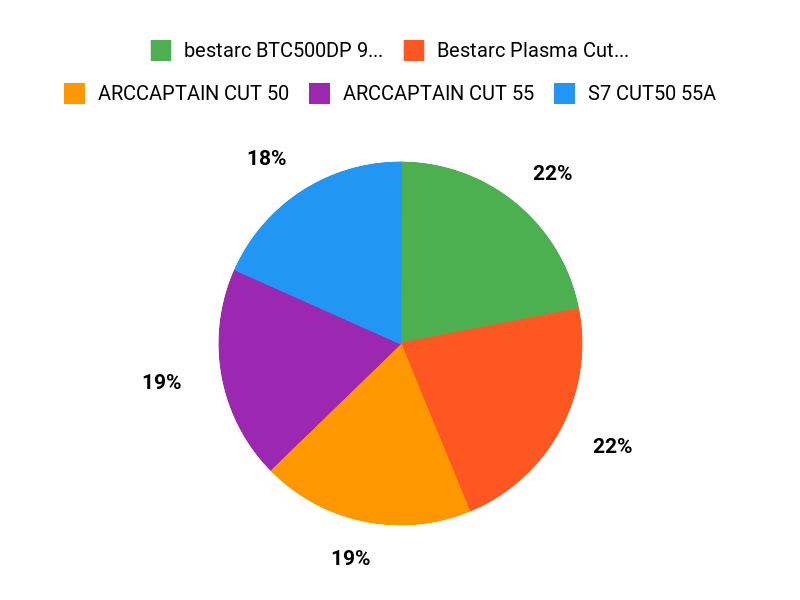
What Buyers Prefer
When choosing between the ARCCAPTAIN CUT 50, ARCCAPTAIN CUT55 Pro, ARCCAPTAIN Cut55 Prolux, and bestarc BTC500DP models, most buyers care first about cutting power, duty cycle, and whether the machine works with their available power and compressor. After that, the big decision points are pilot arc, non-HF start, setup quality, consumable availability, portability, and support.
Wrapping Up
Choosing the right plasma cutter makes your shop faster, cleaner, and more flexible. If you want the best mix of power, modern controls, and useful pilot-arc features, start with the ARCCAPTAIN Cut55 Prolux. If you need the lowest-cost option that still handles real DIY work, the S7 CUT50 is the budget pick.
For app control, choose the ARCCAPTAIN Cut55 Pro. For CNC-adjacent work or sensitive electronics, look at the YESWELDER CUT-55DS PRO. For strong pilot-arc value, the bestarc BTC500DP remains one of the easiest options to justify.
Match your cutter to your voltage, compressor, metal thickness, and expected workload. That will help you avoid buying a machine that is too weak, too complicated, or more expensive than your projects require.
| Product | Image | Best For | Key Strength | CTA |
|---|---|---|---|---|
| ARCCAPTAIN CUT55 Prolux |
 |
Best Overall | App control, pilot arc, smart air pressure detection, and dual voltage | Check Price |
| S7 CUT50 55A |
 |
Best Budget | Low-cost dual-voltage cutting for DIY users | Check Price |
| ARCCAPTAIN iControl Cut55 Pro Plasma Cutter |
 |
Best for App Control | App control, LED display, 2T/4T modes, and non-touch pilot arc | Check Price |
| bestarc Plasma Cutter |
 |
Best Pilot Arc | Strong pilot-arc value with LED and air-sensing features | Check Price |
| ARCCAPTAIN 55A Plasma Cutter |
 |
Best for Heavy DIY | 55A output, pilot arc, dual voltage, and portable design | Check Price |
| YESWELDER 55 Amp Plasma Cutter |
 |
Best for CNC | Non-high-frequency blow-back start and non-touch pilot arc | Check Price |
| YESWELDER CUT-65DS PLUS Plasma Cutter |
 |
Most Versatile | 65A output with plate, grid, gouging, and marking modes | Check Price |
| YESWELDER CUT-60DS PRO-1 |
 |
Best for Auto Shops | 60A output, dual voltage, non-HF start, and IPT40 torch | Check Price |
| ARCCAPTAIN Plasma Cutter |
 |
Best Premium Features | LED display, built-in regulator, and portable 110/220V setup | Check Price |
| Bestarc Plasma Cutter BTC500DP |
 |
Best Value | Pilot arc, LED display, air sensing, and post-flow control | Check Price |
This roundup is reader-supported. When you click through Amazon links, we may earn a referral commission on qualifying purchases at no extra cost to you.