This roundup is reader-supported. When you click through links, we may earn a referral commission on qualifying purchases.
Picking the right plasma cutter can make your DIY metalwork faster, cleaner, and more controlled. In this guide, you’ll find inverter plasma cutters for hobby projects, garage repairs, mobile jobs, field repairs, and light fabrication. The goal is to help you match the machine to your outlet, air setup, material thickness, and experience level instead of buying more cutter than you can use. You’ll also see which features matter most, including voltage options, cutting amperage, compressor needs, portability, consumable costs, duty cycle, pilot arc support, and beginner-friendly controls.
Quick Verdict
If you want the easiest starter option, the Reboot RBC6000D gives you dual-voltage flexibility and simple setup. If you want built-in air convenience, the Reboot RBC4000PUMP removes the need for a separate compressor. If you want the strongest shop-focused choice in this list, the Weldpro CUT60NH is the best all-around prosumer pick, while the Everlast PowerPlasma 62i makes the most sense for CNC-focused shop work.
Top Picks
|
Category |
Product |
Score |
|---|---|---|
|
💰 Best Budget |
78/100 |
|
|
🎯 Best Beginner-Friendly |
86/100 |
|
|
🚀 Best Built-In Compressor |
85/100 |
|
|
💼 Best for Workshops |
72/100 |
|
|
⭐ Best Value Power |
80/100 |
|
|
🔰 Easiest to Use |
82/100 |
|
|
🏆 Best Customer Support |
88/100 |
|
|
🔋 Most Portable |
77/100 |
|
|
🎨 Best for CNC/Commercial |
90/100 |
|
|
🏅 Best for Pros |
92/100 |
How We Picked These Plasma Cutters
You want a cutter that fits your projects, power supply, and shop setup. We evaluated each unit for power and amperage, voltage flexibility, build quality, included accessories, consumable availability, portability, warranty support, and convenience features such as pilot arc, post-flow cooling, 2T/4T modes, digital displays, and built-in air control. We also softened unverified performance claims because real cut quality depends on metal thickness, voltage, air pressure, consumable condition, and operator setup.
Units with practical real-world features for DIYers ranked higher. We also gave extra weight to cutters that solve common buyer problems, such as limited shop space, basic household power, rusty or painted metal, portable repair work, and beginner setup concerns.
Before You Buy
- Check your power supply: 110V or 120V works for lighter cuts, while 220V or 240V usually gives better speed and thickness capacity.
- Plan your air setup: Most plasma cutters need clean, dry compressed air unless they include a built-in pump.
- Match amps to material: Thin sheet metal needs less power, while thicker plate needs higher amperage and more duty cycle.
- Budget for consumables: Electrodes, nozzles, cups, and tips wear over time, so easy availability matters.
- Use proper safety gear: Wear eye protection, gloves, flame-resistant clothing, and respiratory protection when cutting coated metals.
Plasma Cutter Safety Note
Plasma cutting creates bright arc light, sparks, hot metal, noise, and fumes. Use a proper welding helmet or cutting shield, flame-resistant gloves and clothing, eye and ear protection, and good ventilation. When cutting painted, galvanized, oily, or coated metal, remove hazardous coatings when possible and use suitable respiratory protection. Confirm your circuit, breaker, grounding, air pressure, and duty-cycle limits before cutting.
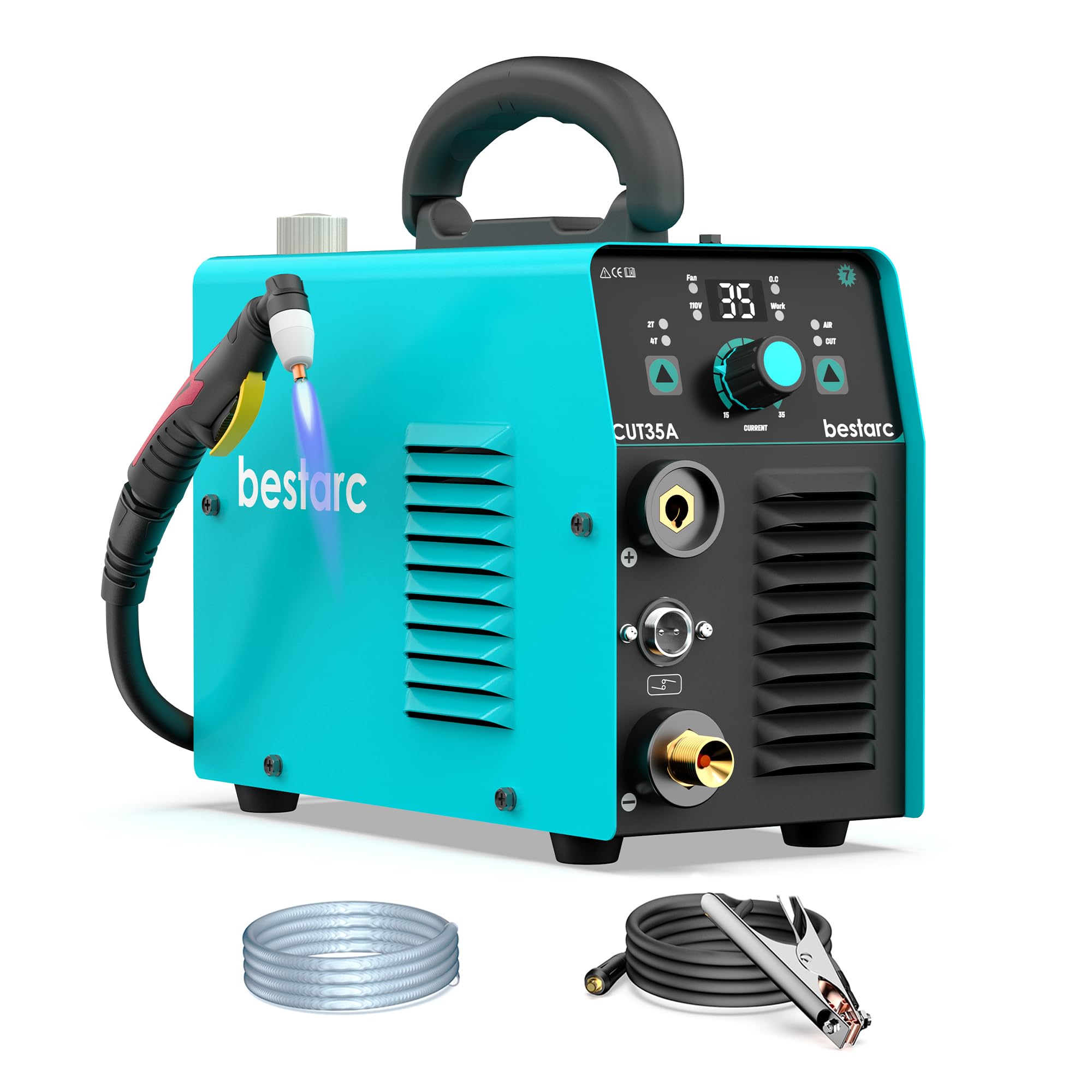
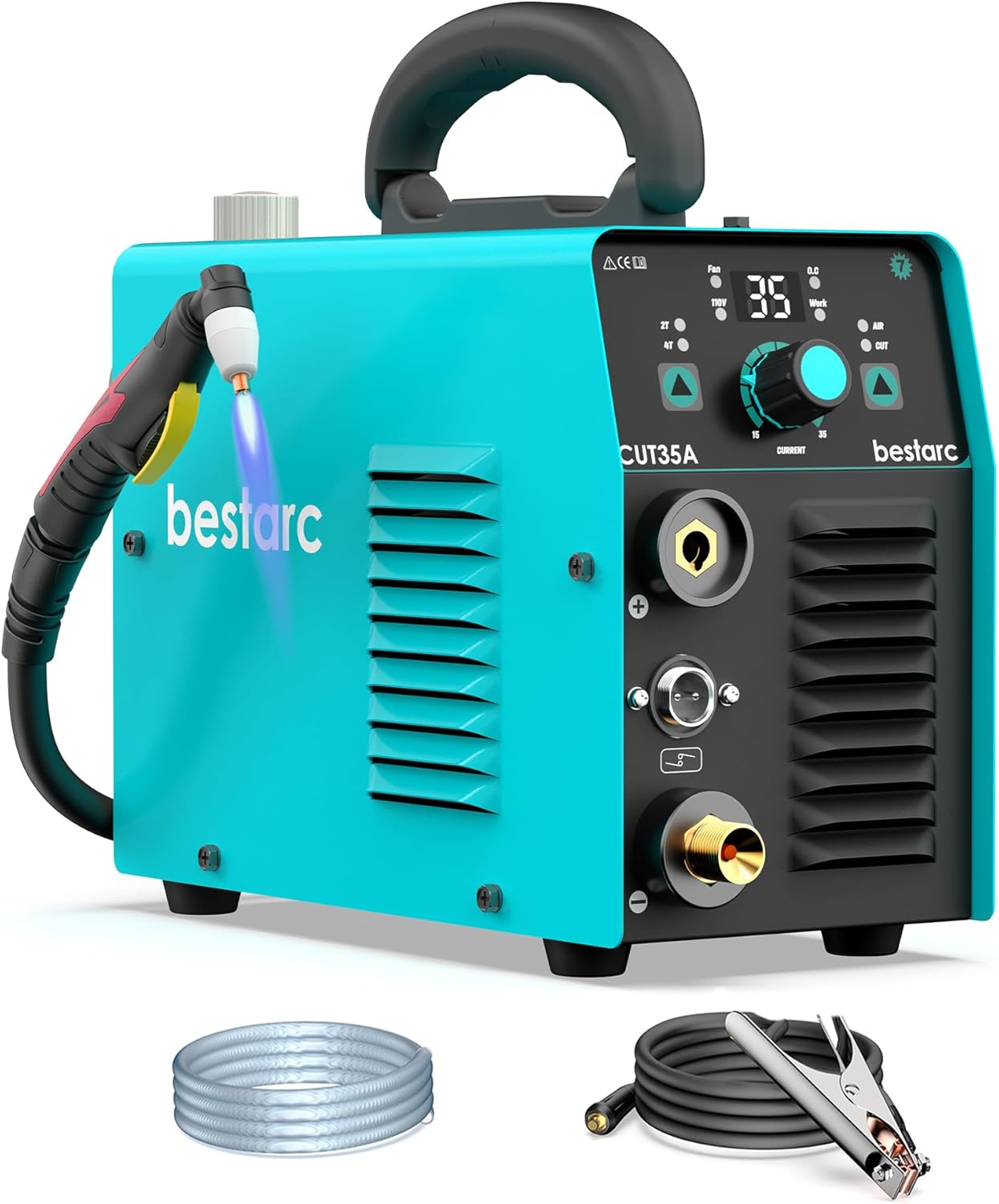
If you do small metal projects around the house, this compact Bestarc unit makes cutting feel less awkward than using a grinder for every job. You plug it in, hook up dry compressed air, and the PT31 torch gives you contact-arc cuts that are clean enough for brackets, art pieces, small panels, and quick repairs. It’s light enough to carry to the job, offers 2T/4T trigger modes for longer cuts, and includes a post-flow cooling feature to help protect the torch.
Keep in mind it’s happiest on thinner stock at 110V. For frequent thick cuts, a higher-amp 220V model will usually feel faster and more capable. For everyday DIY jobs, though, this one gives you usable, repeatable results with minimal fuss.
Why You’ll Like It
The Bestarc CUT35A keeps the learning curve manageable. It gives beginners a clear path into plasma cutting without forcing them to buy a larger, heavier machine right away. It is a practical choice if your main goal is cleaner cutting on thin steel, garage repairs, and occasional small fabrication.
Who Should Avoid It
Skip this model if you regularly cut thick plate, need long continuous cuts, or want the speed of a stronger 220V shop machine. It is better as a budget-friendly DIY cutter than a heavy fabrication tool.
What People Say
Most people say it’s a great little workhorse for beginner-to-intermediate DIY jobs: setup is straightforward, cuts are clean on thin metal, and the unit is easy to carry. Customers frequently point out the built-in air regulator, the clear LED display and the 2T/4T trigger modes as helpful features. A common caveat is that getting the air pressure and consumables right matters — some buyers report occasional assembly or quality-control hiccups, but many say customer service was responsive when they ran into issues.
Overall Sentiment: Positive

Safety Features
Built-in air regulator and quick-connect filter, visible error codes on the LED screen, post-flow cooling to protect the torch, recommended 60 PSI dry air and duty-cycle guidance to avoid overheating. Use a properly rated circuit and follow grounding, ventilation, and PPE recommendations.
How It Helps
This cutter replaces slow, messy methods like grinders for straight, repeatable cuts on sheet metal, brackets and small repairs. It saves time, reduces wasted metal and lets you do neater metal art or automotive bits. It’s not a heavy fabrication machine — for consistent thicker cuts you’ll want a higher-amp 220V model — but for typical home projects it’s a practical step up from handheld grinders.
Key Benefits
- Portable, lightweight design that’s easy to move around your garage or job site
- IGBT inverter technology for stable cutting and efficient power use
- 2T/4T modes and post-flow control for more comfortable longer cuts
- Built-in air regulator and LED readout to help you dial in pressure and settings
- Clean cuts on thin steel (recommended clean cut ~1/4″ / 6mm) for hobby and repair work
Customer feedback snapshot: Positive in the source review summary, especially for portability, simple setup, and light DIY cuts.
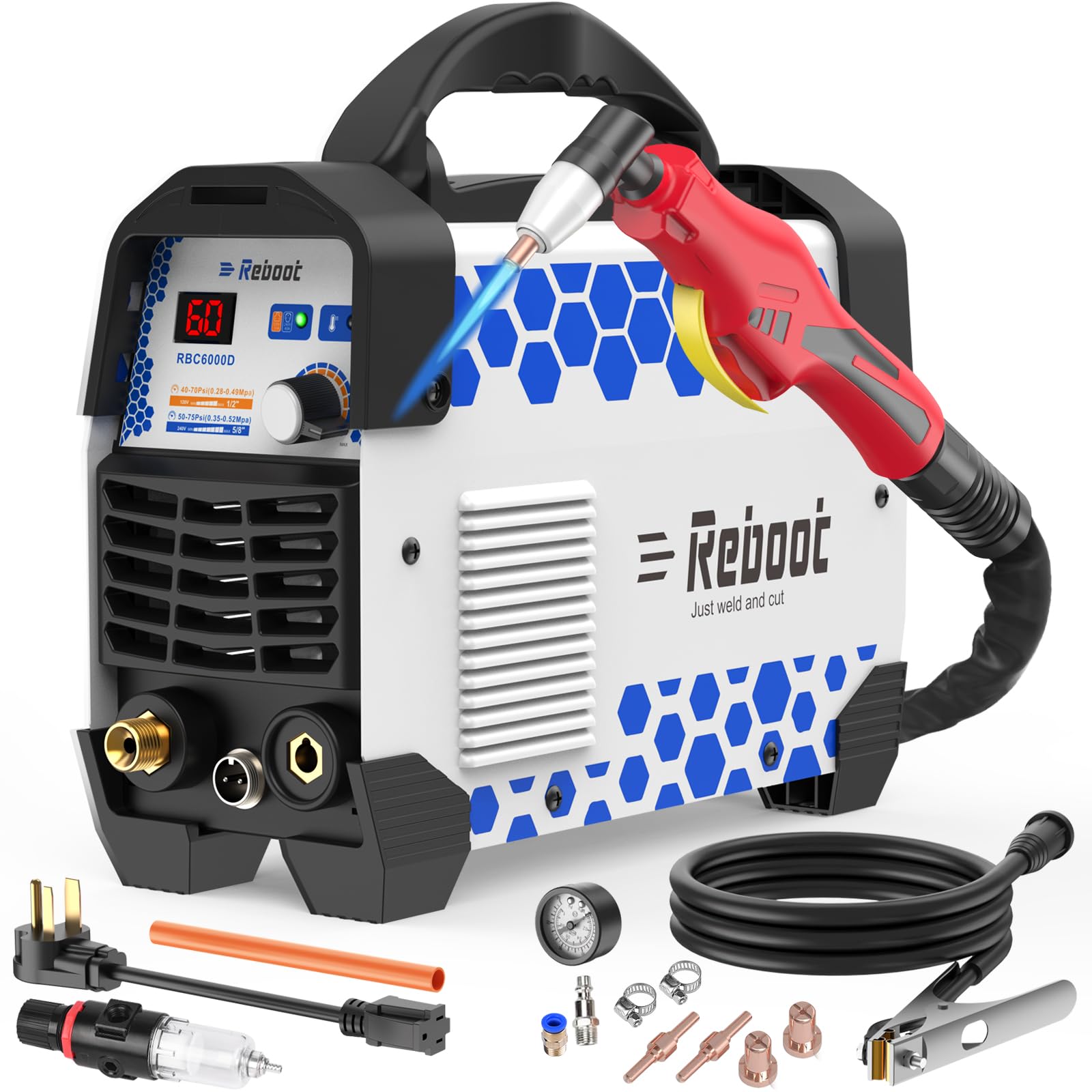
If you want a compact, flexible cutter for garage projects and occasional heavier jobs, this Reboot unit is easy to live with. You plug it in, hook up a dry air source, and the included PT31 torch gets you quick, clean cuts for brackets, bolt removal, metal art and small automotive repairs.
The dual-voltage auto-detect means you can run basic jobs on a 120V circuit or switch to 240V for thicker steel. The unit is light enough to carry between tasks, and it feels beginner-friendly without feeling like a toy. Just make sure you have the right outlet, a steady air supply, and the recommended breaker for smoother results.
Why You’ll Like It
The Reboot RBC6000D gives you room to grow. It works for simple sheet-metal jobs on household-style power, but it also lets you step up to 240V when your projects get thicker or more demanding.
Who Should Avoid It
Skip it if you do not want to manage an external air compressor or if you need a cutter designed for nonstop production work. For heavier use, duty cycle, air quality, and power supply matter much more.
What People Say
People often mention how simple it is to set up and start cutting — the included torch and extra consumables make first runs less fussy. Many users praise the portability and clean cuts on thin to medium steel, and note it really shines on 240V for thicker pieces. A few buyers flag the need for the correct circuit and air pressure, and some report occasional small build-quality quirks, but overall impressions skew toward satisfied hobbyists and DIYers.
Overall Sentiment: Positive

Safety Features
Built-in PSI guidance and recommended pressure ranges, post-flow cooling to protect the torch, visible error indicators, earth ground clamp included, and clear duty-cycle guidance. Always use dry compressed air, a properly rated circuit, and common PPE such as gloves, eye protection, and a welding jacket when operating.
How It Helps
This cutter replaces slow, messy methods like grinders for straight, repeatable cuts and faster bolt removal. It speeds up metal art, bracket fabrication, automotive trim and basic farm repairs, giving you neater edges and less grinding. It’s not meant as a full-time industrial cutter — for heavy, continuous fabrication you’ll want a higher-amp dedicated machine — but for typical home and hobby work it’s a big time-saver.
Key Benefits
- Dual-voltage (120V/240V) flexibility for both light garage jobs and heavier cuts
- Portable, compact design that’s straightforward to carry and store
- IGBT inverter tech for stable arc control and efficient cutting
- Comes with PT31 torch and extra tips so you can get started right away
- Beginner-friendly controls and clear PSI guidance to help dial in settings
Customer feedback snapshot: Positive in the source review summary, especially for setup, portability, and dual-voltage flexibility.
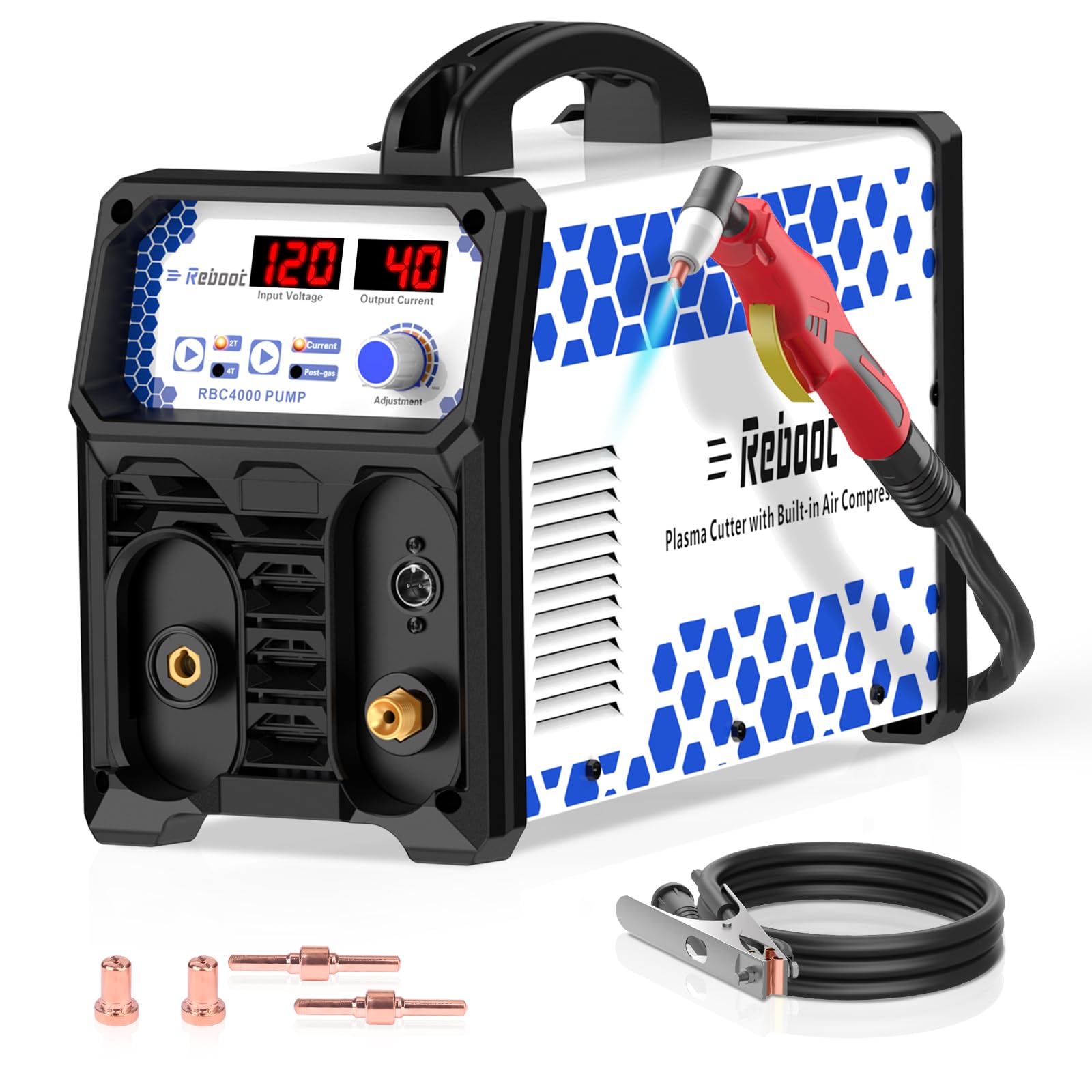
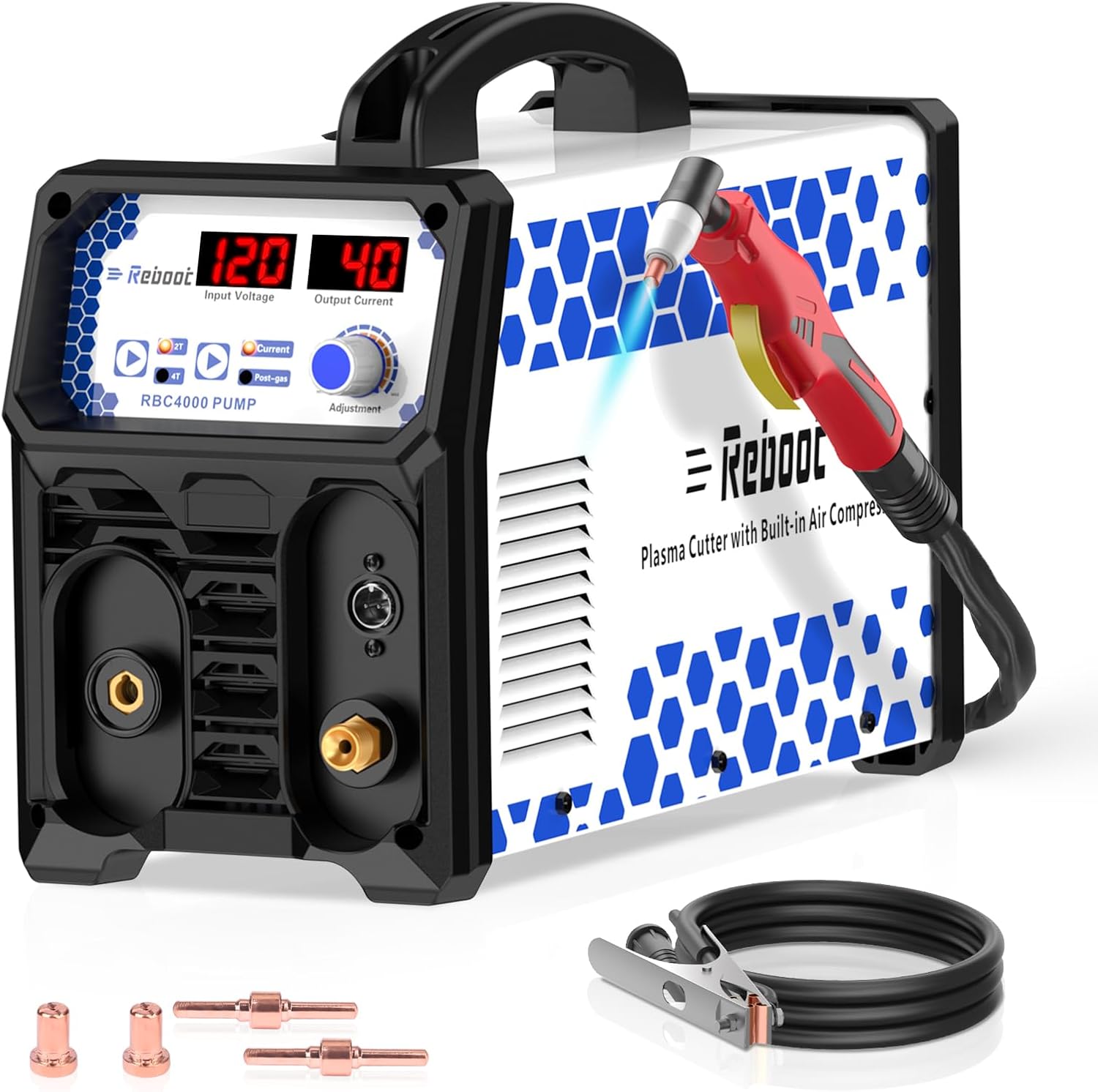
If you want a self-contained cutter that gets you straight into projects without wrestling with a separate air compressor, this model is made for that. You plug it in, set a sensible amp and pressure range, and the built-in air pump helps keep the setup simple for clean cuts on brackets, bolts, sheet metal, and light automotive work.
It’s compact enough to move around the garage or a job site and beginner-friendly enough that you won’t feel overwhelmed by setup. For regular hobby use and occasional heavier pieces, it’s a practical tool to have within reach.
Why You’ll Like It
The biggest win is convenience. You do not need to match a separate compressor, moisture trap, and air hose before your first project. That makes it especially attractive for small garages, occasional users, and mobile repair situations.
Who Should Avoid It
Skip it if you already own a strong compressor and want longer cutting sessions. A built-in pump improves convenience, but an external compressor setup can be better for higher-volume cutting.
What People Say
You’ll notice reviewers most often praise the convenience of the built-in air pump and how fast they can get started without extra gear. People also point out tidy, repeatable cuts on thin and medium metals and appreciate the unit’s portability.
A fair number remind you to use the right circuit and watch for small build-quality things like a flimsy regulator bracket or occasional trigger issues.
Overall Sentiment: Positive

Safety Features
Clear guidance on recommended pressure and amperage, built-in regulator assembly, and advice to use the correct breaker and dry air. Always operate with eye and hand protection, keep the work area ventilated, and follow duty-cycle recommendations to avoid overheating.
How It Helps
This unit replaces slow grinding and hacksaw work for bolt removal, bracket shaping, and metal art, giving you neater edges and less cleanup. It’s great for one-off repairs, hobby projects and mobile jobs where you don’t want to haul extra compressors; for continuous, heavy industrial cutting you’ll still want a higher-capacity machine.
Key Benefits
- Integrated air pump removes the need for a separate compressor
- Compact, portable design makes it easy to move between jobs
- Plug-and-play setup helps you start cutting quickly
- Optimized airflow gives more consistent arcs and cleaner edges
- Good performance on thin to medium steel for common DIY tasks
Customer feedback snapshot: Positive in the source review summary, especially for the built-in air pump and fast setup.

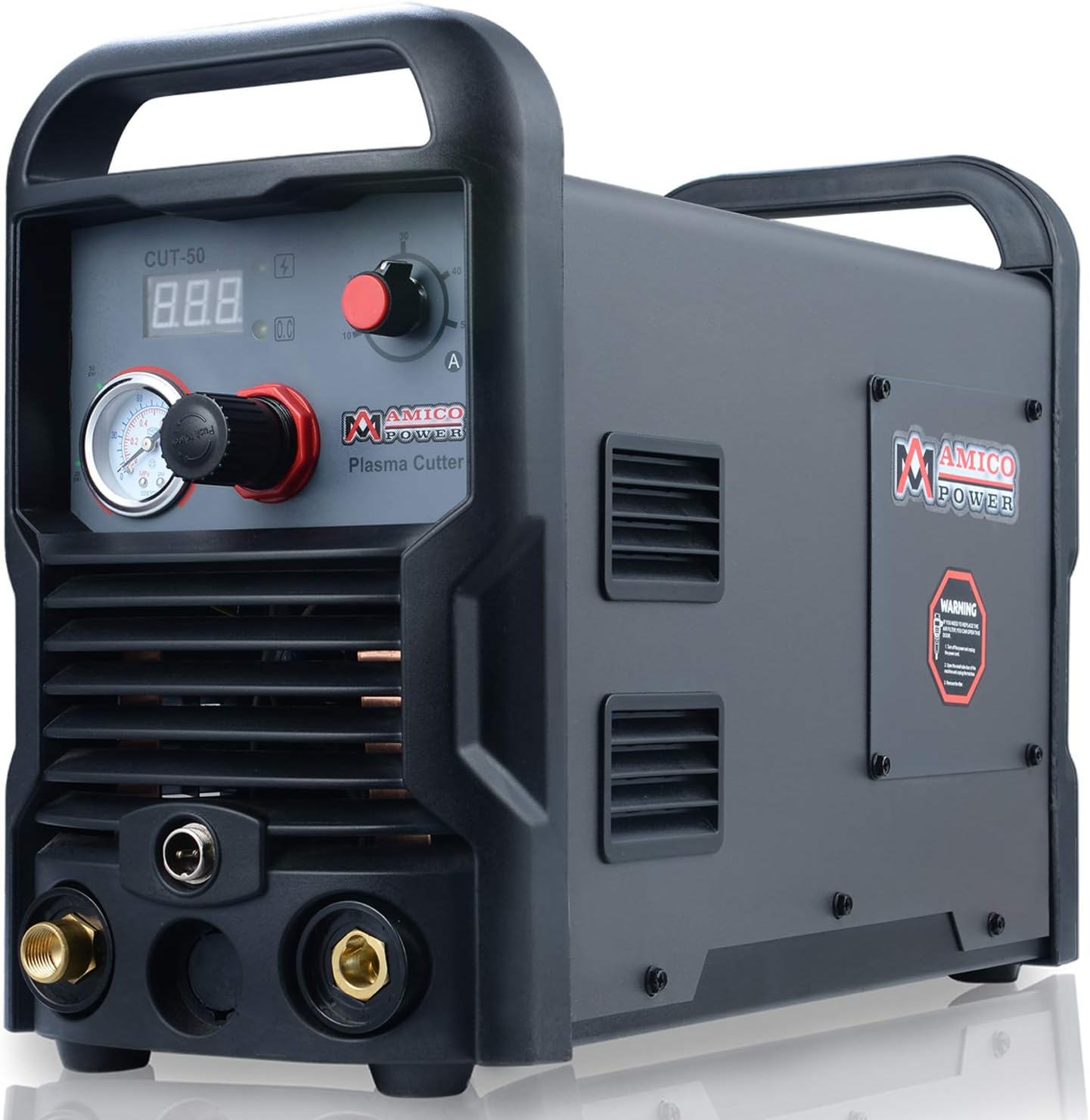
If you want a portable cutter that can handle most garage and small-shop jobs without a lot of fuss, this is one to consider. You get dual-voltage flexibility (115/230 V) so it can fit different power setups, a digital amp readout on the front for quick adjustments, and an internal air filter/regulator that speeds setup.
It’s light enough to move around at about 21 lb and strong enough to slice through brackets, sheet metal, pipe and automotive trim for everyday fixes and weekend projects. For hobbyists and small-business users who need a capable, relatively compact cutter, it’s a practical option — just be mindful to use the recommended voltage and duty cycle.
Why You’ll Like It
The Amico CUT-50 gives you useful controls without making the machine feel complicated. The digital meter, adjustable amp range, and built-in air filter make it easier to tune the cut for different materials.
Who Should Avoid It
Skip it if customer support consistency is your top priority or if you want the simplest beginner experience. It can be a capable workshop cutter, but buyers should pay close attention to setup, consumable compatibility, and correct voltage.
What People Say
You’ll notice people most often praise how much cutting power you get for the size — tidy cuts on thin and medium metals and a steady arc when the unit’s on the right voltage. Users like the built-in air regulator and the front-mounted meter because they make setup faster.
Common complaints center on reliability and customer support, occasional missing or nonstandard consumables, and the fact it performs best on 230 V, so your power supply matters.
Overall Sentiment: Mixed

Safety Features
Built-in protections include over-voltage, under-voltage, over-current, overload protection, and automatic thermal control plus fan dormancy to help prevent overheating. The machine has an internal air filter and an automatic air control solenoid; still, always use proper eye and hand protection, confirm compressed air is dry and at the recommended pressure, ensure correct circuit and breaker sizing, and follow the duty-cycle guidance to avoid overheating.
How It Helps
This cutter replaces slow cutting methods like grinders and saws for bolt removal, trimming brackets, shaping metal parts and small fabrication or automotive work, giving you neater edges and less finishing. It’s great for one-off repairs, hobby metalwork and mobile jobs where portability matters.
For continuous heavy industrial cutting you’ll want a higher-capacity, dedicated system.
Key Benefits
- Dual-voltage 115/230 V works with different shop power setups
- Digital amp meter and adjustable range (15–50 A) for precise control
- Built-in air filter and regulator simplify setup with a compressor
- IGBT inverter design offers stable arc and cleaner cuts on common metals
- Compact and portable at ~21 lb, easy to move around the garage
- Several automatic protections to reduce risk of damage from voltage or heat
Customer feedback snapshot: Mixed in the source review summary, with praise for compact power but concerns about reliability and support consistency.

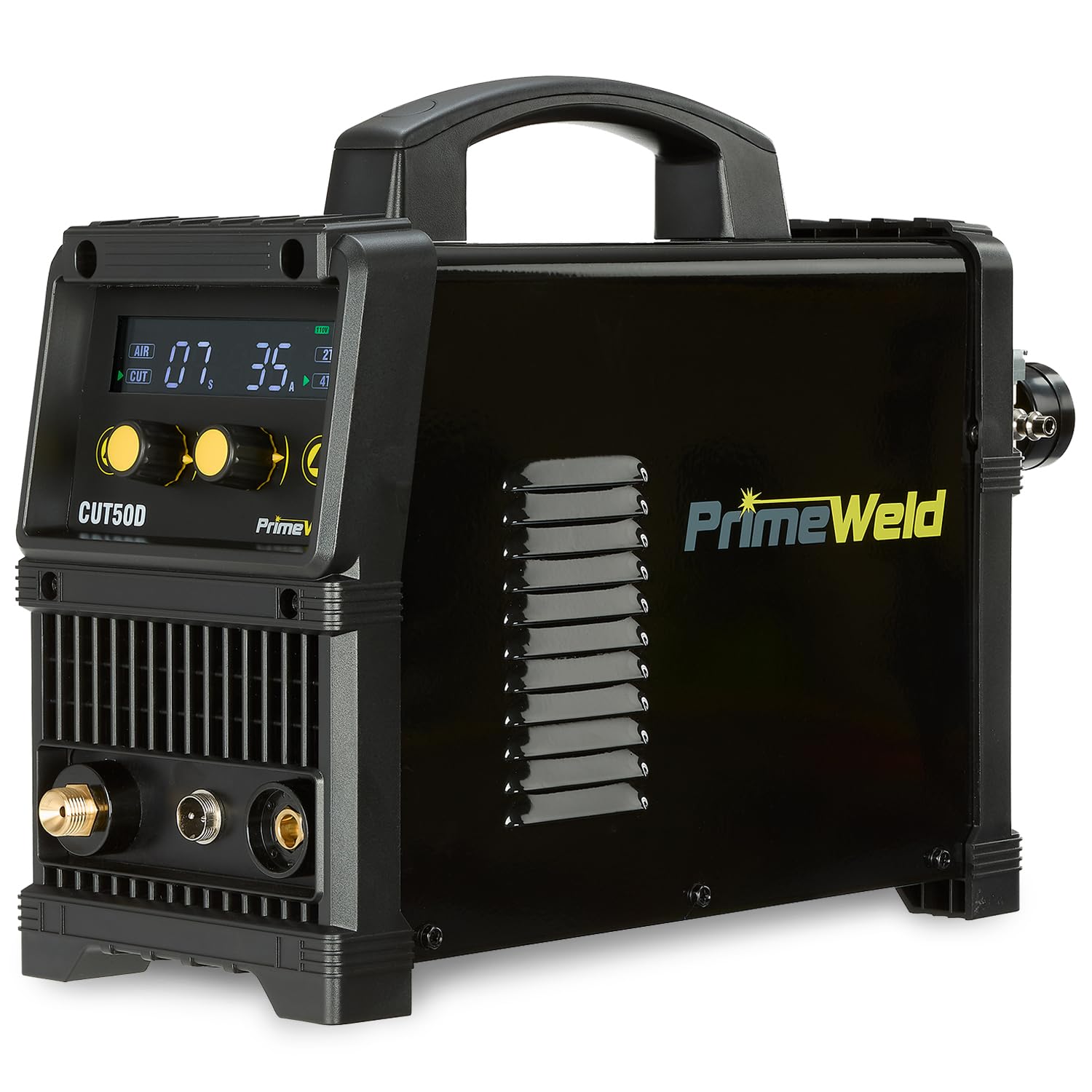
You get a lot of capability in a compact package with this CUT-50. It auto-switches between 110 V and 220 V, shows amps on a clear digital readout, and uses IGBT plus a pilot arc so you can slice through painted or rusty steel with less prep work.
The machine is reasonably light (around 19 lb) and the 1/4-inch D-type air connection makes hooking up a compressor quick — handy when you want to move from the garage to a job site. For everyday fixes like trimming brackets, cutting sheet metal, repairing trailers or making weekend metal art, it’s a solid, portable choice; just be aware it tends to run best on the higher voltage and you should keep spare consumables on hand.
Why You’ll Like It
The pilot arc is the main appeal. It helps the cutter start on painted, rusty, or less-than-perfect surfaces, which makes it useful for repair work, scrap metal projects, trailer fixes, and automotive tasks.
Who Should Avoid It
Skip it if you need long production cuts, premium torch support, or guaranteed consumable compatibility without checking. Keep extra consumables ready and verify the torch style before buying replacements.
What People Say
Most buyers praise how much cutting power you get for the size and like the pilot arc for working on painted or rusted metal. People also appreciate the easy setup with the air connection and the clear digital amp readout. On the flip side, customers sometimes call out reliability concerns, consumable and torch compatibility issues, and better performance on 220–240 V compared with 110 V.
Overall Sentiment: Positive

Safety Features
The unit includes thermal/overheat protection, over-current safeguards and a wide-voltage design to handle fluctuations, plus an internal air control setup. Even with those protections, always use flame-resistant clothing, eye and ear protection, ensure your compressor provides dry, clean air at the recommended pressure, and follow the duty-cycle guidance so the machine can cool properly.
How It Helps
This cutter replaces slower methods like grinders or oxy-acetylene for many DIY tasks — removing bolts, shaping brackets, cutting pipe, and doing quick automotive or trailer repairs. It’s great for one-off jobs, mobile work, and hobby fabrication; for nonstop industrial cutting you’ll want a heavier-duty system.
Key Benefits
- 110/220 V automatic dual-voltage works with multiple shop setups
- IGBT + pilot arc for cutting painted, rusty or rough surfaces
- Digital amp display for quick, visible adjustments
- Compact and portable — easy to move around the garage or site
- Quick setup with 1/4″ D-type air connector
- Built-in protections to reduce risk from overheating or current spikes
Customer feedback snapshot: Positive in the source review summary, especially for pilot arc performance and value for the size.