You want a jacket that keeps you comfortable on brisk days without making you feel like you are wearing a heavy snow parka. For mild winter weather, the best choice is usually a midweight layer that gives you enough warmth while still leaving room to move, commute, travel, or add another layer when temperatures change.
This guide focuses on men’s midweight jackets for mild winter weather, including lightweight softshells for wind and light moisture, fleece for breathable warmth, and lightly insulated jackets for colder commutes or less-active days.
Quick Verdict: The Columbia Ascender is the best all-around choice for everyday mild winter weather because it balances light warmth, wind resistance, water resistance, and easy layering. Choose the Columbia Steens if you mainly want breathable fleece warmth, or the Carhartt Gilliam if you prefer light insulation for work and colder commutes.
Affiliate disclosure:. As an Amazon Associate I earn from qualifying purchases. This roundup is reader-supported. When you click through qualifying Amazon links, we may earn a referral commission at no extra cost to you.
Top Picks
|
Category |
Product |
Best For |
|---|---|---|
|
🏆 Best Overall |
Everyday mild winter use |
|
|
🔥 Best Insulated |
Colder mild-winter days |
|
|
⭐ Best Fleece Layer |
Breathable layering |
|
|
💼 Best for Work |
Work, chores and commuting |
|
|
🔰 Best Tactical |
Pockets and outdoor use |
|
|
🎯 Best Utility |
Active use and gear storage |
How We Picked These Jackets
For a mild-winter jacket, more insulation is not automatically better. We focused on jackets that make sense for brisk, variable weather rather than heavyweight parkas intended mainly for prolonged exposure to deep cold.
Our comparison considers warmth level, breathability, wind and moisture protection, layering potential, fit-adjustment features, pocket layout, ease of care, and the type of activity each jacket suits. Product positioning and listed specifications were used to judge relevance; this article does not claim hands-on laboratory testing.
Before You Buy: Decide whether you mainly need breathable warmth, wind protection, light-rain protection, or insulation. A fleece is comfortable and breathable but is not a rain shell. A softshell is better for wind and light moisture. A lightly insulated jacket usually works better when you will be standing still or commuting in colder conditions.

The Columbia Ascender is the most natural match for a mild-winter roundup. It gives you a useful barrier against cool wind and light rain without the bulk of a snow parka, so it works well for commuting, errands, travel, and casual outdoor use.
The regular fit and adjustable cuffs and hem make it easy to wear over a base layer or light fleece. Zippered hand and chest pockets add everyday practicality without making the jacket look overly technical.
Best for: Someone who wants one simple jacket for breezy, cool and occasionally damp weather.
Skip it if: You expect sustained heavy rain or need substantial insulation while standing outside in colder temperatures.
Source Review Sentiment Snapshot
The chart below is preserved from the source article as a historical sentiment snapshot. Treat it as supporting context rather than live Amazon review data.

Best Uses
|
Situation |
How It Helps |
|---|---|
|
Commuting |
Light warmth and wind resistance help on cool walks or transit trips without creating unnecessary bulk. |
|
Weekend Walks |
The softshell construction provides useful mobility while zippered pockets secure small essentials. |
|
Travel |
A relatively low-profile design works well with layers and adapts easily to variable temperatures. |
|
Light Rain & Wind |
The water- and wind-resistant shell is appropriate for brief exposure to light weather, though it is not a substitute for a dedicated waterproof rain shell. |
Key Benefits
- Light warmth suited to mild winter conditions
- Water- and wind-resistant softshell construction
- Adjustable cuffs and drawcord hem
- Zippered hand and chest pockets
- Comfortable everyday styling and regular fit

This TACVASEN jacket makes sense when your version of a mild winter runs colder or you spend more time outdoors. Its fleece-lined construction provides more warmth than a basic softshell while remaining a medium-weight option rather than a heavyweight expedition parka.
The detachable hood and multiple secure pockets make it useful for active winter days, commuting, hiking, or occasional snow use. Because it is warmer than the Columbia Ascender, it is a better choice for lower temperatures but may feel excessive during active use on a sunny, mild afternoon.
Best for: Buyers who want more insulation than a fleece or basic softshell without moving to a heavyweight winter coat.
Skip it if: You run warm, spend most of your time indoors, or mainly need a thin shell for wind and drizzle.
Source Review Sentiment Snapshot
The chart below is preserved from the source article as a historical sentiment snapshot rather than a live review count or current Amazon rating.

Best Uses
|
Situation |
How It Helps |
|---|---|
|
Cold Commutes |
Fleece lining gives you more insulation when a light softshell does not feel warm enough. |
|
Winter Walks |
The hood and more protective construction help when temperatures and wind drop. |
|
Weekend Outdoors |
Multiple pockets and winter-oriented coverage are useful for casual hiking and outdoor activities. |
|
Occasional Snow |
The winter-sports design provides more protection than a basic fleece when conditions turn colder or snowy. |
Key Benefits
- Medium-weight construction for colder mild-winter conditions
- Soft fleece lining for added insulation
- Detachable hood for flexible coverage
- Double-zip closure
- Multiple pockets for everyday and outdoor essentials

The Columbia Steens Mountain fleece is the simplest choice if warmth and breathability matter more than rain protection. Its fleece fabric works well over a base layer on dry, cool days and slips easily beneath a shell when wind or rain becomes a concern.
It is particularly useful for travel and temperature changes because you can unzip it quickly when you move indoors. Zippered hand pockets help secure a phone, keys, or other small items.
Best for: Dry mild-winter weather, layering, travel and people who prefer breathable warmth.
Skip it if: You need meaningful rain protection or a strong wind barrier without adding another shell.
Source Review Sentiment Snapshot
The chart below is retained from the original source as a historical review-sentiment snapshot and should not be read as a live rating.

Best Uses
|
Situation |
How It Helps |
|---|---|
|
Daily Commute |
Breathable fleece warmth works well when you frequently move between indoor and outdoor spaces. |
|
Layering |
The fleece fits naturally beneath a wind or rain shell when the weather needs more protection. |
|
Weekend Outdoors |
Soft insulation keeps your core comfortable during walks, easy hikes and other low-key activities. |
|
Travel |
The full zip makes temperature adjustment easy during flights, drives and changing weather. |
Key Benefits
- Soft polyester fleece for breathable warmth
- Useful as a standalone layer in dry weather
- Easy to combine with a windproof or waterproof shell
- Full-zip front for quick temperature adjustment
- Zippered hand pockets for small essentials
The Carhartt Gilliam sits in a useful middle ground between a light shell and a bulky winter work coat. Its 100 g polyester insulation adds warmth for cool mornings, while the water-repellent shell and wind-resistant construction make it practical for outdoor jobs, chores and commuting.
The relaxed fit gives you room to layer, and the mix of exterior and interior pockets works well if you routinely carry a phone, wallet, gloves or small work items. A mock-neck collar, adjustable cuffs and adjustable hem help reduce drafts.
Best for: Work, yard chores, commuting and anyone who wants light insulation with a durable workwear feel.
Skip it if: You specifically want a hooded jacket or a soft, casual fleece feel.
Source Review Sentiment Snapshot
The preserved chart below reflects the source article’s review-sentiment snapshot rather than current Amazon review totals.

Best Uses
|
Situation |
How It Helps |
|---|---|
|
Outdoor Work |
Durable workwear construction and light insulation provide practical warmth without the bulk of a heavy work coat. |
|
Daily Commute |
Wind protection and water repellency help during cool, unsettled weather. |
|
Weekend Errands |
The lightweight insulated design is easy to wear in and out of stores without feeling excessively heavy. |
|
Layering |
The relaxed fit leaves room for a sweater or other layer when temperatures fall. |
Key Benefits
- 100 g polyester insulation for midrange warmth
- Lightweight nylon Cordura shell
- Durable water-repellent finish
- Wind-resistant construction
- Relaxed fit with adjustable cuffs and hem
- Multiple exterior and interior pockets

This TACVASEN softshell is more specialized than the Columbia Ascender, but its storage and adjustment features make sense for hiking, outdoor work, travel and buyers who prefer tactical styling. The fleece lining adds warmth, while ventilation helps when your activity level rises.
Multiple zippered pockets are useful if you carry small gear, but they also make the jacket busier and less streamlined than a simple everyday softshell.
Best for: Outdoor users who value pocket capacity, adjustable coverage and tactical styling.
Skip it if: You want a minimalist city jacket or only need a simple two-pocket outer layer.
Source Review Sentiment Snapshot
The following image is retained from the source article and represents its historical review-sentiment snapshot, not a live Amazon score.

Best Uses
|
Situation |
How It Helps |
|---|---|
|
Outdoor Work |
Multiple storage areas give you places for small gear while the fleece-lined softshell adds warmth. |
|
Hiking |
Weather-resistant fabric and ventilation make it easier to adapt as activity levels change. |
|
Travel |
Secure pockets can help keep documents and small essentials organized. |
|
Cold, Breezy Days |
The fleece interior and adjustable openings help reduce heat loss in cool wind. |
Key Benefits
- Fleece lining for additional warmth
- Weather-resistant softshell construction
- Multiple zippered storage areas
- Adjustable hood, waist and cuffs
- Underarm ventilation for active use
- Tactical styling suited to outdoor and utility-focused buyers
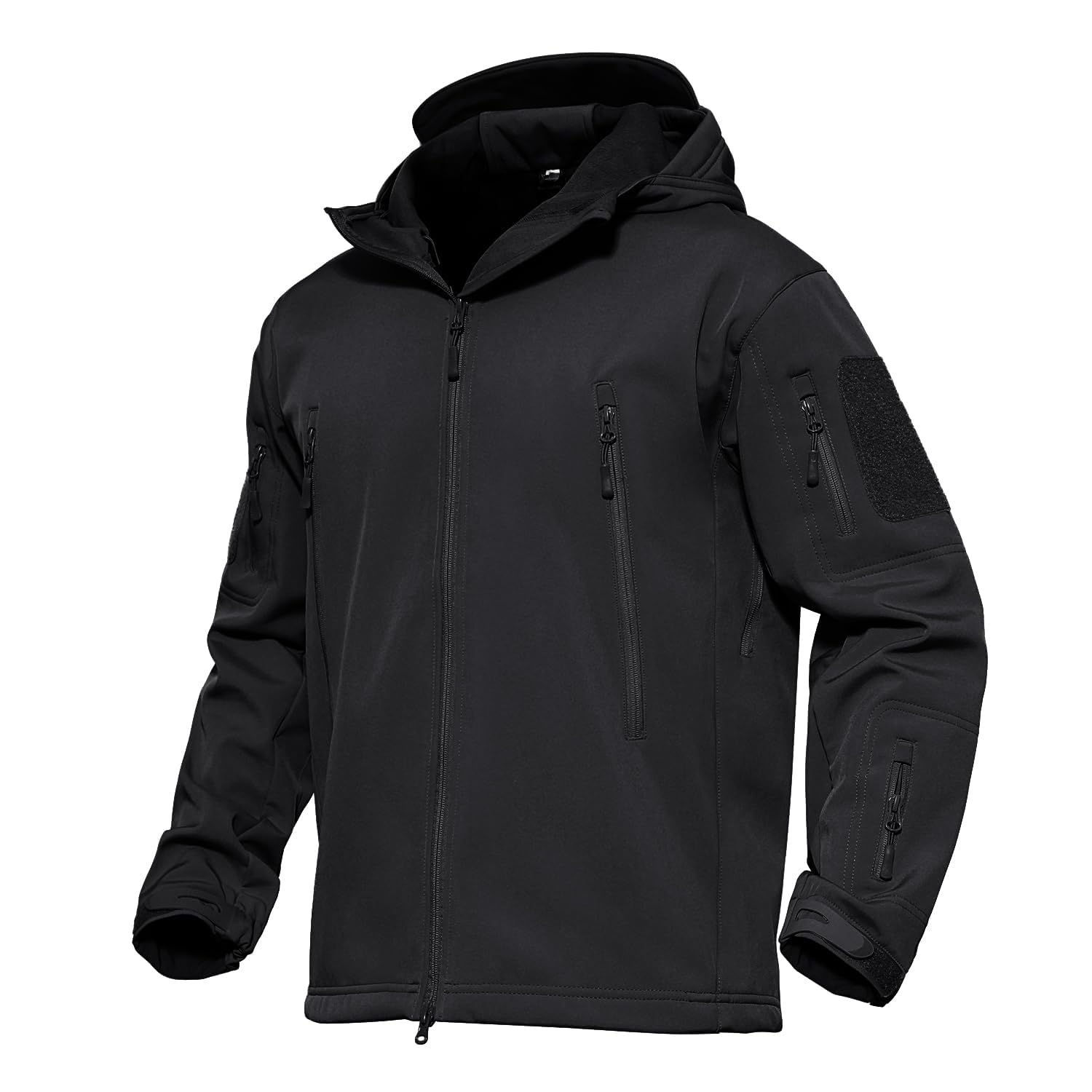
The MAGCOMSEN jacket is another practical choice when storage and adaptability matter more than clean, minimalist styling. Its fleece-backed softshell construction provides useful warmth for cool conditions, while ventilation features can help when you are hiking, working or moving quickly.
The main attraction is utility: you get numerous storage areas and adjustment points for outdoor use. Because specifications can vary across similar MAGCOMSEN versions, confirm the exact pocket layout and weather-protection details on the Amazon listing before ordering.
Best for: Active outdoor use, utility-focused buyers and people who regularly carry small gear.
Skip it if: You want a lightweight office-friendly jacket with a simple appearance.
Source Review Sentiment Snapshot
The chart below is retained exactly from the source article as a historical sentiment graphic and is not presented as current review data.

Best Uses
|
Situation |
How It Helps |
|---|---|
|
Outdoor Work |
Multiple pockets provide convenient storage for small essentials during hands-on tasks. |
|
Hiking |
Fleece-backed warmth and ventilation features help balance protection and heat management. |
|
Travel |
Secure storage helps keep travel essentials organized and close at hand. |
|
Variable Weather |
The softshell design provides a useful compromise between warmth, wind protection and mobility. |
Key Benefits
- Fleece-lined softshell construction
- Weather-resistant outer layer for variable conditions
- Multiple storage pockets for small gear
- Adjustable hood and hem features
- Ventilation useful during active wear
- Utility-focused design for work and outdoor activities
Which Type of Mild-Winter Jacket Should You Choose?
|
Jacket Type |
Best For |
Main Limitation |
|---|---|---|
|
Softshell |
Wind, light moisture, commuting and active use |
Usually less warm than an insulated jacket and not a substitute for a true waterproof shell |
|
Fleece |
Breathable warmth, layering and dry weather |
Limited wind and rain protection |
|
Lightly Insulated Jacket |
Colder commutes, outdoor work and lower-activity use |
Can feel too warm during strenuous activity or warmer afternoons |
|
Tactical Softshell |
Utility, outdoor work, hiking and extra storage |
Busier styling and more pockets than many casual users need |
FAQ
How Warm Should A Jacket Be For Mild Winter Weather?
You usually want enough warmth to stay comfortable without trapping so much heat that you sweat during normal movement. A fleece or light softshell works well when temperatures are cool but not severe, while a lightly insulated jacket makes more sense when you will be standing still, commuting early in the morning, or dealing with colder wind.
Your base layer matters too. A jacket that feels light on its own can become much warmer when combined with a long-sleeve shirt, sweater or fleece.
Should I Choose A Fleece Or A Softshell?
Choose fleece when breathable insulation is your main priority and the weather is mostly dry. Choose a softshell when wind and light moisture are bigger concerns. A fleece also works well underneath a softshell, giving you a flexible two-layer system that you can adjust as conditions change.
Is Water-Resistant Good Enough For Winter?
Water-resistant fabric is usually fine for brief drizzle, light snow and everyday commuting, but it is not the same as a fully waterproof rain shell. If you expect sustained rain, wet snow or long periods outdoors in bad weather, use a jacket specifically designed and verified for waterproof protection.
How Do I Choose The Right Fit And Size?
Choose enough room for the layers you actually plan to wear. Check the brand’s current chest, waist and sleeve measurements instead of relying only on your normal letter size. When trying the jacket on, reach forward, raise your arms and bend at the waist to make sure the shoulders and sleeves still allow comfortable movement.
Adjustable cuffs and hems are useful because they let you reduce drafts without requiring an overly tight overall fit.
How Should I Care For A Fleece Or Softshell Jacket?
Always follow the garment’s care label. In general, technical outerwear benefits from mild detergent and moderate temperatures. Avoid automatically using fabric softener because it can interfere with some moisture-management or water-repellent finishes.
If a water-repellent shell stops beading moisture, check the manufacturer’s care guidance before applying any DWR-refresh treatment. Keep zippers clean and address small tears early so minor damage does not spread.
Quick Decision Guide
If you want the most balanced everyday option, start with the Columbia Ascender. It is the easiest choice for mild winter commuting, travel and light outdoor use because it prioritizes wind resistance, light moisture protection and mobility.
Choose the TACVASEN Winter Jacket when you want noticeably more insulation, the Columbia Steens when breathable fleece warmth matters most, and the Carhartt Gilliam when work-ready durability and light insulation are priorities. The TACVASEN and MAGCOMSEN tactical softshells make more sense when storage and outdoor utility are high on your list.
The chart below is preserved from the source roundup as a snapshot rather than current shopper-ranking data.

Wrapping Up
A good mild-winter jacket should keep you comfortable without forcing you into more insulation than you need. For most people, the Columbia Ascender offers the best balance of light warmth, wind resistance, light-weather protection and everyday versatility.
If you run colder, consider the TACVASEN Winter Jacket. If you want a breathable layer that also works under another shell, the Columbia Steens Mountain Fleece is the better fit. For work and chores, the Carhartt Gilliam adds light insulation and durable utility, while the two tactical softshell options are better for buyers who value storage and outdoor-focused features.
Think about your normal activity level, expected rain and wind, and what you plan to wear underneath. Matching the jacket type to those needs will usually give you better comfort than simply choosing the warmest coat available.
| Product | Image | Best For | Material / Construction | Weather Protection | Amazon |
|---|---|---|---|---|---|
| Columbia Men’s Ascender Softshell Jacket |
 |
Everyday mild winter | 100% polyester softshell | Wind and water resistant | Check Price |
| TACVASEN Men’s Winter Skiing Jacket |
 |
Extra warmth | Polyester with fleece lining | Winter-oriented weather protection | Check Price |
| Columbia Steens Mountain 2.0 Fleece Jacket |
 |
Layering and breathable warmth | 100% polyester fleece | Minimal weather protection; use a shell for wind or rain | Check Price |
| Carhartt Gilliam Jacket |
 |
Work and commuting | Nylon Cordura shell with 100 g polyester insulation | Water repellent and wind resistant | Check Price |
| TACVASEN Men’s Special Ops Tactical Jacket |
 |
Tactical and outdoor use | Polyester softshell with fleece lining | Weather-resistant construction | Check Price |
| MAGCOMSEN Tactical Jacket |
 |
Utility and active outdoor use | Fleece-lined tactical softshell | Weather-resistant construction | Check Price |
This Roundup is reader-supported. When you click through links we may earn a referral commission on qualifying purchases.