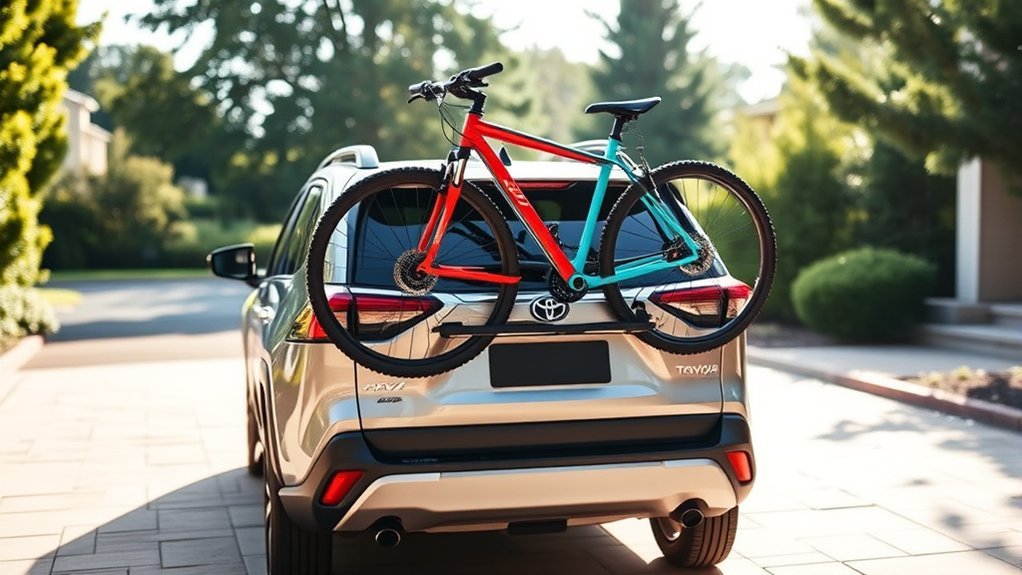
Yes, you can put a bike rack on your Toyota RAV4, but the right setup depends on your model year, hitch receiver, roof rails, crossbars, bike weight, and how often you need rear cargo access. A compatible hitch-mounted platform rack is often the easiest type to load, while roof-mounted, hatch-mounted, and older-style spare-tire racks can work in the right situations.
Last updated: September 19, 2026
Quick Answer
You can install a bike rack on a Toyota RAV4 if the rack matches your exact vehicle year and its hitch, roof system, hatch, or spare-tire setup. For many owners, a compatible hitch-mounted platform rack is the easiest choice to load, especially for heavier bikes. Because Toyota redesigned the RAV4 for 2026, do not assume a rack, hitch accessory, crossbar, or fit kit listed for a 2019–2025 RAV4 also fits a 2026 model. Always verify current vehicle fitment, rack ratings, bike weight, and rear visibility before driving.
Key Takeaways
- A Toyota RAV4 can use a hitch-mounted, roof-mounted, hatch-mounted, or older-style spare-tire bike rack when that rack is approved for the exact vehicle setup.
- A hitch-mounted platform rack is usually easier to load for frequent rides, heavier bikes, and many e-bikes because you do not need to lift bikes onto the roof.
- A roof-mounted rack can work well with compatible crossbars, but the rack, tray, bike, and roof system must stay within every applicable rating.
- Use a trunk or hatch strap rack only when the rack maker explicitly lists your exact RAV4 model year as compatible.
- Use the lowest rating among your vehicle, hitch, rack, crossbars, adapters, and bikes. Never rely on one capacity number alone.
- Treat 2026 RAV4 fitment separately because it begins a new RAV4 generation; re-check all rack and mounting-system compatibility.
At a Glance
| Time Required | 15 to 45 minutes for many removable hitch or hatch racks; longer if you need to install crossbars, a fit kit, or a hitch receiver first |
| Difficulty | Easy to moderate, depending on rack type and whether your RAV4 already has a compatible hitch or crossbars |
| Tools Needed | Rack manual, Toyota owner’s manual, current vehicle-fit guide, hitch pin or lock, clean cloth, measuring tape, and torque wrench if the rack maker requires one |
| Cost | Varies by rack type, bike capacity, locking features, crossbars, fit kits, and whether your RAV4 needs a hitch receiver |
2026 Fitment Note: The 2026 RAV4 begins a new generation. Do not carry over a 2019–2025 rack, hitch, crossbar, or fit-kit assumption without checking the current rack-maker fit guide for your exact 2026 trim and roof or receiver configuration.
Why a Bike Rack Works Well on Your Toyota RAV4

A bike rack helps you carry bikes without folding seats, removing wheels, or loading dirty tires into the cargo area. That helps when you use your RAV4 for trail rides, road cycling, family trips, or weekends with luggage.
The RAV4 also gives you several possible mounting paths. Depending on your exact model year and equipment, you may be able to use a hitch-mounted rack, roof-mounted rack, hatch-mounted rack, or a spare-tire-mounted rack on older RAV4 generations with an exterior rear spare.
Before buying any rack, check your exact RAV4 year and trim in the Toyota owner’s manual library, then use the rack maker’s current vehicle-fit guide. The owner’s manual provides vehicle-specific load and cargo cautions, while the rack maker confirms whether its mounting hardware is approved for your exact vehicle configuration.
Note: A hitch-mounted bike rack is not the same as towing a trailer, but its loaded weight still places force on the receiver and vehicle. Count the rack, bikes, locks, adapters, and any swing-away extension when checking every applicable limit.
What Should You Check Before Choosing a RAV4 Bike Rack?
When choosing a bike rack for your Toyota RAV4, focus on exact vehicle fit, total loaded weight, bike style, rear access, and security. A rack that works on one RAV4 may not fit another if the model year, receiver size, spoiler shape, roof rails, crossbars, or mounting points are different.
[Amazon Products Picked for You]

Features. Hitch insert fits 2-in receiver hitches. Patented tie-down cradle system individually secures and protects bicycles.

🚲【Universal 2-Inch Hitch Fit for 2 Bikes & Heavy-Duty Construction】 Effortlessly mounts to any 2" hitch receiver (SUVs, trucks, sedans, RVs - Ford, Toyota, Jeep compatible).—such as Honda CRV, Toyota Highlander, Jeep Wrangler, and Ford Explorer. Designed to securely transport road, mountain, fat-tire up to 5", and electric bikes, its robust platform-style design ensures safe and stable carrying for all your cycling adventures.
Weight Capacity Considerations
Start with total loaded weight. Add the rack weight, each bike’s weight, locks, adapters, and accessories. This step matters most for e-bikes, fat-tire bikes, and downhill mountain bikes because they can be significantly heavier than typical road or hybrid bikes.
Use the lowest rating in the full system. That means the lowest applicable limit among your RAV4, hitch receiver, bike rack, crossbars, bike trays, frame or wheel retention system, and adapters. If one component is rated lower than the rest, that lower rating controls the setup.
Warning: Do not exceed the rack, hitch, roof-system, adapter, or vehicle load rating. Overloading can damage components, change handling, loosen the mount, or make the bikes unstable during braking and turns.
Security Features Importance
Security features help protect both the rack and the bikes. Look for a compatible locking hitch pin, locking arms or cables, anti-rattle hardware, and strong wheel straps. Locks help during short stops, but they do not make a rack theft-proof.
| Feature | Why It Matters | What to Check |
|---|---|---|
| Locking hitch pin | Helps secure the rack to the receiver | Match the pin to the receiver and rack shank |
| Anti-rattle design | Reduces shaking, noise, and rack movement | Tighten it exactly as the rack maker explains |
| Wheel straps or arms | Keeps each bike from shifting during travel | Confirm tire width, wheelbase, fender, and frame compatibility |
| Integrated bike locks | Adds basic theft deterrence during short stops | Use additional security for long stops or overnight parking |
Compatibility With Your Exact RAV4
For a hitch-mounted rack, confirm the receiver opening and the rack shank size rather than assuming every RAV4 uses the same setup. Many racks are designed for 2-inch receivers, while others work with 1.25-inch receivers or approved adapters. Do not use a receiver adapter unless the rack maker permits that configuration, because an extension or adapter can change the allowable load.
For a roof-mounted rack, identify whether your RAV4 has a naked roof, raised rails, flush rails, or factory crossbars. Never reuse a fit assumption from another model year. Match the vehicle year, roof configuration, towers or feet, crossbars, bike tray, and any required fit kit in the rack manufacturer’s current fit database.
For a trunk or hatch rack, use the rack only when the manufacturer explicitly lists your exact RAV4 model year as compatible. The rear spoiler, hatch shape, paint-contact points, rear wiper, camera area, and strap routing can all affect whether a rack can be used safely.
Which Bike Rack Type Is Best for a Toyota RAV4?
The best rack type depends on how many bikes you carry, how heavy they are, how often you ride, and whether your RAV4 already has a compatible hitch or crossbars. Use this table as a decision guide, then confirm your exact vehicle in the rack maker’s fit system.
| Rack Type | Best For | Main Fit Check |
|---|---|---|
| Hitch-mounted platform rack | Frequent riders, heavier bikes, many e-bikes, and easier loading | Receiver fit, per-bike limit, total loaded weight, bike spacing, and hatch clearance |
| Hitch-mounted hanging rack | Lighter conventional bikes and budget-friendly family use | Frame shape, bike spacing, sway control, receiver fit, and total bike weight |
| Roof-mounted bike rack | Keeping rear hatch access clear and carrying lighter bikes when overhead loading is practical | Exact roof fit, crossbar spread, system rating, bike-tray fit, and total vehicle height |
| Trunk or hatch strap rack | Occasional trips with lighter bikes when a vehicle-specific fit is explicitly approved | Manufacturer fit listing, spoiler clearance, strap routing, paint contact, lights, plate, and camera visibility |
| Spare-tire-mounted rack | Older RAV4 models with an exterior rear spare tire | Exact vehicle fit, spare-tire size, mount style, rear-door clearance, and rack rating |
Fast decision guide:
- For heavy bikes or many e-bikes, start with a compatible hitch-mounted platform rack and verify both the per-bike and total loaded limits.
- For one lighter bike and no hitch, a compatible roof tray can work if you are comfortable lifting the bike overhead.
- For occasional hatch mounting, buy only from a vehicle-fit list that explicitly includes your exact RAV4 year.
- For three or four bikes, pay extra attention to rack length, bike spacing, receiver and rack ratings, hatch clearance, and how much leverage the loaded rack places behind the vehicle.
- For a 2026 RAV4, run a fresh fit check even if you already owned a rack for a 2019–2025 model.
If you already know which mounting style you need and want specific products to compare, see the RAV4 bike rack roundup. Keeping product picks there prevents this fit guide from duplicating the buying guide.
Pro Tip: If you carry e-bikes, remove the batteries before loading only when the bike maker allows it. This can reduce bike weight and may make lifting easier. Store and transport the battery according to the bike or battery manufacturer’s instructions.
[Amazon Products Picked for You]

SAFE & STABLE FOR CARS & SUVS: This hitch rack securely holds your bikes with soft padded hooks to prevent swaying and frame scratches. The hitch tightener ensures a wobble-free fit on your 2-inch receiver, and the rear safety reflector enhances night-time visibility

Patented Design Fits Sedans, Hatchbacks, Minivans, And Suv'S Consult Manufacturer Web Site For Specific Vehicle Fit Information.Comes fully assembled set up and installs in seconds 12 inch long carry arms easily accommodate a wide range of bicycle styles and 115 inch wide carry arms for greater bike compatibilityShips in certified frustration free packaging 70 pounds max capacityFolds fully flat for easy storage.Allen's warranty does not cover items purchased through third-party sellersImportant, please consult manufacturer web page for specific vehicle fit.Target gender : unisex.
Hitch vs. Roof Bike Rack: Which Is Better for a RAV4?
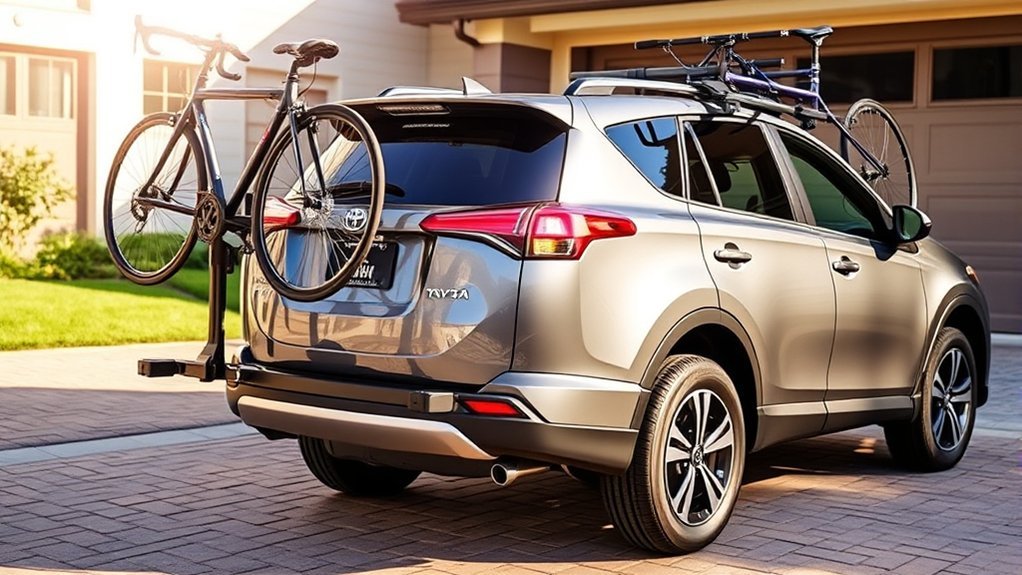
A hitch-mounted bike rack is usually easier to load because the bikes stay closer to the ground. That makes it especially practical for heavier bikes or riders who do not want to lift a bike over shoulder height.
The tradeoff is rear access and obstruction. Even tilting racks can limit hatch opening, and some loaded racks may block the rear camera, parking sensors, license plate, or tail lights. Check the complete loaded setup before every trip.
If required lights or license-plate visibility are obstructed, do not improvise a mounting solution. Use a rack-maker-approved auxiliary light or plate solution when one is available and when required by the laws where you drive.
A roof-mounted bike rack keeps the rear hatch area clear and can work well when your exact RAV4 roof configuration has compatible crossbars and a compatible bike tray. The downside is loading height. Lifting a heavy bike onto an SUV roof can be difficult, and you also need to remember the vehicle’s increased overall height.
A roof-mounted bike sits directly in the airflow and increases vehicle height. A hitch rack avoids overhead loading, but it can affect rear access and visibility. Choose based on the bikes you carry and the compromises you can manage safely.
Any external bike rack can affect fuel economy because it changes airflow and adds weight. Rooftop bikes generally add more exposed frontal area than bikes carried behind the vehicle, especially at highway speed.
[Amazon Products Picked for You]
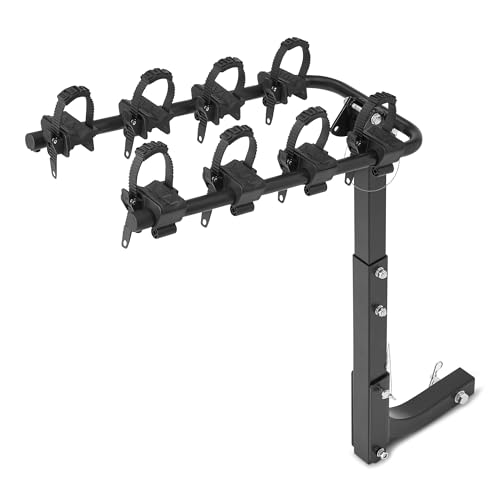
Hitch-mounted bike rack securely holds up to 4 bicycles; fits most cars, SUVs, and trucks; 2-inch hitch
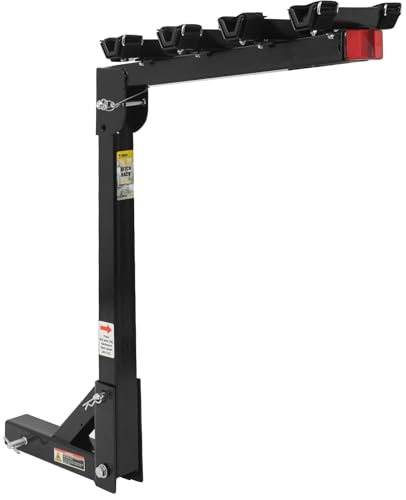
Secure Bike Transportation: Safely transport up to 4 bikes with ease. The rack's towing capacity is 150 lbs and includes a hitch pin for secure attachment. An added reflector enhances safety during travel
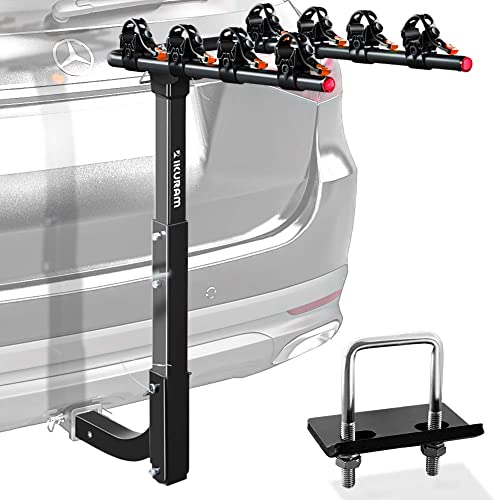
Rigid All Steel Constructed Bike Hitch Rack: Long-lasting and durable all steel construction with protective powder paint finish.
How Do You Install a Bike Rack on a Toyota RAV4?
Install the rack on level ground and read both sets of instructions first: your RAV4 owner’s manual and the rack manual. Confirm the rack maker lists the vehicle or mounting system as compatible before you load a bike. If the rack uses a hitch, inspect the receiver for rust, dirt, damage, or anything that could stop the rack shank from seating correctly.
- Confirm exact vehicle fit. Match the rack to your RAV4 model year and its receiver, roof system, hatch, or spare-tire configuration before loading any bike.
- Check all ratings. Compare the bike weight, per-bike rack limit, total rack limit, receiver or roof-system rating, adapter limits, and applicable vehicle guidance.
- Install the rack fully. Insert the hitch pin, tighten the anti-rattle device, secure straps, or clamp the roof tray exactly as the rack maker explains.
- Load the heaviest bike where instructed. Keep heavier bikes closer to the vehicle when the rack manufacturer specifies or permits that arrangement.
- Secure every required contact point. Make sure straps, hooks, and arms do not press on brake lines, vulnerable fenders, unsupported accessories, or frame areas the bike maker says not to clamp.
- Test for movement. Shake the rack and each bike by hand. Some movement can be normal by design, but loose sliding, repeated clanking, or an incompletely seated mount needs correction.
- Check visibility and required equipment. Confirm the loaded bikes do not create an unsafe obstruction of lights, plate visibility, rear-camera use, or driver awareness. Correct any legally required light or plate obstruction before driving.
- Recheck after a short drive. Stop in a safe place after the initial drive and inspect the rack, straps, locks, and bikes for anything that has settled or loosened.
Do not open the power liftgate into a loaded hitch rack unless the rack maker confirms there is enough clearance. If your RAV4 has a power hatch, prevent accidental opening when the rack is installed if contact is possible.
How Should You Maintain a RAV4 Bike Rack?
After each trip, remove road grime, mud, salt, and moisture from the rack according to the rack maker’s cleaning instructions. This helps control corrosion and keeps moving parts from sticking.
Inspect bolts, pins, locks, straps, wheel trays, frame or wheel arms, and rubber contact pads before your next ride. Replace cracked straps, damaged retention parts, or worn contact pads rather than stretching their service life.
Lubricate locks and hinges only if the rack maker recommends it. Some parts need a particular lubricant or should remain dry, so follow the rack manual instead of guessing.
When you are not using a removable rack, storing it in a dry place can protect it from weather, reduce theft exposure, and eliminate the drag and obstruction created by carrying an empty rack.
Related Guides
Frequently Asked Questions
Will a bike rack affect my RAV4’s fuel efficiency?
Yes, it can. Any exterior rack changes weight or airflow. A roof-mounted bike usually sits directly in the airflow above the vehicle, while a hitch-mounted bike sits behind it. The actual fuel-economy change depends on rack design, bikes, speed, weather, and driving conditions.
How many bikes can a RAV4 bike rack hold?
RAV4-compatible racks are available in different bike capacities, but bike count alone does not determine whether a setup is safe. Check the rack’s bike count, per-bike weight limit, total load limit, receiver or roof-system limit, and compatibility with the exact bikes you plan to carry.
Are there weight limits for bike racks on a RAV4?
Yes. The usable limit depends on the complete system, including the vehicle, receiver or roof system, rack, adapters, and bikes. Add the rack, bikes, locks, adapters, and accessories, then stay within the lowest applicable rating.
Can I use a bike rack with a rear-mounted spare tire?
Only if your RAV4 has an exterior rear-mounted spare tire and the rack manufacturer approves the rack for that exact vehicle and spare-tire setup. This mainly applies to older RAV4 generations. Newer RAV4 models use a rear hatch without an exterior spare.
Do I need a special hitch for my RAV4 bike rack?
You need a receiver and rack combination approved for your exact RAV4 and load. Match the rack shank to the receiver opening, verify the receiver and rack ratings, and follow any restrictions on adapters or extensions. Do not assume receiver size or compatibility from another RAV4 model year.
Can a bike rack block my backup camera or sensors?
Yes. Hitch and hatch racks can interfere with the backup camera, parking sensors, license plate, or tail lights. After loading the bikes, walk behind the RAV4 and inspect the complete setup. Do not rely on the camera or sensors as a substitute for direct observation, and correct any required lighting or plate obstruction before driving.
Is a roof bike rack safe for a Toyota RAV4?
A roof bike rack can be used when your exact RAV4 roof configuration, crossbars or rack system, and bike tray are compatible and the loaded setup stays within every applicable rating. Count the roof-rack components and bike load correctly, and remember the extra vehicle height in garages, drive-throughs, parking structures, and under low branches.
Will a 2019–2025 RAV4 bike rack fit a 2026 RAV4?
Do not assume it will. The 2026 RAV4 begins a new vehicle generation, so hitch, roof, hatch, crossbar, and fit-kit compatibility should be checked again. Search the rack manufacturer’s current fit guide using your exact 2026 RAV4 configuration before reusing older mounting hardware.
Can I carry e-bikes on a Toyota RAV4 bike rack?
You can carry e-bikes only when the complete setup is rated and compatible for them. Check each bike’s weight, the rack’s per-bike and total limits, receiver and vehicle limits, tire width, wheelbase, fender compatibility, and any restrictions on adapters. Remove the battery before loading only when the bike manufacturer permits it.
Conclusion
You can put a bike rack on a Toyota RAV4, but compatibility should be checked by exact model year rather than by vehicle name alone. A hitch-mounted platform rack is often the easiest choice for heavier bikes, a roof-mounted rack keeps the rear hatch area clear, and a hatch-compatible rack can work for occasional use when the manufacturer specifically approves the vehicle fit.
Before your first trip, verify your RAV4 owner’s manual, the rack maker’s current vehicle-fit guide, every applicable load rating, bike weight, and rear visibility. Recheck all fitment for a 2026 RAV4 because it begins a new generation. Once the complete system matches correctly, a RAV4 can carry bikes while leaving the cabin open for passengers and gear.
Sources
- Toyota Owners Manuals — model-year owner manual checks for load, roof, cargo, towing, and vehicle-specific guidance
- Toyota RAV4 official model page — current RAV4 model reference
- Toyota USA Newsroom: All-New 2026 RAV4 — confirms the 2026 redesign and current-generation context
- Thule Bike Rack Guide — bike-rack type selection and vehicle/roof compatibility guidance
- Thule Hitch Bike Racks — hitch-rack styles, receiver compatibility, platform racks, hanging racks, and e-bike-oriented options
- Thule Roof Bike Racks — roof-rack compatibility and roof-bike-rack considerations
- Thule Trunk Bike Racks — vehicle-fit and hatch/trunk rack considerations
- Car and Driver fuel-economy test — independent testing showing how exterior cargo position can affect aerodynamic efficiency
