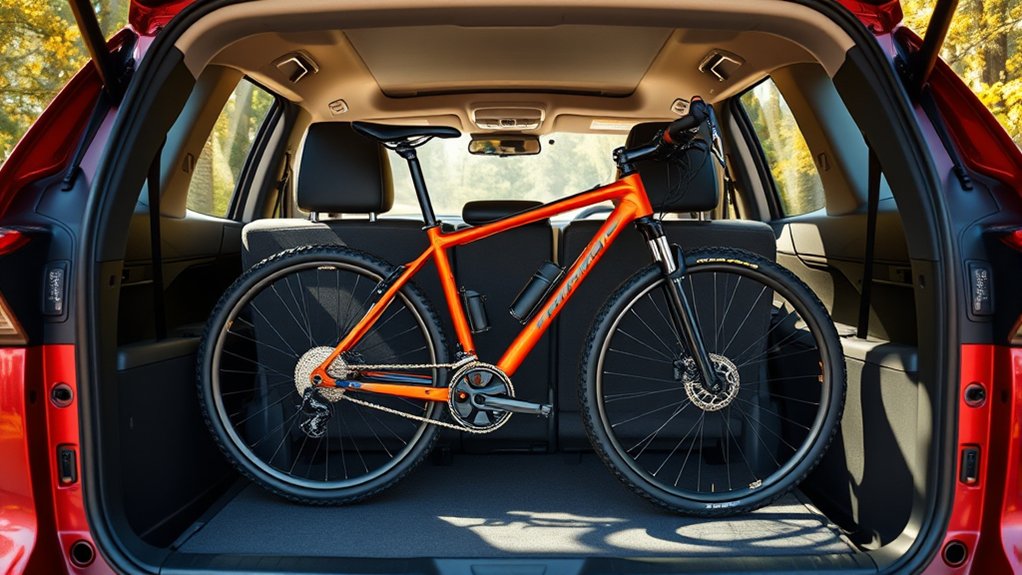
You can usually fit a bike inside a Toyota RAV4 with the rear seats folded down. A 21-inch hybrid bike generally works, but frame size alone does not guarantee the fit. Your bike’s overall length, handlebar width, saddle height, wheel size, and your RAV4 model year all matter. Measure first, protect the interior, and secure the bike before you drive.
Last Updated: July 4, 2026
Quick Answer
A Toyota RAV4 can usually fit a 21-inch hybrid bike inside when you fold the rear seats flat and turn the handlebars. For the easiest fit, measure the bike’s total length and handlebar width first. If space feels tight, remove the front wheel and secure the frame with soft straps.
Key Takeaways
- A 21-inch hybrid bike often fits inside a RAV4, but the bike’s total size matters more than frame size.
- Fold the rear seats, slide the front passenger seat forward if needed, and load the bike at a slight diagonal.
- Turn the handlebars first. Remove the front wheel only if the bike still feels too long or too tall.
- Use blankets, towels, or a cargo mat to protect the RAV4’s trim and the bike’s drivetrain.
- Secure the bike so it cannot slide, tip, or hit the front seats during braking.
At a Glance
| Time Required | 10 to 20 minutes the first time; faster after you test the fit |
| Difficulty | Easy to moderate, depending on bike weight and wheel removal |
| Tools Needed | Tape measure, blanket or cargo mat, soft straps, optional bike multi-tool |
| Cost | Usually $0 to $25 if you already have basic straps or blankets |
Can a Toyota RAV4 Fit a 21-Inch Hybrid Bike Inside?
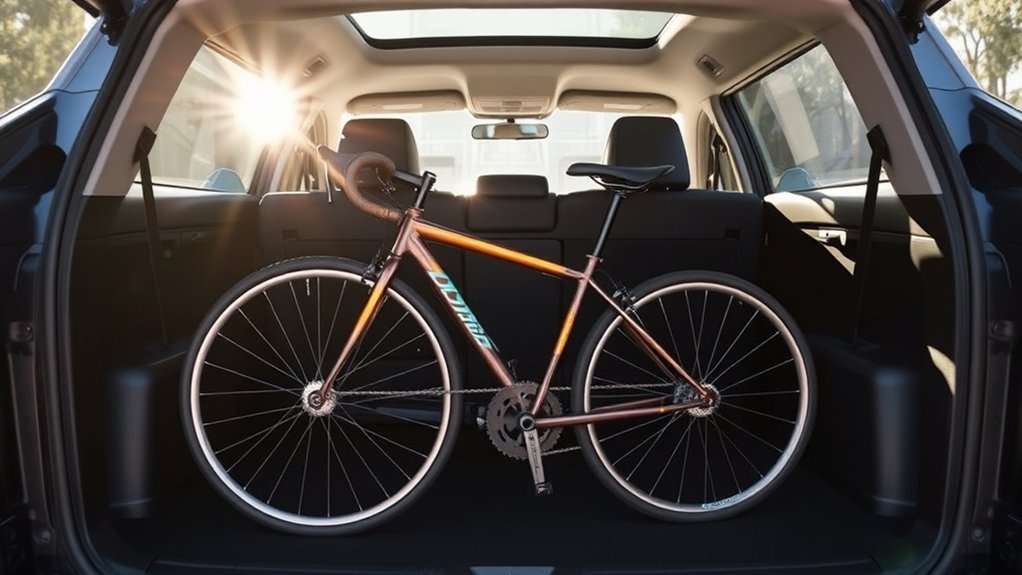
Yes, a Toyota RAV4 can often fit a 21-inch hybrid bike inside without a rack. The safest answer, though, is “measure before you load.” A 21-inch frame size usually describes the seat-tube area, not the bike’s total length or handlebar width.
Most fit problems come from three areas: the handlebars, the saddle, and the front wheel. If your hybrid bike has flat bars, a tall stem, wide pedals, fenders, or a rear rack, you may need to angle the bike or remove the front wheel.
You should also check your exact RAV4 model year. Toyota publishes current RAV4 specifications by model year, trim, and market, and equipment can vary. You can confirm current vehicle details on Toyota’s official RAV4 specifications page.
The bike’s frame size matters less than its full length, bar width, saddle height, and how flat your RAV4’s rear seats fold.
Measure Before Loading Your Bike
Before you lift the bike, take a quick set of measurements. This saves time and helps you decide whether you can keep both wheels attached.
| What to Measure | Why It Matters | What to Do If It Is Tight |
|---|---|---|
| Bike length from front tire to rear tire | Shows whether the bike can lie straight or needs a diagonal angle | Remove the front wheel or angle the bike |
| Handlebar width | Wide flat bars often hit the side trim or hatch opening | Turn the bars or loosen and rotate them if you know how |
| Saddle height | A tall saddle can hit the roof liner or hatch opening | Lower the seatpost and mark its height first |
| Cargo opening height and width | The hatch opening can be tighter than the cargo area inside | Load rear wheel first and rotate the frame slowly |
Note: If your RAV4 has a thick cargo liner, raised cargo floor, child seats, or a front passenger seat set far back, your usable bike space may shrink.
Essential Preparations for Loading Your Bike
Start by clearing the cargo area. Remove loose bags, tools, bottles, and anything that could scratch the bike or slide under it while you drive.
Fold the rear seats down and check that the seatbacks lock flat. Slide the front passenger seat forward only as much as you need. Keep the driver’s seat in your normal driving position so the bike does not affect your control of the vehicle.
Next, prepare the bike. Shift the chain onto a smaller rear cog if that keeps the derailleur tucked in. Remove loose lights, bottles, frame bags, or pumps. If your bike has a quick-release front wheel and the fit looks tight, remove the wheel before you wrestle the bike through the hatch.
Pro Tip: Take one photo of the bike before you remove the front wheel or lower the saddle. It helps you reset everything after the trip.
Step-by-Step: How to Fit a Bike Inside a Toyota RAV4
- Open the hatch fully and place a blanket, towel, or cargo mat over the bumper and cargo floor.
- Fold the rear seats flat and make sure the cargo path is clear.
- Turn the handlebars sideways before lifting the bike.
- Load the rear wheel first if the bike feels long. This gives you more control over the handlebar end.
- Angle the frame diagonally if the front wheel or handlebars touch the side trim.
- Place the drivetrain side up or protected so the derailleur and chain do not press into the floor or trim.
- Use soft straps to stop the bike from sliding forward, sideways, or into the hatch.
- Close the hatch slowly the first time. Stop if the glass, wiper trim, or hatch panel touches the bike.
If the hatch will not close easily, do not force it. Remove the front wheel, lower the saddle, or change the angle of the bike.
Benefits of Transporting Bikes Inside Your Vehicle
Transporting your bike inside the RAV4 protects it from rain, road spray, road debris, and casual theft during quick stops. It also avoids the extra installation steps that come with a hitch rack, trunk rack, or roof rack.
Inside transport works best when you carry one bike, want to keep the bike cleaner, or do not want to leave a rack on the vehicle. It can also help if your apartment, garage, or parking area makes rack storage difficult.
| Benefit | What It Helps With | Tradeoff |
|---|---|---|
| Weather protection | Keeps rain, grit, and road spray off the bike | Dirt can transfer to the cargo area |
| No rack needed | Avoids rack cost, storage, and installation | Reduces passenger and cargo space |
| Lower theft exposure | Keeps the bike out of plain sight better than an exterior rack | You still need to lock the vehicle and avoid long unattended stops |
Techniques for Maximizing Space in Your RAV4
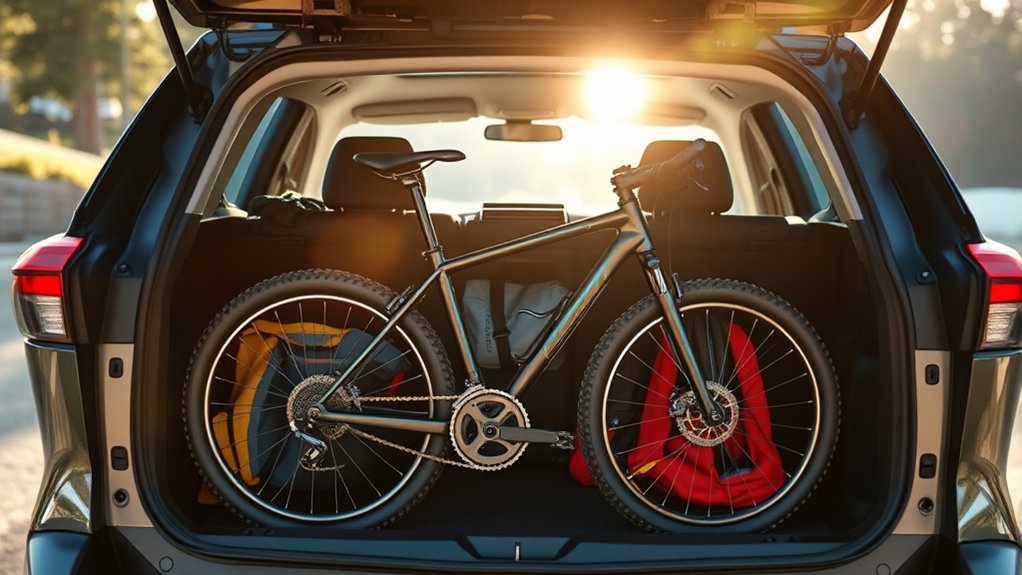
Small adjustments can make the difference between a frustrating load and a clean fit. Start with the simple changes before removing parts from the bike.
Seat Adjustment Techniques
Fold both rear seatbacks flat if you can. If you only need one side folded, use the wider folded section for the bike and keep the smaller section for a passenger or soft gear.
Slide the front passenger seat forward to gain length, but keep enough room so the bike does not press hard against the seatback. Avoid putting the handlebar, pedal, or fork against the front seat controls.
Handlebar Positioning Methods
Most hybrid bikes use wider flat handlebars than road bikes. Turn the bars sideways before loading. If the handlebar still catches the hatch opening, rotate the front wheel slightly as you guide the frame in.
If you know how to adjust your stem safely, you can loosen the stem bolts just enough to rotate the bar. Tighten everything back to the correct torque before riding. If you are unsure, do not loosen the stem. Remove the front wheel instead.
Using Blankets, Mats, and Totes for Stability
A blanket, moving pad, or cargo mat protects the RAV4’s trim and reduces sliding. A large plastic tote can work for small accessories, muddy shoes, or the removed front wheel, but the bike frame itself usually fits better when it rests on padded flooring.
Keep the chain and derailleur away from light-colored upholstery. If the bike is dirty, wrap the drivetrain area with a towel or place the bike drivetrain side up.
Securing Your Bike for Safe Transport
Once the bike fits, secure it. A loose bike can slide during braking, hit the hatch, damage the interior, or move toward the front seats.
Warning: Do not drive with the bike resting loosely against the hatch, glass, front seats, or side trim. Secure it before you leave, and keep your mirrors and rear visibility usable.
Proper Bike Securing Techniques
- Use soft cam straps or tie-down straps instead of metal hooks against the frame.
- Loop straps around strong frame areas, not brake cables, spokes, rotors, or the derailleur.
- Use the RAV4’s cargo tie-down points if your model has them.
- Block the wheels with a towel, bag, or folded blanket to reduce rolling.
- Keep pedals and handlebars away from glass and painted trim.
When to Remove the Front Wheel
Try loading with both wheels attached first. Remove the front wheel if the bike is too long, the handlebars hit the hatch opening, the saddle is too tall, or the bike only fits when forced.
After removing the wheel, place it in a wheel bag, tote, or towel. Keep the disc rotor protected if your bike has disc brakes. Avoid squeezing hydraulic brake levers while the wheel is out unless you use a brake pad spacer.
Battery Removal Benefits
If you are transporting an electric hybrid bike, check your bike manufacturer’s battery instructions. Removing the battery often makes the bike lighter and easier to lift. It also helps you keep the battery away from hard impacts during loading.
Carry the battery in the cabin or cargo area where it cannot slide, get crushed, or sit in direct heat for long periods. Do not transport a damaged, swollen, wet, or recalled battery.
Best No-Rack Methods for Family Bike Transport
No-rack transport can work for families, but it needs planning. One adult hybrid bike may take most of the rear cargo area. A child’s bike can often fit beside it if you remove loose accessories and use padding between frames.
If you need to carry passengers, child seats, luggage, and more than one bike, interior transport becomes harder. Fold only one rear seat if you need a rear passenger, then place the bike on the folded side with the front wheel removed.
For two adult bikes, remove both front wheels, alternate the handlebar direction, and place padding between the frames. Keep drivetrains from rubbing against each other. If loading becomes too tight, a hitch rack will usually be safer and faster.
Should You Transport Bikes Inside or Use a Hitch Rack?
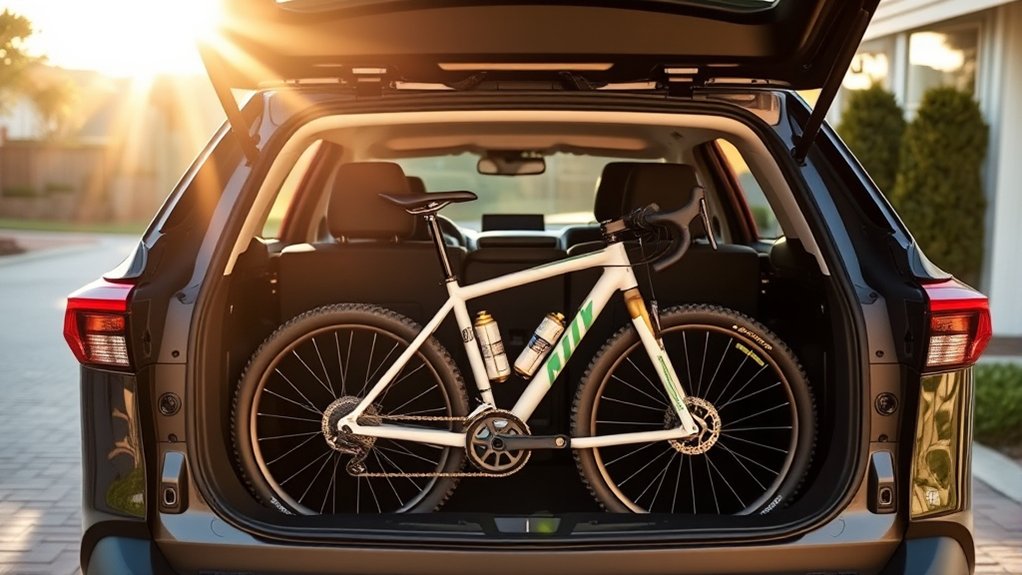
Inside transport and hitch racks solve different problems. Interior loading protects the bike from weather and avoids rack setup. A hitch rack keeps the cargo area clean and preserves room for passengers, bags, pets, and family gear.
| Choose Inside Transport If… | Choose a Hitch Rack If… |
|---|---|
| You carry one bike and want weather protection | You carry two or more bikes often |
| You do not want to buy or store a rack | You need the rear seats for passengers |
| You can lift the bike into the cargo area comfortably | Your bike is heavy, muddy, or difficult to angle inside |
| You make occasional short trips | You ride often and want faster loading |
Roof racks and trunk racks can also work, but each has tradeoffs. Roof racks require higher lifting, and trunk racks can limit hatch access or vehicle compatibility. If you use any exterior rack, follow the rack maker’s fit guide and weight limit.
Common Challenges of Fitting Bikes Inside a RAV4
Fitting a bike inside a RAV4 can feel easy once you know the angle, but the first attempt may take a few tries. These are the most common problems.
Space Limitations and Adjustments
If the bike is too long, remove the front wheel or angle the frame. If it is too tall, lower the saddle. If it is too wide, turn the handlebars and rotate the pedals so they do not catch on trim.
Do not force the hatch closed. If the hatch touches the tire, saddle, or handlebar, reopen it and reposition the bike.
Loading and Unloading Difficulties
Hybrid bikes can be awkward because the handlebars are wide and the frame sits higher than a road bike. Lift with two hands, keep the chain away from your clothes, and protect the bumper before loading.
When unloading, support the bike before you release the straps. Pull it out slowly so the pedals, handlebar ends, or rear derailleur do not scrape the trim.
Mud, Grease, and Interior Cleanup
Wipe the tires and chain area before loading if the bike is muddy. After the trip, vacuum the cargo area and wipe hard surfaces with a damp microfiber cloth and mild interior-safe cleaner.
If grease touches fabric, blot it instead of rubbing it. Rubbing can push the stain deeper into the upholstery.
User Experiences: Tips for Easy Bike Transport
Most RAV4 owners find a repeatable loading angle after one or two attempts. The trick is to avoid guessing every time. Use the same seat position, same blanket placement, and same strap points once you find a setup that works.
- Load the bike the same direction each time so the derailleur stays protected.
- Keep a dedicated cargo blanket in the RAV4.
- Use a small tote for the front wheel, helmet, shoes, and dirty gear.
- Practice front-wheel removal at home before you need to do it at a trailhead.
- Keep a multi-tool in your ride bag in case you need to adjust a seatpost or accessory.
Important Maintenance Considerations for Transported Bikes
Check the bike before you ride after transport. Confirm that the brakes work, the wheels are seated correctly, and the handlebar and saddle are tight if you adjusted them.
If you removed the front wheel, reinstall it carefully and check that the brake rotor sits correctly between the pads. Spin the wheel and listen for rubbing. If your bike uses rim brakes, make sure the brake is reconnected before riding.
Also inspect the rear derailleur. It can bend or shift if the bike rests on the drivetrain side. Shift through a few gears in a safe area before heading onto a busy road or trail.
NHTSA recommends riding a bike that fits and works properly before heading out. That includes brakes, visibility equipment, and a route that matches your riding conditions.
Related Guides
Frequently Asked Questions
What types of bikes fit best inside a RAV4?
Road bikes, many hybrid bikes, and some mountain bikes can fit inside a RAV4 with the rear seats folded. Bikes with wide handlebars, large frames, fenders, rear racks, or tall seatposts may need the front wheel removed.
Can I fit a bike with the front wheel attached?
Often, yes. Try turning the handlebars and placing the bike at a diagonal first. If the hatch will not close easily or the bike presses into the trim, remove the front wheel instead of forcing the fit.
Will transporting bikes inside affect fuel efficiency?
The added bike weight can have a small effect, but inside transport usually avoids the aerodynamic drag that comes from exterior racks. The real difference depends on your speed, route, bike weight, and how much gear you carry.
What tools do I need for bike disassembly?
Many front wheels with quick-release skewers need no tool. Thru-axle wheels may need a hex key or the axle lever built into the bike. A small bike multi-tool, towel, and brake pad spacer are useful if you remove a disc-brake wheel.
How do I clean the interior after transporting a bike?
Vacuum loose dirt first. Wipe plastic trim and cargo mats with a damp microfiber cloth and mild cleaner. For fabric, blot stains gently and avoid soaking the area. A washable cargo liner makes cleanup much easier.
Can I carry an e-bike inside a RAV4?
Sometimes, but e-bikes are heavier than standard hybrids. Check your lifting ability, the bike’s weight, and your manufacturer’s battery instructions. Remove the battery if your bike maker recommends it, and secure both the bike and battery so they cannot move.
Conclusion
A 21-inch hybrid bike can usually fit inside a Toyota RAV4, but you should confirm the fit with real measurements instead of relying on frame size alone. Fold the rear seats, turn the handlebars, protect the cargo area, and remove the front wheel if the bike feels tight.
Inside transport works well for one bike, short trips, and riders who want weather protection without buying a rack. If you often carry multiple bikes, passengers, or heavy e-bikes, a properly fitted hitch rack may save time and keep your cabin cleaner.
Sources
- Toyota RAV4 Official Specifications — supports checking current model-year specifications and trim details.
- NHTSA Bicycle Safety — supports pre-ride bike condition, fit, brakes, and riding safety guidance.
- AP / Edmunds 2025 RAV4 Hybrid Comparison — supports cargo-space context for the 2025 RAV4 Hybrid.
- CyclingNews Bike Rack Guide — supports rack-type tradeoffs for vehicle bike transport.

