Toyota RAV4 Stop & Start technology shuts off the gasoline engine during qualifying stops and restarts it when you are ready to move, reducing fuel burned while idling. The feature is vehicle-specific, and an engine that stays running because of battery charge, engine temperature, climate demand, driver input, or another operating condition is often behaving normally. This guide mainly applies to gasoline-only RAV4s equipped with Toyota’s conventional Stop & Start system; the U.S. 2026 RAV4 lineup is hybrid and plug-in hybrid only, so its gasoline-engine cycling is managed by the hybrid system instead.
Last updated: September 11, 2026 — refreshed for the 2026 U.S. RAV4 powertrain change and current Toyota Stop & Start guidance.
Quick Answer
Some gasoline-powered Toyota RAV4 models use an automatic Stop & Start system, but not every RAV4 does. When equipped, it normally stops the engine at a complete stop and restarts it as you release the brake or when vehicle conditions require the engine to run. A “Battery Charging,” “For Climate Control,” or similar message often indicates normal temporary inhibition; a flashing cancel indicator, a persistent malfunction message, a stall, or a failed restart needs diagnosis.
Key Takeaways
- Stop-start availability is vehicle-specific; confirm it by checking for the cancel switch and reading the owner’s manual for your exact year and trim.
- For U.S. shoppers, the 2026 RAV4 is HEV/PHEV-only; conventional Stop & Start guidance mainly applies to earlier gasoline-only RAV4s when equipped.
- The system saves fuel only while the engine would otherwise be idling, so the benefit is greatest in stop-and-go driving and small on open highways.
- A low 12-volt battery, a cold engine, strong heating or cooling demand, or certain driver inputs can keep the system from activating.
- Use the correct replacement battery specification and investigate warning messages, slow cranking, stalling, or repeated failed restarts promptly.
RAV4 Stop & Start: Normal Behavior vs. Warning Signs
| What You See | What It Usually Means | What to Do |
|---|---|---|
| “Battery Charging” | The system is prioritizing 12-volt battery charge, so an automatic stop is temporarily blocked. | Continue driving normally. If the message persists or cranking becomes slow, test the battery and charging system. |
| “For Climate Control” | Heating, cooling, or windshield defogging demand is keeping the engine running or causing an early restart. | No repair is usually needed if operation returns when climate demand decreases. |
| “Press Brake More to Activate” | Brake-pedal pressure is not sufficient for the automatic stop conditions. | At a safe full stop, hold steady brake pressure rather than pumping the pedal. |
| “Non-Dedicated Battery” | A battery not specified for the Stop & Start system may have been installed. | Verify the battery specification for the VIN and have the vehicle inspected if the message remains. |
| Flashing cancel indicator, malfunction message, stall, or failed restart | The vehicle may have a battery, starter, charging, sensor, control, or other fault that needs diagnosis. | Arrange Toyota-compatible diagnosis promptly; do not dismiss repeated failed restarts as normal Stop & Start behavior. |
Does Your Toyota RAV4 Have Stop-Start Technology?
Do not assume that every RAV4 has the same system. Equipment varies by country, model year, trim, drivetrain, and production specification. The most reliable check is the Toyota owner’s manual for the exact vehicle, selected by year or VIN.
A gasoline RAV4 equipped with the feature normally has a Stop & Start cancel switch and related messages or indicators in the instrument display. Toyota’s 2025 U.S. owner information still lists Stop & Start as an “if equipped” feature on gas-engine RAV4s. For 2026, Toyota moved the U.S. RAV4 lineup to hybrid and plug-in hybrid powertrains only, so the conventional gasoline-only system described here no longer defines the new U.S. model range.
Note: A RAV4 Hybrid or plug-in hybrid also turns its gasoline engine on and off, but that is part of Toyota’s hybrid control strategy. It should not be confused with the conventional Stop & Start feature used on some gasoline-only models.
How Does Toyota RAV4 Start-Stop Technology Work?

When the vehicle is fully stopped and the required operating conditions are met, the system can shut off the gasoline engine while accessories continue to draw power from the 12-volt electrical system. The engine restarts when the driver prepares to move or when the vehicle needs the engine to maintain safety, battery charge, climate control, or other functions.
The vehicle evaluates several inputs before allowing an automatic stop. Depending on the exact RAV4, these may include engine temperature, battery condition, brake-pedal input, steering input, climate-control demand, defogger operation, hood or door status, and whether the driver is properly seated and belted.
The system is designed to skip an automatic stop whenever restarting reliability, visibility, cabin comfort, or vehicle operation takes priority over saving fuel.
That means an inactive system is often behaving normally. For example, the engine may continue running during warm-up, battery charging, windshield defogging, or strong heating and air-conditioning demand.
Common Toyota RAV4 Start-Stop Complaints
Drivers generally notice three concerns: the feel of the restart, uncertainty about the 12-volt battery, and inconsistent operation in extreme temperatures. These concerns are understandable, but they do not all point to a fault.
[Amazon Products Picked for You]

【Compability】 This Auto Start Stop Eliminator Compatible with Ford Bronco 2021 2022 2023 2024 2025. (Note: No fit Bronco Sport and Bronco Badlands, When the installation is not working, contact us immediately to quickly solve your problem.)

1. Compability: This Auto Start Stop Eliminator fits for Audi 2017-2024 A4/2017-2024 S4/2018-2024 A5/2018-2024 Q5 SQ5
Inconvenient Engine Restarts
A conventional gasoline engine restart may produce a brief vibration, sound, or delay that is more noticeable than the near-silent engine transitions in a hybrid. In heavy traffic, repeated stops can make the feature feel intrusive, especially when a traffic light changes quickly or the vehicle moves only a few feet at a time.
A severe shudder, unusually slow restart, warning message, or actual stall is different from a normal brief restart. Those symptoms deserve inspection rather than being dismissed as a normal characteristic.
Battery Drain Concerns
The 12-volt battery supports vehicle electronics while the engine is off and must remain healthy enough for dependable restarts. The control system can suspend automatic stopping when battery charge or battery condition is inadequate, which protects restart capability.
Frequent short trips, long storage periods, extreme heat or cold, and an aging battery can reduce available charge. Use the battery type and rating specified for the exact vehicle; installing an unsuitable replacement can cause poor stop-start performance even when the vehicle still starts.
Performance During Cold Weather
Cold weather can reduce battery output and increase the need for engine heat, windshield defogging, and cabin heating. The RAV4 may therefore keep the engine running or restart it sooner. This is usually intentional system inhibition, not proof that the technology has become unreliable.
A single universal temperature cutoff should not be applied to every RAV4. Thresholds and conditions differ by vehicle specification, so use the exact owner’s manual rather than relying on a number quoted for another model or market. The more useful diagnostic clue is whether the system begins working again after the engine, cabin, and battery return to normal operating conditions.
Addressing Common Frustrations With Start-Stop Technology
If the system feels abrupt, come to a smooth, complete stop and hold steady brake pressure. Avoid repeatedly easing on and off the brake while waiting, because driver input can trigger an early restart or prevent the engine from stopping.
When equipped, the Stop & Start cancel switch can temporarily disable the feature. On many vehicles, the system returns to its default setting after the ignition is cycled, but the exact behavior should be confirmed in the model-specific manual.
Pro Tip: If automatic stopping suddenly becomes less frequent, note the weather, climate settings, trip length, and any display message before scheduling service. That context can help separate normal operating logic from a weak battery or sensor fault.
The factory cancel switch is the safest way to suspend Stop & Start when your RAV4 provides one. Aftermarket bypass modules and wiring changes can alter system behavior, and Toyota warns that installation or removal of electrical components or wireless devices may affect Stop & Start operation. If you want the feature disabled beyond the factory control, confirm the legal, warranty, diagnostic, and compatibility implications for your exact vehicle before modifying it.
Benefits of Start-Stop Technology in the RAV4
The main benefit is simple: fuel is not burned during an automatic engine-off period. The U.S. Department of Energy explains that reducing idling saves fuel and reduces pollution, while stop-start technology eliminates idling at traffic stops when operating conditions allow.
| Benefit | What It Means in Real Driving |
|---|---|
| Lower idle fuel use | The engine uses no gasoline during qualifying automatic-stop periods. |
| Reduced idling emissions | Less fuel burned while stationary means less tailpipe output during those periods. |
| Best value in city traffic | More and longer stops create more opportunities to avoid idling; highway driving offers little benefit. |
The exact fuel-economy improvement cannot be promised as a single RAV4 percentage. It depends on traffic, stop duration, weather, accessory use, battery condition, and how often the system is able to activate.
[Amazon Products Picked for You]

Catch Battery Problems Early: Featured in two videos by Project Farm, a popular YouTube channel with millions of subscribers, the ANCEL BA101 helps you quickly spot battery issues before they leave you stranded. It provides easy-to-understand readings for State of Health (SOH), State of Charge (SOC), voltage, current, CCA, plus cranking and charging system tests, so you can better understand your battery and help avoid unexpected breakdowns

[Car Battery Tester] You can easily test and inspect your 12V lead-acid battery with this TOPDON car battery tester. The SOH (State of Health), SOC (State of Charge), Voltage, Current, Rating, and numerous other understandable analytical data are provided by this battery tester. It is compatible with 100-2000CCA regular flooded, AGM flat plate/spiral, EFB, and GEL for their optimum performance.

【Reliable Automotive Car Battery Tester】 KW208 is the most cost-effective battery load tester compared to other brands, it has all the functions you need and the lowest cost that you can afford. KW208 can test all 12V batteries(100-2000CCA) including regular flooded, AGM flat plate, AGM spiral or gel batteries. Provide overall analysis of batteries’ condition and help you know their status in advance before it dies. KW208 battery analyzer supports cranking and charging system tests also alternator and starter test. Conveniently store this car battery tester for batteries in your glove box or garage, ready for use whenever needed.
Essential Maintenance Tips for Start-Stop Systems
Start-stop maintenance is mostly normal vehicle maintenance with extra attention to the 12-volt battery and charging system.
- Use the correct battery specification: Match the type, capacity, size, terminal layout, and other requirements listed for the vehicle or VIN.
- Test an aging or weak battery: Slow cranking, repeated low-voltage messages, or declining stop-start availability can justify a battery and charging-system test.
- Keep battery connections secure: Corrosion, loose terminals, or a poorly secured battery can cause voltage problems and safety risks.
- Follow Toyota’s maintenance schedule: Do not replace the starter at an invented age or cycle count; inspect or replace it based on symptoms and Toyota service information.
- Allow for temporary inactivity after battery work: Toyota notes that some Stop & Start-equipped RAV4s may not automatically stop the engine for a period after the battery is removed, discharged, or replaced while the system restores battery-related conditions.
- Use qualified service after battery replacement when needed: A disconnect may reset learned settings or create warning messages. Follow the exact manual and service procedure rather than assuming every RAV4 requires battery registration.
Warning: Stop driving and arrange service if the engine repeatedly stalls instead of restarting, electrical power drops out, a charging-system warning appears, or the vehicle displays a persistent Stop & Start malfunction message. Also disable Stop & Start in a poorly ventilated area because the engine can restart automatically and allow exhaust gases to accumulate.
The Engineering Behind Start-Stop Technology
A stop-start system depends on coordinated engine controls, battery monitoring, starter operation, brake input, and accessory management. Its software allows an automatic stop only when it predicts that the engine can restart promptly and vehicle functions can remain within acceptable limits.
Vehicle manufacturers design equipped systems for repeated automatic restarts, so frequent cycling is not the same as repeatedly cold-starting an older conventional engine. Even so, no mechanical or electrical component is immune to wear. A weak battery, starter fault, charging issue, or bad sensor can eventually cause symptoms and should be diagnosed using the vehicle’s fault codes and Toyota service information.
Climate behavior also varies by powertrain and equipment. Rather than assuming every RAV4 uses the same electric pumps or thermal hardware, the accurate rule is that the control system may restart or keep the engine running whenever heating, cooling, defogging, or electrical demand requires it.
How Does Start-Stop Technology Reduce Emissions?
An idling gasoline engine burns fuel without moving the vehicle. During a qualifying automatic stop, fuel use from idling falls to zero, so carbon dioxide and other combustion-related tailpipe emissions are avoided for that engine-off period. The U.S. Department of Energy’s Alternative Fuels Data Center identifies fuel savings and reduced pollution as core benefits of idle reduction.
The benefit is cumulative rather than dramatic at every stop. A driver who spends substantial time in urban traffic may see more benefit than someone whose trips are mostly uninterrupted highway miles.
Real-World Performance of Start-Stop Technology
In real driving, system behavior changes from trip to trip because the RAV4 continuously evaluates operating conditions. Automatic stopping may occur often on a mild day after a longer drive, then rarely during a short winter trip with the defroster and heater running.
The Department of Energy’s light-duty idle-reduction guidance notes that stop-start technology eliminates idling at traffic stops. It does not, however, guarantee a fixed fuel-saving percentage for every driver.
Judge the system by consistent patterns, not a single missed stop. A change that persists across normal weather and driving conditions, especially with a warning message or slow restart, is more meaningful than occasional inactivity.
Why the Start-Stop System May Not Activate
Common normal reasons include:
- The engine or cabin has not reached the required temperature.
- The 12-volt battery needs charging or its condition has declined.
- The air conditioner, heater, windshield defogger, or other electrical loads are demanding engine operation.
- The brake pedal is not held as required, the steering wheel is being turned, or the vehicle has not fully stopped.
- The vehicle is stopping very frequently in traffic, is on a steep incline or at high altitude, or another model-specific condition temporarily blocks operation.
- A hood, door, seat-belt, drive-mode, incline, or other vehicle-specific condition prevents activation.
- The battery was recently disconnected, discharged, or replaced and the system is restoring its battery-related operating conditions.
- The driver has pressed the Stop & Start cancel switch.
Because the exact list differs by model, read the instrument message and consult the manual for your RAV4 before assuming a sensor has failed.
[Amazon Products Picked for You]

【Reliable Car Battery Tester】: The alternator tester can accurately determine whether the car battery needs to be replaced or if there is a power outage, and at the same time evaluate the output status of the alternator, clearly presents real-time voltage data, battery health and charging status. It can effectively prevent the battery from being damaged due to overcharging or undercharging, and extend the battery's service life.

🔥【A MUST HAVE TOOL IN YOUR GARAGE】 - With up-to-date testing technology, it provides a quick reading to determine whether a vehicle battery needs a jump or replacement and also the output status of the alternator. All you have to do is log in and play. Save your time and money.
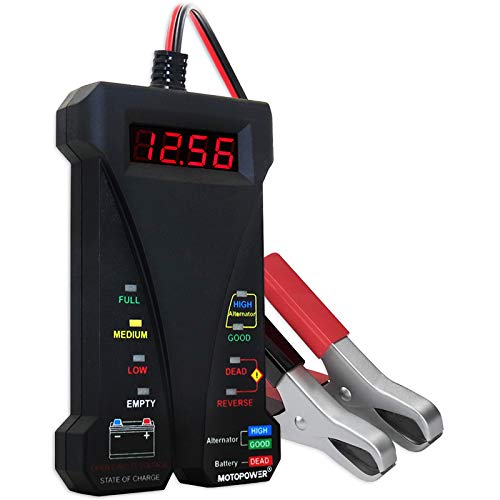
Effortless Operation - Boasting a “plug-and-test” design, there's no need for complex set-up procedures. Just connect it to the battery following simple steps. Without starting the vehicle, you can read the battery status, and after starting, quickly obtain the alternator status. Whether you're a professional mechanic or an ordinary car owner, you can easily use it to quickly determine if the battery needs jump - starting, replacement, or if the alternator output is normal.
Troubleshooting a RAV4 Start-Stop Problem
- Check the display: Record the exact indicator or message instead of relying on memory. “Battery Charging,” “For Climate Control,” “Press Brake More to Activate,” and “Non-Dedicated Battery” point to different causes.
- Remove obvious temporary demands: When safe, reduce maximum defrost or climate demand and see whether normal operation returns later in the trip.
- Consider recent battery events: Note a jump-start, battery replacement, long storage period, or repeated short trips.
- Inspect basic battery condition: Look for loose or corroded terminals, but do not work near the battery unless you understand the safety procedure.
- Test rather than guess: Have the 12-volt battery and charging system tested if cranking is slow or low-voltage symptoms appear.
- Seek professional diagnosis: Persistent warnings, failed restarts, stalling, or stored trouble codes require Toyota-compatible diagnostic equipment and service information.
Frequently Asked Questions
Can I permanently disable the Stop & Start feature in my RAV4?
The factory cancel switch is normally temporary. On 2025 RAV4s with the system, Toyota states that Stop & Start is automatically re-enabled after the engine is switched off and restarted. Aftermarket bypass devices exist, but electrical modifications can affect system operation, diagnostics, warranty questions, or emissions compliance, so check exact-vehicle implications before using one.
How does stop-start technology affect battery life?
It places more cycling demand on the 12-volt battery than a vehicle without automatic stops. The system monitors battery condition and may remain inactive when charge is low. Correct battery specification, secure connections, and periodic testing are important.
What does “Battery Charging” mean on a RAV4 Stop & Start display?
It normally means automatic engine stopping is being limited so the 12-volt battery can charge. If the message clears after normal driving, that can be normal. If it persists for a long time, returns frequently, or appears with slow cranking or low-voltage symptoms, have the battery and charging system tested.
Does stop-start technology impact engine performance?
Equipped vehicles are engineered for repeated automatic restarts, and Toyota does not publish a universal age or restart count at which the starter must be replaced. Normal wear remains possible, so investigate slow, noisy, failed, or unusually harsh restarts.
Why does the engine keep running at a red light?
The system may be protecting battery charge, warming the engine, meeting climate or defogging demand, responding to driver input, or observing another vehicle-specific condition. An explanatory display message may appear.
Is RAV4 Hybrid engine cycling the same as conventional stop-start?
No. A RAV4 Hybrid routinely starts and stops its gasoline engine as part of the hybrid powertrain’s energy management. That operation differs from the conventional driver-cancelable Stop & Start system found on some gasoline-only vehicles.
Is stop-start technology common in other vehicles?
Yes. Many manufacturers use automatic stop-start as an idle-reduction strategy, although the hardware, activation conditions, restart feel, and driver controls differ among vehicles.
What should I do if the system malfunctions?
Record the warning message, avoid repeated attempts to force operation, and arrange a battery, charging-system, and diagnostic-code check. Seek prompt service if the engine stalls, fails to restart, cranks slowly, or electrical power becomes unstable.
Toyota RAV4 Start-Stop Technology: Bottom Line
Toyota RAV4 Stop & Start is an idle-reduction system, not a feature that should operate at every stop. First confirm that your gasoline RAV4 is actually equipped, then use the display message to separate normal inhibition from a fault. “Battery Charging” and “For Climate Control” often explain temporary inactivity; a flashing cancel indicator, persistent malfunction message, repeated stall, or failed restart calls for diagnosis. Use the correct 12-volt battery specification, rely on the factory cancel switch when you want to suspend the feature, and remember that the U.S. 2026 RAV4 lineup is hybrid/PHEV-only rather than gasoline-only.
Sources
- Toyota Manuals and Warranties — model-specific owner information, controls, indicators, operating conditions, and maintenance guidance.
- U.S. Department of Energy: Idle Reduction — explains stop-start operation and the fuel, pollution, noise, and wear benefits of reducing idling.
- U.S. Department of Energy: Light-Duty Vehicle Idle Reduction Strategies — covers passenger-vehicle stop-start technology and idle-reduction practices.
- U.S. Department of Energy: Idle Reduction Benefits and Considerations — supports the fuel-saving and air-quality benefits of reducing engine idle time.
- Toyota USA Newsroom, “The Next Adventure Begins: 2026 RAV4 Arrives this Winter” — confirms the U.S. 2026 RAV4 lineup is Hybrid Electric Vehicle (HEV) or Plug-in Hybrid Electric Vehicle (PHEV) only.
