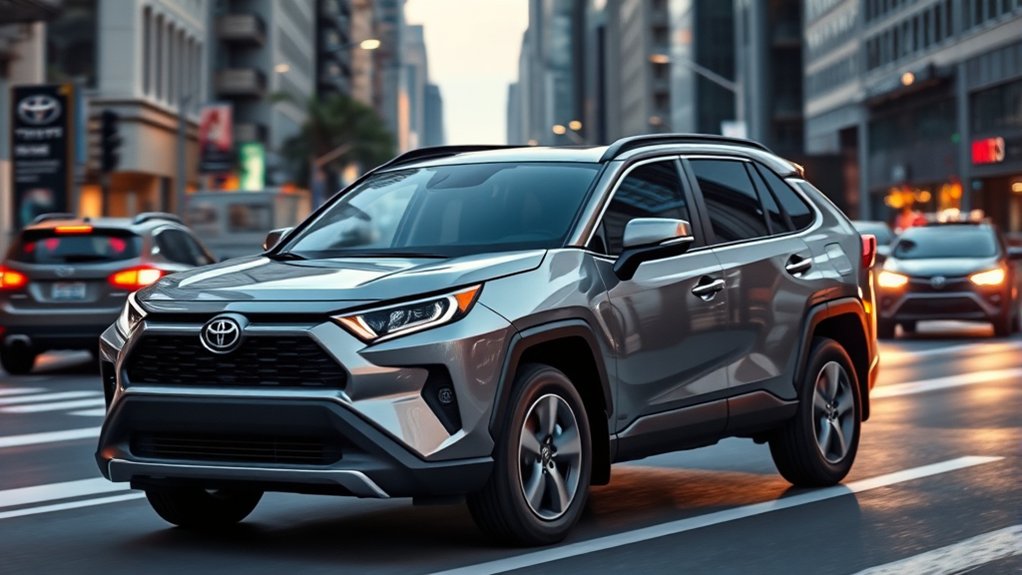
Toyota Safety Sense in the RAV4 combines camera- and radar-based driver-assistance features that can warn you about certain hazards, support braking or steering, maintain a following distance, and manage high beams. The exact features, controls, detection capabilities, and operating speeds depend on your RAV4’s model year, powertrain, trim, and market, so use this guide together with your vehicle’s owner’s manual.
Quick Answer
Toyota Safety Sense helps a RAV4 driver by providing forward-collision warnings, automatic emergency braking in certain conditions, lane-departure support, adaptive cruise control, road-sign information, and automatic high beams. It is a driver-assistance suite—not a self-driving system—and its features vary significantly by model year.
Key Takeaways
- U.S. RAV4 models have used several generations of Toyota Safety Sense, beginning with standard TSS-P for the 2017 model year and advancing to TSS 4.0 for 2026.
- Pre-Collision System, Lane Departure Alert, Lane Tracing Assist, and Dynamic Radar Cruise Control perform different jobs and have different operating conditions.
- Poor weather, blocked sensors, faded lane markings, glare, darkness, sharp curves, and unusual road users can reduce or prevent system operation.
- Keep the windshield camera and radar areas clean, and have the system inspected or calibrated after relevant glass, body, suspension, or collision repairs.
- Toyota Safety Sense supports an attentive driver; it does not replace steering, braking, observation, or safe following-distance decisions.
Why Toyota Safety Sense Matters for RAV4 Drivers
Toyota Safety Sense, commonly shortened to TSS, is a group of active driver-assistance technologies. Depending on the version installed, the suite uses a forward-facing camera, radar, vehicle-speed data, steering information, and other sensors to assess selected conditions around the RAV4.
The systems can provide warnings or limited control assistance, but they cannot recognize every object or handle every traffic situation. Toyota’s own documentation states that the driver remains responsible for watching the surroundings and driving safely.
Warning: Toyota Safety Sense is not an autonomous-driving system. Keep your hands ready to steer, watch the road, maintain a safe following distance, and brake whenever conditions require it. Never wait for a warning or automatic intervention before responding to a hazard.
The practical benefit is an extra layer of assistance during common driving tasks. Pre-Collision System may warn and brake for certain frontal hazards. Lane Departure Alert can warn of an unintended lane departure and may add limited steering support. Dynamic Radar Cruise Control adjusts speed around a detected vehicle ahead, while Automatic High Beams can switch between high and low beams based on surrounding traffic.
Which Toyota Safety Sense Version Does Your RAV4 Have?
Before changing settings or relying on a specific capability, identify your model year and TSS generation. The following table summarizes the main U.S.-market RAV4 changes. Equipment can still differ by powertrain, trim, production date, and region.
| RAV4 model year | Common U.S. TSS version | Key points |
|---|---|---|
| 2016 and earlier | No standard integrated TSS suite | Some vehicles may have separate safety or convenience options, but they should not be assumed to have Toyota Safety Sense. |
| 2017–2018 | TSS-P | Standard on all U.S. RAV4 grades, with PCS with Pedestrian Detection, LDA with Steering Assist, DRCC, and Automatic High Beams. |
| 2019–2022 | TSS 2.0 | Added or expanded functions such as bicyclist detection in certain conditions, Lane Tracing Assist, and Road Sign Assist. |
| 2023–2025 gas and hybrid | TSS 2.5 | Expanded PCS capabilities include selected intersection support and Emergency Steering Assist under specified conditions. |
| 2024–2025 RAV4 Prime / Plug-in Hybrid | TSS 2.5+ | Similar core functions with version- and powertrain-specific capabilities. Confirm the equipment in the PHEV manual. |
| 2026 | TSS 4.0 | Updated hardware and detection capabilities, plus Proactive Driving Assist. Selected trims can offer additional systems such as Lane Change Assist, Front Cross-Traffic Alert, and Traffic Jam Assist. |
Note: The version table applies primarily to U.S.-market vehicles. Check your owner’s manual, window sticker, Toyota account, or vehicle settings for the exact equipment installed on your RAV4.
Key Features of Toyota Safety Sense
Although the details have evolved, most recent RAV4 systems include a group of functions for frontal collision assistance, lane support, cruise control, nighttime lighting, and road-sign information.
Pre-Collision System With Pedestrian Detection
The Pre-Collision System with Pedestrian Detection, or PCS with PD, uses the forward camera and radar to look for certain potential frontal collisions. Depending on the TSS version and operating conditions, detectable road users may include vehicles, pedestrians, bicyclists, and—on TSS 4.0—motorcyclists.
If PCS determines that a frontal collision risk is sufficiently high, it may:
- Display a visual warning and sound a buzzer.
- Increase braking assistance when you press the brake pedal.
- Apply automatic emergency braking if the driver does not respond adequately.
- On applicable versions, provide support during selected turns or emergency steering maneuvers.
PCS cannot guarantee that a crash will be avoided. Detection depends on speed, target size and position, lighting, weather, road shape, sensor visibility, and other conditions.
Lane Support Technologies
The RAV4 may have several lane-related functions whose names sound similar but whose jobs are different:
- Lane Departure Alert (LDA) looks for an unintended departure from a detected lane or road edge and provides a warning.
- Steering Assist can add a small steering input after an unintended departure is detected. It does not continuously drive the vehicle.
- Lane Tracing Assist (LTA) provides ongoing lane-centering support while Dynamic Radar Cruise Control is operating and the required lane or vehicle information is available.
Using a turn signal normally tells the system that a lane change is intentional. The driver can override steering assistance at any time by steering normally.
Automatic High Beams
Automatic High Beams, or AHB, use the forward camera to look for the headlights of oncoming vehicles, the taillights of vehicles ahead, and surrounding light. When the system’s conditions are met, it switches between high and low beams to improve forward illumination without unnecessarily glaring other drivers.
The exact activation sequence differs by model year. Commonly, the headlight control must be in the required “Auto” or headlight-on position and the AHB function must be enabled with its stalk or dashboard control. A dashboard indicator confirms when the system is ready or operating.
AHB can remain on low beam when it detects street lighting, another vehicle, reflective objects, or other conditions that it interprets as requiring low beams. The driver can always select the appropriate beam manually.
Road Sign Assist
Road Sign Assist, or RSA, uses the forward camera to recognize certain signs and show them on the multi-information display. Recognized signs depend on the TSS generation and market, but may include speed-limit, stop, yield, and do-not-enter signs.
RSA can miss, misread, or continue displaying an outdated sign. Construction signs, damaged signs, electronic signs, unusual sign designs, snow, glare, and obstructed views can affect recognition. Always follow the signs you see on the road rather than relying solely on the display.
Proactive Driving Assist and Additional Features
The 2026 RAV4’s TSS 4.0 suite includes Proactive Driving Assist. When its operating conditions are met, PDA may provide gentle braking, acceleration, or steering assistance to support tasks such as maintaining space from a vehicle ahead or responding to selected curves and objects.
Do not confuse the core TSS suite with every driver-assistance option on the vehicle. Blind Spot Monitor, Rear Cross-Traffic Alert, parking sensors, Panoramic View Monitor, Front and Rear Parking Assist with Automatic Braking, Lane Change Assist, Front Cross-Traffic Alert, and Traffic Jam Assist may be separate standard or optional features depending on the year and trim.
How the Pre-Collision System Enhances Safety
PCS adds a second layer of observation ahead of the RAV4, but it does not replace the driver’s eyes or judgment. Its main value is the ability to warn quickly and, in certain circumstances, begin or strengthen braking when a frontal collision appears imminent.
A 2017 Insurance Institute for Highway Safety study found that forward-collision warning combined with automatic emergency braking was associated with a 50% reduction in rear-end striking crash involvement for the passenger vehicles studied. That result was not specific to the RAV4 and does not mean PCS prevents half of all crashes.
In an IIHS study of selected passenger vehicles, forward-collision warning with automatic emergency braking was associated with 50% fewer rear-end striking crash involvements—not 50% fewer crashes of every type.
For the best chance of useful assistance:
- Keep a safe following distance rather than waiting for PCS to warn you.
- Watch for pedestrians, cyclists, motorcycles, and crossing traffic yourself.
- Brake immediately when a hazard develops.
- Do not intentionally test automatic braking on public roads.
- Respond promptly to camera, radar, or PCS warning messages.
Lane Departure Alert and Tracing Assist Explained
Lane Departure Alert and Lane Tracing Assist both use forward-camera information, but they are intended for different situations.
| Function | What it does | When it helps | Important limit |
|---|---|---|---|
| LDA | Warns when the vehicle appears to leave a detected lane or road edge unintentionally. | Higher-speed driving on roads with visible lane boundaries. | May not recognize faded, covered, temporary, merging, or unusual lane markings. |
| Steering Assist | Adds limited corrective steering after an unintended departure is detected. | When LDA is active and the required conditions are met. | The input is limited and may be insufficient to keep the vehicle on the road. |
| LTA | Provides active lane-centering support. | While DRCC is engaged and the system can identify the lane or a suitable preceding vehicle. | It can disengage or provide little assistance on sharp curves, poor markings, or obstructed roads. |
Do not apply one speed threshold to every RAV4. For example, Toyota states that the 2026 RAV4’s LDA with Steering Assist detects lane markings or the road edge at speeds above 30 mph, while older systems may use a different threshold. LTA is linked to DRCC and has its own operating conditions.
How Dynamic Radar Cruise Control Enhances Your Drive
Dynamic Radar Cruise Control, or DRCC, maintains a driver-selected cruising speed when the road ahead is clear. When it detects a vehicle ahead traveling more slowly, it reduces speed to help maintain the selected following distance. It can accelerate toward the set speed after the lane clears, subject to system limits.
On recent RAV4s with Full-Speed Range DRCC, the cruise system is designed to be set at speeds above 20 mph. Once engaged, it can manage lower-speed following and may bring the RAV4 to a stop behind a detected vehicle. Depending on how long the stop lasts and the model year, the driver may need to press the accelerator or use the resume control before following resumes.
The following-distance setting changes the time gap the system attempts to maintain. It does not guarantee enough stopping distance for rain, ice, worn tires, a heavy load, or a driver who is not paying attention. Choose a longer gap when conditions are less favorable.
DRCC may not respond as expected to:
- A vehicle cutting sharply into the lane.
- A stopped object detected late after a hill or curve.
- A motorcycle, bicycle, narrow vehicle, or offset vehicle.
- Vehicles crossing the road or traveling in another lane.
- Heavy rain, snow, fog, spray, dust, glare, or a blocked sensor.
- Steep grades, winding roads, work zones, or toll plazas.
Tips for Optimizing Toyota Safety Sense Features
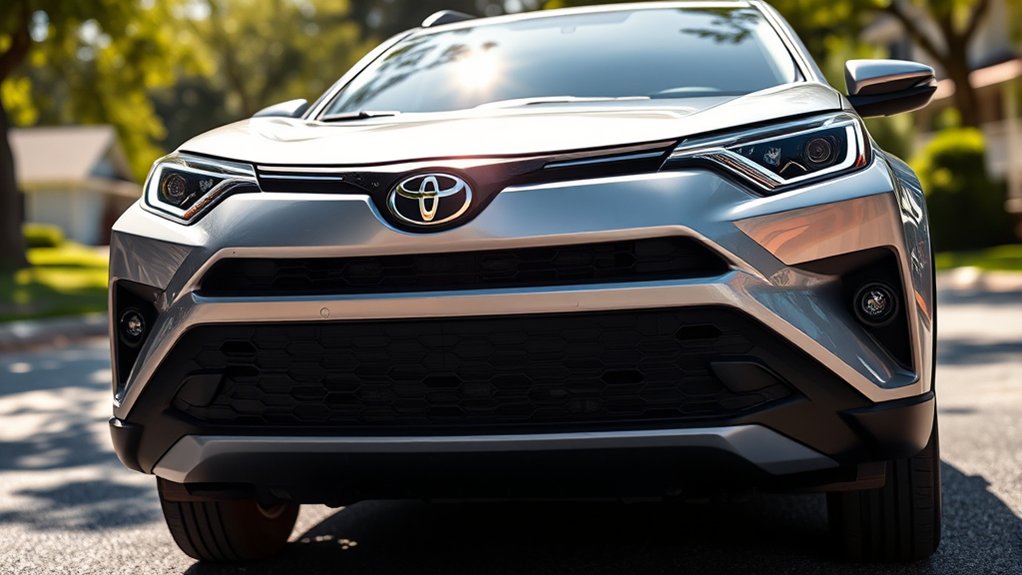
You do not need to perform a separate scheduled service simply because the RAV4 has Toyota Safety Sense. However, the sensors, windshield, tires, alignment, and related vehicle systems must remain in suitable condition.
- Clean the windshield in front of the camera. Remove dirt, frost, condensation, stickers, dashcam accessories, and other obstructions without damaging the camera area.
- Keep the radar area clear. Snow, ice, mud, badges, wraps, accessories, body damage, or an incorrectly repaired bumper or grille can interfere with radar detection.
- Use the correct tires and inflation pressures. Uneven, worn, underinflated, or nonstandard tires can affect vehicle stability and driver-assistance performance.
- Learn the indicators. Know which dashboard symbols mean a feature is enabled, operating, temporarily unavailable, or malfunctioning.
- Adjust one setting at a time. On many models, you can change PCS warning timing, lane alerts, steering support, following distance, or RSA notifications through the multi-information display or multimedia settings.
- Have repairs calibrated correctly. Windshield replacement, front-end collision repair, suspension work, wheel alignment, sensor replacement, or a strong impact near a sensor may require inspection and calibration by qualified equipment.
- Read the manual for your exact model year. Control locations and menu names changed as the RAV4 moved from TSS-P to TSS 2.0, 2.5, 2.5+, and 4.0.
Pro Tip: If several TSS functions become unavailable at the same time, inspect the upper-center windshield and front radar area first. A shared camera or radar obstruction can affect multiple systems at once.
Understanding the Limits of Toyota Safety Sense
Toyota Safety Sense can assist only when its sensors recognize the scene and all operating conditions are satisfied. An alert may occur late, may not occur, or may occur when no immediate danger exists.
| Condition | Possible effect | Driver response |
|---|---|---|
| Heavy rain, snow, fog, spray, dust, or ice | Camera or radar detection may weaken or stop. | Reduce speed, increase distance, use manual control, and clear sensors when safe. |
| Faded, covered, branching, temporary, or missing lane markings | LDA or LTA may not identify the lane correctly. | Steer based on the road, not the lane display. |
| Glare, darkness, backlighting, wet reflections, or bright signs | Object, sign, lane, or vehicle-light recognition may be delayed or incorrect. | Control the lights manually and watch the roadway directly. |
| Sharp curve, crest, dip, steep grade, or narrow road | The system may lose the lane or vehicle ahead. | Brake and steer manually before assistance becomes inadequate. |
| Vehicle cutting in, crossing traffic, unusual object, or offset road user | PCS or DRCC may detect the target late or not classify it. | Anticipate the hazard and take control immediately. |
| Sensor obstruction, impact, misalignment, or repair | One or more systems may become unavailable or operate incorrectly. | Follow the warning message and arrange inspection or calibration. |
Nighttime Driving Support in the RAV4: What to Know
Automatic High Beams can reduce the need to switch beams repeatedly, but the driver remains responsible for selecting legal and appropriate lighting. Toyota states that current AHB systems operate at speeds above 21 mph, although exact conditions can differ on older RAV4s.
The system may stay on low beam or switch later than expected near:
- Streetlights, illuminated buildings, or reflective road signs.
- Curves, hills, intersections, and divided highways.
- Vehicles with dim, dirty, hidden, or unusually positioned lights.
- Fog, rain, snow, road spray, smoke, or dust.
- Pedestrians, bicycles, animals, and other objects that do not present recognizable vehicle lights.
Road Sign Assist can display certain signs at night when the camera recognizes them, but it is not a substitute for looking at roadside signs. PCS may also detect selected road users at night, depending on the TSS generation, lighting, target, and road conditions.
Real-World Examples of Toyota Safety Sense Benefits
Urban Collision Assistance
Imagine that traffic ahead stops while you are checking a mirror. PCS may identify the rapidly closing distance and produce a warning. If you react and brake, Brake Assist may increase braking force when appropriate. If you do not respond adequately, automatic emergency braking may reduce speed or help avoid the collision under certain conditions.
At an intersection, newer TSS 2.5, 2.5+, and 4.0 versions have expanded detection capabilities for selected turning situations. This does not cover every crossing vehicle or pedestrian, so the driver must still yield and verify that the path is clear.
Highway Lane and Distance Support
On a clearly marked highway, DRCC can maintain a selected gap behind a vehicle ahead. With DRCC engaged, LTA may add lane-centering support. If the lane lines fade, the road curves sharply, or the camera loses the lane, the display can indicate reduced or unavailable assistance. The driver must continue steering throughout the trip.
Improved Nighttime Visibility
On a dark road, AHB may select high beams when no relevant vehicle lights are detected and return to low beams when another vehicle appears. This can make repeated beam changes more convenient, but the driver should override the system whenever the selected beam is unsuitable.
Stop-and-Go Traffic
Full-Speed Range DRCC can follow a detected vehicle into lower-speed traffic and may stop the RAV4. The driver must remain ready for vehicles cutting in, pedestrians, bicycles, traffic signals, and situations where DRCC does not identify the correct target.
Selected 2026 trims may offer Traffic Jam Assist for certain controlled-access highways at speeds under 25 mph. It is separate from the basic DRCC description and requires the applicable equipment and an active Drive Connect trial or subscription.
Troubleshooting Toyota Safety Sense Warnings
A temporary “unavailable” message does not always mean a component has failed. The system may pause when a sensor cannot obtain reliable information.
- Camera unavailable: Clear frost, fog, dirt, stickers, or accessories from the upper-center windshield. Allow the cabin and windshield to reach a normal temperature.
- Radar unavailable: Safely remove snow, ice, mud, or heavy dirt from the radar area identified in the owner’s manual.
- Lane functions unavailable: Look for faded lines, roadwork, glare, heavy rain, snow cover, or a road that is too narrow or sharply curved.
- PCS, DRCC, or multiple systems unavailable: Check both shared sensor areas. Stop using the affected assistance and drive manually.
- Message remains after cleaning and restarting: Arrange an inspection. Do not cover, move, paint, or attempt to align a radar or camera yourself.
- Warning appears after glass or body repair: Ask whether the required camera or radar calibration was completed to Toyota procedures.
If the display instructs you to visit a dealer or reports a malfunction rather than a temporary obstruction, follow that instruction promptly.
Adjusting or Disabling Toyota Safety Sense
Many RAV4s allow individual functions or alert settings to be changed through steering-wheel controls, the multi-information display, or the multimedia screen. TSS 4.0 moves its settings and controls into the Audio Multimedia interface.
Available adjustments may include:
- PCS warning timing or sensitivity.
- LDA warning type and steering assistance.
- LTA activation.
- DRCC following distance.
- Road Sign Assist notifications.
- Automatic High Beam activation.
- Proactive Driving Assist support level on applicable vehicles.
Disabling one feature does not remove the entire TSS suite, and some safety functions or defaults may reactivate when the vehicle is restarted. Warning lights or messages may remain visible while a function is off. Because behavior varies, use the instructions for your exact model year rather than following a generic button sequence.
Related Guides
Frequently Asked Questions
Can Toyota Safety Sense be turned off completely?
Individual functions can usually be adjusted or disabled, but Toyota does not provide one universal permanent-delete switch for the entire suite. Some settings may reset after the RAV4 is restarted. Use the multi-information display or multimedia settings described in your model-year manual.
Does Toyota Safety Sense require regular maintenance?
It normally has no separate scheduled-maintenance interval, but the camera and radar areas must remain clean and unobstructed. Calibration or inspection may be necessary after windshield replacement, front-end repair, collision damage, sensor disturbance, suspension work, or wheel alignment.
Is Toyota Safety Sense available in older RAV4 models?
Yes. Toyota Safety Sense P became standard on all U.S. RAV4 grades for the 2017 model year. The 2019 RAV4 introduced TSS 2.0, later models moved to TSS 2.5 or 2.5+, and the 2026 RAV4 uses TSS 4.0. RAV4s from 2016 and earlier generally do not have the integrated factory suite.
How does weather affect Toyota Safety Sense performance?
Rain, snow, fog, ice, spray, dust, glare, and condensation can obscure the camera, radar, lane markings, road signs, vehicle lights, or other targets. Assistance may be limited or temporarily unavailable, so slow down, increase following distance, and control the vehicle manually.
Are there additional costs for Toyota Safety Sense features?
The core Toyota Safety Sense suite is standard on current U.S. RAV4 models. Additional systems can depend on the trim or option package. For example, selected 2026 driver-assistance features such as Traffic Jam Assist may require compatible equipment and an active connected-service trial or subscription.
Does Toyota Safety Sense make the RAV4 self-driving?
No. Toyota Safety Sense provides limited driver assistance. The driver must supervise every feature, keep control of steering and braking, watch surrounding traffic, and respond immediately when the system does not recognize a hazard or becomes unavailable.
Why does my RAV4 say a safety system is unavailable?
Common causes include dirt, ice, fogging, glare, extreme temperature, heavy weather, faded lane markings, sensor obstruction, or a recent repair that affected alignment. Clean only the approved exterior areas, follow the displayed instructions, and arrange service if the warning remains.
Conclusion
Toyota Safety Sense can make everyday RAV4 driving more manageable by warning about selected frontal hazards, supporting emergency braking, monitoring lane position, adjusting cruise speed, displaying certain road signs, and managing high beams. Its value is greatest when the driver understands exactly which TSS generation is installed and treats every feature as backup rather than authority.
Start with the manual for your RAV4’s model year, keep the camera and radar areas clear, respond to warning messages, and take control whenever road, weather, traffic, or visibility conditions challenge the system. Used with realistic expectations, Toyota Safety Sense can provide meaningful assistance without encouraging over-reliance.
Sources
- Toyota USA Newsroom: 2026 RAV4 Safety and Convenience Features — TSS 4.0 features, operating descriptions, and available driver-assistance equipment.
- Toyota Safety Sense 4.0 Overview — official feature descriptions, operating qualifications, and driver-responsibility disclosures.
- 2026 RAV4 Plug-in Hybrid Driving Support Systems Manual Excerpt — sensor locations, warnings, system limits, and operating precautions.
- Toyota USA Newsroom: 2017 RAV4 and Standard TSS-P — confirms the introduction of standard Toyota Safety Sense P across U.S. RAV4 grades.
- NHTSA Driver Assistance Technologies — independent explanations of collision warning, automatic emergency braking, and lane-support technologies.
- Cicchino: Effectiveness of Forward-Collision Warning and Automatic Emergency Braking — evidence and context for rear-end crash reductions associated with FCW and AEB.
