
Last updated: September 22, 2026 — interior and cargo dimensions rechecked for the 2025 RAV4 Hybrid and redesigned 2026 RAV4.
The Toyota RAV4 Hybrid does not have one official “overall interior length” measurement because Toyota publishes passenger and cargo dimensions separately. For the fifth-generation RAV4, Toyota’s U.S. specifications list 40.0 inches of cargo length behind the rear seat. The 2025 RAV4 Hybrid also provides 41.0 inches of front legroom, 37.8 inches of rear legroom, about 37.5–37.6 cubic feet of cargo room behind the second row depending on trim/source, and up to 69.8 cubic feet behind the front row.
The redesigned 2026 RAV4 starts a new generation. Toyota lists the 2026 Hybrid at 41.0 inches of front legroom, 37.8 inches of rear legroom, 37.8 cubic feet behind the second row, and 70.4 cubic feet with the second row folded. Do not automatically apply fifth-generation cargo-floor dimensions to a 2026 vehicle.
Quick Answer
For a 2019–2025 RAV4, Toyota lists 40.0 inches of cargo-floor length behind the rear seat. The 2025 RAV4 Hybrid has 41.0 inches of front legroom, 37.8 inches in the rear, about 37.5–37.6 cubic feet of cargo space behind the second row, and up to 69.8 cubic feet with the rear seats folded. The redesigned 2026 RAV4 Hybrid keeps the same listed front/rear legroom but increases published cargo volume to 37.8 cubic feet behind the second row and 70.4 cubic feet behind the front row.
Key Takeaways
- Toyota does not publish one universal overall cabin-length figure; passenger and cargo measurements are listed separately.
- For the fifth-generation RAV4, Toyota lists 40.0 inches of cargo length behind the rear seat and 39.4/59.0 inches of minimum/maximum cargo width.
- The 2025 RAV4 Hybrid has 41.0 inches of front legroom, 37.8 inches of rear legroom, and about 37.5–37.6 cubic feet behind the second row.
- The redesigned 2026 RAV4 Hybrid lists 37.8 cubic feet behind the second row and 70.4 cubic feet with the second row folded.
- A cubic-foot rating cannot guarantee that a stroller, pet crate, mattress, bicycle, or rigid box will fit; measure the narrowest width and hatch opening for close-fit cargo.
Model-year note: The 2019–2025 RAV4 belongs to the fifth generation. The 2026 RAV4 begins the sixth generation and uses Hybrid Electric Vehicle (HEV) or Plug-in Hybrid Electric Vehicle (PHEV) powertrains. Because the body and interior were redesigned, use measurements for your exact year, grade, roof configuration, and powertrain.
Toyota RAV4 Hybrid Interior Dimensions: 2025 vs 2026

The 2025 RAV4 Hybrid uses the fifth-generation body. It seats five and combines 41.0 inches of front legroom with 37.8 inches in the rear. Toyota’s fifth-generation specifications also provide unusually useful cargo-floor measurements, including 40.0 inches of length behind the rear seat and 39.4/59.0 inches of minimum/maximum cargo width.
The 2026 RAV4 is a redesigned sixth-generation model. Front and rear legroom remain listed at 41.0 and 37.8 inches, but several other interior measurements and the published cargo-volume figures change.
| Measurement | 2025 RAV4 Hybrid | 2026 RAV4 Hybrid |
|---|---|---|
| Seating capacity | 5 | 5 |
| Front legroom | 41.0 in. | 41.0 in. |
| Rear legroom | 37.8 in. | 37.8 in. |
| Front/rear shoulder room | 57.8 / 56.4 in. | 57.0 / 56.4 in. |
| Front/rear hip room | 54.3 / 47.7 in. | 55.3 / 49.6 in. |
| Cargo behind second row | About 37.5–37.6 cu. ft., depending on trim/source | 37.8 cu. ft. |
| Maximum cargo volume | 69.8 cu. ft. | 70.4 cu. ft. |
Sources: Toyota U.S. fifth-generation RAV4 specifications and Toyota 2026 RAV4 Sales Consultant Guide. The fifth-generation physical cargo measurements are useful references for the 2019–2025 body, but verify the exact trim before buying a tightly fitted accessory or loading a rigid item.
How Much Passenger Space Does the RAV4 Hybrid Have?
The RAV4 Hybrid gives front passengers 41.0 inches of listed legroom in both the 2025 and redesigned 2026 models. Rear legroom is 37.8 inches. That is enough for many adults, but seating comfort still depends on passenger height, front-seat position, roof configuration, and how long you will be in the vehicle.
Front Row Legroom and Driving Position
For the 2025 model, published fifth-generation specifications list 41.0 inches of front legroom, 57.8 inches of shoulder room, and 54.3 inches of hip room. Toyota lists 37.7 inches of front headroom with a moonroof, so do not treat 37.7 inches as the maximum headroom for every trim.
Seat equipment varies by grade. Depending on year and trim, RAV4 models may use fabric or SofTex-trimmed seating and may add power adjustment, heating, ventilation, memory, or other comfort equipment. Check the equipment list for the exact vehicle rather than assuming an upper-trim feature is standard.
Rear Seat Space for Adults, Kids, and Car Seats
The 2025 RAV4 Hybrid lists 37.8 inches of rear legroom, 56.4 inches of rear shoulder room, and 47.7 inches of rear hip room. Two adults generally have more personal space than three across, especially on longer drives.
Child-seat fit is more specific than the raw rear-legroom number. In Cars.com’s standardized 2025 RAV4 Hybrid test, an infant seat and rear-facing convertible fit well after the front passenger seat was moved forward slightly. The publication’s three-child-seat-across test did not fit, and its booster test found buckle access more difficult because of the seat-cushion shape.
A rear-facing child restraint can still affect front passenger space differently depending on the restraint model and installation angle. Test your actual child seat in the exact vehicle before buying.
Pro Tip: Bring your tallest regular passenger, child restraint, stroller, pet crate, or other hard-to-fit item to the test drive. Published dimensions narrow the search, but your real seating positions and item dimensions determine whether the setup works.
How Much Cargo Space Does the RAV4 Hybrid Have?
For the 2025 RAV4 Hybrid, current specification sources commonly list about 37.5–37.6 cubic feet behind the second row and up to 69.8 cubic feet behind the front row with the rear seats folded. The small 37.5-versus-37.6 difference reflects trim/source reporting rather than a meaningful change in everyday usefulness.
The redesigned 2026 RAV4 Hybrid increases Toyota’s published figures to 37.8 cubic feet behind the second row and 70.4 cubic feet behind the front row. These volume numbers should not be mixed with fifth-generation physical length, width, or height measurements.
How Long and Wide Is the Fifth-Generation RAV4 Cargo Area?
Toyota’s U.S. fifth-generation specifications list 40.0 inches of cargo length behind the rear seat, a 39.4-inch minimum cargo width, a 59.0-inch maximum cargo width, and approximately 34.5–36.6 inches of cargo height on applicable non-plug-in configurations.
The minimum width is usually more useful than the maximum width for a rigid box, crate, or fitted organizer because wheel housings and interior trim create narrower points. The hatch opening also needs to be measured separately: an item can theoretically fit inside the cargo bay but still be too large to pass through the liftgate opening.
Volume vs. physical fit: Cubic feet measure total volume, not a rectangular box. If an item is close to the vehicle’s limits, measure its full exterior length, width, and height, then compare those numbers with the narrowest cargo area and liftgate opening in your exact RAV4.
Edmunds describes the fifth-generation RAV4 Hybrid’s load floor as low and notes that the standard hybrid battery does not consume the main cargo area. That helps make the space useful for groceries, luggage, folded strollers, sports gear, and other everyday loads.
Interior Features That Affect Usable Space
The 60/40 split-folding rear seat is one of the RAV4 Hybrid’s most useful space features because you can lower only part of the second row when you need a longer cargo area while retaining a rear seating position.
Technology changes significantly between the two generations. For 2025, Toyota lists an 8-inch multimedia screen on several RAV4 Hybrid grades, while Hybrid XSE and Hybrid Limited use a 10.5-inch display. A 12.3-inch digital gauge cluster is standard on Hybrid Limited and available on Hybrid XSE.
For 2026, Toyota makes a 12.3-inch digital gauge cluster standard across the lineup and uses a 10.5-inch multimedia screen with an available 12.9-inch display. The sixth-generation model also introduces Toyota Safety Sense 4.0 and a newer Toyota Audio Multimedia system.
Sources: Toyota USA: 2025 RAV4 and Toyota USA: 2026 RAV4.
[Amazon Products Picked for You]

- 2PCS Surpassme Universal Car Seat Front Covers fit Most Car Types; Provides Comfortable Driving Experience and Keeps Car Seat Clean; Machine Washable and Tumble Dry

Perfect Fits Your Car: 𝐏𝐞𝐫𝐟𝐞𝐜𝐭 𝐬𝐢𝐳𝐞 𝟓𝟐"𝐖 𝐱 𝟒𝟖"𝐋 fits most cars and SUVs with a rear seat width within 52". Supplies your pets with comfort while keeping your vehicle interior safe from scratches, fur, and urine. It also perfects for protecting from damage caused by baby car seats. And for kids, it can protect the back seat from food and juice spills. Ideal for pet owners who commute daily, take weekend road trips, or travel with both kids and dogs – whether you have a messy toddler, a furry friend, or both, this cover keeps your car clean and stress-free.

PREMIUM DURABILITY AND EXCELLENT MATERIALS: Made of premium leather and tear-resistant, waterproof fabric, this car seat cover combines luxury with rugged protection.180-day durability guarantee ensures long-lasting comfort while protecting the seat from spills, pet claws, UV damage, and everyday wear and tear.
How Does the 2025 RAV4 Hybrid Compare With Rivals for Space?

Comparing the same model year makes the differences easier to understand. The 2025 RAV4 Hybrid offers competitive behind-seat cargo room, but the Hyundai Tucson Hybrid provides more rear legroom and more published cargo volume behind the second row. The Honda CR-V Hybrid provides considerably more rear legroom and more maximum cargo volume, although its behind-seat cargo figure varies by hybrid trim.
| 2025 Hybrid SUV | Rear Legroom | Cargo Behind Rear Seat | Maximum Cargo |
|---|---|---|---|
| Toyota RAV4 Hybrid | 37.8 in. | About 37.5–37.6 cu. ft. | 69.8 cu. ft. |
| Hyundai Tucson Hybrid | 41.3 in. | 38.7 cu. ft. SAE | 74.5 cu. ft. SAE |
| Honda CR-V Hybrid | 41.0 in. | 34.7–36.3 cu. ft., depending on hybrid trim | 76.5 cu. ft. |
The numbers show different strengths rather than one universal winner. The Tucson Hybrid gives rear passengers more listed legroom and slightly more SAE cargo volume behind the second row. The CR-V Hybrid gives substantially more rear legroom and more maximum cargo volume. The RAV4 Hybrid remains useful for daily cargo because its behind-seat volume is competitive and its fifth-generation cargo area provides a low load floor and useful physical dimensions.
Comparison sources: Hyundai USA 2025 Tucson Hybrid specifications and Honda 2025 CR-V specifications.
[Amazon Products Picked for You]

[ORGANIZE YOUR CAR TRUNK]: When you open the trunk after grocery shopping, you definitely don't want to have a mess of groceries splattered around the trunk. Our trunk organizer is secured with Velcro. It does a great job of helping you organize groceries

SPACIOUS STORAGE: With 2 large compartments and 6 extra mesh pockets, this car trunk organizer provides ample space to neatly store groceries, tools, sports equipment, and more. Keep your car trunk clutter-free and organized on every trip.
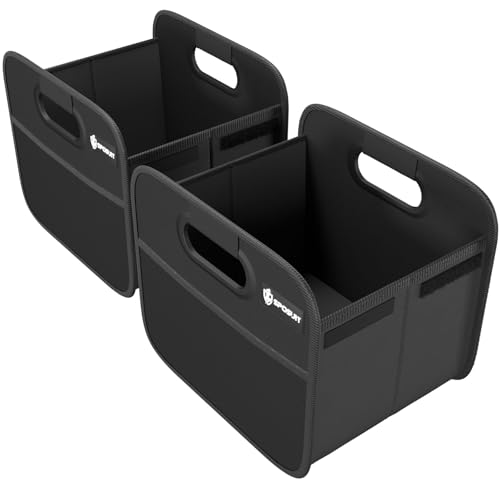
[ORGANIZE YOUR CAR TRUNK]: When you open the trunk after grocery shopping, you definitely don't want to have a mess of groceries splattered around the trunk. Our trunk organizer is secured with Velcro. It does a great job of helping you organize groceries
How to Maximize Cargo Space in the RAV4 Hybrid
Start by deciding whether you need maximum volume or a particular usable length, width, and height. Cubic feet are useful for comparing vehicles, but measurements matter more when you are loading a rigid object.
[Amazon Products Picked for You]

【No More Flying Groceries】The E KANI Car Trunk Net easily accommodates large, bulky, fragile and round items. Perfect for carrying groceries, luggage, clothes, etc. It can easily solve the problem of loose items.

【Fits most cars】: This cargo net comes in three sizes for you to choose from, 43.3 inch cargo net is recommended for truck owners, 35.43 inch cargo net is recommended for SUV owners, and 49.2 inch cargo net is recommended for RV owners. Your cargo is secure on any bumpy road, it fits securely in the right size trunk, and driving or opening the trunk is no longer bothered by rolling cargo

Selected Materials: Th cargo net is made of 5mm high quality latex and nylon woven, sturdy and durable, wear-resistant, not easily deformed, and not prone to aging
Optimize Rear Seat Folding
Use the 60/40 split rear seat when you need to carry both cargo and a rear passenger. Fold the larger section for wide boxes or several bags, or fold the smaller section for long narrow items while keeping more seating available.
Before lowering a seatback, remove loose items and keep seat belts clear of the folding mechanism. Do not force a seatback if a child restraint, head restraint, front seat, buckle, or other object is blocking it.
Utilize Cargo Tie-Downs
Securing cargo reduces shifting during braking and cornering. Choose straps, bins, or a cargo net based on the shape and weight of what you are carrying rather than relying on stacking alone.
| Item Type | Recommended Method |
|---|---|
| Large boxes | Measure the box and hatch opening first, place the box flat when possible, and secure it if it can slide. |
| Sports equipment | Use the split-folding seat as needed and restrain loose equipment with suitable straps or a cargo net. |
| Groceries | Use reusable bins, crates, or a cargo net to keep bags upright and prevent rolling items. |
| Small furniture | Measure the hatch opening as well as the interior, fold the required seat sections, protect the trim, and secure the item. |
| Tools | Keep heavy tools low in a closed container and restrain the container so it cannot move during a sudden stop. |
Measure Before Loading a Close-Fit Item
For a stroller, dog crate, appliance, storage box, bicycle, or camping platform, measure more than total cubic volume. Check the item’s full exterior size and compare it with the RAV4’s narrowest usable width, cargo-floor depth, interior height, and liftgate-opening dimensions.
For a fifth-generation RAV4, Toyota’s 40.0-inch seats-up cargo length and 39.4-inch minimum cargo width are useful starting references. A 2026 RAV4 uses a redesigned body, so measure that generation separately instead of assuming the older dimensions apply.
Warning: Do not stack cargo high enough to block necessary rear visibility, and do not leave heavy objects unsecured. Also stay within the vehicle’s load-carrying limit shown on the Tire and Loading Information label for your specific vehicle.
Related Guides
Frequently Asked Questions
How long is the cargo area in a 2019–2025 Toyota RAV4 Hybrid?
Toyota’s fifth-generation U.S. specifications list 40.0 inches of cargo length behind the rear seat. Toyota does not publish one universal overall cabin-length number or a single folded-seat floor-length measurement that answers every cargo-fit question. Measure your exact vehicle if an item will be a close fit.
How much cargo space does the 2025 RAV4 Hybrid have?
Current specifications commonly list about 37.5–37.6 cubic feet behind the second row for the 2025 RAV4 Hybrid, depending on trim/source, and up to 69.8 cubic feet behind the front row with the rear seats folded.
How much cargo space does the 2026 RAV4 Hybrid have?
Toyota’s 2026 RAV4 Sales Consultant Guide lists 37.8 cubic feet behind the second row and 70.4 cubic feet behind the front row with the second row folded.
Does the standard RAV4 Hybrid lose cargo space because of its battery?
The standard fifth-generation RAV4 Hybrid keeps cargo volume very close to the gas RAV4, and many configurations share the same maximum 69.8-cubic-foot rating. Do not apply that statement to the plug-in hybrid, which uses different packaging and cargo figures.
Can three child seats fit across a 2025 RAV4 Hybrid?
In Cars.com’s standardized 2025 RAV4 Hybrid Car Seat Check, its three test child seats did not fit across the second row. Child restraints vary in width and shape, so test the specific seats you plan to use and follow both the vehicle and child-restraint instructions.
Is the 2026 RAV4 Hybrid roomier than the 2025 model?
Toyota lists the same 41.0 inches of front legroom and 37.8 inches of rear legroom for both model years. The 2026 redesign changes several shoulder and hip measurements and raises published maximum cargo volume from 69.8 to 70.4 cubic feet, so compare the exact dimensions that matter for your passengers or cargo.
Conclusion
The Toyota RAV4 Hybrid provides practical passenger and cargo room, but the correct answer depends on the model year and on whether you need passenger measurements, cubic cargo volume, or a physical length and width for a specific item.
For a fifth-generation RAV4, start with the useful 40.0-inch cargo-length figure behind the rear seat, 41.0 inches of front legroom, 37.8 inches of rear legroom, about 37.5–37.6 cubic feet behind the second row, and 69.8 cubic feet at maximum. For the redesigned 2026 RAV4 Hybrid, Toyota lists 37.8 cubic feet behind the second row and 70.4 cubic feet behind the front row.
If you are buying a child seat, stroller, pet crate, mattress, bicycle rack system, storage box, or other close-fit item, measure the exact RAV4 and the item before ordering. Physical fit depends on the narrowest interior point and hatch opening, not only the cubic-foot rating.
Sources
- Toyota USA: 2024 RAV4 eBrochure and Specifications — fifth-generation legroom, shoulder room, hip room, cargo-floor length, cargo width, cargo height, passenger volume, and cargo-volume references.
- Toyota: 2026 RAV4 Sales Consultant Guide — redesigned 2026 interior measurements and 37.8/70.4-cu.-ft. cargo figures.
- Toyota USA Newsroom: 2025 RAV4 — 2025 multimedia screens, digital gauge availability, seating, liftgate, and trim-equipment information.
- Toyota USA Newsroom: The Next Adventure Begins — 2026 RAV4 — sixth-generation lineup, interior technology, seating equipment, and Toyota Safety Sense 4.0.
- Hyundai USA: 2025 Tucson Hybrid Specifications — rear legroom and SAE cargo-volume comparison.
- Honda: 2025 CR-V Specifications — hybrid rear legroom and cargo-volume comparison.
- Cars.com: How Do Car Seats Fit in a 2025 Toyota RAV4 Hybrid? — standardized infant, convertible, booster, and three-across child-seat observations.
- AP News / Edmunds: 2025 Hyundai Tucson Hybrid vs. 2025 Toyota RAV4 Hybrid — 2025 RAV4 Hybrid technology, cargo, comfort, and rival-comparison context.
