
Checking your Toyota Tacoma’s oil takes only a few minutes, but the reading matters. Park on level ground, shut the engine off, let the oil settle, then use the dipstick the same way every time. A clean, repeatable check helps you spot low oil, overfill, leaks, or dirty oil before they turn into expensive engine problems.
Quick Answer
To check your Tacoma’s oil, park on level ground, turn the engine off, wait 5–15 minutes, pull the dipstick, wipe it clean, reinsert it fully, then pull it out again. The oil should sit between the low and full marks. If it is low, add the correct oil slowly and recheck.
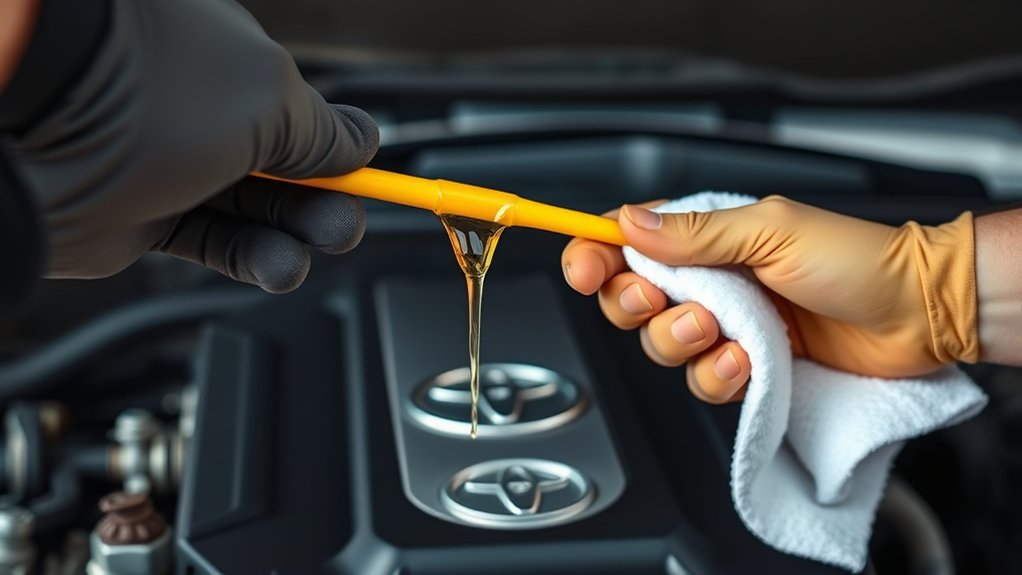
Key Takeaways
- Use the same process every time: level ground, engine off, short wait, wipe, reinsert, and read again.
- The correct oil viscosity and service interval depend on your Tacoma’s model year and engine, so check the owner’s manual first.
- Add oil in small amounts, usually 1/4 to 1/2 quart at a time, because overfilling can also cause problems.
- Do not keep driving if the low oil pressure warning light comes on. Stop safely and check the level before continuing.
At a Glance
| Time Required | 5–10 minutes |
| Difficulty | Easy beginner DIY task |
| Tools Needed | Clean lint-free rag or paper towel, funnel, flashlight, and the correct engine oil if topping off |
| Cost | Free to check; cost only applies if you need oil or service |
Tools and Prep Before You Pop the Hood
Before you open the hood, gather a clean lint-free cloth or paper towel, a funnel, a flashlight, and the correct engine oil if the level may need topping off. Use the oil viscosity and specification listed in your Tacoma’s owner’s manual or on the oil filler cap. Toyota’s official owner manual library is the best place to confirm model-year details.
Required Tools
You only need a few basic items for a clean oil-level check. Use a lint-free rag to wipe the dipstick, a flashlight if the dipstick is hard to read, and a funnel if you need to add oil. Keep the oil bottle sealed until you use it so dirt does not enter the engine.
- Clean lint-free rag or paper towel
- Funnel for clean topping off
- Flashlight for reading the dipstick marks
- Correct engine oil for your Tacoma’s model year and engine
- Gloves, if you want to keep oil off your hands
Safety Precautions
Park the Tacoma on level ground, shift into Park or set the manual transmission securely, and apply the parking brake. Turn the engine off before checking the dipstick. If the engine was running, wait 5–15 minutes so oil can drain back into the pan and hot parts can cool slightly.
Warning: If the low oil pressure warning light comes on while driving, do not treat it like a normal dipstick check. Pull over safely, shut the engine off, check the oil level, and get help if the light stays on after the level is corrected.
Pre-Check Prep
Open the hood and locate the engine oil dipstick. It usually has a bright handle, but the exact location can vary by Tacoma generation and engine. Look for the low and full marks before you take the reading. If the dipstick tube or handle looks damaged, fix that issue before trusting the result.
Check Your Tacoma’s Oil: Step-by-Step
Use the same steps every time so your readings are consistent. The owner’s manual is the final authority, but this process works well for a routine driveway check.
- Park level. A slope can make the oil read too high or too low.
- Turn the engine off. Wait 5–15 minutes if the engine was running so oil can settle back into the pan.
- Pull the dipstick. Pull it straight out and keep the tip from touching dirty surfaces.
- Wipe it clean. Use a lint-free rag or paper towel so old splash oil does not create a false reading.
- Reinsert it fully. Push it all the way back into the tube until it seats.
- Pull it again and read it. The oil film should sit between the low and full marks.
- Check both sides. If one side is smeared, use the clearer side and repeat the check once.
If the oil is between the marks, the level is acceptable. If it sits below the low mark, add the correct oil in small amounts. If it is above the full mark, do not ignore it; overfilled oil can create foaming, leaks, or pressure problems.
Note: A first-morning cold check can give a consistent personal baseline, but the best method is always the one listed in your Tacoma owner’s manual for your exact model year.
Hot or Cold: When to Check Tacoma Oil
The clearest rule is simple: follow your owner’s manual. For a normal DIY check, park level, shut the engine off, and wait 5–15 minutes before reading the dipstick. That short wait lets oil drain back into the pan without leaving the engine fully cold.
A cold overnight reading can also be useful because the oil has fully settled. Use it for consistency if you check the truck in the same parking spot each time. Avoid checking immediately after shutting the engine off because oil may still be coating internal parts, which can make the dipstick read low.
Read Smeared or Hard-to-See Dipsticks (Simple Tricks)
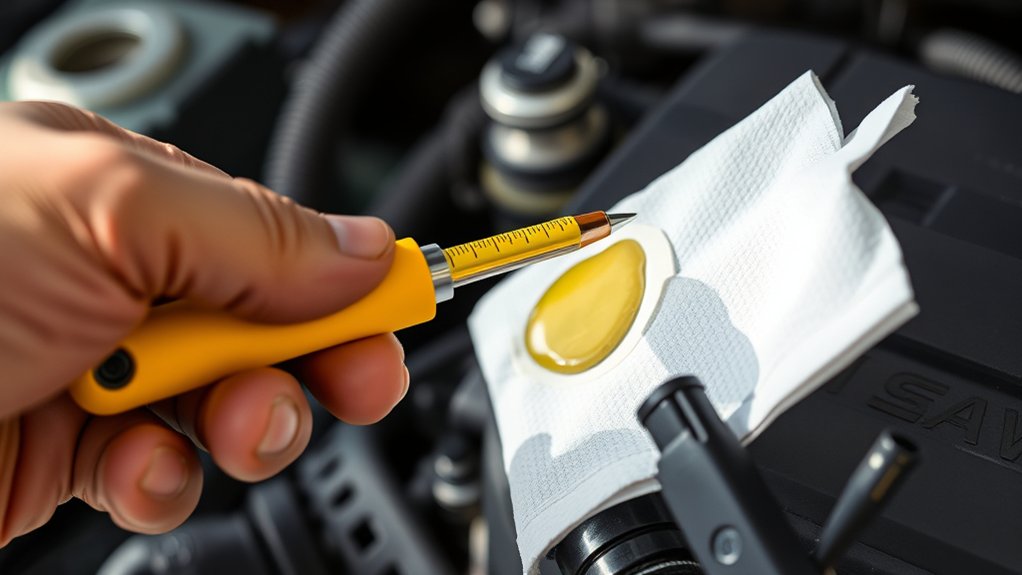
A smeared dipstick does not always mean the oil level is wrong. It often means oil dragged along the tube or the dipstick was not fully wiped before the second reading. Start by wiping the dipstick clean, reinserting it fully, and pulling it out again in one smooth motion.
If the level is still hard to see, hold the dipstick under bright light and rotate it slowly. Read the side with the cleanest oil line. You can also wait another few minutes and repeat the check. Do not file, sand, notch, or etch the dipstick; it is a calibrated part, and metal shavings or altered marks can make future readings less reliable.
Pro Tip: If the dipstick is bent, rusty, unreadable, or missing clear marks, replace it with the correct part instead of modifying it.
If Oil Is Low: How Much to Add and How to Do It
If the dipstick reads below the low mark, add oil slowly. For normal topping off, start with 1/4 to 1/2 quart. Wait a few minutes, recheck the dipstick, and repeat only if the level is still low. This method reduces the chance of overfilling.
How Much To Add
Add less than you think you need at first. A Tacoma that reads slightly low may need only a small amount. A reading far below the low mark may need more, but you should still add oil in controlled steps and recheck after each pour.
- If the oil is just under the safe range, add about 1/4 quart.
- If the oil is clearly below the low mark, add about 1/2 quart.
- If the dipstick shows little or no oil, do not keep driving until the level is corrected and the cause is checked.
- If you must add oil often, inspect for leaks or oil consumption.
Choosing the Right Oil
Choose oil by model year, engine, and the requirement listed in your owner’s manual. Do not assume one viscosity fits every Tacoma. The American Petroleum Institute says vehicle owners should refer to their owner’s manuals before using oil category charts, and current gasoline-engine oil categories include API SP and ILSAC GF-6 standards. You can review the official API oil category guide for label context, but your Tacoma manual comes first.
Adding Oil Safely
Remove the oil filler cap, place a clean funnel in the filler neck, and pour slowly. Keep dirt, water, and torn foil seals out of the funnel. Reinstall the cap before starting the engine. After topping off, wait a few minutes and recheck the dipstick. The goal is between the low and full marks, not above the full mark.
If Oil Is Overfilled: When to Drain or Visit a Shop
If the oil level is clearly above the full mark after repeat checks on level ground, correct it before driving hard or taking a long trip. A small fluid extractor through the dipstick tube can remove modest overfill, but larger overfills are better handled through the drain plug or by a repair shop.
- Confirm the overfill with a second dipstick reading.
- Make sure the truck is level and the engine has been off for several minutes.
- Remove small amounts only, then recheck.
- Do not crawl under the truck unless it is safely supported.
- Visit a shop if you are unsure, see leaks, smell burning oil, or notice smoke.
Do not try to “burn off” a serious overfill. Too much oil can contact moving parts, foam, and create poor lubrication. Correct the level first.
How Often to Check Tacoma Oil (And When to Get Service)
Check your Tacoma’s oil at least once a month, before long trips, after heavy towing, and anytime you notice leaks, burning smells, smoke, or a warning light. Regular checks help you spot changes before they become serious.
Follow the Warranty and Maintenance Guide for your exact Tacoma when choosing oil-change intervals. Severe use, short trips, towing, dust, heat, and off-road driving can change service needs. The oil level check does not replace scheduled oil changes.
What Your Oil Condition Can Tell You
Oil level is only part of the check. Look at the oil on the dipstick before wiping it off. Normal used oil may look darker than new oil, but texture and smell matter.
- Gritty oil: Dirt or debris may be present. Plan service soon.
- Milky or creamy oil: Moisture or coolant contamination may be present. Get the engine inspected.
- Fuel smell: Fuel dilution may be possible, especially with short trips or engine issues.
- Burnt smell: Heat, old oil, or engine stress may be involved.
- Metal flakes: Stop driving and get professional diagnosis.
If the oil looks abnormal, do not just top it off and forget it. The condition can point to a deeper issue that needs service.
Common Tacoma Dipstick Problems and Safe Fixes
Some Tacoma dipsticks can be hard to read because oil smears along the tube or clings unevenly to the metal. Use repeatable, non-destructive fixes first.
- Smear on both sides: Wipe clean, wait a few more minutes, then check again.
- Oil streak up one edge: Read the clearer side and repeat the check.
- Hard-to-see clean oil: Use a flashlight and view the dipstick at an angle.
- Dipstick will not seat: Inspect the tube for obstruction or damage.
- Marks are damaged: Replace the dipstick with the correct part.
A consistent method is more reliable than a single rushed reading. If you get very different results each time, check the truck’s position, wait time, and dipstick seating before adding oil.
When Not to Drive
Do not keep driving your Tacoma if the dipstick shows little or no oil, the low oil pressure warning light stays on, the engine knocks, or oil is pouring onto the ground. Toyota’s warning light guidance explains that red warning icons need immediate attention, including low engine oil pressure.
If you corrected the level but the warning light remains on, shut the engine off and arrange service. Oil pressure is not the same as oil level; a full dipstick does not guarantee proper oil pressure.
Related Guides
Frequently Asked Questions
How do you check the oil level on a Toyota Tacoma?
Park on level ground, turn the engine off, wait several minutes, pull the dipstick, wipe it clean, reinsert it fully, and pull it again. The oil should sit between the low and full marks.
Do you check Toyota oil hot or cold?
Follow your owner’s manual first. For a routine check, a practical method is to shut the warm engine off and wait 5–15 minutes. A cold overnight check can also be consistent if you use the same parking spot and process each time.
How much oil should I add if my Tacoma is low?
Add oil slowly. Start with 1/4 to 1/2 quart, wait a few minutes, and recheck the dipstick. Repeat only until the oil sits within the safe range. Do not fill above the full mark.
What oil does a Toyota Tacoma take?
The correct oil depends on the Tacoma’s model year, engine, and market. Check the oil filler cap and the owner’s manual for the exact viscosity and specification before buying oil.
Can I drive with the low oil pressure light on?
No. Pull over safely, shut the engine off, and check the oil level. If the light stays on after the level is corrected, do not keep driving. Get the truck inspected.
What should I do if the dipstick is hard to read?
Wipe it clean, reinsert it fully, pull it again, and read both sides under bright light. Repeat after a longer wait if needed. Do not file, sand, or notch the dipstick; replace it if the marks are damaged.
Conclusion
You can check your Tacoma’s oil level accurately by using a steady routine: park level, shut the engine off, wait, wipe the dipstick, reinsert it fully, and read it again. Keep the oil between the low and full marks, use only the oil specified for your model year, and treat warning lights, abnormal oil condition, repeated low readings, or overfill as service issues. A careful five-minute check can protect the engine and help you catch problems early.
Sources
- Toyota Owners: Manuals and Warranties — confirms the official place to verify model-year owner manual and maintenance details.
- Toyota Owners: Warning Lights — supports the low oil pressure warning-light safety guidance.
- American Petroleum Institute: API Oil Categories — supports manual-first oil selection and current gasoline-engine oil category context.
- SAE International: SAE J300 Engine Oil Viscosity Classification — supports viscosity-grade terminology used on engine oil labels.

