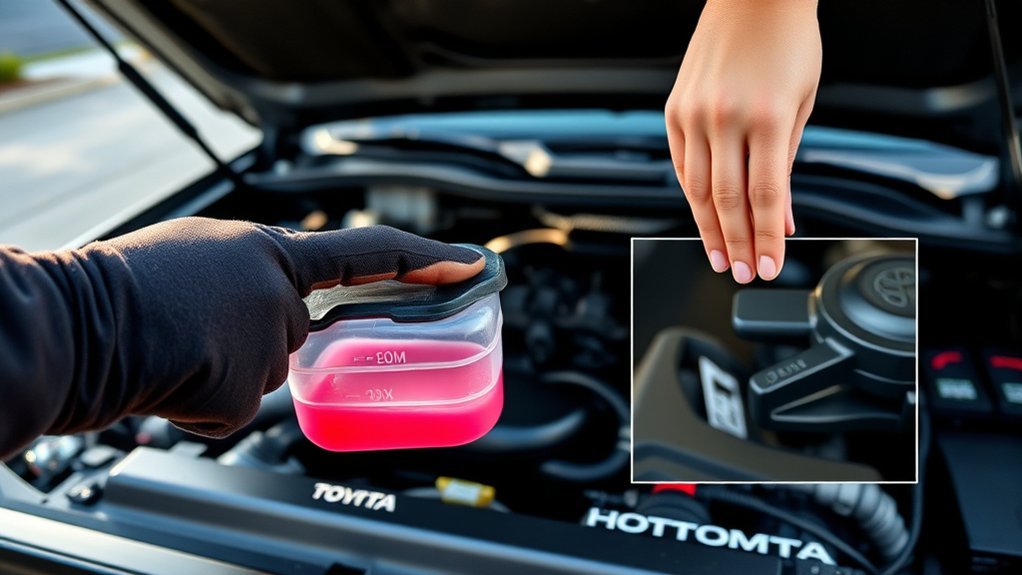
Checking your Toyota Tacoma’s coolant level takes only a few minutes once the engine is completely cold. The key is to identify the correct coolant reservoir, read the F/FULL and L/LOW marks correctly, and avoid opening a pressurized cooling system while it is hot. A low or repeatedly falling level can point to a leak or another cooling-system problem that needs attention.
Quick Answer
Check your Toyota Tacoma’s coolant with the engine completely cold. Look at the translucent engine-coolant reservoir and confirm the fluid sits between its F/FULL and L/LOW marks. If it is at or below LOW, add the coolant specified for your model year up to FULL without overfilling.
Key Takeaways
- Check the coolant reservoir only when the engine is cold so the reading is meaningful and you avoid hot, pressurized coolant.
- A normal cold level is between the F/FULL and L/LOW marks; you do not need to aim for the exact middle.
- If the level is at or below LOW, use the coolant specified in your Tacoma’s model-year owner’s manual and fill only to FULL.
- A level that keeps dropping can indicate a leak or another cooling-system fault and should be diagnosed.
- Never remove a radiator or other pressurized cooling-system cap while the engine is hot.
At a Glance
| Time Required | About 5 minutes, plus enough cool-down time for the engine to become completely cold |
| Difficulty | Easy |
| Tools Needed | Usually none for inspection; a clean funnel, gloves, shop towel, and approved coolant are useful if topping off |
| Cost | Free to inspect; topping-off cost depends on the approved coolant your Tacoma requires |
Why Checking Coolant Levels Is Essential for Your Tacoma
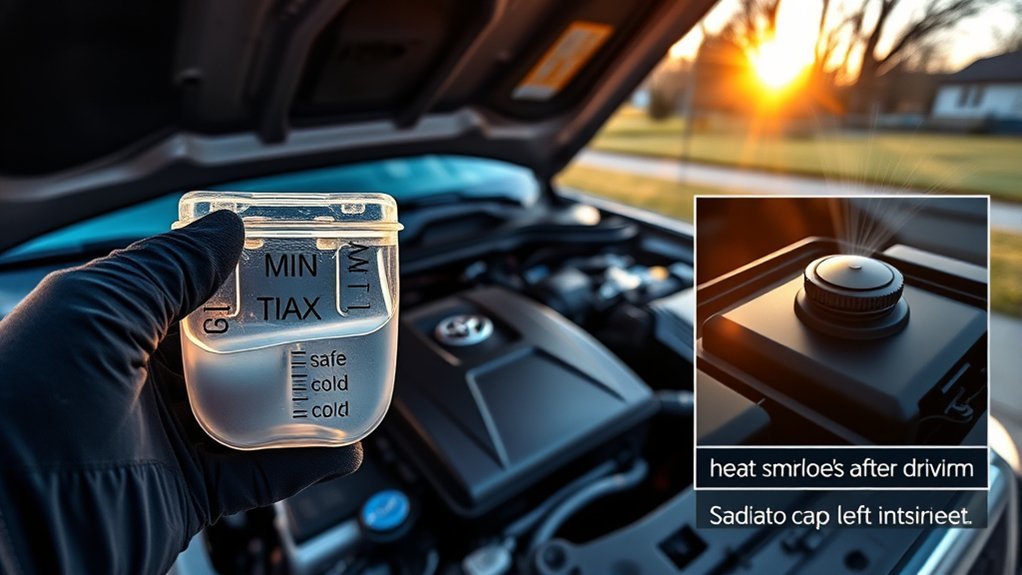
Your Tacoma’s cooling system carries heat away from the engine and helps control operating temperature. Coolant also provides freeze and corrosion protection. Toyota explains that engine coolant is an important part of temperature management and recommends following the coolant specification and maintenance information in the vehicle’s owner’s manual.
If the system loses enough coolant, it may no longer control engine temperature effectively. That can contribute to overheating and, if the vehicle continues to operate severely overheated, expensive engine damage.
Checking the level also gives you an opportunity to catch a slow leak early. A reservoir that repeatedly falls from FULL toward LOW is more important than a one-time small variation caused by temperature.
Toyota specifically advises investigating the system when the coolant level drops again soon after it has been replenished. Visible areas to inspect include the radiator, hoses, reservoir area, connections, and water-pump area.
Pro Tip: Look at the reservoir under similar conditions each time—preferably before the first drive of the day. Comparing cold readings makes a slow change in level much easier to notice.
How to Check Your Coolant Levels Safely: Cold vs. Hot
For a routine Toyota Tacoma coolant-level check, use a cold engine. Coolant expands as it heats, and a hot cooling system can remain pressurized. Toyota’s owner’s-manual guidance is to judge the reservoir level when the engine is cold.
Warning: Never remove the radiator cap or another pressurized cooling-system cap while the engine is hot. Hot coolant or steam can be released under pressure and cause serious burns. If the truck has recently been driven, allow it to cool completely before working around the cooling system.
Step 1: Park Safely and Let the Engine Cool
Park the Tacoma on reasonably level ground, switch the engine off, and wait until the engine is completely cold. Checking it before the first drive of the day is an easy way to avoid guessing whether the system has cooled enough.
Step 2: Locate the Correct Coolant Reservoir
Open the hood and identify the translucent engine-coolant reservoir. The exact location and labeling can differ by Tacoma generation, engine, and powertrain, so use the under-hood labels and your model-year owner’s manual if you are unsure.
Some newer Tacoma configurations have additional cooling circuits. For example, Toyota’s recent Tacoma maintenance information separately references intercooler coolant. Do not assume that every coolant tank under the hood serves the same circuit.
Step 3: Read the F/FULL and L/LOW Marks
Look through the side of the reservoir. Depending on model year, the markings may read F and L or FULL and LOW.
- Between FULL and LOW: The cold reservoir level is normally satisfactory.
- At or below LOW: Add the correct coolant to the FULL mark.
- Above FULL: Do not add more coolant.
You do not need to bring the coolant to an exact “middle” position. Toyota’s guidance is based on the upper and lower reservoir marks.
Step 4: Inspect for Obvious Problems
Before closing the hood, look for wet spots, dried coolant residue, damaged hoses, loose-looking connections, or evidence of coolant around the reservoir and radiator area. A sweet coolant odor or a level that repeatedly drops also deserves attention.
Step 5: Record the Level if You Are Monitoring a Possible Leak
If you are concerned about coolant loss, note the cold level or take a photo of the reservoir. Recheck it under similar cold conditions later. A consistent downward trend is more useful diagnostically than comparing one cold reading with one hot reading.
What Happens If Your Coolant Levels Are Low?
Low coolant reduces the amount of fluid available to absorb and move heat through the cooling system. If the level becomes too low, engine temperature can rise beyond its normal operating range.
Severe overheating can damage components such as gaskets, cylinder-head surfaces, seals, and other heat-sensitive engine parts. The risk is especially serious if you continue driving after an overheating warning appears.
A low reservoir can result from several causes, including:
- a leak from a hose, connection, radiator, reservoir, or other cooling-system component;
- a failing cap or sealing problem;
- a water-pump or related cooling-system leak;
- coolant lost during previous repair or maintenance;
- air remaining in the system after cooling-system service; or
- another fault that requires pressure testing or professional diagnosis.
If coolant disappears again shortly after you top it off, do not keep treating the symptom by repeatedly adding fluid. Toyota recommends having the cooling system checked for leaks when the level falls rapidly after replenishment.
Note: If the temperature warning comes on, the gauge moves into an overheating range, steam is visible, or coolant is pouring from the vehicle, treat it as an overheating problem rather than a routine top-off. Stop in a safe location and follow your Tacoma owner’s manual’s overheating procedure.
Best Practices for Maintaining Optimal Coolant Levels
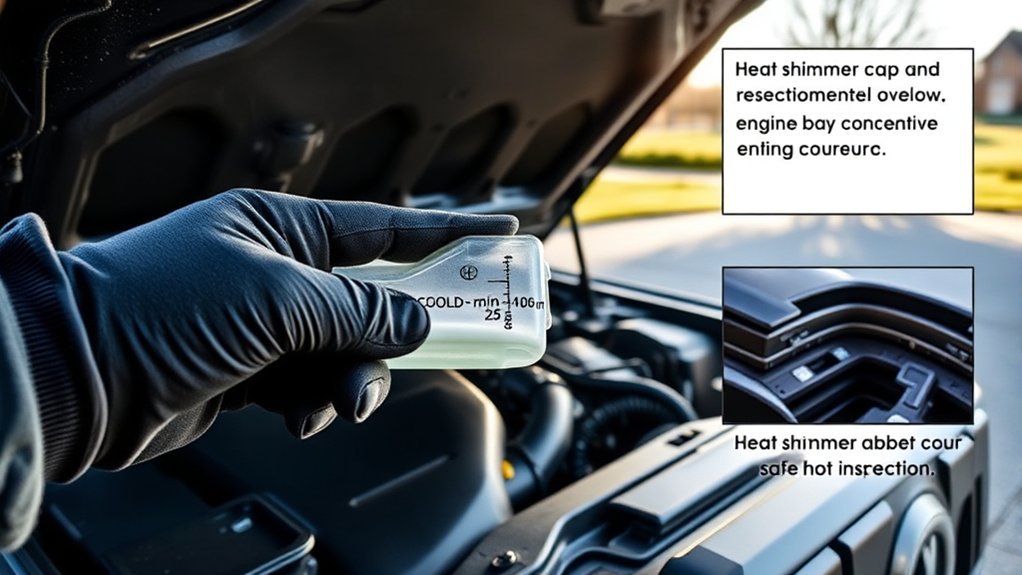
A quick visual check can help you catch cooling-system problems before they become severe. Follow these habits:
- Check the reservoir when the engine is cold.
- Keep the level between the marked FULL and LOW limits.
- Inspect fluid levels as part of your normal vehicle-maintenance routine.
- Watch for unexplained changes rather than assuming repeated coolant loss is normal.
- Keep coolant containers tightly closed and clearly labeled.
- Use only coolant that meets the specification for your exact Tacoma model year.
Use the Correct Toyota Tacoma Coolant
Many Tacoma model years specify Toyota Super Long Life Coolant or a coolant meeting Toyota’s stated chemistry requirements. However, you should verify the specification for your exact truck through the Toyota owner’s-manual portal.
Do not choose coolant only by color. Different coolant formulations can use similar colors, and appearance alone does not prove compatibility.
If your specified coolant is supplied as a premixed product, do not dilute it unless the product instructions and your owner’s manual specifically call for that. Toyota’s genuine Super Long Life Coolant is sold as a formulated coolant product for compatible Toyota vehicles.
Keep Coolant Away From Children and Animals
Many automotive coolants contain ethylene glycol. The CDC/NIOSH identifies ingestion as an important exposure hazard. Store coolant in its original closed container and clean spills promptly.
Do not pour used coolant onto the ground or into a storm drain. Follow your local waste rules for collection or recycling of used antifreeze.
How Often Should You Check Tacoma Coolant?
You do not need to open the cooling system frequently just to confirm the level. A visual reservoir inspection can be included with routine vehicle checks and scheduled maintenance.
Toyota maintenance schedules include inspections and adjustment of vehicle fluid levels at service intervals. The exact schedule varies by model year and operating conditions, so use your Tacoma’s warranty and maintenance guide rather than relying on one mileage interval for every generation.
It is also sensible to check sooner if you notice:
- a temperature warning;
- a sweet coolant smell;
- fluid beneath the truck;
- visible residue around cooling-system components;
- recent cooling-system work; or
- a reservoir level that has fallen since your previous cold check.
What Should You Do After Checking Your Coolant Levels?
If the cold level is already between LOW and FULL, reinstall or secure anything you moved and no top-off is normally necessary.
If the cold level is at or below LOW, confirm the coolant specification in your Tacoma’s owner’s manual. Then add the approved coolant gradually until the reservoir reaches the F/FULL line. Do not overfill it.
After topping it off, inspect the visible reservoir, hoses, radiator area, and surrounding components for signs of leakage. You do not need to open a hot radiator cap or handle the cooling system at operating temperature simply to verify the reservoir level.
If you drive the truck afterward, let the engine cool completely before making another level comparison. A significant or repeated drop indicates that the system should be inspected rather than continuously topped off.
The useful measurement is the cold reservoir level: between FULL and LOW is normal; repeated coolant loss is a problem to investigate.
When Should You Get the Cooling System Checked?
Arrange diagnosis if the coolant repeatedly falls below LOW, especially after you have already corrected the level. A technician can pressure-test the cooling system and inspect components that may not reveal an obvious leak during a simple visual check.
Seek prompt attention if you notice overheating, steam, recurring coolant odor, coolant contamination, a large puddle beneath the vehicle, or rapid fluid loss.
If the truck has overheated severely, simply adding coolant does not prove that it is safe to continue driving. Follow the overheating procedure in the owner’s manual and have the cause determined if the problem persists.
Related Guides
Frequently Asked Questions
Should You Check Coolant Reservoir Level Hot or Cold?
Check your Toyota Tacoma’s coolant reservoir when the engine is cold. Toyota bases the reservoir reading on a cold engine. The fluid should normally be between the F/FULL and L/LOW marks. Do not remove a radiator or pressurized cooling-system cap while the engine is hot.
How Do You Check the Coolant Level on a Toyota Tacoma?
Park on level ground and allow the engine to cool completely. Locate the translucent engine-coolant reservoir and read the level against its F/FULL and L/LOW marks. If the cold level is at or below LOW, add the coolant specified for your model year until it reaches FULL.
How Do I Check My Toyota’s Coolant Level?
For most Toyota vehicles with a translucent coolant reservoir, check the marked reservoir with the engine cold. The exact location, markings, coolant specification, and procedure can differ by model and year, so confirm them in the vehicle’s owner’s manual.
Can You Check Coolant With a Warm Engine?
A warm reservoir may give you a visual indication that coolant is present, but it is not the correct condition for comparing the level with Toyota’s cold-level marks. For a routine check, wait until the engine is completely cold. Never remove a pressurized cap from a hot cooling system.
What Coolant Should I Put in a Toyota Tacoma?
Use the coolant specified in the owner’s manual for your Tacoma’s exact model year and powertrain. Many Tacomas call for Toyota Super Long Life Coolant or an equivalent coolant that meets Toyota’s stated chemistry requirements. Do not rely on coolant color alone to determine compatibility.
Why Does My Tacoma Coolant Level Keep Dropping?
Repeated coolant loss can indicate a leak or another cooling-system problem. Inspect for visible leakage or residue around the reservoir, radiator, hoses, connections, and water-pump area. If the level falls again soon after topping off or no leak is visible, have the system professionally pressure-tested.
Conclusion
Checking your Toyota Tacoma’s coolant level is straightforward when you follow one rule first: let the engine become completely cold. Read the translucent reservoir against its F/FULL and L/LOW marks, use the coolant specified for your exact model year, and never open a hot pressurized cooling system.
A small visual check can also reveal a developing problem. If the level repeatedly drops, the truck overheats, or you find evidence of leakage, have the cooling system diagnosed instead of repeatedly adding coolant. Keeping the system at its specified level helps it manage engine heat, freeze protection, and corrosion as designed.
Sources
- Toyota Manuals and Warranties — model-year owner’s manuals and vehicle-specific maintenance information.
- Toyota: How Often to Change Engine Coolant — coolant function, maintenance, overheating, and coolant-selection guidance.
- Toyota Genuine Super Long Life Coolant — current Toyota coolant product and compatibility guidance.
- CDC/NIOSH: Ethylene Glycol — handling and exposure safety information.
- U.S. EPA: How Do I Dispose of Used Antifreeze? — used-antifreeze handling and disposal information.
