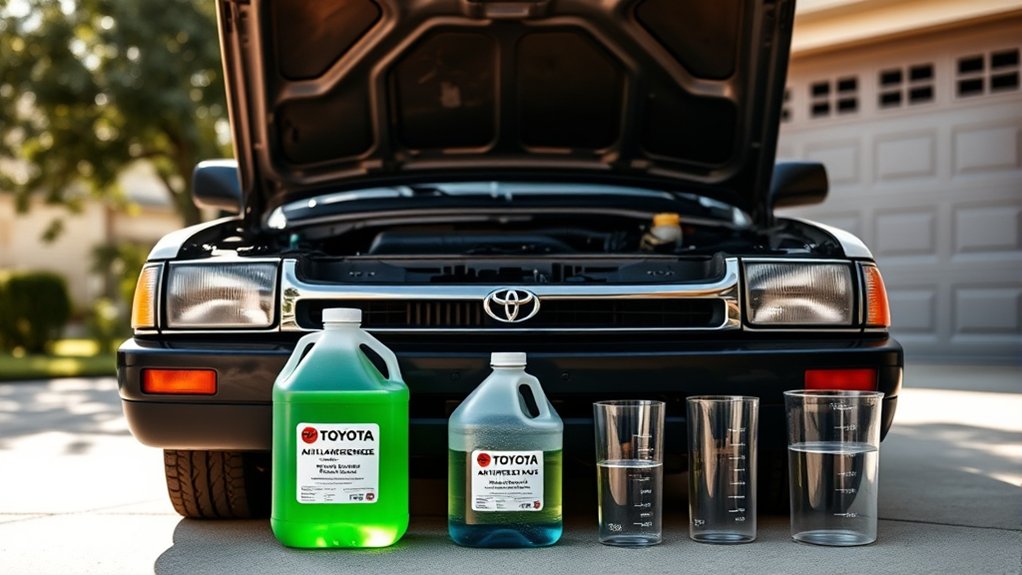
A 1998 Toyota Tacoma holds about 8.7 quarts of coolant overall, or roughly 2.2 gallons, though capacity varies slightly by engine. The 2.4L four-cylinder is commonly listed near 2.3 gallons, while the 3.4L V6 is closer to 2.5 gallons for a full service fill. Toyota specified red Long Life coolant, mixed 50/50 with distilled water. Actual refill volume may be lower if coolant remains trapped in the block or heater core. Additional details follow below.
How Much Antifreeze Does a 1998 Toyota Tacoma Hold?
A 1998 Toyota Tacoma holds approximately 8.7 quarts of coolant, or about 2.2 gallons, when the system is completely filled. That figure defines the baseline coolant capacity for service planning, refill calculation, and post-flush verification.
A 1998 Toyota Tacoma requires about 8.7 quarts of coolant, establishing the correct fill target for accurate service and refill verification.
For operators seeking independence from guesswork, this number establishes a clear maintenance target and prevents underfilling or dilution errors.
During a complete flush, approximately 2 gallons of distilled water are typically used to clear residual fluid and contaminants before final filling. The specified coolant is Toyota Long Life coolant, identified by its red color and formulated for system compatibility.
Mixture control remains critical: a 50/50 ratio of coolant to water supports freeze protection, corrosion resistance, and stable thermal transfer.
After refilling, radiator level and overflow reservoir level should be checked and corrected as needed. This final inspection confirms that trapped air, settling, or incomplete top-off has not reduced effective system volume below specification during normal heat cycling.
1998 Toyota Tacoma Coolant Capacity by Engine
Two engine configurations define 1998 Toyota Tacoma coolant capacity. The 2.4L 4-cylinder system typically holds about 2.3 gallons when filled completely. The 3.4L V6 requires roughly 2.5 gallons for a full service fill, accounting for the radiator, hoses, heater circuit, and engine block.
These figures give owners a clear baseline for independent maintenance and accurate parts-store purchasing.
Across the lineup, total coolant capacity is commonly cited near 8.7 quarts, or about 2.2 gallons, though the exact amount depends on engine choice and how thoroughly the system drains.
In diagnostic terms, trapped fluid in the engine block or heater core can reduce refill volume below specification. After any refill, coolant level should be rechecked once the engine reaches operating temperature and cools again.
That verification step supports stable thermal control, helps prevent overheating, and frees the owner from guesswork. Precise capacity knowledge reduces waste, delays, and service dependence.
What Coolant Should a 1998 Toyota Tacoma Use?
For a 1998 Toyota Tacoma, the correct specification is Toyota red Long Life coolant, the formulation recommended for pre-2004 Toyota models. This coolant aligns with Toyota metallurgy and seal materials, reducing corrosion risk and preserving thermal stability under load.
If concentrated product is used, it should be mixed 50/50 with distilled water to maintain freeze protection and heat transfer efficiency.
- Specified type: Toyota red Long Life coolant is the preferred factory-matched chemistry for the 1998 Tacoma.
- Correct mixture: A 50/50 blend is required unless premixed coolant is purchased; the full system holds about 8.7 quarts.
- Critical caution: Different coolant brands should not be mixed, because additive incompatibility can trigger deposits, seal wear, or internal passage contamination.
This approach gives the owner more control and fewer maintenance traps.
During service verification, any residue near the drain plug or filler neck can indicate prior coolant mismatch or neglected system care.
How to Refill and Bleed Coolant in a 1998 Tacoma
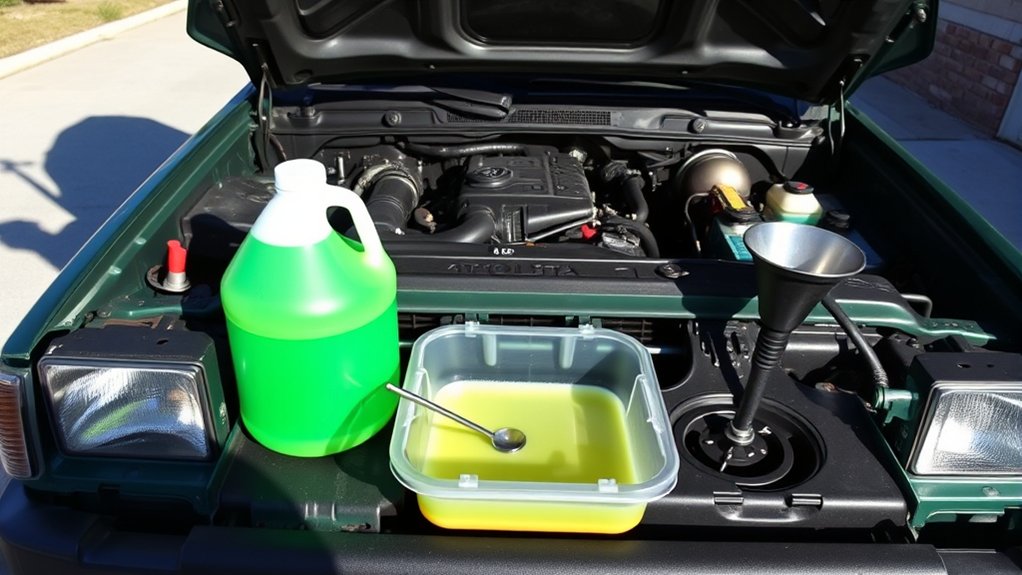
Begin with a fully cool engine, then refill the 1998 Toyota Tacoma’s cooling system slowly through the radiator neck with the correct 50/50 coolant mixture, using a funnel to reduce spillage and trapped air. A complete refill after a drain typically approaches 8.7 quarts, covering both radiator and engine block capacity.
Slow filling helps prevent false fullness and supports a cleaner, more controlled service process.
Once the radiator appears full, start the engine and set the heater to maximum. This opens circulation paths and moves coolant through the system. Observe the coolant at the neck for escaping air bubbles, and monitor the temperature gauge for stable operation.
As trapped air purges, add coolant incrementally until the level stabilizes and bubbling stops. Then install the radiator cap and verify the overflow reservoir sits at the proper mark.
For independent maintenance and system confidence, coolant level should be rechecked over the next several days after complete cool-down.
Signs Your 1998 Toyota Tacoma Is Low on Coolant
Vigilance is essential when evaluating whether a 1998 Toyota Tacoma is low on coolant, because early symptoms often appear before severe overheating occurs.
Diagnostic attention frees the owner from preventable engine damage and roadside failure.
Diagnostic vigilance spares the owner from avoidable engine damage and unexpected roadside breakdown.
- Dashboard indicators: An illuminated temperature warning light or a rising temperature gauge often signals low coolant and reduced heat transfer capacity. Either symptom warrants immediate inspection before sustained overheating develops.
- Physical evidence: The coolant reservoir should sit above the minimum mark. A level below that line confirms low coolant. Puddles or dried stains beneath the truck also suggest an external leak requiring correction.
- Operational symptoms: Reduced engine performance, a sweet odor from coolant contacting hot components, or gurgling and hissing noises may indicate air pockets in the cooling system caused by low coolant levels.
These signs should be assessed promptly.
Early detection supports mechanical autonomy, limits repair costs, and preserves the Tacoma’s cooling system integrity under normal operating conditions.
Frequently Asked Questions
How Many Gallons of Antifreeze Does a Toyota Tacoma Take?
A Toyota Tacoma takes about 2.2 gallons total coolant capacity. For coolant maintenance, it typically needs 1 to 1.5 gallons of antifreeze during refill, depending on drainage. Correct antifreeze types and 50/50 mixing guarantee liberated performance.
What Type of Coolant Does a 1998 Toyota Tacoma Require?
A 1998 Toyota Tacoma requires Toyota Long Life red, silicate-free coolant—an ocean against volcanic engine temperatures. Among coolant types, this formula prevents corrosive incompatibility, maintains thermal control, and frees the cooling system from mixture-related degradation risks.
What Is the Coolant Capacity of a 1999 Toyota Tacoma?
A 1999 Toyota Tacoma holds approximately 8.7 quarts of coolant total. For effective coolant maintenance, a complete radiator flush should include radiator and engine block draining, then reservoir level verification to support reliable, liberated operation.
What Type of Antifreeze for Toyota Tacoma?
Ironically, liberation begins with conformity: a Toyota Tacoma should use Toyota red Long Life, silicate-free antifreeze types, or a compatible equivalent. Diagnostic coolant maintenance forbids brand mixing; incorrect formulation invites corrosion, overheating, and compromised system integrity.
Conclusion
In the grand mechanical drama, the 1998 Toyota Tacoma does not thrive on guesswork, garden-hose chemistry, or heroic overfilling. Its coolant capacity depends on engine configuration, and correct antifreeze selection matters if one prefers cylinder heads unwarped and radiators unsulking. Proper refill and bleeding prevent air pockets, that beloved saboteur of temperature control. Low coolant signs should be addressed before the truck begins its subtle performance art: overheating, leaking, and converting minor neglect into expensive educational material.
