
Your Tacoma’s rear differential lock can provide strong low-speed traction when one rear wheel loses grip, but the correct activation sequence depends on the truck’s model year, drivetrain, and factory equipment. Before pressing any switch, confirm that your truck actually has a rear locker and follow the operating conditions in its year-specific owner’s manual.
Quick Answer
On a factory-equipped Tacoma, stop rear-wheel spin, select the drivetrain mode required by your owner’s manual, press the rear differential lock switch, and wait for the indicator to stay solid. Many 4WD models require 4LO, but 2WD PreRunner models do not have 4LO. Use the locker only at low speed on loose terrain.
Last updated: July 14, 2026.
Key Takeaways
- Do not treat “shift to 4LO” as a universal rule. Some factory-locker Tacomas are 2WD, including the fourth-generation TRD PreRunner.
- A flashing locker indicator usually means the system has not completed the requested lock or unlock action. Wait for the confirmed indicator state before relying on it.
- Engage only after stopping wheelspin and while moving slowly, if movement is needed to align the mechanism.
- Avoid pavement, high speed, tight turns, and heavy throttle while the rear differential is locked.
- Check the exact owner’s manual because switch location, allowed modes, speed limits, and warning behavior vary by year and configuration.
At a Glance
| Time Required | Usually 1–3 minutes once the truck is safely positioned |
| Difficulty | Easy, after confirming the correct procedure for your model |
| Tools Needed | No tools; keep the owner’s manual available |
| Cost | $0 for normal operation |
How to Activate the Tacoma Rear Differential Lock
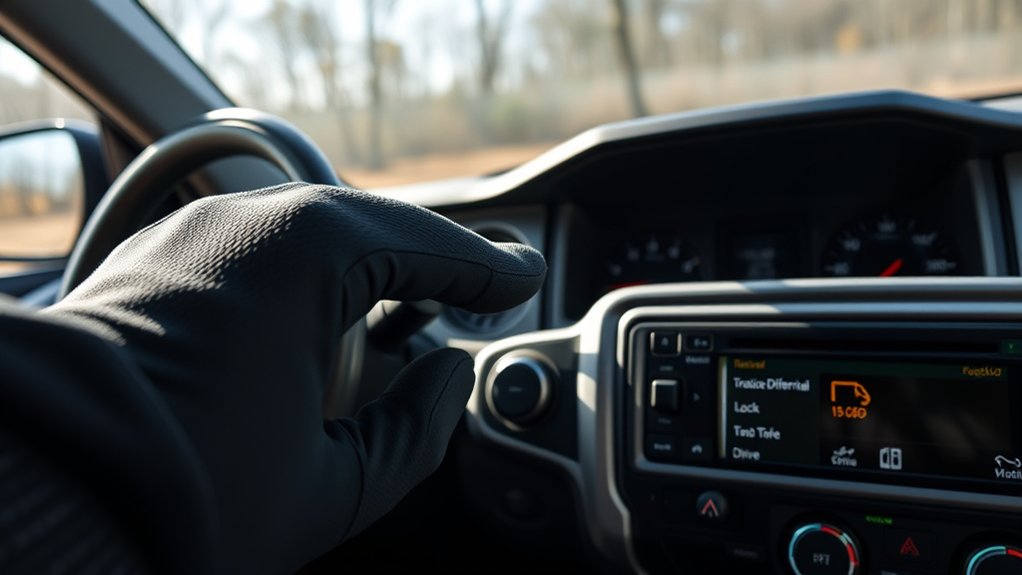
Use this sequence only after checking the instructions for your exact year and drivetrain:
- Move onto a suitable surface. Use loose dirt, sand, mud, snow, or uneven rock where the tires can slip slightly. Do not test the locker on dry pavement.
- Stop wheelspin. Release the throttle and bring the truck to a stop or the low speed specified in the manual. Never command the locker while a rear tire is spinning quickly.
- Select the required drive mode. Many 4WD Tacomas require L4 or 4LO. A 2WD factory-locker model, such as a TRD PreRunner, has no 4LO and uses its model-specific procedure.
- Press the rear differential lock switch once. The switch location varies, so use the labeled axle-lock symbol rather than relying on a description such as “behind the shifter.”
- Wait for confirmation. Do not apply heavy power while the indicator is flashing. A solid locker indicator normally confirms engagement, but use the meaning shown in your manual and instrument display.
- Proceed slowly. Use smooth throttle and avoid tight steering inputs. Disengage as soon as the obstacle or low-traction section is cleared.
Warning: Do not engage the locker while a rear wheel is spinning at speed. Sudden engagement can shock the axle and differential. Also avoid dry pavement, high speed, and sharp turns while locked because the rear wheels cannot rotate at different speeds during a turn.
Check Your Tacoma Before Engaging the Locker
The safest procedure starts with identification. Toyota has used rear electronic lockers on different trims, packages, and drivetrains across Tacoma generations. A rule that fits one truck may be wrong for another.
Confirm the Drivetrain and Required Mode
If your Tacoma is a part-time 4WD model, check whether the manual requires L4 or 4LO before the rear locker can engage. Follow the specified transmission position as well, which may require the automatic transmission in Neutral or the clutch pedal depressed during the shift into low range.
If your Tacoma is a 2WD PreRunner with a factory rear locker, it cannot be placed in 4LO. Follow the separate low-speed engagement instructions for that model. Toyota’s fourth-generation Tacoma information confirms that the TRD PreRunner is rear-wheel drive and has a standard electronic locking rear differential.
Confirm That the Truck Has a Rear Locker
Look for a dedicated rear differential lock switch with an axle-lock symbol. Do not confuse it with the 4WD selector, Multi-Terrain Select, CRAWL Control, Auto LSD, traction control, or a center differential lock. A full-time 4WD Tacoma Limited may have a center locking differential without having the same rear-locker equipment used on off-road grades.
You can also confirm equipment through the window sticker, build sheet, dealer parts catalog, or the Toyota owner’s manual lookup. Checking by exact year and VIN is more reliable than using a generic trim list.
Understand the Indicator Before You Rely on the Locker
- Flashing after you press the switch: the requested lock or unlock action has not finished.
- Solid locker indicator: the system normally confirms that the rear differential is locked.
- Indicator off: the rear differential is normally unlocked.
- Persistent flashing, warning message, or repeated beeping: the operating conditions may not be met, the driveline may be loaded, or the system may need inspection.
Indicator wording and behavior can differ by generation. Use the exact dashboard message and owner’s manual instead of assuming every blink means a damaged or “misaligned” pin.
Note: Toyota states that the fourth-generation electronic rear locker can divide power sent to the rear axle evenly between the two rear wheels. It does not create more tire grip, so both rear tires can still spin when the surface is extremely slick.
Step-by-Step: Engage the Locker From a Stop
- Position the Tacoma on loose or uneven ground and keep the front wheels as straight as practical.
- Release the accelerator and let all rear-wheel spin stop.
- For a 4WD model, shift into the drive range and transmission position required by the manual. For a 2WD factory-locker model, remain in its approved low-speed drive mode.
- Press the rear locker switch once.
- Watch the indicator. If it becomes solid, apply light throttle and cross the obstacle at low speed.
- If it keeps flashing, release the throttle and use the troubleshooting steps below. Do not repeatedly press the switch while the first command is still pending.
Fix a Beeping Button or Blinking Locker Light
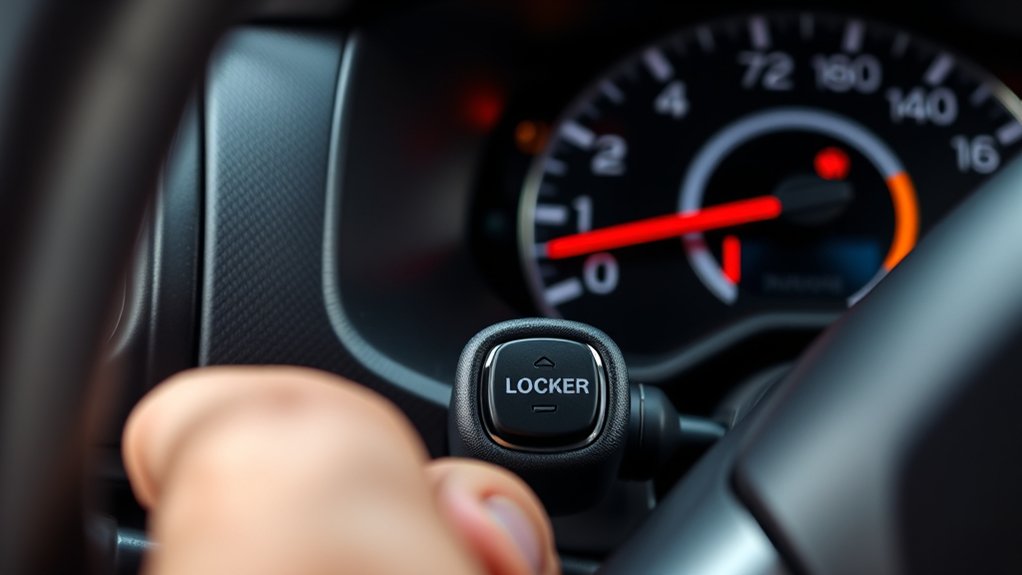
A beep or flashing light does not prove that the differential has failed. It usually means the system has not completed the request or the truck is outside its permitted operating conditions.
The Switch Beeps or Shows a Mode Warning
- Confirm that your truck has the factory rear locker rather than only Auto LSD or another traction feature.
- On a 4WD model, verify the required transfer-case range and transmission position.
- On a 2WD PreRunner, do not search for 4LO. Check the model-specific speed and gear requirements.
- Stop wheelspin, reduce speed, and press the switch only once after the correct conditions are set.
- If the same warning returns, stop using the system until you can check the manual or have the truck inspected.
The Locker Light Keeps Flashing
First, unload the driveline. Ease off the accelerator and hold the steering nearly straight. If the manual allows movement during engagement, roll forward at walking speed on loose ground. A small, gentle steering change may help the mechanism align, but a fixed 15–20-degree steering angle is not a universal Toyota procedure.
Do not use high throttle, spin a tire, make sharp turns, or toggle the switch repeatedly. If the indicator does not become solid after a brief low-load attempt, stop, return the truck to a stable position, cancel the command as directed by the manual, and try once more.
The Locker Will Not Disengage
Driveline torque can hold the mechanism loaded. Straighten the wheels, release the accelerator, and stop or crawl slowly on loose ground. Press the switch once and wait for the indicator to turn off. If your manual permits it, a short, gentle roll forward or backward can release the load.
Do not drive onto pavement while the locker remains confirmed on. If the indicator stays solid or flashes indefinitely, arrange inspection of the actuator, wiring, connector, fuse, and differential system.
How to Move the Truck While the Locker Is Engaging
If the manual allows slow movement while the indicator flashes, use the least input needed to complete engagement:
- Stay on a loose surface that allows minor tire slip.
- Use idle or very light throttle and maintain walking speed.
- Keep the steering close to straight, then add only a small steering change if needed.
- Stop applying power if a tire begins spinning quickly.
- Wait for a solid confirmation before asking the locker to carry a heavy load.
A rear locker works best as a low-speed traction tool: engage it before heavy wheelspin, cross the obstacle smoothly, and unlock it as soon as normal differential action is useful again.
Pro Tip: Engage the locker before the truck is deeply stuck. Once the tires have dug holes or the chassis is resting on the ground, the locker may not be enough by itself. Stop early and reassess tire placement, pressure, and recovery options.
How to Disengage the Locker Safely
- Clear the obstacle and reduce throttle.
- Straighten the steering wheel and keep speed very low.
- Press the rear differential lock switch once.
- Wait for the locker indicator to turn off.
- If the light keeps flashing, unload the driveline with a gentle straight roll on loose ground, following the manual.
- Confirm the locker is off before normal-speed driving or entering a paved surface.
Leaving a locker engaged can make the truck resist turning because the rear tires need to cover different distances in a corner. Tire scrub, hopping, binding, and unpredictable handling are signs that the axle should be unlocked and the driveline unloaded.
When to Use the Rear Locker
Use the locker when one rear wheel is likely to unload or spin while the other still has traction. Common situations include cross-axle ruts, a slow rock ledge, deep mud, loose sand, or uneven snow. It can also help during a controlled low-speed recovery when ordinary traction systems cannot move the truck.
- Good uses: loose climbs, uneven rocks, deep ruts, mud, sand, and snow at low speed.
- Avoid: dry pavement, high-speed travel, tight turns, routine street driving, and aggressive throttle.
- Driving technique: use steady momentum, gentle steering, and the minimum throttle needed.
- After use: unlock the axle, confirm the indicator is off, and check for leaks, unusual noises, or warning messages after hard trail use.
A rear locker is not a substitute for safe tire pressure, suitable tires, careful line choice, or recovery equipment. When both rear tires lack grip, locking them together will not create traction that the surface cannot provide.
Model Differences: Which Tacomas Have a Rear Locker?
Tacoma locker availability has changed across generations. Toyota listed the electronic locking rear differential as standard on the fourth-generation TRD PreRunner, TRD Off-Road, TRD Pro, and Trailhunter. The TRD PreRunner is rear-wheel drive, while the other listed off-road grades use 4WD configurations. Earlier Tacoma availability depends on the year, trim, drivetrain, and package.
| Configuration | What to Know |
| 2024–2026 TRD PreRunner | Rear-wheel drive with a standard rear electronic locker. It has no 4LO, so use the PreRunner procedure in the exact owner’s manual. |
| Fourth-generation TRD Off-Road, TRD Pro, and Trailhunter | These grades were introduced with a standard rear electronic locker. Follow the required drive range, speed, and transmission conditions listed for the specific powertrain and model year. |
| Earlier TRD Off-Road, TRD Pro, Trail Edition, and PreRunner models | Availability and operating rules vary. Verify the dedicated switch, build sheet, and year-specific manual. |
| SR, SR5, TRD Sport, or Limited | Do not assume a rear locker is fitted. The truck may instead use Auto LSD, brake-based traction control, or, on certain full-time 4WD Limited models, a center locking differential. |
For fourth-generation equipment details, see Toyota’s 2024 Tacoma technical overview. Toyota explains the locker’s even rear power distribution in its 2025 Tacoma overview. The current 2026 Tacoma page also confirms an electronically controlled rear locker on the TRD PreRunner.
Related Guides
Frequently Asked Questions
How do I engage the rear differential lock on a Toyota Tacoma?
Stop wheelspin, select the drivetrain mode required by the exact owner’s manual, press the rear locker switch once, and wait for the confirmed solid indicator. Use only low speed and loose terrain. Many 4WD models require 4LO, while 2WD PreRunner models use a different procedure.
Does every Tacoma need to be in 4LO before the locker works?
No. Many factory-locker 4WD Tacomas require L4 or 4LO, but a 2WD PreRunner has no low-range transfer case. Always check the exact model-year manual instead of applying a single rule to every Tacoma.
What does a flashing rear locker light mean?
It generally means the requested lock or unlock action has not completed. Reduce driveline load, stop wheelspin, and follow the manual’s low-speed alignment procedure. Do not rely on the locker until the display confirms engagement.
Can I drive on pavement with the rear differential locked?
No. High-traction pavement prevents the rear tires from slipping enough to relieve speed differences during a turn. This can cause tire scrub, hopping, driveline binding, difficult steering, and component stress.
Can I turn while the Tacoma rear locker is engaged?
Use only gentle steering on loose ground and avoid sharp turns. Because both rear axle shafts rotate together when locked, the truck may resist turning and scrub a tire. Unlock the differential once you no longer need maximum rear traction.
Is Auto LSD the same as a rear differential lock?
No. Auto LSD is a traction-control function that can brake a spinning wheel and manage engine output. A selectable rear locker mechanically couples the rear axle shafts so the rear wheels rotate together. Controls and operating limits differ.
Conclusion
Use the Tacoma rear differential lock as a low-speed traction tool, not a permanent drive mode. Confirm your truck’s equipment, stop wheelspin, follow the exact manual’s mode requirements, and wait for a confirmed indicator before applying load. Unlock the axle before pavement, normal-speed travel, or tight turning. Persistent warnings or incomplete engagement need inspection rather than more throttle.
Sources
- Toyota Manuals and Warranties — year-specific operating instructions, warnings, controls, and indicator meanings.
- 2023 Toyota Tacoma Manuals and Warranties — official manual access for the third-generation Tacoma.
- 2024 Toyota Tacoma Manuals and Warranties — official manual access for the fourth-generation Tacoma.
- Toyota USA Newsroom: 2024 Toyota Tacoma Is the Ultimate Adventure Machine — drivetrain types and fourth-generation grades introduced with a standard electronic rear locker.
- Toyota USA Newsroom: The 2025 Toyota Tacoma Is Ready for Adventure — fourth-generation drivetrain and rear-locker capability details.
- 2026 Toyota Tacoma — current lineup and TRD PreRunner electronic rear-locker information.
