Preparing a Toyota Tundra for towing requires more than checking the tires and attaching a trailer. Before every trip, verify the truck’s actual weight ratings, inspect the hitch and trailer connections, test the brakes and lights, secure the load, and complete a low-speed road test. A careful inspection can reveal an overloaded axle, damaged tire, loose coupler, or electrical fault before it becomes an emergency.
Quick Answer
Before towing with a Toyota Tundra, confirm the truck, hitch, trailer, and cargo stay within every listed weight rating. Then inspect the coupler, safety chains, breakaway cable, tires, lug nuts, brakes, lights, suspension, mirrors, and load securement. Finish with a low-speed brake and handling test before entering traffic.
Key Takeaways
- Use the towing chart and instructions for your exact Tundra model year, cab, bed, drivetrain, engine, axle, and equipment package.
- Do not rely only on advertised towing capacity; payload, GVWR, GAWR, GCWR, tongue weight, tires, and hitch ratings may create a lower limit.
- Check truck and trailer tire pressures while cold, inspect every tire for damage, and torque wheel fasteners to the correct specification.
- Verify the coupler, safety chains, breakaway cable, electrical plug, lights, trailer brakes, mirrors, and cargo before departure.
- Do not tow when a weight rating is exceeded or when a safety-critical defect cannot be corrected.
At a Glance
| Time Required | 20–30 minutes, plus time to correct defects or weigh the loaded combination |
| Difficulty | Easy to moderate; damaged steering, suspension, brake, tire, or hitch components require professional service |
| Tools Needed | Owner’s manuals, tire-pressure gauge, tread gauge, flashlight, wheel chocks, torque wrench with the correct socket, and a helper for the light test |
| Cost | Usually $0 with tools on hand; scale fees, replacement parts, or professional repairs cost extra |
Warning: Never assume your Tundra can safely tow a trailer because the trailer is below a maximum number shown in an advertisement. Your exact truck may have a lower tow rating, and tongue weight, passengers, bed cargo, accessories, or a weight-distribution hitch can consume available payload and exceed the truck’s GVWR, rear GAWR, tire rating, or receiver rating.
Essential Safety Checks Before Towing
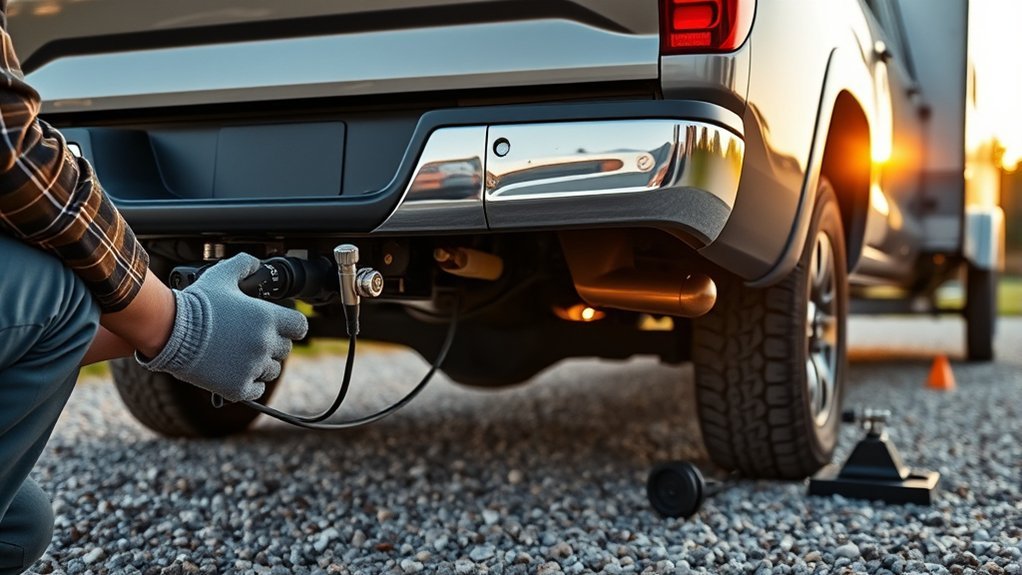
Begin with the manuals and labels for the exact truck and trailer. Toyota provides model-specific documentation through its manuals and warranties portal. Tundra towing ratings, equipment, controls, and procedures vary by model year and configuration, so generic capacity figures cannot replace the instructions for your vehicle.
Complete the inspection on firm, level ground with the Tundra in Park, the parking brake applied, and the trailer wheels chocked when appropriate. Walk around the truck and trailer in the same direction each time so you are less likely to skip a connection.
- Confirm that all truck, trailer, axle, tire, hitch, and cargo weight ratings will remain within their limits.
- Inspect the receiver, ball mount, hitch ball, coupler, latch, hitch pin, retaining device, safety chains, and breakaway system.
- Check every truck and trailer tire, including accessible spare tires, while the tires are cold.
- Inspect wheels, lug nuts, brakes, suspension, steering, frame attachment points, and visible fluid lines.
- Connect the electrical plug and test running lights, brake lights, turn signals, hazard lights, trailer brakes, and the brake controller if equipped.
- Secure cargo and close trailer doors, hatches, steps, vents, awnings, jacks, and stabilizers for travel.
- Adjust mirrors, confirm the trailer is level or set as its manufacturer specifies, and check clearance around the truck and trailer.
- Perform a low-speed pull, steering, and brake test before entering normal traffic.
Confirm Your Tundra’s Towing and Weight Ratings
The maximum towing number for a vehicle lineup is not necessarily the rating of the truck in your driveway. For example, Toyota currently advertises up to 12,000 pounds of towing for the 2026 Tundra lineup, but the rating varies by configuration. Toyota also publishes payload separately because passengers, accessories, cargo, and trailer tongue weight load the truck even when the trailer itself remains below the tow rating.
Find the Correct Ratings
Check the owner’s manual, towing chart, certification label, Tire and Loading Information label, hitch labels, trailer identification plate, and tire sidewalls or placards. Identify these limits before loading:
- GVWR: The maximum permitted loaded weight of the Tundra itself.
- Front and rear GAWR: The maximum permitted weight on each truck axle.
- GCWR: The maximum permitted combined weight of the loaded truck and loaded trailer.
- Payload capacity: The available capacity for occupants, bed cargo, accessories, hitch equipment, and trailer tongue weight.
- Trailer weight rating: The maximum trailer weight permitted for the exact Tundra configuration and required equipment.
- Receiver and ball-mount ratings: The limits for conventional and, where specifically approved, weight-distributing operation.
- Tire and wheel ratings: The load each tire and wheel can safely carry at the specified inflation pressure.
Use the lowest applicable rating. A higher-rated hitch does not increase the Tundra’s rating, and a weight-distribution hitch does not create additional GVWR, GAWR, payload, tire capacity, or GCWR.
Verify the Loaded Combination
Calculate with the truck and trailer packed as they will travel. Include passengers, fuel, tools, coolers, bed cargo, aftermarket bumpers, tonneau covers, running boards, recovery gear, the hitch assembly, water, batteries, propane, and all trailer cargo.
Measure the loaded trailer and tongue weight using an appropriate scale or weighing method. Tongue weight must remain within the range specified by Toyota, the trailer manufacturer, and the hitch manufacturer while keeping the truck below its GVWR and axle ratings. Confirming only the total trailer weight is not enough.
Pro Tip: Weigh the fully loaded truck and trailer at a public vehicle scale. Record the truck alone, the combined vehicle, and the individual axle weights when the scale layout permits. Compare the results with every label and manual rating rather than estimating from the trailer’s empty or “dry” weight.
Inspect the Hitch, Coupler, and Safety Equipment
Inspect the Tundra’s receiver and its frame attachment points for cracks, deformation, heavy corrosion, missing hardware, or movement. Check that the ball mount and hitch ball match the trailer coupler and are rated for the loaded trailer and tongue weight. Use the manufacturer’s torque specification for threaded hitch-ball and mounting hardware.
Lower the coupler fully onto the correctly sized ball, close the latch, and install its safety pin or lock. Raise the tongue jack slightly to confirm that the coupler is captured before fully retracting the jack. Do not depend on appearance alone.
- Secure the receiver pin with its correct retaining clip or locking device.
- Route the safety chains as required by the hitch and trailer instructions and local law, with enough slack for turns but not enough to drag.
- Attach the breakaway cable to an independent, secure point on the tow vehicle—not to a safety chain or a removable component that could separate with the trailer.
- Check the breakaway battery and switch according to the trailer manufacturer’s procedure.
- Retract the tongue jack completely and secure any caster wheel, jack handle, or removable foot.
- Set up weight-distribution and sway-control equipment only as approved and instructed by Toyota, the hitch manufacturer, and the trailer manufacturer.
[Amazon Products Picked for You]

【Heavy Duty Construction】- The high quality, standard link 3/8" size chain is heat-treated, and strength tested for superior quality. The chain retainer has a removable zinc-plated pin and cotter for easy chain installation and replacement.

Welded solid steel links with weather-resistant zinc-plated finish for dependable performance

Sufficient Quantity: you will receive 2 pieces of trailer safety chain extension with snap hooks, each with a total length of about 12 inches, a chain diameter of 5/16 inches, an S hook diameter of 0.46 inches, precise size fits most trailer interfaces; And the enough quantity to meet multiple connection needs
How to Inspect Your Tundra’s Suspension and Steering
A loaded trailer can make existing steering or suspension wear more noticeable. Inspect the Tundra before towing, particularly if you have noticed wandering, clunking, vibration, uneven tire wear, excessive bouncing, or a change in ride height.
Look at the upper and lower control arms, ball-joint boots, tie-rod ends, sway-bar links, bushings, springs, shocks, and visible mounting hardware. Check for cracked or displaced rubber, leaking shocks, bent components, missing fasteners, severe corrosion, or contact marks that suggest something is moving improperly.
Inspect the rear suspension and the truck’s stance after the trailer is connected. Some rear compression is normal, but the truck must remain within its axle, tire, and vehicle ratings. Excessive rear sag is not proof that a weight-distribution hitch is permitted or that adding suspension helpers will make an overloaded combination safe.
Note: A driveway inspection cannot confirm the internal condition of every steering or suspension part. Have a qualified technician inspect the Tundra before towing if you find looseness, cracking, leakage, abnormal tire wear, steering play, persistent noise, or damaged mounting points.
Inspect Wheels, Tires, and Brakes for Towing Safety
Check the Tundra and trailer tire pressures while the tires are cold. Use the Tundra’s door placard or owner’s manual for the truck and the trailer manufacturer’s placard or manual for the trailer. Do not use the maximum pressure molded into a truck tire’s sidewall as a substitute for the vehicle manufacturer’s specification.
The National Highway Traffic Safety Administration recommends checking pressure when tires have not been driven for at least three hours. Include spare tires that may be needed during the trip.
Inspect each tire for cuts, bulges, exposed cords, punctures, sidewall cracking, uneven wear, embedded objects, or signs of overloading. NHTSA says tires should be replaced when tread is worn to 2/32 inch. For wet-weather towing, snow, unpaved access roads, or long trips, replacing worn tires earlier may provide a more appropriate traction margin.
NHTSA reported 511 traffic fatalities in tire-related crashes in 2024, reinforcing why pressure, damage, tread, age, and load capacity deserve attention before every towing trip.
Inspect wheels for cracks, bends, missing hardware, or corrosion around the mounting surface. Tighten truck and trailer wheel fasteners only to the correct specification and sequence. Recheck trailer wheel fasteners after wheel installation or service at the interval required by the trailer or wheel manufacturer.
[Amazon Products Picked for You]
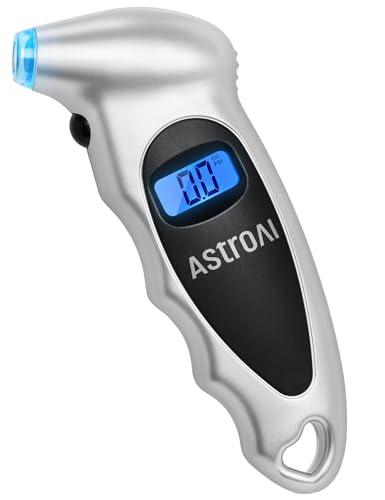
Accurate, Dependable Readings: Factory‑calibrated to ±1 PSI, so you can confidently match your vehicle’s recommended PSI (check the door jamb sticker). Ideal for monthly checks and road trips — consistent results every time, cold or warm.

PROCESS LEVEL ACCURACY: Each ETENWOLF’s digital tire pressure gauge is calibrated manually to ANSI B40.7 Grade 2A(plus-minus 1 PSI).Presta valve adapter not included, if used for bicycles, it must be purchased separately

RUGGED DESIGN: The stainless steel components prevent rust and corrosion while the precision-crafted nozzle seamlessly seals onto the valve stems for highly accurate readings (±2% span). We also provide 4 valve stem caps for convenient replacement.
Inspect Truck and Trailer Brakes
Look for brake-fluid leaks, damaged hoses or lines, abnormal rotor or drum wear, low fluid, warning lights, scraping sounds, or a soft brake pedal. The truck’s brakes must be in good condition before adding a trailer.
Inspect and maintain the trailer brakes according to the trailer and axle manufacturer’s schedule. Confirm that the trailer electrical connector is fully seated and that the brake controller recognizes the trailer when applicable.
In an open, controlled area, move forward slowly and apply the trailer brakes using the controller’s manual control as directed by its instructions. The trailer should provide smooth, noticeable braking without locking, grabbing, pulling, or failing to respond. Adjust controller gain according to the manual and the loaded trailer—not by guesswork.
Get Your Skid Plates and Underbody Ready
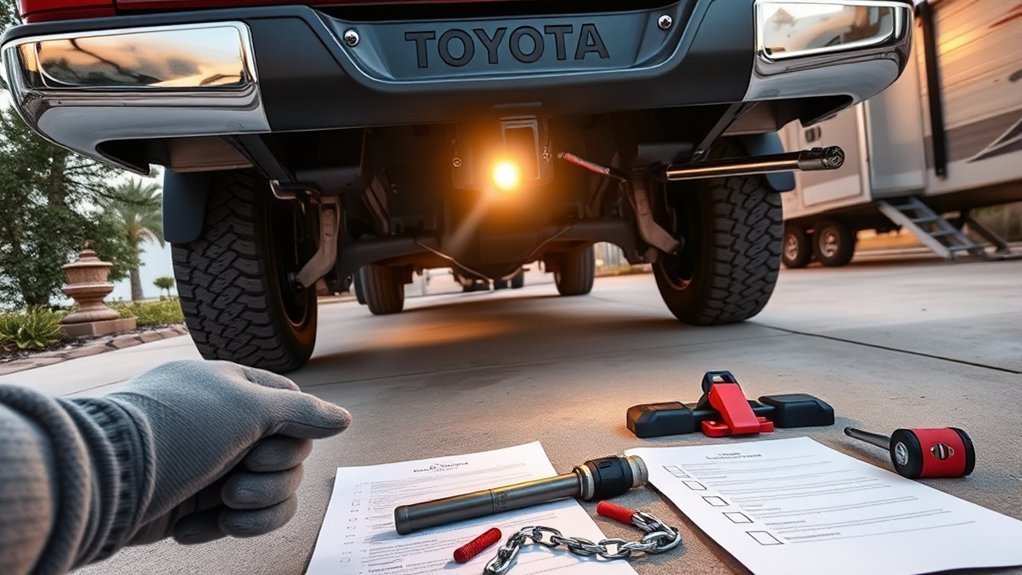
Skid plates are not a substitute for checking towing ratings or hitch equipment, but they deserve attention when the route includes rough campsites, construction access, rutted roads, or off-road terrain.
Inspect each skid plate for cracks, severe dents, loose edges, missing fasteners, or contact with the engine, transmission, exhaust, transfer case, fuel system, wiring, or other components. A bent plate can trap debris, create noise, reduce clearance, or rub against a moving or heat-sensitive part.
Check beneath the Tundra for fluid leaks, hanging wiring, loose heat shields, damaged exhaust parts, or anything that could contact the driveline. Repair loose or damaged underbody protection before traveling over rough terrain.
When towing off pavement, remember that the trailer changes the combination’s breakover, departure, and turning clearance. Walk questionable sections first and avoid routes that exceed the capability of the truck, trailer, tires, hitch, or driver.
Essential Recovery Gear and Hitch Setup for Towing
Trailer-towing hardware and vehicle-recovery equipment serve different purposes. A trailer ball, ball mount, safety chain, transport tie-down, or unrated attachment point should not be assumed safe for vehicle recovery.
Inspect factory or professionally installed recovery points for damage, corrosion, missing hardware, and clear access. Carry only recovery straps, shackles, soft shackles, winches, dampers, and other equipment that are designed and rated for the intended recovery method. Follow the equipment manufacturer’s instructions and understand the difference between working-load limits, minimum breaking strength, and dynamic recovery forces.
Warning: Never attach a recovery strap or winch line to a trailer hitch ball. A hitch ball is not a recovery point and can become a dangerous projectile if it or its mounting hardware fails.
For remote travel, useful equipment may include rated recovery gear, gloves, a shovel, traction boards, a tire-repair kit, an air source, reflective warning devices, a flashlight, wheel chocks, and communication equipment. Training and a safe recovery plan are more important than simply carrying more hardware.
[Amazon Products Picked for You]

Premium Material: This recovery ring winch is made of 7075 aluminum alloy for superior strength and durability. It is stronger, corrosion-resistant and less prone to rust than traditional grip blocks, ensuring a longer service time for a wide range of off-road gear and winch lines

AMERICAN OWNED, FAMILY OPERATED - Join the Rhino USA Family and Support a Father/Son Business With the Best USA-Based Customer Support.

Optimize Lighting and Electrical Accessories for Safety
Connect the trailer plug with enough cable movement for turns but without allowing the cable to drag, pinch, or contact hot exhaust components. Inspect the plug, socket, wiring, junction boxes, and visible grounds for corrosion, bent terminals, loose covers, abrasion, or previous repairs that are separating.
Test All Lights Functionality
With a helper standing where each lamp is visible, test the trailer’s running lights, brake lights, left and right turn signals, hazard lights, marker lights, license-plate light, and reverse lights when equipped. Confirm that the Tundra’s lights continue to work normally.
Clean dirty lenses and replace failed lamps or repair wiring before departure. A light that flickers when the plug or cable moves may indicate a loose terminal, poor ground, broken conductor, or damaged connector.
Auxiliary, fog, work, and off-road lights should be secure and aimed so they do not obstruct required lamps or blind other drivers. Turn work lights off before entering public roads unless their use is lawful and necessary.
Inspect Wiring Connections Thoroughly
Confirm that the brake controller, breakaway switch, trailer battery, charging circuit, and any relays or fuses operate as their manufacturers specify. Do not continue towing with intermittent trailer-brake operation or a recurring electrical warning.
Secure excess wiring away from the hitch mechanism, safety chains, suspension, tires, and exhaust. Make sure the trailer plug cannot pull out during a tight turn but will not be crushed by the coupler or tailgate.
Secure Cargo and Adjust Visibility
Load heavy cargo low and in the position recommended by the trailer manufacturer. Secure every item so it cannot slide, tip, leak, or move the trailer’s balance during braking or cornering. Recheck tongue weight after major loading changes.
Close and latch trailer doors, windows, roof vents, storage compartments, ramps, steps, awnings, antennas, and exterior accessories. Retract stabilizer jacks and leveling equipment unless the manufacturer specifically designed a component to remain deployed in transit.
Adjust the Tundra’s mirrors so you can monitor both sides of the trailer and approaching traffic. Toyota offers tow mirrors and other towing technology on applicable current configurations, but cameras and driver-assistance systems do not remove the driver’s responsibility to verify clearance and blind spots.
Perform a Final Low-Speed Test
Remove the wheel chocks only after all connections are complete, the trailer jack is raised, and the area is clear. Pull forward a few feet, stop, and inspect the hitch again. Confirm that the coupler remains seated, the safety chains and electrical cable have enough turning clearance, and no jack or stabilizer is dragging.
In a safe open area, make several gentle turns and controlled stops. Listen for clunks, scraping, tire contact, dragging chains, brake noise, or movement from unsecured cargo. The trailer should track steadily without pulling, hopping, or producing abnormal sway.
Using Tow/Haul Mode
If your Tundra is equipped with Tow/Haul or multiple towing modes, select the appropriate mode according to the owner’s manual. Current Tundra configurations may provide selectable TOW/HAUL modes and an Integrated Trailer Brake Controller, but availability and operation vary by year and trim.
Tow/Haul commonly changes transmission behavior and may improve control when the truck is carrying or towing a substantial load, shifting frequently, or traveling on grades. It does not increase the truck’s weight ratings, compensate for an overloaded combination, replace trailer brakes, or eliminate the need to control speed.
Safe Driving After the Inspection
- Follow the lowest applicable speed limit or equipment restriction and reduce speed further for wind, rain, snow, traffic, curves, poor pavement, or limited visibility.
- Leave substantially more following distance and begin braking earlier than you would without a trailer.
- Make wider turns while watching the trailer tires and rear corner.
- Avoid abrupt steering, acceleration, braking, and lane changes.
- Select an appropriate gear or Tow/Haul setting before long grades and control downhill speed without continuously overheating the brakes.
- Stop after the first few miles and periodically during the trip to recheck the hitch, tires, wheel fasteners where required, cargo, lights, and any developing heat, odor, or noise.
If trailer sway begins, remain calm, hold the steering wheel steady, ease off the accelerator, and avoid abrupt steering or hard braking. Use the trailer-brake controller’s manual function only as directed by its manufacturer and when safe to do so. Pull over safely and correct loading, tire, hitch, speed, or equipment problems before continuing.
Chock and Unhitch the Trailer Safely
Park on a firm, level surface whenever possible. Apply the Tundra’s parking brake, place the transmission in Park, and chock the trailer wheels securely before releasing the coupler. On a slope, follow the trailer and vehicle manufacturers’ procedures and use chocks designed for the trailer’s weight and tire size.
Support the trailer with its tongue jack, disconnect electrical and breakaway connections without allowing them to drag, remove the safety chains, and release the coupler only after the trailer is stable. Keep hands, feet, and bystanders clear of pinch points.
Do Not Tow Until These Problems Are Corrected
Delay the trip and arrange qualified service when you find any of the following:
- Any exceeded GVWR, GAWR, GCWR, payload, trailer, tire, wheel, receiver, ball-mount, or coupler rating
- A coupler that does not match or securely capture the hitch ball
- Cracked, bent, heavily corroded, loose, or missing hitch hardware
- Damaged, underinflated, overloaded, or excessively worn tires
- Loose wheel fasteners, cracked wheels, or abnormal bearing movement
- Brake-fluid leaks, brake warnings, ineffective trailer brakes, or an unrecognized trailer-brake connection
- Failed brake lights, turn signals, running lights, or required marker lights
- Steering looseness, damaged suspension parts, severe rear sag, or tire-to-body contact
- An inoperative breakaway system when one is required
- Persistent sway, pulling, overheating, burning odors, unusual noise, or unstable handling during the low-speed test
Related Guides
Frequently Asked Questions
What is the 80/20 rule for towing?
There is no official Toyota or SAE towing rule stating that 80% of towing experiences are simple. Some owners use 80% of a published tow rating as an informal planning margin, but it is not a manufacturer rating and does not guarantee safety. The truck must remain within every applicable GVWR, GAWR, GCWR, payload, tire, axle, hitch, and trailer limit.
How do you put a Toyota Tundra in Tow/Haul mode?
Use the Tow/Haul button, drive-mode selector, or menu identified in the owner’s manual for your exact model year. The location, available modes, and activation procedure vary. Confirm the selected mode on the instrument display before driving and follow Toyota’s instructions for when to use it.
What should I check before towing with a Toyota Tundra?
Verify all loaded-weight ratings, then inspect the hitch, coupler, safety chains, breakaway cable, tires, wheels, brakes, suspension, steering, lights, wiring, mirrors, cargo, doors, jacks, and stabilizers. Finish with a low-speed pull and brake test followed by a second walk-around.
Should I always use Tow/Haul mode when towing?
Not as a universal rule. Use Tow/Haul according to the instructions for your model year and the load and road conditions. It is commonly useful with substantial loads, frequent transmission shifting, or grades, but it does not increase towing capacity or correct an overloaded or improperly configured trailer.
How can I tell whether my Tundra is overloaded?
Weigh the loaded truck and trailer and compare the truck, axle, combined, trailer, tongue, hitch, wheel, and tire loads with their ratings. Rear sag or poor handling can be warning signs, but appearance alone cannot prove that the combination is within its limits.
Can I tow if the trailer brake or light test fails?
Do not begin the trip with required lights or trailer brakes inoperative. Inspect the connector, ground, wiring, fuses, controller, trailer battery, breakaway equipment, lamps, and brake hardware. Repair the fault and repeat the complete test before entering traffic.
Conclusion
A safe Toyota Tundra towing trip begins with the numbers and ends with a road test. Confirm the exact truck’s ratings, weigh the combination when needed, inspect every hitch and breakaway connection, check cold tire pressures, test the brakes and lights, secure the load, and correct every safety-critical defect before leaving. Recheck the combination after the first few miles and whenever handling, noise, temperature, or weather changes.
Sources
- Toyota Manuals and Warranties — model-specific owner’s manuals, towing instructions, equipment information, and warnings
- Toyota Tundra — current Tundra towing, payload, Tow/Haul, brake-controller, mirror, suspension, and towing-technology information
- NHTSA TireWise — cold tire-pressure checks, tread replacement guidance, tire damage, aging, and tire-safety data
- SAE J2807 — standardized performance requirements used to determine tow-vehicle and trailer weight ratings