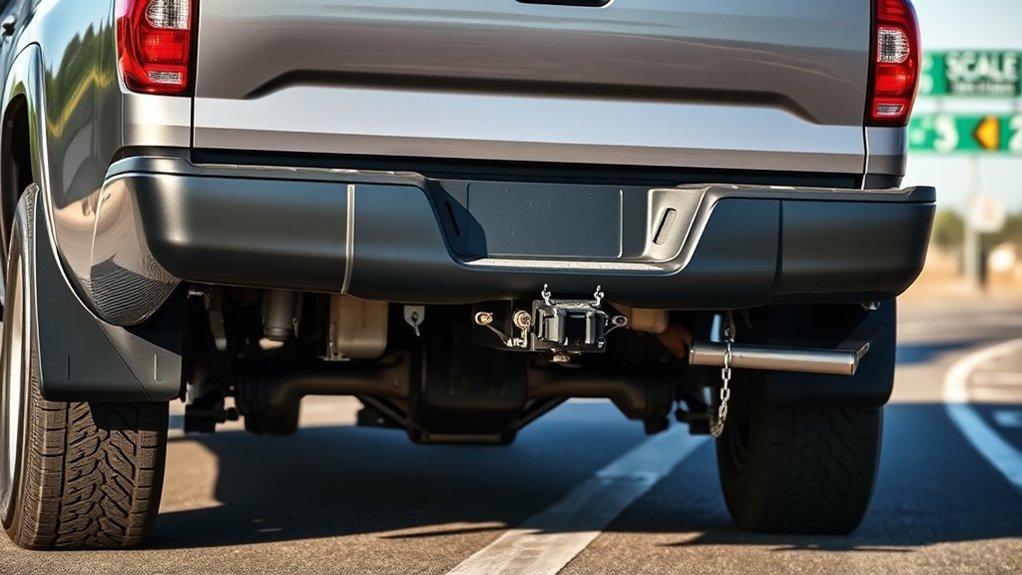
GCWR, GVWR, and GAWR describe different weight limits for your Toyota Tundra. Understanding all three is essential because a truck-and-trailer combination can remain below the advertised towing capacity while exceeding the truck’s payload, rear-axle, hitch, or tire limits. The safest towing limit is always the lowest applicable rating for your specific truck and loaded trailer.
Quick Answer
GCWR is the maximum loaded weight of your Tundra and trailer together. GVWR is the maximum loaded weight of the truck itself, while GAWR limits the weight on each axle. Your safe trailer limit is whichever limit you reach first: GCWR, GVWR, GAWR, the tow rating, hitch, tires, or trailer rating.
Key Takeaways
- GCWR is not the same as towing capacity. It is the maximum loaded weight of the truck and trailer combined.
- GVWR applies to the Tundra itself. Passengers, cargo, accessories, hitch equipment, and trailer tongue weight all use truck capacity.
- GAWR applies separately to each axle. The rear axle can be overloaded even when total truck weight is below GVWR.
- Use actual loaded weights whenever possible. Trailer dry weight does not include the supplies, water, batteries, propane, equipment, or cargo you add.
- The lowest rating controls. Never exceed the truck, trailer, hitch, ball, tire, axle, or combined-weight limit.
At a Glance
| Time Required | About 15–30 minutes to check labels and calculate limits; additional time for a public-scale weighing |
| Difficulty | Easy to moderate |
| Tools Needed | Tundra certification label, tire-and-loading label, owner’s manual, trailer data plate, calculator, and preferably a certified public scale |
| Cost | Free using labels and manuals; public-scale fees vary by location |
Why GCWR, GVWR, and GAWR Matter for Your Tundra’s Towing Capabilities
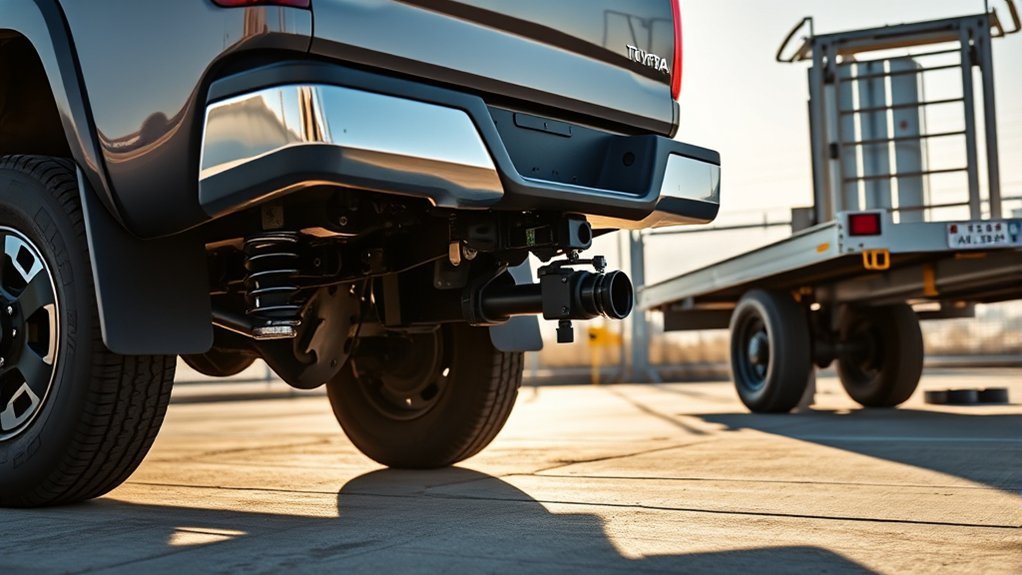
GCWR, GVWR, and GAWR measure different parts of your towing setup. None of them can be used alone to decide whether a trailer is safe for your Tundra.
The federal definitions are straightforward: GCWR is the manufacturer-specified loaded weight of a combination vehicle, GVWR is the manufacturer-specified loaded weight of one vehicle, and GAWR is the load-carrying capacity of one axle system.
In practical terms, GCWR limits the total truck-and-trailer combination. GVWR limits the Tundra itself. GAWR limits the weight carried by each axle. The truck must remain within all three ratings at the same time.
A high towing rating does not cancel a lower payload, rear-axle, hitch, tire, or trailer limit. The first rating you reach becomes the controlling limit.
This distinction is especially important for travel trailers and equipment trailers. Their tongue weight presses down on the hitch and becomes part of the truck’s loaded weight. That load commonly affects payload and the rear axle before the combination reaches the advertised maximum towing figure.
GCWR, GVWR, GAWR, and Related Towing Terms
| Term | What It Means | What Counts Toward It |
|---|---|---|
| GCWR | Maximum rated loaded weight of the truck-and-trailer combination | Truck, passengers, cargo, accessories, hitch equipment, trailer, fluids, and trailer cargo |
| GVWR | Maximum rated loaded weight of the Tundra itself | Truck, fuel, occupants, bed cargo, installed accessories, hitch hardware, and the load imposed by the trailer |
| GAWR | Maximum rated load on one axle system | The weight measured at the tires for the front or rear axle |
| Actual GVW | What the truck actually weighs in its current loaded condition | Everything currently carried by the truck, including trailer-imposed load when connected |
| Curb Weight | Vehicle weight with standard operating equipment and fluids but without ordinary occupants or cargo | The manufacturer’s defined base operating condition |
| Payload | The weight the truck can carry beyond its defined vehicle weight | Occupants, cargo, accessories, hitch hardware, and trailer tongue or pin weight |
| Trailer Weight Rating | Maximum trailer weight approved for a specific tow-vehicle configuration | The fully loaded trailer, subject to the manufacturer’s stated test assumptions |
| Trailer GVWR | Maximum rated loaded weight of the trailer | Trailer structure, equipment, fluids, and cargo |
| Tongue Weight | Downward load a conventional trailer places on the hitch | Part of the trailer’s weight that is carried by the truck and uses payload capacity |
Do not add the front and rear GAWR figures and assume the result is your GVWR. Each rating is established separately, and the truck must remain within the printed GVWR as well as both axle ratings.
Where to Find Your Tundra’s Weight Ratings
Your exact ratings depend on the model year, cab, bed, drivetrain, powertrain, installed options, and equipment. Use the following sources for the truck you are actually driving:
- Driver-door certification label: Look on the driver-side door opening or pillar for the truck’s GVWR and front and rear GAWR.
- Tire and loading label: Check the occupant-and-cargo statement for the truck’s as-built carrying information.
- Owner’s manual and towing information: Use Toyota’s official manual portal to find the instructions and ratings that apply to the selected model year.
- Receiver, ball mount, hitch ball, and weight-distribution equipment: Read every equipment label. The lowest component rating controls.
- Tires: Verify tire size, type, cold inflation pressure, and load capacity. Replacement tires must support the intended axle loads.
- Trailer data plate: Find the trailer GVWR and GAWR on its certification or VIN plate.
Note: Toyota lists up to 12,000 pounds of towing capacity and up to 1,850 pounds of payload for the 2026 Tundra lineup. These are maximum lineup figures, not guaranteed ratings for every truck. Verify the labels and towing information for your exact configuration.
Toyota’s 2026 Tundra announcement also states that a tow hitch and 7/4-pin connector are standard across the lineup. Standard hardware does not mean every configuration has the same trailer, tongue-weight, payload, or axle rating.
How to Calculate Your Toyota Tundra’s Safe Towing Limit
There is no single subtraction that proves a towing setup is safe. Use a series of checks and accept the lowest result.
[Amazon Products Picked for You]

1800 lbs Heavy-Duty Capacity, built with strong carbon steel to handle your toughest loads with reliability

1800 lbs Heavy-Duty Capacity, built with strong carbon steel to handle your toughest loads with reliability
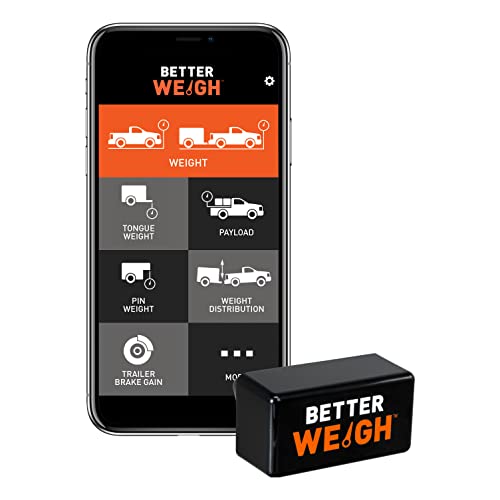
SMARTPHONE-READY. BetterWeigh uses Bluetooth to connect to your smartphone and show the actual weight of your vehicle and trailer. It is compatible with Apple or Android phones
1. Find the GCWR-Based Trailer Allowance
GCWR-based trailer allowance = GCWR − actual loaded truck weight before coupling
The truck weight should include the driver, passengers, fuel, bed cargo, permanent accessories, and hitch equipment that will be carried on the trip. Do not use an optimistic catalog curb weight when the loaded truck is available to weigh.
2. Find the Truck’s Remaining Payload Capacity
Remaining truck capacity = GVWR − actual loaded truck weight
The trailer’s tongue weight must fit within this remaining capacity. Hitch equipment that was not included in the truck-only weighing must also be counted.
3. Check the Rear Axle
After coupling the trailer and setting up any approved weight-distribution system, compare the measured rear-axle weight with the rear GAWR. Also confirm that the front axle remains within its GAWR and is loaded according to Toyota’s instructions.
4. Compare Every Other Limit
Your usable trailer limit cannot exceed any of the following:
- The Tundra’s configuration-specific trailer weight rating
- The GCWR-based allowance
- The remaining truck payload and GVWR
- The front and rear GAWR
- The receiver, ball mount, hitch ball, and weight-distribution ratings
- The truck and trailer tire capacities
- The trailer’s GVWR and axle ratings
- Any lower limit stated in the owner’s manual or equipment instructions
Safe planning limit = the lowest applicable truck, axle, hitch, tire, trailer, or combined-weight limit
Worked Example
Assume the following example values. They are for explaining the method and do not represent a specific Tundra configuration:
- GCWR: 17,000 pounds
- Factory trailer weight rating: 10,000 pounds
- Truck GVWR: 7,500 pounds
- Actual loaded truck weight before coupling: 6,500 pounds
The GCWR calculation gives:
17,000 − 6,500 = 10,500 pounds
However, the manufacturer’s trailer rating is 10,000 pounds, so the GCWR calculation does not authorize a 10,500-pound trailer.
The truck has:
7,500 − 6,500 = 1,000 pounds of remaining GVWR capacity
If a conventional trailer places approximately 12% of its loaded weight on the hitch, an 8,300-pound trailer would produce about 996 pounds of tongue weight before adding any hitch equipment not already included in the truck weighing. In this example, truck payload becomes the practical limit before the 10,000-pound trailer rating is reached.
Warning: This example is a planning illustration, not permission to tow a specific weight. Tongue-weight percentage, weight-distribution setup, axle loads, equipment ratings, trailer design, and manufacturer instructions must all be verified for the actual combination.
How to Weigh Your Tundra and Trailer
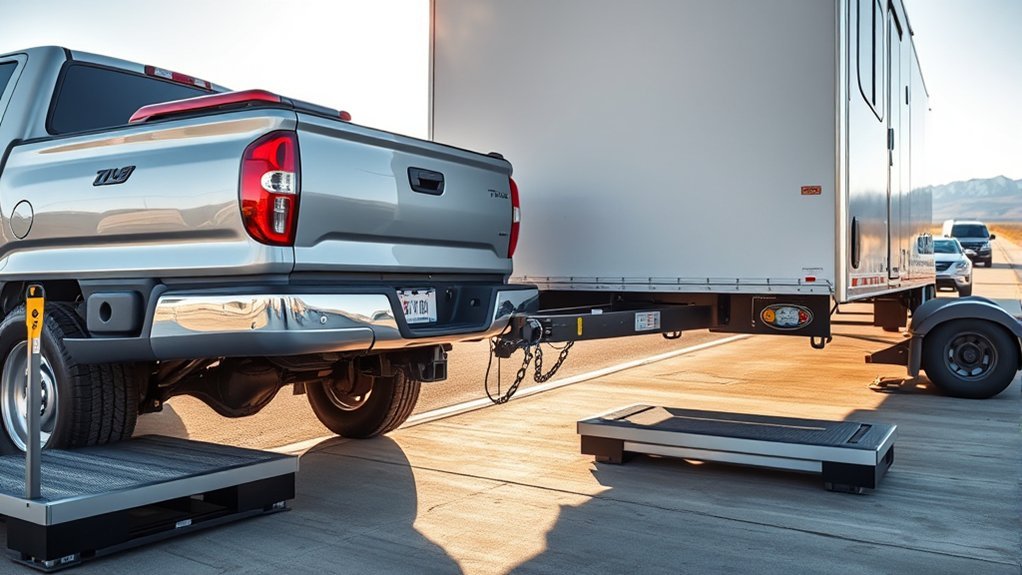
A certified public scale provides a more reliable picture than advertised dry weights. Load the truck and trailer exactly as they will travel, including passengers, food, tools, water, batteries, propane, recreational equipment, and other cargo.
- Weigh the loaded truck by itself. Record the front axle, rear axle, and total truck weight.
- Connect the loaded trailer. Set the hitch and any weight-distribution equipment according to the manufacturer’s instructions.
- Weigh the complete combination. Record the truck’s front axle, truck’s rear axle, trailer axle group, and total combined weight.
- Compare the results. Keep the truck below GVWR, each axle below its GAWR, the combination below GCWR, and the trailer below its ratings.
- Confirm tongue weight. Use an appropriate tongue-weight scale or an accepted multi-pass scale procedure. Follow the hitch, trailer, and Toyota instructions when a weight-distribution system is used.
The trailer’s actual loaded weight can generally be determined by subtracting the unchanged truck-only weight from the total combined weight. Reweigh after major cargo, equipment, water, or hitch changes.
Pro Tip: Save a photo of each scale ticket and keep a simple list of what was loaded. This makes it easier to identify which passengers, supplies, water, or accessories caused a later weight increase.
[Amazon Products Picked for You]
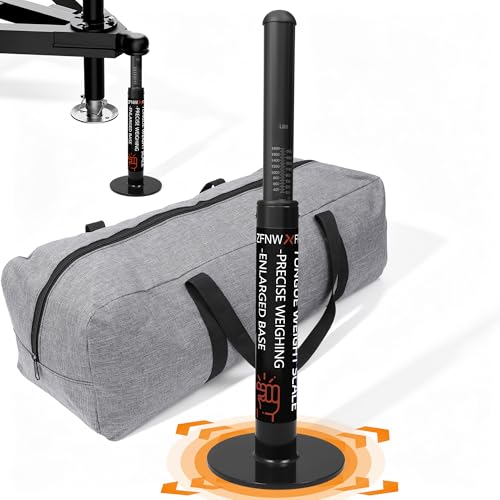
【Stable 6.3" Large Base】Our trailer tongue weight scale features an upgraded large base - 6.3" to prevent tipping, wobbling, or sinking in mud—safe and reliable for every towing trip, no messy mishaps.

Upgraded 2000 LBS Heavy‑Duty Capacity:This upgraded trailer tongue weight scale supports up to 2000 lbs tongue load. Built with high‑strength steel and heavy‑duty internal spring assembly, it delivers stable performance for heavy‑load towing, ideal for RVs, travel trailers, boat trailers and utility trailers

【Accurate Trailer Tongue Weight Scale】 Know your tongue weight before you tow. This trailer tongue weight scale helps you check hitch load, support proper weight distribution, reduce trailer sway, and improve towing stability for travel trailers, RVs, boats, campers, cargo trailers, and utility trailers.
Essential Safety Tips for Towing With Your Toyota Tundra
Weight ratings are only one part of safe towing. Inspect and configure the complete setup before every trip:
- Use loaded weights: Base decisions on the truck and trailer as they will travel, not on an empty trailer’s advertised dry weight.
- Check tongue weight: Many conventional travel and cargo trailers are commonly planned near a 10–15% tongue-weight range, but the trailer, hitch, and Toyota instructions take priority because trailer types differ.
- Inspect the hitch system: Confirm that the receiver, ball mount, hitch ball, coupler, pins, and fasteners are compatible and rated for the load.
- Cross the safety chains correctly: Leave enough movement for turns without allowing the chains to drag.
- Connect the electrical system: Test running lights, brake lights, turn signals, the brake controller, and the breakaway system when equipped.
- Check trailer brakes: Use the equipment required by the owner’s manual and the laws where the combination will be operated.
- Inspect tires: Check cold pressure, load rating, age, tread, sidewall condition, and lug-nut torque on the truck and trailer.
- Secure cargo: Prevent cargo from moving and changing tongue or axle loads during travel.
- Allow more space: Accelerate gradually, increase following distance, slow before turns, and account for the trailer’s added width and length.
- Recheck the setup: Stop after the first part of the trip to inspect the coupler, chains, wiring, tires, cargo, and hitch components.
Warning: Never continue driving with persistent sway, overloaded tires, excessive rear suspension sag, abnormal steering, overheated brakes, or an unstable trailer. Stop in a safe location and correct the cause rather than attempting to control it by increasing speed.
A weight-distribution hitch can move part of the hitch load between the truck’s axles and the trailer axles when correctly selected and adjusted. It does not automatically increase the Tundra’s GVWR, GAWR, GCWR, trailer weight rating, receiver rating, or tire capacity.
[Amazon Products Picked for You]

Robust Tightener: 0.28" powder coated with DEEAGLE hitch tightener plate to achieve better shock absorption and anti-cuts. Rubber-coated U-bolts for tougher bumps and poor weather. The hitch anti rattle 2 inch is built to last and rust-free

Constructed from durable solid steel with a zinc-plated finish and a vinyl yellow grip to resist rust and corrosion

🔧 2" Hitch Receivers with 3/4 D-ring Shackle: The Tow Hitch Receiver is made of carbon steel with a rated working load of 11,000 lbs and a breakpoint of 45,000 lbs. Black silicone isolators to prevent scratching when mounted. This shackle hitch receiver accessory is suitable for all towing applications.
Common Myths About Toyota Tundra Towing Capacity and Weight Ratings
| Myth | Fact |
|---|---|
| Every 2026 Tundra can tow 12,000 pounds. | The 12,000-pound figure is a lineup maximum. Your cab, bed, drivetrain, powertrain, options, passengers, cargo, and equipment may produce a lower usable limit. |
| Staying below GCWR means the setup is safe. | The truck can be below GCWR while exceeding GVWR, rear GAWR, tire capacity, hitch capacity, or the trailer rating. |
| Trailer dry weight is the weight that matters. | Dry weight excludes some or all cargo, fluids, batteries, propane, equipment, and supplies. Actual loaded weight is more useful. |
| A weight-distribution hitch adds payload or towing capacity. | It redistributes load when properly adjusted but does not rewrite the manufacturer’s ratings. |
| Only the rear GAWR matters while towing. | Both axle ratings matter. Hitch setup can also change front-axle loading and steering behavior. |
| Adding helper springs increases GVWR. | Suspension aids may change ride height or handling, but they do not automatically raise the certified GVWR or GAWR. |
Frequently Asked Questions
What is the difference between GVWR, GCWR, and GAWR?
GVWR is the maximum rated loaded weight of the Tundra itself. GCWR is the maximum rated loaded weight of the Tundra and trailer together. GAWR is the maximum load allowed on one axle system. The truck must remain below its GVWR and both axle ratings while the complete combination remains below GCWR.
When towing, should I use trailer dry weight or GVWR?
Use the trailer’s actual loaded weight whenever possible. When planning before the trailer has been loaded, its GVWR provides a more conservative figure than dry weight. Dry weight alone can omit cargo, water, batteries, propane, equipment, and dealer-installed options.
Does GVWR mean the truck is fully loaded?
No. GVWR is the maximum rated loaded weight, not the truck’s current weight. A Tundra may weigh less than its GVWR when partly loaded. Its actual weight reaches or exceeds GVWR only when enough occupants, cargo, accessories, and trailer-imposed load are added.
Is towing capacity the same as GCWR?
No. GCWR applies to the loaded truck and trailer together. Towing capacity or trailer weight rating applies to the trailer. Truck cargo and passengers increase the truck’s actual weight and can reduce the trailer weight that fits beneath GCWR, GVWR, and axle limits.
Can a weight-distribution hitch increase my Tundra’s towing capacity?
No. A properly selected weight-distribution hitch can improve load distribution and restore some front-axle load, but it does not automatically increase the truck’s GVWR, GAWR, GCWR, trailer weight rating, tire capacity, or receiver rating.
Where can I find the exact ratings for my Toyota Tundra?
Find GVWR and front and rear GAWR on the driver-door certification label. Check the tire-and-loading label for occupant-and-cargo information. Use the Toyota owner’s manual and towing information for GCWR, trailer limits, hitch requirements, and operating instructions. Also inspect the ratings on the hitch, tires, and trailer data plate.
Sources
- Toyota — 2026 Tundra — current maximum towing and payload figures
- Toyota USA Newsroom — 2026 Toyota Tundra announcement — model-year towing figure, equipment, and feature updates
- Toyota Owners — 2026 Tundra manuals — configuration-specific operating and towing instructions
- Electronic Code of Federal Regulations, 49 CFR 571.3 — federal definitions of curb weight, GCWR, GVWR, and GAWR
- SAE International — J2807_202002 — performance requirements used to determine tow-vehicle GCWR and trailer weight ratings
Conclusion
GCWR, GVWR, and GAWR work together rather than replacing one another. GCWR controls the loaded truck-and-trailer combination, GVWR controls the loaded Tundra, and GAWR protects each axle from excessive load. Trailer tongue weight, passengers, bed cargo, accessories, hitch equipment, and tires can create a lower practical limit than the advertised towing maximum.
Before towing, read the labels on your truck and equipment, consult the correct Toyota manual, load the combination as it will travel, and verify the results at a public scale. Staying below every applicable rating—not merely the largest number in a brochure—is the reliable way to use your Tundra’s towing capability safely.
