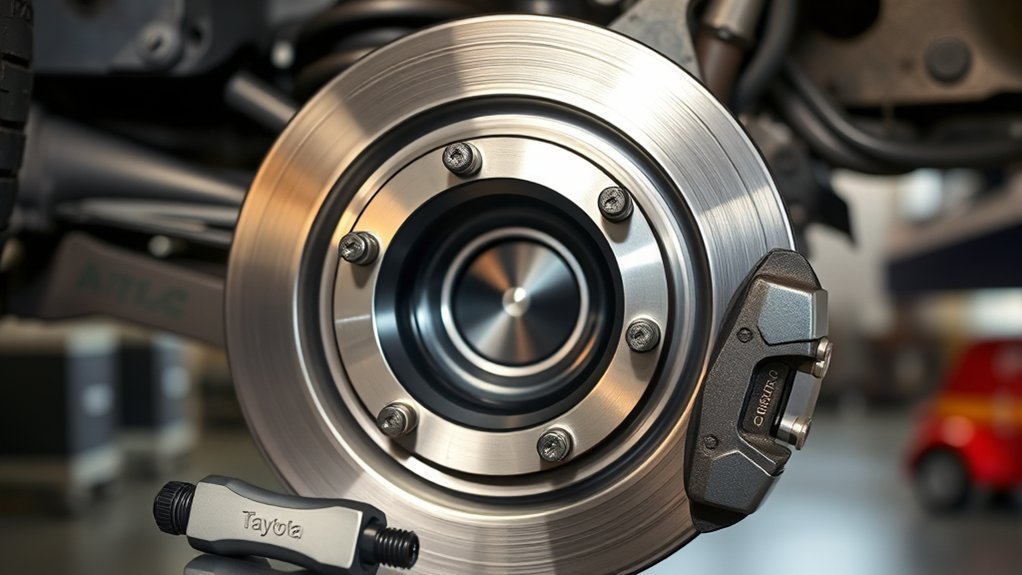
The Toyota Tacoma hub bore is commonly listed as 106.1 mm on 2005–2023 six-lug trucks and 95.1 mm on 2024–2026 fourth-generation trucks. Early conventional 2WD five-lug Tacomas use a separate fitment family, so do not apply the six-lug figure to them. Before installing a wheel, verify the truck’s hub-pilot diameter, the wheel’s center bore, bolt pattern, lug hardware, offset, load rating, and brake clearance.
Last updated: September 19, 2026 — fitment references and fourth-generation wheel-hardware guidance rechecked.
Quick Answer
For six-lug Tacomas, use 106.1 mm as the common hub-pilot reference for 2005–2023 and 95.1 mm for 2024–2026 fourth-generation trucks. Some wheel catalogs round the newer value to 95.2 mm. Conventional 2WD five-lug Tacomas from earlier generations are a separate fitment family. Measure the actual hub and wheel before ordering wheels or hub-centric rings.
Key Takeaways
- Measure the outside diameter of the truck’s raised hub pilot and the inside diameter of the wheel’s center bore.
- A wheel center bore may be equal to or larger than the hub pilot. A smaller center bore will not fit normally.
- A correctly sized hub-centric ring can center a compatible wheel with a larger bore, but it cannot correct the wrong bolt pattern, offset, load rating, lug seat, or brake clearance.
- Do not apply one lug-thread, socket, or torque specification to every Tacoma generation.
- Stop the installation if the wheel does not sit completely flush against the hub mounting face.
At a Glance
| Time Required | Varies with wheel removal, corrosion, and access; allow enough time for safe lifting and repeated measurements |
| Difficulty | Moderate; accurate measurement and safe wheel removal are required |
| Tools Needed | Wheel chocks, jack, jack stands, digital or vernier caliper, nylon or brass brush, clean rag, work light, and calibrated torque wrench |
| Cost | Varies by the tools and any rings required; do not select rings by price before confirming both diameters and seating depth |
Toyota Tacoma Hub Bore Size by Generation (1995–2026)
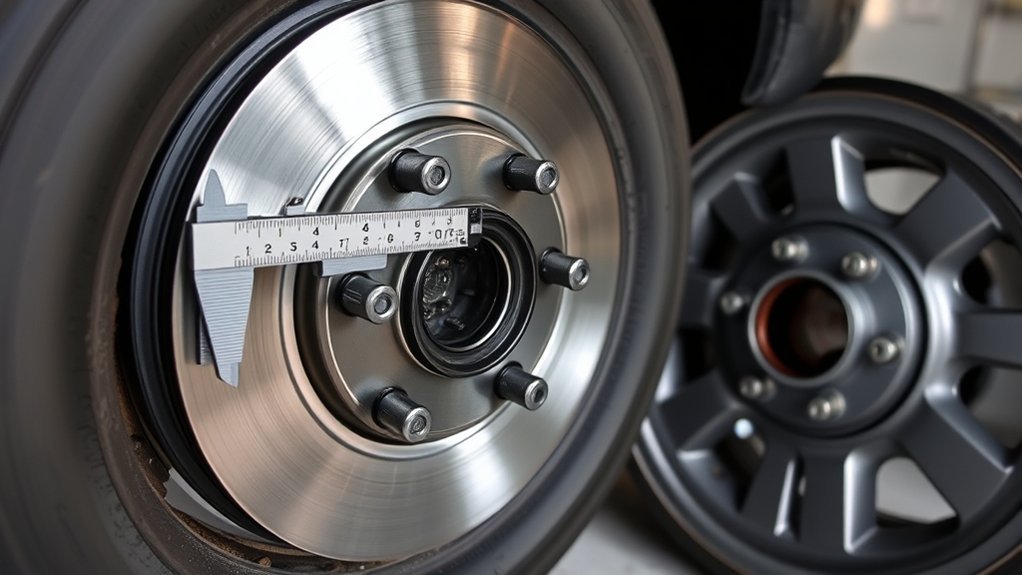
“Hub bore” is commonly used for two related measurements. On the truck, the relevant measurement is the outside diameter of the raised hub pilot. On the wheel, it is the inside diameter of the center opening. The wheel opening must clear the truck’s hub pilot and allow the wheel mounting face to sit flat against the hub.
The table below summarizes common Tacoma fitment references. It is a starting point, not purchase authorization. Production changes, two-wheel-drive configurations, wheel packages, replacement hubs, and aftermarket conversions can affect fitment.
| Tacoma group | Common hub-pilot reference | Important verification |
|---|---|---|
| 2024–2026 fourth generation | Commonly cataloged as 95.1 mm; some catalogs round to 95.2 mm | Confirm the exact model year, wheel, thread size, offset, and torque instructions. Toyota introduced the all-new fourth-generation Tacoma for 2024. |
| 2005–2023 six-lug Tacoma | Commonly cataloged as 106.1 mm | Verify the wheel center bore, bolt pattern, offset, brake clearance, lug-seat design, and load rating. |
| 2005–2015 conventional 2WD five-lug applications, including X-Runner where offered | Separate fitment family | Do not use the 106.1 mm six-lug reference without checking the exact drivetrain, wheel pattern, and measured hub. |
| 1995–2004 4WD and PreRunner six-lug models | Often cataloged in the 106.1 mm fitment family | Check the exact year, drivetrain, hub, and wheel specifications before ordering. |
| 1995–2004 conventional 2WD five-lug models | Separate fitment family | Do not use a general six-lug Tacoma table. Verify the vehicle by year, drivetrain, bolt pattern, and measured hub. |
Note: A figure such as 112.1 mm usually refers to an aftermarket wheel’s center bore, not a factory Tacoma hub-pilot diameter. An otherwise compatible 112.1 mm wheel may require a ring sized for that wheel bore and your measured 106.1 mm or 95.1 mm hub. Early 2WD fitment catalogs are inconsistent enough that a direct measurement is safer than relying on one generic number.
Does the Wheel Center Bore Have to Match the Tacoma Hub?
A hub-centric wheel has a center bore closely matched to the vehicle’s hub pilot. That fit helps place the wheel concentrically during installation. A purpose-designed lug-centric wheel is centered by its lug-seat geometry as its fasteners are tightened in stages.
During normal operation, properly specified and torqued fasteners clamp the wheel’s mounting pad against the hub face. The center pilot or ring does not make an incompatible wheel safe, and it does not replace adequate fastener engagement, the correct seat shape, or full mounting-face contact.
A correct center bore helps the wheel run concentrically, but complete wheel fitment also requires the right bolt pattern, offset, load rating, clearance, lug seat, thread engagement, and installation torque.
| Wheel bore compared with hub pilot | What it means | Next step |
|---|---|---|
| Smaller | The wheel cannot seat over the hub pilot normally. | Do not force it. Use a compatible wheel or obtain written manufacturer approval for professional modification. |
| Closely matched | The wheel may locate directly on the hub pilot. | Still verify bolt pattern, lug hardware, offset, load rating, and clearances. |
| Larger | The wheel may be usable if the application is approved. | Use a correctly sized centering ring when specified and confirm full mounting-face contact. |
How to Measure Your Tacoma Hub and Wheel Center Bore
Measure both mating parts instead of relying on a product listing alone. The truck measurement and wheel measurement use different caliper surfaces, so identify each one before you begin.
Tools You’ll Need
- A digital or vernier caliper that reads in millimeters
- Wheel chocks
- A suitable floor jack and correctly rated jack stands
- A nylon or brass brush and clean rag
- A work light
- Safety glasses and gloves
- A calibrated torque wrench for reinstallation
- The correct socket or key for the installed lug nuts
Warning: Work on a firm, level surface, chock the wheels, follow Toyota’s lifting points, and support the truck with jack stands. Never place any part of your body beneath a vehicle supported only by a jack.
Step-by-Step Measurement Method
- Identify the vehicle. Record the model year, drivetrain, trim, cab configuration, and whether the truck has factory or replacement hubs.
- Secure and lift the truck. Loosen the lug nuts only as directed for your setup, raise the truck at an approved point, install jack stands, and remove the wheel.
- Clean the mating surfaces. Remove loose dirt and rust scale from the hub pilot and mounting face with a non-marring brush. Do not grind away hub material.
- Zero the caliper. Close the jaws, confirm a zero reading, and test the tool against a known dimension when possible.
- Measure the truck’s hub-pilot outside diameter. Use the caliper’s large outside jaws across the raised circular pilot. Keep the tool square and avoid measuring a chamfer or damaged edge.
- Repeat the hub measurement. Check at several orientations. The same clean value should repeat. If readings differ materially, inspect for corrosion, damage, or poor caliper alignment instead of averaging them.
- Measure the wheel’s center-bore inside diameter. Use the caliper’s small inside jaws at the wheel opening where a ring would seat. Avoid a decorative front opening, bevel, or step that is not the actual locating surface.
- Measure available ring depth. Check how much straight, cylindrical seating area exists in the wheel bore and on the hub pilot.
- Compare the values. The wheel bore must be at least as large as the hub pilot. A larger bore may accept a correctly designed ring.
- Confirm all remaining fitment specifications. Check the bolt pattern, offset, backspacing, load rating, brake clearance, lug seat, thread size, and required torque before installation.
| Part | Measurement | Caliper jaws |
|---|---|---|
| Vehicle hub pilot | Outside diameter | Large outside jaws |
| Wheel center bore | Inside diameter | Small inside jaws |
| Ring seating area | Usable depth and shape | Depth rod or careful direct measurement |
Pro Tip: Photograph the caliper display while it is squarely positioned on each part. Save the photos with the wheel model, part number, offset, and ring dimensions so you can verify a future replacement.
Common Measurement Errors
- Measuring the wrong side: The truck pilot is an outside-diameter measurement; the wheel bore is an inside-diameter measurement.
- Measuring a bevel: A chamfered entry can be wider than the cylindrical ring seat.
- Measuring over rust or paint: Surface buildup can change the reading and prevent the wheel or ring from sitting flat.
- Tilting the caliper: An angled tool can produce a falsely large measurement.
- Averaging inconsistent readings: Different values require inspection, not mathematical averaging.
- Assuming every wheel on the truck is identical: Used vehicles may have mixed wheels, spacers, replacement hubs, or previous modifications.
- Using a tape measure: A tape is not precise enough for selecting a hub-centric ring.
Hub-Centric vs. Lug-Centric Wheels
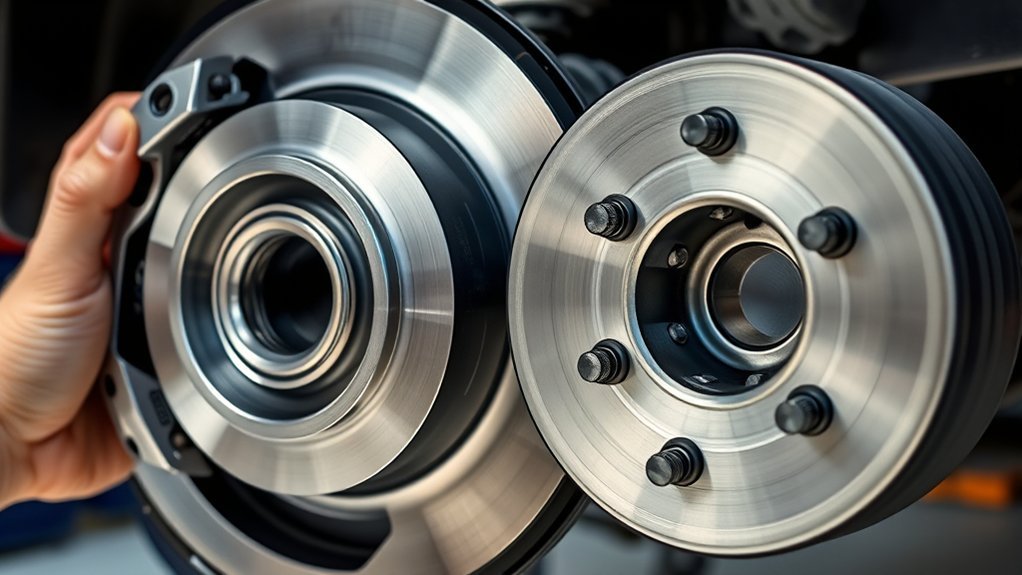
Both hub-centric and purpose-designed lug-centric wheels can work when their manufacturers approve the application and every fitment requirement is met. The important distinction is how the wheel is centered during installation.
Hub-Centric Alignment
A hub-centric wheel uses its center bore to locate closely around the Tacoma’s hub pilot. If the wheel bore is larger, an application-specific ring may fill the radial gap and help center the wheel before the lug nuts are fully tightened.
The wheel must still contact the hub mounting face completely. A ring that bottoms out, sits crooked, overlaps a radius, or prevents flush contact creates an unsafe installation.
Lug-Centric Differences
A true lug-centric wheel uses matched lug seats to center the wheel as the fasteners are tightened gradually in a star pattern. It should not be labeled defective merely because its center bore does not closely match the hub. However, its wheel manufacturer must approve the vehicle application and specify the required lug hardware.
| Feature | Hub-centric wheel | Purpose-designed lug-centric wheel |
|---|---|---|
| Primary installation-centering feature | Hub pilot and matching wheel bore or ring | Matched lug-seat geometry |
| Ring may be used | Often, when the approved wheel bore is larger | Only when the wheel maker specifies one |
| Still requires correct lug hardware | Yes | Yes |
| Acceptable when properly engineered and installed | Yes | Yes |
When Does a Tacoma Need a Hub-Centric Ring?
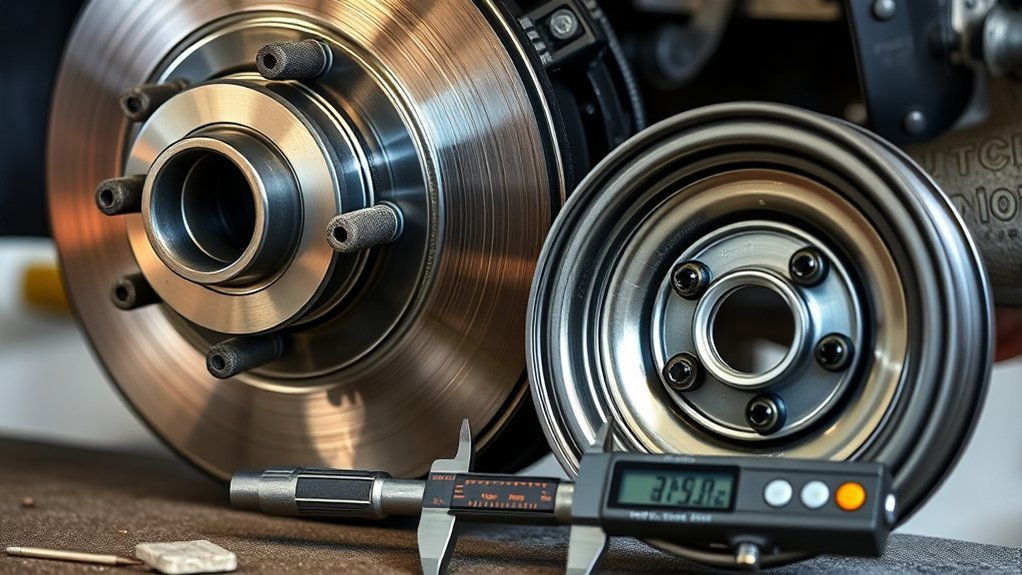
A wheel with a center bore larger than the Tacoma’s hub pilot may accept a hub-centric ring when the wheel manufacturer approves the application. Select the ring by matching its outside diameter to the wheel bore and its inside diameter to the vehicle hub pilot.
For example, a wheel with a verified 112.1 mm bore on a truck with a verified 106.1 mm pilot would require a ring designed for those two dimensions. Sellers may write the wheel-bore dimension first, but confirm the vendor’s labeling convention before ordering.
[Amazon Products Picked for You]

StanceMagic Hub Centric Rings made of CNC Machined billet aluminum. These hubrings will reduce or eliminate vibrations caused by a gap between your aftermarket wheel's...
Check More Than the Two Diameters
- Ring depth: It must fit within the wheel’s cylindrical center-bore seat.
- Hub-pilot length: The ring must not bottom out before the wheel reaches the mounting face.
- Chamfers and radii: The ring must clear curved transitions on the hub and wheel.
- Wheel mounting pad: The wheel must sit flat with no visible gap.
- Material and heat exposure: Use a ring intended for automotive wheel service and the expected operating environment.
- Removal and corrosion: Keep the mating surfaces clean and inspect rings whenever a wheel is removed.
Note: No universal rule limits a safe ring to a 1 mm or 2 mm diameter reduction. The ring must match the exact diameters and geometry and must allow full wheel seating. Follow the wheel and ring manufacturers’ approved applications.
Warning: A hub-centric ring is not a wheel spacer. It does not change offset, backspacing, bolt pattern, load capacity, brake clearance, stud length, or lug-seat compatibility.
Can 2005–2023 Tacoma Wheels Fit a 2024–2026 Tacoma?
From a center-bore standpoint, a typical 106.1 mm six-lug wheel from a 2005–2023 Tacoma can clear the smaller 95.1 mm hub pilot used on 2024–2026 fourth-generation trucks. That does not make the wheel a direct fit. Fourth-generation trucks commonly use M14×1.5 wheel studs instead of the M12×1.5 hardware used on many earlier six-lug Tacomas, so the wheel’s lug-hole diameter, lug-seat design, offset, load rating, brake clearance, and required centering ring must all be verified.
The reverse direction is more restrictive: a fourth-generation wheel with an approximately 95.1 mm center bore will not normally pass over a 106.1 mm hub pilot on a 2005–2023 six-lug Tacoma. A centering ring cannot enlarge a wheel bore.
| Swap direction | Center-bore result | What must still be checked |
|---|---|---|
| 2005–2023 six-lug wheel → 2024–2026 Tacoma | The larger 106.1 mm wheel bore can clear a 95.1 mm hub pilot. | M14 stud and lug-hole clearance, lug seat, ring requirement, offset, brakes, load rating, and full seating. |
| 2024–2026 wheel → 2005–2023 six-lug Tacoma | The smaller 95.1 mm wheel bore will not normally clear a 106.1 mm hub pilot. | Do not force the wheel or grind the truck hub. Any wheel machining requires written manufacturer approval and professional evaluation. |
Warning: Shared 6×139.7 bolt pattern does not make third- and fourth-generation Tacoma wheels automatically interchangeable. The hub bore and wheel-stud hardware changed for the fourth generation.
[Amazon Products Picked for You]

Outside Diameter (O.D.) 73.1 mm. Must match wheel center bore. Inner Diameter (I.D.)64.15 or 64.1mm. Must match the vehicle hub bore. Select the correct size from the size list above and then click Buy Now.

StanceMagic Hub Centric Rings made of corrosion resistant polycarbonate plastic. These hubrings will reduce or eliminate vibrations caused by a gap between your aftermarket wheel's centerbore and your wheel hub. Having a gap will prevent your wheel from centering properly during installation, leading to vibrations.

4 Pcs | Fits Hub OD : 73.00mm | Wheel ID : 63.40mm | Material : Poly Carbonate | Color : Black | Fits : Ford Bronco Sport Edge Escape Escort Explorer Flex Focus Fusion | Land Rover Evoque | Lincoln MKX MKZ Vehicles
Why Does a Tacoma Vibrate After a Wheel Change?
Do not assume every vibration after a wheel change comes from the center bore. Begin with the installation, then inspect the wheel-and-tire assembly and surrounding clearances.
- Stop and inspect the seating. Confirm that the wheel mounting pad sits flush against the hub face.
- Look for trapped objects. Remove rust flakes, dirt, old rings, rotor-retaining clips, loose spacers, or foreign material between the mounting faces.
- Confirm ring installation. Check the ring’s dimensions, direction, depth, and seating.
- Verify lug-seat compatibility. The lug nut or bolt seat must match the wheel exactly.
- Check tightening procedure. Tighten gradually in a star pattern and finish with a calibrated torque wrench using the applicable specification.
- Inspect balance and tire condition. A lost wheel weight, uneven tire, shifted belt, or improper balance can mimic a centering problem.
- Check wheel runout and damage. A bent wheel or damaged mounting pad may wobble even when the center bore is correct.
- Check clearance. Inspect the brake caliper, suspension, tie rod, control arm, fender liner, and body at full steering lock and through the suspension’s travel.
- Verify offset and backspacing. A center-bore ring cannot correct an incompatible wheel position.
- Have persistent symptoms inspected. A qualified tire or wheel shop can measure radial and lateral runout and road-force balance the assembly.
| Symptom | Possible causes |
|---|---|
| Speed-related steering-wheel vibration | Balance, centering, bent wheel, tire variation, or front-hub runout |
| Wheel will not sit flush | Bore too small, incorrect ring, interfering clip, rust scale, brake contact, or incompatible mounting-pad shape |
| Scraping during turns | Wrong offset, excessive tire size, liner contact, suspension contact, or inadequate brake clearance |
| Lug nuts repeatedly lose torque | Wrong seat, damaged threads, inadequate engagement, contaminated mounting faces, incorrect torque, or wheel movement |
What Lug Hardware Must Match With Aftermarket Tacoma Wheels?
Do not buy lug nuts by thread size alone. They must also have the correct seat shape, shank dimensions when applicable, overall diameter, tool clearance, load rating, and usable thread engagement for the wheel.
Many 2005–2023 six-lug Tacoma applications are commonly cataloged with M12×1.5 threads, while 2024–2026 fourth-generation applications are commonly cataloged with larger M14×1.5 hardware. Treat those figures as identification clues rather than a substitute for checking the actual stud, Toyota documentation, and wheel instructions.
Socket or key size can also change with factory, spline-drive, locking, and aftermarket lug nuts. Inspect the installed hardware instead of assuming every Tacoma uses a 21 mm hex.
[Amazon Products Picked for You]
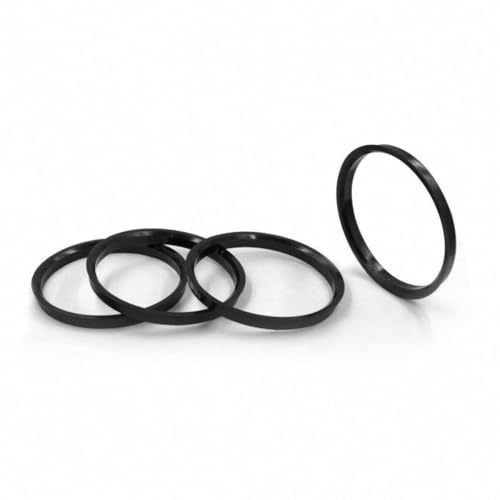
4 Pcs | Fits Hub OD : 108.00mm | Wheel ID : 106.10mm | Material : Poly Carbonate | Color : Black | Fits : Toyota Tacoma Tundra Land Cruiser FJ Cruiser Sequoia Lexus GX460 GX470 GX550 LX450 Vehicles
4 Pcs | Fits Hub OD : 110.10mm | Wheel ID : 106.10mm | Material : Poly Carbonate | Color : Black | Fits : Toyota Tacoma Tundra Land Cruiser FJ Cruiser Sequoia Lexus GX460 GX470 GX550 LX450 Vehicles

Use the Correct Torque Source
Use the wheel-nut torque specified for the exact vehicle and approved wheel setup. Toyota provides model-year-specific information through its 2024 Tacoma manual page, 2023 Tacoma manual page, and other year-specific owner resources. When aftermarket-wheel instructions impose an additional requirement or lower limit, resolve the difference with the wheel manufacturer or installer before driving.
- Start every lug nut by hand to prevent cross-threading.
- Use the lug-seat type required by the wheel manufacturer.
- Tighten in stages with a star pattern.
- Finish with a calibrated torque wrench.
- Do not use an impact wrench as the final torque-control tool.
- Do not apply oil, grease, or anti-seize to threads or seats unless the applicable instructions specifically require it.
- Follow the wheel manufacturer or installer’s torque-recheck interval after installation.
Warning: Stop driving if a lug nut will not thread smoothly by hand, the wheel does not sit flush, the hardware bottoms out before clamping the wheel, or the lug nuts repeatedly lose torque.
What Should You Check Before Buying Tacoma Wheels or Hub Rings?
Confirm every item below in writing before ordering an aftermarket wheel or ring:
- Exact vehicle: Model year, drivetrain, trim, cab, bed, and any hub or brake modifications
- Bolt pattern: Do not assume every first-generation Tacoma shares the later six-lug pattern
- Vehicle hub-pilot outside diameter: Measure it on a clean, undamaged surface
- Wheel center-bore inside diameter: Obtain the manufacturer’s specification and verify the actual wheel
- Ring dimensions: Exact outside diameter, inside diameter, depth, lip style, and approved material
- Wheel width and diameter: Confirm tire compatibility and brake clearance
- Offset and backspacing: Check suspension, steering, body, and bearing-load implications
- Wheel load rating: It must meet the truck’s application requirements
- Lug seat: Conical, radius, flat, washer, shank, or another wheel-specific design
- Thread size and engagement: Confirm the actual studs and required engagement
- Tool clearance: Verify the socket or spline key fits inside the wheel’s lug openings
- Mounting-face geometry: Check for hub lips, rotor clips, protrusions, and steps that could prevent flush seating
- Torque and recheck procedure: Obtain the applicable vehicle and wheel instructions before installation
Frequently Asked Questions
Does Tacoma hub bore size matter?
Yes. The wheel center bore must clear the truck’s hub pilot, and a hub-centric setup needs the correct locating fit. However, center-bore compatibility alone does not confirm that a wheel is safe. The bolt pattern, offset, load rating, brake clearance, lug seat, thread engagement, and torque procedure must also be correct.
What happens if the wheel center bore is too large?
An approved wheel with a larger center bore may require a correctly sized hub-centric ring to help center it during installation. The ring must fit the wheel bore, hub pilot, and available seating depth without preventing the wheel from sitting flush.
What happens if the wheel center bore is too small?
The wheel will not pass over the vehicle’s hub pilot and should not be forced into place. Do not grind the truck hub or casually enlarge the wheel. Use a wheel manufactured for the application or obtain written approval and professional machining guidance from the wheel manufacturer.
What is the hub bore on a Toyota Tacoma?
Common fitment references list 95.1 mm for the fourth-generation Tacoma introduced for 2024 and 106.1 mm for many 2005–2023 six-lug Tacomas. First-generation configurations can differ, especially conventional two-wheel-drive five-lug trucks. Verify the exact vehicle and measure before ordering.
Does the wheel center bore have to match the hub exactly?
Not always. A hub-centric wheel may match closely, while an approved wheel with a larger bore may use a fitted ring. A purpose-designed lug-centric wheel may rely on matched lug seats. The wheel bore cannot be smaller than the hub pilot unless the wheel is professionally modified with manufacturer approval.
Can a 106.1 mm wheel fit a 95.1 mm Tacoma hub?
It may fit from a center-bore standpoint because the wheel opening is larger. On a 2024–2026 Tacoma, also verify M14 stud clearance through the wheel, the correct lug-seat design, offset, load rating, brake clearance, and mounting geometry. If the wheel manufacturer approves the application, a 106.1-to-95.1 mm centering ring may be required.
Can 2024–2026 Tacoma wheels fit a 2005–2023 six-lug Tacoma?
Not as a normal center-bore fit. A typical fourth-generation wheel has an approximately 95.1 mm center bore, which is smaller than the commonly listed 106.1 mm hub pilot on 2005–2023 six-lug Tacomas. A hub-centric ring cannot make a smaller wheel bore pass over a larger hub.
Do hub-centric rings change wheel offset?
No. A normal centering ring fills the radial space between the wheel bore and hub pilot. It does not move the wheel outward or inward and cannot correct an unsuitable offset or backspacing measurement.
Conclusion
For 2005–2023 six-lug Tacomas, 106.1 mm is the common hub-pilot reference; for 2024–2026 fourth-generation trucks, 95.1 mm is the common reference. Measure before ordering and verify before driving. The truck measurement is the hub pilot’s outside diameter, while the wheel measurement is the center bore’s inside diameter.
A larger wheel bore may use an approved, correctly sized ring, but a ring cannot correct bolt pattern, lug hardware, offset, load rating, brake clearance, or a wheel that does not sit flush. Do not force a wheel over the hub. When measurements, hardware, or manufacturer instructions conflict, have the setup checked by a qualified wheel-and-tire professional.
Sources
- Toyota USA Newsroom: 2024 Toyota Tacoma — confirms the introduction of the all-new fourth-generation Tacoma.
- Toyota 2024 Tacoma Warranty and Owner’s Manuals — model-year-specific operating, lifting, wheel-change, and maintenance information.
- Toyota 2023 Tacoma Warranty and Owner’s Manuals — previous-generation model documentation for comparison and exact procedures.
- Toyota 2004 Tacoma Warranty and Owner’s Manuals — first-generation documentation that helps owners verify their exact configuration.
- Toyota Technical Information System — official service-information resource for vehicle-specific repair and specification research.
- National Highway Traffic Safety Administration: Tires — general tire and wheel safety guidance.
