The Toyota Camry’s engine lineup has changed substantially since the car reached the U.S. market for the 1983 model year. Early models used gasoline and diesel four-cylinder engines, later generations added several V6 options, and the Camry Hybrid arrived for 2007. Beginning with the 2025 model year, every new U.S.-market Camry uses a hybrid powertrain. This guide covers U.S. specifications; engines, outputs, trims, and model-year ranges may differ in other countries.
Quick Answer
U.S.-market Camrys evolved from four-cylinder gasoline and diesel power to four-cylinder, V6, and hybrid choices. The 3.5-liter V6 was offered from 2007 through 2024. Since the 2025 model year, every new Camry has used a 2.5-liter hybrid system with front- or all-wheel drive.
Key Takeaways
- The first U.S.-market Camry generation covered model years 1983–1986 and primarily used a 2.0-liter gasoline four-cylinder.
- The first Camry V6 arrived for 1988, while the first 3.5-liter V6 arrived for 2007.
- Toyota introduced the first U.S. Camry Hybrid for the 2007 model year.
- The 2024 Camry was the final U.S. model to offer a non-hybrid engine or V6.
- The current Camry is hybrid-only, producing 225 net combined horsepower with front-wheel drive or 232 horsepower with all-wheel drive.
The Evolution of Toyota Camry Engine Options
Toyota has repeatedly adjusted the Camry’s powertrain lineup to match changing priorities. The earliest U.S. cars emphasized affordability and fuel economy. V6 engines later added smoother acceleration and substantially more power, while hybrid systems shifted the focus back toward efficiency without making the Camry unusually slow or difficult to drive.
The exact specification of any Camry depends on its model year, trim, transmission, drivetrain, and production market. The table below summarizes the principal U.S.-market choices rather than every limited-production variation.
| Generation | U.S. Model Years | Main Engine Options | Transmissions | Key Change |
|---|---|---|---|---|
| First | 1983–1986 | 2.0L gasoline four-cylinder; optional 1.8L and later 2.0L turbo-diesel four-cylinders | 5-speed manual; 4-speed automatic | Established the front-wheel-drive Camry in the U.S. |
| Second | 1987–1991 | 2.0L four-cylinder; 2.5L V6 | 5-speed manual; 4-speed automatic | First Camry V6 and select All-Trac models |
| Third | 1992–1996 | 2.2L four-cylinder; 3.0L V6 | 5-speed manual; 4-speed automatic | Larger midsize body and stronger engines |
| Fourth | 1997–2001 | 2.2L four-cylinder; 3.0L V6 | 5-speed manual; 4-speed automatic | Refined the established four-cylinder/V6 formula |
| Fifth | 2002–2006 | 2.4L four-cylinder; 3.0L and 3.3L V6 | 5-speed manual; 4- and 5-speed automatics | Larger four-cylinder and optional 3.3L performance engine |
| Sixth | 2007–2011 | 2.4L or 2.5L four-cylinder; 3.5L V6; 2.4L hybrid | Manual and conventional automatics; hybrid eCVT | First Camry Hybrid and first 3.5L V6 |
| Seventh | 2012–2017 | 2.5L four-cylinder; 3.5L V6; 2.5L hybrid | 6-speed automatic; hybrid eCVT | No U.S. manual option; stronger hybrid system |
| Eighth | 2018–2024 | 2.5L four-cylinder; 3.5L V6; 2.5L hybrid | 8-speed automatic; hybrid eCVT | Final V6 generation; modern AWD returned for 2020 |
| Ninth | 2025–present | 2.5L hybrid only: 225 hp FWD or 232 hp AWD | eCVT | Every trim is hybrid; AWD is available across the lineup |
Note: Horsepower and equipment can change within a generation. Verify the exact model year and trim rather than assuming every car in a generation has the same engine or output.
First-Generation Camry Engine Options: 1983–1986
The first front-wheel-drive Camry reached U.S. buyers for the 1983 model year. Its primary engine was a 2.0-liter gasoline four-cylinder rated at approximately 92 horsepower in early cars. Toyota also offered a 1.8-liter turbo-diesel with lower output, followed by a 2.0-liter turbo-diesel for 1986.
Gasoline and Diesel Choices
The gasoline engine was the practical mainstream choice. It emphasized smooth operation and economy rather than rapid acceleration. The diesel models appealed to drivers seeking lower fuel consumption, but they were uncommon and offered modest performance by modern standards.
The article’s original description of a 1.8-liter gasoline engine making 92 horsepower mixed different specifications. In the U.S. lineup, the 92-horsepower figure applied to the early 2.0-liter gasoline engine, while the 1.8-liter engine was a turbo-diesel.
Manual and Automatic Transmissions
Buyers could select a five-speed manual or four-speed automatic, depending on model year and engine. The manual provided greater driver involvement and could make better use of the engine’s limited output. The automatic prioritized convenience but did not offer the number of ratios found in modern Camrys.
No 2.2-liter engine was offered in this generation. That displacement arrived with the larger third-generation Camry for the 1992 model year.
Understanding Historical Fuel-Economy Ratings
Early Camrys were economical for their time, particularly with a manual transmission or diesel engine. However, an old EPA rating should not be compared directly with a current rating without context. Test procedures, adjustment methods, fuel, vehicle equipment, and available data have changed.
For the most useful comparison, search the exact engine, transmission, and model year through FuelEconomy.gov. Avoid applying one mileage figure to every first-generation Camry.
Second- to Fourth-Generation Powertrains: 1987–2001
These three generations transformed the Camry from an efficient compact-family car into a larger midsize sedan with a genuine performance option. Toyota retained a four-cylinder as the volume engine while steadily developing its V6 lineup.
Second Generation: 1987–1991
The second-generation U.S. Camry used a 2.0-liter four-cylinder as its primary engine. For 1988, Toyota added the Camry’s first V6—a 2.5-liter unit rather than the 3.0-liter engine stated in the original article.
Select second-generation sedans also offered Toyota’s All-Trac four-wheel-drive system. That historical system should not be confused with the electronically assisted AWD used by current Camry hybrids.
Third Generation: 1992–1996
The third-generation Camry grew into a full midsize car for the U.S. market. Its standard 2.2-liter four-cylinder offered more torque than the previous 2.0-liter engine, while the optional 3.0-liter V6 provided smoother and stronger acceleration.
This is the generation in which the 2.2-liter engine belongs. Placing it in the first-generation section creates a nine-year timeline error.
Fourth Generation: 1997–2001
The fourth generation continued with a 2.2-liter four-cylinder and 3.0-liter V6. Representative early outputs were approximately 133 horsepower for the four-cylinder and 194 horsepower for the V6, although ratings changed slightly by model year and emissions specification.
The four-cylinder was generally the sensible choice for commuting and operating cost. The V6 suited drivers who regularly carried passengers, merged onto fast highways, or preferred quieter acceleration with less engine strain.
The Camry’s V6 history began with a 2.5-liter engine in 1988—not with the later 3.0- or 3.5-liter engines.
Performance Upgrades From the Fifth to Seventh Generations: 2002–2017
From 2002 through 2017, Toyota enlarged the base four-cylinder, introduced the 3.5-liter V6, launched the Camry Hybrid, and gradually eliminated manual-transmission availability in the U.S.
[Amazon Products Picked for You]
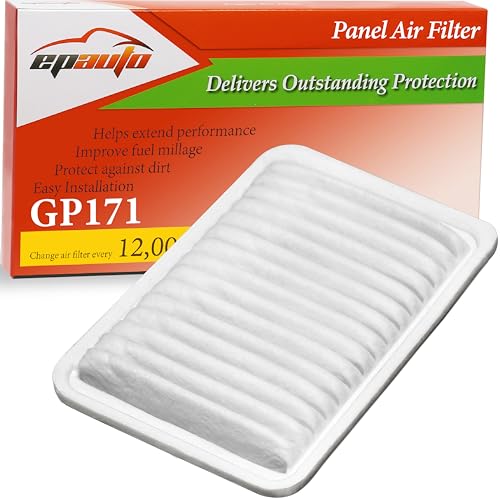
OEM Replacement Fit – Replaces CA10171; Precision-engineered for Toyota Camry and Venza with 4-cylinder Gas engines

[99% Air Purification] KURIMUP engine air filter is made of high-density, high-capture ability, and high-breathable fabric material. It reliably filters out 99% of impurities in air and provides larger volume clean airflow for engine, then increases efficiency of fuel combustion, mileage per gallon and optimizes engine power.

【Fitment for Toyota Models / Not fit for RAV4 XLE models】fit for 2018-2026 Camry Hybrid, 2019-2022 Avalon Hybrid, 2019-2026 Corolla (not fit for Hybrid), 2022-2026 Corolla cross, 2019-2026 RAV4 Hybrid, 2021-2024 RAV4 Prime, 2020-2026 Highlander Hybrid, 2024-2026 Grand Highlander Hybrid XLE/Limited 2.5L (not for 2.4 Hybrid), 2021-2026 Sienna, 2021-2024 Venza, 2018-2022 C-HR, 2023-2026 Crown, 2025-2026 Crown Signia Hybrid
Fifth Generation: 2002–2006
The fifth-generation Camry replaced the previous 2.2-liter base engine with a 2.4-liter four-cylinder. V6 choices included 3.0- and 3.3-liter engines, depending on trim and model year.
This generation did not use the 3.5-liter V6. Listings that describe a 2002–2006 Camry as having a factory 3.5-liter engine are incorrect unless the vehicle has undergone a nonstandard engine swap.
Sixth Generation: 2007–2011
The 2007 redesign introduced two important Camry milestones:
- The first 3.5-liter V6: The new V6 produced approximately 268 horsepower and was paired with a six-speed automatic.
- The first Camry Hybrid: A gasoline engine, electric motor, battery, and power-control system worked together through an eCVT.
Early sixth-generation four-cylinder models used a 2.4-liter engine. A 2.5-liter four-cylinder replaced it during the generation, offering updated performance and efficiency. Transmission availability differed by year, with manual and conventional automatic choices on some non-hybrid four-cylinder models.
Seventh Generation: 2012–2017
The seventh-generation lineup became simpler: a 2.5-liter four-cylinder, a 3.5-liter V6, or a 2.5-liter hybrid. The standard four-cylinder produced about 178 horsepower, while the V6 retained approximately 268 horsepower. The hybrid delivered about 200 net combined horsepower.
Non-hybrid models used a six-speed automatic. Hybrid models used an eCVT, which varies the relationship between gasoline and electric power without operating like a traditional belt-driven continuously variable transmission.
Pro Tip: To identify a specific used Camry’s engine, decode its 17-character VIN, check the under-hood emissions label, and compare the information with the model-year owner’s manual. Do not rely only on exterior badges, which may have been removed or replaced.
Eighth-Generation Camry Engines: 2018–2024
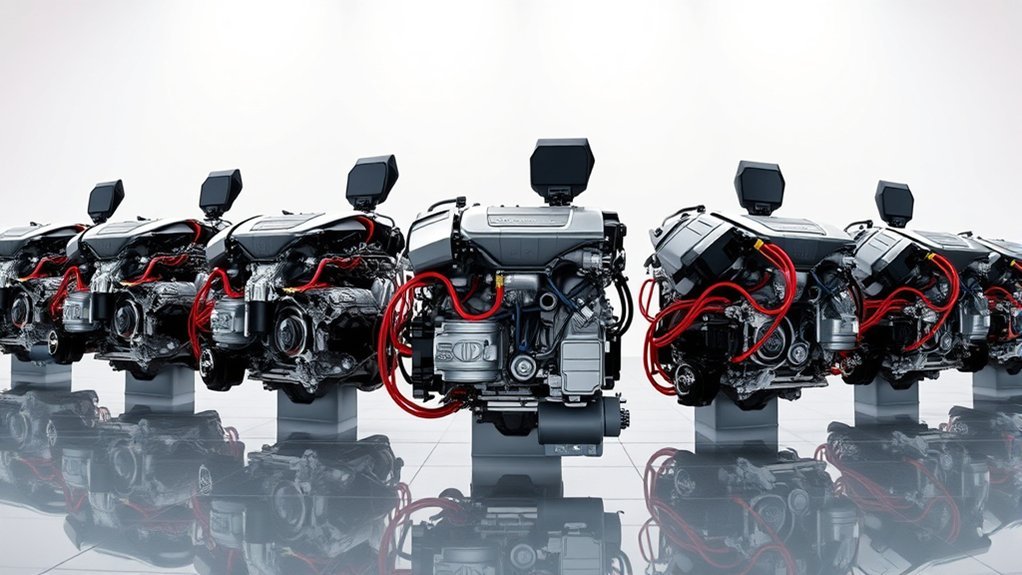
The eighth generation offered the broadest late-model Camry engine selection. Buyers could choose a conventional 2.5-liter four-cylinder, a 3.5-liter V6, or a 2.5-liter hybrid.
2.5-Liter Four-Cylinder
For the final 2024 model year, the standard 2.5-liter engine produced 203 horsepower in most front-wheel-drive versions. The XSE’s configuration produced 206 horsepower. These engines used an eight-speed automatic transmission.
All-wheel drive returned to the modern U.S. Camry during this generation for the 2020 model year. It was paired with the non-hybrid 2.5-liter four-cylinder rather than the V6 or hybrid system.
3.5-Liter V6
The eighth-generation 3.5-liter V6 produced 301 horsepower and used an eight-speed automatic. It was available in performance-oriented and premium trims, including the XSE V6 and TRD during applicable model years.
The 2024 Camry was the final U.S.-market Camry to offer this engine. Therefore, the accurate factory-production range for a U.S. Camry with the 3.5-liter V6 is 2007 through 2024.
2.5-Liter Hybrid
The eighth-generation hybrid produced 208 net combined horsepower and used an eCVT. Toyota listed a manufacturer-estimated 52 mpg combined for the efficiency-focused 2024 LE Hybrid, while trims with larger wheels and different equipment had lower ratings.
Official late-eighth-generation specifications are available in Toyota’s 2024 Camry model information.
Ninth-Generation Camry: 2025–Present
The ninth-generation Camry launched for the 2025 model year with an exclusively hybrid U.S. lineup. There is no current gas-only four-cylinder or V6 option.
Current Hybrid Output
The current system combines a 2.5-liter four-cylinder gasoline engine with Toyota’s fifth-generation hybrid technology:
- Front-wheel drive: 225 net combined horsepower.
- Electronic on-demand all-wheel drive: 232 net combined horsepower.
- Transmission: Electronically controlled continuously variable transmission, or eCVT.
The AWD version adds an electric motor to power the rear axle when extra traction or acceleration is needed. It does not use a conventional driveshaft connecting the gasoline engine to the rear wheels.
Fuel-Economy Expectations
Toyota lists up to a manufacturer-estimated 51 mpg combined for the LE front-wheel-drive configuration. Other trims may return lower ratings because of wheel size, tires, weight, AWD equipment, and aerodynamic differences.
The 2026 Camry retains the same 225-horsepower FWD and 232-horsepower AWD structure while adding the Nightshade grade. See Toyota’s official 2026 Camry overview for the current lineup.
Note: “Up to 51 mpg” does not mean every current Camry receives that rating. Confirm the exact EPA label for the trim and drivetrain you plan to buy.
Which Toyota Camry Engine Option Suits You Best?
The best Camry powertrain depends on whether you are shopping for a new hybrid or comparing used models from earlier generations.
| Priority | Best Starting Point | Why |
|---|---|---|
| Buying new | 2025 or newer hybrid | Current technology, strong economy, and available AWD |
| Maximum used-car fuel economy | Later Camry Hybrid | Efficient city operation and reduced gasoline-engine use in traffic |
| Strongest factory acceleration | 2018–2024 3.5L V6 | 301 horsepower and immediate non-hybrid power delivery |
| Simple, affordable used commuter | Well-maintained four-cylinder | Common parts, broad availability, and generally lower fuel use than a comparable V6 |
| Winter traction | 2020–2024 four-cylinder AWD or 2025+ hybrid AWD | Additional driven wheels when conditions require them |
[Amazon Products Picked for You]

Fitment: Compatible with Toyota Camry Hybrid 2012-2016 and Toyota Avalon Hybrid 2012-2017
Made of brand-new high-quality filter material with sturdy structure, effectively blocks dust and impurities for smooth and stable air intake.

✅Batter dimensions: 10.75" L x 6.81" W x 8.98" H, Terminal: Tapered terminal (Left negative (-), Right positive (+)). ✅Please ensure to verify the dimensions and terminal position before making a purchase to guarantee compatibility with your vehicle to avoid any fitment issues.
Four-Cylinder Gasoline Models
A conventional four-cylinder is usually the easiest used Camry configuration to find. It generally consumes less fuel than the same-generation V6 and may have lower routine service costs. Condition and maintenance history matter more than displacement alone, especially on an older car.
V6 Models
A V6 is the better choice for drivers who value smooth, effortless acceleration and do not mind greater fuel consumption. The 2018–2024 301-horsepower engine is the most powerful regular-production Camry engine covered here, excluding specialty race or concept vehicles.
Hybrid Models
A hybrid works especially well for urban and suburban driving because it can recover energy during deceleration and use electric assistance at low speeds. Highway savings may be less dramatic than city savings, but later Camry Hybrids remain efficient in both environments.
AWD Models
AWD can improve acceleration on snow or other slippery surfaces, but it does not shorten braking distance or replace proper winter tires. It also adds weight and mechanical or electrical components. Drivers in mild climates may prefer the lower price and slightly better efficiency of front-wheel drive.
Fuel Economy, Reliability, and Maintenance
Engine type is only one part of long-term ownership. Tires, wheel alignment, driving speed, weather, trip length, maintenance, and accessory use can all change real-world fuel consumption.
[Amazon Products Picked for You]
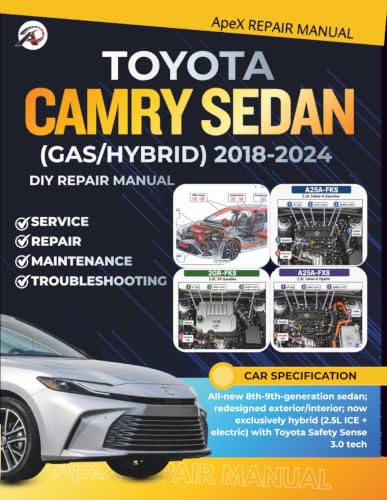

Complete Repair Coverage: Step-by-step repair procedures specific to your vehicle — from routine maintenance like oil changes and air filter replacement to complex engine and transmission repairs

Step-by-step procedures written from a complete teardown and rebuild, giving you the confidence to tackle repairs at any skill level.
Compare the Exact Configuration
Use FuelEconomy.gov to compare the precise model year, engine, drivetrain, and trim where available. Do not compare a base hybrid’s rating with an AWD or large-wheel trim and assume the powertrain alone caused the difference.
Conventional Automatic Versus Hybrid eCVT
A conventional automatic shifts through fixed gear ratios. Toyota’s hybrid eCVT coordinates the gasoline engine and electric motor-generators through a power-split system. It may hold the engine at a steady speed during acceleration, which can sound different from a stepped automatic but is normal operation.
Used-Car Inspection
A maintenance history is more informative than a broad online claim that an entire model year is good or bad. Before buying, inspect for fluid leaks, overheating evidence, warning lights, rough shifting, abnormal engine noise, collision repairs, and neglected maintenance.
Warning: Recall status is vehicle-specific. Enter the exact 17-character VIN in the official NHTSA recall lookup, review service records, and arrange an independent pre-purchase inspection before buying a used Camry.
For fluid specifications, maintenance intervals, warning-light explanations, and model-specific procedures, retrieve the correct publication through Toyota’s owner-manual and warranty library.
Related Guides
Frequently Asked Questions
Are there any Toyota Camry years to avoid?
There is no single model-year blacklist that accurately describes every Camry. Reliability depends on engine, trim, production date, mileage, maintenance, climate, prior repairs, and the individual vehicle. Check the VIN for open recalls, review service records, scan all control modules, road-test the car, and obtain an independent inspection.
Which Toyota Camry has a 3.5-liter engine?
U.S.-market Camrys offered the factory 3.5-liter V6 from the 2007 through 2024 model years. It appeared in selected trims rather than every Camry. The 2024 model was the final Camry with this V6.
Which Toyota Camrys have a V6 engine?
V6 engines were available in selected U.S. Camrys from 1988 through 2024. The progression included a 2.5-liter V6 in the second generation, 3.0-liter engines in the third and fourth generations, 3.0- and 3.3-liter engines in the fifth generation, and a 3.5-liter V6 from the sixth through eighth generations.
What year did the Toyota Camry become hybrid-only?
The U.S.-market Camry became hybrid-only for the 2025 model year. Current models use a 2.5-liter hybrid system producing 225 net combined horsepower with front-wheel drive or 232 horsepower with all-wheel drive.
Is the Camry SE better than the LE?
Neither trim is automatically better. The SE generally emphasizes sportier exterior details, wheels, seats, steering feel, and suspension tuning. The LE usually emphasizes comfort, value, a softer ride, and maximum efficiency. The better choice depends on the model year and your priorities.
Does the current Toyota Camry have a CVT?
The current hybrid Camry uses an eCVT. It is an electronically controlled hybrid power-split transmission rather than the conventional belt-driven CVT design found in some non-hybrid vehicles.
When did the Toyota Camry first offer AWD?
Select second-generation Camrys offered All-Trac four-wheel drive beginning with the 1988 model year. After a long absence, AWD returned to the modern U.S. Camry for 2020 with the 2.5-liter gasoline engine. The 2025-and-newer lineup offers electronic on-demand AWD with the hybrid system.
Conclusion
The Toyota Camry’s engine history reflects a steady shift from simple four-cylinder transportation to broader four-cylinder, V6, AWD, and hybrid choices. Used-car shoppers can still choose among decades of gasoline, V6, and hybrid models, but the exact year, trim, maintenance history, and condition are more important than a generation-wide reputation.
For a new Camry, the decision is now simpler: every current model uses a 2.5-liter hybrid system, with front-wheel drive for maximum efficiency or AWD for additional traction. For a used Camry, verify the installed engine, compare the correct EPA configuration, check the VIN for recalls, and inspect the individual vehicle before deciding.
Sources
- Toyota: 2026 Camry Model Overview — current hybrid output, AWD availability, trim updates, and maximum manufacturer-estimated fuel economy.
- Toyota: 2025 Camry Goes Exclusively Hybrid — transition to the all-hybrid ninth generation and 225/232-horsepower specifications.
- Toyota: 2024 Camry Specifications — final eighth-generation four-cylinder, V6, hybrid, transmission, and AWD information.
- U.S. Department of Energy and EPA: FuelEconomy.gov — model-specific official fuel-economy comparisons.
- National Highway Traffic Safety Administration Recall Lookup — VIN-specific safety recall information.
- Toyota Owner’s Manuals and Warranty Information — model-year maintenance, operating, fluid, and warranty guidance.
