
Toyota has used two different all-wheel-drive designs in recent Camrys, so the model year matters. The 2020–2024 gasoline Camry used a mechanical AWD system, while the 2025 and 2026 U.S. Camry is hybrid-only and uses an electric rear motor. Here is how the current system works, where it helps, and what it cannot do.
Quick Answer
The 2026 Toyota Camry uses Electronic On-Demand All-Wheel Drive. A rear electric motor-generator automatically adds power to the rear wheels when conditions call for more traction or stability. The system can improve starts and control on wet or snowy roads, but it does not replace winter tires, safe speeds, or longer braking distances.
Key Takeaways
- The 2025–2026 Camry AWD system is electric and hybrid-based, not the mechanical system used in 2020–2024 models.
- A rear-axle motor supplies rear-wheel power automatically when the control system determines it is useful.
- Toyota rates the 2026 Camry at 225 net combined horsepower with FWD and 232 horsepower with AWD.
- AWD mainly helps acceleration and directional stability; it does not create extra braking grip.
- AWD is available on every 2026 Camry grade, but it raises the purchase price and may reduce fuel economy compared with the most efficient FWD configuration.
What Is the 2026 Toyota Camry All-Wheel-Drive System?
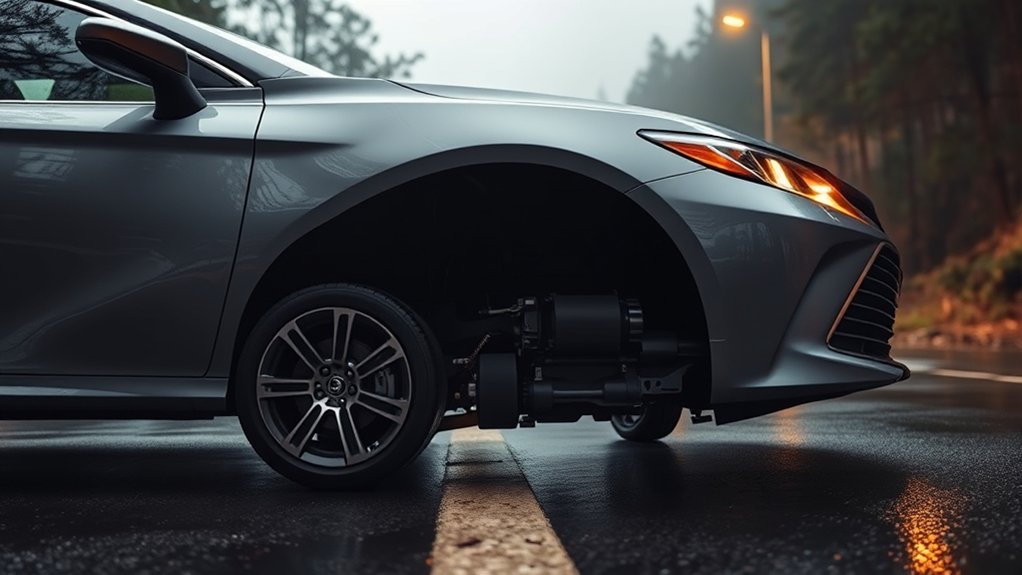
The current Camry uses Electronic On-Demand All-Wheel Drive as part of Toyota’s fifth-generation hybrid system. A 2.5-liter four-cylinder gasoline engine and front electric motor power the front wheels, while a separate electric motor-generator at the rear axle can drive the rear wheels when needed.
According to Toyota’s 2026 Camry technical announcement, the system varies front-to-rear torque according to driving conditions. It can add rear-wheel assistance during initial acceleration, cornering, or a loss of tire grip.
Toyota rates the 2026 Camry at 225 net combined horsepower with front-wheel drive and 232 net combined horsepower with all-wheel drive.
Note: Specifications such as a mechanical coupling, a fixed “up to 50%” rear-torque figure, 202 or 205 horsepower, and a 165-pound weight increase describe the previous-generation gasoline Camry AWD system. They should not be applied to a 2025 or 2026 Camry.
How the Electronic On-Demand AWD System Works
The driver does not have to switch the AWD system on. The vehicle monitors inputs such as accelerator demand, wheel grip, and vehicle movement, then adjusts rear-motor assistance automatically.
- Normal cruising: The hybrid system prioritizes efficient operation, and the front wheels do most or all of the propulsion when rear assistance is unnecessary.
- Starting or accelerating: The rear motor can contribute power to help the car move away with less front-wheel slip.
- Slippery conditions: If the system detects reduced tire grip, it controls rear-wheel torque to support traction and help the car follow the driver’s intended path.
- Cornering and changing conditions: Torque distribution can change as conditions change instead of remaining at a fixed front-to-rear split.
The control system is always monitoring the car, but the rear axle is not necessarily providing propulsion every moment. This is why Toyota calls it “on-demand” AWD.
Do not apply the old Camry’s “up to 50% of engine torque” description to the current hybrid system. Toyota describes the 2026 setup as precise, on-demand front-to-rear torque distribution rather than publishing one fixed split for every situation.
Performance and Fuel-Economy Effects
The rear motor gives the AWD Camry a modest power increase while preserving the basic efficiency advantages of a hybrid sedan. The exact fuel-economy rating depends on trim, wheels, and drivetrain.
| Feature | Front-Wheel Drive | All-Wheel Drive |
|---|---|---|
| Net combined horsepower | 225 hp | 232 hp |
| Rear-wheel propulsion | None | Rear electric motor-generator, used on demand |
| 2026 grade availability | LE, SE, Nightshade, XLE, and XSE | LE, SE, Nightshade, XLE, and XSE |
| Efficiency headline | The LE FWD is the configuration Toyota cites at up to 51 mpg combined | Rating varies by trim; verify the exact configuration |
Toyota’s “up to 51 combined mpg” headline applies to the LE front-wheel-drive grade, not every Camry. Compare the official specification sheet or window label for the exact AWD trim you are considering. Larger wheels and higher trims can also affect the rating.
What Driving Conditions Does Camry AWD Handle?
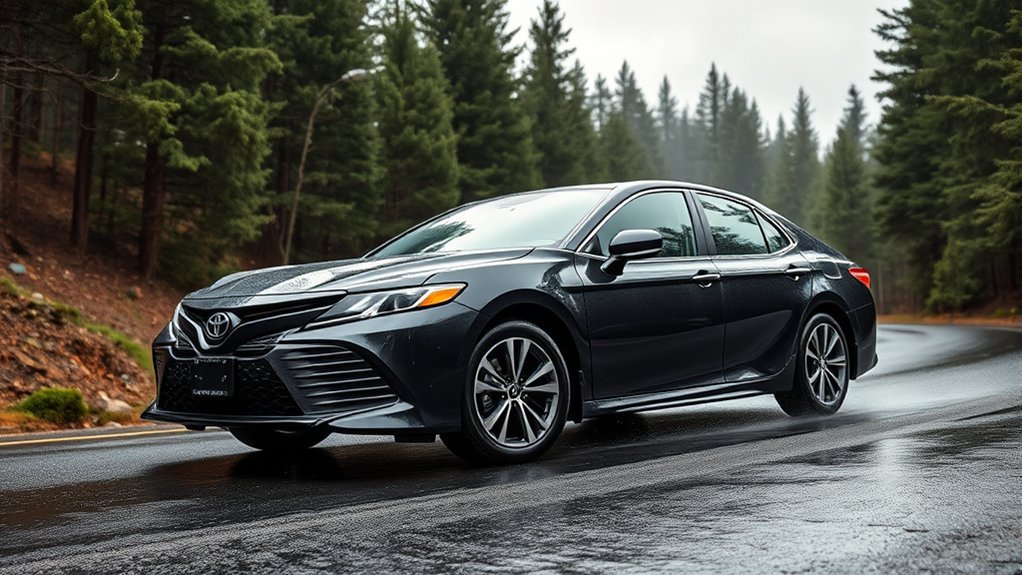
The Camry’s AWD system is designed for everyday paved-road conditions. It can be useful in rain, light or moderate snow, slippery intersections, steep driveways, and other situations where the front tires may struggle to put power down.
| Condition | How AWD Can Help | Important Limit |
|---|---|---|
| Rain or wet pavement | Can reduce front-wheel spin when accelerating | Cannot prevent hydroplaning caused by speed, standing water, or worn tires |
| Light or moderate snow | Can improve starts, hill climbing, and low-speed traction | Winter tires may provide a larger safety benefit for braking and cornering |
| Ice | Can use available grip at more than one axle | No drivetrain can create traction where the tires have almost none |
| Dry roads | May support smooth launches and handling when the system calls for it | Many drivers will not need AWD in consistently mild, dry conditions |
| Deep snow or rough trails | May provide some additional propulsion | The Camry is a road-focused sedan; ground clearance and tire choice remain limiting factors |
Warning: AWD helps the car accelerate, but it does not shorten stopping distance by itself. The National Highway Traffic Safety Administration advises drivers to slow down, increase following distance, maintain correct tire pressure, inspect tread, and consider snow tires for winter travel.
Pro Tip: For frequent snow and freezing temperatures, consider four matching winter tires. Use the tire size and cold inflation pressure listed in the owner’s manual or on the driver-side door placard.
2020–2024 Camry AWD vs. 2025–2026 Camry AWD
This model-year distinction explains most of the inaccurate or conflicting information found online. The system changed when the U.S. Camry became an all-hybrid lineup for 2025.
| Model Years | Powertrain | AWD Design |
|---|---|---|
| 2020–2024 U.S. Camry AWD | Gasoline four-cylinder with a conventional automatic transmission | Previous-generation mechanical AWD system |
| 2025–2026 U.S. Camry AWD | Fifth-generation Toyota Hybrid System with a 2.5-liter four-cylinder engine and eCVT | Electronic On-Demand AWD with a rear electric motor-generator |
Before using an AWD specification, maintenance instruction, or troubleshooting tip, confirm the model year in the owner’s manual. Advice for a 2022 Camry AWD may not describe a 2026 Camry AWD correctly.
How AWD Affects 2026 Camry Pricing
AWD is optional across the 2026 LE, SE, Nightshade, XLE, and XSE grades. Toyota’s current U.S. Camry page lists front-wheel-drive base MSRPs beginning at $29,600 for the LE, with higher base prices for the SE, Nightshade, XLE, and XSE. Selecting AWD increases the configured price.
Because pricing, destination charges, accessories, and regional availability can change, use the official 2026 Toyota Camry page and configurator for the exact AWD price in your area rather than relying on an older article’s $26,370 or $31,405 figures.
What You Pay For
The AWD premium buys the rear motor-generator, associated controls, and the ability to send power to the rear wheels automatically. It also raises net combined output from 225 to 232 horsepower.
What to Compare Before Buying
- The final AWD price for your chosen trim and option packages
- The exact EPA fuel-economy rating for that configuration
- Your local snowfall, hills, road-clearing standards, and winter-tire needs
- Insurance, tire, and long-term ownership costs
- Whether you regularly encounter conditions where front-wheel traction is a problem
Camry AWD vs. Front-Wheel Drive: Which Should You Choose?
Neither drivetrain is automatically best for every buyer. Your climate, roads, budget, and tire plan matter more than the badge alone.
| Choose AWD If… | Choose FWD If… |
|---|---|
| You regularly drive in snow, freezing rain, steep terrain, or on poorly cleared roads. | Your roads are usually dry or promptly cleared and you prioritize lower purchase cost. |
| You value extra launch traction and the added rear-motor assistance. | You want the Camry configuration with the highest advertised fuel economy. |
| The added price fits your budget after accounting for proper tires. | You would rather spend the difference on winter tires, safety features, or another trim upgrade. |
For many snow-belt drivers, AWD plus suitable winter tires offers the most confidence. In milder regions, FWD with good tires may be the better-value choice.
Related Guides
Frequently Asked Questions
How does the 2026 Toyota Camry AWD system work?
It uses an electric motor-generator at the rear axle. The vehicle automatically varies front-to-rear propulsion according to acceleration demand, handling needs, and available tire grip. No manual AWD switch is required.
Is the Toyota Camry AWD always on?
The control system monitors conditions continuously, but the rear motor does not need to propel the car at all times. Rear-wheel assistance is added automatically when the system determines that it will help traction, acceleration, handling, or stability.
Does the 2026 Camry send up to 50% of engine torque to the rear wheels?
That figure belongs to the previous mechanical AWD system and should not be used as a current-generation specification. Toyota describes the 2026 hybrid system as providing precise on-demand front-to-rear torque distribution through a rear electric motor-generator.
Does Camry AWD help the car stop faster in snow?
Not by itself. AWD can improve acceleration traction, but braking depends mainly on tire grip, road conditions, speed, and the braking system. Slow down, leave extra following distance, and use suitable tires.
Does AWD reduce Toyota Camry fuel economy?
It can. The exact rating varies by trim, wheels, and drivetrain. Toyota’s headline figure of up to 51 mpg combined applies to the 2026 LE FWD, so compare the official rating for the exact AWD model you plan to buy.
Is Toyota Camry AWD worth it?
It is most valuable for drivers who regularly face snow, ice, steep grades, or wet roads where front-wheel slip is common. FWD may be the better value in mild climates, especially when lower price and maximum fuel economy are the priorities.
Conclusion
The 2026 Toyota Camry AWD system is a useful traction aid, but it is not the mechanical system described in many older Camry articles. Its rear electric motor automatically supports the front-driven hybrid powertrain when conditions call for it, raising output to 232 net combined horsepower and improving everyday traction. Choose it for the conditions you actually drive in, and remember that tires, speed, and following distance still determine much of your winter safety.
Sources
- Toyota USA Newsroom: 2026 Camry announcement — hybrid powertrain, horsepower, AWD design, availability, and torque-control description.
- Toyota: 2026 Camry overview — current starting MSRP, drivetrain availability, trim pricing, horsepower, and fuel-economy headline.
- Toyota: 2026 Camry specifications — manufacturer specifications and current model details.
- NHTSA: Winter Weather Driving Tips — safe speeds, following distance, tire pressure, tread inspection, and snow-tire guidance.
- NHTSA TireWise — tire selection, winter-tire guidance, traction ratings, pressure, and tread safety.
