Toyota Camry Automatic High Beams (AHB) can reduce how often you need to switch manually between high and low beams on dark roads. The exact activation sequence is not the same on every Camry. On a 2025 U.S. Camry, Toyota instructs the driver to press the AHB switch, place the headlight switch in AUTO or the headlight-on position, and keep the headlight stalk in its low-beam position. Older Camrys can use a different stalk sequence, so use the model-year instructions below rather than assuming one procedure fits every generation.
Last updated: September 19, 2026
Quick Answer
On a 2025 U.S. Toyota Camry, press the Automatic High Beams switch, turn the headlight switch to AUTO or the normal headlight-on position, and leave the headlight stalk in the low-beam position. The AHB indicator shows that automatic control is active. Toyota’s 2025 Camry guide says the high beams can illuminate automatically at about 21 mph when the road is dark and other operating conditions are met, and they return to low beams below about 17 mph or when surrounding lights make high beams inappropriate. Older Camrys can use a different lever sequence, so confirm your exact model-year manual.
Key Takeaways
- There is no universal Camry AHB stalk position: the 2025 U.S. Camry uses the low-beam position while some older Camrys use a different activation sequence.
- Toyota’s 2025 Camry Quick Reference Guide lists automatic high-beam illumination at approximately 21 mph and return to low beams below approximately 17 mph when the other conditions are met.
- The AHB status icon means automatic control is active or ready; a separate high-beam indicator shows when the high beams are actually illuminated.
- Rain, fog, snow, hills, curves, bright signs, weak vehicle lights, and a blocked windshield camera can affect detection.
- AHB is driver assistance, not a substitute for watching traffic, selecting the correct beam, or following local laws.
At a Glance
| Time Required | About 1–2 minutes |
| Difficulty | Easy |
| Tools Needed | No tools; the correct Camry owner’s manual is helpful |
| Cost | $0 when the vehicle is equipped with AHB |
How to Activate Toyota Camry Automatic High Beams
Before starting, confirm that your Camry is equipped with Automatic High Beams. Look for an AHB button or a headlamp symbol containing the letter “A.” You can also check the safety-feature section of the correct Toyota owner’s manual. Do not combine instructions from different Camry generations because Toyota has changed the required stalk position.
2025 U.S. Toyota Camry AHB Activation
- Start the vehicle and learn the controls while safely parked.
- Press the Automatic High Beams switch. The switch uses a headlamp symbol with the letter “A.”
- Turn the headlight switch to AUTO or the normal headlight-on position.
- Leave the headlight stalk in the low-beam position. Toyota’s 2025 Camry guide states that the AHB system becomes active with the stalk in this position.
- Check the instrument cluster. The AHB indicator should illuminate when the headlights are on and automatic high-beam control is active.
- Drive only in suitable nighttime conditions. The system decides when to illuminate the high beams after considering darkness, speed, surrounding lights, and detected traffic.
2025 operating thresholds: Toyota’s U.S. Camry Quick Reference Guide says the high beams can turn on automatically at approximately 21 mph (34 km/h) or more when the area ahead is dark, few streetlights are present, and no relevant oncoming or preceding vehicle lights are detected. They return to low beams if speed falls below approximately 17 mph (27 km/h), the road is no longer dark, traffic lights are detected, or there are many streetlights.
Why Camry AHB Instructions Differ by Model Year
| Documented Example | AHB Activation | Stalk Position |
| 2025 U.S. Camry | Press the AHB switch and turn the headlight switch to AUTO or the normal headlight-on position. | Low-beam position while AHB is active. Pushing the lever away selects manual high beams. |
| 2018 U.S. Camry example | Toyota’s earlier Camry procedure used AUTO headlights, a forward stalk position, and the AHB switch. | Forward/high-beam position was part of the activation procedure. |
Verification note: The current-generation procedure above was checked against Toyota’s 2025 U.S. Camry Quick Reference Guide. Older Camry controls differ by year, trim, country, and safety-system version. If your switch or lever behavior does not match these examples, use the manual selected for your VIN or exact model year rather than forcing a control.
Pro Tip: Test AHB on a familiar, unlit road with little traffic. Watch the dashboard indicators while keeping your attention on the road so you can learn when your Camry is in automatic standby, when the high beams are actually illuminated, and when the system returns to low beams.
How Toyota Automatic High Beams Work
The system uses a forward-facing camera near the upper portion of the windshield to evaluate surrounding light and look for the headlights of oncoming vehicles and the taillights of vehicles traveling ahead. When the required conditions are met, AHB changes between high and low beams without requiring the driver to make every beam change manually.
Toyota’s current Safety Hub describes Automatic High Beams as operating at speeds above approximately 21 mph. Toyota’s 2025 U.S. Camry Quick Reference Guide is more specific: high beams can illuminate automatically at about 21 mph or more and switch back to low beams below about 17 mph. Some Toyota model-summary pages use a broader “above 25 mph” description, so the vehicle-specific owner’s manual or quick guide should take priority over a generic threshold.
AHB will generally select high beams only when all of the following are true:
- The headlights are on and the AHB feature is enabled.
- The road ahead is dark enough to benefit from high beams.
- The vehicle is traveling above the applicable operating threshold.
- No oncoming headlights or preceding taillights are detected within the system’s switching criteria.
- The forward camera has a sufficiently clear view through the windshield.
The system normally returns to low beams when it detects another vehicle, brighter road lighting, or another condition that makes high beams unsuitable. It can also leave the low beams on when you expect high beams because AHB is designed to avoid unnecessary glare rather than illuminate the high beams at every dark location.
Understanding the AHB and High-Beam Indicators
| Indicator | What It Usually Means |
| AHB or headlamp-with-“A” symbol | Automatic high-beam control is enabled or active. A lit AHB icon does not necessarily mean that the high beams are currently illuminated. The precise color and status meaning vary by instrument cluster. |
| Separate high-beam symbol | The high beams are currently illuminated. |
| Warning message or warning indicator | The camera view may be obstructed, conditions may be unsuitable, or the system may require inspection. |
How to Turn Off or Override Automatic High Beams
The driver can override AHB at any time, but the stalk behavior differs by Camry generation. On the 2025 U.S. Camry, use the following documented controls:
- Turn AHB off: Press the Automatic High Beams switch. The AHB indicator turns off and automatic beam control stops.
- Select manual high beams: Push the headlight lever away from you. Toyota’s 2025 guide identifies this as the manual high-beam position rather than the normal AHB-active position.
- Return from manual high beams: Move the stalk back to its normal low-beam position, then reactivate AHB with the AHB switch if necessary.
- Temporarily request low beams while AHB is active: Toyota’s 2025 guide describes pulling the lever rearward and returning it. The high beams illuminate while the lever is being held; after release, the low beams remain on for a period before AHB resumes.
- Older Camrys: Do not assume the 2025 stalk logic applies. Some older models use a forward stalk position as part of AHB activation, so follow the manual for that model year.
The driver—not the camera—has final responsibility for choosing the correct beam. Override AHB whenever its response does not match traffic, weather, road conditions, or local requirements.
Warning: Do not wait for AHB to react if the high beams could distract another road user. Select low beams manually when approaching traffic, following another vehicle, entering a well-lit area, or whenever detection appears delayed.
[Amazon Products Picked for You]

[Vehicle Fitment-1]: Compatible with Chevrolet Impala 1961-1976, Malibu 1964-1967/1973-1977, Suburban 1961-1966, Blazer 1969-1974, Corvette 1963-1976, Camaro 1967-1981, Caprice 1966-1977, Vega 1971-1977, Nova 1969-1979; Compatible with GMC C15 1500 C25 2500/K15 1500 K25 2500 Suburban/Pickup 1967-1974, Jimmy 1971-1983, Sprint 1971-1977, Caballero 1978; Compatible with Jeep Cherokee 1975-1987, Wagoneer 1971-1984, Grand Wagoneer 1984-1985, Universal 1962, Dispatcher 1962-1967, Scrambler 1981-1985

Rated: 12V DC 20 A, 24V DC 10A; Position: ON-OFF-ON; Number of Pins: 7 DPDT

Dual Push Button Switch: Dual on/off button 2-in-1 design, suitable for High Beam & Low Beam at the same time.The ON-OFF rocker switch with SPST design (single pole single Throw) is manufactured to fit in the OEM switch blank for your cars. It come with a small pigtail that plugs into the back of the switch for better installation
When to Use Automatic High Beams
AHB is most useful on dark, open roads where traffic is light and the forward camera has a clear view. It is less useful in dense traffic, brightly illuminated areas, or weather that reduces camera visibility.
| Good Conditions for AHB | Use Extra Caution or Manual Control |
|
|
High beams can reflect from fog, rain, or snow and make the road harder to see. In those conditions, low beams are usually the safer choice even when no vehicle is directly ahead.
Benefits of Using Automatic High Beams
AHB can make it easier to use high beams when they are appropriate and return to low beams when another vehicle is detected. This reduces the number of headlight adjustments a driver must remember as traffic and lighting change.
The Insurance Institute for Highway Safety explains that high-beam assist uses a camera to switch between high and low beams while preserving manual driver control. In an IIHS and University of Michigan observational study of about 3,200 isolated vehicles, only 18% were using their high beams. That finding suggests automatic assistance can address the common underuse of high beams when conditions otherwise permit them.
Practical benefits can include:
- Better use of available high-beam illumination on dark roads
- Less frequent manual switching during changing traffic conditions
- Reduced likelihood of accidentally leaving high beams on after another vehicle appears
- More attention available for steering, speed, hazards, and lane position
These are convenience and visibility benefits, not guarantees. AHB does not identify every road user, does not replace careful observation, and may not react exactly when the driver expects.
Automatic High Beams vs. Automatic Headlights
These two functions are related but not identical:
- Automatic headlights turn the exterior lights on or off according to ambient light conditions.
- Automatic High Beams change between high and low beams after the headlights are operating and AHB has been enabled.
- Adaptive driving beams are a different, more advanced technology that can alter portions of the light pattern instead of switching the entire headlamp between two fixed beam settings.
A Camry can therefore have its headlights in AUTO while AHB remains disabled. Conversely, enabling AHB does not mean the high beams will remain illuminated continuously.
[Amazon Products Picked for You]

Easy to install and use: 7 pin on off on rocker switch with DPDT design (double pole double Throw), rated at 20AMP/12VDC and 10AMP/24VDC. Can be installed or replaced on the original rocker switch panels. It is easy and simple to set up. Can control 2 loads.
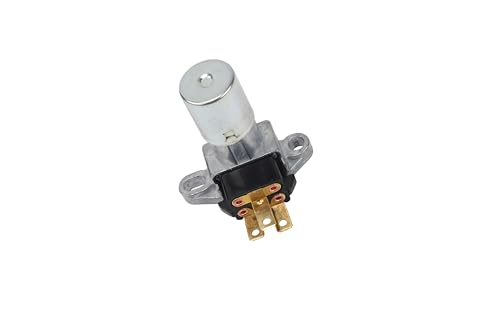
Professional, premium aftermarket replacement.Material:Metal
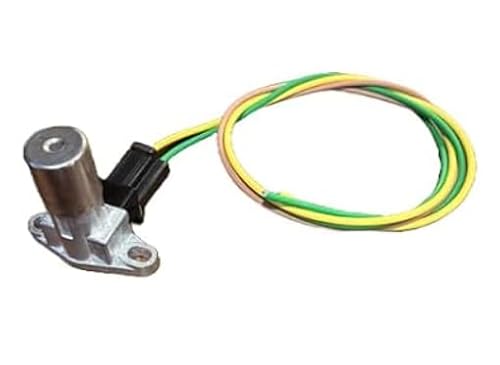
Headlight Control - With its ON-OFF operation mode and plug-in connector type, this headlight dimmer switch simplifies the task of managing your car's headlights, ensuring a smooth and convenient operation.
Automatic High-Beam Limitations
The camera identifies brightness and light patterns rather than understanding every traffic situation exactly as a driver does. Toyota states that safety-system effectiveness depends on weather, lighting, road, vehicle, and detection conditions.
AHB may switch late, remain on low beam, or react unexpectedly when:
- An approaching vehicle is partly hidden by a curve, hill, barrier, or vegetation.
- A vehicle ahead has dim, dirty, damaged, unusually positioned, or partially blocked lights.
- A motorcycle, bicycle, farm vehicle, or other road user has a small or unusual light pattern.
- Streetlights, signs, buildings, or reflective objects appear similar to vehicle lights.
- Rain, fog, snow, frost, dirt, road salt, condensation, or glare reduces the camera’s view.
- The windshield has a sticker, accessory, damage, tint, or repair near the camera area.
- The vehicle is turning sharply, climbing a crest, descending a grade, or bouncing on an uneven road.
Note: Clean the outside of the windshield in front of the camera and use the defroster when the glass is fogged. Do not attach objects near the camera housing or attempt to realign or remove the camera yourself.
Toyota Camry Automatic High Beams Not Working
If AHB does not behave as expected, check the operating conditions and model-year control sequence before assuming that a component has failed.
| Symptom | Likely Explanation | What to Check |
| No AHB indicator | The feature is off, the headlights are not in the required position, or the stalk position does not match the model-year procedure. | On a 2025 U.S. Camry, press the AHB switch, use AUTO or the normal headlight-on position, and leave the stalk in the low-beam position. Use the correct manual for another year. |
| AHB indicator is on, but high beams stay off | The system is standing by because the road is too bright, speed is below the operating threshold, or vehicle lights are being detected. | Test only in a safe, dark area with no nearby traffic. For the 2025 U.S. Camry, Toyota lists approximately 21 mph as the high-beam activation threshold when the other conditions are met. |
| High beams switch off frequently | Streetlights, signs, reflections, nearby vehicles, or lower speed may be triggering low beams. | This may be normal. The 2025 guide says AHB returns to low beams below approximately 17 mph. Use manual control if repeated switching becomes distracting. |
| AHB reacts late or misses a vehicle | The other vehicle may be partly hidden, its lights may be weak, or camera visibility may be poor. | Select low beams manually. Check the windshield and avoid relying on AHB in difficult conditions. |
| Camera or system warning appears | The camera area may be dirty, fogged, overheated, frozen, obstructed, or malfunctioning. | Clean and defog the windshield, remove safe-to-remove obstructions, restart the vehicle, and follow the displayed message. |
If a warning remains after the windshield is clear and normal conditions return, or if the headlights behave incorrectly during manual operation, arrange an inspection with a qualified Toyota service facility. Windshield replacement or relevant camera work can require professional camera inspection or calibration; do not attempt to realign the forward camera at home.
[Amazon Products Picked for You]

✅Effortless Auto Glass & Windshield Cleaning – The XINDELL Windshield Cleaner Tool makes cleaning auto glass—inside and out—quick and easy. With its extendable handle and 180° pivoting head, you can reach every corner without strain, ensuring streak-free clarity for improved visibility and complete car care.🌟
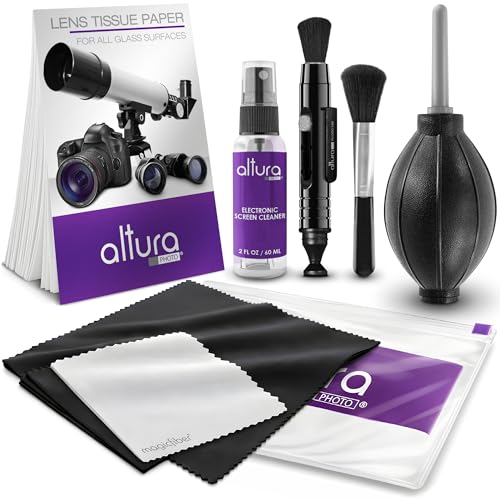
COMPLETE CAMERA CLEANING KIT: Our camera lens cleaning kit includes an alcohol & ammonia-free lens cleaner spray, cleaning brush, lens pen, air blower, MagicFiber microfiber cloths (3), and lens tissue paper wipes (50). Most competing lens cleaning kits cost more and still make you buy the spray and brush separately. Ours doesn't.

Camera Lens Cleaning Kit (14 pieces), including, air blower, lens pen, cleaning brush, lint-free cloth, lens pen, storage bag, etc.
Related Guides
Frequently Asked Questions
What is Toyota Automatic High Beam AHB?
Automatic High Beam is a camera-assisted feature designed to switch between high and low beams according to surrounding light and detected vehicle lights. It reduces manual switching but does not replace the driver’s judgment or responsibility.
How do I turn on Automatic High Beams in a Toyota Camry?
On a 2025 U.S. Camry, press the AHB switch, turn the headlight switch to AUTO or the normal headlight-on position, and leave the headlight stalk in the low-beam position. Confirm that the AHB indicator appears. Older Camrys can use a different stalk sequence, so check the manual for the exact model year.
Why is the AHB light on when the high beams are off?
The AHB symbol indicates that automatic high-beam control is enabled or active; it does not mean the high beams must be illuminated at that moment. Darkness, vehicle speed, surrounding traffic, streetlights, and camera-detection conditions determine when the high beams come on. Use the separate high-beam indicator to confirm that they are actually illuminated.
At what speed do Toyota Camry Automatic High Beams work?
For the 2025 U.S. Camry, Toyota’s Quick Reference Guide says the high beams can illuminate automatically at approximately 21 mph (34 km/h) or more when the other operating conditions are satisfied and return to low beams below approximately 17 mph (27 km/h). Other Toyota summaries and older Camry documentation can use different wording or thresholds, so the manual for the exact vehicle takes priority.
Should I use Automatic High Beams in fog, rain, or snow?
Use caution. Precipitation and fog can reduce camera performance, and high beams can reflect from water droplets or snow and reduce your own visibility. Select low beams manually whenever they provide a clearer view or AHB does not respond appropriately.
What is the AHB switch?
The AHB switch enables or disables automatic high-beam control. It is commonly marked with a headlamp symbol containing the letter “A.” Its location varies by model year, so use the instrument-panel diagram in your Camry’s manual if you cannot identify it.
Can I override Toyota Automatic High Beams?
Yes. You can disable AHB and operate the high and low beams manually whenever necessary. On the 2025 U.S. Camry, pushing the stalk away selects manual high beams, while the AHB switch turns automatic control off. Older Camrys can use a different stalk sequence, so follow the procedure in the correct owner’s manual.
Does the 2025 Toyota Camry have Automatic High Beams?
Yes. Toyota lists LED headlights with Automatic High Beams as standard equipment on the U.S.-market 2025 Camry. Equipment can differ by country, so owners outside the U.S. should confirm the specification for their market.
Conclusion
Toyota Camry Automatic High Beams can make dark-road driving more convenient, but the activation sequence depends on the Camry generation. On a 2025 U.S. Camry, the key detail is that AHB operates with the headlight stalk in its low-beam position after the AHB switch and appropriate headlight setting are selected. Older Camrys can use a different sequence.
Keep the windshield area in front of the camera clear, learn the difference between the AHB indicator and the active high-beam indicator, and override the system whenever traffic, weather, visibility, or local rules require low beams. If your controls do not match the procedure shown here, use Toyota’s manual for your exact model year rather than adapting instructions from another generation.
Sources
- Toyota 2025 Camry Quick Reference Guide — current-generation U.S. AHB activation sequence, indicators, approximately 21-mph activation threshold, approximately 17-mph low-beam threshold, and temporary override behavior
- Toyota Safety Hub — Automatic High Beams purpose, detected vehicle lights, general operating-speed guidance, and model-specific caveat
- Toyota Manuals and Warranties — model- and year-specific operating instructions and limitations
- Toyota USA: How to Turn On the Automatic High Beams — older Camry AHB example demonstrating why the control sequence can differ by generation
- Insurance Institute for Highway Safety: Headlights — high-beam-assist operation, manual control, high-beam-use research, and nighttime headlight performance
