Toyota Tacoma manual shift mode—usually the S shift-range position on automatic models—is most useful when you want more engine braking, fewer unwanted upshifts, or steadier power on grades. It does not turn the automatic into a clutch-operated manual transmission, and the displayed S number generally represents the highest transmission range you are allowing rather than a gear that stays mechanically locked.
Quick Answer
Use your Tacoma’s manual, sequential, or S shift mode when you need more engine braking downhill, want to reduce repeated gear hunting on hills, or need steadier power while towing. Leave it in Drive for normal cruising. On many Tacomas, S4 means the transmission can use ranges 1 through 4 rather than being locked in fourth gear. Check your owner’s manual because the controls and behavior differ by model year.
Key Takeaways
- Use a lower shift range mainly for descents, repeated hills, towing grades, and controlled low-speed driving.
- On many Tacomas, the displayed S number is the highest range the transmission may use, not necessarily the current gear.
- S shift mode and Sport/Sport S drive mode are different controls: S limits transmission ranges, while Sport changes vehicle response on equipped models.
- Manual-style mode does not guarantee quicker acceleration or better fuel economy than Drive.
- Tow/Haul, 4LO, Downhill Assist Control, and CRAWL Control serve different purposes and may be better suited to specific conditions.
- Never force a downshift, coast downhill in Neutral, or depend on engine braking instead of the service brakes.
Last reviewed: September 19, 2026
At a Glance
| Time Required | Varies; review the controls first and practice gradually on a quiet road |
| Difficulty | Easy, once you understand what the display means |
| Tools Needed | Your Tacoma owner’s manual and a safe place to practice |
| Cost | $0 |
First, Identify Your Tacoma’s Shift System
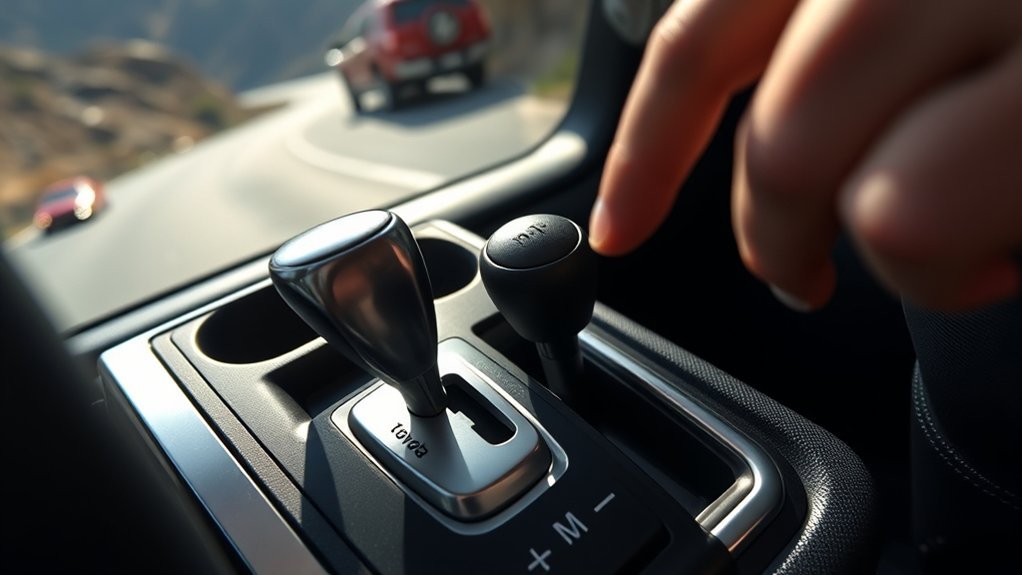
Tacoma owners often call this feature “manual mode,” but Toyota has used different transmission controls and logic across generations. Before using it, check the markings beside your shifter and the transmission section of your Toyota owner’s manual.
| Tacoma setup | What the control generally does |
|---|---|
| 2016–2023 six-speed automatic | Uses an S position with six selectable shift ranges. A display such as S4 means the transmission can generally use gears 1 through 4 rather than being locked in fourth gear. Toyota’s 2023 manual also states that moving from D to S cancels AI-SHIFT. |
| 2024–2026 eight-speed automatic | Uses an eight-speed automatic with sequential S-range control. The selected range is shown from S1 through S8, and a lower range increases available engine braking and accelerating force. On this generation, Toyota describes AI-SHIFT as operating in both D and S. |
| Earlier automatic models | May provide numbered lower ranges such as 4, 3, 2, or L instead of the later S-range arrangement. Follow the manual for the exact truck rather than applying newer Tacoma instructions. |
Note: This article covers the manual-style function of an automatic transmission. It does not explain how to drive a Tacoma equipped with a clutch pedal and a true manual transmission.
[Amazon Products Picked for You]

High quality black leather 6 Speed Manual Gear Shift Knob with black stitch
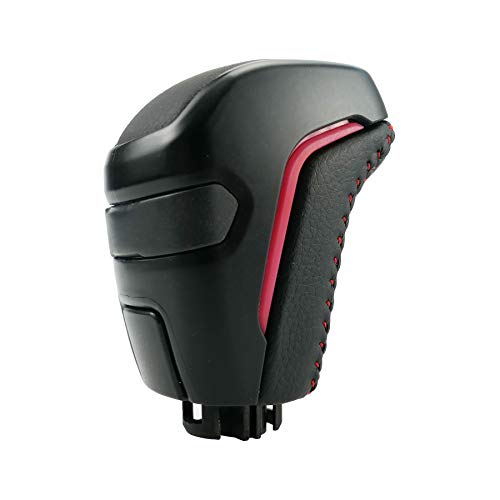
Enhanced Operating Experience: Shifter's robust internal structure and comfortable grip improve the smoothness of shifting, resulting in a more natural gear adjustment experience

Package: 1pc. Compatible with Toyota 4Runner 1996-2001, for Toyota Tacoma 1995-2004. Please check your model before buying it!
When Manual Shift Mode Helps Most
The best reason to use manual-style shifting is control, not speed. It can limit unwanted upshifts, add engine braking, or keep the transmission from repeatedly changing ranges on a grade.
Long or Steep Descents
Selecting a lower range before your speed builds can add engine braking and reduce how continuously you need to press the brake pedal. Choose the highest range that helps hold a safe speed without making the engine race.
Engine braking only assists the service brakes. Stay within a safe speed, leave extra following distance, and stop in a safe place if you notice a burning smell, a soft brake pedal, or reduced braking performance.
Cruise-control note: Do not assume that selecting a lower S range will always create the expected engine braking while cruise control or Dynamic Radar Cruise Control is active. Toyota manuals note that engine braking may not activate in certain downshift ranges while cruise control remains engaged. Cancel cruise control when appropriate and use the service brakes as needed to control speed.
Rolling Hills and Mountain Roads
If the transmission repeatedly upshifts and downshifts, choosing a lower maximum range can make the truck feel more settled. It can also provide a more predictable response as you enter and exit grades. Return to Drive when the road levels out.
Towing or Hauling on Grades
A lower range can help the engine stay in a useful power band and reduce repeated gear hunting. On newer trucks, use Tow/Haul mode when equipped because Toyota tunes that setting to change throttle and transmission behavior while towing.
Manual-style shifting does not increase the truck’s tow rating. Follow the weight limits, hitch requirements, trailer-brake instructions, and cooling guidance for your exact model and configuration.
Low-Speed Off-Road Driving
Holding a lower range can provide steadier power on some trails. However, it is not a replacement for the correct four-wheel-drive range or off-road system. Depending on your Tacoma, 4LO, Multi-Terrain Select, Downhill Assist Control, or CRAWL Control may be the more appropriate tool.
Passing and Merging
Manual-style mode can hold a lower range when you want predictable response before a pass or merge. In ordinary driving, the automatic transmission can usually select a suitable gear on its own. Do not use public roads to test stoplight launches or aggressive acceleration.
Warning: A sudden downshift can increase engine braking and disturb traction on wet, icy, gravel, or loose surfaces. Make small changes, keep steering inputs smooth, and never select a lower range that causes the engine to race.
Benefits and Limits of Manual Shift Mode
More Predictable Gear Control
Manual-style shifting can stop the transmission from using higher ranges that do not suit the road. This is helpful when you want consistent engine braking or when the transmission keeps hunting between ratios.
More Consistent Power Delivery
Holding a lower range may make response feel more immediate on a hill or before a pass. However, it does not guarantee faster acceleration than Drive, and the transmission computer can still manage shifts and protect the drivetrain.
Added Engine Braking
Reducing the available shift range raises engine speed and increases the resistance that helps slow the truck. This can improve speed control downhill, but it should supplement rather than replace normal braking.
| It can | It cannot |
|---|---|
| Limit higher gears, add engine braking, and reduce gear hunting. | Turn the automatic into a clutch-operated manual transmission. |
| Help maintain steadier power on grades. | Increase tow ratings or replace Tow/Haul and 4WD systems. |
| Give you more control over when higher gears become available. | Guarantee better fuel economy, faster acceleration, or a fixed gear in every model. |
Switching From Drive to Manual or S Mode
Tacoma automatics with an S position are designed so you can select the S range from Drive for situations where extra transmission control is useful. The exact selector operation varies by model year, so confirm the procedure for your truck before relying on it in traffic or on a grade.
- Check the selector markings. Look for S, plus/minus symbols, or numbered lower ranges.
- Keep the truck stable. Use a steady throttle and make the change on a straight, predictable section of road.
- Move from D into the manual-style position. Follow the shifter markings and do not move toward Park, Reverse, or Neutral.
- Choose one step at a time. Move toward minus to request a lower range and toward plus to allow a higher range.
- Check the instrument display. Confirm the S number changed, then listen to the engine and monitor vehicle speed without taking your attention from the road.
- Return to Drive when finished. D is normally the best setting for flat roads and routine cruising.
Pro Tip: Practice by selecting only one range lower on a quiet, dry road. Notice how engine speed and deceleration change before using the feature on a steep grade or with a trailer.
How to Choose the Right Shift Range
No single S number works for every Tacoma, load, slope, tire size, or speed. Start conservatively and adjust one step at a time. The lower the selected range, the stronger the available engine braking and the higher engine speed will generally become.
| Driving condition | Practical starting approach |
|---|---|
| Mild rolling grade | Select one range lower than the current setting if the transmission keeps hunting. |
| Long descent | Choose a range that adds useful engine braking without excessive RPM. |
| Climb with a trailer or heavy load | Use Tow/Haul if equipped, then limit the upper range only if repeated shifting continues. |
| Low-speed trail | Choose the correct 4WD range first, then use a lower transmission range if the owner’s manual recommends it. |
| Flat highway cruising | Use Drive unless you have a specific reason to hold a lower range. |
Using Manual Shift Mode for Acceleration
Manual-style mode can make response more predictable because you can prevent an early upshift or select a lower maximum range before a planned pass or climb.
It is not a guaranteed performance upgrade. The automatic transmission can usually choose a suitable lower ratio in Drive, while Sport or Tow/Haul modes on equipped trucks alter response for their intended use. Smooth throttle input and adequate following distance matter more than holding high RPM.
Engine RPM and Automatic Safeguards
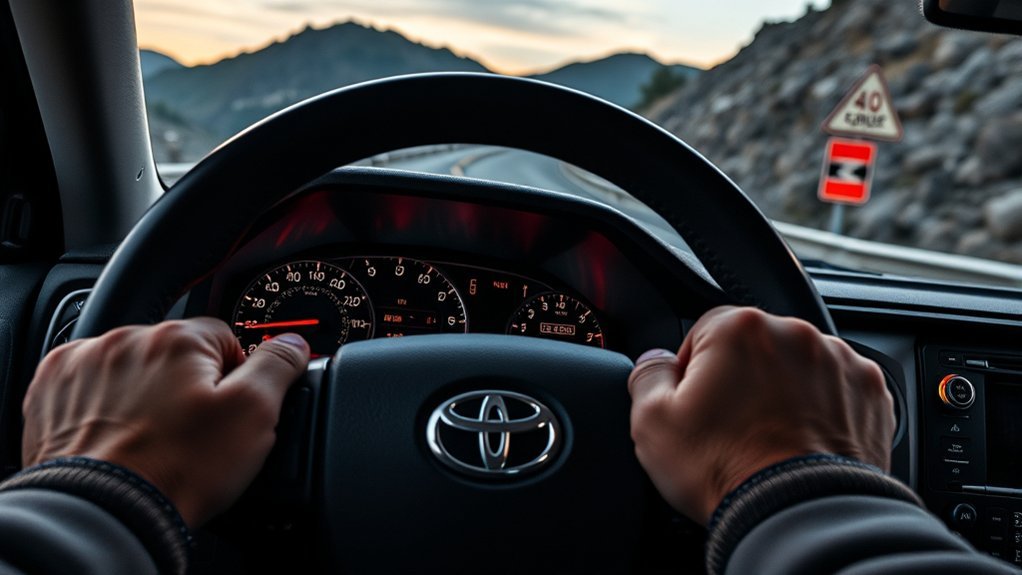
Engine speed normally rises when you request a lower range. The correct RPM depends on the engine, transmission, road speed, load, and selected range, so do not chase a universal number such as 1,500 RPM at 60 mph.
Manage RPM by Sound, Display, and Road Conditions
Downshift only as much as needed. If the engine becomes unusually loud, the tachometer approaches the red zone, or the truck slows too abruptly, allow a higher range. Avoid holding high RPM without a clear reason.
What Happens if a Requested Shift Is Unsafe?
The transmission may reject, delay, or override a requested range when vehicle speed, engine speed, or transmission protection logic requires it. Current-generation Tacoma manuals also describe automatic protective upshifts if engine speed becomes excessive. A refused request is a protective response, not a reason to repeat the command rapidly.
Use the Brakes and Transmission Together
On a descent, select a suitable lower range early and use the brake pedal as needed to maintain a safe speed. Never coast in Neutral. If the brakes feel different, a warning light appears, or the transmission behaves abnormally, pull over safely and arrange an inspection.
Manual Shift Mode vs. Sport, Tow/Haul, and 4LO
These controls solve different problems. S mode changes which transmission ranges are available, Sport/Sport S changes response mapping on equipped trucks, and 4LO changes the transfer-case gearing for demanding low-speed off-road driving.
| Setting | Best use |
|---|---|
| Manual, sequential, or S range | Limits higher transmission ranges and gives you more control over engine braking and gear availability. |
| Sport / Sport S drive mode (where equipped) | Changes throttle, transmission, and other response mapping for a more responsive feel while the transmission remains automatically controlled. It is not the same feature as the shifter’s S range. |
| Tow/Haul mode (where equipped) | Adjusts vehicle and transmission behavior for towing or carrying a heavy load. |
| 4LO | Provides low-range transfer-case gearing for slow, demanding off-road conditions. Use only as directed in the owner’s manual. |
| Downhill Assist or CRAWL Control | Helps manage very low-speed off-road descents or trail speed on equipped models under their specified operating conditions. |
[Amazon Products Picked for You]
Proportional Mode Brake Kit for Everyday Towing: The Tow-Pro Liberty delivers Proportional Mode braking for smooth on-road control. Easy to install and use, the system reduces push and pull for ultimate towing confidence on roads and highways

Push Button Switch: The ON-OFF rocker switch with SPST design (single pole single Throw) is manufactured to fit in the OEM switch blank for your cars. It come with a small pigtail that plugs into the back of the switch for better installation. Please note: Surface size 1.28" x 0.87", do not order by vehicle only, always verify the actual dash blank size in your vehicle before ordering.

Push Button Switch: The ON-OFF rocker switch with SPST design (single pole single Throw) is manufactured to fit in the OEM switch blank for your cars. It come with a small pigtail that plugs into the back of the switch for better installation. Note: Surface size 1.54" x 0.83", please measure your present switches and compare the size
Common Mistakes to Avoid
- Assuming the display shows the current gear: On S-range systems, the number generally represents the selected upper range rather than guaranteeing the transmission is presently in that numbered gear.
- Confusing S mode with Sport mode: The S shifter position controls transmission ranges; Sport/Sport S is a separate drive mode on equipped trucks.
- Downshifting several steps at once: Make one change, feel the result, and adjust again only if needed.
- Using high RPM for routine driving: Manual-style mode does not automatically improve fuel economy or acceleration.
- Ignoring Tow/Haul or 4WD controls: Those systems may be more appropriate than manually limiting the transmission.
- Staring at the tachometer: Keep your attention on traffic, road conditions, and vehicle speed.
- Using the feature to mask a problem: Frequent slipping, harsh shifts, warning lights, or delayed engagement require diagnosis.
Troubleshooting Manual Shift Mode
[Amazon Products Picked for You]

[Easy to Use—Work Out of the Box] + [FOXWELL 2026 New Version] FOXWELL NT604 Elite scan tool is the 2026 new version from FOXWELL, designed for car owners who want to figure out the cause of issues before fixing car problems by scanning common systems like ABS, SRS, engine, and transmission. The NT604 Elite obd2 scanner diagnostic tool comes with the latest software—no need to waste time downloading software first. Plug the scanner into the OBDII port with OBDII cable to start the diagnosis.

【Reset ABS/SRS/Transmission/Engine Lights】 More than an check engine code reader, OBDMATE OM901 obd2 scanner performs comprehensive diagnostics for the 4 most-used systems (ABS/SRS/Engine/Transmission). It quickly clears fault codes, turns off warning lights, read data stream and auto VIN.

【Diagnose Check Engine Light in Seconds – No Mechanic Needed】The FOXWELL NT301 OBD2 scanner instantly reads & clears engine fault codes (DTCs) with one click. Simply plug into the 16-pin DLC port, turn ignition on, and get accurate results within seconds—No prior car knowledge required. Save hundreds on dealership fees by knowing exactly what’s wrong before you visit a shop. The #1 choice car scanner for DIYers and car owners who want to take control of their vehicle’s health
The Requested Downshift Does Not Happen
Your road speed or engine speed may be outside the permitted range for that request. Keep control of the truck, slow normally if conditions allow, and try one step at a time. Do not keep tapping the selector repeatedly.
The Transmission Still Shifts Automatically
This can be normal. S mode controls the available range rather than giving unrestricted mechanical control of one gear, and protective logic may override a request. Current-generation Tacoma AI-SHIFT can also continue operating in S. Manual-style mode gives you more influence, not complete control.
Shifts Feel Harsh or the Display Flashes
Return to Drive and reduce load if it is safe to do so. If harsh shifting, delayed engagement, unusual noises, fluid leaks, or a transmission warning continues, have the truck inspected by a qualified technician.
What Manual Shift Mode Feels Like in Real Driving
The difference is usually most noticeable on a descent or a road where the transmission keeps changing ratios. A lower selected range can help the truck hold speed with more engine braking or avoid repeated upshifts on a grade.
For daily flat-road driving, Drive is normally simpler and is Toyota’s recommended position for routine driving. The safest way to learn the S-range controls is to practice one change at a time on a dry, low-traffic road before using the feature in demanding conditions.
Sources
- Toyota Manuals and Warranties — current and model-specific owner-manual access.
- Toyota Tacoma Owner’s Manual, 2023 — six-speed S-range operation, engine braking, and AI-SHIFT behavior.
- Toyota USA Newsroom: 2025 Tacoma — Drive Mode Select, Sport modes, Tow/Haul, and current-generation systems.
- Toyota USA Newsroom: 2026 Tacoma — current Tacoma drive-mode and Tow/Haul information.
Related Guides
Frequently Asked Questions
When should you use manual mode in a Toyota Tacoma automatic?
Use it for added engine braking on long descents, to reduce gear hunting on rolling grades, to hold steadier power while towing, or for controlled low-speed driving when your owner’s manual recommends it. Leave the truck in Drive for most normal cruising.
What does S4 mean on a Toyota Tacoma?
S4 normally means the transmission can use ranges up to fourth gear, so it can still shift automatically among lower gears. It does not necessarily mean the truck is currently locked in fourth gear. Exact operation depends on the model year and transmission.
Is Tacoma S mode the same as Sport mode?
No. The S position on the automatic shifter lets you select or limit transmission ranges. Sport or Sport S is a separate drive mode on equipped Tacomas that changes vehicle response and transmission mapping while automatic control remains active.
What are the benefits of manual shift mode?
It can add engine braking, limit unwanted upshifts, reduce repeated gear hunting, and make power delivery more predictable. It does not automatically improve fuel economy, increase towing capacity, or make the truck accelerate faster.
Can you switch from Drive to S or manual mode while moving?
Tacomas equipped with an S shifter position are designed to use that range while driving, but the selector procedure and transmission behavior vary by model year. Keep the vehicle stable, follow the shifter markings, and confirm the instructions in your owner’s manual.
Does Tacoma S mode improve fuel economy?
Not normally. Selecting a lower S range often raises engine speed, while Toyota recommends Drive for routine driving and fuel economy. Use S mode when you need extra engine braking or transmission control rather than as a fuel-saving setting.
Why did my Tacoma refuse an S-mode downshift?
The requested range may not be appropriate for the truck’s current road speed or engine speed, or transmission-protection logic may override it. Slow normally if conditions allow and request one lower range at a time instead of repeatedly forcing the selector.
Conclusion
Use your Tacoma’s manual-style S mode when it solves a specific problem: controlling speed on a descent, reducing gear hunting, or maintaining steadier power on a grade. Choose one range at a time, watch engine speed, and return to Drive when the road becomes routine. Remember that S mode is not the same as Sport mode, and that 2016–2023 and 2024–2026 Tacomas do not use identical transmission logic. Check the transmission section of the owner’s manual for your exact model year before relying on the feature in demanding conditions.
