The Toyota Tacoma uses different four-wheel-drive systems depending on its model year, trim, and powertrain. Most 4WD Tacomas use selectable part-time 4WD, while current Limited grades offer full-time 4WD with an electronic locking center differential. Knowing which system your truck has helps you choose the correct mode and avoid drivetrain binding.
Last updated: September 19, 2026 — 2026 Limited drivetrain availability, fourth-generation transfer-case mode names, shift procedures, and maintenance guidance were rechecked against Toyota sources.
Quick Answer
Most Toyota Tacoma 4WD grades use a selectable part-time system: use 2H on dry pavement, choose 4H only on loose or slippery surfaces that permit tire slip, and reserve 4L for slow, demanding terrain. Current 2025–2026 Limited grades offer full-time 4WD, which can remain active on dry pavement because it uses a center differential. On Toyota’s fourth-generation full-time system, H4F is the normal unlocked high-range mode, H4L is high range with the center differential locked, and L4L adds low range with the center differential locked.
Key Takeaways
- Part-time 4WD gives you 2H, 4H, and 4L modes, but you must select the appropriate mode for the surface.
- Do not leave part-time 4WD engaged on dry, high-traction pavement because the driveline can bind during turns.
- Toyota identifies full-time 4WD with an electronic locking center differential on 2025–2026 Limited grades.
- The 2024 launch description limited full-time 4WD to Limited models equipped with the i-FORCE MAX powertrain.
- On Toyota’s fourth-generation full-time system, H4F is the normal road mode; H4L and L4L lock the center differential.
- Four-wheel drive can improve forward traction, but it does not shorten braking distance or replace suitable tires.
Understanding 4WD Systems in the Toyota Tacoma
Toyota currently describes the Tacoma lineup as offering 2WD, part-time 4WD, and full-time 4WD configurations. However, availability has changed as the fourth-generation Tacoma lineup has developed, so you should not apply one model year’s trim description to every Tacoma.
| Model Year | Toyota’s Published Configuration | What to Verify |
|---|---|---|
| 2024 | Toyota’s launch material described full-time 4WD with a center-locking differential on Limited models equipped with the i-FORCE MAX powertrain. | Confirm the powertrain, transfer-case controls, and owner’s manual. |
| 2025–2026 | Toyota identifies full-time 4WD with an electronic locking center differential on Limited grades. | Check the window sticker, vehicle specifications, and manual for the exact truck. |
| Earlier Tacomas | Equipment varies by generation and market. Many earlier 4WD Tacomas use selectable part-time 4WD. | Do not assume that current Limited equipment applies to an earlier truck. |
How Can You Identify Your Tacoma’s 4WD System?
The transfer-case selector gives fourth-generation owners a quick clue. Toyota’s part-time system uses 2H, 4H, and 4L labels, while its fourth-generation full-time system uses H4F, H4L, and L4L. Always confirm the system in the owner’s manual because controls and terminology can vary by model year and market.
| Selector Labels | System | Normal Road Mode |
|---|---|---|
| 2H / 4H / 4L | Part-time 4WD | 2H on normal dry, hard-surfaced roads. |
| H4F / H4L / L4L | Fourth-generation full-time 4WD | H4F for normal paved driving. |
You can review Toyota’s current specifications in its 2026 Tacoma product announcement. For operating instructions, select your exact vehicle on Toyota’s owner’s manual portal.
Note: Marketing names and dashboard controls can look similar even when the transfer-case operation differs. Your model-year owner’s manual is the final authority for shift procedures, permitted speeds, and indicator behavior.
What Is Part-Time 4WD in the Toyota Tacoma?
Part-time 4WD lets you select rear-wheel drive for normal road use or engage the front axle when the surface becomes loose or slippery. In 2H, the Tacoma drives through the rear wheels. Selecting 4H or 4L connects the front and rear driveline through the transfer case.
Because a typical part-time system does not use an unlocked center differential between the front and rear axles, the axles cannot freely rotate at different average speeds while turning. Loose surfaces allow the tires to release that difference through slight slip. Dry pavement may not.
What 2H, 4H, and 4L Mean
| Mode | What It Does | Typical Use |
|---|---|---|
| 2H | Uses high-range rear-wheel drive. | Normal driving on dry or consistently high-traction pavement. |
| 4H | Uses high-range gearing while driving the front and rear axles. | Snow-covered roads, mud, gravel, sand, and moderate off-road terrain where tire slip can occur. |
| 4L | Uses low-range gearing to increase control and torque multiplication at low speed. | Steep grades, deep mud or sand, rock obstacles, difficult recovery situations, and other slow off-road work. |
Warning: Do not use part-time 4H or 4L continuously on dry, high-traction pavement. Drivetrain wind-up can cause heavy steering, tire scrub, difficult disengagement, vibration, and additional stress on transfer-case and axle components.
Benefits and Limits of Part-Time 4WD
Part-time 4WD works well when you spend most of your time on pavement but want additional capability for snow, unpaved roads, job sites, or recreational trails. You decide when the added traction is needed and return to 2H when conditions improve.
Its main benefits include:
- Simple mode selection: You can keep the truck in 2H for ordinary pavement and select 4H or 4L when conditions require it.
- Low-range gearing: 4L provides better low-speed control on steep, uneven, or deeply rutted terrain.
- Strong loose-surface traction: Driving both axles can help the truck move through snow, gravel, mud, and sand.
- Reduced unnecessary driveline engagement: The front driveline is not continuously driven in normal 2H operation.
The tradeoff is that you must recognize changing conditions and select the correct mode. A road with alternating dry and snow-covered sections may require more judgment than a full-time system that can remain active on dry pavement.
Do not assume that part-time 4WD always creates a large fuel-economy advantage. Actual mileage depends on the engine, tires, axle ratio, trim, vehicle load, aerodynamics, and driving conditions. Compare official ratings for the exact configurations you are considering.
How Full-Time 4WD Works in the Tacoma
A full-time 4WD system keeps the front and rear driveline engaged during normal driving. Its center differential permits the front and rear axles to rotate at the different average speeds required during paved-road turns. That is why normal, unlocked full-time operation can be used on dry pavement.
Toyota’s current Tacoma Limited system also includes an electronic locking center differential. Engaging that lock limits front-to-rear differentiation, which can help when one axle has less grip than the other.
A locked center differential does not guarantee equal torque at all four wheels. Tire grip, the front and rear axle differentials, traction-control intervention, and the surface beneath each tire still affect how useful torque reaches the ground.
What Do H4F, H4L, and L4L Mean?
Toyota’s fourth-generation full-time Tacoma system uses three selector positions. H4F is the normal high-range mode with the center differential free to accommodate paved-road turns. H4L remains in high range but locks the center differential. L4L combines low-range gearing with the center differential locked for demanding low-speed terrain.
| Mode | Center Differential | Typical Use |
|---|---|---|
| H4F | Unlocked/free in high range. | Normal paved driving, including dry hard-surfaced roads. |
| H4L | Locked in high range. | Loose or slippery surfaces that permit tire slip, such as off-road, icy, or snow-covered conditions. |
| L4L | Locked with low-range gearing. | Steep climbs or descents, deep mud or snow, sand, and other slow conditions requiring maximum low-range control. |
Toyota’s 2024 fourth-generation quick-reference guide specifies reducing speed below 62 mph (100 km/h) when changing between H4F and H4L. Changing between H4L and L4L requires a complete stop, continued brake application, and Neutral. Follow the owner’s manual for your exact model year before operating the transfer case.
Warning: Full-time 4WD does not mean the center differential should remain locked on dry pavement. Use H4F for normal paved driving and use a locked mode only under the conditions permitted by your owner’s manual.
When to Choose Full-Time 4WD in the Tacoma
Full-time 4WD makes the most sense when you want continuous four-wheel engagement without repeatedly switching between 2H and 4H as surface conditions change. It can be useful for drivers who regularly encounter mixed winter roads, wet pavement, gravel, or transitions between paved and unpaved surfaces.
Mixed Winter and Wet-Road Driving
Normal full-time operation can remain active when a road alternates between dry and slippery sections. This reduces the risk of leaving a part-time system engaged after returning to high-traction pavement.
However, full-time 4WD cannot create grip that the tires do not have. Winter-rated tires, appropriate speed, smooth steering, and greater following distance remain essential on snow and ice.
Off-Road Performance
Full-time 4WD can provide consistent front-and-rear drive on changing trail surfaces. When conditions become loose enough to require stronger front-to-rear coupling, the center lock can add capability.
Full-time operation does not automatically make one Tacoma better off-road than every part-time model. Ground clearance, tires, suspension, low-range gearing, axle locking equipment, driver technique, and trail conditions also matter.
Convenience in Changing Conditions
A full-time system is convenient when traction changes frequently. You do not need to select 4H every time you cross a short icy patch or enter a gravel section, and normal unlocked operation remains suitable for paved turns.
This convenience does not guarantee safety or prevent the truck from becoming stuck. Deep snow, mud, ice, and steep terrain can exceed the available tire grip regardless of drivetrain type.
Four-wheel drive can help your Tacoma accelerate on a low-traction surface, but the tires still determine how well it brakes and turns.
Key Differences Between Part-Time and Full-Time 4WD
| Feature | Part-Time 4WD | Full-Time 4WD |
|---|---|---|
| Normal operation | Usually driven in 2H until the driver selects 4H or 4L. | Front and rear driveline remain engaged during normal driving. |
| Driver input | You select the appropriate mode as conditions change. | Normal full-time operation requires less mode switching. |
| Dry pavement | Use 2H. Continuous 4H or 4L use can cause binding. | Normal unlocked H4F operation is designed for paved use on Toyota’s fourth-generation full-time system. |
| Center differential | A conventional selectable system does not provide an unlocked center differential in 4H or 4L. | Uses a center differential and includes an electronic center lock on current Limited grades. |
| Low range | 4L supports slow, demanding off-road travel. | Toyota’s fourth-generation system uses L4L for low range with the center differential locked. |
| Best fit | Drivers who mainly use dry pavement and select 4WD for specific conditions. | Drivers who value continuous engagement across frequently changing surfaces. |
| Main misuse risk | Leaving 4H or 4L engaged on dry, high-traction pavement. | Leaving the center differential locked where the manual does not permit it. |
[Amazon Products Picked for You]


HIGH PERFORMANCE - gear protection and longer synchro life, Satisfies the gear oil viscosity requirements of 70W & 75W
Engagement Method Differences
Part-time 4WD requires you to choose 2H, 4H, or 4L. Full-time 4WD keeps both axles driven during normal operation and lets the center differential accommodate paved-road turns.
Neither design removes the need to understand the controls. Full-time Tacoma owners still need to know when H4L or L4L is appropriate, while part-time owners must know when to return to 2H.
Traction and Stability
Both systems can improve the truck’s ability to move when more than one axle has useful grip. Full-time 4WD provides that engagement continuously, while part-time 4WD provides it after you select 4H or 4L.
Neither system guarantees stability. Excessive speed, abrupt inputs, worn tires, incorrect tire pressure, and ice can overwhelm the available grip.
Fuel-Efficiency Considerations
Running in 2H can reduce unnecessary front-driveline engagement on a part-time model, but you should not assume a fixed mileage advantage. Engine choice, hybrid equipment, tires, trim weight, axle ratio, accessories, and driving conditions can outweigh the drivetrain difference.
Use official fuel-economy figures for the exact trucks you are comparing rather than applying a general part-time-versus-full-time estimate.
How to Use Tacoma 4WD Safely
- Identify your system. Check the controls, window sticker, specifications, and owner’s manual before assuming the truck is part-time or full-time.
- Evaluate the surface. Use 2H for normal dry pavement in a part-time Tacoma. Select 4H only when the surface and manual permit it. On Toyota’s fourth-generation full-time system, H4F is the normal paved-road setting.
- Follow the correct shift procedure. On Toyota’s 2024 electronic-selector part-time system, reduce speed below 62 mph (100 km/h) for 2H↔4H changes. Stop completely, keep the brake applied, and select Neutral before 4H↔4L. On the fourth-generation full-time system, Toyota specifies below 62 mph for H4F↔H4L and a complete stop with Neutral for H4L↔L4L. Procedures can differ by model year, so follow the manual for your truck.
- Wait for confirmation. Make sure the 4WD indicator completes its change instead of continuing to flash.
- Use low range only for low-speed work. 4L or L4L is intended for demanding terrain, not ordinary road speed.
- Return to the correct road mode. Disengage part-time 4WD before prolonged driving on dry pavement. On a full-time fourth-generation system, return the center differential to unlocked H4F for normal paved driving.
Pro Tip: If the 4WD indicator continues flashing, do not assume the shift has finished. Reduce driveline load, keep the wheels as straight as practical, and follow the owner’s manual. Stop and arrange service if the light persists or you notice binding, grinding, or abnormal vibration.
Common Misunderstandings About 4WD Systems
“Avoiding Part-Time 4WD on Dry Pavement Is a Myth”
It is not a myth. A conventional part-time system can bind when 4H or 4L is used on a high-traction surface because the front and rear axles need to travel different distances during a turn.
“Full-Time 4WD Means the Center Lock Is Always Engaged”
Normal full-time operation and center-lock operation are different. On Toyota’s fourth-generation system, H4F allows front-to-rear differentiation for normal paved-road turning. H4L and L4L lock the center differential for conditions where stronger front-to-rear coupling is appropriate.
“A Center Lock Sends Equal Torque to All Four Wheels”
The center lock couples the front and rear driveline outputs. It does not lock both axle differentials or guarantee equal torque at each tire.
“Four-Wheel Drive Helps the Tacoma Stop Faster”
Four-wheel drive can improve acceleration when traction is limited, but ordinary braking acts at all four wheels regardless of drivetrain mode. Tires, road conditions, vehicle speed, and stopping distance remain the controlling factors.
“Full-Time 4WD Is Automatically Better for Towing”
Towing capacity depends on the engine, cab, bed, axle ratio, cooling equipment, hitch setup, payload, and other configuration details. Full-time engagement may be convenient in changing conditions, but it does not by itself create a higher tow rating.
Maintenance Tips for Your Tacoma’s 4WD System
- Keep tire sizes and wear closely matched. Large circumference differences can create unnecessary driveline stress.
- Check tire pressure when the tires are cold. Use the pressure label on the driver-side door area rather than the maximum number molded into the tire.
- Rotate and inspect the tires. Uneven tread depth can affect handling and driveline operation.
- Inspect for fluid leaks. Watch the transfer case and front and rear differentials for seepage or damage.
- Follow the maintenance schedule. Fluid inspection or replacement intervals can change with towing, off-road use, water crossings, and severe operating conditions.
- Exercise the 4WD system as Toyota specifies. Toyota’s fourth-generation part-time-4WD guidance says to drive in four-wheel drive for at least 10 miles (16 km) each month to help lubricate the front-drive components. Do this only on a surface where the owner’s manual permits 4WD use, and check the guidance for your exact model year.
- Investigate persistent symptoms. Warning lights, grinding, binding, clunks, or repeated failure to engage deserve professional diagnosis.
NHTSA’s tire safety guidance recommends checking pressure regularly and using the vehicle label or owner’s manual for the correct specification.
[Amazon Products Picked for You]

Specifically approved for use in GM automatic four-wheel drive vehicles with transfer cases

Genuine OEM Product: Toyota factory-engineered Transfer Gear Oil LF 75W specifically formulated and tested to meet Toyota's strict standards

Toyota Lexus Transfer & Differential Service Gasket Kit
Choosing the Right 4WD System for Your Driving Needs
Your best choice depends more on where and how you drive than on which system sounds more advanced.
| Driving Pattern | Likely Better Fit | Reason |
|---|---|---|
| Mostly dry pavement with occasional trails, snow, mud, or job-site use | Part-time 4WD | You can use 2H daily and select 4H or 4L only when needed. |
| Frequent transitions between dry, wet, icy, gravel, and unpaved surfaces | Full-time 4WD | Normal unlocked operation can stay engaged across mixed surfaces. |
| Slow, demanding off-road travel | Compare complete equipment packages | Low range, tires, clearance, suspension, skid plates, and axle lockers may matter more than continuous engagement. |
| Regular towing | Compare exact tow and payload ratings | Do not choose solely by part-time or full-time 4WD. |
Part-time 4WD remains a strong choice when you are comfortable selecting modes and mainly drive on dry pavement. Full-time 4WD adds convenience when traction changes often, but current Tacoma availability is concentrated in Limited grades. Price, powertrain, payload, towing needs, tires, and off-road equipment should remain part of the decision.
[Amazon Products Picked for You]
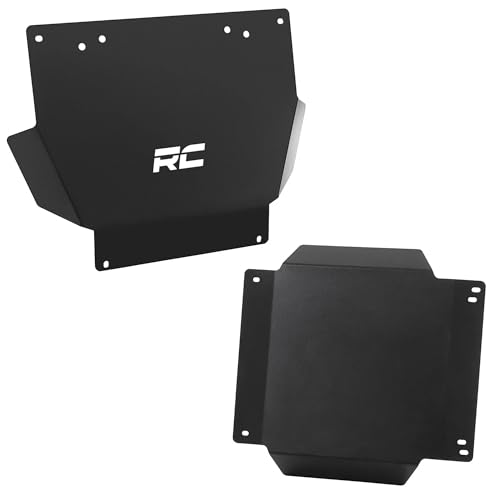
Off-Road Protection: Heavy-duty skid plate armor helps shield your Tacoma’s undercarriage from rocks, stumps, and trail debris—so you can drive with more confidence off-road.

Fitment: For Toyota Tacoma 2024-2026 2WD & 4WD. Comes with differential skid plate. TRD Off-Road Fitment Note: Crossmember between tow hook frame mounts must be trimmed for proper installation. Notes: Due to variances in structural support, this kit does NOT fit hybrid models. Designed to fit models at stock height up to 3 inches of suspension lift WITHOUT a differential drop

Fitment: Skid plate compatible with 2024-2025 Toyota Tacoma 2WD & 4WD, Fits Gas Models Only (Does Not Fit Hybrid Models)
Related Guides
Frequently Asked Questions
What is the difference between part-time and full-time 4WD in a Toyota Tacoma?
Part-time 4WD normally uses rear-wheel drive until you select 4H or 4L. Full-time 4WD keeps the front and rear driveline engaged and uses a center differential so normal unlocked operation can continue on dry pavement.
Which Toyota Tacoma models have full-time 4WD?
Toyota’s 2025 and 2026 materials identify full-time 4WD with an electronic locking center differential on Limited grades. Toyota’s 2024 launch information described it on Limited models with the i-FORCE MAX powertrain. Verify the exact truck because equipment can vary by year and market.
Can you drive a part-time 4WD Tacoma on dry pavement?
Drive in 2H on normal dry pavement. Leaving a conventional part-time system in 4H or 4L on a high-traction surface can cause tire scrub and drivetrain binding during turns.
What do 2H, 4H, and 4L mean on a Tacoma?
2H is high-range rear-wheel drive for normal pavement. 4H drives the front and rear axles for loose or slippery surfaces that permit tire slip. 4L adds low-range gearing for slow, demanding off-road conditions. Follow the model-year manual for shifting instructions and operating limits.
What do H4F, H4L, and L4L mean on a Tacoma?
On Toyota’s fourth-generation full-time 4WD system, H4F is high-range four-wheel drive with the center differential unlocked for normal paved driving. H4L is high range with the center differential locked, while L4L combines a locked center differential with low-range gearing for slow, demanding terrain.
Does four-wheel drive help a Tacoma stop on snow or ice?
Four-wheel drive can help the truck accelerate, but it does not automatically shorten its stopping distance. Tire condition, tire type, speed, road grip, and following distance remain critical.
Is part-time 4WD worth it on a Toyota Tacoma?
It can be worthwhile if you mainly drive on pavement but need 4H or 4L for snow, trails, mud, sand, or work sites. You must be willing to select the correct mode and return to 2H on dry pavement.
Why is the Tacoma 4WD indicator flashing?
A flashing indicator can mean the requested shift has not finished. Reduce driveline load and follow the manual’s procedure. Do not force the selector. Arrange service if the indicator keeps flashing or the truck binds, grinds, vibrates, or refuses to engage or disengage.
Conclusion
Part-time and full-time 4WD can both make a Toyota Tacoma more capable, but they require different operating habits. Use a part-time system in 2H on dry pavement and select 4H or 4L only when conditions justify it. A full-time system can remain active during normal paved driving in its unlocked road mode, while H4L or L4L should be reserved for conditions allowed by the owner’s manual.
Before choosing or operating either system, confirm the Tacoma’s model year, trim, controls, and official instructions. Proper tires, sensible speed, and routine drivetrain maintenance remain just as important as the type of 4WD fitted to the truck.
Sources
- Toyota: The 2026 Toyota Tacoma, Adventure Awaits — current drivetrain choices and Limited full-time 4WD availability.
- Toyota: The 2025 Toyota Tacoma Is Ready for Adventure — 2025 drivetrain and Limited-grade specifications.
- Toyota: 2024 Toyota Tacoma Is the Ultimate Adventure Machine — fourth-generation launch details, transfer-case information, and 2024 Limited i-FORCE MAX configuration.
- Toyota: 2024 Tacoma i-FORCE MAX Quick Reference Guide — H4F, H4L, L4L definitions and fourth-generation full-time 4WD shift procedures.
- Toyota Warranty and Owner’s Manuals — model-specific shift procedures, warnings, controls, and maintenance instructions.
- NHTSA Tire Safety — tire pressure, sizing, inspection, rotation, and tread guidance.
