Last Updated: September 22, 2026
If your Toyota Camry steering wheel is hard to turn, suddenly feels heavy, or does not return toward center normally, treat it as a safety symptom rather than a minor inconvenience. Common causes include low or damaged tires, loss of steering assist, low electrical voltage, mechanical binding, alignment or suspension problems, and—in certain 2018 Camry and Camry Hybrid vehicles—a documented steering intermediate-shaft condition.
For U.S.-market Camrys, Toyota introduced electric power steering (EPS) across the Camry lineup for the 2012 model year. That means a 2012 or newer U.S. Camry normally does not have a hydraulic power-steering-fluid reservoir or belt-driven steering pump. Earlier vehicles and market-specific configurations should be checked against the exact owner’s manual before following hydraulic-steering advice.
Quick Answer
A Toyota Camry steering wheel can feel heavy because of low tire pressure, an EPS electrical or voltage problem, mechanical binding in the steering or suspension, or—on an older hydraulic-equipped Camry—a fluid leak, slipping belt, restricted hose, or weak pump. If you have a 2018 Camry or Camry Hybrid with gradually increasing steering effort or poor return-to-center, also check Toyota T-SB-0028-22 and Customer Support Program 22TE02 for the steering intermediate shaft. Stop driving if steering effort changes suddenly or the car becomes difficult to control.
Key Takeaways
- U.S.-market 2012 and newer Camrys use electric power steering, so do not start by looking for power-steering fluid or a hydraulic pump.
- Check cold tire pressure, visible tire damage, warning lights, 12-volt electrical condition, leaks where applicable, and unusual noises before replacing steering parts.
- Certain 2018 Camry and Camry Hybrid vehicles have Toyota-documented steering intermediate-shaft coverage for increased steering effort or slow return-to-center.
- Whining or groaning together with low fluid or leakage matters mainly on a confirmed hydraulic system; an EPS warning light or problem following low system voltage points toward electrical diagnosis on an EPS model.
- Sudden loss of assist, binding, smoke, a rapidly leaking fluid, or damaged tires calls for a safe stop and professional inspection or towing.
At a Glance
| Time Required | 10–20 minutes for basic checks; longer for professional diagnosis |
| Difficulty | Easy for tires, warning lights, and visual checks; advanced for lifting, electrical testing, hydraulic pressure testing, or steering repair |
| Tools Needed | Owner’s manual, tire-pressure gauge, flashlight, gloves, clean cloth; a scan tool capable of accessing Toyota EPS/chassis modules for electrical diagnosis |
| Cost | Basic checks may cost nothing. Current U.S. repair estimates vary substantially by model year and fault; examples are listed in the repair-cost section below. |
Warning: Do not keep driving if steering effort increases suddenly, the wheel binds, the car will not track safely, a tire is damaged, fluid is pouring out, or a steering warning light appears with poor control. Slow down smoothly, stop in a safe place, and arrange a tow.
First, Identify Your Camry’s Steering System
The first diagnostic step is determining whether your Camry uses electric or hydraulic steering assist. Toyota states that all U.S.-market 2012 Camry models adopted its electric power steering system. EPS uses an electric motor and control electronics rather than a hydraulic power-steering pump and fluid circuit.
| Camry | Best Starting Point |
|---|---|
| U.S.-market 2012 and newer | Start with EPS, tires, 12-volt electrical condition, steering components, suspension, and alignment. Do not look for power-steering fluid. |
| Certain 2018 Camry/Camry Hybrid vehicles | If effort gradually increases or the wheel is slow to return to center, check Toyota T-SB-0028-22 and Customer Support Program 22TE02. |
| Earlier or non-U.S. Camry | Check the exact owner’s manual before assuming the vehicle is hydraulic or electric because equipment can vary by year, powertrain, and market. |
- Hydraulic system: A hydraulic-equipped Camry normally has a power-steering-fluid reservoir, hoses, a hydraulic steering gear, and a pump driven by the engine.
- Electric power steering: There is no hydraulic power-steering-fluid reservoir to top up. Diagnosis focuses on the 12-volt electrical supply, fuses, wiring, sensors, control electronics, motor, steering gear, and mechanical components.
- Not sure: Use Toyota’s official manuals and warranties portal and select the exact vehicle.
Note: Never add “universal” power-steering fluid until the owner’s manual confirms that your Camry has a hydraulic system and specifies the correct fluid. Some older Toyota hydraulic systems specify an automatic-transmission fluid rather than a generic power-steering fluid.
2018 Camry: Check the Steering Intermediate Shaft
If you have a 2018 Toyota Camry or Camry Hybrid and the steering gradually becomes harder to turn, develops slight resistance at points during low-speed turns, or becomes slow to return toward center, check Toyota’s steering intermediate-shaft information before authorizing an expensive steering rack or EPS replacement.
Toyota Technical Service Bulletin T-SB-0028-22 says some 2018 Camry and Camry Hybrid vehicles may develop these symptoms because of the lower universal joint in the steering intermediate shaft. Toyota developed a revised shaft assembly to address the condition.
Toyota also issued Customer Support Program 22TE02 for certain 2018 Camry and Camry Hybrid vehicles. Toyota’s program documents list secondary coverage for 10 years from the vehicle’s date of first use or 150,000 miles, whichever comes first. Eligibility is vehicle-specific, so confirm your VIN and in-service date with an authorized Toyota dealer.
Important: Customer Support Program 22TE02 is not the same thing as a safety recall. A recall lookup alone should not be used to decide whether this 2018 steering-shaft coverage applies to your vehicle.
Why Is My Toyota Camry Steering Wheel Hard to Turn?
Heavy steering means the wheel requires more effort than normal, turns unevenly, sticks at certain angles, or does not return toward center as expected. The symptom is often most noticeable while parking because steering assist does more work at low vehicle speeds.
Mileage alone does not diagnose the problem. A high-mileage Camry may have worn components, but a newer car can also develop heavy steering after tire damage, low system voltage, collision damage, corrosion, an EPS fault, or mechanical binding.
Pay attention to when the problem occurs. That pattern can narrow the cause before any parts are replaced.
| Symptom Pattern | More Likely Areas to Check |
|---|---|
| Heavy at parking speed with whining or groaning on a confirmed hydraulic model | Low fluid, a leak, air in the system, slipping belt, weak pump, or restricted hose |
| EPS warning light, recent low-voltage event, or intermittent assist | 12-volt battery condition, power supply, fuse, wiring, torque-sensor data, EPS motor, control electronics, or electric steering gear |
| 2018 Camry: gradual stiffness or slow return-to-center | Steering intermediate shaft; check Toyota T-SB-0028-22 and CSP 22TE02 |
| Harder in one direction or binding at one point | Steering rack, intermediate shaft, column joint, strut mount, ball joint, tie-rod end, or collision damage |
| Pulling, wandering, vibration, or uneven tire wear | Tire pressure or damage, wheel alignment, wheel bearing, brake drag, or suspension wear |
| Temporarily heavy after repeated parking maneuvers | Possible EPS overheating protection; persistent, repeated, binding, or warning-light-related symptoms still require diagnosis |
[Amazon Products Picked for You]
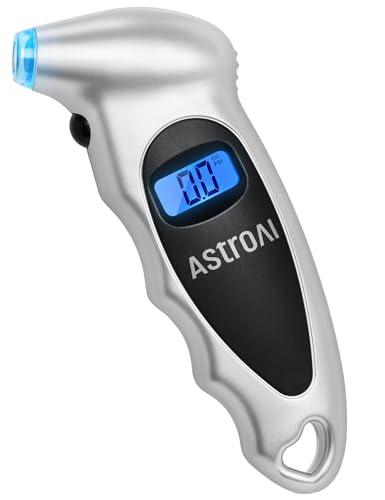
Accurate, Dependable Readings: Factory‑calibrated to ±1 PSI, so you can confidently match your vehicle’s recommended PSI (check the door jamb sticker). Ideal for monthly checks and road trips — consistent results every time, cold or warm.

HIGH ACCURACY: Every ETENWOLF's pencil tire gauge is calibrated to ANSI B40.1 Grade B, it is accurate to 2% of span in the middle 50% of range and 3% of span in the lower and upper 25% of range. Each ETENWOLF pencil tire pressure gauge is manually calibrated and has its unique calibration number printed on the pencil
What Causes Stiff Power Steering?
Stiff steering can come from the steering-assist system, but it can also come from tires, alignment, suspension, brakes, or mechanical binding. Do not replace a pump or steering rack until the full system has been checked.
| Cause | Description | Applies To |
|---|---|---|
| Low or incorrect tire pressure | Underinflation increases tire deformation and rolling resistance; damage or mismatched tires can also change steering feel and tracking. | All Camrys |
| Low hydraulic fluid | A leak at the pump, reservoir, hoses, seals, or rack can reduce hydraulic assist and allow air into the system. | Hydraulic models only |
| Worn or slipping drive belt | A loose, glazed, contaminated, or damaged belt may prevent a belt-driven steering pump from producing normal assist. | Hydraulic models with a belt-driven pump |
| Weak pump or restricted hydraulic line | The pump may not build adequate pressure, or a damaged hose may restrict hydraulic flow. | Hydraulic models only |
| Low voltage or EPS fault | Low system voltage, a power-supply or wiring problem, sensor error, motor fault, control fault, or electric steering-gear problem can reduce electric assist. | EPS models only |
| 2018 steering intermediate shaft condition | Toyota documented increased steering effort, resistance during low-speed steering, and reduced return-to-center on some 2018 vehicles. | Certain 2018 Camry/Camry Hybrid vehicles |
| Worn or binding steering components | The rack, intermediate shaft, steering-column joints, tie rods, ball joints, or strut mounts can create mechanical resistance. | All Camrys |
| Alignment, brake, or collision damage | Incorrect geometry, brake drag, bent parts, or subframe movement can make the car pull or steer abnormally. | All Camrys |
Cold, icy, or wet roads normally change available traction more than steering-assist effort. A tire failure or major tire-pressure loss, however, can strongly alter steering and vehicle control.
[Amazon Products Picked for You]
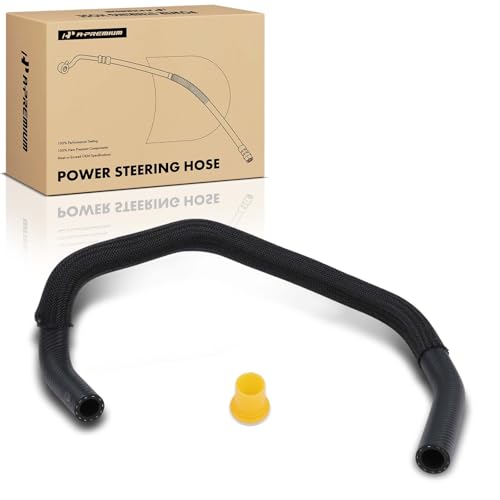
[Vehicle Fitment]: Compatible with Lexus ES300 2002-2003 V6 3.0L, ES330 2004-2006 V6 3.3L; Compatible with Toyota Camry 2002-2006 V6 3.0L, Solara 2004-2008 V6 3.3L

【Vehicle Fitment】power steering pump for 3.0L/3.3L V6 gas Toyota & Lexus, direct OEM cross reference replacement. Fits Toyota Camry 3.0L(1995-2003)/3.3L(2004-2006), Sienna 3.0L(1998-2003), Highlander 3.3L(2004-2007), Avalon 3.0L(1995-2004), Solara 3.0L(1999-2003); Lexus ES300 3.0L(1997-2001), RX330 3.3L(2004-2006, Japan Built Only). Interchange OE: 4432007010, 21-5931, AA1215931, FENSP15459, 55356924, 555459

Compatible Vehicles: 2002-2009 fit for Toyota Camry L4 2.4L Sedan, 2002-2008 for Toyota Solara L4 2.4L Coupe, 2002-2008 for Toyota Solara L4 2.4L Convertible
Why the Power Steering Pump Matters
This section applies only to Camrys confirmed to have hydraulic power steering. A U.S.-market 2012 or newer Camry uses EPS and does not have a hydraulic power-steering pump or reservoir.
[Amazon Products Picked for You]

ALL ASIAN CAR COVERAGE: Fully compatible with all Asian vehicles, including Subaru, Honda, Toyota, Lexus, Acura, and Mitsubishi

100,000 mile fluid life

The service solution for ALL European, North American, and Asian vehicles (Honda fluid recommended for Honda/Acura vehicles)
Importance of Hydraulic Pressure
The hydraulic power-steering pump circulates the specified fluid and creates pressure that assists the steering gear. When pressure is too low, steering effort usually rises most noticeably at idle, during parking, and during tight low-speed turns.
Low pressure can result from low fluid, aerated fluid, a slipping belt, a restricted hose, internal pump wear, or an internal steering-gear leak. Pressure testing may be needed before condemning the pump.
Symptoms of Pump Failure
- Whining, groaning, or squealing that changes as the wheel turns
- Heavy steering at low engine speed that changes as engine speed rises
- Foamy fluid or repeated air bubbles after the hydraulic system has been filled and bled correctly
- Visible leakage from the pump body, shaft seal, hoses, or fittings
- A burning smell, overheated fluid, or a slipping contaminated belt
These symptoms are clues, not proof. Low fluid, air intrusion, a restricted line, belt trouble, mechanical binding, or a steering-rack fault can imitate a bad pump.
Maintenance for Longevity
On a hydraulic-equipped Camry, check fluid level and condition during routine service and whenever steering effort or noise changes. Repair leaks promptly, use only the specified fluid, and inspect the pump drive belt and hoses. There is no single power-steering-fluid replacement interval that applies to every Camry; follow the maintenance and repair information for the exact model.
Pro Tip: Before buying a pump, verify that the car actually has hydraulic steering and check for leaks, correct fluid, belt condition, air intrusion, restricted hoses, and mechanical binding. Replacing a pump will not fix a seized joint, binding rack, damaged tire, or EPS fault.
How to Diagnose Power Steering Issues
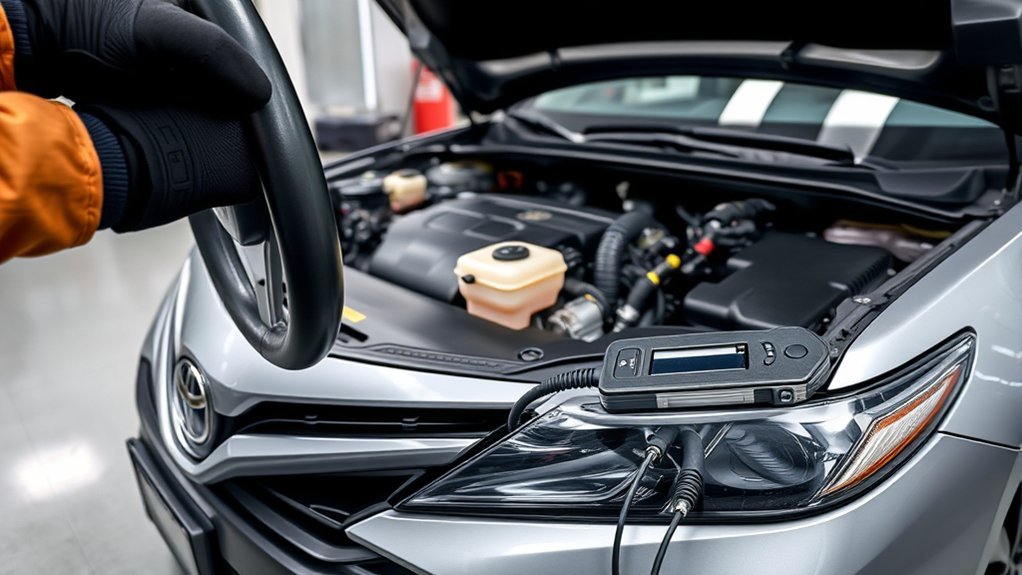
Start with checks that apply to every Camry, then follow the branch for the exact steering system. Work on a cool vehicle parked on level ground with the transmission in Park, the parking brake set, and the engine off unless a specific manufacturer procedure requires otherwise.
1. Confirm the Symptom and Warning Lights
Note whether the steering is heavy all the time, mainly at low speed, only in one direction, at specific steering-wheel positions, or after repeated turns. Listen for whining, squealing, clunks, scraping, or grinding. Check the instrument panel and consult Toyota’s official warning-light guide and the exact owner’s manual. Toyota identifies the EPS warning light as an indication of an electric power-steering system malfunction.
2. Check Tires and Road Contact
Inspect all tires for low pressure, cuts, bulges, severe wear, mismatched sizes, or a recently repaired puncture. Measure pressure when the tires are cold and use the value on the driver-door placard or in the owner’s manual—not the maximum pressure molded into the tire sidewall. The NHTSA TireWise guidance recommends checking tire pressure at least once a month when the tires are cold.
If the car pulls, the wheel sits off-center, or the tires wear unevenly, have the alignment, wheel bearings, brakes, tires, and suspension inspected.
3. Inspect Power Steering Fluid on Hydraulic Models
If the exact Camry is confirmed to have a hydraulic reservoir, follow the owner’s-manual procedure for checking the level because hot and cold markings may differ. Use a clean cloth and inspect the fluid for foam, debris, a burnt odor, or severe discoloration.
- Look for leaks: Inspect the reservoir, pump, pressure and return hoses, fittings, rack boots, and the ground under the car.
- Check the correct fluid: Do not mix fluids or use a stop-leak product unless Toyota specifically approves it for that vehicle.
- Watch for recurring bubbles: Foam can indicate low fluid, a suction-side air leak, improper bleeding, or pump cavitation.
Topping off a low reservoir is not a complete repair. The source of the fluid loss still needs to be identified.
4. Check Steering Components Condition
With the engine off, inspect what is safely visible: steering-rack boots, tie-rod ends, ball-joint boots, strut mounts, intermediate shaft, and steering-column joints. Look for torn boots, corrosion, impact damage, bent parts, looseness, or hydraulic-fluid contamination where applicable.
For a 2018 Camry or Camry Hybrid with increased effort or poor return-to-center, make the intermediate shaft an early inspection point because Toyota T-SB-0028-22 specifically identifies the lower universal joint as a possible cause.
A technician may lift the vehicle to check for play and binding while watching each joint. Suspension parts such as strut bearings, ball joints, and tie-rod ends can create resistance that feels like a power-steering problem.
Warning: Never work under a vehicle supported only by a jack. Steering and suspension inspections that require lifting the car should use properly rated stands and correct lift points, or be performed by a qualified shop.
5. Evaluate Electrical System Integrity on EPS Models
On an EPS-equipped Camry, inspect the 12-volt battery terminals for looseness or corrosion and have the battery and vehicle charging system tested if there has been a recent low-voltage event, jump-start, difficult startup, or multiple warning lights. Check EPS-related fuses and visible wiring only according to the exact owner’s manual or service information.
A scan tool capable of communicating with Toyota chassis and power-steering modules should be used to read steering-system diagnostic trouble codes and relevant live data. A basic emissions-only OBD-II reader may not access the EPS control system. Possible fault areas include power supply, wiring, torque-sensor input, the assist motor, control electronics, communication faults, or the electric steering gear.
Do not erase diagnostic codes, perform calibration, or replace an EPS module before recording the fault information and following the applicable Toyota diagnostic procedure. Some steering or collision repairs may require model-specific initialization or calibration.
6. Consider Temporary EPS Overheating Protection
Toyota owner documentation explains that frequent steering input over an extended period can cause EPS assistance to be reduced to protect the electric motor from overheating. The wheel can temporarily feel heavier as a result.
If this follows repeated parking or low-speed steering, reduce unnecessary steering input or stop safely and switch the vehicle off as directed by the exact owner’s manual. Toyota documentation for affected EPS systems says normal assist should generally return within about 10 minutes. If heavy steering persists, repeatedly returns during normal driving, comes with an EPS warning, or includes binding or poor return-to-center, treat it as a fault that needs diagnosis rather than normal thermal protection.
7. Perform a Controlled Road Test Only if Safe
If the tires are sound, there is no severe leak or binding, no critical steering warning is present, and the vehicle remains easy to control, a short low-speed test can help establish whether the symptom changes with vehicle speed, road crown, braking, or repeated turns. Stop immediately if steering effort increases, the wheel sticks, or the car cannot be held safely on the intended path.
Heavy steering is a symptom, not a diagnosis. The fastest safe repair comes from identifying the Camry’s steering-system type, checking model-specific Toyota information, and matching the symptom pattern before replacing parts.
How to Check the Steering Rack for Damage
The steering rack can be hydraulically or electrically assisted depending on the Camry. Before blaming the rack, rule out tires, alignment, hydraulic supply where applicable, EPS power supply and faults, the steering intermediate shaft, and suspension binding.
| Inspection Step | What to Look For | What It May Mean |
|---|---|---|
| Visual inspection | Cracked housing, impact marks, wet hydraulic lines on hydraulic models, fluid inside or around rack boots, torn boots | Leak, contamination, collision damage, or internal seal failure |
| Movement test | Binding, a tight spot, delayed road-wheel movement, or different effort left versus right | Rack, shaft, joint, suspension, or assist-system fault |
| Play check | Steering wheel moves before the road wheels respond; inner or outer tie-rod looseness | Worn linkage or steering-gear components |
| Noise check | Clunks, knocks, scraping, or grinding while turning or crossing bumps | Loose mount, intermediate-shaft joint, rack damage, strut mount, or suspension wear |
| Electronic diagnosis | EPS codes, abnormal sensor data, assist-limit history, motor-current faults, power-supply problems, or communication errors | Electrical or electric-steering-gear fault requiring service information and appropriate test equipment |
Rack replacement is expensive and normally requires alignment checks; EPS-equipped vehicles may also require specified initialization or calibration procedures. Confirm the diagnosis before authorizing a complete steering-gear replacement.
Maintenance Tips for Smooth Steering Performance
- Check tire pressure monthly: Use the cold-pressure specification on the door placard and inspect the tires for uneven wear or damage.
- Respond to leaks and warning lights: A falling hydraulic-fluid level on a hydraulic model or an EPS warning on an electric-assist model deserves prompt diagnosis.
- Inspect belts and hoses where fitted: On hydraulic systems, look for cracks, glazing, looseness, swelling, seepage, or contamination during routine service.
- Avoid unnecessary steering at full lock: Prolonged high steering load can stress hydraulic components, while repeated low-speed steering can temporarily reduce assist on some EPS systems.
- Maintain alignment and suspension: Binding strut mounts, worn tie rods or ball joints, damaged wheel bearings, and incorrect alignment can change steering effort or tracking.
- Use the correct fluid and procedure: Never assume every Camry needs power-steering fluid or a routine fluid flush.
- Check model-specific programs: Owners of a 2018 Camry or Camry Hybrid with stiffness or poor return-to-center should ask about T-SB-0028-22 and Customer Support Program 22TE02.
Routine checks can catch tire problems, low voltage, leaks, damaged joints, and suspension wear before they become more expensive or create a loss-of-control risk.
Knowing When to Get Professional Help

Arrange professional diagnosis when basic checks do not reveal the cause, the symptom is intermittent, the steering binds, or the repair requires lifting the vehicle, hydraulic pressure testing, EPS module data, calibration, or steering-gear removal.
Have the vehicle towed rather than driven when:
- Steering assist is suddenly lost or the wheel binds
- The car is difficult to keep on its intended path
- A front tire is flat, bulged, separated, or otherwise seriously damaged
- Hydraulic fluid is leaking rapidly or reaching hot parts
- You hear severe grinding, see smoke, or smell a burning belt or fluid
- The EPS warning light appears with noticeably reduced steering control
Mechanics can inspect the complete system, read steering-module data, perform hydraulic pressure tests where applicable, and distinguish a steering-gear fault from a pump, shaft, electrical, tire, brake, or suspension problem.
Check the exact VIN for open safety recalls through Toyota’s recall lookup and the NHTSA recall database. Recall coverage depends on the VIN. If you have a 2018 Camry with the stiffness or return-to-center symptoms described above, separately ask Toyota or an authorized dealer about Customer Support Program 22TE02 because it is a support program rather than a safety recall.
Estimated Costs for Camry Steering Repairs
Steering repair prices vary by model year, steering-system type, location, labor rate, part source, rust, related damage, and whether alignment or calibration is required. The figures below are U.S. budgeting references from RepairPal estimates available in September 2026, not guaranteed quotes.
| Service or Repair | Current Reference | Notes |
|---|---|---|
| Basic tire, warning-light, and visual checks | Often $0 if performed by the owner | Does not replace professional diagnosis when steering is unsafe or the cause remains unknown |
| Professional diagnosis | Shop-specific | Ask whether the fee includes chassis/EPS scanning, lift inspection, road testing, or hydraulic pressure testing |
| Hydraulic power-steering pump | About $678–$782 average Camry estimate | Applies only to hydraulic-equipped model years; taxes, location, and related repairs are extra |
| Steering intermediate shaft | Varies; potentially covered on eligible 2018 vehicles | Check CSP 22TE02 before paying for an eligible 2018 Camry/Camry Hybrid repair |
| Rack-and-pinion / steering gear | About $2,167–$2,697 average across Camry estimates | Year-specific estimates can be substantially higher on later Camrys; confirm the exact vehicle before budgeting |
| Wheel alignment | About $223–$326 average Camry estimate | Year and location affect the estimate; alignment should be checked after many steering or suspension repairs |
RepairPal’s September 2026 year-specific rack estimates illustrate why a single universal figure can mislead: later Camrys can price considerably above the model-wide average. Get a written diagnosis and itemized estimate before approving a steering rack or electric steering gear.
How to Maintain Your Power Steering System
The safest maintenance schedule is the one published for the exact Camry. A U.S.-market 2012 or newer Camry uses EPS, so its steering maintenance does not include hydraulic power-steering-fluid service.
| Task | Practical Frequency |
|---|---|
| Check cold tire pressure and visible tire condition | At least monthly and before long trips |
| Check hydraulic fluid level and leaks, if equipped | During routine service and anytime steering noise or effort changes |
| Inspect hydraulic pump belt and hoses, if equipped | At scheduled service intervals and whenever cracks, squeal, contamination, or leakage appears |
| Check 12-volt electrical condition on EPS models | During routine service and after low-voltage events, jump-starts, startup problems, or relevant warning lights |
| Inspect steering and suspension components | At service visits and whenever there is play, binding, clunking, pulling, poor return-to-center, or uneven tire wear |
| Replace or exchange hydraulic fluid | Only when specified for the exact hydraulic-equipped vehicle or required by contamination or repair |
| Check recalls and applicable Toyota service/support programs | After purchase and when a model-specific symptom or campaign applies |
Regular checks of tires, electrical health, leaks on hydraulic models, steering joints, and suspension components help preserve predictable steering and reduce the chance that a small problem turns into a costly repair.
Related Guides
Frequently Asked Questions
Why does my Toyota Camry steering feel heavy?
Common causes include low or damaged tires, mechanical binding, alignment or suspension problems, loss of electric steering assist, and—on older hydraulic-equipped Camrys—a fluid, belt, hose, or pump problem. Certain 2018 Camry and Camry Hybrid vehicles also have a Toyota-documented steering intermediate-shaft condition.
Does a 2012 or newer Toyota Camry have power steering fluid?
A U.S.-market 2012 or newer Camry uses electric power steering and does not use hydraulic power-steering fluid. Toyota introduced EPS across the U.S. Camry lineup for the 2012 model year. Check the exact manual for earlier vehicles or vehicles built for other markets.
Why is my 2018 Camry steering stiff or slow to return to center?
Toyota T-SB-0028-22 says some 2018 Camry and Camry Hybrid vehicles can develop increased steering effort, slight resistance during low-speed steering, or reduced return-to-center because of the lower universal joint in the steering intermediate shaft. Toyota Customer Support Program 22TE02 covers certain affected vehicles, subject to its VIN, mileage, and time requirements.
What are the signs of a failing power steering pump?
On a hydraulic-equipped Camry, possible signs include whining or groaning, increased low-speed steering effort, leaks, foamy fluid, or a burning smell. These symptoms can also come from low fluid, air intrusion, a belt, a hose, mechanical binding, or the steering rack, so confirm the fault before replacing the pump.
Can a weak 12-volt battery make Camry steering feel heavy?
Low or unstable electrical-system voltage can contribute to reduced electric steering assistance or warning lights on an EPS-equipped Camry. Check the 12-volt battery connections and vehicle power supply and scan the EPS system rather than assuming the steering motor or rack has failed.
Why does the steering get heavy after repeated parking maneuvers?
Toyota documents that frequent steering input can temporarily reduce EPS assistance to protect the motor from overheating, which can make the steering feel heavier. On systems covered by this guidance, normal assist should generally return after the steering load is reduced or the vehicle is stopped for about 10 minutes. Persistent, repeated, binding, or warning-light-related symptoms still require diagnosis.
Is it safe to drive a Camry with heavy steering?
Do not continue driving when the change is sudden, the wheel binds, the car is difficult to control, a tire is seriously damaged, fluid is leaking rapidly, or an EPS warning appears with reduced steering control. Stop safely and arrange towing. A mild but persistent change in steering effort still needs prompt diagnosis.
Should I replace the steering rack if my Camry is hard to turn?
Not until simpler and model-specific causes have been ruled out. Tire problems, an intermediate shaft, strut mounts, tie rods, ball joints, alignment, hydraulic-assist faults on older models, low EPS voltage, sensors, wiring, and control faults can all imitate a bad steering rack. A complete diagnosis is worthwhile before approving an expensive steering-gear replacement.
Conclusion
If your Toyota Camry steering wheel is hard to turn, start with the model year and steering-system type instead of assuming it needs power-steering fluid or a new rack. U.S.-market 2012 and newer Camrys use EPS, while older configurations may require hydraulic-system checks. On a 2018 Camry or Camry Hybrid with increasing steering effort or poor return-to-center, check Toyota T-SB-0028-22 and Customer Support Program 22TE02 before authorizing a major repair.
Check the tires first, record any warning lights and noises, and stop driving if the wheel binds or the vehicle becomes difficult to control. A symptom-based, model-specific diagnosis is safer and can prevent unnecessary parts replacement.
Sources
- Toyota Introduces Seventh-Generation Camry for 2012 — Toyota statement that all new 2012 Camry models adopted electric power steering
- Toyota Manuals and Warranties — exact model-year operating, warning, fluid, and maintenance information
- Toyota Warning Lights — official warning-light information including EPS
- Toyota T-SB-0028-22 — 2018 Camry/Camry Hybrid steering effort and reduced return-to-center bulletin
- Toyota Customer Support Program 22TE02 — coverage information for the steering intermediate shaft on certain 2018 vehicles
- Toyota Recall Lookup — VIN-based Toyota safety-recall information
- NHTSA Recalls — federal VIN and equipment recall lookup
- NHTSA TireWise — cold tire-pressure, tire condition, and tire-safety guidance
- Toyota Technical Information System — official Toyota service information for professional diagnosis and repair
- RepairPal Camry Power Steering Pump Estimate — U.S. cost reference updated in September 2026
- RepairPal Camry Rack-and-Pinion Estimate — U.S. model-wide and model-year repair-cost reference
- RepairPal Camry Wheel Alignment Estimate — U.S. alignment-cost reference updated in September 2026