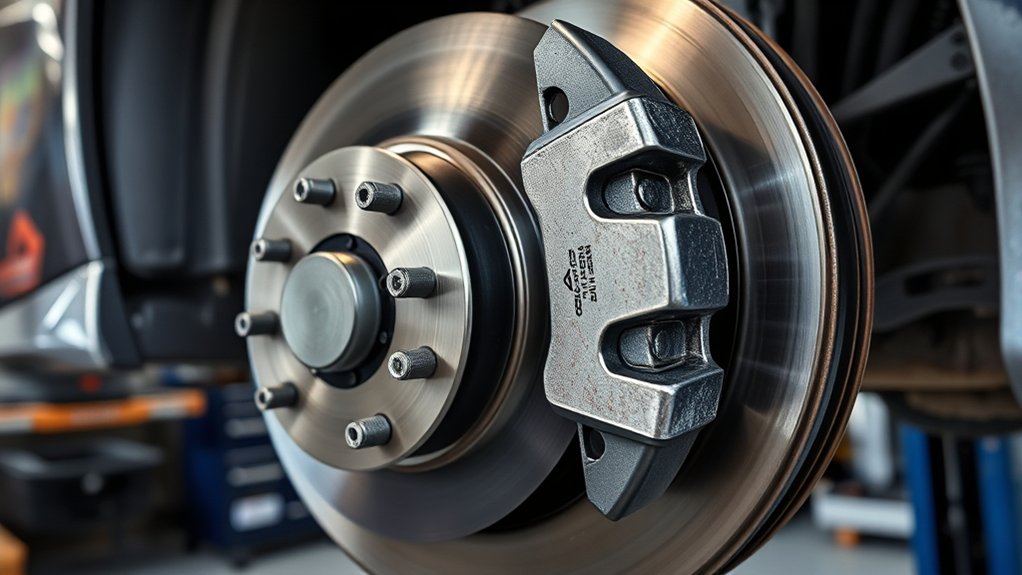
Worn brake pads can change how a Toyota Camry sounds, feels, and stops, but no single symptom proves that the pads are the cause. A high-pitched squeal may come from a wear tab, while grinding, pulling, a soft pedal, vibration, or a red brake warning light can point to a more urgent brake-system problem. The safest approach is to combine a careful visual inspection with the guidance for your Camry’s model year.
Quick Answer
Toyota Camry brake pads may need service if the friction material is visibly thin, a wear tab produces a persistent metallic squeal, braking takes more effort, or grinding begins. Stop driving and arrange an inspection if braking feels unsafe, the pedal sinks, fluid is leaking, or a red brake warning light stays on.
Key Takeaways
- A wear-indicator squeal can signal thin pads, but ordinary brake squeal has several other possible causes.
- Grinding usually requires prompt professional inspection because the pad backing plate may be contacting the rotor.
- A soft or sinking pedal, fluid leak, pulling, or warning light is not simply a “worn pad” symptom and may indicate a hydraulic or system fault.
- Measure the friction material on both the inner and outer pads and compare it with the service limit for the exact Camry year and brake package.
- Use the VIN when buying pads because front and rear part numbers vary by model year, trim, drivetrain, and brake package.
Signs Your Toyota Camry Brake Pads Are Worn Out
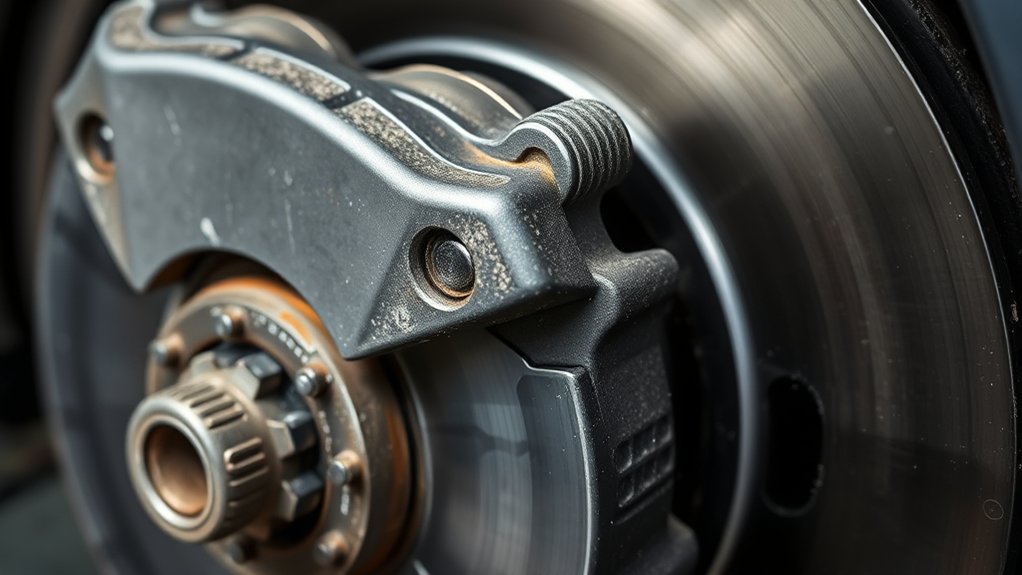
The most useful warning signs are a combination of visible pad wear and changes that occur when you brake. Listen, feel, and look, but do not diagnose the pads from sound alone. Brake noise can also come from surface rust, debris, glazing, loose hardware, missing shims, contaminated friction material, or normal vibration between the pads and rotors.
Persistent Metallic Squeal
Many disc-brake pads use a small metal wear tab that contacts the rotor when the friction material becomes thin. That contact can produce a sharp, repeating squeal that may be heard while the wheel is turning or during light braking. A brief squeak after rain, washing, or an overnight temperature change is less conclusive. If the noise persists, inspect the pads rather than assuming the sound is harmless.
Grinding or Harsh Scraping
A grinding sound can mean the friction material is severely worn and metal is contacting the rotor. It can also have other causes, such as trapped debris or damaged hardware, so the brake assembly needs inspection. Because metal-to-metal contact can reduce braking performance and score the rotor, avoid unnecessary driving and arrange service promptly.
Visible Thin or Uneven Friction Material
Look at the friction material bonded to the metal backing plate, not the total thickness of the pad assembly. Check both the inner and outer pads on each side of the axle. One pad may wear faster because of a sticking caliper slide, piston problem, or hardware issue. If the wear groove has disappeared, the material is close to the backing plate, or one pad is much thinner than its partner, the brakes need professional evaluation.
Longer Stopping Distance or Reduced Brake Response
Worn or overheated pads can contribute to weaker braking, but longer stopping distance is not specific to pad wear. Tires, road conditions, contaminated pads, brake fluid problems, caliper faults, and other system defects can produce a similar result. Treat any noticeable loss of braking effectiveness as a safety concern rather than waiting for another symptom.
Vibration, Pulsation, or Pulling
Pedal pulsation or steering-wheel vibration often points to rotor thickness variation, uneven friction deposits, contamination, or another brake or suspension problem. Pulling to one side may involve a sticking caliper, uneven pad wear, a hydraulic restriction, tires, or alignment. These symptoms justify a complete inspection; replacing pads alone may not solve them.
Brake Warning Light
Do not treat the red brake warning light as a dedicated pad-wear light. Depending on the Camry model year and condition, it may indicate an applied parking brake, low brake fluid, or a brake-system malfunction. Toyota advises owners to consult the vehicle-specific manual for warning-light meanings, and red indicators require prompt attention. Review the Toyota warning-light guidance and the manual for your exact model.
Warning: Stop driving as soon as it is safe if the brake pedal sinks, braking power suddenly drops, brake fluid is leaking, smoke or a burning odor comes from a wheel, grinding is severe, or a red brake warning light remains on with the parking brake released. Have the vehicle towed if safe braking is uncertain.
Key Warning Signs and What They May Mean
This table separates likely pad-wear clues from symptoms that can indicate a broader brake-system problem.
| Warning Sign | What It May Mean | Recommended Action |
|---|---|---|
| Persistent high-pitched metallic squeal | Wear tab contacting the rotor, or another brake-noise cause | Inspect pad thickness and hardware soon |
| Grinding or harsh scraping | Severely worn pads, damaged hardware, or debris | Limit driving and arrange prompt inspection |
| Soft, spongy, or sinking pedal | Air, fluid leak, master-cylinder fault, overheating, or another hydraulic issue | Do not assume pads are the cause; seek immediate diagnosis |
| Pedal or steering-wheel vibration | Rotor variation, uneven deposits, contamination, or suspension/tire issue | Request a complete brake and wheel inspection |
| Vehicle pulls while braking | Uneven braking, sticking caliper, hydraulic restriction, or tire issue | Inspect before normal driving continues |
| Red brake warning light | Parking brake, low fluid, or brake-system fault; meaning varies by model | Check the owner’s manual and address immediately |
How Brake Wear Indicators Work
A mechanical wear indicator is usually a small metal tab attached to one pad. As the friction material wears down, the tab reaches the rotor and creates an audible warning. Some vehicles use electrical wear sensors, but equipment varies by model and market. Do not assume every newer Camry has a dedicated electronic pad-wear light; confirm the features and warning symbols in the Toyota manual for your vehicle.
A wear indicator is an alert to inspect the brakes, not a complete diagnosis. Pads can wear unevenly, a tab can be bent or installed in a position that changes when it sounds, and some pads may not use the same indicator design. Whenever pads are replaced, the technician should inspect the rotors, caliper slides, pistons, shims, clips, hoses, and fluid condition as applicable.
Note: A general brake-system warning light and an electronic brake-pad wear sensor are not the same thing. Use the symbol description in the Camry owner’s manual instead of guessing from the color or shape of the light.
How to Check Your Toyota Camry Brake Pads at Home
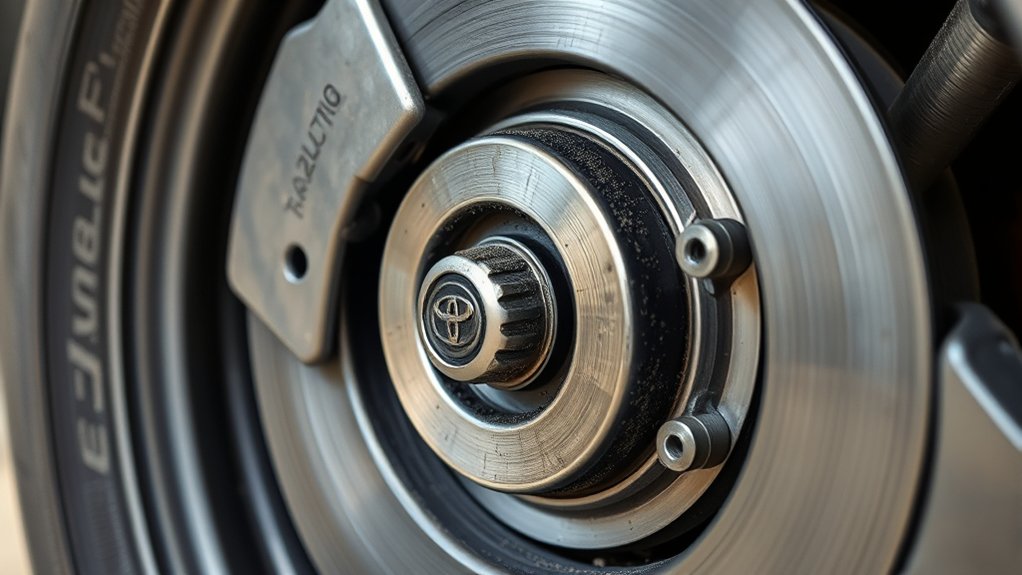
A basic visual check can help you decide whether the car needs service. The inspection does not replace professional diagnosis, and removing a wheel requires proper lifting equipment and the correct jacking points. If you are not confident supporting the vehicle safely, inspect through the wheel openings or ask a qualified technician to check the brakes.
At a Glance
| Time Required | About 10–20 minutes for a wheel-on check; longer if a wheel is removed |
| Difficulty | Beginner for a visual check; intermediate for safe wheel removal |
| Tools Needed | Flashlight, ruler or brake-lining gauge; for wheel removal, wheel chocks, lug wrench, approved jack, jack stands, and torque wrench |
| Cost | No parts cost for an inspection; tool and professional inspection costs vary |
Gather the Necessary Tools
For a wheel-on inspection, use a bright flashlight and a small ruler, depth gauge, or brake-lining gauge. A digital caliper may work when access allows, but measure only the friction material. A drawing compass is not an appropriate measuring tool because it does not provide a direct, reliable thickness reading.
If the wheel must come off, add wheel chocks, the correct lug wrench or socket, a vehicle-rated jack, properly rated jack stands, and a torque wrench. Use the lifting points and wheel-installation procedure specified for your Camry. Never rely on the emergency jack or a hydraulic jack alone while any part of your body is near or under the vehicle.
Prepare the Vehicle Safely
- Park on a firm, level surface away from traffic.
- Shift to Park, turn the vehicle off, and follow the owner’s manual instructions for securing the vehicle.
- Chock the wheels that will remain on the ground.
- Allow the brakes to cool before touching the wheel, caliper, or rotor.
- If removing a wheel, loosen the lug nuts slightly before lifting, use the specified jacking point, and support the vehicle with jack stands before continuing.
Inspect Brake Pad Thickness
- Locate the caliper and identify the metal backing plate and the friction material that faces the rotor.
- Use the caliper opening to view the outer pad. If access is poor, remove the wheel safely.
- Measure the friction material only. Do not include the metal backing plate or noise-insulator shim.
- Inspect the inner pad as well as the outer pad. A large difference in thickness can indicate a caliper or hardware problem.
- Check the opposite wheel on the same axle. Pads should be evaluated as an axle set, not one wheel at a time.
- Compare the measurements with the service information for the exact model year and brake package. If the material is close to the backing plate, the wear groove is gone, or the indicator is contacting the rotor, schedule replacement promptly.
Pro Tip: Record the inner and outer pad measurements for all four wheels. Comparing them at the next tire rotation helps reveal rapid or uneven wear before it becomes a larger repair.
Look for Related Brake Problems
Pad thickness is only part of the inspection. Look for deep rotor scoring, a pronounced rotor lip, cracks, blue heat spots, torn caliper boots, leaking fluid, loose or missing hardware, and pads contaminated by oil or brake fluid. Do not inhale or blow out brake dust with compressed air. If the rotor or caliper condition is unclear, have a technician measure and inspect the components.
Reinstall the Wheel Correctly
If you removed a wheel, clean obvious debris from the wheel-to-hub mounting surfaces without disturbing brake components, install the wheel, hand-start every lug nut, lower the vehicle as directed, and tighten the lug nuts in the specified sequence and to the torque listed for your model. Pump the brake pedal only if brake components were serviced; a simple visual inspection should not require opening the hydraulic system.
How Much Brake Pad Material Is Enough?
The original article’s “replace below 1/4 inch” rule is too broad. One-quarter inch equals about 6.35 mm, which may still represent substantial usable friction material on many pads. The correct replacement point is the service limit for the exact pad and vehicle, along with the condition of the rotor, hardware, and paired pad. As a conservative planning guide, many shops recommend arranging service as pads approach the low-single-digit millimeter range, but that rule does not override Toyota’s model-specific specifications.
Do not wait for a universal mileage number. Brake-pad life changes with traffic, hills, towing, wheel and tire condition, driver habits, pad compound, caliper condition, corrosion, and whether the Camry uses regenerative braking. Inspecting the brakes during tire service is more reliable than assuming every set will last the same distance.
The Importance of Timely Brake Pad Replacement
Replacing pads before the friction material is exhausted preserves a predictable contact surface and reduces the chance that the backing plate will damage the rotor. It also creates an opportunity to catch uneven wear, seized slides, torn boots, fluid leaks, and other faults that a simple pad swap could miss.
Enhanced Vehicle Safety
Healthy pads, rotors, calipers, fluid, tires, and electronic brake controls work together. Timely service helps maintain consistent pedal response and stopping performance, but new pads cannot correct every braking complaint. Any sudden change in pedal feel, stopping ability, noise, heat, or vehicle direction should trigger a complete diagnosis.
Cost-Effective Maintenance
Early inspection can prevent a worn pad from scoring a serviceable rotor or overheating nearby components. However, no fixed savings percentage applies to every repair. Labor rates, rotor condition, hardware, caliper problems, parts brand, and local pricing all affect the final cost. Ask for measured pad thickness and rotor condition so the recommendation is based on evidence.
Improved Brake Performance
Correctly matched pads installed with serviceable rotors and freely moving hardware can restore smooth, consistent braking. The job should include inspection of both sides of the axle, correct hardware placement, proper wheel torque, and any bedding procedure specified by the pad manufacturer. Replace pads as an axle set; do not install a new pad on only one side.
Consequences of Ignoring Worn Brake Pads
Continuing to drive after the friction material is exhausted can allow the backing plate to scrape the rotor. The result may include deep scoring, excess heat, reduced braking consistency, noise, and a repair that requires rotors or additional hardware instead of pads alone. Extreme heat or a sticking caliper can also damage seals and create uneven wear.
Grinding is not a mileage reminder. It is a reason to reduce driving and have the complete brake assembly inspected before more damage occurs.
Do not assume that topping off low brake fluid solves a warning light. Fluid level can fall as pads wear, but it can also drop because of a leak. Adding fluid without finding the cause can hide a serious problem or overfill the reservoir after brake service.
Where to Find Affordable Replacement Brake Pads
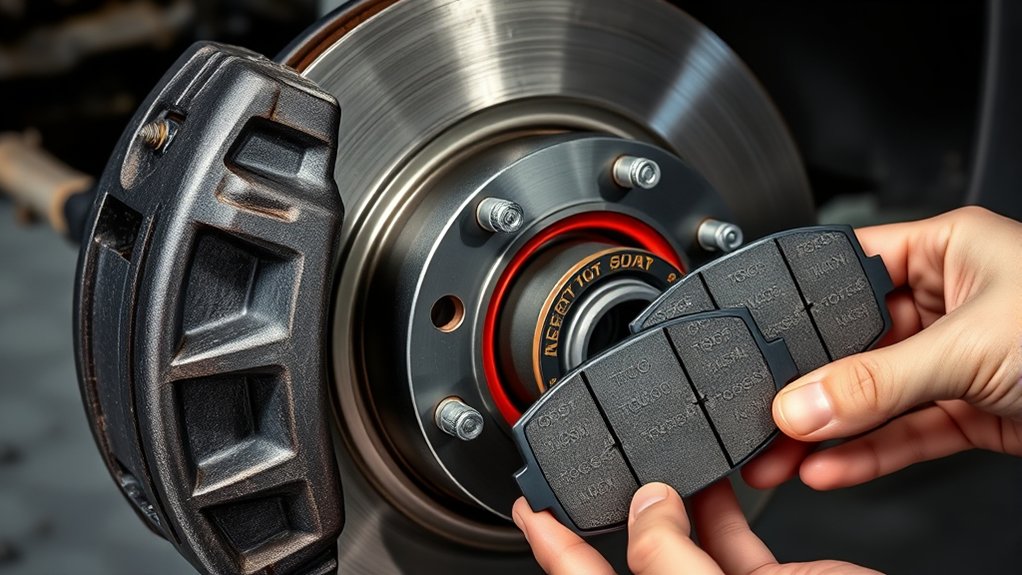
Brake-pad fitment is not universal across all Toyota Camry years and trims. The part numbers and prices in the original draft should not be used without verification. Front and rear pads differ, and variations may exist by model year, drivetrain, production configuration, and brake package.
Use the full 17-character VIN in the official Toyota parts catalog, ask a Toyota parts department to confirm fitment, or use a reputable manufacturer’s application catalog. Compare the complete job cost, including pads, shims or clips, rotors if needed, labor, taxes, and warranty terms. Toyota Genuine Parts are one option, but a correctly specified, standards-compliant aftermarket pad from a reputable manufacturer may also be suitable. The important points are verified fitment, appropriate friction characteristics, quality hardware, and correct installation.
Before purchasing, confirm all of the following:
- Exact model year and VIN
- Front or rear axle
- Trim, drivetrain, and brake package where applicable
- Whether hardware, shims, or wear indicators are included
- Rotor condition and minimum thickness
- Return policy and warranty coverage
You can also use the NHTSA VIN recall lookup to check whether the vehicle has an unrepaired safety recall. A recall search does not replace normal brake maintenance, but it can identify model-specific safety campaigns.
Frequently Asked Questions
How do I read a Toyota Camry brake pad wear indicator?
A mechanical wear tab makes a repeating metallic squeal when it reaches the rotor. A visual groove may also disappear as the pad wears. Electrical sensors are model-dependent, so use the owner’s manual to identify any dashboard message or symbol. Confirm wear by inspecting both the inner and outer pads.
How do I check Toyota Camry brake pads?
Park on a firm, level surface, let the brakes cool, and inspect through the wheel or remove the wheel using the correct jacking points, wheel chocks, jack stands, and wheel-torque procedure. Measure only the friction material and compare the inner and outer pads on both sides of the axle.
What is the 30/30/30 rule for brakes?
There is no verified Toyota maintenance rule requiring inspection every 30 days and replacement every 30,000 miles. Brake wear varies too much for that schedule to be reliable. Follow the maintenance guide for your model and inspect the brakes whenever symptoms appear or the wheels are removed for service.
Do Toyota Camry brake pads have wear indicators?
Many replacement pad sets use mechanical wear tabs, but the design and location vary. Do not assume every Camry has an electronic brake-pad sensor or a dedicated pad-wear warning light. Check the exact pad set, VIN-based parts information, and owner’s manual.
Can worn brake pads cause a soft pedal?
Pad wear can change caliper-piston position and fluid level, but a soft, spongy, or sinking pedal should be treated as a possible hydraulic problem, such as air, a leak, overheated fluid, or a master-cylinder fault. Have the system inspected immediately.
Can I drive a Toyota Camry with grinding brakes?
Driving should be limited because grinding may indicate metal-to-metal contact or another serious fault. If braking power is reduced, the pedal feels abnormal, a wheel is very hot, or a warning light is on, stop and arrange towing rather than driving to a shop.
Conclusion
Check Toyota Camry brake pads by combining visible friction-material thickness with sound, pedal feel, rotor condition, and model-specific information. Persistent squealing deserves inspection; grinding, fluid leaks, a sinking pedal, or reduced stopping power requires urgent attention. Measure both pads on both sides of the axle, use safe lifting practices, and verify replacement parts by VIN. Timely diagnosis protects the rotors, controls repair costs, and—most importantly—keeps the braking system dependable.
Sources
- Toyota Manuals and Warranties — model-specific owner’s manuals, maintenance guides, and official vehicle information.
- Toyota Dashboard Warning Lights — explains that warning meanings vary by vehicle and directs owners to the model-specific manual.
- Official Toyota Parts Catalog — VIN-based parts lookup and fitment verification.
- National Highway Traffic Safety Administration Recall Lookup — VIN and year/make/model recall information.
- Stender et al., “Deep Learning for Brake Squeal” — research showing that brake squeal is a vibration phenomenon with complex causes, not a pad-wear diagnosis by itself.

