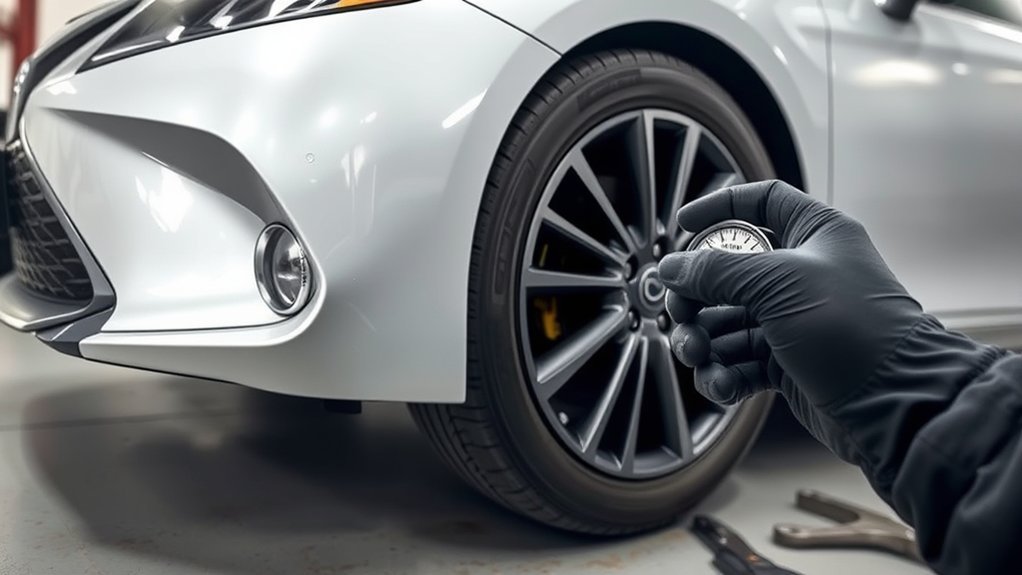
Uneven tire wear on a Toyota Camry usually means one or more tire, alignment, suspension, balance, inflation, or wheel-related issues need attention. Start by reading the wear pattern: one-sided inner or outer wear points first toward alignment or suspension, center wear often points toward excessive pressure, both-edge wear often points toward low pressure or excess load, and scalloped or patchy wear can involve balance, damping, wheel damage, or mechanical looseness. Fixing the cause early helps protect handling, braking, tire life, and fuel economy.
Quick Answer
Toyota Camry uneven tire wear is most often linked to incorrect tire pressure, missed rotations, wheel misalignment, tire or wheel imbalance, worn suspension or steering parts, or tire and wheel damage. Check tread depth across the full tire, compare the wear pattern, set cold pressure from the driver-door label, and note any pulling, vibration, noise, or repeated pressure loss. If the wear is severe or keeps returning, have the tires, wheels, alignment, brakes, bearings, and suspension inspected.
Last updated: September 22, 2026 · Fact-checked against current Toyota, NHTSA, and tire-manufacturer guidance. Author: [VERIFY: add real author/byline and relevant credentials]
Key Takeaways
- Inner-edge or outer-edge wear often points toward toe, camber, suspension movement, or impact damage.
- Center tread wear can point toward excessive inflation, while both-edge wear often points toward underinflation, excess load, or driving conditions.
- Check cold tire pressure at least monthly and use the Camry’s driver-door Tire and Loading Information Label, not the tire sidewall maximum.
- Follow the rotation interval and pattern in your exact Toyota maintenance information. NHTSA says 5,000 to 8,000 miles is a common interval when the vehicle manufacturer recommends rotation.
- Replace tires at 2/32 inch tread depth, or sooner if you see cords, bulges, serious cracks, sidewall damage, tread separation, or other unsafe damage.
At a Glance
| Time Required | 10 to 20 minutes for a driveway inspection; longer if a shop checks alignment, balance, wheels, brakes, bearings, or suspension |
| Difficulty | Easy for visual and pressure checks; professional help recommended for alignment, balancing, bearings, brakes, and suspension diagnosis |
| Tools Needed | Tire-pressure gauge, tread-depth gauge or penny, flashlight, gloves, and your Toyota owner’s manual |
| Cost | Free for basic inspection; shop pricing varies for rotation, balancing, alignment, tire replacement, wheel repair, or suspension work |
How Do You Diagnose Uneven Tire Wear on a Toyota Camry?

Start with a slow visual inspection in good light. Park your Camry on a flat surface, turn the front wheels slightly for better access, and look across the full tread width of each tire. Compare the inner shoulder, center ribs, and outer shoulder instead of checking only the most visible edge.
- Check tread depth. Use a tread-depth gauge, or use the penny test as a quick screen. The National Highway Traffic Safety Administration says tires are not safe and should be replaced when tread reaches 2/32 inch.
- Read the wear pattern. Compare one-sided shoulder wear, center wear, both-edge wear, feathering, cupping, and localized flat or patchy spots.
- Check cold tire pressure. Measure pressure before driving, or after the car has been parked for at least three hours.
- Compare all four tires. One tire wearing much faster than the others can point to local tire or wheel damage, brake drag, alignment trouble, or a steering, suspension, hub, or bearing problem at that corner.
- Notice driving symptoms. Pulling, steering-wheel vibration, thumping, humming, wandering, or a crooked steering wheel can help narrow the problem.
Note: The correct tire pressure for your Camry is the cold pressure listed on the driver-door Tire and Loading Information Label or in your Toyota owner’s manual. Do not use the maximum pressure printed on the tire sidewall as your normal setting. For the complete pressure-setting procedure, see how to set Toyota Camry tire pressure.
[Amazon Products Picked for You]

1. Accuracy: Accurately measure your tire tread depth in both inches and millimeters with depth gauge. Range: 0-25.4mm/0-1inch, Accuracy: 0.01mm/0.0005inch.

1.Accurate and Efficient: Different colors on the bar represents different scopes, the red range on bar: 0 - 3/ 32; Yellow range on bar: 3/ 32 - 6/ 32; Green range on bar: 6/ 32 - 32/ 32, allowing you easy and fast to read and calibrated

1. Accurately measures tire tread depth gauge, Calibrated from 0 to 1 inch in 1/32 inch
What Do Common Toyota Camry Tire Wear Patterns Mean?
The quickest way to narrow uneven tire wear is to match the physical pattern with any handling, vibration, or noise symptoms. Treat the pattern as a diagnostic clue rather than proof of one failed part.
| Wear Pattern | Likely Causes | Check First |
| Both outer edges worn | Underinflation, excess load, or repeated hard cornering | Cold tire pressure, load, and driving conditions |
| Center tread worn faster | Excessive inflation for the vehicle/load, fitment, or other tire-specific conditions | Pressure reading against the driver-door label and correct tire fitment |
| Inner or outer shoulder worn on one side | Toe or camber misalignment, worn or damaged suspension, or a bent component | Four-wheel alignment measurements and suspension inspection |
| Feathered or sawtooth tread | Toe misalignment or irregular wear made worse by missed rotation | Toe readings, suspension condition, and rotation history |
| Cupping or scalloped dips | Imbalance, weak damping, wheel damage, loose suspension or hub components, or an irregular tire | Tire condition, balance, wheel runout, struts, suspension, hub, and bearing condition |
| Localized flat spot or patchy wear | Brake lock or skid, imbalance, localized tire damage, wheel issues, mounting problems, or loose suspension components | Tire casing, balance, brakes, wheel condition, mounting, and suspension |
| One tire much worse than the others | Local tire or wheel damage, brake drag, alignment trouble, or steering/suspension/hub fault at that corner | Wheel, brake, hub, bearing, tire, and suspension inspection |
Do not diagnose from tread shape alone. For example, Michelin notes that one-sided shoulder wear can have several causes, including alignment, loose or worn suspension parts, hard cornering, rotation practices, and fitment. Localized wear can likewise involve balance, braking, tire damage, mounting, or suspension problems.
What Causes Uneven Tire Wear on a Toyota Camry?
Uneven tire wear often comes from more than one condition. A low tire can wear its shoulders faster while incorrect alignment damages one edge, or a worn steering or suspension part can let alignment change while the vehicle is moving. Start with tire condition and pressure, then use the wear pattern and driving symptoms to decide what needs professional measurement.
Wheel Alignment Issues
Wheel alignment controls the angles at which the tires meet the road. The main angles are toe, camber, and caster. Incorrect toe can produce rapid feathering or scrubbing across the tread, while incorrect camber commonly appears as faster wear on an inner or outer shoulder.
If your Camry pulls to one side, the steering wheel sits off-center, or one shoulder wears much faster than the other, schedule an alignment check. Ask the shop for a before-and-after printout so you can see which measurements were outside specification. Correcting alignment can prevent additional alignment-related wear, but it cannot restore tread rubber that has already worn away.
Tire Inflation Problems
Incorrect tire pressure changes the tire’s contact with the road. Underinflation can contribute to faster shoulder wear and extra heat. Excessive inflation can contribute to faster center wear, although tread patterns can also be influenced by tire construction, fitment, load, alignment, and driving conditions.
Check pressure when the tires are cold. Temperature changes can alter pressure, so recheck after major seasonal changes, before long trips, and whenever the TPMS light appears. Your Camry’s placard—not a generic PSI figure—is the correct starting point.
Missed Tire Rotation or Tire Balance
The tires at different positions on a Camry do not necessarily experience the same steering, braking, drive, and load forces. Rotation helps distribute wear when the tire design and Toyota’s model-specific guidance allow it.
Wheel balance addresses a different problem from alignment. An imbalanced tire-and-wheel assembly commonly causes speed-related vibration and can contribute to irregular wear. Alignment controls wheel angles and is more closely associated with pulling, crooked steering-wheel position, feathering, and shoulder wear. If highway-speed vibration is your main symptom, see the dedicated guide to Toyota Camry vibration at highway speed.
Suspension, Steering, and Wheel Bearing Wear
Worn struts, control-arm bushings, ball joints, tie rods, or severely loose hub/bearing components can let a wheel move outside its intended position. That movement may contribute to cupping, edge wear, vibration, clunking, wandering, or changing alignment.
Do not treat every uneven-wear problem as “just alignment.” If alignment cannot be held within specification, the same tire repeatedly wears strangely, or the car also clunks, wanders, or has detectable looseness, the underlying problem may be a worn, loose, bent, or damaged component. A bearing should not be diagnosed from tire wear alone; see the separate Toyota Camry wheel-bearing guide for bearing-specific symptoms.
Load and Driving Habits
Heavy cargo, excess load, repeated hard braking, fast cornering, potholes, curb strikes, and rough roads can accelerate tread wear. A hard pothole or curb impact can also damage a tire or wheel or change alignment.
Keep cargo within the vehicle’s load limits and distribute it securely. If you notice new vibration, pulling, wheel damage, or tire damage after an impact, inspect the affected area promptly and arrange professional service if anything feels different.
How Does Wheel Alignment Affect Camry Tire Wear?
Proper wheel alignment helps each tire roll without excessive sideways scrub. Incorrect toe can create feathering or a sawtooth feel across tread blocks. Incorrect camber can place more load on the inner or outer shoulder and accelerate one-sided wear.
Alignment can change after suspension wear, pothole impacts, curb strikes, collision repairs, or steering and suspension work. Ask for an alignment check when installing new tires if the previous set wore unevenly. Installing new tires without correcting the cause can start damaging the replacement tread immediately.
Pro Tip: Keep your alignment printout and your tread-depth measurements. If the same wear pattern returns, a technician can compare the old and new readings instead of starting with no history.
How Often Should You Rotate Toyota Camry Tires?
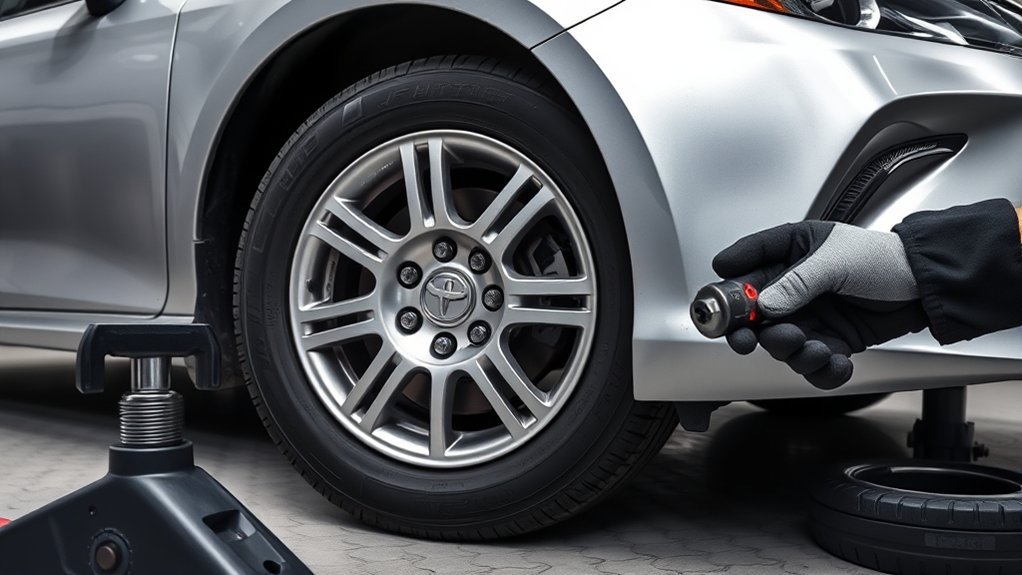
Regular tire rotation can reduce irregular wear by moving tires to different positions when Toyota and the tire design allow it. Toyota’s maintenance guidance says many Toyota vehicles follow maintenance visits every 5,000 miles or six months, with tire rotation among the routine services performed at applicable intervals. NHTSA says that when a vehicle manufacturer recommends tire rotation, 5,000 to 8,000 miles is a common interval. Use the schedule for your exact Camry rather than treating either number as universal.
Use the Right Rotation Pattern
Your Camry’s permitted rotation pattern can depend on model year, drivetrain, wheel and tire sizes, and tire type. Directional tires generally need to remain on the same side unless they are dismounted and remounted correctly. Staggered or otherwise specialized setups can have additional limits. Check Toyota’s instructions and the tire manufacturer’s requirements before choosing a pattern.
Rotate Before the Pattern Gets Severe
Rotation works best as prevention. It cannot repair tread that is already worn away. If a tire has deep cupping, exposed cords, a bulge, tread separation, sidewall damage, or tread at 2/32 inch, fix the cause and replace the unsafe tire rather than trying to solve the problem by moving it to another position.
Combine Rotation With Pressure and Tread Checks
Use each rotation as a chance to measure tread depth at the inner shoulder, center, and outer shoulder of every tire. Write the readings down by wheel position. A simple record can show whether one edge or one corner is beginning to wear faster long before the difference becomes visually obvious.
How Does Tire Pressure Affect Camry Tire Wear?
Tire pressure affects tread loading, heat buildup, handling, braking, and fuel use. Low pressure can increase flex and shoulder loading. Excessive pressure can change the contact patch and contribute to center-biased wear. Either condition can shorten tire life or hide a developing tire problem.
NHTSA recommends checking all tires at least monthly when cold, including the spare when applicable. If the TPMS light turns on, do not rely only on the dashboard warning. Stop when safe, check pressure with a gauge, and inspect for punctures or visible damage. For TPMS-specific behavior, see the Toyota Camry TPMS guide.
NHTSA reports that 511 people died in tire-related U.S. traffic crashes in 2024, reinforcing why pressure, tread depth, tire condition, rotation, balance, and alignment deserve regular attention.
What Signs Suggest Misalignment or Tire Damage?
You may feel the problem before uneven tread becomes obvious. Pay attention to new handling changes, especially after a pothole, curb strike, tire replacement, or steering or suspension repair.
- Pulling to one side: Unequal pressure, tire characteristics, alignment, brake drag, or worn chassis parts can all contribute. See the guide to a Toyota Camry pulling to one side.
- Off-center steering wheel: The car travels straight, but the steering wheel is tilted; alignment or steering-centering issues may be involved.
- Steering-wheel vibration: Tire condition, imbalance, poor wheel centering, a bent wheel, or worn components may be involved.
- Thumping or humming: A tire may be cupped or damaged, while hub/bearing or other rotating components can produce similar noise.
- Uneven tread depth: One edge, one tire, or one axle wears faster than the rest.
- Visible damage: Bulges, cuts, exposed cords, tread separation, or serious sidewall damage need immediate attention.
Warning: Do not keep driving normally on a tire with exposed cords, a bulge, tread separation, serious sidewall damage, or tread worn to 2/32 inch. Install the spare only when it is safe and appropriate for your Camry, or have the vehicle towed to a tire shop.
How Do You Correct Uneven Tire Wear?
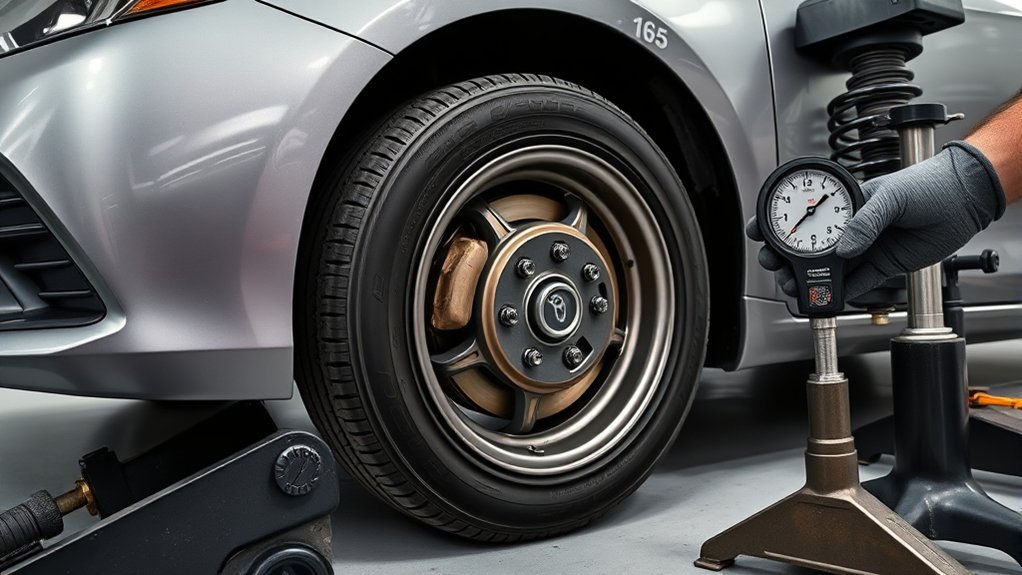
Correcting uneven tire wear means fixing the underlying cause before another tire is damaged. A practical order is pressure and tire-condition checks first, followed by rotation or balance where appropriate, then alignment and mechanical inspection when the pattern or symptoms point that way.
- Set cold tire pressure. Match the driver-door label or exact owner’s-manual guidance. Recheck after a few days if one tire was low.
- Measure tread depth and inspect damage. Replace tires that are unsafe, severely damaged, or at 2/32 inch.
- Rotate the tires if safe and permitted. Follow the Camry and tire-manufacturer instructions. Do not rotate an unsafe tire in an attempt to hide the wear.
- Balance and inspect the tire-and-wheel assembly. Do this when vibration, localized wear, cupping, wheel damage, or recent tire installation points toward a rotating assembly problem.
- Measure four-wheel alignment. Ask for the actual before-and-after toe, camber, caster, and thrust-angle readings that apply to the vehicle.
- Inspect steering, suspension, brakes, hubs, and bearings when indicated. Worn or damaged parts can let alignment change under load or create tire movement that a static alignment alone will not fix.
- Choose replacement tires that meet Toyota’s requirements. Match the required size, load capability, speed specification, and other model-specific requirements. See the Toyota Camry wheel and tire fitment guide before changing sizes.
If your Camry has all-wheel drive, do not assume that one random new tire can always be mixed with substantially more worn tires. Ask a qualified Toyota or tire professional to verify the permitted size and tread-depth relationship for your exact model, tire design, and drivetrain before mixing tires.
[Amazon Products Picked for You]
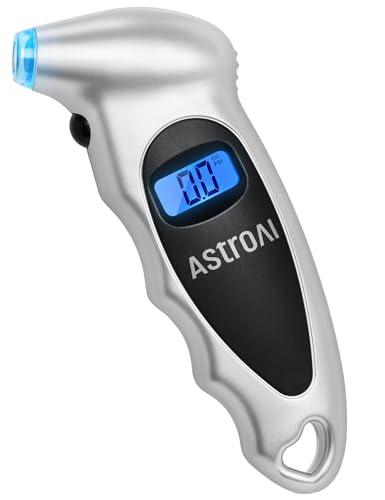
Accurate, Dependable Readings: Factory‑calibrated to ±1 PSI, so you can confidently match your vehicle’s recommended PSI (check the door jamb sticker). Ideal for monthly checks and road trips — consistent results every time, cold or warm.

HIGH ACCURACY: Every ETENWOLF's pencil tire gauge is calibrated to ANSI B40.1 Grade B, it is accurate to 2% of span in the middle 50% of range and 3% of span in the lower and upper 25% of range. Each ETENWOLF pencil tire pressure gauge is manually calibrated and has its unique calibration number printed on the pencil

RUGGED DESIGN: The stainless steel components prevent rust and corrosion while the precision-crafted nozzle seamlessly seals onto the valve stems for highly accurate readings (±2% span). We also provide 4 valve stem caps for convenient replacement.
When Should You Get Professional Tire Help?
Get professional help when the wear is severe, keeps returning, or is paired with pulling, vibration, unusual noise, repeated pressure loss, or visible damage. A tire shop can inspect the casing, measure tread, balance the assembly, and check alignment. A qualified repair shop or Toyota dealer can inspect steering, suspension, brakes, hubs, bearings, and damaged wheels.
Schedule service promptly if you notice any of these signs:
- Outer- or inner-edge wear that returns after pressure and rotation have been corrected.
- Cupping, scalloping, localized wear, or repeated vibration at road speed.
- A tire that repeatedly loses pressure after being inflated correctly.
- Uneven wear that began after a curb strike, pothole hit, or collision repair.
- Clunking, humming, grinding, wandering, or looseness near one wheel.
- Brake pull, a dragging smell, or one wheel becoming unusually hot after driving.
You can also check the NHTSA recall database for vehicle, tire, or equipment recalls if you suspect a recurring safety defect.
[Amazon Products Picked for You]
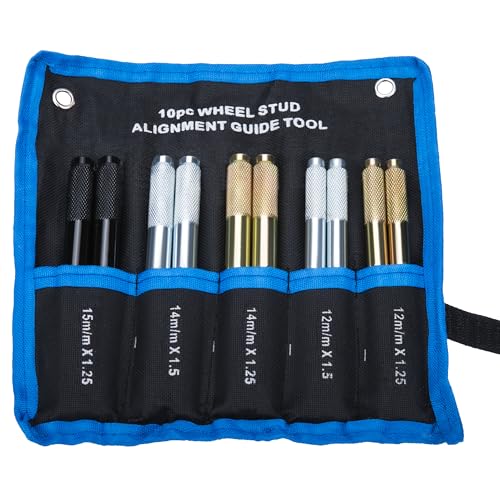
Sturdy Construction: Made from a robust steel alloy material, this wheel alignment kit offer superior strength and durability, along with abrasion resistance and breakage resistance. They can withstand the repetitive stresses of wheel alignment and tire changing, ensuring consistent performance over time

Main Characteristics: Our wheel alignment tool is capable of assisting you in resetting the strut to its initial camber position after the suspension has been removed and reinstalled. It can also check the extent of camber variation prior to re-installation. This camber alignment tool is ideal for precisely inspecting the castor and camber angles

【Easy to Use DIY Front-end Toe Adjustment】Attach the toe plates to the brake rotor after removing the tire, in conjunction with digital angle finder, then hook dual tape measure to compare wheel distances directly. This mechanical design requires no complex calibration or electronics, lowering the skill threshold for DIY enthusiasts to perform quick and effective front-end adjustments
How Can You Prevent Uneven Camry Tire Wear?
Prevention is easier than correcting a damaged tread pattern. Build pressure, tread, rotation, and symptom checks into your normal Camry maintenance routine.
- Check pressure monthly. Use cold readings and the driver-door placard.
- Measure tread across the tire. Compare the inner edge, center, and outer edge instead of checking only one groove.
- Rotate on the correct schedule. Follow Toyota’s interval and the permitted pattern for your exact tire setup.
- Balance when symptoms justify it. New tires should be balanced at installation, and new speed-related vibration deserves a tire/wheel check.
- Check alignment after symptoms or impacts. Uneven wear, pulling, a crooked steering wheel, pothole impacts, and certain steering/suspension repairs are good reasons to measure alignment.
- Inspect steering and suspension when symptoms appear and during scheduled service. Address worn or damaged joints, bushings, struts, hubs, or bearings before they damage another tire.
- Avoid unnecessary tread stress. Stay within vehicle load limits and avoid hard curb impacts, potholes when safely possible, repeated aggressive cornering, and unnecessary hard braking.
- Use suitable replacement tires. Confirm the correct size and specifications from Toyota’s information and use NHTSA TireWise to understand treadwear, traction, temperature, sizing, and tire-safety information.
Frequently Asked Questions
What could cause uneven tire wear on a Toyota Camry?
Common causes include incorrect tire pressure, missed rotations, wheel misalignment, imbalance, tire or wheel damage, worn steering or suspension parts, severe hub or bearing looseness, brake drag, excess load, impacts, and driving conditions. The tread pattern plus symptoms such as pulling, vibration, or noise helps narrow the cause.
Why are my Toyota Camry tires wearing on the inside edge?
Inside-edge wear commonly points toward excessive negative camber, incorrect toe, or a steering or suspension problem that lets the wheel move out of position. Have all four alignment angles measured and inspect worn or damaged suspension parts rather than replacing the tire alone.
What is the best way to prevent uneven tire wear?
Check cold tire pressure monthly, measure tread across the full width, rotate according to Toyota and tire-manufacturer instructions, balance when needed, measure alignment after symptoms or impacts, and repair worn steering or suspension parts before they damage the tires.
Can a bad rear wheel bearing cause uneven tire wear?
A severely worn or loose wheel bearing can contribute to abnormal wheel movement and uneven wear, but tire pressure, alignment, tire damage, and suspension problems are more common explanations. Humming, roughness, vibration, or measurable looseness near the wheel strengthens the case for a hub/bearing inspection.
Can I keep driving with uneven tire wear?
Minor early uneven wear may leave enough tread to drive carefully to scheduled service, but severe damage is different. Do not keep driving normally on a tire with exposed cords, a bulge, tread separation, serious sidewall damage, or tread worn to 2/32 inch.
Should I replace one tire or all four on a Camry?
It depends on the remaining tread depth, tire age and condition, tire design, size, drivetrain, and Toyota’s guidance for the exact vehicle. On AWD models in particular, verify the permitted tire-size and tread-depth relationship before mixing a new tire with substantially more worn tires.
Will an alignment fix a tire that is already worn unevenly?
An alignment can stop additional wear when incorrect wheel angles are the cause, but it cannot replace tread that has already worn away. Measure the remaining tread and inspect the tire for damage to decide whether it can stay in service after the underlying cause is corrected.
Conclusion
Uneven tire wear on your Toyota Camry is a diagnostic clue, not simply a cosmetic tread problem. Start by measuring tread across the full tire, checking cold pressure against the driver-door placard, identifying the wear pattern, and noting whether the car also pulls, vibrates, wanders, or makes noise.
Fix the cause before sacrificing another set of tires. Pressure and rotation are easy first checks, but repeated shoulder wear, feathering, cupping, localized wear, vibration, or pulling may require tire/wheel inspection, four-wheel alignment measurements, and checks of the brakes, steering, suspension, hubs, and bearings.
Sources
- NHTSA TireWise Tire Safety — supports monthly cold-pressure checks, the driver-door pressure label, 2/32-inch tread replacement guidance, rotation, balance, alignment, UTQG information, and the 2024 tire-related fatality figure.
- Toyota Maintenance Schedule — supports using model-specific factory maintenance information and notes that many Toyota vehicles use 5,000-mile or six-month maintenance visits.
- Toyota Wheel Alignment & Why It Matters — supports caster, camber, toe, steering stability, and even-tire-wear guidance.
- Toyota Manuals and Warranties — supports checking the correct Camry manual for model-specific tire pressure, tire size, maintenance, and rotation guidance.
- Michelin Tire FAQ — supports the fact that center, one-sided, and localized tread-wear patterns can have multiple possible causes and require inspection rather than one-pattern/one-cause diagnosis.
- NHTSA Recalls — supports checking vehicle, tire, and equipment recalls when a recurring safety defect is suspected.
