If your Toyota Camry squeaks while driving over bumps, the noise may come from a suspension bushing, sway bar link, strut mount, spring seat, loose fastener, or another contact point. The sound alone cannot identify the failed part, so note when it happens, locate the corner, and check for clunking, steering changes, uneven tire wear, leakage, or visible damage.
Quick Answer
A Toyota Camry that squeaks over bumps often needs its sway bar bushings and links, control arm bushings, strut mounts, spring seats, and fasteners inspected. Do not assume lubrication will fix it. If the squeak comes with clunking, pulling, looseness, leakage, or unstable handling, arrange a professional inspection promptly.
Last updated: July 11, 2026
Key Takeaways
- Use the noise pattern to narrow the inspection area, but confirm the fault before replacing parts.
- Sway bar bushings, links, control arm bushings, strut mounts, and spring seats are common inspection points.
- Use only material-compatible lubricant approved for that component, and treat it as a diagnostic test rather than a repair.
- Model-year procedures, torque values, and suspension layouts vary, so use the correct Toyota service information.
- Stop driving if the car feels unstable, the steering is loose, a spring is broken, or a wheel appears out of position.
At a Glance
| Time Required | About 15–30 minutes for observation and a basic visual check; a complete diagnosis may take longer. |
| Difficulty | Easy for recording symptoms; moderate to advanced for lifted inspection or component replacement. |
| Tools Needed | Flashlight, gloves, phone or recorder used by a passenger, and model-year service information. Lifted checks require approved lifting equipment and stands. |
| Cost | Observation may cost nothing. Inspection and repair costs depend on the confirmed part, model year, labor, and alignment needs. |
Warning: Never work under a Camry supported only by a jack. Use the approved lift points and suitable stands. Keep sprays away from brake rotors, pads, tires, belts, and other friction surfaces.
What Do Toyota Camry Suspension Squeaks Usually Sound Like?
Toyota Camry suspension squeaks often become louder over bumps, during turns, or as the body rocks. The sound may remain minor, but a squeak combined with clunking, looseness, pulling, or another handling change can indicate excess movement in a worn, damaged, or loose part.
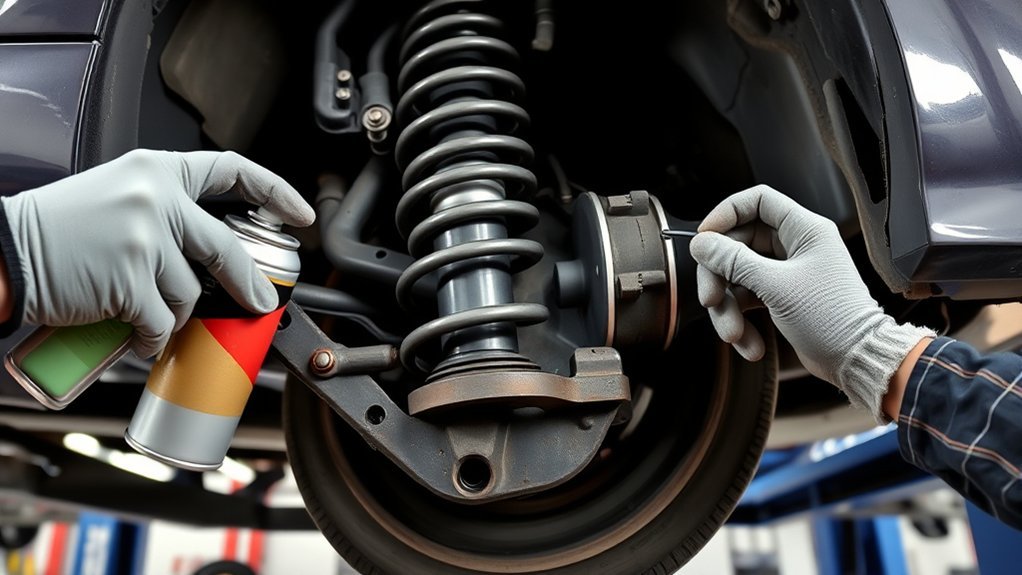
Use the noise pattern to narrow the inspection area. This table is a starting point, not a final diagnosis.
| Noise Pattern | Parts to Inspect First | Urgency |
|---|---|---|
| Squeak over small bumps | Sway bar bushings, sway bar links, control arm bushings, or strut mounts | Inspect soon; act faster if a clunk is present |
| Creak while turning at low speed | Upper strut mount or bearing, spring seat, control arm bushing, or tire contact | Inspect soon if steering feels rough or sticky |
| Squeak as the body rocks | Bushings, mounts, spring seats, or links | Inspect if the noise persists or handling changes |
| Squeak plus clunk, wandering, or looseness | Loose hardware, worn links, damaged bushings, or steering and suspension joints | Prompt professional inspection |
| Squeal tied to braking or wheel speed | Brakes, dust shield, tire contact, or another rotating part | Do not assume it is suspension noise |
A creak over bumps can come from a rubber bushing, strut mount, sway bar link, spring seat, or another moving joint. Noise while turning can point toward an upper strut mount or bearing, but nearby bushings and spring components can make a similar sound.
Also rule out non-suspension noises. Brake hardware, a bent dust shield, tire rubbing, loose underbody panels, a hood latch, or interior trim can create squeaks that seem to come from the suspension.
A rubber-safe lubricant may briefly quiet an approved contact point. If the sound returns, inspect the part for cracks, separation, looseness, or polished contact marks instead of treating the lubricant as a repair.
Pro Tip: Drive slowly over the same bump with the windows open, then repeat from the opposite direction. A passenger can listen and record the sound while the driver keeps both hands on the wheel.
What Causes a Toyota Camry Suspension to Squeak?
Possible causes include worn rubber bushings, damaged links or joints, loose fasteners, worn mounts, spring-seat friction, and contact between moving parts. Dirt, moisture, temperature, road salt, age, and previous repair work can change when the sound appears.
The exact source varies by Camry model year and suspension design. Diagnose the noise under the conditions that reproduce it, then compare the finding with the correct service information before tightening or replacing parts.
How Do Worn Bushings and Joints Create Noise?
Rubber bushings isolate vibration while allowing controlled suspension movement. As they age, they can harden, crack, separate, or permit extra movement. Control arm and sway bar bushings may then squeak as the suspension compresses, rebounds, or loads during a turn.
| Bushing Type | Symptoms of Wear |
|---|---|
| Lower Control Arm Bushings | Squeaking, clunking, steering change, or excess movement. |
| Sway Bar Bushings | Noise over small bumps or during cornering. |
| General Suspension Bushings | Creaks as the suspension compresses or rebounds. |
A rubber-safe lubricant may provide temporary relief on an approved external contact surface. It will not repair a torn, separated, or badly worn bushing, which normally requires replacement after the fault is confirmed.
Can a Dry Contact Point Cause the Squeak?
Some serviceable suspension contact points can squeak after their approved lubricant washes away or dries out. Other components may be sealed or use bonded rubber, depending on the Camry’s model year and part design, and should not be treated as routine grease points.
Use only a lubricant approved by the correct service procedure or part maker. For a limited external test, choose a product clearly labeled as safe for the specific rubber or material. Keep it away from brake rotors, brake pads, tires, belts, and other friction surfaces.
If one controlled application changes the sound, you have narrowed the search. You have not proved the part is healthy. Inspect the rubber, mounting hardware, and nearby joints for damage or unwanted movement.
Can Loose Suspension Parts Squeak or Clunk?
Loose or worn suspension parts can squeak, click, or clunk as the wheel moves. Sway bar links, control arm bushings, mounts, and incorrectly tightened fasteners are reasonable areas to inspect.
| Component Type | Problem Description |
|---|---|
| Sway Bar Links | Worn joints can allow movement and noise. |
| Control Arm Bushings | Cracked or separated rubber can create play. |
| Suspension Bolts | Incorrect torque or tightening position can allow movement. |
| Rear Sway Bar | Worn bushings or links may squeak over bumps. |
| Other Contact Points | Inspection may reveal damage, looseness, or rubbing. |
Tighten fasteners only to the correct model-year specification and in the required suspension position. Guessing at torque can damage a part, preload a bushing incorrectly, or leave the joint unsafe.
Can Weather Change a Suspension Squeak?
Cold temperatures can temporarily stiffen rubber, while rain or humidity can change friction at exposed contact points. Road salt and dirt can also affect noise. A weather-related pattern helps reproduce the problem, but it does not prove the component is safe or identify the exact part.
Can You Lubricate a Squeaky Camry Suspension?
Use lubrication only as a controlled diagnostic step on a serviceable contact point. Do not spray the complete suspension. That approach can attract dirt, contaminate nearby parts, and make the original source harder to locate.
- Identify one suspected point: Reproduce the noise and isolate the corner or component.
- Confirm material compatibility: Check the service procedure or part maker before applying anything.
- Protect friction surfaces: Cover nearby brakes and tires, and never spray a belt.
- Apply a small amount: Use only enough approved product to test whether the sound changes.
- Inspect after the test: Look for torn rubber, separation, looseness, rust, or contact marks.
Do not grease sealed ball joints, bonded control arm bushings, or shock and strut shaft seals without a manufacturer-approved procedure. Replace a damaged part rather than repeatedly masking the sound.
Note: A change in sound after lubrication only identifies a likely area. It does not confirm that the bushing, mount, or joint still meets Toyota’s service limits.
[Amazon Products Picked for You]

Restores Fork Performance: Revitalizes old suspension forks to feel like new and helps break in brand-new forks faster for smooth, reliable performance on every ride.
Durability is superior for cars, trucks and SUVs; road salt, oil, and a host of other common under car contaminants will eventually destroy the rubber bushings on your vehicles, not to mention the weight and torque forces that typically compress rubber

Everything you need in a garage door lubricant: High performance and fast drying. Select a wide or narrow spray for fast, easy application
When Should You Replace Toyota Camry Suspension Parts?
Replace a suspension part when inspection confirms damage, excess play, leakage, binding, broken material, or loss of control. Mileage alone is not enough because wear depends on model year, roads, climate, load, impacts, and previous repairs.
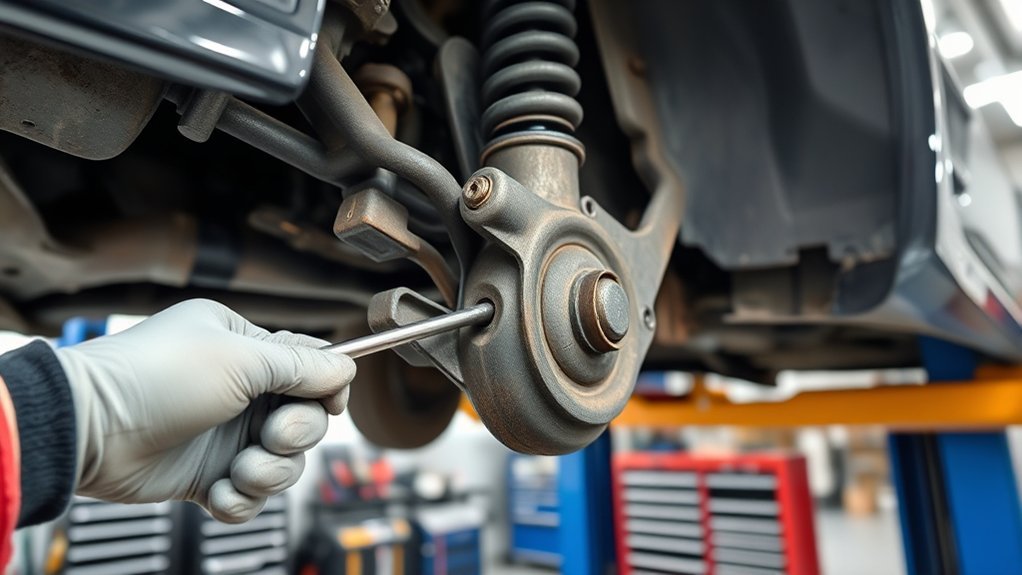
Persistent squeaks, clunks, uneven tire wear, or unstable handling are reasons to inspect the suspension rather than wait for a fixed mileage. Common replacement candidates include sway bar bushings and links, control arm bushings, strut mounts, springs, shocks, and struts.
[Amazon Products Picked for You]

【Front End Suspension Kit Fitment】2013-2018 for Toyota Avalon, 2012-2017 for Toyota Camry

【Front End Suspension Kit Fitment】Compatible with Lexus for ES300 1999 2000 2001, for Toyota for Avalon 1997 1998 1999 2000 2001 2002 2003 2004, for Toyota for Camry 1997 1998 1999 2000 2001, for Toyota for Solara 1999 2000 2001 2002 2003

【Front End Suspension Kit Fitment】2002-2003 for Lexus ES300, 2004-2006 for Lexus ES330, 2002-2003 for Toyota Camry
What Signs Point to a Worn Suspension Part?
Clunking or thumping over bumps can point to worn sway bar links, loose mounts, damaged bushings, or strut mounting problems. Uneven tire wear can come from alignment, worn suspension parts, steering components, tire pressure, or prior damage.
If the vehicle sits lower on one side, inspect the spring, spring seat, tire, load, and body. On a conventional spring-and-damper layout, the spring supports the vehicle’s static weight while the damper controls motion, but you should confirm the exact design for your Camry model year.
Excessive body roll, wandering, steering instability, repeated bouncing, or visible fluid leakage needs prompt attention. Stop driving if control feels unsafe.
Is There a Fixed Replacement Interval?
Toyota Camry suspension parts do not share one universal replacement interval. Inspect them according to the maintenance information for your model year and whenever noise, impact damage, tire wear, leakage, or handling changes appear.
Condition-based inspection is more reliable than replacing parts at an arbitrary mileage. A technician can compare movement, torque, alignment, and measurements with the correct Toyota service limits.
How Do You Diagnose a Toyota Camry Suspension Squeak?
Start with a controlled road test, then inspect the area where the sound is strongest. Compare front versus rear, left versus right, straight-line bumps versus turns, and dry versus wet or cold conditions.

- Record the conditions: Note speed, road surface, steering angle, braking, temperature, and whether passengers or cargo change the noise.
- Check visible parts: Inspect bushings, control arms, sway bar links, mounts, springs, and shock or strut bodies for cracks, separation, rust, broken coils, contact marks, or leakage.
- Reproduce the sound safely: With the car parked on level ground, press down carefully at each corner and listen as the body rises.
- Test one area at a time: If an approved rubber-safe product is used, apply it to only one suspected external contact point.
- Check for play correctly: Raise the vehicle only at approved lift points and support it with suitable stands. Never work under a car held only by a jack.
- Verify the repair: Repeat the same road test, confirm that fasteners were tightened to specification, and check alignment when the repair procedure requires it.
Noise is a clue, not a diagnosis. Reproduce the sound, isolate one area, and confirm wear before ordering parts.
A passenger may record the noise while you drive slowly over a known bump, or you can use a securely mounted recorder. The driver should not hold or operate a phone while the vehicle is moving.
Suspension loading can hide faults while the vehicle is parked. A shop may need a lift, chassis microphones, pry tools, alignment equipment, or model-specific measurements.
[Amazon Products Picked for You]
The package length is 9.906 centimeters

⚙️ Engineered for Extreme Pressure Moly-fortified synthetic formula handles heavy shock loads and metal-to-metal contact.
How Can You Tell Whether the Squeak Is Front or Rear?
Listen for the sound as one axle crosses a bump at a time. A front squeak may change with steering input, while a rear squeak may become easier to reproduce when rear passengers or cargo change the load. Sound can travel through the body, so confirm the location with inspection rather than relying on the driver’s seat alone.
What Should You Tell the Technician?
Share the speed, road surface, temperature, steering angle, braking condition, load, and exact corner where the noise seems strongest. A short recording and a repeatable road location can reduce diagnostic time. Also mention recent suspension, tire, brake, or alignment work.
Where Can You Check the Correct Camry Manual and Recalls?
Camry suspension layouts, torque values, and service procedures vary by model year. Use the Toyota manuals and warranties lookup to select the correct vehicle information. For factory repair procedures and service bulletins, use Toyota’s Technical Information System.
Also check your VIN through Toyota’s safety recall and service-campaign lookup. U.S. owners can cross-check recalls through the NHTSA recall database. A recall search does not diagnose the squeak, but it can reveal an open campaign that should be addressed.
NHTSA notes that a VIN search may not show recalls that were already repaired, certain recently announced recalls before every VIN is identified, or manufacturer service campaigns that are not safety recalls. Toyota’s lookup also includes eligible service campaigns for supported U.S.-market vehicles.
Why Do Regular Suspension Checks Matter?
Regular checks help protect handling, tire contact, ride comfort, and braking stability. They also help find a loose link, cracked bushing, damaged spring, or leaking damper before it causes more wear.
- Limit secondary damage: Early repair may protect nearby tires, mounts, and suspension parts.
- Protect tire life: Worn or loose components can change wheel alignment and load the tread unevenly.
- Maintain predictable handling: Healthy springs, dampers, links, and bushings help control wheel movement over bumps and through turns.
Can Strut Mounts Cause a Camry Suspension Squeak?
Strut mounts connect the strut assembly to the body and help isolate vibration. When a mount or its bearing wears, you may hear clunks, creaks, or squeaks over bumps or while steering.
A damaged mount can allow extra movement that affects ride feel, steering response, and alignment. Confirm the mount before replacing it because nearby links, springs, spring seats, and bushings can produce similar sounds.
What Are Common Symptoms of Strut-Mount Wear?
- Clunking, creaking, or squeaking over bumps or during steering.
- Visible cracking, separation, corrosion, or movement at the upper mount.
- Vibration, steering bind, or rough rotation when the mount bearing is damaged.
These symptoms make the strut mount an important inspection point, but sound alone does not confirm failure.
How Can a Worn Strut Mount Affect Driving?
The mount’s rubber section reduces vibration, while a bearing on many front applications allows the strut assembly to turn with the steering. A worn mount can allow noise and movement. A damaged bearing can make steering feel rough, sticky, or uneven.
Noise near the mount can still come from the spring seat, strut, link, or body attachment. Inspect the full assembly before choosing a repair.
What Should You Replace with a Worn Strut Mount?
When a strut assembly is removed, inspect the mount, bearing, spring seat, boot, bump stop, spring, and hardware. Replace only the parts that are worn, damaged, corroded, or outside the service limit.
- Match the vehicle: Use parts designed for the Camry’s model year, trim, and suspension.
- Inspect related parts: Reusing a damaged bearing or spring seat can cause repeat noise and labor.
- Follow the correct procedure: Coil springs store dangerous energy and require proper tools and training.
Can Shock or Strut Seals Cause Suspension Squeaks?
A shock or strut can make noise, but its shaft seal is not a normal external lubrication point. A worn internal seal may leak fluid and reduce damping. Squeaks can also come from mounts, bushings, spring seats, dust boots, or nearby contact points.
Fluid running down the shock or strut body, repeated bouncing, weak control, or uneven damping are stronger warning signs than a light surface film. Do not grease a shock or strut shaft seal unless the manufacturer provides that exact procedure.
Will Fixing a Suspension Squeak Improve Handling?
Fixing the confirmed cause can improve handling when the noisy part also has wear, looseness, binding, or damping loss. A harmless trim squeak or dry non-structural contact point may not affect control.
- Inspect and test: Check bushings, links, mounts, springs, shocks, struts, and steering parts.
- Repair the confirmed fault: Prioritize loose joints, broken springs, separated bushings, and leaking or weak dampers.
- Verify the result: Tighten fasteners to specification, check alignment when required, and repeat the road test.
When Should You Seek Professional Help?
Seek professional help when the Camry keeps squeaking after a basic visual check, or when the noise includes clunking, binding, fluid leakage, visible damage, or steering changes.
Arrange prompt evaluation for uneven tire wear, pulling, excessive body roll, repeated bouncing, or instability during turns. Stop driving if a wheel appears out of position, the steering feels loose, the car sits unusually low, a spring is broken, or the vehicle feels unsafe. Have it transported instead of road-testing it.
A trained technician can inspect the suspension under load, measure play, confirm torque, check alignment, and compare findings with model-specific service information.
Frequently Asked Questions
What Is the Most Common Cause of Squeaky Suspension?
Worn or dry rubber bushings are frequent inspection points, but strut mounts, sway bar links, spring seats, loose hardware, and other joints can make similar sounds. Locate the noise and inspect the part before lubricating or replacing it.
Why Is My Toyota Camry Making a Squeaking or Squealing Noise?
A squeak over bumps often points to suspension or body movement. A squeal may come from brakes, a belt, tire contact, or another rotating part. Note when the sound occurs and whether steering, braking, speed, weather, or road surface changes it.
How Do I Get My Suspension to Stop Squeaking?
Inspect bushings, links, mounts, springs, shocks, struts, and hardware for wear or looseness. Use approved material-safe lubricant only as a controlled test on a serviceable contact point. Replace the confirmed damaged part and tighten fasteners to the correct specification.
What Is the Most Common Problem With Toyota Camry?
No single problem applies to every Toyota Camry because common faults vary by model year, engine, mileage, climate, and maintenance history. For a Camry that squeaks over bumps, bushings, links, mounts, spring seats, and other suspension contact points are reasonable places to inspect first.
Is It Safe to Drive With a Squeaky Suspension?
A light squeak with normal steering, braking, ride height, and tire wear may not require an immediate stop, but it still needs inspection if it persists. Stop driving if the noise comes with looseness, clunking, pulling, a broken spring, severe bouncing, fluid leakage, or unstable handling.
Can I Use WD-40 on Suspension Bushings?
Do not use an unidentified general-purpose petroleum spray on unknown rubber or near brakes and tires. Use only a product that the service procedure or part maker approves for the specific material, and treat any application as a diagnostic test rather than a permanent repair.
Why Does the Squeak Get Worse in Cold or Wet Weather?
Temperature and moisture can change the stiffness of rubber and friction at exposed contact points. The pattern can help reproduce the noise, but it does not identify the exact part or prove that the suspension is safe.
Do I Need an Alignment After Suspension Repair?
It depends on the component and repair procedure. Work that changes wheel position or disturbs alignment-related fasteners may require an alignment check. Follow the model-year Toyota procedure and verify tire wear and steering afterward.
Conclusion
A Toyota Camry squeaking over bumps may have worn bushings, loose links, damaged mounts, spring-seat contact, or a shock or strut problem. Start by recording when the noise occurs, isolate the corner, rule out brakes and other non-suspension sources, and inspect one suspected area at a time. Use lubricant only when the material and procedure allow it. Seek professional help when the squeak comes with clunking, leakage, tire wear, steering changes, or unstable handling.
Sources
- Toyota Manuals and Warranties — model-year owner information and maintenance documents.
- Toyota Technical Information System — factory repair manuals, service bulletins, and diagnostic information for supported Toyota vehicles.
- Toyota Safety Recalls and Service Campaigns — VIN-based recall and campaign lookup for supported markets.
- NHTSA Recall Database — U.S. vehicle recall, investigation, complaint, and manufacturer-communication lookup.