
Traction control and stability control are related safety systems, but they solve different problems. Traction control limits drive-wheel spin while you accelerate. Electronic stability control, often shortened to ESC, helps keep the vehicle moving in the direction you intend when it starts to understeer, oversteer, or skid. In normal road driving, both systems should stay on.
Quick Answer
Traction control manages wheel spin during acceleration, while stability control manages the vehicle’s direction during a skid or sudden maneuver. They share sensors and braking hardware, but ESC can brake individual wheels to correct understeer or oversteer. Keep both on for normal driving and disable them only when your owner’s manual recommends it.
Key Takeaways
- Traction control reduces drive-wheel spin, mainly when you accelerate on a low-grip surface.
- Stability control compares your steering input with the vehicle’s actual motion and can brake individual wheels to correct a developing skid.
- A flashing skid light usually means the system is actively helping. A light that stays on may mean the system is off or has a fault.
- Turning the systems off may help briefly when you are stuck in deep snow, mud, sand, or gravel, but the correct procedure depends on the vehicle.
- Neither system creates extra tire grip or makes unsafe speed, worn tires, hydroplaning, or abrupt steering safe.
What Is Traction Control and How Does It Enhance Vehicle Safety?

Traction control, also called TCS or TRAC, is designed to control excessive wheel spin at the driven wheels. It is most likely to activate when you accelerate on rain, ice, snow, gravel, or another low-grip surface.
The system watches wheel-speed signals and compares how quickly the wheels are turning. When a drive wheel begins spinning too quickly, the system may reduce engine or motor torque, apply the brake to the spinning wheel, or use both actions. NHTSA describes traction control as reducing engine power and braking a spinning drive wheel so torque can move to the other wheel on the axle.
This helps the vehicle start moving and continue accelerating with less wheel spin. It does not perform the same job as electronic stability control, and it does not increase the amount of grip available from the tires.
Note: U.S. federal rules require electronic stability control on covered light vehicles, not traction control as a separate stand-alone feature. Many modern vehicles include traction control because it is integrated with the ABS and ESC hardware.
What’s Important About Stability Control?
Electronic stability control helps when the vehicle is not following the direction indicated by your steering input. Automakers may use names such as ESC, ESP, DSC, VSC, VDC, AdvanceTrac, or StabiliTrak, but the basic purpose is directional stability.
The system can detect a developing spin, plow, understeer, or oversteer. It then applies brake force to selected wheels and may reduce engine or motor torque. The goal is to create a correcting turning force, called a yaw moment, that helps bring the vehicle back toward your intended path.
Federal Motor Vehicle Safety Standard No. 126 defines ESC as a computer-controlled system that can adjust individual wheel-brake torque, monitor steering input and yaw, limit understeer and oversteer, and modify engine torque when needed.
NHTSA’s 2007 final rule estimated that ESC could reduce single-vehicle crashes by 34% for passenger cars and 59% for SUVs. Those figures are agency estimates from the rulemaking, not a guarantee for every vehicle or crash.
The U.S. requirement was phased in for passenger cars, multipurpose passenger vehicles, trucks, and buses with a gross vehicle weight rating of 10,000 pounds or less. The rule required full installation in covered light vehicles by model year 2012, with limited timing exceptions for certain manufacturers and staged vehicles.
Key Features of Stability Control
Stability control works in the background during acceleration, coasting, deceleration, and braking. It can remain ready even when the anti-lock braking system or traction control is active. You may feel a brief brake pulse, reduced power, vibration, or hear a mechanical sound during an intervention. The exact behavior varies by vehicle.
Key Functions of ESC
- Tracks your intended path: The steering-angle input helps the controller determine where you are trying to go.
- Measures actual motion: Wheel-speed, yaw-rate, and other motion inputs show what the vehicle is actually doing.
- Detects understeer or oversteer: The controller compares intended motion with actual motion.
- Brakes individual wheels: Selective braking creates a correcting force that can help reduce a skid.
- Reduces drive torque when needed: Lowering engine or motor torque can support the braking intervention.
Sensor Integration Explained
The exact sensor set and control strategy vary by model, but the main inputs usually include wheel speed, steering angle, and yaw or rotational motion. The system may also use lateral acceleration, brake-pressure, throttle, and powertrain data.
| Input or Component | What It Tells the System |
|---|---|
| Wheel-speed sensors | How fast each wheel is rotating and whether a wheel is spinning or locking. |
| Steering-angle sensor | The direction and amount you are steering. |
| Yaw-rate sensor | How quickly the vehicle is rotating around its vertical axis. |
| Brake control unit | Applies and adjusts brake pressure at individual wheels. |
| Powertrain control | Reduces engine or motor torque when the stability strategy calls for it. |
Real-World Applications and Benefits
ESC is most valuable during sudden evasive steering, a curve entered with too much speed, or a loss of grip caused by rain, ice, snow, gravel, or a split-friction surface. It can help reduce the severity of a developing understeer or oversteer event before you can make a complete correction.
It is especially important in vehicles with a higher center of gravity because preventing a roadway departure or spin can also reduce exposure to rollover conditions. However, ESC is not a direct anti-rollover shield and cannot stop every rollover.
Traction Control vs. Stability Control: Side-by-Side Comparison
| Feature | Traction Control | Stability Control |
|---|---|---|
| Main problem | Drive-wheel spin during acceleration | Vehicle not following the intended direction |
| Typical trigger | One or more driven wheels spin too quickly | Yaw and vehicle path do not match steering input |
| Typical action | Reduces drive torque and may brake a spinning wheel | Brakes selected wheels and may reduce drive torque |
| Primary direction | Longitudinal acceleration | Lateral and yaw stability |
| Best default setting | On for normal road use | On for normal road use |
[Amazon Products Picked for You]
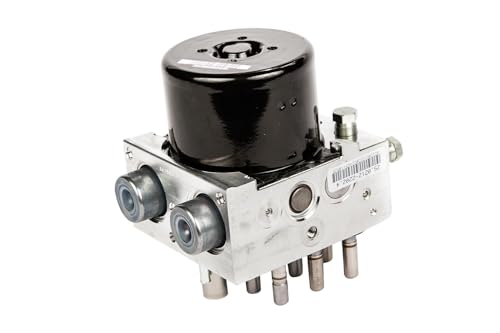
GM-recommended replacement part for your GM vehicle’s original factory component

Helps provide controlled braking in icy or wet conditions

Helps provide controlled braking in icy or wet conditions
Scenarios for Turning Off Stability Control
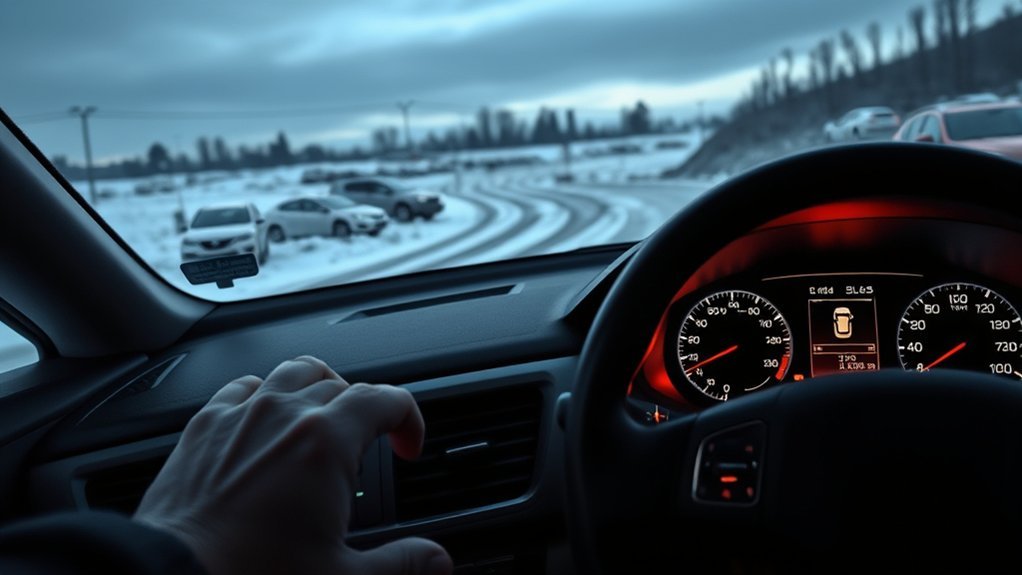
There are limited situations where reducing or disabling stability or traction intervention may help. The correct choice depends on how your vehicle’s button, drive modes, four-wheel-drive system, and differentials are designed.
Warning: Do not switch off traction or stability control for wet-road driving, fast public-road cornering, aggressive lane changes, or ordinary snow driving. Disabling the system removes a layer of assistance and can make a loss of control harder to recover.
Off-Road Driving Scenarios
Temporary reduction of intervention may help when the vehicle is stuck in deep snow, mud, sand, or loose gravel and the system keeps cutting power before the tires can clear material or build momentum. Snow chains, low-range four-wheel drive, locking differentials, and dedicated terrain modes can also change how the system operates.
Do not assume that “off” is always better off-road. Many modern vehicles use brake-based traction control to slow a spinning wheel and send torque to a wheel with grip. A terrain mode may work better than fully disabling the system. Follow the owner’s manual, use the lowest practical speed, and turn the normal mode back on once the vehicle is free.
Performance Driving Conditions
Some performance vehicles provide sport, track, or reduced-assistance modes for use on a closed course. These modes may allow more wheel slip or yaw before intervening. They should not be used as a way to drive faster on public roads.
Full ESC disablement should be reserved for a controlled course, a suitable vehicle, and a trained driver who understands the car’s behavior without electronic assistance. For most drivers, a manufacturer-provided sport mode is safer than a full-off setting.
When to Keep Traction Control On or Off?

Keep traction control on for daily driving, rain, light snow, ice, highway travel, and emergency maneuvers. The system is designed to help you use the grip that is available without excessive drive-wheel spin.
Consider a temporary off or reduced-intervention mode only when the owner’s manual directs it, such as when you are stuck in a deformable surface, using certain tire chains, operating in a specific low-range four-wheel-drive mode, or driving on a closed track. Re-enable the normal setting as soon as the special condition ends.
Pro Tip: Before pressing the skid-control button, check the owner’s manual. A quick press, long press, and drive-mode selection may disable different functions on the same vehicle.
What Traction and Stability Control Cannot Do
These systems can only work with the grip available between the tires and road. They cannot overcome worn tires, incorrect tire pressure, unsafe speed, deep standing water, severe ice, excessive cargo loading, or abrupt steering beyond the vehicle’s physical limits.
- They cannot prevent every skid. A rapid maneuver or very low grip can exceed the system’s ability to correct the path.
- They cannot stop hydroplaning on their own. If the tires lose contact with the road, brake and steering corrections have little effect until contact returns.
- They do not shorten every stopping distance. ABS, traction control, and ESC have different jobs.
- They do not replace safe tires. Tread depth, tire type, matching sizes, and correct pressure remain essential.
Key Warning Signs Indicating Traction and Stability Control Malfunctions
The same skid-shaped symbol can communicate different conditions. Always confirm the exact meaning in your owner’s manual because indicator designs and messages vary.
- Light flashes while driving: The system is usually intervening because it detected wheel spin or instability. Ease off the accelerator and make smooth steering inputs.
- Light stays on: The system may be switched off, limited by a selected drive mode, or affected by a fault.
- “ESC OFF,” “TC OFF,” or similar message: A driver-selected mode has reduced or disabled assistance.
- ABS and stability lights appear together: The systems may share a wheel-speed sensor, brake-control unit, wiring, or power-supply fault.
- Red brake warning, unusual braking, or steering problem: Stop in a safe place and follow the owner’s manual. Do not treat this as a routine traction-control warning.
Current U.S. rules allow the ESC telltale to flash during system operation and require it to remain illuminated for certain malfunctions. They also require an “ESC Off” indication when a provided mode prevents the system from meeting its normal performance requirements.
[Amazon Products Picked for You]

For Chevrolet: 1996-2002 Astro; 2002-2006 Avalanche 1500, Avalanche 2500; 2000-2006 Suburban 2500; 1995-2006 Tahoe

For Toyota Corolla 2009-2019
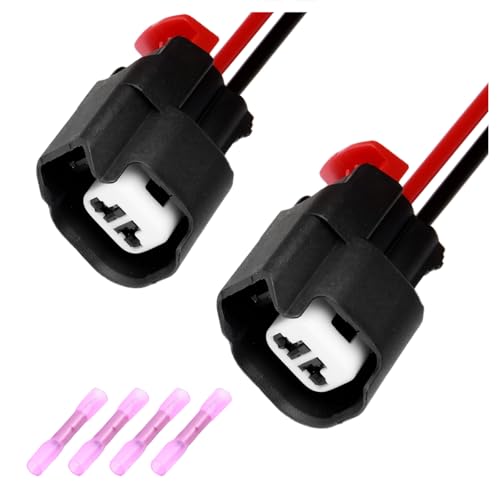
PACKAGE INCLUDES: This front wheel speed sensor connector pigtail is compatible with OEM#68065018AA, 19352068, 3U2Z14S411BXAB, S-1895, 5183448AA, 645-134. Please verify if your original part number matches these OEM references to confirm suitability
How Traction and Stability Control Work Together
Traction control, stability control, and ABS often share wheel-speed sensors, hydraulic brake hardware, and an electronic control unit. The controller decides which strategy is needed based on the driving event.
- During acceleration: Traction control limits excessive drive-wheel spin.
- During braking: ABS helps prevent wheel lock so you can retain steering control.
- During a developing skid: ESC compares steering input with actual motion and brakes selected wheels to correct yaw.
- During a combined event: The control unit can coordinate torque reduction and brake pressure while ABS or traction control is also active.
This integration is why one failed sensor can trigger several warning lights. It is also why the fault should be diagnosed through the ABS or stability-control module instead of assuming that the illuminated symbol identifies one bad part.
What to Do When the System Activates
- Look where you want to go. Keep your attention on the intended path and surrounding traffic.
- Use smooth inputs. Avoid abrupt throttle, brake, or steering changes that can demand more grip.
- Ease off excess acceleration. Let the system reduce wheel spin instead of adding more throttle.
- Do not fight the brake pulses. Brief pulsing or reduced power may be part of normal intervention.
- Slow down for the conditions. Repeated activation is a warning that your speed or inputs are near the available grip limit.
Tips for Maintaining and Troubleshooting Your Control Systems
Start with simple checks, then use proper diagnostic equipment. Do not replace a wheel-speed sensor only because the stability light is on. The cause may be wiring, a damaged tone ring or hub, a steering-angle issue, low voltage, tire mismatch, brake-system data, or another stored fault.
- Confirm the system is not manually off. Return the vehicle to its normal drive mode.
- Restart once in a safe place. A normal bulb check should end after startup. If the light remains on, continue diagnosis.
- Check all four tires. Verify matching approved sizes, visible damage, and cold pressure against the door-jamb placard.
- Inspect recent work. A wheel bearing, alignment, steering, suspension, brake, battery, or tire change may be relevant.
- Scan the correct module. Use a scan tool that can read ABS and ESC diagnostic trouble codes, not only engine codes.
- Follow service information. Steering-angle or yaw-sensor calibration should be performed only when the manufacturer calls for it after a repair or related procedure.
- Check for recalls. Search your VIN through the NHTSA recall lookup.
Note: Major changes to tire size, suspension height, steering geometry, or vehicle loading can affect the motion data used by ESC. Use manufacturer-approved configurations or qualified calibration guidance.
[Amazon Products Picked for You]

[Easy to Use—Work Out of the Box] + [FOXWELL 2026 New Version] FOXWELL NT604 Elite scan tool is the 2026 new version from FOXWELL, designed for car owners who want to figure out the cause of issues before fixing car problems by scanning common systems like ABS, SRS, engine, and transmission. The NT604 Elite obd2 scanner diagnostic tool comes with the latest software—no need to waste time downloading software first. Plug the scanner into the OBDII port with OBDII cable to start the diagnosis.

CEL Doctor: The ANCEL AD310 is one of the best-selling OBD II scanners on the market and is recommended by Scotty Kilmer, a YouTuber and auto mechanic. It can easily determine the cause of the check engine light coming on. After repairing the vehicle's problems, it can quickly read and clear diagnostic trouble codes of emission system, read live data & hard memory data, view freeze frame, I/M monitor readiness and collect vehicle information

【Diagnose Check Engine Light in Seconds – No Mechanic Needed】The FOXWELL NT301 OBD2 scanner instantly reads & clears engine fault codes (DTCs) with one click. Simply plug into the 16-pin DLC port, turn ignition on, and get accurate results within seconds—No prior car knowledge required. Save hundreds on dealership fees by knowing exactly what’s wrong before you visit a shop. The #1 choice car scanner for DIYers and car owners who want to take control of their vehicle’s health
Frequently Asked Questions
What is the difference between traction control and stability control?
Traction control limits drive-wheel spin during acceleration. Stability control watches the vehicle’s direction and can brake individual wheels to reduce understeer, oversteer, or a developing spin. They often share sensors and brake hardware, but they have different primary jobs.
What do TCS and ESC mean?
TCS means traction control system. ESC means electronic stability control. Automakers may use other names, including TRAC, VSC, VDC, DSC, ESP, StabiliTrak, or AdvanceTrac.
Is ESC more important than traction control?
They are not interchangeable. Traction control helps with acceleration grip, while ESC addresses directional stability and loss-of-control events. ESC has the broader safety role, but both should normally remain active.
Is it okay to drive with traction control on all the time?
Yes. Leaving traction control on is the correct default for normal public-road driving. A temporary off mode may help when the vehicle is stuck in deep snow, mud, sand, or gravel, but follow the owner’s manual and turn it back on promptly.
Why does the traction or stability light flash?
A flashing skid light usually means the system is actively limiting wheel spin or correcting instability. Reduce speed, ease off excess throttle, and use smooth steering. A light that stays on after startup may indicate an off setting or a fault.
Can you drive with the ESC warning light on?
A steady amber ESC light may mean stability assistance is unavailable, so drive cautiously and arrange diagnosis soon. Stop and follow the owner’s manual if it appears with a red brake warning, abnormal braking, steering trouble, or other serious symptoms.
Conclusion
Traction control and stability control work together, but they are not the same. Traction control manages drive-wheel spin during acceleration. Stability control manages the vehicle’s direction when actual motion no longer matches your steering input. Keep both systems active for normal driving, use off modes only for a specific manual-approved need, and diagnose a steady warning light instead of ignoring it.
Sources
- Electronic Code of Federal Regulations, 49 CFR 571.126 — current ESC definitions, required operation, telltales, off modes, and performance requirements.
- NHTSA Final Rule, 72 FR 17236 — rulemaking history, traction-control distinction, safety estimates, and permitted disablement scenarios.
- GovInfo official PDF of the ESC final rule — official published version of the 2007 rule.
- Electronic Code of Federal Regulations, 49 CFR 571.101 — controls, telltales, indicators, and identification requirements.
- NHTSA Recall Lookup — VIN-based safety recall checks.
