
A Toyota Camry check engine light needs prompt diagnosis, but the urgency depends on whether the light is steady or flashing and how the car is running. If the light is steady and the Camry drives normally, check the fuel cap, avoid hard driving, and read the stored OBD II code soon. If the light flashes, the engine shakes, power drops, smoke appears, or you smell raw fuel, reduce engine load, pull over safely, shut the vehicle off, and arrange professional help. A diagnostic code identifies the system or condition that needs testing; it does not prove which part has failed.
Last updated: September 19, 2026 — reviewed against current Toyota owner guidance and California Air Resources Board OBD II guidance.
Quick Answer
If the Toyota Camry check engine light is steady and the car runs normally, cautious short-distance driving is often reasonable while you arrange diagnosis. If the light flashes or the Camry runs poorly, stop safely and get professional help. Save the diagnostic codes and freeze-frame data before clearing anything.
Key Takeaways
- A steady light is not automatically a minor problem. Check for symptoms and retrieve the stored diagnostic codes soon.
- A flashing light can indicate an active misfire capable of overheating and damaging the catalytic converter.
- Inspecting the fuel cap is a useful first step, but it is not a substitute for an OBD II scan.
- Record codes and freeze-frame information before clearing anything or disconnecting the battery.
- Use the owner’s manual for your exact Camry model year because warning messages, engines, hybrid systems, and procedures differ.
At a Glance
| Time Required | Basic visual checks and code retrieval are brief; complete diagnosis may take substantially longer |
| Difficulty | Easy for visual checks and code retrieval; moderate to advanced for testing and repair |
| Tools Needed | Flashlight, your Camry owner’s manual, and an OBD II scan tool or professional diagnostic equipment |
| Cost | Basic inspection may cost nothing; scan, diagnosis, and repair costs vary by the fault, model year, shop, and location |
Warning: Stop driving as soon as it is safe if the check engine light keeps flashing, the engine shakes severely, the car stalls, smoke appears, you smell raw fuel, or a red oil-pressure or overheating warning comes on. Continuing to drive may cause expensive damage or create an unsafe condition.
Common Causes for the Toyota Camry Check Engine Light
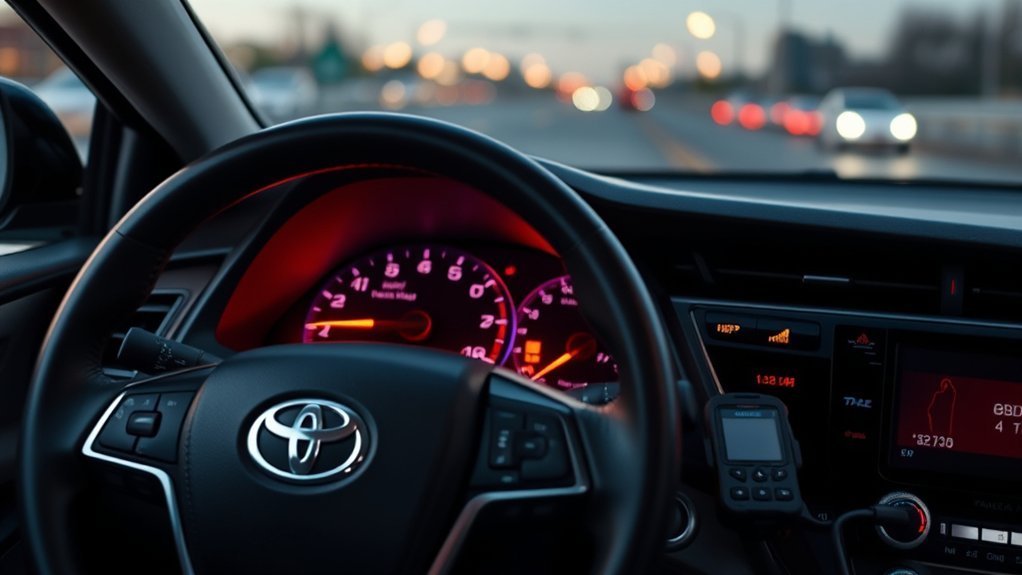
The check engine light, also called the malfunction indicator lamp, comes on when the Camry’s onboard diagnostic system detects an emissions-related fault or a problem that prevents the system from checking itself correctly. The computer also stores diagnostic information that can help a technician locate the cause. The exact possibilities vary by model year, engine, and whether the Camry uses a gasoline or hybrid powertrain. Toyota’s warning-light guidance directs owners to the vehicle-specific manual for details, so use the manual for your exact year and configuration.
Loose or Damaged Fuel Cap and EVAP Leaks
A loose, damaged, missing, or incorrectly installed fuel cap can prevent the evaporative-emissions system from sealing. Cracked vapor hoses, purge-valve problems, vent-valve faults, and canister leaks can produce similar EVAP codes.
Remove the cap only when the vehicle is safely parked and the engine is off. Inspect the cap seal and filler-neck area, then reinstall the cap fully according to the instructions printed on the cap or in your owner’s manual. If the cap caused the fault, the light may remain on until the vehicle completes another EVAP system check.
Ignition Misfires
Worn spark plugs, a failing ignition coil, damaged wiring, injector problems, incorrect fuel delivery, vacuum leaks, or internal engine faults can cause a misfire. You may notice shaking, hesitation, hard starting, reduced power, poor fuel economy, or a fuel smell.
Misfire codes often fall in the P0300 family. P0300 generally indicates a random or multiple-cylinder misfire, while codes such as P0301 through P0304 identify the cylinder where the computer detected the misfire. The code does not prove that the spark plug or coil is defective, so testing is still required.
Air-Fuel Ratio and Oxygen-Sensor Faults
Camrys may use air-fuel ratio sensors, oxygen sensors, or both, depending on the model year and engine. An upstream sensor helps the engine computer adjust fuel delivery, while a downstream sensor is commonly used to monitor catalytic-converter performance. Sensor codes can also be caused by wiring faults, exhaust leaks, incorrect fuel mixture, or another engine problem.
Mass Airflow, Intake, and Vacuum Problems
A contaminated or failing mass airflow sensor, an intake duct leak, a disconnected hose, or a vacuum leak can cause incorrect airflow readings. Possible symptoms include unstable idle, hesitation, lean-mixture codes, stalling, or poor acceleration.
Catalytic-Converter and Exhaust Faults
A catalyst-efficiency code does not automatically mean the catalytic converter must be replaced. Exhaust leaks, prolonged misfires, fuel-mixture problems, sensor faults, or a damaged converter can all influence catalyst-monitor results. The underlying cause should be diagnosed before an expensive converter is installed.
Electrical, Voltage, Cooling, and Fuel-System Faults
Low system voltage, corroded connectors, damaged wiring, coolant-temperature sensor faults, thermostat problems, fuel-pressure faults, and control-module communication problems can also set diagnostic codes. These issues require testing rather than visual guessing.
Note: The check engine light is different from Toyota’s maintenance reminder, low oil-pressure warning, charging-system warning, coolant-temperature warning, ABS light, and hybrid-system warnings. Identify every illuminated symbol before deciding whether the car is safe to drive.
Is a Steady or Flashing Toyota Camry Check Engine Light More Serious?
The light pattern helps you judge urgency, but it does not reveal the exact failure. A steady light is generally less urgent than a flashing light, yet a steady light can still represent a significant fault. Your Camry’s behavior and any other warning messages are equally important.
Steady Light Implications
If the light is steady and the Camry starts, idles, accelerates, and shifts normally, you can usually drive cautiously for a limited distance while arranging a scan or service appointment. Avoid hard acceleration, high engine speed, towing, and long trips until you know the cause.
Stop driving and seek assistance if the steady light is accompanied by severe shaking, stalling, smoke, overheating, a strong fuel smell, unusual mechanical noise, major power loss, or a red warning light.
Flashing Light Urgency
A flashing check engine light commonly warns of an active misfire or another malfunction severe enough to risk catalytic-converter damage. The California Air Resources Board notes that a blinking malfunction indicator can signal a fault that could damage the catalyst. For a Camry-specific deep dive, see Toyota Camry check engine light flashing: meaning and what to do. If the light starts flashing:
- Reduce engine load: Release the accelerator, avoid high speed, and turn off unnecessary loads where practical.
- Move to a safe location: Pull off the road without making an abrupt maneuver.
- Assess the symptoms: Check for shaking, smoke, fuel odor, stalling, overheating, or other warning lights.
- Shut the vehicle off when needed: Do not continue driving if the flashing continues or the engine runs poorly.
- Arrange towing or professional help: A tow is usually safer than risking catalyst or engine damage.
What Does the Light Pattern Mean?
| Light and Symptoms | Likely Urgency | Recommended Action |
|---|---|---|
| Steady light, no noticeable symptoms | Prompt diagnosis | Check the cap, retrieve codes, and schedule service soon. |
| Steady light with rough running or power loss | High | Limit driving and arrange professional diagnosis. |
| Flashing light | Urgent | Reduce load, pull over safely, and stop if flashing continues. |
| CEL plus red oil-pressure or overheating warning | Immediate | Shut the vehicle off safely and do not continue driving. |
What Should You Do When the Toyota Camry Check Engine Light Comes On?
- Identify the warning correctly. Confirm that it is the engine-shaped malfunction indicator lamp, not the maintenance reminder or another warning symbol.
- Check whether it is steady or flashing. A persistent flashing light requires a much faster response.
- Look for serious symptoms. Pay attention to shaking, smoke, unusual noise, fuel odor, stalling, overheating, or major power loss.
- Inspect the fuel cap. When safely parked, verify that the cap is present, undamaged, and fully installed.
- Read the diagnostic codes. Use an OBD II scan tool or have a qualified shop retrieve the codes, status, and freeze-frame information.
- Do not replace parts from the code alone. Test the related sensor, circuit, hose, ignition component, fuel system, or mechanical condition.
- Repair the cause and confirm the result. After the repair, verify that the code does not return and that the required readiness monitors complete.
Pro Tip: Photograph or write down every stored, pending, and permanent code before clearing anything. Also save the freeze-frame data, which records operating conditions such as engine speed, temperature, load, and fuel-trim values when the fault was detected.
[Amazon Products Picked for You]

Understand Your Check Engine Light – The ANCEL AD410 OBD2 scanner helps everyday drivers quickly read and clear engine-related fault codes, view code definitions, and understand why the check engine light is on before visiting a repair shop. With 42,000+ built-in DTC lookups, this car code reader helps reduce guesswork and makes basic vehicle diagnostics easier for beginners and DIY users

【Diagnose Check Engine Light in Seconds – No Mechanic Needed】The FOXWELL NT301 OBD2 scanner instantly reads & clears engine fault codes (DTCs) with one click. Simply plug into the 16-pin DLC port, turn ignition on, and get accurate results within seconds—No prior car knowledge required. Save hundreds on dealership fees by knowing exactly what’s wrong before you visit a shop. The #1 choice car scanner for DIYers and car owners who want to take control of their vehicle’s health

[All System Diagnostics, Professional-Level Scanner] - BLCKTEC 460T is the ultimate OBD2 diagnostic tool for home mechanics and professionals. It supports all 10 OBD2 modes, reads and clears Engine/Transmission/ABS/SRS codes, performs All-System Diagnostics, offers workshop reset tools, and provides real-time live data. It helps you pinpoint issues, assess your car's condition, and prepare for SMOG checks with ease. NOTE: Function availability depends on your vehicle. Before you buy, be sure to use the Compatibility Checker on BLCKTEC website or contact our customer support to verify that the features you need are supported for your vehicle’s specific year, make, and model.
How Do You Troubleshoot a Toyota Camry Check Engine Light?
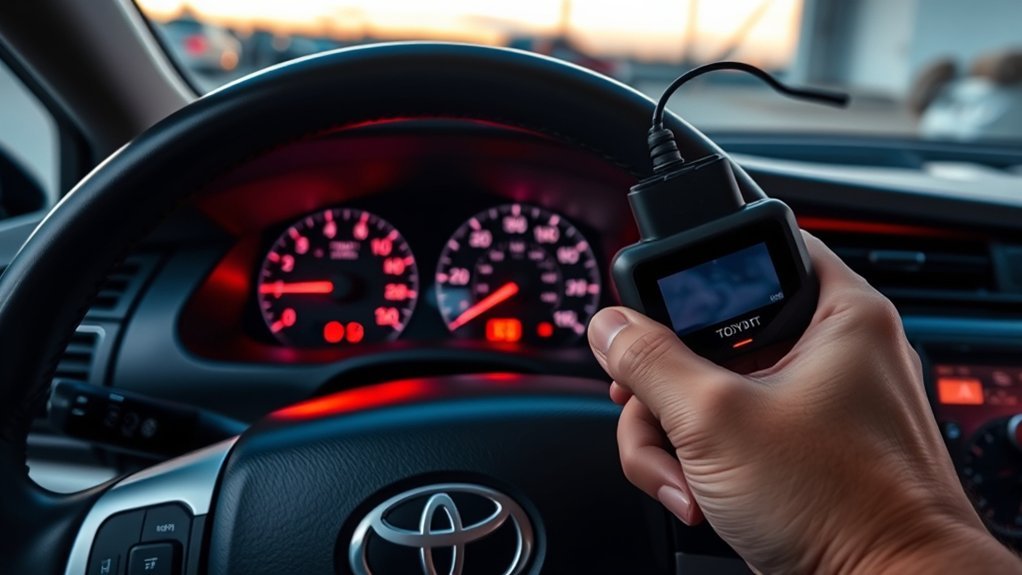
Begin with safe observations and code retrieval. Do not open the cooling system while it is hot, touch moving engine parts, work near a running cooling fan, or crawl under an unsupported vehicle.
| Step | Action | What It Tells You |
|---|---|---|
| 1. Observe | Note whether the light is steady or flashing and record all symptoms. | Helps determine immediate driving risk. |
| 2. Check the cap | Inspect and fully reinstall the fuel cap. | May correct a simple EVAP sealing issue. |
| 3. Inspect visually | Look for a disconnected intake tube, loose connector, damaged hose, or obvious fluid leak. | May reveal a recent service or physical problem. |
| 4. Scan | Connect an OBD II scanner and retrieve stored, pending, and permanent codes. | Identifies the system or condition that needs testing. |
| 5. Save data | Record freeze-frame and relevant live-data values. | Shows when and under what conditions the fault occurred. |
| 6. Test | Follow the correct Toyota diagnostic procedure for the model year and code. | Separates the actual cause from a related symptom. |
| 7. Verify | Confirm normal operation and monitor completion after repair. | Shows whether the repair solved the original fault. |
[Amazon Products Picked for You]

CEL Doctor: The ANCEL AD310 is one of the best-selling OBD II scanners on the market and is recommended by Scotty Kilmer, a YouTuber and auto mechanic. It can easily determine the cause of the check engine light coming on. After repairing the vehicle's problems, it can quickly read and clear diagnostic trouble codes of emission system, read live data & hard memory data, view freeze frame, I/M monitor readiness and collect vehicle information
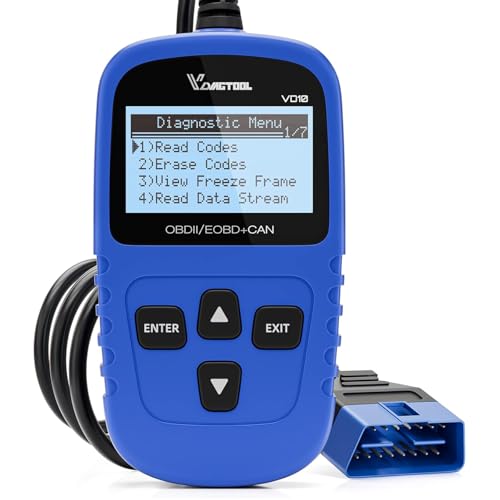
【A MUST-HAVE TOOL FOR DIYERS】 - VDIAGTOOL VD10 car code reader is an incredibly useful obd scanner for each car owner or hobbyist, even for those with little to no experience when it comes to vehicle mechanics! Similar to a fixd car diagnostic tool, using this car diagnostic scanner is extremely easy. All you have to do is attach it to your car OBDII port and you can diagnose car problems in seconds! Read Codes (DTCs); Clear Codes; Live Data; View Freeze Frame; I/M Readiness; Vehicle Information.
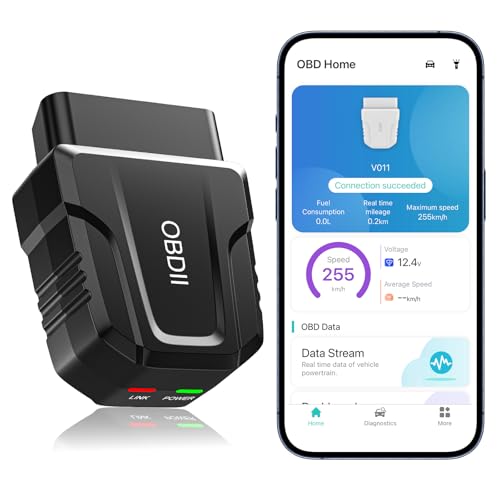
【Comprehensive Performance Testing】V011 OBD2 Scanner provides a complete diagnostic solution, giving you a thorough understanding of your vehicle's condition. It supports a variety of performance tests, support 9 protocols,👍automotive fault clearing,including fast reading of DTCs, access to electronic emission readiness, turning off CEL or MIL, resetting monitors, reading live data and retrieving the vehicle's VIN, freeze frame, sensor data, data streaming, diagnostic reports, onboard monitoring, live data streaming, and more. With these features, you can monitor your car's performance in real time and discover potential problems before they become major issues.
How to Use a Basic OBD II Scanner
- Park safely, apply the parking brake, and switch the vehicle off.
- Locate the diagnostic connector, which is commonly under the driver’s side of the dashboard on OBD II-equipped Camrys.
- Connect the scanner and follow its instructions for the correct ignition or READY-mode setting.
- Read stored, pending, and permanent diagnostic trouble codes.
- Save freeze-frame data before clearing codes.
- Research and test the complete system associated with the code.
The California Air Resources Board’s OBD II fact sheet explains that the system monitors components that affect emissions and stores information to help a repair technician locate the malfunction.
Common Code Families You May See
| Code Example | General Area | Possible Causes |
|---|---|---|
| P0300; P0301–P0306 where applicable | Misfire detection | Spark plug, coil, injector, wiring, air leak, fuel issue, or mechanical fault |
| P0440, P0441, P0455, P0456 | EVAP system | Fuel cap, hose, purge valve, vent valve, canister, or leak |
| P0171 or P0174 | Lean air-fuel mixture | Air leak, airflow reading, fuel delivery, exhaust leak, or sensor input |
| P0101 | Mass airflow performance | Sensor contamination, intake leak, wiring, or airflow problem |
| P0420; P0430 where applicable | Catalyst efficiency | Converter degradation, exhaust leak, misfire history, fuel-mixture fault, or sensor issue |
Not every code applies to every Camry. Four-cylinder, V6, gasoline, and hybrid models use different layouts and may have different banks, cylinders, sensors, and Toyota-specific codes. For more detail, see the Toyota Camry OBD II system guide and the Toyota Camry P0300 diagnostic guide.
What Not to Do
- Do not keep driving with a persistent flashing light to see whether it clears.
- Do not buy an oxygen sensor, catalytic converter, coil, or other part solely because its name appears in a code description.
- Do not disconnect the battery simply to turn the light off.
- Do not clear codes before saving the code numbers and freeze-frame information.
- Do not assume the car is repaired merely because the light remains off for one short trip.
- Do not ignore a separate red oil-pressure, temperature, brake, or charging-system warning.
Why Does Your Toyota Camry Model Year Matter?
Camry diagnostic paths are not identical across generations. Toyota made the U.S.-market 2025 Camry exclusively hybrid with a 2.5-liter four-cylinder engine and continued the all-hybrid lineup for 2026. Earlier Camrys included gasoline-only and hybrid powertrains, and some generations offered V6 engines. These differences change which cylinders, banks, sensors, fuel-system components, and hybrid warnings may apply.
Before ordering parts or following a repair video, confirm the model year, engine or hybrid powertrain, drivetrain, and all stored codes. Use Toyota’s manual library for the exact vehicle rather than assuming a code description or repair step applies to every Camry.
Why Timely Repairs Matter for Your Car’s Health
Prompt diagnosis protects more than the component that originally set the code. A continuing misfire may overheat the catalytic converter, a lean condition may affect drivability, and an EVAP fault may increase fuel-vapor emissions. Some faults can also reduce fuel economy or cause the vehicle to fail an emissions inspection.
- Prevent secondary damage: Correcting an ignition, fuel, or airflow fault may protect the converter and engine.
- Restore normal performance: Diagnosis may resolve rough idle, hesitation, stalling, or reduced power.
- Control emissions: The OBD system is designed to identify faults that affect emissions or prevent proper emissions monitoring.
- Prepare for inspection: An illuminated light or incomplete readiness monitors may prevent an OBD-based emissions test from passing.
- Preserve useful evidence: Early diagnosis makes stored codes and freeze-frame information available before they are erased or replaced by later events.
A check engine code is a diagnostic clue, not a command to replace the part named in the code description.
[Amazon Products Picked for You]

Multi-Functions - Practical Multi-Functions OBD2 code reader features built-in OBD2 DTC lookup library, which help you to determine the cause of the engine light, read code, erase code, view freeze frame, I/M ready, vehicle information, data flow, real-time curve, get vehicle speed information, calculate load value, engine coolant temperature, get engine speed.

MAINTAIN PEAK PERFORMANCE AND SAFETY ON THE ROAD - Easily find and fix the problem with your vehicle using the INNOVA 5610 bidirectional scan tool. This OBD2 scanner diagnostic tool provides real-time solutions to troubleshoot issues. Access OBD2 and OEM live data with ease, making it an essential car scanner diagnostic tool. Perfect for those seeking reliable car diagnostic scanner and code readers & scan tools for vehicles.

[Easy to Use—Work Out of the Box] + [FOXWELL 2026 New Version] FOXWELL NT604 Elite scan tool is the 2026 new version from FOXWELL, designed for car owners who want to figure out the cause of issues before fixing car problems by scanning common systems like ABS, SRS, engine, and transmission. The NT604 Elite obd2 scanner diagnostic tool comes with the latest software—no need to waste time downloading software first. Plug the scanner into the OBDII port with OBDII cable to start the diagnosis.
How Much Does Toyota Camry Check Engine Light Diagnosis Cost?
There is no reliable universal price for check engine light service. A basic code read may take only a few minutes, but a complete diagnosis may require wiring tests, smoke testing, fuel-pressure testing, ignition analysis, live-data review, compression testing, or an extended road test.
| Service | What It Includes | Cost Considerations |
|---|---|---|
| Basic code read | Retrieves code numbers and limited status information | May be free or low-cost, but it is not a complete diagnosis |
| Professional diagnosis | Code analysis, technical information, inspection, testing, and confirmation | Varies by shop rate, region, vehicle, code, and testing time |
| Minor EVAP or connection repair | Cap, seal, hose, connector, or small leak repair | Often lower-cost, but smoke testing may be needed |
| Sensor, ignition, or fuel repair | Sensor, coil, plug, injector, wiring, or fuel-system work | Depends on engine layout, parts, access, and test results |
| Catalyst or internal engine repair | Converter replacement or mechanical engine work | Usually among the more expensive outcomes and requires firm diagnosis |
Ask whether the diagnostic charge is separate or credited toward an approved repair. Request the code numbers, test results, recommended repair, parts information, warranty terms, and a written estimate before authorizing work.
You do not always need a dealership for diagnosis. Properly trained and equipped independent repair shops can service OBD II faults. A Toyota dealer may be appropriate when the vehicle is under an applicable warranty, needs Toyota-specific programming, has a hybrid-system concern, or requires access to manufacturer procedures and equipment.
After the Repair
A good repair process includes more than turning the light off. The technician should:
- Confirm that the original fault has been corrected.
- Clear codes only after recording the diagnostic information.
- Road-test or operate the vehicle under the conditions needed to rerun the affected monitor.
- Check for returning, pending, or permanent codes.
- Verify that required readiness monitors complete before an emissions inspection.
Clearing codes or disconnecting the battery resets diagnostic information and may leave readiness monitors incomplete. The vehicle may need several normal trips before all applicable self-checks run again. CARB explains that incomplete readiness indicators can occur after codes are cleared or a battery is disconnected or replaced. In U.S. OBD-based inspection programs, testing rules vary by state, so check your local program before an emissions inspection.
Related Guides
Frequently Asked Questions
What Is the Most Common Reason for the Check Engine Light in a Toyota Camry?
There is no single verified most-common cause across every Camry model year and engine. A loose fuel cap or EVAP leak is a simple possibility, but misfires, airflow faults, sensor problems, catalyst codes, wiring issues, and fuel-system faults are also common diagnostic categories. Read the stored code before choosing a repair.
Can I Drive My Toyota With a Check Engine Light?
You can often drive cautiously for a short distance if the light is steady and the Camry runs normally. Stop as soon as it is safe if the light flashes, the engine shakes, power drops sharply, the car stalls, smoke appears, you smell raw fuel, or a red oil-pressure or overheating warning comes on.
Why Is My Camry Check Engine Light On If the Car Runs Normally?
Some OBD II faults do not cause obvious drivability symptoms right away. A small EVAP leak, sensor-range fault, catalyst-monitor issue, or intermittent electrical problem can turn the light on while the Camry still feels normal. Treat a steady light as a prompt to read the stored codes soon rather than waiting for symptoms to appear.
What Is the First Thing to Check When the Check Engine Light Comes On?
First determine whether the light is steady or flashing and look for serious symptoms or other warning lights. If the car is stable and safely parked, inspect the fuel cap. The next useful step is retrieving the OBD II codes without clearing them.
How Long Does It Take for the Light to Turn Off After Tightening the Gas Cap?
The light may not turn off immediately. The Camry must run the EVAP monitor again under suitable operating conditions. This can take several normal trips. If the cap is secure and the light remains on, retrieve the code because another leak or fault may be present.
Will a Toyota Camry Check Engine Light Reset Itself?
It may turn off after the fault is no longer detected for the required number of operating cycles. However, history or permanent-code information may remain available. Do not assume the problem is solved unless the cause has been checked and the code does not return.
Can a Weak Battery Cause Check Engine Codes?
Low voltage, poor connections, charging faults, or voltage interruption can contribute to communication or circuit codes. Test the battery and charging system when voltage-related symptoms or codes are present, but do not assume every check engine light is caused by the battery.
Can a Camry Pass an Emissions Test With the Check Engine Light On?
In U.S. programs that use OBD-based emissions inspections, an illuminated malfunction indicator lamp normally causes a failure. A vehicle may also be rejected or fail if too many readiness monitors are incomplete after codes were cleared or the battery was disconnected. Exact rules vary by state and program.
Conclusion
A Toyota Camry check engine light should be treated as a request for diagnosis, not as proof that one particular part has failed. Check whether the light is steady or flashing, watch for dangerous symptoms, inspect the fuel cap, and retrieve the stored codes without erasing them. Use the code, freeze-frame information, symptoms, and model-specific procedures together to find the actual cause.
For instructions that apply to your exact model year, consult the official Toyota manuals and warranties portal. If the light flashes or the Camry runs poorly, stop driving when safe and arrange professional assistance.
Sources
- Toyota Dashboard Warning Lights — Toyota guidance on identifying warning lights and consulting the vehicle-specific owner’s manual
- Toyota Manuals and Warranties — official model- and year-specific owner information
- California Air Resources Board OBD II Fact Sheet — OBD operation, blinking-light risk, stored fault data, repair guidance, and readiness monitors
- CARB On-Board Diagnostic Program — official overview of emissions-related onboard diagnostics
- U.S. EPA Regulations for Emissions From Vehicles and Engines — federal vehicle-emissions regulatory information
- Toyota 2025 Camry All-Hybrid Announcement — official 2025 Camry powertrain information
- Toyota 2026 Camry Announcement — official 2026 Camry lineup and hybrid powertrain information
