
If your Toyota Camry’s check engine light is flashing, treat it as an urgent warning. A flashing light usually points to an active engine misfire or another fault that can damage the catalytic converter if you keep driving. Slow down, find a safe place to stop, turn the engine off, and avoid driving again if the light keeps flashing or the car shakes, smells like fuel, or loses power.
Quick Answer
A flashing Toyota Camry check engine light usually means the engine is misfiring badly enough to risk catalytic converter damage. Pull over safely, shut the engine off, and arrange professional diagnosis. If the light becomes steady and the car runs normally, drive gently only to a nearby repair shop.
Key Takeaways
- A flashing check engine light is more urgent than a steady light.
- Common causes include worn spark plugs, bad ignition coils, fuel delivery problems, vacuum leaks, sensor issues, or compression problems.
- Do not keep driving if the light flashes, the engine shakes, or you smell raw fuel.
- An OBD-II scan gives a starting point, but a code does not automatically prove which part failed.
- Use your model-year Toyota maintenance guide and check for open recalls before approving major repairs.
At a Glance
| Time Required | 5 minutes to stop safely and document symptoms; diagnostic time varies by repair shop |
| Difficulty | Easy for immediate safety steps; professional skill needed for full diagnosis |
| Tools Needed | Phone, roadside assistance contact, OBD-II scanner if available, repair records |
| Cost | Code reading may be free or low-cost; repairs depend on the confirmed cause |
Understanding the Flashing Check Engine Light in Your Toyota Camry

When the check engine light flashes in a Toyota Camry, the engine computer is warning you about an active fault that needs fast attention. In many cases, this warning points to a misfire. A misfire happens when one or more cylinders fail to burn the air-fuel mixture correctly.
That matters because unburned fuel can enter the exhaust and overheat the catalytic converter. The on-board diagnostics system is designed to help detect emissions-related faults and store diagnostic trouble codes for repair testing.
Warning: Do not keep driving normally with a flashing check engine light. If the light keeps flashing, the engine runs rough, or the car loses power, stop in a safe place and arrange towing or roadside assistance.
You may also notice shaking, rough idling, hesitation, poor acceleration, or a fuel smell. Some Camrys may limit power to protect the engine, but a flashing light does not always mean the car is in limp mode. Treat the warning seriously either way.
Flashing vs. Steady Check Engine Light
A steady check engine light means the vehicle has stored a fault that needs diagnosis. A flashing check engine light is more urgent because the fault may be happening right now.
| Light Pattern | What It Usually Means | Best Action |
| Steady light | A stored fault, such as an emissions, sensor, fuel, or ignition issue | Schedule diagnosis soon and avoid hard acceleration |
| Flashing light | An active severe fault, often a misfire that can harm the catalytic converter | Pull over safely, shut the engine off, and get professional help |
Common Causes of a Flashing Check Engine Light
A flashing check engine light does not name the failed part by itself. It only tells you the engine computer has detected a serious problem. These are the most common areas a technician will check first.
Worn or incorrectly gapped plugs are one of the most common triggers behind that flashing light, because a weak spark is what lets raw fuel reach the converter in the first place. Fitting the right plugs for a 2007 Camry is often the cheapest part of solving it.
- Worn or fouled spark plugs: A weak spark can cause one cylinder to misfire under load.
- Faulty ignition coils: A bad coil can stop a cylinder from firing correctly.
- Fuel injector problems: A clogged, leaking, or electrically faulty injector can create a lean or rich misfire.
- Vacuum leaks: Extra unmetered air can make the air-fuel mixture too lean.
- Bad sensor data: Oxygen sensor, mass airflow sensor, or crankshaft/camshaft sensor issues can affect engine control.
- Low compression: Internal engine wear, valve problems, or head gasket issues can cause repeat misfires.
- Exhaust or catalytic converter problems: A damaged or restricted converter can worsen performance and trigger related codes.
For many Camrys, misfire-related OBD-II codes often start with P03. For example, P0300 points to random or multiple misfires, while P0301 through P0306 point to a misfire on a specific cylinder. Your exact code depends on the model year, engine, and fault.
Note: Do not replace parts based on the code alone. A P0302 code, for example, says cylinder 2 misfired. It does not prove the spark plug, coil, injector, wiring, or engine compression is the root cause.
What to Do Immediately When Your Check Engine Light Flashes
When your Toyota Camry’s check engine light flashes, focus on safety first and diagnosis second. The right response can prevent extra damage.
1. Pull Over Safely
Ease off the accelerator and avoid sudden moves. Turn on your hazard lights if traffic conditions require it. Pull into a safe shoulder, parking lot, or side street. Once stopped, shift to park, set the parking brake, and turn the engine off.
2. Check for Obvious Danger Signs
Do a quick safety check from inside the vehicle first. Look for smoke, steam, warning lights, strong fuel smell, overheating, or oil pressure warnings. If you see smoke or smell fuel, move away from the vehicle and call for help.
3. Document the Symptoms
Write down what happened before the light started flashing. Helpful details include speed, weather, fuel level, whether the engine was cold or warm, and whether the car shook during acceleration or at idle.
4. Decide Whether to Drive or Tow
If the light keeps flashing, the engine shakes, or the Camry runs poorly, do not continue driving. Arrange towing to a trusted repair shop or Toyota service center. If the flashing stops and becomes a steady light, and the car runs normally, drive gently only if needed to reach a nearby repair facility.
5. Do Not Clear Codes Too Soon
Clearing codes before saving them can erase useful diagnostic clues, including freeze-frame data. If you have a scanner, record the codes and freeze-frame information before clearing anything.
Pro Tip: If you call a repair shop, tell them the light was flashing, not just “on.” That one detail changes the urgency and helps them prioritize misfire and catalytic converter protection checks.
Why Ignoring Your Check Engine Light Could Cost You Big
Ignoring a flashing check engine light can turn a smaller repair into a larger one. A misfire can send unburned fuel into the exhaust, which may overheat or damage the catalytic converter. That can also reduce fuel economy, increase emissions, and make the car run worse.
In places that require emissions inspections, an unresolved check engine light may also prevent the vehicle from passing inspection. That is why fast diagnosis matters. You are not just protecting the engine. You are also protecting the exhaust system, fuel economy, and your ability to keep the vehicle road-ready.
A flashing check engine light is not a “wait and see” warning. Treat it like an active fault that can cause secondary damage if you keep driving.
Diagnosing Your Check Engine Light Problem
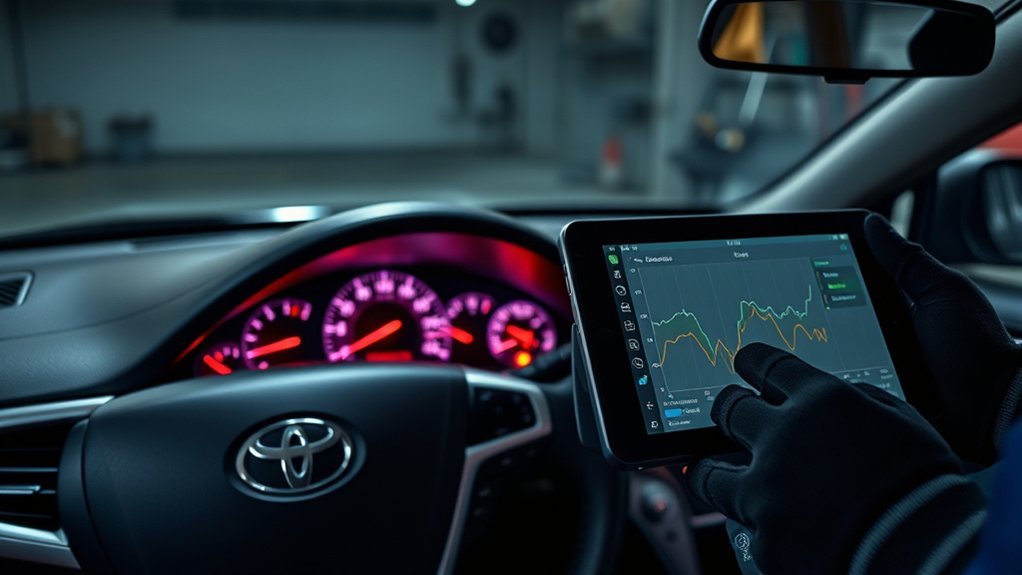
Diagnosis starts with an OBD-II scan, but it should not stop there. The scanner reads stored codes from the engine computer. A trained technician then tests the system that the code points to.
Scan for Codes and Freeze-Frame Data
An OBD-II scanner can show misfire codes, fuel trim data, oxygen sensor activity, and freeze-frame data from the moment the fault was recorded. This helps narrow down the issue before parts are replaced.
Inspect Ignition and Fuel Components
The technician may inspect spark plugs, ignition coils, coil boots, wiring, fuel injectors, vacuum hoses, and intake components. On some Camrys, swapping a coil from one cylinder to another can help confirm whether the misfire follows the coil.
Check for Air Leaks and Sensor Problems
Vacuum leaks, cracked intake hoses, dirty mass airflow readings, and sensor faults can all create poor combustion. These problems may feel like a bad spark plug even when the ignition system is not the true cause.
Test Compression if the Misfire Returns
If the same cylinder keeps misfiring after basic ignition and fuel checks, the shop may perform compression, leak-down, or borescope testing. These tests help find internal engine problems before more parts are replaced.
Verify the Repair
A proper repair ends with a re-scan and a controlled road test. The technician should confirm that the misfire monitor passes, the light stays off, and no related codes return.
When to Get Professional Help for Your Check Engine Light
Get professional help right away if the light is flashing or the engine feels abnormal. Even if you own a scanner, a flashing warning can involve ignition, fuel, air, sensor, exhaust, or internal engine issues.
| Situation | Action Required |
|---|---|
| Check engine light is flashing | Stop safely and arrange diagnosis as soon as possible |
| Light is steady | Schedule a scan and inspection soon |
| Engine shakes, hesitates, or smells like fuel | Avoid driving and request towing |
| Vehicle has reduced power | Drive only if needed to move out of danger; then get help |
| Recent repair did not fix the light | Ask for code history, freeze-frame data, and follow-up testing |
Toyota Camry Hybrid Note
If you drive a Camry Hybrid, the same flashing-light warning still deserves urgent attention. Hybrid systems may start and stop the gasoline engine at different times, so symptoms can feel intermittent. Do not assume the problem is gone just because the engine shuts off at a stop. Save the codes and have the gasoline engine, hybrid control data, and emissions system checked by a qualified technician.
Preventative Maintenance to Avoid Future Check Engine Light Issues
Preventative maintenance can reduce the chance of future check engine light problems, but the right schedule depends on your Camry’s model year, engine, mileage, and driving conditions. Use your Toyota owner’s resources and model-specific maintenance guide as the main reference.
- Follow the oil-change schedule: Old oil can increase wear and affect engine performance.
- Replace spark plugs on schedule: Worn plugs can cause misfires, rough idle, and poor acceleration.
- Inspect ignition coils and boots: Cracks, oil contamination, or moisture can create intermittent misfires.
- Keep the air filter clean: Restricted airflow can hurt performance and fuel economy.
- Fix vacuum leaks early: Small leaks can create lean running and misfire codes.
- Use the correct fuel and fluids: Follow Toyota’s recommendations for your exact model year.
- Check for open recalls: Search your VIN through NHTSA’s recall tool or Toyota’s owner portal.
Also keep repair records. If the light returns, records help the shop see which parts were replaced, which codes appeared before, and which tests were already done.
Frequently Asked Questions
Why is the check engine light blinking on my Toyota Camry?
A blinking or flashing check engine light usually means the engine computer has detected an active severe fault. In many cases, that fault is a misfire. Stop safely, shut the engine off, and have the car scanned before driving again.
Can I still drive if my check engine light is flashing?
You should not keep driving normally with a flashing check engine light. If the engine is shaking, losing power, or smelling like fuel, pull over and arrange towing. If the light stops flashing and the car runs normally, drive gently only if needed to reach a nearby repair shop.
What is the most common reason for a flashing check engine light?
A misfire is one of the most common reasons. The cause may be a worn spark plug, faulty ignition coil, fuel injector problem, vacuum leak, sensor fault, or low compression. A proper diagnosis is needed before replacing parts.
What does a flashing engine light mean on a Toyota?
On a Toyota, a flashing engine light means the engine control system has detected a fault that needs urgent attention. It often relates to an active misfire that can damage the catalytic converter if you continue driving.
Can a loose gas cap cause a flashing check engine light?
A loose gas cap usually causes a steady check engine light, not a flashing one. If the light is flashing, treat it as more urgent and check for misfire symptoms such as shaking, rough idle, or hesitation.
Should I clear the code after the light stops flashing?
Do not clear the code until you save the diagnostic trouble codes and freeze-frame data. Clearing codes too soon can erase clues that help the technician confirm the cause.
Conclusion
When your Toyota Camry’s check engine light flashes, act quickly and calmly. Pull over safely, shut the engine off, and avoid driving if the light keeps flashing or the car runs rough. A scanner can point you in the right direction, but a full diagnosis should confirm the cause before parts are replaced. Quick action can protect your engine, catalytic converter, fuel economy, and repair budget.
Sources
- U.S. Environmental Protection Agency: Basic Information on On-Board Diagnostics — backs OBD system and emissions-monitoring context.
- Toyota Owners — supports using model-specific owner resources and maintenance guidance.
- National Highway Traffic Safety Administration: Recalls Lookup — supports checking open safety recalls by VIN.
- California Bureau of Automotive Repair: Smog Check Program — backs emissions-inspection context where applicable.
