LED and halogen headlights can both light the road well, but they do it in different ways. Factory LED systems usually use less electrical power, produce a whiter beam, and last longer. Halogen bulbs cost less, are easier to replace, and often work best when your vehicle was designed for them. The right choice depends on the complete headlamp system, not the bulb technology alone.
Quick Answer
Factory-designed LED headlights usually offer lower power use, a whiter beam, and longer service life. Halogen headlights are cheaper and easier to replace. LEDs are not automatically brighter, safer, or legal as retrofit bulbs. Beam pattern, aim, housing compatibility, and local rules matter more than advertised lumen figures.
Key Takeaways
- A well-designed LED headlamp can provide strong road illumination with less electrical power than a comparable halogen system.
- Lumens alone do not show how well a headlight performs. Beam shape, aim, lux on the road, and glare control are more useful.
- Installing an LED bulb in a housing designed for halogen can create dark spots, scatter, glare, flicker, or a noncompliant beam.
- Halogen remains a sensible choice when you want low cost, simple replacement, and guaranteed compatibility with the original housing.
- Before upgrading, confirm the exact bulb type, legal approval, housing compatibility, rear clearance, dust-cap fit, and headlight aim.
Understanding Halogen and LED Headlight Technology
A halogen bulb sends electricity through a tungsten filament. The filament becomes hot enough to glow, while halogen gas inside the bulb helps slow filament wear. The design is simple, inexpensive, and easy to service, but much of the electrical input becomes heat instead of visible light.
An LED headlight uses light-emitting diodes controlled by an electronic driver. LEDs can produce more useful light from less electrical power, but they are not heat-free. Heat builds at the diode and driver, so a proper heat sink, cooling fan, or other thermal system is essential.
There are also two different LED situations to consider:
- Factory LED headlamps: The emitters, reflectors or projectors, cooling system, electronics, and lens were engineered as one unit.
- LED retrofit bulbs: An LED bulb is installed in a headlamp originally designed around the size and position of a halogen filament. Results vary widely because the new emitter may not sit at the exact optical focal point.
LED vs. Halogen Headlights at a Glance
| Factor | LED Headlights | Halogen Headlights |
|---|---|---|
| Light source | Semiconductor diodes and an electronic driver | Heated tungsten filament in a gas-filled bulb |
| Typical appearance | Neutral to cool white | Warm white with a yellow tint |
| Electrical demand | Usually lower for comparable useful output | Usually higher because the filament creates substantial heat |
| Service life | Often longer, but cooling and driver quality matter | Shorter, but the bulb is normally cheap and easy to replace |
| Failure cost | Can be high when the LED module or complete lamp must be replaced | Usually limited to a replaceable bulb |
| Best fit | Factory LED systems or approved vehicle-specific conversions | Vehicles designed for replaceable halogen bulbs and budget-focused repairs |
Which Is Brighter: LED or Halogen?
A well-engineered LED headlamp can illuminate farther and more evenly than a basic halogen system. However, the word brighter can be misleading because headlight performance is not determined by one number.
- Lumens describe the total amount of light produced by a source.
- Candela describe light intensity in a specific direction.
- Lux describe how much light reaches a surface at a stated distance.
- Beam pattern shows where the headlamp places that light and where it limits glare.
That is why a bulb advertised with a very high lumen figure can still perform poorly. If the emitter position does not match the reflector or projector, the beam may have a bright foreground, weak distance illumination, dark areas, or excessive light above the cutoff.
The Insurance Institute for Highway Safety headlight test measures how far adequate illumination reaches on straight and curved roads while also checking glare for oncoming drivers. This system-level approach is more useful than comparing bulb-box claims.
The best headlight is not the one with the largest advertised lumen number. It is the complete system that puts enough light on the road without sending excessive glare into other drivers’ eyes.
Power Consumption and Energy Efficiency
LED technology is more efficient than a glowing filament, so an LED headlamp can usually produce comparable useful illumination with less electrical power. That lower draw reduces the load on the alternator in a gasoline or diesel vehicle and the low-voltage electrical system in an electric vehicle.
The practical fuel or range benefit is normally modest because headlights use far less energy than propulsion. You should treat reduced power demand as a supporting benefit, not as a reason to expect hundreds of dollars in fuel or electricity savings.
Heat also needs a careful explanation. Halogen bulbs radiate a great deal of heat from the filament and bulb. LEDs send less radiant heat forward, but the diodes and driver still create heat at the rear. Poor thermal design can shorten LED life, dim the output, damage the driver, or cause an internal cooling fan to fail.
Note: A fanless LED bulb is not automatically better than a fan-cooled bulb. Fanless designs need enough open space and metal surface area to shed heat. Fan-cooled designs need clean airflow and a durable fan.
Lifespan and Replacement Costs
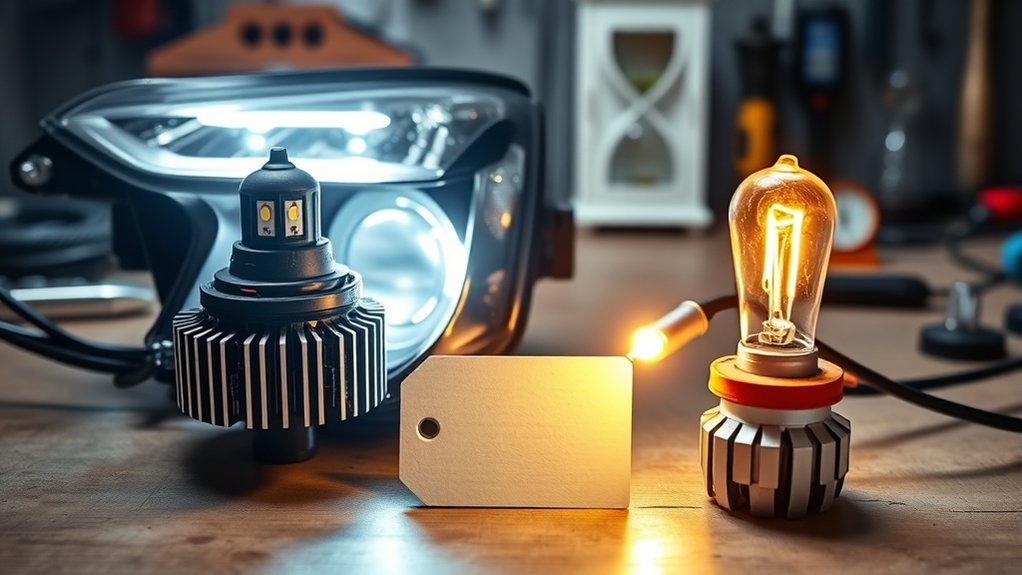
LED light sources generally last longer than halogen filaments, but fixed lifetime claims should be treated with caution. Actual service life depends on operating temperature, voltage control, moisture protection, vibration, driver quality, and cooling performance.
Halogen bulbs slowly lose output and eventually break a filament. Replacement is usually straightforward, and many vehicles allow you to change only the failed bulb. You should replace halogen bulbs in pairs when practical because the other bulb has often aged at a similar rate.
Factory LED lamps can run for many years, but some vehicles use sealed or integrated assemblies. If the driver, module, cooling system, or internal LED fails, the repair may involve a control unit or complete headlamp rather than a low-cost bulb. This can erase part of the long-term savings.
How Color Temperature Affects Visibility
Color temperature is measured in kelvins, but it does not measure brightness. Halogen light normally appears warm and slightly yellow. Automotive LEDs usually appear neutral white or cool white.
Whiter light can make road signs, lane markings, and some objects look more distinct. Very cool or blue-leaning light can also feel harsher and may create more perceived glare or backscatter in rain, fog, and snow. The best color is usually a balanced white rather than the highest kelvin rating available.
Beam aim, lens condition, road surface, driver eyesight, and weather often affect useful visibility more than a small change in color temperature.
Safety, Glare, and Road-Legal Use
Headlights must balance two goals: helping you see and preventing glare for other road users. NHTSA’s headlighting rulemaking explains that beam patterns use minimum light levels for visibility and maximum levels in areas that could glare oncoming or preceding drivers.
In the United States, Federal Motor Vehicle Safety Standard No. 108 applies to original and replacement lighting equipment. Replacement equipment must not cause the vehicle to fall out of compliance. State inspection and equipment laws can add further requirements.
Rules differ by country. For example, the current United Kingdom MOT inspection manual says covered halogen headlamp units must not be converted for use with HID or LED bulbs, while complete replacement headlamp units designed for those light sources may be acceptable if they meet the remaining requirements.
Warning: Do not assume an LED retrofit is road legal because the bulb fits the socket or carries a marketing claim such as “DOT approved.” Confirm that the exact bulb-and-headlamp combination is approved for your vehicle and location, then check the beam pattern and aim.
What to Check Before Installing LED Bulbs
A plug-in LED conversion can create problems even when the base matches your original bulb. Check all of the following before buying or installing a kit:
- Correct bulb designation: Confirm the exact low-beam, high-beam, or dual-beam bulb listed in the owner’s manual.
- Vehicle-specific approval: Verify that the product is legal for on-road use in your jurisdiction and approved for your specific headlamp or vehicle.
- Emitter position: The LED chips must closely reproduce the location and orientation of the original halogen filament.
- Reflector or projector compatibility: A bulb that works acceptably in one housing can perform badly in another.
- Rear clearance: Make sure the heat sink, fan, connector, and driver fit behind the housing.
- Dust-cap sealing: Do not leave the housing open to moisture or dirt. Use a properly sealed solution.
- Electrical compatibility: Some vehicles may show bulb-out warnings, flicker, radio interference, or switching faults without compatible electronics.
- Beam aim: Check and adjust the aim after installation, especially if the vehicle carries heavy loads or has modified suspension.
- High-beam function: Confirm that both low and high beams work correctly and that the dashboard high-beam indicator still operates.
[Amazon Products Picked for You]

【900% Brighter - S1 Pro Bulbs】The SEALIGHT 9005 H11 bulbs combo feature 16pcs high-performance chips, delivering up to 8 times the brightness than stock bulbs. Upgrade your nighttime driving experience by replacing dim, narrow stock bulbs with SEALIGHT 9005/HB3 H11/H9/H8/H16 LED Bulbs Combo. Enjoy crystal-clear 6500K cool white light that cuts through the dark, giving you way better visibility for safer night drives

【Huge Improvement in Visibility】-AUTOONE H11 led bulbs are equipped with high luminous efficacy CSP chips. And 1:1 halogen h11 bulbs’ beam pattern, spread out the light more to help in the side and front vision but no endangering other drivers. Safer and bright upgrade for fog lights or drl
Environmental Impact of LED and Halogen Headlights
LED headlights can reduce electrical demand and may need fewer light-source replacements. Those benefits can lower energy use and reduce the number of discarded bulbs over a vehicle’s life.
The full environmental picture is more complex. LED systems contain drivers, circuit boards, heat sinks, wiring, and sometimes cooling fans. An integrated lamp that cannot be repaired at component level may create more material waste and cost more to replace than a simple halogen bulb.
For the best result, choose a durable, compliant product from a manufacturer that provides fitment data, warranty support, and replacement parts. Avoid short-lived kits with exaggerated output claims.
Cost Analysis: Upfront Price vs. Long-Term Value
Halogen normally wins on purchase price. LED can offer better long-term value when it is part of a well-designed factory system or a properly approved conversion, but the result depends on installation and repair costs.
| Cost Factor | LED | Halogen |
|---|---|---|
| Initial purchase | Higher for quality bulbs or complete assemblies | Lower for standard replacement bulbs |
| Installation | May require adapters, coding, drivers, dust caps, or professional aiming | Usually a direct bulb replacement |
| Routine replacement | Less frequent when thermal design and electronics are reliable | More frequent, but normally inexpensive |
| Major failure | Integrated modules or assemblies can be costly | Often limited to the bulb, socket, or wiring repair |
Do not calculate payback from household electricity prices. A vehicle generates or stores the electricity used by its lights, and the difference in fuel use or driving range is usually small. The main financial advantages of LED are potential service life and lighting performance, not dramatic energy-bill savings.
[Amazon Products Picked for You]
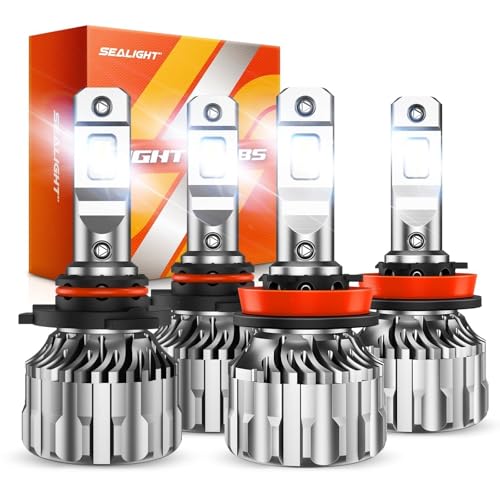
Better Driving Experience- The h11 9005 bulbs provide super bright illumination, offering a safer and more enjoyable driving experience

Ultimate Brightness: RCJ 9005 9006 bulbs combo use high-end 16 CSP chips to deliver up to 600% brighter light than OEM halogen bulbs. With 6000K cool white colour temperature, HB3 HB4 bulbs combo allows you to see further and clearer on the road at night, improving driver safety

【See Wider, Drive Safer】 900% Brighter Output: Banish dark spots and upgrade your night vision. Featuring advanced LED chips outputting a massive 50,000LM per pair in 6500K cool white, these H7 bulbs light up the road 9 times brighter than dim stock halogens, giving you more reaction time on dark country roads.
When Should You Upgrade to LED Headlights?
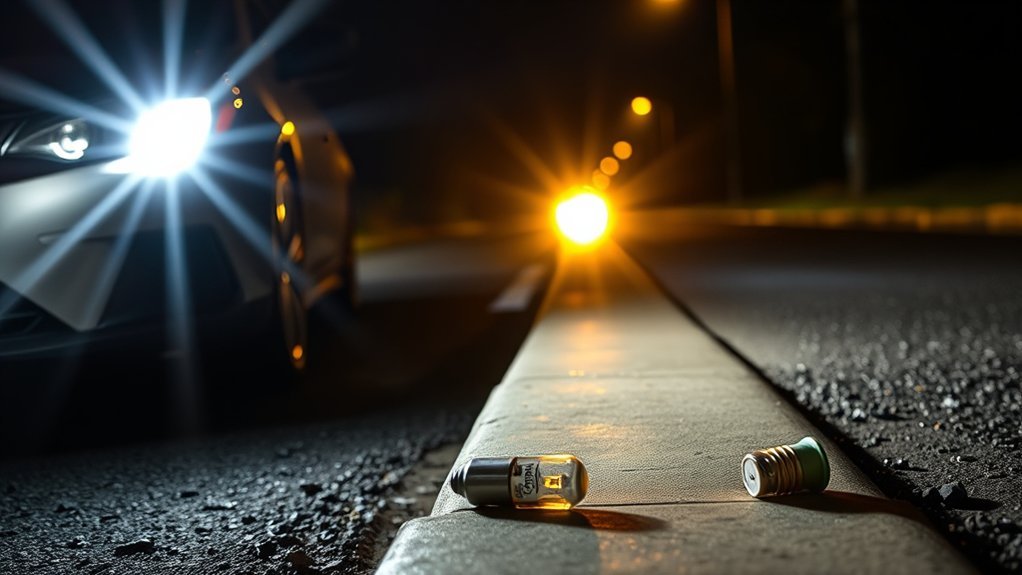
An LED upgrade makes the most sense when your vehicle has a factory LED option, a certified complete LED headlamp, or a vehicle-specific retrofit that has documented legal approval and verified beam performance.
Older trucks are the clearest case, because their reflector housings were designed around dim halogen output and the factory lenses are usually yellowed by now. For one worked example, our roundup of LED headlight picks for a 2005 F-150 shows what a well-matched upgrade looks like on a twenty-year-old vehicle.
Stay with halogen when the original housings are in good condition, you want a low-cost repair, legal retrofit approval is unclear, or the LED kit cannot preserve the dust seal and beam pattern.
Pro Tip: Before changing technologies, clean the lenses, restore cloudy plastic, inspect the connectors and grounds, install the correct high-quality halogen bulbs, and check headlight aim. These steps can recover a surprising amount of useful light without creating retrofit problems.
After any repair or upgrade, test the lights on a level surface. Make sure both beams have a clean, consistent pattern and do not point above the proper cutoff. A professional headlight aiming check is worthwhile when the pattern looks uneven or the suspension height has changed.
[Amazon Products Picked for You]

Premium Ceramic Construction: These wiring adapters utilize high-grade ceramic material that provides exceptional heat resistance and electrical insulation. The ceramic housing incorporates advanced waterproof and dustproof technology for reliable performance in all conditions. Inside, high-efficiency copper wiring ensures optimal conductivity and power transmission.

✅ROXX Headlight Conversion Harness Compatible with toyota tacoma 2016-2023 Factory LED Model Only.
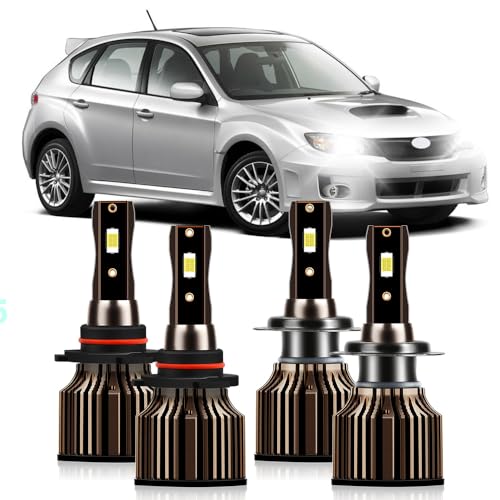
Perfect fit: For Subaru Legacy 2005, 2006, 2007, 2008, 2009, 2010, 2011, 2012, 2013, 2014 models specifically, guaranteeing a perfect fit and easy installation.
Related Guides
Frequently Asked Questions
Are halogen headlights brighter than LEDs?
Not as a general rule. A factory LED system often provides more useful road illumination than a basic halogen system, but a good halogen headlamp can outperform a poor LED retrofit. Compare the complete beam pattern, distance illumination, and glare control instead of technology alone.
Are 20,000-lumen headlights legal?
A marketing lumen number does not determine legality by itself. Road rules normally regulate the complete lamp, beam distribution, intensity at test points, color, aim, and glare. Verify that the exact product and headlamp combination is approved for on-road use where you drive.
What is a 60-watt halogen equivalent in LED?
There is no reliable watt-for-watt automotive conversion. The common “60-watt equivalent” label applies to household bulbs, not vehicle headlamps. Use the bulb designation, approved fitment, electrical compatibility, and measured beam performance for your vehicle.
What is a good brightness for LED headlights?
There is no universal lumen target that guarantees a good headlight. Useful brightness depends on how much light reaches the road at distance, how evenly it is distributed, and whether the low beam controls glare. Choose a compliant system tested for your vehicle.
Can I put LED bulbs in halogen headlight housings?
Only when the exact conversion is approved for that housing and vehicle in your jurisdiction. Physical fit does not prove optical compatibility. An unapproved bulb may scatter light, create glare, trigger inspection failure, or leave the vehicle noncompliant.
Are LED headlights better in rain, fog, or snow?
Not always. A very cool white beam can create more visible backscatter in poor weather. A well-aimed low beam with controlled intensity is more important than bulb type. Use fog lights only when conditions call for them, and do not use high beams in dense fog.
Why do LED bulbs flicker or cause a bulb warning?
Some vehicles monitor bulb resistance or send pulsed voltage to the lights. An LED driver may not respond like the original filament, which can cause flicker, radio noise, or a dashboard warning. Use a vehicle-compatible product rather than adding random resistors that create extra heat.
Do headlights need to be aimed after an LED upgrade?
Yes. Check the aim after any bulb, housing, suspension, or ride-height change. Even a small vertical error can reduce seeing distance or increase glare. If the beam lacks a clean pattern, aiming alone may not fix an incompatible bulb and housing.
Conclusion
LED headlights can deliver excellent visibility, lower electrical demand, and long service life when the complete system is designed around LED technology. Halogen headlights remain affordable, easy to service, and dependable in housings built for them.
Do not choose by color, wattage, or an advertised lumen number alone. Check the beam pattern, glare control, legal approval, vehicle compatibility, cooling, sealing, and repair cost. A properly aimed halogen headlamp is safer than a bright but uncontrolled LED retrofit.
Sources
- National Highway Traffic Safety Administration, Adaptive Driving Beam Final Rule — visibility, glare prevention, beam photometry, and replacement-equipment compliance.
- 49 CFR 571.108, Federal Motor Vehicle Safety Standard No. 108 — United States requirements for lamps, reflective devices, and associated equipment.
- Insurance Institute for Highway Safety, Headlight Test — road illumination distance and glare evaluation methods.
- Driver and Vehicle Standards Agency, MOT Headlamp Requirements — United Kingdom compatibility, alignment, and conversion rules.
