
If your Toyota Camry hesitates when you press the accelerator, the cause may be an ignition misfire, an intake-air problem, weak fuel delivery, an electronic throttle fault, a transmission issue, or a hybrid-system concern. The fastest way to avoid replacing good parts is to note exactly when the hesitation occurs, scan for diagnostic trouble codes, and follow the service information for your Camry’s model year and powertrain.
Quick Answer
A Toyota Camry that hesitates during acceleration most often needs diagnosis of the ignition, air intake, fuel system, electronic throttle, transmission, or hybrid controls. Scan the car before clearing codes, inspect basic items such as the intake hose and air filter, and stop driving if the check engine light flashes or power loss is severe.
Key Takeaways
- Hesitation is a symptom, not a diagnosis. The same feeling can come from a misfire, lean air-fuel mixture, delayed shift, or hybrid power limitation.
- Read stored, pending, and history codes before disconnecting the battery or clearing the check engine light.
- Do not assume the fuel injectors, mass air flow sensor, or transmission is bad without test results.
- Maintenance intervals and service procedures differ by model year, engine, transmission, and hybrid configuration.
- Fuel-pressure, direct-injection, transmission, and high-voltage hybrid tests are best left to a qualified technician.
At a Glance
| Time Required | 20 to 45 minutes for an initial scan and visual inspection; advanced diagnosis may take longer |
| Difficulty | Beginner for code reading and basic checks; advanced for fuel, transmission, or hybrid testing |
| Tools Needed | OBD-II scanner, flashlight, clean cloth, and the correct Toyota owner’s or repair manual |
| Cost | About $0 to $100 for initial checks or scanning; repair cost depends on the confirmed fault |
Warning: Pull over safely and arrange service if the check engine light flashes, the engine stalls, acceleration becomes dangerously weak, you smell raw fuel, the car overheats, or a red or hybrid-system warning appears. Continuing to drive may worsen damage or leave you unable to merge safely.
Why Is My Toyota Camry Hesitating on Acceleration?
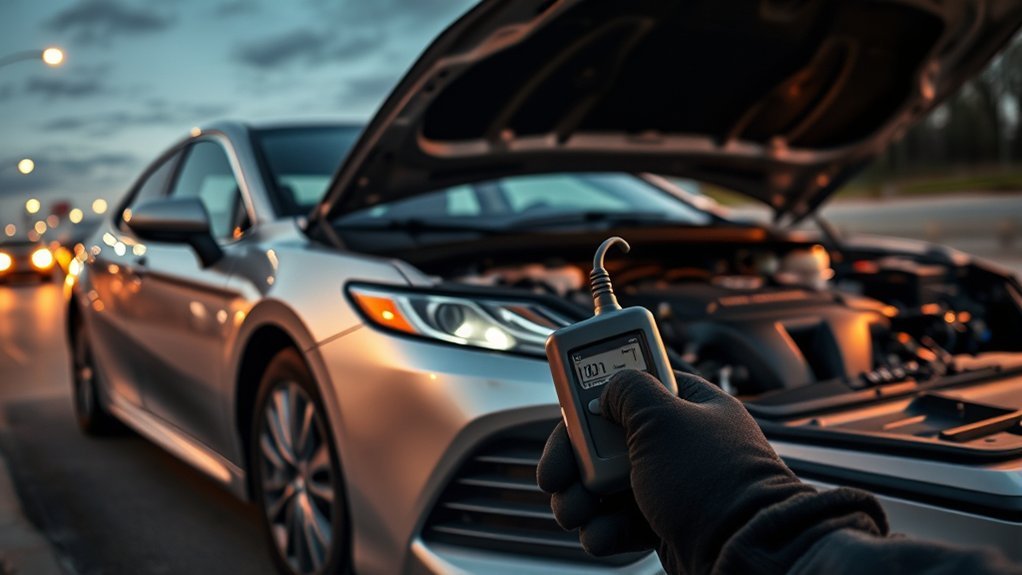
Your Camry can hesitate because the engine is not receiving the correct spark, air, or fuel at the moment you ask for more power. It can also feel hesitant when an automatic transmission delays a downshift, when an electronic throttle system limits opening, or when a hybrid control system reduces output after detecting a fault.
The model year matters. Older Camrys use different engines, sensors, ignition systems, and transmissions than newer cars. Current U.S. Camry models also use an all-hybrid powertrain, so advice written only for a conventional gasoline Camry is incomplete. Start with the Toyota manual and maintenance guide for your exact vehicle.
What Acceleration Hesitation Can Feel Like
Describe the symptom as precisely as possible before testing anything. The timing of the problem often narrows the system you should inspect first.
| When It Happens | Systems to Check First |
|---|---|
| From a stop | Electronic throttle, intake leaks, fuel delivery, transmission engagement, or hybrid power request |
| During a gear change | Transmission fluid condition, shift controls, software calibration, or internal transmission wear |
| Only under heavy load or uphill | Spark plugs, ignition coils, fuel pressure, restricted exhaust, or engine mechanical condition |
| Only when cold or hot | Temperature-dependent sensor data, air-fuel correction, ignition breakdown, or transmission behavior |
| After refueling | Poor-quality or contaminated fuel, incorrect fuel, or an evaporative-emissions fault |
| With warning messages on a hybrid | Hybrid control, cooling, battery, inverter, engine, or related electronic systems |
Common Causes of Acceleration Hesitation
The following faults can produce similar symptoms. Use codes, freeze-frame data, live readings, and physical tests to identify the real cause instead of replacing parts by guesswork.
[Amazon Products Picked for You]
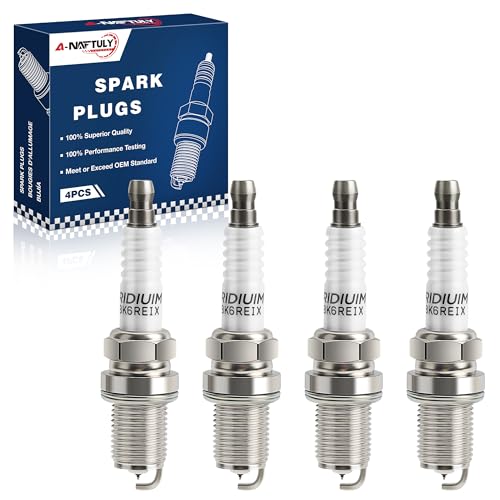
[Reference Number]: 7092, BKR6EGP, 3764, BKR6EIX11, 5553, BKR6ES11, 6741, IFR6E11, 2756, BKR6E11, 4115, PFR6G13, XP3923, 22401AA500, 980795614EHE, 9900079K60KR6, 99906910X9007, BY481BKR6E

【Precautions for Purchase】:Compatible with Acura Integra; Compatible with Audi A4 A4 Quattro; Compatible with BMW 318i 318is 318ti; Compatible with Chevy Aveo Optra Tracker; Compatible with Chrysler Neon Sebring; Compatible with Dodge Neon Stratus; Compatible with GMC Tracker; Compatible with Honda Civic; Compatible with Hyundai Scoupe; Compatible with Kia Rio Sportage.etc.Please confirm the compatibility according to the year/make/model of your vehicle and the OE number of the replaceable part.
Spark Plug and Ignition Coil Problems
Worn spark plugs, incorrect plug gaps, oil-fouled plugs, damaged coil boots, or weak ignition coils can cause a misfire when cylinder pressure rises during acceleration. You may feel a stumble, jerking, shaking, or loss of power. Misfire codes may include P0300 for a random misfire or cylinder-specific codes such as P0301 through P0304, depending on the engine.
Replace plugs only with the correct type and specification for your model year and engine. Do not use a universal 60,000-to-100,000-mile rule. Toyota maintenance schedules vary, so check the exact guide rather than assuming that a different plug brand will improve throttle response.
Air Intake, Vacuum Leak, and MAF Problems
A loose intake clamp, split intake boot, disconnected vacuum hose, restricted air filter, or inaccurate mass air flow sensor reading can make the engine run too lean or too rich. The result may be hesitation, unstable idle, poor fuel economy, or a check engine light.
Inspect the intake path from the air box to the throttle body. Look for cracks, loose clamps, disconnected hoses, and debris. If scan data or a code such as P0101 points toward the MAF circuit, follow Toyota’s diagnostic procedure. Do not touch the sensing element, and do not assume cleaning will repair an electrically failed sensor.
Throttle Body and Throttle Position Sensor Issues
Carbon buildup around the throttle plate can affect airflow at small openings, while an electronic throttle fault can limit response or trigger reduced-power operation. On many Camrys, the throttle actuator and position sensors are part of an electronic throttle-body assembly, so the old advice to test and replace a separate throttle position sensor does not apply to every model.
Check for throttle-related codes and compare commanded throttle position with actual position on a capable scan tool. Clean the throttle body only with a method approved for your vehicle, and avoid forcing an electronic throttle plate if the service procedure warns against it.
Clogged or Faulty Fuel Injectors
A restricted, leaking, or electrically faulty injector can cause uneven fueling, a cylinder misfire, rough idle, or hesitation under load. However, injectors should not be treated as the default cause. Similar symptoms can come from ignition faults, intake leaks, weak fuel pressure, wiring problems, or low compression.
Injector diagnosis may involve cylinder contribution testing, misfire counts, fuel-trim analysis, electrical testing, or professional flow testing. A fuel additive may help with light deposits in some situations, but it will not repair a failed injector, damaged wiring, or low fuel pressure.
Low Fuel Pressure or Poor Fuel Quality
A weak pump, restricted pickup, failed pressure control component, contaminated fuel, or an electrical supply problem can reduce fuel delivery when the engine needs more power. The car may run acceptably at idle but stumble during hard acceleration.
Do not automatically replace a “fuel filter regularly.” Filter design and service requirements differ among Camry generations, and many modern systems do not use a simple scheduled external filter. Use model-specific service information. On direct-injection engines, the high-pressure side of the fuel system requires special procedures and equipment.
Transmission or Shift-Control Problems
If engine speed rises without matching vehicle speed, the transmission may be slipping. If the hesitation occurs exactly when the car should downshift or upshift, the concern may involve fluid condition, a solenoid, valve-body control, software calibration, adaptive values, or internal wear. A harsh shift, delayed engagement, or transmission-related P07xx code makes transmission diagnosis more likely.
Transmission fluid and filter recommendations are not universal across Camry model years. Use the correct Toyota maintenance and repair information, and verify fluid level with the specified temperature and procedure. The wrong fluid or an incorrect level can create additional problems.
Hybrid-System Power Limitation
On a Camry Hybrid, the gasoline engine, traction motor, hybrid battery, inverter, cooling systems, and electronic controls work together. Reduced acceleration can occur when the system detects overheating, low available battery power, an engine fault, or another condition that limits output. Some engine start-and-stop transitions are normal, but warning messages, repeated power loss, or abnormal surging are not.
Do not open or test high-voltage components without proper training and protective equipment. If the hybrid warning appears, scan all relevant control modules with a tool that can read Toyota hybrid data, not only generic engine codes.
Other Possible Causes
- Restricted exhaust: A damaged catalytic converter or crushed exhaust section can limit airflow and power under load.
- Engine mechanical problems: Low compression, valve-timing faults, or excessive oil consumption can contribute to misfires and hesitation.
- Electrical voltage problems: A weak 12-volt battery, poor ground, or charging fault can disrupt sensor and control-module operation.
- Software or campaign-related issues: Some symptoms may be addressed by a calibration update or service campaign for a specific VIN.
- Traction-control intervention: Wheel slip or a wheel-speed sensor problem can make the car reduce power and flash the traction indicator.
Pro Tip: Write down whether the hesitation occurs cold, hot, uphill, after refueling, at a certain speed, or during a shift. Also record warning lights and codes. This pattern is often more useful than a general description such as “it runs badly.”
How Dirty Fuel Injectors Can Affect Acceleration
Fuel injectors must deliver the correct amount of fuel in a controlled spray. Deposits or internal wear can disturb that delivery, but symptoms alone cannot prove the injectors are dirty.
[Amazon Products Picked for You]

Upgraded Universal Fuel Injector Tester and Cleaner Tool Kit---Operates injectors individually to diagnose fuel delivery problems on petrol vehicles with electronic fuel injection, such as blockage, leakage, damage, and burnout of the injectors. The included 8-size cleaning adapters combined with the tester pulse mode can quickly clean the injectors. TURN OFF THE ENGINE BEFORE USE.

Upgraded Universal Fuel Injector Tester and Cleaner Tool Kit---Operates injectors individually to diagnose fuel delivery problems on petrol vehicles with electronic fuel injection, such as blockage, leakage, damage, and burnout of the injectors. The included 8-size cleaning adapters combined with the tester pulse mode can quickly clean the injectors. TURN OFF THE ENGINE BEFORE USE.

Manual fuel injector cleaning tool: the electrical interface of car fuel injector flush cleaner adapter cleaning tool set nozzle is connected to 12V power supply through this line, which is suitable for fuel injectors of most models. When used with detergent, gasoline can be seen intuitively According to the atomization shape, it can be judged whether there are faults such as clogging oil leakage or lax closure.
Symptoms That May Point to an Injector Problem
- One cylinder repeatedly shows misfire counts after ignition parts have been checked.
- The engine idles unevenly and hesitates under load.
- Fuel trims or cylinder-balance results suggest uneven fueling.
- A specific injector circuit code is stored.
- The exhaust smells unusually rich, or one injector appears to leak after shutdown.
These signs can overlap with a weak coil, vacuum leak, low compression, or wiring fault. Confirm the cause before replacing injectors.
Cleaning and Maintenance Tips
Use fuel that meets the octane and quality requirements in your owner’s manual. If you try a fuel-system cleaner, use a product compatible with your engine and follow its label. Do not repeatedly add extra cleaner or mix products. Persistent misfires, injector circuit codes, or suspected leaks need proper testing.
Professional cleaning or replacement may be appropriate after electrical, mechanical, and fuel-pressure checks support an injector diagnosis. New seals and the correct installation procedure are important because fuel leaks create a fire risk.
What Spark Plugs and Ignition Coils Do for Acceleration
Each ignition coil supplies high voltage to a spark plug, and the plug ignites the air-fuel mixture in the cylinder. During acceleration, cylinder pressure increases and a weak ignition component may fail under load even if the engine seems smooth at idle.
- Check codes and misfire data: Identify whether the fault is random or isolated to one cylinder.
- Inspect the plug: Look for excessive wear, deposits, oil, cracks, or an incorrect part number.
- Inspect the coil and boot: Look for moisture, carbon tracking, torn rubber, corrosion, or connector damage.
- Confirm the repair: Clear codes only after recording them, then road-test under the original conditions and recheck misfire counts.
Use original-equipment-specification parts and the correct tightening procedure. Replacing all coils without evidence is usually unnecessary.
Transmission Problems Causing Hesitation
Transmission hesitation often feels different from an engine misfire. The engine may run smoothly while the car delays, shifts harshly, or allows engine speed to flare. Check whether the symptom happens at a repeatable vehicle speed or during a specific shift.
Inspect for leaks and scan the transmission control system, not just the engine module. A technician may need to evaluate fluid condition and level, commanded versus actual gear, solenoid operation, adaptation data, and available software updates. Do not perform a generic transmission flush or use a universal fluid as a first response.
Note: A delay that occurs only during a gear change points more strongly toward transmission or shift-control behavior. A stumble that also shakes the engine or flashes the check engine light points more strongly toward a misfire.
The Importance of the Mass Air Flow Sensor
The mass air flow sensor helps the engine control module estimate how much air enters the engine. That information supports fuel delivery and load calculations. A contaminated sensor, damaged wiring, intake leak, or airflow problem can produce an implausible reading and cause poor throttle response.
Use live data and trouble codes to judge whether the reading makes sense at idle and while engine speed increases. Check the intake for unmetered air before condemning the sensor. If cleaning is permitted, use only a sensor-safe product and let the sensor dry fully before installation. Replace it only after testing supports the diagnosis.
How to Diagnose and Fix Acceleration Hesitation
[Amazon Products Picked for You]

CEL Doctor: The ANCEL AD310 is one of the best-selling OBD II scanners on the market and is recommended by Scotty Kilmer, a YouTuber and auto mechanic. It can easily determine the cause of the check engine light coming on. After repairing the vehicle's problems, it can quickly read and clear diagnostic trouble codes of emission system, read live data & hard memory data, view freeze frame, I/M monitor readiness and collect vehicle information

[Easy to Use—Work Out of the Box] + [FOXWELL 2026 New Version] FOXWELL NT604 Elite scan tool is the 2026 new version from FOXWELL, designed for car owners who want to figure out the cause of issues before fixing car problems by scanning common systems like ABS, SRS, engine, and transmission. The NT604 Elite obd2 scanner diagnostic tool comes with the latest software—no need to waste time downloading software first. Plug the scanner into the OBDII port with OBDII cable to start the diagnosis.
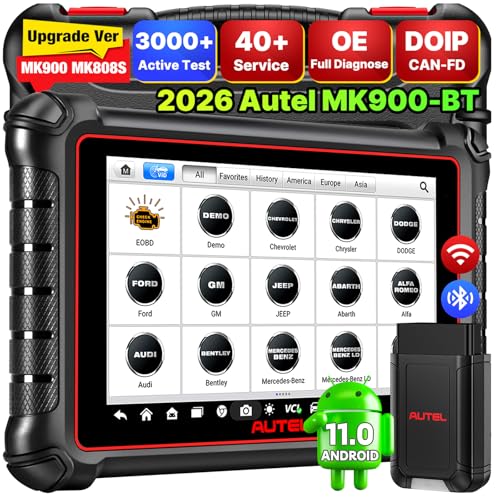
💯【Conta.ct us for Support Directly】If you met any issues about: Received a registered device/ Language Changing/ Function not Support/ VCI150 Blueto-oth connector malfunction/ Subscription Renewal, please conta.ct us via 📞autelsupply @outlook. com🛣️, we will provide perfect solution for you. ⚠️Note: Autel MK900BT comes with 1-Year Free Software Update, most features will remain active after update subscription expires. 1. For questions regarding updates or need more useful accessories, please conta.ct us via 📞autelsupply @outlook.com🛣️. 2. If the device fails to charge or turn on, please conta.ct us via 📞autelsupply @outlook. com🛣️, we will handle it promptly.
1. Record the Driving Conditions
Note engine temperature, road speed, gear, throttle position, fuel level, weather, warning lights, and whether the problem began after service or refueling. Try to identify a safe, repeatable condition without forcing the car to continue if power loss is severe.
2. Scan All Relevant Modules Before Clearing Codes
Read stored, pending, and permanent codes, plus freeze-frame data. A generic reader may show engine codes, but transmission, ABS, traction-control, and hybrid faults may require a more capable scan tool. Do not replace a sensor only because its name appears in a code. A code identifies the circuit or condition that needs testing.
3. Perform Basic Visual Checks
- Check the engine-oil and coolant levels according to the owner’s manual.
- Inspect the air filter, intake duct, clamps, vacuum hoses, and electrical connectors.
- Look for loose battery terminals, damaged grounds, fluid leaks, or signs of recent rodent damage.
- Confirm that the fuel cap is installed correctly if an evaporative-emissions code is present.
- Check whether the symptom began immediately after maintenance, a battery disconnect, or refueling.
4. Separate an Engine Stumble From a Shift Delay
If the engine shakes, misfire counts rise, or the check engine light flashes, focus on ignition, fueling, air leaks, and engine condition. If engine speed changes smoothly but the vehicle delays or shifts harshly, focus on transmission data. On a hybrid, review engine, battery, inverter, and hybrid-control information together.
5. Test the Most Likely System
Use the code, freeze-frame data, and symptom pattern to choose the next test. Examples include checking plugs and coils for a cylinder misfire, smoke-testing the intake for a lean condition, comparing MAF and throttle data, testing injector control, or evaluating transmission operation.
6. Leave High-Risk Tests to a Professional
Fuel-pressure testing, direct-injection service, injector removal, transmission hydraulic tests, internal transmission work, and high-voltage hybrid diagnosis can involve fire, pressure, electrical, or vehicle-movement hazards. A qualified shop should perform these procedures with the correct Toyota service information and equipment.
7. Check Recalls and Service Campaigns
Enter the 17-digit VIN in Toyota’s Safety Recall and Service Campaign lookup. You can also use the NHTSA recall database. A general year-and-model search is useful, but the VIN result is what identifies open items for a specific vehicle.
8. Verify the Repair
After the confirmed fault is repaired, clear codes if appropriate, perform any required relearn, and road-test the car under the same conditions that produced the hesitation. Recheck pending codes, fuel trims, misfire counts, and warning messages. A repair is not complete until the symptom is gone and the relevant data remains normal.
The cheapest diagnostic path is usually the most disciplined one: save the codes, match the symptom to the driving condition, test the related system, and replace only the part that fails the test.
When to Stop Driving and Get Help
Do not continue normal driving when hesitation creates a merging hazard or appears with any of the following:
- A flashing check engine light or violent engine shaking
- Stalling, repeated no-starting, or sudden loss of power
- A red warning light, overheating, or low oil-pressure warning
- A strong fuel smell or visible fuel leak
- Transmission slipping, failure to engage, or severe banging shifts
- A hybrid-system warning, electrical burning smell, or reduced-power message
Move out of traffic if you can do so safely, shut the vehicle off when appropriate, and consult the warning-light instructions in your owner’s manual or Toyota’s warning-light guide.
Frequently Asked Questions
Why does my Toyota Camry hesitate when accelerating?
Common areas include spark plugs and coils, intake leaks, MAF or throttle faults, fuel-delivery problems, transmission behavior, and hybrid-system limits. Scan for codes and note exactly when the symptom occurs before replacing parts.
What could cause hesitation with no check engine light?
A problem may be intermittent, below the threshold for a warning light, or stored as a pending code. Transmission shift behavior, fuel quality, a small intake leak, early ignition weakness, or hybrid power management can also cause hesitation without an illuminated light.
Why is my Camry jerking when accelerating?
Jerking often points to an engine misfire, uneven fuel delivery, an electronic throttle problem, traction-control intervention, or a harsh transmission shift. If the check engine light flashes, reduce load and arrange prompt diagnosis.
Why does my Toyota sputter when accelerating?
Sputtering can result from a misfire, lean mixture, restricted fuel delivery, poor-quality fuel, or an exhaust restriction. Read the codes and inspect ignition and intake components before assuming the injectors are clogged.
Can bad gasoline make a Camry hesitate?
Yes. Contaminated, stale, or incorrect fuel can cause poor combustion and hesitation, especially if the problem begins soon after refueling. Save the receipt, avoid adding multiple chemicals, and seek service if the engine runs severely rough.
Is it safe to drive a Camry that hesitates?
Mild, occasional hesitation still needs diagnosis because it can worsen. Stop driving when power loss makes merging unsafe, the check engine light flashes, the car stalls, you smell fuel, the transmission slips badly, or a red or hybrid-system warning appears.
Conclusion
A Toyota Camry that hesitates during acceleration needs a structured diagnosis, not an automatic injector cleaning or sensor replacement. Start by recording the driving conditions and scanning every relevant module. Then inspect basic intake and electrical items, separate an engine stumble from a shift delay, and test the system supported by the evidence. Use the correct Toyota manual for your model year, and leave high-pressure fuel, transmission, and hybrid high-voltage work to a qualified technician.
Sources
- Toyota Manuals and Warranties — model-year-specific owner, warranty, and maintenance information
- Toyota Warning Lights — official warning-light guidance and owner-manual direction
- Toyota Safety Recalls and Service Campaigns — VIN-based Toyota campaign lookup
- National Highway Traffic Safety Administration Recall Lookup — federal VIN, recall, investigation, complaint, and manufacturer-communication search
- Toyota Camry Official Vehicle Page — current U.S. Camry powertrain information
