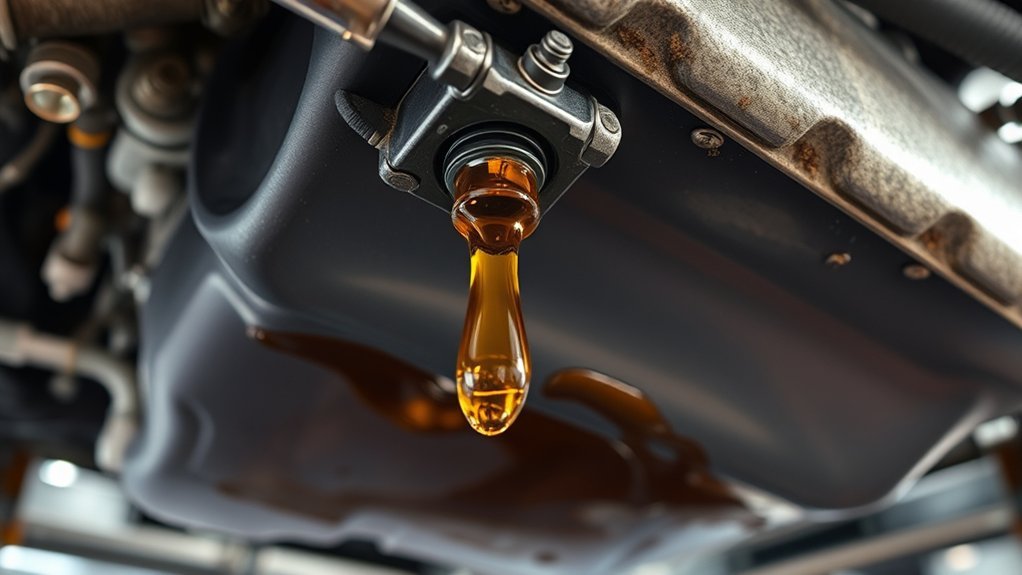
A Toyota Camry oil leak is best diagnosed by checking recent service points first, then tracing fresh oil upward to the highest wet source. Common areas include the oil filter or housing, drain plug, valve or cylinder-head cover, timing cover, oil pan, pressure switch, cooler lines, and crankshaft seals. Check the dipstick before driving. Stop immediately for a low-engine-oil-pressure warning, rapid oil loss, smoke, or new mechanical noise.
Last updated: September 19, 2026. U.S.-market Toyota owner manuals and Toyota/NHTSA service documents were rechecked for this update. Author:.
Quick Answer
Start with the oil filter or housing and drain plug if the leak appeared after service. Otherwise, trace fresh oil from the highest wet point around the valve or cylinder-head cover, timing cover, oil pan, pressure switch, cooler lines, and crankshaft seals. Check the dipstick before driving. Stop for a low-oil-pressure warning, rapid loss, smoke, or abnormal engine noise.
Key Takeaways
- Oil commonly escapes near the filter or filter housing, drain plug washer, valve cover, oil pan seal, timing cover, or crankshaft seals.
- A low oil level does not always prove an external leak because engines can also consume oil.
- A red low-engine-oil-pressure warning means you should stop safely and shut the engine off.
- Trace a leak from the highest fresh wet point because airflow can carry oil backward and downward.
- Repair cost depends more on the leak source and labor access than on the size of the puddle.
At a Glance
| Time Required | Varies; a basic top-side visual inspection may be brief, while a hidden leak can require shop diagnosis |
| Difficulty | Low risk for top-side visual checks; professional help is safer for underbody access, lifting, or disassembly |
| Tools Needed | Flashlight, gloves, clean rags, white cardboard, wheel chocks, and an engine-safe degreaser |
| Cost | Little or no cost for a visual check; repair cost varies by source, engine, access, parts, and local labor |
Warning: If the red low-engine-oil-pressure warning appears, pull over safely, shut the engine off, and do not continue driving to test whether the light clears. Toyota directs drivers to stop immediately because continued operation with low oil pressure can damage the engine.
Is It an Active Oil Leak or Oil Seepage?
Toyota service bulletin T-SB-0008-20, written for 2000–2020 Toyota powertrain fluids, distinguishes an active leak from seepage. It describes a leak as pooling fluid with droplets or dripping, while a seep is a thin film or damp coating without active dripping. Toyota says seepage covered by that bulletin should be documented and checked again at a later service rather than automatically repaired. A falling dipstick level, smoke, engine noise, or an oil-pressure warning is more important than the label and still requires prompt action. See Toyota T-SB-0008-20: Oil Leak Diagnosis and Repair.
Fast triage: Leak started just after an oil change → inspect the filter/housing, drain plug, washer, and filler cap first. Fresh oil high on the engine → inspect the valve or cylinder-head cover and nearby seams. Oil level falling with no external wetness → investigate internal consumption. Active dripping, smoke, an oil-pressure warning, or new engine noise → stop driving and arrange diagnosis.
Common Causes of Toyota Camry Oil Leaks
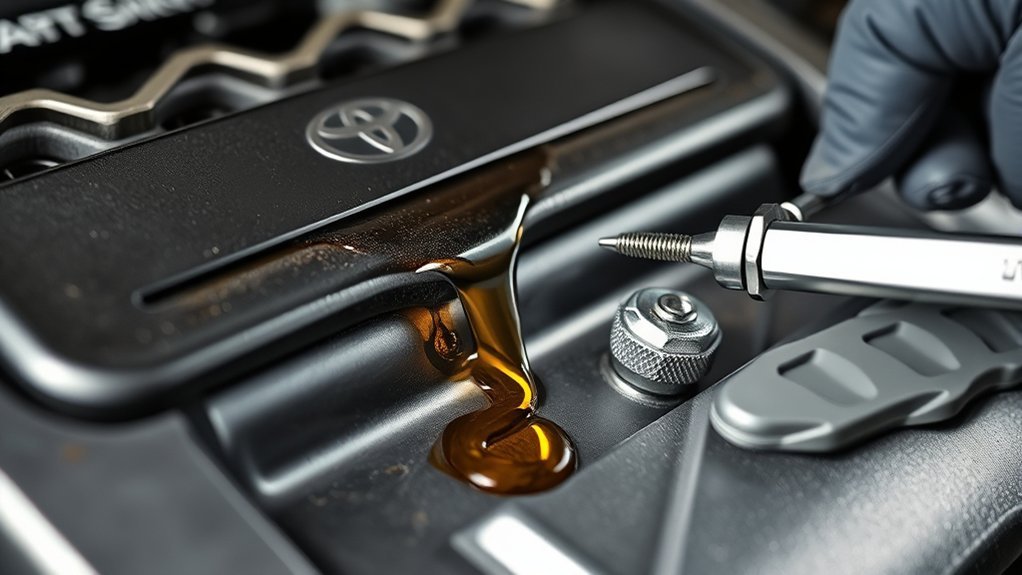
Toyota has built many Camry generations with different four-cylinder, V6, and hybrid powertrains. A leak point that appears often on one engine may not exist on another. Treat the following areas as inspection points, not as a diagnosis based only on the vehicle name.
Oil Filter, Filter Housing, or O-Ring
Oil may escape from a loose filter, a damaged filter seal, a cracked housing, or an O-ring installed in the wrong groove. A spin-on filter can leak if the old gasket stays on the mounting surface and a new filter is installed over it. Cartridge-style housings can leak when the cap O-ring is cut, twisted, reused, or misplaced.
A leak that starts immediately after an oil change should make the filter area one of your first checks. Fresh oil may spread across a splash shield, so the puddle may not sit directly below the source.
Drain Plug and Sealing Washer
A loose drain plug, damaged threads, or a flattened sealing washer can allow oil to drip from the bottom of the oil pan. Over-tightening can also damage the pan or threads. If the plug needs adjustment, use the specification for your exact model year and engine rather than guessing.
Valve Cover Gasket and Upper-Engine Seals
Aging valve cover gaskets can seep oil down the side of the engine. Oil may then reach hot exhaust components and create a burning smell or light smoke. Camshaft plugs, oil-control components, and other upper-engine seals may produce a similar pattern, depending on the engine.
Oil Pan and Timing Cover Seals
The oil pan may leak from its gasket or formed-in-place seal, and road debris can dent or crack the pan. Timing cover seepage can also travel along seams and collect lower on the engine. Because gravity moves oil downward, a wet oil pan does not always mean the pan itself is the source.
Crankshaft, Camshaft, and Rear Main Seals
Front crankshaft or camshaft seals can spread oil around the belt or pulley area. A rear main seal leak may appear near the engine and transmission joint. These repairs usually require more labor because other components must be removed to reach the seal.
Oil Cooler Lines, Pressure Switch, and Other Sources
Some Camry engines use oil cooler hoses, lines, or housings that can seep. An oil-pressure switch or sensor may also leak through its body or threads. A restricted crankcase ventilation system can contribute to pressure that encourages seepage, but it should be tested rather than replaced automatically.
Oil near the cylinder-head-to-block joint does not prove a head gasket failure. Oil often travels from a valve cover, timing cover, or another point above that seam.
Toyota Camry Oil-Leak Documents by Model Year and Engine
Toyota service bulletins and campaigns apply only to the listed engines, production ranges, and conditions. They are not proof that every Camry in those years has the problem, and a service bulletin is not the same thing as a safety recall. Use the VIN, engine code, production information, and service history to determine whether a document is relevant.
| Camry / Engine | Toyota Document | Why It Matters |
|---|---|---|
| Certain 2007–2010 Camry models with the 2GR-FE V6 | Limited Service Campaign 90K extension | Toyota documented degradation of the rubber portion of a VVT-i oil hose that could cause oil leakage, abnormal engine noise, and an oil-pressure warning. The campaign is historical; use it to check VIN/service history, not to assume current coverage. |
| Certain 2007–2009 Camry and 2007–2011 Camry Hybrid models with a 2AZ engine | Warranty Enhancement Program ZE7 | ZE7 addressed excessive internal engine-oil consumption, not an external oil leak. This is important when the dipstick falls but no fresh wet area or puddle appears. |
| Certain 2023–2024 Camry and Camry Hybrid models with A25A-FKS or A25A-FXS engines | T-SB-0096-24 / NHTSA 11010346 | Toyota documented an oil leak between the oil-pan sub-assembly and stiffening crankcase assembly on specific vehicles produced before listed production-change VINs. Confirm applicability by VIN before treating this as the source. |
| Certain 2023–2024 Camry and Camry Hybrid models | T-TT-0765-24 / NHTSA 11010341 | Toyota documented a possible engine-oil leak from the cylinder-head cover near the timing-chain cover and cam housing. Treat it as a model-specific diagnostic lead, not a universal Camry fault. |
For current recall status, use Toyota or NHTSA’s VIN lookup. A bulletin, tech tip, or expired service campaign may still be useful diagnostic history even when it does not provide present-day coverage.
Oil Leak, Oil Consumption, or Another Fluid?
A falling dipstick level can result from an external leak, internal oil consumption, or both. Toyota notes that an engine can consume some oil during normal operation and that consumption may increase under certain driving conditions. On certain 2007–2009 Camry and 2007–2011 Camry Hybrid vehicles with a 2AZ engine, Toyota issued Warranty Enhancement Program ZE7 for excessive oil consumption. That program addressed oil consumed inside the engine, not an external leak. A Camry can therefore lose oil without leaving a puddle.
Note: Dark oil is not proof of a leak. Engine oil normally darkens as it circulates and collects combustion byproducts. The useful clues are the oil level, fresh wet areas, drip location, smell, warning lights, and the rate of loss.
Use clean white cardboard under the parked car to compare the fluid and drip location. Engine oil usually feels slick and may range from amber to dark brown or black. Coolant and transmission-fluid appearance can vary with fluid type, age, and contamination, while clear water near the passenger side can be normal air-conditioning condensation. Do not diagnose a fluid only by color. If the cooling-system level is dropping instead, use the Toyota Camry coolant leak guide rather than treating it as an engine-oil problem.
Identifying Oil Leak Symptoms in Your Camry
Look for a pattern rather than relying on one symptom. Useful signs include:
- Puddles or wet spots: Fresh drops under the engine area suggest an active leak, although shields and airflow may move the oil.
- A falling dipstick level: Repeated loss between checks needs investigation, even when no puddle appears.
- Wet residue on the engine: Fresh, glossy oil is more useful than old, dusty buildup.
- Burning oil odor or smoke: Oil may be reaching a hot exhaust surface.
- Red oil-pressure warning: Stop safely and shut the engine off immediately.
- Ticking, knocking, or unusually loud engine noise: Low oil level or pressure may be reducing lubrication.
Inspect the valve cover, timing cover seams, oil filter or housing, oil pan, and drain plug. Oily buildup near an engine mount or the head gasket area only shows where oil collected, not necessarily where it began.
Pro Tip: Mark the edges of a fresh spot on white cardboard and write down the date, mileage, and dipstick level. Photos taken before cleaning can help a mechanic trace how quickly the leak returns.
When to Stop Driving a Camry With an Oil Leak
Stop the engine and arrange a tow or professional advice when any of these conditions appears:
- The red low-engine-oil-pressure warning stays on or appears while driving.
- The dipstick shows no oil, or the level drops rapidly after topping up.
- Oil is streaming, spraying, or forming a large puddle.
- Smoke increases, you see flames, or the burning smell becomes strong.
- The engine begins ticking, knocking, overheating, or losing power.
A light seep with a normal dipstick level, no warning lights, and no smoke may not require an emergency tow, but it still needs timely inspection. Check the level before driving and avoid assuming that a small puddle means a small repair.
Step-by-Step Guide to Inspecting Your Camry for Oil Leaks
Start with checks you can perform from above. Stop if the area is too hot, access is poor, or the leak requires you to work under the car without proper equipment.
1. Prepare the Car Safely
Park on firm, level ground, select Park, apply the parking brake, shut the engine off, and let hot components cool. Keep ignition sources away from oil and cleaning products. Wear gloves and use wheel chocks if the car could move.
Never place any part of your body beneath a vehicle supported only by a jack. Use the correct lift points and properly rated jack stands if underbody access is necessary, or let a shop perform that part of the inspection.
2. Check the Engine Oil Level Correctly
Follow the procedure in the manual for your exact Camry. In the 2015 U.S. Camry Owner’s Manual OM33A86U, Toyota directs you to park on level ground, warm the engine, turn it off, wait more than five minutes, wipe the dipstick, reinsert it fully, and then read the level. Other model years may use different wording or procedures, so check the exact manual for your vehicle. See the 2015 Toyota Camry Owner’s Manual (OM33A86U).
If the level is below or near the low mark, add only the correct oil specified for your engine, in small amounts, while rechecking the dipstick. Avoid overfilling. A low level tells you oil was lost or consumed, but it does not identify the source.
3. Confirm the Fluid
Place white cardboard beneath the suspected area overnight. Note the fluid color, texture, smell, and position. Do not taste automotive fluid, and avoid prolonged skin contact. Check the coolant reservoir separately because a falling coolant level points to a different system, not proof of an engine oil leak.
4. Inspect From Top to Bottom
Use a flashlight to look around the oil filler cap, valve cover, upper timing cover, oil-pressure switch area, and visible seams. Find the highest fresh wet point. Oil lower on the engine may have traveled from above.
5. Inspect the Oil Filter Area
- Look for fresh oil around the filter, filter cap, housing, and nearby splash shield.
- Check whether a cartridge-housing O-ring appears pinched or positioned outside its intended groove.
- On a spin-on filter, consider whether an old gasket may have remained on the mounting surface after service.
- Do not keep tightening a filter blindly because an incorrect seal or damaged housing will not be fixed by extra force.
6. Check the Drain Plug and Washer
Look for a fresh drop forming at the drain plug, wetness around the sealing washer, damaged threads, or a crack near the drain opening. If the plug is loose, use the correct torque specification for your exact engine and pan. Replace a worn sealing washer rather than trying to stop the leak by over-tightening.
7. Examine the Oil Pan Condition
- Look for dents, cracks, corrosion, or impact marks.
- Inspect the pan seam for fresh oil, while remembering that oil can run down from above.
- Check the area after an oil change because a spill can resemble a leak until it is cleaned.
Damage to the pan or its seal can cause oil loss and may require removal and resealing or replacement.
8. Clean, Document, and Recheck
Photograph the wet areas before cleaning. With the engine cool, use an engine-safe degreaser according to its label, protect electrical connectors, and avoid spraying hot exhaust parts. Brake cleaner can damage some finishes, plastics, rubber, or coatings and is highly flammable, so use it only when the product label and vehicle service information allow it.
After cleaning, run the engine only if the oil level is safe and no oil-pressure warning is present. Recheck for the first fresh trace. A shop may use fluorescent dye, ultraviolet light, or other diagnostic methods when the source remains hidden.
Why Regular Maintenance Helps Prevent Oil Leaks
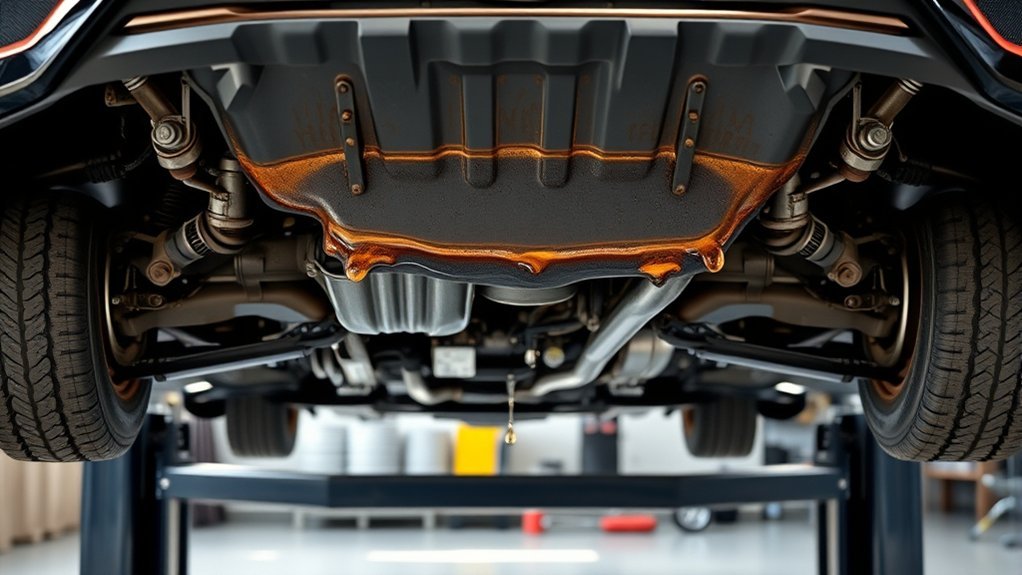
Maintenance cannot guarantee that a gasket or seal will never fail, but it can reveal problems before oil loss becomes severe. Use the correct engine oil and filter, follow the maintenance schedule, check the dipstick regularly, and inspect for fresh residue after service.
Make sure the oil filler cap, filter, housing cap, drain plug, and sealing washer are installed correctly. Ask a technician to inspect the crankcase ventilation system when pressure-related seepage, rough running, or related symptoms suggest a problem. Checking the oil pan and lower engine for road damage can also catch leaks early.
Service campaigns and recalls depend on the exact VIN, not just the model name. Check the Toyota recall and service campaign lookup or the NHTSA recall database for your vehicle.
[Amazon Products Picked for You]

COMPATIBILITY – Fits 2009-2010 Pontiac Vibe; 2010-2012 Lexus HS250h; 2001-2007 Toyota Highlander; 2002-2011 Toyota Camry; 2009-2012 Toyota Corolla; 2009-2013 Toyota Matrix; 2002-2008 Toyota Solara; 2001-2003 Toyota RAV4; 2004-2008 Toyota RAV4; 2008-2015 S

COMPATIBILITY – Fits 1987-1991 Toyota Camry; 1992-2001 Toyota Camry; 1987-1989 Toyota Celica; 1990-1999 Toyota Celica; 1991-1995 Toyota MR2; 1999-2001 Toyota Solara; 1996-2000 Toyota RAV4

【Compatible with】-- 2010-2012 LEXUS HS250h; 2009-2010 PONTIAC Vibe; 2005-2010 SCION TC; 2008-2013 XB; 2002-2011 Camry; 2009-2012 Corolla; 2001-2007 Highlander; 2009-2013 Matrix; 2001-2008 RAV4; 2002-2008 Solara.
What to Record Before a Repair Appointment
Once the vehicle is safe, preserve evidence that helps a technician find the source faster. Record what changed, where the first fresh oil appeared, and whether the leak began after service.
[Amazon Products Picked for You]

Compatible with petroleum, semi-synthetic, and full synthetic motor oils

DON'T GAMBLE ON AN UNPROVEN BRAND: A leaking engine, head gasket, cooling system, power steering or transmission is your one shot to avoid a bigger repair bill – reach for the brand proven for over 75 years
Seals timing cover, cam seal, rear main and other hard to stop oil leaks
Record Oil Level and Recent Service
- Write down the dipstick level, mileage, date, and the oil grade added, if any.
- Note the date and mileage of the last oil change and whether the filter, housing cap, drain plug, or washer was serviced.
- Record any warning message, burning smell, smoke, unusual noise, or temperature change.
Document the Leak Pattern
Photograph the engine before cleaning and place white cardboard beneath the car for several hours or overnight if the leak is slow and the vehicle is safe to leave parked. Note whether oil appears only after driving, while idling, or after the car sits. A repeatable pattern helps separate a service-point leak from oil traveling down from a higher seam.
Bring Model, Engine, and VIN Details
Give the shop your model year, engine or powertrain information, VIN, recent service history, and photos. Ask whether any Toyota bulletin, tech tip, campaign, or prior repair history applies to that exact vehicle. This is especially useful when the source is near the oil pan, cylinder-head cover, timing cover, or an older V6 VVT-i oil-hose area.
Your Repair Options for Camry Oil Leaks
The correct repair depends on the highest confirmed leak point. Replacing a part below the true source may leave the leak unchanged.
| Confirmed Source | Typical Repair Direction | Practical Note |
|---|---|---|
| Oil filter or housing seal | Correct the filter, cap, housing, or O-ring installation and refill as needed | Inspect immediately when leakage begins after an oil change |
| Drain plug or sealing washer | Replace the washer or damaged plug and repair threads if necessary | Do not over-tighten a damaged pan |
| Valve cover gasket | Replace the gasket and inspect related seals and the cover | Oil on hot exhaust parts can create odor or smoke |
| Oil pan or timing cover seal | Remove, clean, and reseal or replace the damaged component | Confirm that oil is not running down from above |
| Crankshaft, camshaft, or rear main seal | Replace the failed seal and inspect nearby components | Access can require substantial disassembly |
| Oil cooler line, housing, or pressure switch | Replace the leaking line, seal, housing, switch, or related hardware | Availability and design vary by engine |
Choose a reputable shop that confirms the source, explains the repair, provides a written estimate, and states the parts and labor warranty. A certification badge or advertised price program should not replace a clear diagnosis and written terms.
[Amazon Products Picked for You]

One application of oil and fuel system UV leak detection dye

2-in-1 design: A/C leak detector tool kit helps to check out automotive air conditioner freon leak locations. Can also helps detect food stains and pet urine stains on rugs, carpets, and clothes that are otherwise invisible to the naked Eye

Professional AC Leak Detection: COSOOS leak detector design for detecting automotive air conditioner leak, flashlight with Professional grade 21 high intensity LED, it can accurately pinpoint leaks in seconds, enabling precise repairs and prevent potential accidents.
Cost of Fixing Oil Leaks
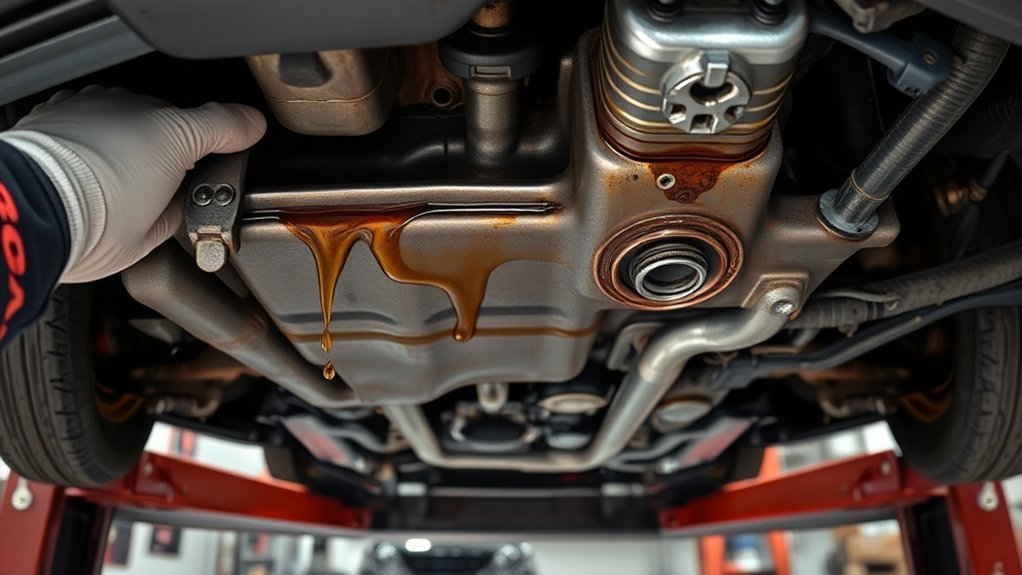
No single price range accurately covers every Toyota Camry oil leak. Model year, engine, leak location, labor access, local rates, parts quality, cleanup, and the amount of oil lost can change the total substantially.
- Lower-complexity repairs: A correctly diagnosed filter seal, housing O-ring, filler cap, or drain plug washer usually requires less labor than an internal or hidden seal.
- Moderate-complexity repairs: Valve cover gaskets, accessible sensors, cooler lines, and some oil pan repairs may require more parts, cleaning, and disassembly.
- Higher-complexity repairs: Timing cover resealing, crankshaft seals, rear main seals, or repairs involving damaged threads and major component removal can require much more labor.
- Diagnostic charges: A shop may charge for cleaning, dye testing, underbody inspection, or oil-pressure testing before giving a final repair estimate.
A water pump belongs to the cooling system and is not a routine repair for an engine oil leak. An oil pump or its housing can contribute to pressure or leakage problems on some designs, but it should not be replaced without a confirmed diagnosis.
Ask for an itemized estimate that identifies the exact leak source, required parts, labor time, fluids, taxes, and warranty. Compare estimates only when each shop is proposing the same repair.
When to Seek Professional Help for Oil Leaks
Arrange professional diagnosis when you see a large puddle, a rapid dipstick drop, oil on the exhaust, recurring smoke, engine noise, or a red oil-pressure warning. You should also seek help when the leak appears near the timing cover, crankshaft, transmission bellhousing, or another area that requires underbody access or major disassembly.
Leaks that begin immediately after service deserve prompt inspection of the filter, filter housing, drain plug, washer, and filler cap. A technician can also distinguish a true leak from spilled oil, internal consumption, or another fluid.
Used oil and oil-soaked materials require proper handling. Keep collected oil in a leak-proof container and take it to an approved recycling location. The U.S. Environmental Protection Agency advises consumers not to pour used oil onto the ground, into drains, or into regular waste systems that do not accept it.
Frequently Asked Questions
Why Is My Toyota Camry Leaking Oil?
Possible causes include a loose or damaged filter seal, drain plug washer, valve or cylinder-head cover gasket, oil pan seal, timing cover, pressure switch, cooler line, VVT-i oil hose on certain older V6 models, or crankshaft seal. The exact pattern depends on model year and engine, so trace the highest fresh wet point before replacing parts.
How Do I Know if My Camry Is Leaking Oil or Burning Oil?
An external leak usually leaves fresh wet engine surfaces, drops, or spots under the car. Internal oil consumption can lower the dipstick level without visible external wetness and may be accompanied by blue exhaust smoke or other engine symptoms. Confirm the rate of loss before assuming the oil is leaking externally.
What Is the Difference Between an Oil Seep and an Active Leak?
Toyota T-SB-0008-20 describes a leak as pooling fluid with droplets or dripping and a seep as a thin film or damp coating without active dripping. That bulletin applied to 2000–2020 Toyota powertrain fluids. Regardless of the label, a falling oil level, smoke, abnormal noise, or an oil-pressure warning needs prompt attention.
Can I Drive a Toyota Camry With a Small Oil Leak?
A documented seep with the oil level safely in range and no warning light, smoke, or abnormal noise may allow you to drive to a repair facility. Do not drive if oil is actively dripping or spraying, the level falls quickly, oil reaches hot exhaust parts, the oil-pressure warning appears, or the engine develops abnormal noise. If you cannot confirm the severity, arrange a tow.
Why Did My Camry Start Leaking Oil After an Oil Change?
Check for spilled oil, a loose filter or housing cap, a pinched or misplaced O-ring, a double gasket on a spin-on filter, a loose drain plug, a reused or damaged sealing washer, and an improperly tightened filler cap. A rapid post-service leak needs immediate inspection.
Do Any Toyota Camry Model Years Have Oil-Leak Service Bulletins?
Yes, Toyota has issued model- and engine-specific service documents for some Camrys, including the 2GR-FE VVT-i oil-hose campaign on certain older V6 models and T-SB-0096-24 for a specific oil-pan sealing condition on certain 2023–2024 Camry and Camry Hybrid vehicles. Applicability depends on the VIN, engine, production range, and exact condition; a bulletin is not the same as a recall.
Conclusion
Start a Toyota Camry oil-leak diagnosis with the dipstick and recent service points, then trace fresh oil to the highest wet source. Distinguish a damp seep from active dripping, and check model-year-specific Toyota documents when your engine and VIN match an affected range. Stop immediately for a low-oil-pressure warning, rapid oil loss, smoke, or abnormal engine noise. If the source is hidden or the loss is active, arrange professional diagnosis before authorizing parts.
Sources
- 2015 Toyota Camry Owner’s Manual (OM33A86U) — oil-level checking procedure and owner safety guidance
- Toyota T-SB-0008-20: Oil Leak Diagnosis and Repair — Toyota definitions of an active leak versus seepage for covered model years
- Toyota Limited Service Campaign 90K extension — VVT-i oil-hose condition on certain 2GR-FE vehicles, including Camry
- Toyota Warranty Enhancement Program ZE7 — excessive oil consumption on certain 2AZ-equipped vehicles
- Toyota T-SB-0096-24 / NHTSA 11010346 — oil-pan/stiffening-crankcase leak condition on certain 2023–2024 Camry and Camry Hybrid vehicles
- Toyota T-TT-0765-24 / NHTSA 11010341 — cylinder-head-cover leak condition on certain 2023–2024 Camry and Camry Hybrid vehicles
- Toyota Recall and Service Campaign Lookup — VIN-based Toyota campaign information
- NHTSA Recall Lookup — VIN-based safety recall information
- U.S. EPA Used Oil Guidance — safe handling and recycling of used engine oil
