You spend a lot of time in your garage or workshop, and the right heater can make cold-weather projects far more comfortable. Choosing the right model matters because fuel type, heat output, heating method, insulation, ventilation, and electrical requirements all affect how well a heater works in your space.
This guide compares practical propane, electric infrared, ceramic, forced-air propane, and liquid-fuel heaters so you can choose the right type for a small workbench area, a typical garage, or a larger ventilated workshop.
Affiliate disclosure: This roundup is reader-supported. When you click through qualifying Amazon links, we may earn a referral commission at no additional cost to you.
The Mr. Heater Big Buddy PRO is the most versatile choice when you want portable propane radiant heat. Choose the Heat Hog 9000 for a smaller directional propane heater, the DEWALT Forced Air when rapid whole-area heating matters, the Briza for quiet electric infrared spot heat, the Remington 80K for a large ventilated workshop, or the ISILER when you only need compact electric heat close to your work area.
Top Picks
|
Category |
Product |
Best For |
|---|---|---|
|
🏆 Best Overall |
Portable radiant garage heat |
|
|
🎯 Best Portable Propane |
Directional spot heating |
|
|
🔧 Best Forced-Air Propane |
Fast workshop warm-up |
|
|
⭐ Best Electric Infrared |
Quiet targeted electric heat |
|
|
🔥 Best High-Capacity |
Large ventilated workshops |
|
|
💼 Best Compact Electric |
Small personal work zones |
[Amazon Products Picked for You]

WATER RESISTANCE IPX5 - Indoor and outdoor rated heater, IP55. Instantly warm up the area with clean and odorless infrared heat, ideal for greenhouse heating, shed, store room, garage, milk house, grow tent.
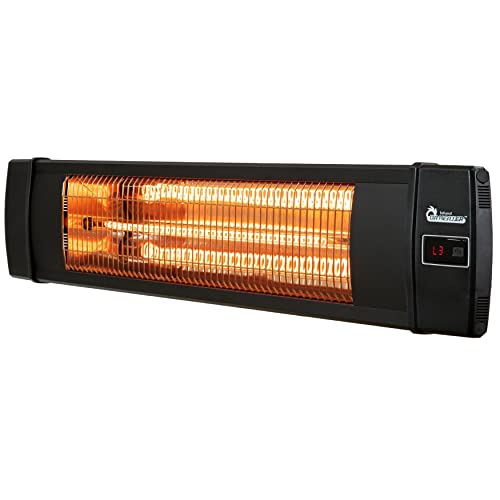
INDOOR and OUTDOOR HEATER - Heater is IP55 approved for both indoor and outdoor use - perfect for home, backyard, garages, open-air restaurant, outdoor patio or deck. Create a comfortable environment for both your indoor activities and outdoor recreation.
Selection Criteria
You need a garage heater that matches the way you actually use the space. We prioritized heating method, output, intended coverage, fuel source, portability, and safety requirements. Radiant heaters work especially well when you mainly need to warm yourself and nearby objects, while forced-air models are better suited to raising the overall air temperature more quickly.
We also considered ventilation requirements, electrical needs, controls, portability, installation demands, and whether each heater makes sense for a small workstation, typical garage, or larger workshop. Exact real-world performance will still depend heavily on insulation, ceiling height, outside temperature, drafts, and how frequently garage doors are opened.
Always follow the heater manufacturer’s operating manual, required clearances, fuel instructions, and ventilation requirements. Combustion heaters can produce carbon monoxide and should never be treated as safe simply because a garage door is nearby. Use an appropriate carbon-monoxide detector, and keep heaters away from gasoline, fuel containers, solvents, paint fumes, sawdust buildup, and other combustible or flammable materials.
Big Buddy Pro
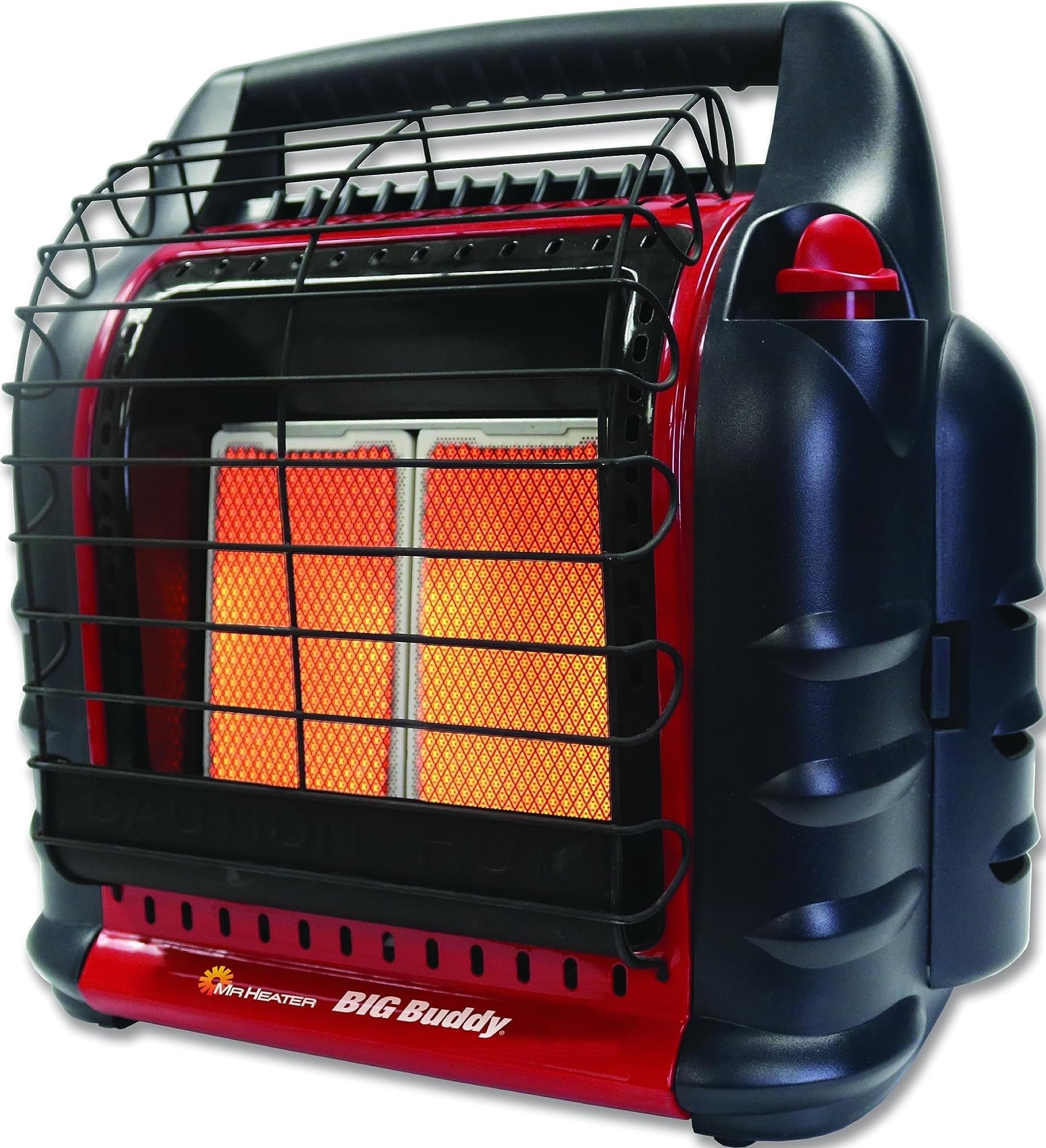
The Big Buddy PRO is a portable radiant propane heater designed for situations where you want strong localized warmth without permanently installing a garage heating system. Its maximum output is 18,000 BTU, making it much more capable than a small personal electric heater while remaining portable enough to move around a garage, workshop, or suitable outdoor shelter.
Radiant heat warms people and nearby surfaces directly, so you do not have to wait for the entire garage air volume to reach room temperature before feeling warmer. It can run from compatible small propane cylinders or an approved larger-cylinder connection when configured according to the manufacturer’s instructions.
[Amazon Products Picked for You]

Multi-directional radiant propane heater mounts directly to a 20 lb tank for easy portability

Wide Heating Range: This propane heater provides up to 60000 BTU heat output, adjustable between 30°-45° for flexible heating angles. It efficiently heats areas up to 1400 sq.ft / 130 ㎡, making it ideal for large indoor or outdoor spaces
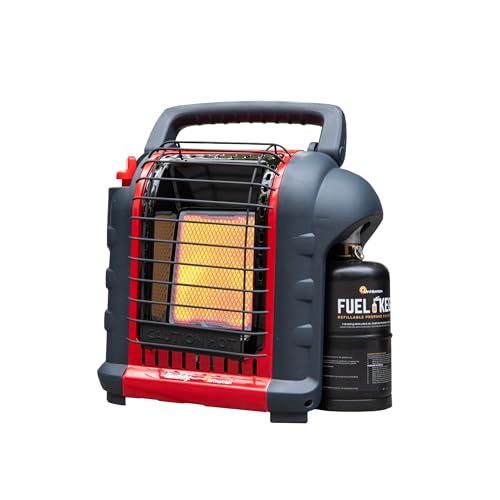
Emits 4,000 or 9,000 BTU/hr radiant heat
Why You’ll Like It
The main advantage is flexibility. You can position the heater close to the part of the garage where you are working, use a lower output when you only need moderate warmth, and increase output when conditions become colder.
Who Should Buy This
Choose the Big Buddy PRO if you want portable propane heat for a garage, workshop, emergency setup, or suitable outdoor shelter and prefer radiant warmth over the noise and airflow of a forced-air heater.
Who Should Avoid This
Skip it if combustion appliances are inappropriate for your workspace, if you cannot provide the ventilation required by the manual, or if you need automatic whole-building temperature control from a permanently installed heating system.
Seasonal Benefits
This heater is most useful during cold-weather projects when you need warmth quickly without waiting for a permanent HVAC system to heat an entire detached workspace. Its portability also makes it useful as a backup heat source in appropriate emergency situations.
Situational Benefits
|
Situation |
How It Helps |
|---|---|
|
Insulated Garage |
Provides strong localized radiant heat while an insulated structure helps reduce heat loss. |
|
Uninsulated Workshop |
Lets you focus warmth around your work area instead of trying to heat every cubic foot of a drafty building. |
|
Temporary Work Area |
Portable construction makes it easier to move the heat source as your work location changes. |
|
Emergency Heating |
Provides propane-powered heat when electricity is unavailable, provided the location and ventilation meet manufacturer requirements. |
Ease Of Use
|
Feature |
Ease Level |
|---|---|
|
Setup |
Easy |
|
Fuel Hookup |
Moderate |
|
Ignition |
Easy |
|
Repositioning |
Easy |
Versatility
You can use the Big Buddy PRO as a portable radiant spot heater in suitable garages and workshops or move it to other manufacturer-approved locations. Its main strength is portable heat rather than permanent installation.
Energy Efficiency
Radiant heating can be efficient when you only need warmth around the person or workstation rather than throughout a large air volume. Using the lowest setting that keeps you comfortable can also help reduce unnecessary fuel consumption.
Problem Solving
This model solves the common problem of needing meaningful garage heat without installing a fixed furnace or large electric heater. It provides quick localized warmth while remaining portable.
Key Benefits
- Up to 18,000 BTU of radiant heat
- Portable design for flexible garage positioning
- Multiple heat settings for different conditions
- Designed with safety systems such as oxygen-depletion and tip-over protection
Heat Hog 9000

The Heat Hog 9000 is a smaller propane radiant heater built around targeted warmth and easy repositioning. Its 9,000-BTU output is better suited to spot heating than to warming a large garage from wall to wall.
The adjustable head is particularly useful around a workbench because you can direct radiant heat toward the area where you are standing instead of sending energy toward an unused part of the room.
[Amazon Products Picked for You]

ETL-Certified Safety: Made of V0 flame-retardant materials with multiple safety features including built-in smart tip-over protection, overheat protection, 12-hour timer, 24-hour automatic power off without interaction, V0 flame retardant 2-prong plug, and sturdy 6ft long flat power cord. Safe and worry-free all-day use. Safety Reminder: Please do not use with an extension cord. Only plug directly into the wall outlet.

ECO Energy-Saving Thermostat Mode: This wall-mounted heater features an intelligent ECO mode that automatically adjusts heating power based on the ambient temperature, helping to save energy while maintaining comfort. Temperature range: 41℉ to 95℉, suitable for year-round use.

Vertical Tilt for Full-Body Warmth: Manually tilt the portable heater from 0°-20°-40°-60°, enjoying warmth from your head to toe. Place it on a table or floor, heating exactly wherever you need it
Why You’ll Like It
It combines portable propane operation with an adjustable heating direction, making it useful when your work position changes or when only one small part of the garage needs heat.
Who Should Buy This
Choose it if you work in a small garage zone, hunting shelter, campsite, or similar manufacturer-approved area and want portable directional propane heat.
Who Should Avoid This
Look at a larger forced-air heater if your main goal is rapidly raising the air temperature throughout a large garage or workshop.
Seasonal Benefits
The Heat Hog is particularly useful for short winter projects because you can aim warmth toward yourself and start working without trying to condition the entire building.
Situational Benefits
|
Situation |
How It Helps |
|---|---|
|
Small Garage Workspace |
Provides focused radiant warmth without requiring you to heat the entire structure. |
|
Workbench Tasks |
The adjustable head lets you direct heat toward the area where you are standing or sitting. |
|
Outdoor Projects |
Portable propane operation allows use where electrical power may not be convenient. |
|
Temporary Heating |
Compact construction makes it easier to store when the cold season ends. |
Ease Of Use
|
Feature |
Ease Level |
|---|---|
|
Setup |
Easy |
|
Ignition |
Moderate |
|
Aiming/Tilt |
Easy |
|
Fuel Change |
Moderate |
Versatility
The combination of portability and adjustable direction makes this model useful for small garages, temporary work areas, and approved outdoor activities where localized heat is more useful than whole-room heating.
Energy Efficiency
Radiant heating directs energy toward people and surfaces instead of relying solely on warming air, which can make it a practical approach for short garage sessions.
Problem Solving
The Heat Hog addresses the problem of needing portable warmth exactly where you are working while avoiding the size and airflow of a large forced-air heater.
Key Benefits
- 9,000-BTU portable radiant heating
- Adjustable tilt head for directional warmth
- Useful for small work zones and temporary setups
- Designed with combustion-heater safety features
DEWALT Forced Air

The DEWALT Forced Air heater is designed for garages, workshops, and jobsites where you need to raise the overall temperature faster than a small radiant heater can. Its propane burner provides up to roughly 68,000 BTU, while the forced-air design distributes that heat across a much larger area.
An important distinction is that this is still a propane heater. Its battery or 120V electrical power capability supports the heater’s powered components; the battery does not replace propane as the heat source.
Why You’ll Like It
This is the better choice when your priority is broad, fast-moving warm air rather than standing directly in front of a radiant heater.
Who Should Buy This
Choose it for a larger garage, jobsite enclosure, or workshop where fast forced-air heating and flexible electrical power for the heater’s operating components are useful.
Who Should Avoid This
Avoid this style if your workspace cannot meet the manufacturer’s combustion-air and ventilation requirements, or if you only need quiet personal heat at one workbench.
Seasonal Benefits
The DEWALT is most useful during winter jobs where a cold garage or temporary work area needs to become workable quickly rather than warming gradually over a long period.
Situational Benefits
|
Situation |
How It Helps |
|---|---|
|
Larger Garage |
Forced air distributes heat more broadly than a small radiant spot heater. |
|
Jobsite Enclosure |
High heat output helps reduce cold-weather downtime where the heater is approved for use. |
|
Temporary Workshop |
Portable forced-air construction makes it easier to bring significant heat to temporary work locations. |
|
Quick Warm-Up |
High output and active airflow can bring a cold work area toward a usable temperature faster. |
Ease Of Use
|
Feature |
Ease Level |
|---|---|
|
Setup |
Moderate |
|
Electrical Power Options |
Easy |
|
Controls |
Easy |
|
Propane Connection |
Moderate |
Versatility
The heater can serve garages, temporary workshops, and jobsite environments where propane forced-air heating is appropriate. Its hybrid electrical-power arrangement helps when ordinary mains power is inconvenient, but propane remains necessary for producing heat.
Energy Efficiency
A forced-air heater can be effective when the goal is rapidly increasing the overall temperature of an enclosed or partially enclosed work area. Insulation and air sealing make a major difference because high-output heat can otherwise escape quickly.
Problem Solving
This unit solves the problem of slow whole-area warm-up in larger workspaces where a small radiant heater only warms the person standing immediately beside it.
Key Benefits
- Up to roughly 68,000 BTU of propane heat
- Forced-air design for broader heat distribution
- Suitable for larger garage and jobsite heating applications
- Flexible electrical-power options for powered components
Briza Infrared

The Briza is a 1,500W electric infrared heater designed to warm people and nearby surfaces directly. That makes it a useful garage option when you want quiet targeted heat without storing propane, kerosene, or diesel.
It can be positioned on its stand or installed using its supported mounting options, giving you more placement flexibility than a conventional floor-only ceramic space heater. Because it is radiant, think of it primarily as a comfort-zone heater rather than a guaranteed solution for heating every cubic foot of a large garage.
Why You’ll Like It
There is no combustion fuel to refill, and the fanless radiant approach avoids the airflow and operating noise associated with high-output forced-air heaters.
Who Should Buy This
Choose the Briza if you have suitable electrical capacity and mainly want quiet heat directed toward a workbench, seating area, hobby space, or similar garage zone.
Who Should Avoid This
Choose a higher-output garage heating system if you need to rapidly raise the entire air temperature of a large, poorly insulated garage in severe winter weather.
Seasonal Benefits
Infrared heat is useful for colder months when you spend time in one predictable part of the garage and want warmth to reach you quickly without waiting for all the surrounding air to warm.
Situational Benefits
|
Situation |
How It Helps |
|---|---|
|
Workbench |
Directs radiant heat toward the person and surfaces around the active work area. |
|
Garage Hobby Area |
Quiet operation is useful when noise from a blower would be distracting. |
|
Wall or Ceiling Position |
Supported mounting configurations can free floor space when installed according to the manual. |
|
Temporary Zone Heating |
The stand allows you to reposition the heater when your work area changes. |
Ease Of Use
|
Feature |
Ease Level |
|---|---|
|
Stand Setup |
Easy |
|
Wall/Ceiling Installation |
Moderate |
|
Controls |
Easy |
|
Routine Maintenance |
Easy |
Versatility
You can configure it as a portable targeted heater or use an approved fixed mounting arrangement. That gives it an advantage in garages where floor space is limited.
Energy Efficiency
Infrared heating works best when directed toward the people and surfaces you actually want warm. Trying to use a 1,500W radiant unit as a whole-building furnace in a large drafty garage is a much less effective use case.
Problem Solving
The Briza gives you localized garage warmth without combustion fumes, propane cylinders, or the noise of a large forced-air blower.
Key Benefits
- 1,500W electric infrared heating
- Direct radiant heat for people and nearby surfaces
- Stand plus supported mounting configurations
- Quiet alternative to combustion forced-air heaters
Remington 80K

The Remington 80K is a high-output forced-air heater intended for large work areas where a small electric or radiant heater simply does not produce enough heat. Its approximately 80,000-BTU output makes it suited to larger garages, workshops, construction areas, and similar environments when operated under the conditions specified in its manual.
This model uses approved liquid fuel and also requires electrical power for its blower and operating system. The trade-off for the high heat output is greater ventilation, fuel-handling, clearance, and safety responsibility.
Why You’ll Like It
If your workspace loses heat quickly, the Remington’s combination of high BTU output and forced airflow can make a much bigger difference than a small 1,500W personal heater.
Who Should Buy This
It makes the most sense for larger, well-managed work areas where high-output temporary heat is needed and the manufacturer’s ventilation and fuel-storage requirements can be followed.
Who Should Avoid This
Do not choose this type of heater for a small tightly sealed room, a space where combustion heaters are prohibited, or a garage where you cannot safely manage fuel, exhaust, ventilation, and required clearances.
Seasonal Benefits
This heater is designed for demanding winter conditions where maintaining a workable temperature in a larger space matters more than silent operation or compact size.
Situational Benefits
|
Situation |
How It Helps |
|---|---|
|
Large Ventilated Garage |
High forced-air output distributes substantial heat across a larger working area. |
|
Construction Site |
Provides high-capacity temporary heat for cold-weather work when operated according to the manual. |
|
Barn or Outbuilding |
High output can help large spaces where compact electric heaters are inadequate, subject to safe-use requirements. |
|
Extended Work Session |
Its larger fuel system is better suited to sustained heating than disposable-cylinder spot heaters. |
Ease Of Use
|
Feature |
Ease Level |
|---|---|
|
Fueling |
Moderate |
|
Startup |
Easy |
|
Controls |
Easy |
|
Maintenance |
Moderate |
Versatility
The Remington is best viewed as a high-capacity work heater rather than a general household space heater. Its strongest use cases are larger workshops and work areas where combustion heating is appropriate and required ventilation can be provided.
Energy Efficiency
Its high output can raise temperatures quickly, but it also consumes much more fuel than a small spot heater. Improving insulation, closing unnecessary openings, and heating only the required work period can reduce wasted energy.
Problem Solving
This heater solves the problem of trying to heat a large cold work area with undersized equipment. The added capacity can significantly reduce warm-up time where a high-output liquid-fuel heater is appropriate.
Key Benefits
- Approximately 80,000 BTU of forced-air heating capacity
- Designed for larger workshops and work areas
- Longer-duration heating compared with small disposable-cylinder heaters
- High airflow for broad heat distribution
ISILER Ceramic
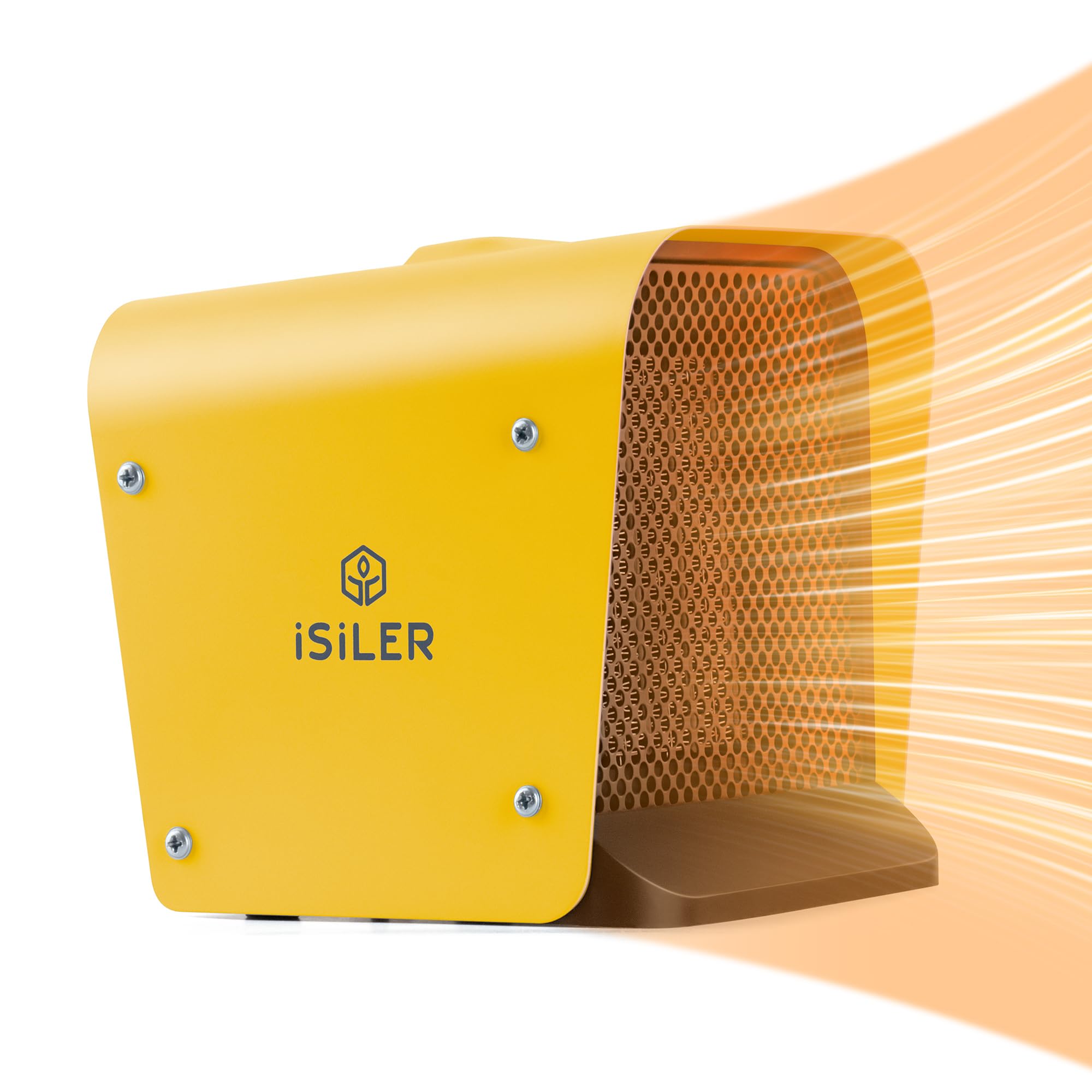
The ISILER is a compact 1,500W ceramic electric heater intended for small heating zones. In a garage, that means it makes the most sense beside a workbench or in a small enclosed section rather than as the primary heater for a large two-car bay.
Its main advantages are simple plug-in operation, compact dimensions, an adjustable thermostat, and no combustion fuel to store. That makes it a straightforward supplemental option when your electrical circuit can support the heater safely.
Why You’ll Like It
Setup is simple, storage takes little space, and you can use it when all you really need is extra warmth close to where you are working.
Who Should Buy This
Choose it for a small workshop corner, workbench area, enclosed utility workspace, or other compact indoor zone where 1,500W supplemental heat is appropriate.
Who Should Avoid This
Skip it if you expect one portable 1,500W heater to quickly warm a large, drafty, uninsulated garage during very cold weather.
Seasonal Benefits
The ISILER works best during short winter work sessions when you need local warmth near your hands and feet rather than full-building temperature control.
Situational Benefits
|
Situation |
How It Helps |
|---|---|
|
Workbench |
Provides supplemental warmth close to where you are standing or sitting. |
|
Small Workshop Room |
A 1,500W ceramic heater is more practical in a compact enclosed area than in a large open garage. |
|
Short Garage Project |
Quick plug-in setup makes it convenient when you only plan to work for a limited period. |
|
Supplemental Heat |
Can support an existing heating setup by adding warmth to one colder zone. |
Ease Of Use
|
Feature |
Ease Level |
|---|---|
|
Setup |
Easy |
|
Controls |
Easy |
|
Portability |
Easy |
|
Maintenance |
Easy |
Versatility
This is primarily a personal or small-zone heater. Its compact size makes it easy to move between a workshop bench, office, or other suitable indoor location.
Energy Efficiency
A small electric heater can make sense when you heat only the occupied zone instead of raising the temperature of an entire garage. It becomes much less practical when asked to compensate for a large uninsulated structure.
Problem Solving
The ISILER solves the simple problem of needing convenient supplemental warmth without handling propane or liquid fuel.
Key Benefits
- 1,500W ceramic electric heat
- Compact footprint for small work zones
- Adjustable thermostat
- Tip-over and overheating protection features
Before You Buy a Garage Heater
- Match the heater to the job: Use radiant heat for a person or workstation and forced air when you need broader air-temperature improvement.
- Consider insulation: An insulated garage requires much less heat than a drafty structure with bare walls and frequent door openings.
- Check electrical capacity: High-wattage electric heaters should be used only on circuits that meet their electrical requirements.
- Plan ventilation: Propane and liquid-fuel heaters must be operated exactly as specified by the manufacturer.
- Watch for flammable vapors: Garages may contain gasoline, solvents, paints, aerosols, or other products that make heater placement especially important.
- Check clearance requirements: Do not place heaters against vehicles, storage boxes, lumber, fabric, or other combustible materials.
FAQ
How Do I Choose The Right Heater?
Start with the size and insulation of your garage, then decide whether you want to warm the whole air volume or mainly the area where you work. Radiant models are well suited to spot heating, while forced-air heaters distribute heat across a larger area more quickly.
Next, choose a power source that fits your setup. Electric heaters avoid combustion fuel but require adequate electrical capacity. Propane offers portability, while high-output liquid-fuel heaters can make sense for larger work areas where their ventilation and fuel requirements can be safely managed.
Are Propane Heaters Safe Indoors?
Only use a propane heater indoors when the specific model is approved for that application and you can follow every ventilation, clearance, cylinder, and operating requirement in its manual. Safety shutoffs do not eliminate the need for ventilation. A suitable carbon-monoxide detector adds another important layer of protection.
Is Electric Or Propane Better For A Garage?
Electric heat is attractive when you want simple operation, no combustion fumes, and have sufficient electrical capacity. Propane is useful when portability and higher output are more important. The better option depends on garage size, insulation, electrical service, ventilation, and how long you normally work in the space.
Should I Choose Radiant Or Forced-Air Heat?
Choose radiant heat when you mainly want to warm yourself, a workbench, or nearby surfaces. Choose forced air when you need to raise the overall temperature across a larger part of the garage. In a drafty building, targeted radiant heat may feel more effective because warm air from a forced-air heater can escape quickly.
Can I Use A Heater Around Gasoline, Paint, Or Solvents?
Do not operate a heater where flammable vapors may be present. Gasoline, solvents, paint products, aerosols, and similar materials can create serious ignition hazards. Follow the heater manufacturer’s clearance and placement instructions and store combustible materials appropriately.
How Can I Maximize Efficiency And Run Time?
Reduce heat loss before simply buying a larger heater. Weather-seal garage doors, improve insulation where practical, close unnecessary openings, and heat the occupied zone instead of the entire building when possible. With radiant heaters, point the heater toward the work area. With forced-air units, use the lowest output that maintains a useful temperature rather than continuously running at maximum output.
Wrapping Up
The best garage heater depends more on your workspace than on one headline specification. For flexible portable propane heat, the Mr. Heater Big Buddy PRO is the strongest all-around option in this group. The Heat Hog 9000 is better when you want a smaller directional propane heater, while the DEWALT Forced Air makes more sense when rapid broad-area heating is the priority.
Choose the Briza Infrared if you prefer quiet electric radiant heat around a work area. The Remington 80K is the heavy-duty choice for larger ventilated workspaces where its fuel and combustion requirements can be safely managed. For a small workbench or compact zone, the ISILER Ceramic offers a much simpler electric solution.
Whichever heater you choose, match its output and heating method to your garage size, insulation, ventilation, electrical capacity, and actual working habits rather than buying solely on the largest BTU or coverage number.
| Product Name | Image | Best For | Heat Output | Heating Approach |
|---|---|---|---|---|
| Mr. Heater 18,000 BTU Big Buddy PRO Series Heater |
|
Portable garage spot heating | Up to 18,000 BTU | Propane radiant heat |
| Heat Hog 9,000 BTU Portable Propane Radiant Space Heater |
|
Directional portable heat | 9,000 BTU | Propane radiant heat |
| DEWALT 68000 BTU/H Forced AIR Propane Heater |
|
Rapid larger-area warm-up | Up to about 68,000 BTU | Propane forced air |
| Briza Infrared Electric Patio Heater |
|
Quiet targeted heating | 1,500 watts | Electric infrared radiant heat |
| Remington 80,000 BTU Kerosene/Diesel Heater |
|
Large ventilated workshops | 80,000 BTU | Liquid-fuel forced air |
| ISILER Space Heater, 1500W Portable Ceramic Space Heater |
|
Small personal work zones | 1,500 watts | Electric ceramic forced air |
This Roundup is reader-supported. When you click through links we may earn a referral commission on qualifying purchases.
