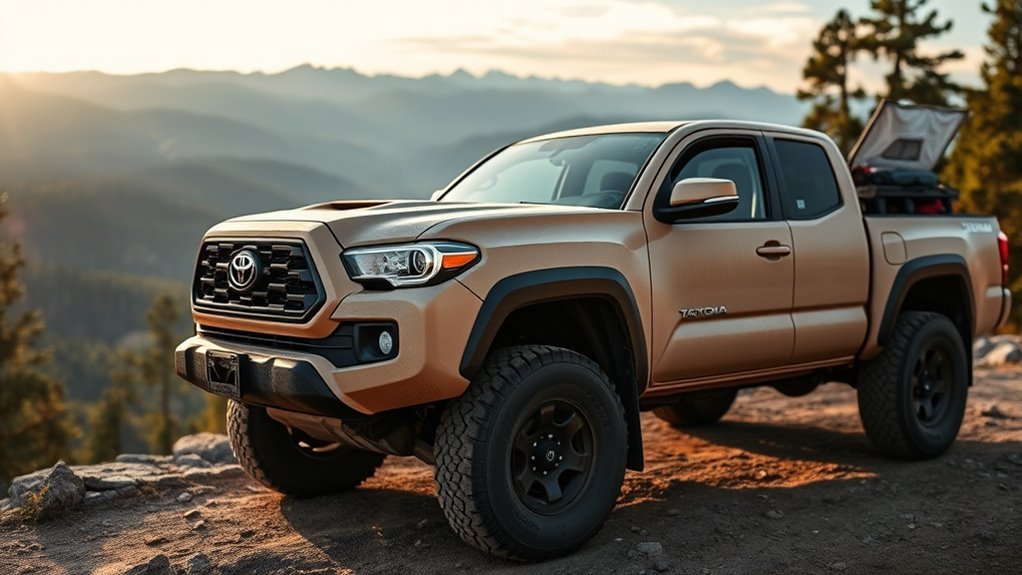
The last year the Toyota Tacoma was available without turbocharging was 2023. That model used a 3.5L V6 with 278 hp and 265 lb-ft of torque, and it closed out the third-generation Tacoma. Toyota then moved to a 2.4L turbo engine for 2024, aiming for better efficiency, stronger low-end response, and cleaner emissions. The change also brought updated towing, fuel economy, and interior features that set the new truck apart.
Key Takeaways
- 2023 was the last Tacoma model year with a non-turbo engine.
- It used a 3.5L V6 making 278 hp and 265 lb-ft of torque.
- This ended Tacoma’s third generation, which ran from 2016 to 2023.
- The 2024 Tacoma switched to 2.4L turbocharged powertrains.
- Buyers wanting a naturally aspirated Tacoma should look for 2023 or earlier models.
What Was the Last Non-Turbo Tacoma?
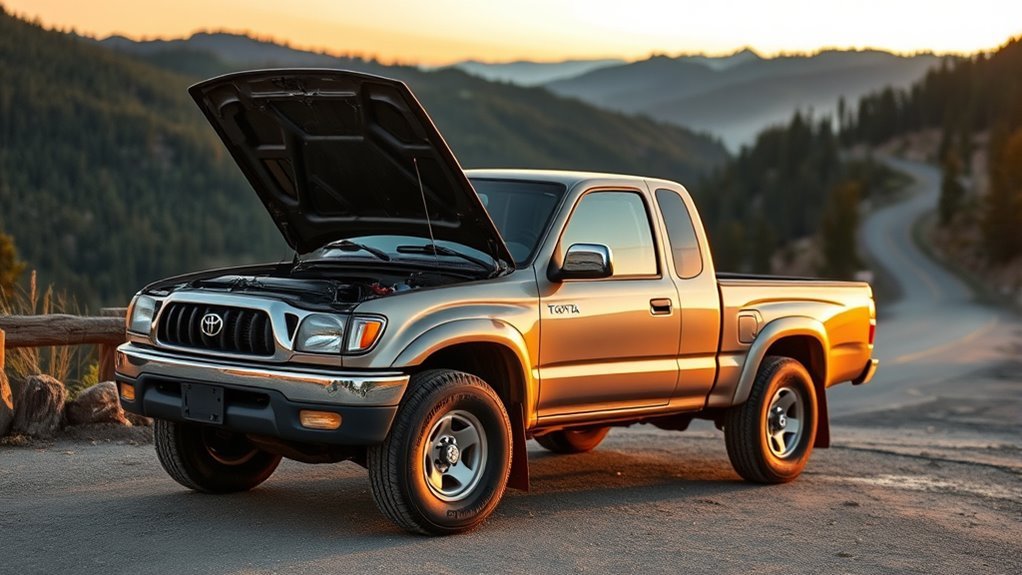
The last non-turbo Tacoma was the 2023 model, which carried a 3.5L V6 producing 278 horsepower and 265 lb-ft of torque. It was the final Toyota Tacoma of the third generation, a run that lasted from 2016 through 2023 before the 2024 shift to turbocharged power.
As the closing V6 version, it served drivers who valued a straightforward drivetrain and proven capability. The truck could tow up to 6,800 pounds, giving it strong utility for hauling work gear, trailers, and other demanding loads.
Its fuel economy ranged from 18 to 21 mpg, reflecting the tradeoff of the larger engine. A 2020 update improved the third generation, but the V6 remained available only until its end.
For buyers seeking a conventional, non-turbo pickup, the 2023 Toyota Tacoma marked the final opportunity to choose that configuration.
Why Toyota Dropped the Tacoma V6
Toyota ended the Tacoma V6 after the 2023 model year as part of a broader move toward turbocharged powertrains.
The change reflected a shift in engine strategy toward smaller-displacement units that can balance fuel efficiency with strong towing and performance figures.
In the fourth-generation Tacoma, Toyota replaced the V6 with four-cylinder options, including a turbocharged version that matches the old V6 in horsepower while exceeding it in torque.
V6 Phaseout Reasons
Phaseout of the Tacoma’s V6 reflected Toyota’s shift toward smaller turbocharged engines that better matched changing buyer preferences and tightening emissions rules.
The V6 engine had long served the Tacoma well, but consumer feedback increasingly favored the efficiency and responsiveness of forced induction. Stricter EPA and international standards also pushed Toyota toward lower-displacement powertrains.
The final V6-equipped Tacoma arrived in the 2023 model year, closing a durable chapter in the lineup. For 2024, Toyota replaced it with a 2.4L turbo engine tuned to deliver comparable horsepower and torque, while improving fuel economy and regulatory compliance.
The decision signaled a strategic reset, not a rejection of capability, but a move toward cleaner engineering and broader market appeal for drivers seeking practical freedom.
Turbo Era Shift
Shifting market expectations and stricter emissions standards helped accelerate Tacoma’s move away from the V6 and into the turbo era. The 2023 model year was the last without a turbocharged engine, before 2024 brought a fourth-generation lineup built entirely around four-cylinder power.
Toyota’s decision reflected a broader industry turn toward smaller displacement engines that balance efficiency, output, and compliance. The new 2.4L turbo delivers up to 278 hp, while the hybrid version reaches 326 hp, giving buyers stronger options without a V6 badge.
Reports from owners suggest the change has improved responsiveness and towing capability. For drivers seeking less waste and more control, the shift marks a clear break from older, heavier formulas and a more liberated approach to performance.
Tacoma Engine Options Before 2023
Before 2023, the Tacoma’s third generation relied on non-turbo engines, led by a 3.5L V6 rated at 278 hp and 265 lb-ft of torque.
A 2.7L four-cylinder was also offered, though its 159 hp and 180 lb-ft made it the less capable choice.
Third-Gen V6 Option
The third-generation Tacoma, sold from 2016 through 2023, offered a 3.5L V6 as its stronger engine choice, producing 278 horsepower and 265 lb-ft of torque.
In third-gen V6 form, it gave drivers a clearer path to capability, with a six-speed automatic or six-speed manual transmission. The setup balanced control and everyday use, while keeping the truck responsive under load.
Rated to tow up to 6,800 lbs, the V6 suited work, travel, and recreation without excess complication. A 2.7L four-cylinder remained available, but its 159 hp and 180 lb-ft left it less convincing.
Pre-Turbo Engine Choices
Alongside the third-generation Tacoma’s 3.5L V6, the pre-2023 engine lineup also included a 2.7L four-cylinder for buyers prioritizing simplicity and lower output. The 2.7L unit produced 159 hp and 180 lb-ft of torque, serving as the modest entry point before turbocharging arrived.
Above it, the 5L V6 engine remained the main choice for stronger acceleration and utility, delivering 278 hp and 265 lb-ft. In 2023, that V6 supported towing up to 6,800 lbs, reflecting a practical balance of restraint and capability.
These pre-turbo options defined the third-generation Tacoma from 2016 through 2023, offering clear engine separation without forced induction. The lineup ended as the 2024 model shifted to turbo power, closing one era and opening another.
2023 Tacoma Powertrains
By 2023, the Tacoma’s powertrain lineup still centered on two familiar choices: a 2.7L four-cylinder with 159 hp and 180 lb-ft of torque, and a 3.5L V6 rated at 278 hp and 265 lb-ft.
The Tacoma powertrains reflected a final pre-turbo era, giving drivers a straightforward path between efficiency and stronger hauling ability. The V6 could be matched with a six-speed automatic or six-speed manual, and it enabled towing up to 6,800 lbs.
Fuel economy varied from 18 to 21 mpg, depending on drivetrain and engine.
Inside, Apple CarPlay® and Android Auto™ added practical connectivity.
As the third-generation model closed its run, the 2023 Tacoma remained a clear example of mechanical choice before the shift to turbocharged power in 2024.
2022 Tacoma V6 vs. 2024 Turbo
For buyers comparing the 2022 Tacoma V6 with the 2024 turbocharged lineup, the difference begins with engine philosophy: the 2022 model uses a 3.5L V6 rated at 278 hp and 265 lb-ft of torque, while the 2024 Tacoma replaces that setup with a 2.4L turbo engine offered in three versions, including a 228 hp base model, a 278 hp mid-level tune, and a hybrid producing 326 hp and 465 lb-ft.
The 2022 V6 is known for straightforward power delivery and a traditional feel, while the newer turbocharged engine approach favors efficiency and adaptability. Fuel economy improves from roughly 18-21 mpg to 20-24 mpg, reflecting Toyota’s move toward lighter, more efficient powertrains.
The V6 remains the simpler choice on paper; the 2024 range offers more choices and a clearer path toward modern performance without excess. For drivers seeking less dependence on old formulas, the 2024 shift signals more freedom.
How the New Tacoma Turbo Drives and Tows
The 2024 Tacoma’s 2.4L turbocharged engine changes how the truck drives under load, delivering 278 horsepower and 317 lb-ft of torque with a more responsive feel than the older V6.
The turbocharged setup supplies strong low-end pull, helping the truck move with less hesitation in city traffic, on grades, and on rougher roads. Its 6,500-pound towing rating is slightly below some earlier V6 figures, yet the added torque improves control and makes towing feel more efficient.
Drivers report steady performance when hauling boats and trailers, with the engine maintaining composure as weight increases. Off-road, the same power delivery supports measured climbs and controlled throttle response.
The result is a truck that trades peak nostalgia for usable strength, giving drivers more immediate access to power and a clearer sense of command.
Third-Gen vs. Fourth-Gen Tacoma Interior
Compared with the third-generation Tacoma’s more traditional, function-first cabin, the fourth-generation model moves toward a cleaner, more modern interior with better usability and a more polished look.
The third-generation Tacoma (2016-2023) keeps controls straightforward, but its design feels dated beside the fourth-generation Tacoma, which adds a more refined interior and clearer layout.
Standard eight-inch touchscreen technology replaces the smaller 6.1-inch and 7-inch options, making infotainment easier to use.
Rear legroom is slightly improved, especially in four-door models, while two-door and four-door configurations remain available across both generations.
Cargo space stays similar, yet the fourth-generation Tacoma improves storage solutions for daily organization.
In practice, the newer cabin offers greater comfort and a more liberated sense of space without abandoning practicality.
The result is a truck interior that better supports modern use, while the third-generation Tacoma remains more utilitarian and basic.
Which Tacoma Generation Fits Your Needs?
Which Tacoma generation fits a buyer’s needs depends largely on priorities. The third generation suits those who want freedom from turbocharging and prefer proven mechanical choices. It remains the last Tacoma with a non-turbo V6, rated at 278 hp and 265 lb-ft, while also offering a 2.7L four-cylinder.
For shoppers focused on capability, the third generation can tow up to 6,800 lbs, giving it a small edge over the fourth generation’s 6,500 lbs rating. Its 2020 tech updates added Apple CarPlay® and Android Auto™, improving daily use without changing the engine formula. The rugged design and multiple cab configurations also make it adaptable for work, commuting, and off-road travel.
What Owners Say About the Tacoma Turbo
Owner feedback on the new Tacoma turbo has been largely positive, especially among drivers comparing it with earlier V6 models.
The 2024 Tacoma’s 2.4L turbo engine is often praised for sharper throttle response and stronger, more immediate power delivery. Owners report that it tows well, handling loads equal to or better than prior V6 trucks.
Darrell Henderson and others describe the turbo model as meeting daily driving needs while remaining capable on trails and rough terrain.
The shift to turbocharged power also aligns with broader buyer preferences for a mix of fuel efficiency and usable performance.
Compared with older Tacomas, many drivers note a more composed, confident driving feel.
The feedback suggests that the turbo engine has not diminished capability; instead, it has given owners a modern balance of control, strength, and freedom in use.
Frequently Asked Questions
What Year Was the Worst Year for Toyota Tacoma?
The worst Toyota Tacoma year is often considered 2016. It drew criticism for reliability issues, weak performance, outdated infotainment, and cramped rear seating, making it a particularly disappointing choice despite continued strong sales.
Which Year of the Toyota Tacoma Has the Best Engine?
The 2023 Toyota Tacoma stands out, its 3.5L V6 pairing strong towing power with Engine Reliability. In a clean mechanical landscape, it feels like a dependable trail companion, offering freedom through balanced performance and proven durability.
What Year Did Tacoma Change to Turbo?
Tacoma changed to turbo in 2024, when the fourth generation arrived. This Turbo Shift replaced naturally aspirated options with 2.4L turbo engines, reflecting a move toward greater efficiency, performance, and broader automotive modernization.
Which Tacomas to Stay Away From?
Models from 2016–2019, and any third-gen Tacoma with neglected frame corrosion or weak Engine Reliability, deserve caution; they can feel like rusty anchors and tired mules. Older base 2.7L trucks are also underpowered.
Conclusion
The last year the Tacoma was available without turbo was 2023, closing the chapter on Toyota’s long-running naturally aspirated V6. The 2024 model brings more torque, updated tech, and stronger towing numbers, but also a different driving character. Which matters more: familiar simplicity or modern performance? For buyers, the choice depends on priorities. The older Tacoma offers proven toughness, while the new turbocharged version delivers greater efficiency, refinement, and capability for today’s demands.
