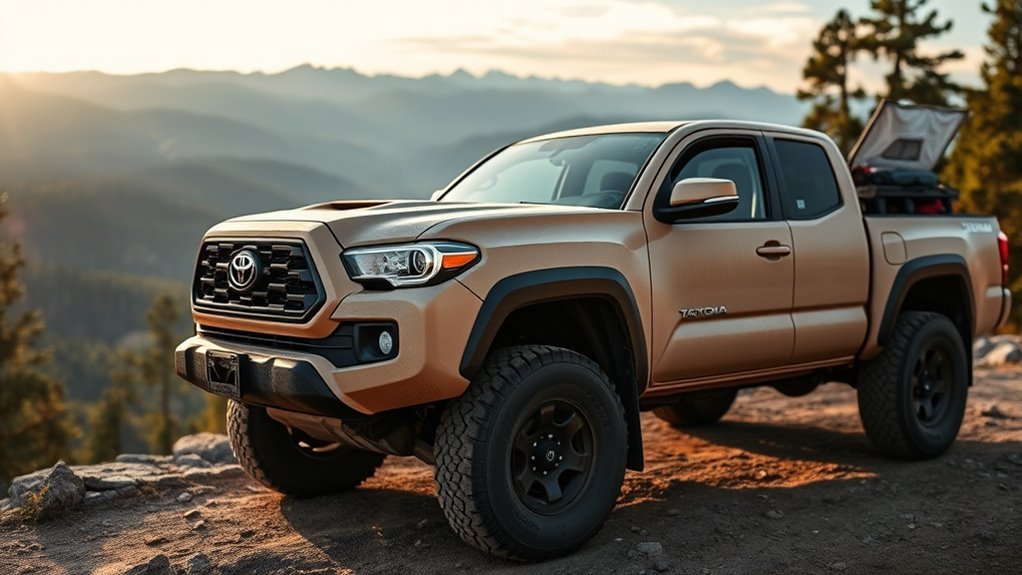
The last non-turbo Toyota Tacoma was the 2023 model year. Toyota ended its naturally aspirated engine lineup when it introduced the fourth-generation Tacoma for 2024. The change replaced the familiar V6 and base four-cylinder with turbocharged 2.4-liter engines, including a hybrid option.
If you’re shopping for a used Tacoma, understanding the differences in engine output, towing capacity, fuel economy, and maintenance can help you choose the right generation.
Quick Answer
2023 was the final model year for a naturally aspirated Toyota Tacoma in the US. It offered a 2.7L four-cylinder or a 3.5L V6 producing 278 horsepower and 265 lb-ft of torque. The redesigned 2024 Tacoma replaced both engines with turbocharged 2.4L four-cylinder powertrains.
Last checked: September 26, 2026. Dates and figures were verified against official sources.
Key Takeaways
- The third-generation Tacoma ran from the 2016 through 2023 model years.
- The 2023 Tacoma offered two naturally aspirated engines, not just the V6.
- The properly equipped 2023 V6 could tow up to 6,800 pounds.
- The 2024 Tacoma introduced three main power configurations, including a turbocharged hybrid.
- The 2024 model offers more peak torque, but its maximum towing rating is lower than the previous generation’s.
- A used Tacoma’s condition, maintenance history, and exact configuration matter more than engine type alone.
What Was the Last Non-Turbo Tacoma?
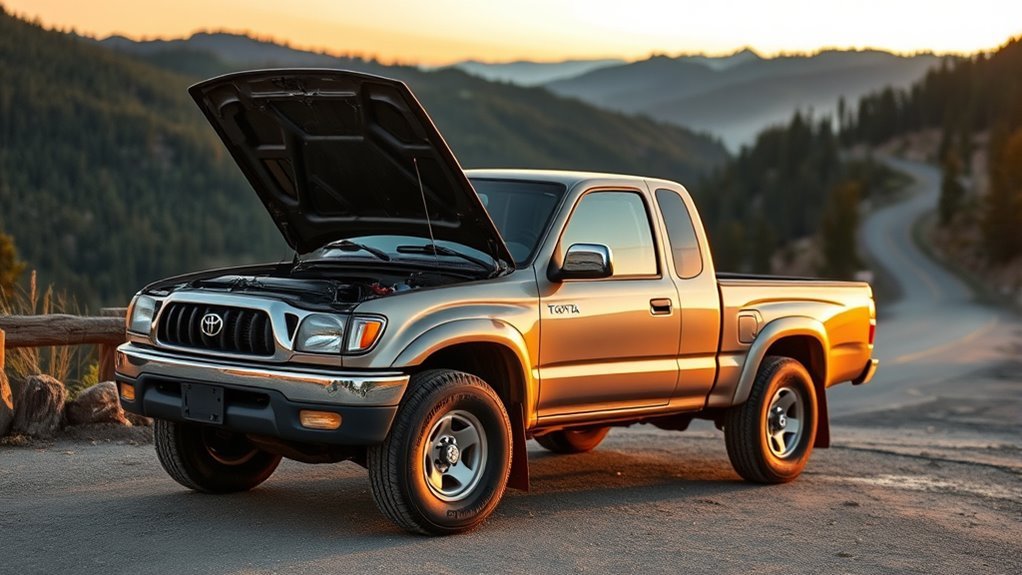
The 2023 Toyota Tacoma was the final non-turbo model. It closed the third generation, which began with the 2016 model year.
Buyers could choose between two engines:
- 2.7L naturally aspirated four-cylinder: 159 horsepower and 180 lb-ft of torque.
- 3.5L naturally aspirated V6: 278 horsepower and 265 lb-ft of torque.
Neither engine used a turbocharger. The V6 was available with a six-speed automatic or six-speed manual transmission, depending on the configuration.
The V6 used Toyota’s D-4S fuel injection system, combining direct and port fuel injection. It was not an old-style, basic engine simply because it lacked turbocharging.
According to Toyota’s 2023 Tacoma brochure, properly equipped V6 models could tow up to 6,800 pounds.
EPA-estimated combined fuel economy ranged from approximately 18 to 21 mpg for the V6, depending on transmission and drivetrain.
The 2023 Tacoma also retained the familiar body-on-frame construction, available part-time four-wheel drive, and rear leaf-spring suspension.
Why Toyota Dropped the Tacoma V6
Toyota discontinued the Tacoma’s naturally aspirated V6 as part of its complete fourth-generation redesign. The new powertrain strategy emphasizes smaller turbocharged engines, stronger low-speed torque, and an available hybrid system.
The previous 3.5L V6 produced its peak torque higher in the engine’s rev range. The new turbocharged engines can deliver greater torque at lower engine speeds.
That difference changes how the Tacoma responds when accelerating, climbing grades, or carrying a load.
However, increased torque does not automatically mean a higher towing capacity or better reliability. Those outcomes depend on the entire vehicle, its configuration, and operating conditions.
V6 Phaseout Reasons
The V6 phaseout accompanied a broader redesign rather than a simple engine replacement.
Toyota introduced a new truck platform, updated transmissions, revised suspension options, modernized electronics, and new powertrain configurations.
The company also expanded electrification through the i-FORCE MAX hybrid system.
In its fourth-generation Tacoma announcement, Toyota described the redesigned truck’s focus on power, efficiency, capability, and improved driving characteristics.
Smaller turbocharged engines can help manufacturers balance performance and efficiency. However, fuel economy and emissions depend on the complete vehicle, not engine displacement alone.
Turbo Era Shift
The 2024 Tacoma introduced turbocharging across its gasoline and hybrid powertrains.
Instead of choosing between a naturally aspirated four-cylinder and V6, buyers could select different versions of the 2.4L turbocharged engine.
The standard-output engine produces 228 horsepower. Higher-output gasoline models reach 278 horsepower, matching the previous V6’s peak horsepower.
The i-FORCE MAX hybrid combines the turbocharged engine with an electric motor. Its maximum output reaches 326 horsepower and 465 lb-ft of torque.
The fourth generation also introduced an eight-speed automatic transmission while retaining a six-speed manual on selected gasoline models.
This means the newer Tacoma offers more powertrain variety without offering a naturally aspirated engine.
Tacoma Engine Options Before 2023
The third-generation Tacoma offered two non-turbo engines throughout its 2016–2023 model run.
Both engines used gasoline and conventional automatic transmission options. The V6 also offered a manual transmission on selected configurations.
| Specification | 2.7L Four-Cylinder | 3.5L V6 |
|---|---|---|
| Horsepower | 159 hp | 278 hp |
| Torque | 180 lb-ft | 265 lb-ft |
| Turbocharger | No | No |
| Automatic transmission | Six-speed | Six-speed |
| Manual transmission | Not offered | Available on selected models |
Third-Gen V6 Option
The 3.5L V6 was the stronger engine option in the third-generation Tacoma.
Its 278 horsepower and 265 lb-ft of torque supported everyday driving, highway travel, off-road use, and trailer towing.
The V6 could be paired with a six-speed automatic or manual transmission. Availability depended on the model and drivetrain.
The engine used both direct and port fuel injection. That design helped Toyota balance performance and efficiency.
The maximum 6,800-pound towing figure applied only to properly equipped configurations. Many Double Cab and off-road models had lower ratings.
Pre-Turbo Engine Choices
The 2.7L four-cylinder provided a lower-output alternative to the V6.
It produced 159 horsepower and 180 lb-ft of torque, making it suitable for buyers who did not need the V6’s additional output.
However, it was not automatically more fuel-efficient in every configuration. Vehicle weight, drivetrain, and transmission affected the EPA rating.
For example, some 2023 four-cylinder and V6 configurations shared a 21-mpg combined rating.
Buyers comparing these engines should consider their intended payload, trailer weight, driving conditions, and maintenance history rather than relying on cylinder count alone.
2023 Tacoma Powertrains
For 2023, Toyota retained the two naturally aspirated engines and familiar transmission choices.
The V6 remained available with rear-wheel drive or part-time four-wheel drive, depending on the model. Selected V6 trims also offered the six-speed manual.
The 2023 lineup included practical connectivity features introduced during the third generation’s 2020 model-year update.
Apple CarPlay and Android Auto compatibility were available through Toyota’s infotainment system, with a 7-inch or available 8-inch touchscreen.
The truck also retained available off-road technology such as Crawl Control, Multi-Terrain Select, and an electronically locking rear differential on applicable models.
These features make the final third-generation Tacoma more than a basic pickup, even though its engines lack turbocharging.
2022 Tacoma V6 vs. 2024 Turbo
The main difference between the 2022 Tacoma V6 and 2024 turbo is how they produce power.
The older V6 makes 278 horsepower and 265 lb-ft of torque. The higher-output 2024 gasoline turbo matches its horsepower while producing 317 lb-ft of torque with the automatic transmission.
The hybrid delivers substantially more combined torque.
The following figures come from Toyota’s published specifications. Actual equipment varies by trim and drivetrain.
| Specification | 2022 V6 | 2024 Turbo Automatic | 2024 Turbo Hybrid |
|---|---|---|---|
| Engine | 3.5L V6 | 2.4L turbo four-cylinder | 2.4L turbo four-cylinder with electric motor |
| Maximum horsepower | 278 hp | 278 hp | 326 hp |
| Maximum torque | 265 lb-ft | 317 lb-ft | 465 lb-ft |
| Automatic transmission | Six-speed | Eight-speed | Eight-speed |
| Generation | Third | Fourth | Fourth |
The comparison uses Toyota’s 2022 Tacoma brochure and the manufacturer’s published fourth-generation specifications.
The 2024 lineup also included a lower-output SR engine making 228 horsepower and 243 lb-ft of torque. Selected manual-transmission models produced 270 horsepower and 310 lb-ft.
Fuel economy varies by configuration. For example, a 2023 V6 four-wheel-drive automatic has an EPA-estimated 20 mpg combined rating, while a 2024 SR5 four-wheel-drive automatic is rated at 21 mpg combined.
The newer engine therefore does not guarantee a dramatic fuel economy improvement in every configuration.
How the New Tacoma Turbo Drives and Tows
The 2024 Tacoma’s higher-output turbo engine produces 278 horsepower and 317 lb-ft of torque with the eight-speed automatic transmission.
Its stronger low-end torque helps the truck respond without needing as much engine speed as the older V6.
The revised transmission also provides more gear ratios than the previous six-speed automatic.
For highway driving, hills, and trailer towing, these differences can improve how the engine delivers usable power.
However, the maximum towing rating did not increase.
| Model Year | Maximum Published Towing Capacity |
|---|---|
| 2023 Tacoma | 6,800 lb |
| 2024 Tacoma | 6,500 lb |
The 2024 maximum is 300 pounds lower than the previous generation’s maximum.
Some 2024 models also offer features such as an integrated trailer brake controller, trailer backup guidance, and Straight Path Assist.
These systems can make trailer handling more convenient, but availability depends on the trim and equipment.
Before towing, confirm the specific truck’s tow rating, payload capacity, tongue-weight limit, and trailer equipment requirements.
Warning: Do not use the maximum advertised towing figure as the rating for every Tacoma. Cab style, drivetrain, equipment, passengers, and cargo can reduce the capacity available for your trailer.
Off-road, the turbocharged engine’s low-speed torque supports controlled acceleration. Available traction systems, suspension equipment, and tire choice remain important factors in trail performance.
Third-Gen vs. Fourth-Gen Tacoma Interior
The fourth-generation Tacoma introduces a redesigned cabin, updated displays, new storage features, and revised seating arrangements.
The third-generation interior remains functional and offers modern smartphone connectivity on later models, including the 2023 truck.
The main differences include:
- 2023 infotainment: 7-inch or available 8-inch touchscreen, depending on the configuration.
- 2024 infotainment: Standard 8-inch touchscreen with an available 14-inch display.
- Smartphone connectivity: The 2024 model supports wireless Apple CarPlay and Android Auto.
- Rear suspension: The third generation uses rear leaf springs, while most fourth-generation models offer a multi-link rear suspension with coil springs.
- Storage: The newer generation adds revised cabin storage and a redesigned cargo bed.
The 2024 Double Cab also provides slightly more published rear legroom.
Toyota lists 32.6 inches for the 2023 Double Cab and 33.7 inches for the 2024 Double Cab.
That is an increase of 1.1 inches, although both trucks remain midsize pickups with limited rear-seat space compared with larger vehicles.
The fourth generation retains two cab configurations, but their designs differ from the older models.
The 2023 Access Cab includes rear access doors and compact rear seating. The newer XtraCab is a two-seat utility configuration with storage behind the front seats.
The Double Cab remains the configuration for buyers who need a conventional second row.
Toyota’s 2024 Tacoma brochure provides the detailed equipment and dimension specifications for each configuration.
Which Tacoma Generation Fits Your Needs?
The choice between third- and fourth-generation Tacomas depends on your engine preference, intended use, and the condition of the truck you’re considering.
A third-generation model provides naturally aspirated engine options. A fourth-generation truck offers the turbocharged powertrains, newer technology, and redesigned chassis.
Use the following comparison to identify which characteristics matter for your driving needs.
| Priority | Third Generation | Fourth Generation |
|---|---|---|
| Engine design | Naturally aspirated four-cylinder or V6 | Turbocharged four-cylinder or turbo hybrid |
| Maximum engine output | 278 hp and 265 lb-ft | 326 hp and 465 lb-ft with hybrid |
| Maximum towing | Up to 6,800 lb | Up to 6,500 lb for 2024 |
| Automatic transmission | Six-speed | Eight-speed |
| Infotainment | Traditional controls with smaller screens | Redesigned system with larger available screen |
The naturally aspirated V6 may appeal to drivers who prefer its engine design and established maintenance history.
The newer turbocharged engine offers more torque at lower engine speeds, while the hybrid adds electric assistance.
Neither engine type guarantees freedom from mechanical problems. Maintenance, previous use, and vehicle condition remain essential.
Toyota’s 2026 Tacoma brochure confirms that the current lineup continues to use turbocharged gasoline and turbo-hybrid powertrains.
What to Check Before Buying a Used Non-Turbo Tacoma
If you’re considering a 2023 or earlier Tacoma, inspect the actual vehicle rather than relying only on its model year.
- Confirm the engine. Check whether the truck has the 2.7L four-cylinder or 3.5L V6.
- Review maintenance records. Look for regular oil changes, cooling-system service, and other scheduled maintenance.
- Inspect the frame. Check for corrosion, previous repairs, and signs of damage, especially on trucks used in areas with road salt.
- Test the transmission. Check for unusual noises, delayed engagement, rough shifts, or clutch problems.
- Inspect the four-wheel-drive system. Confirm that the transfer case and applicable off-road equipment operate correctly.
- Check for accident or flood damage. Inspect the body, cabin, electrical equipment, and available vehicle history records.
- Review the towing equipment. Confirm the actual capacity and look for signs of improper trailer use.
- Check the VIN for open recalls. Use Toyota’s official recall database.
Toyota’s recall lookup allows owners and prospective buyers to check applicable safety recalls and service campaigns using a vehicle identification number.
A professional pre-purchase inspection can also identify problems that are not obvious during a short test drive.
What Owners Say About the Tacoma Turbo
Feedback about the fourth-generation Tacoma often focuses on its stronger low-speed response, redesigned transmission, updated interior, and new suspension.
Drivers comparing it with the previous V6 may notice that the turbocharged engine delivers torque earlier in the rev range.
That can make everyday acceleration and hill climbing feel different, even though the higher-output gasoline engine has the same peak horsepower as the old V6.
The eight-speed automatic also changes how the truck selects gears compared with the previous six-speed transmission.
However, individual impressions vary. Driving style, tire choice, vehicle weight, and transmission configuration can all affect the experience.
Some drivers prefer the familiar sound and response of the naturally aspirated V6, while others prefer the turbocharged engine’s stronger low-speed output.
Owner comments and short-term driving impressions should not be treated as proof of long-term engine reliability.
The fourth generation uses a different engine and drivetrain design, so its long-term maintenance experience should be assessed using records specific to that generation.
Frequently Asked Questions
What Year Was the Worst Year for Toyota Tacoma?
There is no single Tacoma model year that every buyer should avoid. The 2016 model introduced the third generation, but condition and maintenance can matter more than the year alone. Review the vehicle’s service records, inspect for corrosion, check recall status, and arrange a pre-purchase inspection before deciding.
Which Year of the Toyota Tacoma Has the Best Engine?
The answer depends on your priorities. The 2023 Tacoma is the final model offering the naturally aspirated 3.5L V6, producing 278 horsepower and 265 lb-ft of torque. The 2024 turbocharged gasoline engine offers up to 317 lb-ft, while the hybrid produces up to 465 lb-ft. Maintenance history and intended use should guide your comparison.
What Year Did Tacoma Change to Turbo?
The Toyota Tacoma changed to turbocharged engines for the 2024 model year. The redesigned fourth generation replaced the naturally aspirated 2.7L four-cylinder and 3.5L V6 with 2.4L turbocharged powertrains. The lineup also introduced the i-FORCE MAX hybrid, which combines a turbocharged engine with an electric motor.
Which Tacomas Should You Stay Away From?
Avoid buying a Tacoma with serious unresolved mechanical problems, significant frame corrosion, major undisclosed damage, or missing maintenance records without further inspection. Pay particular attention to the transmission, cooling system, frame, and four-wheel-drive equipment. The older 2.7L engine also offers considerably less power than the V6, so consider your towing and driving requirements.
Conclusion
The 2023 Toyota Tacoma was the last non-turbo model year, offering a naturally aspirated 2.7L four-cylinder or 3.5L V6.
The fourth-generation Tacoma introduced turbocharged engines for 2024, bringing stronger low-speed torque, an available hybrid system, and updated technology. Its maximum towing rating, however, is slightly lower than the previous generation’s.
If you prefer a naturally aspirated Tacoma, focus your search on 2023 and earlier models. Compare the exact engine and configuration, review the service history, and inspect the vehicle before buying.
Sources
- Toyota: 2023 Tacoma Brochure: Naturally aspirated engine specifications, transmission options, fuel economy, towing capacity, and interior dimensions.
- Toyota: All-New 2024 Tacoma Announcement: Fourth-generation redesign, turbocharged engines, hybrid output, suspension, and towing technology.
- Toyota: 2022 Tacoma Brochure: Third-generation V6 specifications and equipment.
- Toyota: 2024 Tacoma Brochure: Fourth-generation engine configurations, fuel economy, interior specifications, and available features.
- Toyota: 2026 Tacoma Brochure: Continued availability of turbocharged gasoline and hybrid powertrains.
- Toyota: Safety Recall and Service Campaign Lookup: VIN-based recall and service campaign information.
