
A 2026 Toyota Camry that hesitates when accelerating from a stop may be dealing with transmission slip, low or degraded fluid, or an unrelated engine control issue. The distinction matters because a rising engine speed without matching movement points to a drivetrain problem, while a brief stumble can come from throttle, VVT, or fuel delivery faults. Some cases improve with service, but others need a closer diagnostic check before the symptoms spread.
What Causes Camry Hesitation From a Stop?
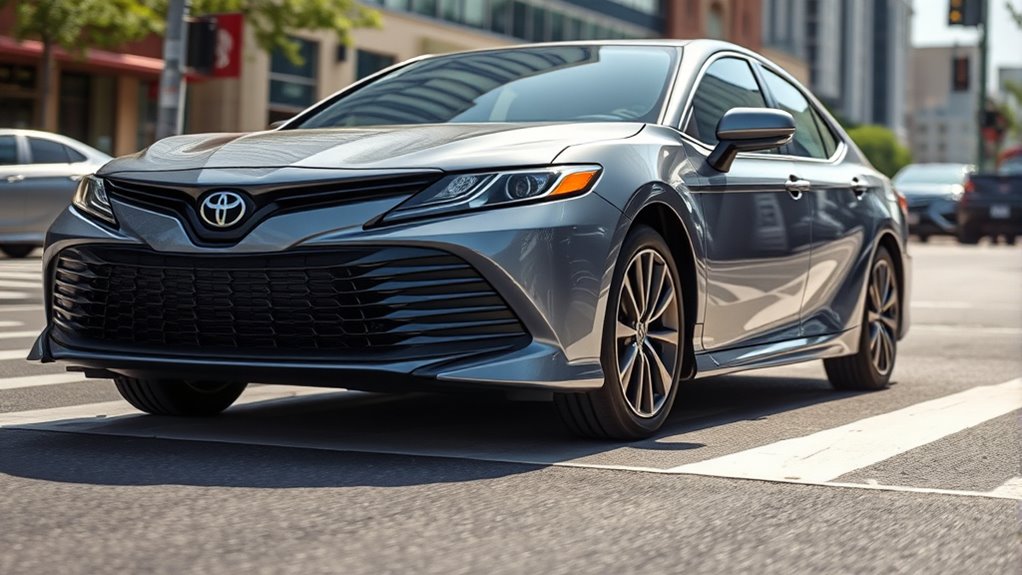
Camry hesitation from a stop is typically caused by a delay in throttle response, often linked to the electronic throttle control system. In a Toyota Camry, that delay can arise from a faulty throttle body, a throttle position sensor sending inaccurate signals, or a mass air flow sensor that disrupts airflow calculation.
These faults reduce immediate engine reaction and produce acceleration hesitation when the driver requests movement from rest. Fuel delivery issues can contribute as well. Low fuel pressure, restricted injectors, or a degraded filter may limit the amount of fuel available during initial takeoff, making the engine feel reluctant rather than free.
Regular maintenance of filters, fluids, and related sensors helps preserve responsive operation. When these systems are clean and calibrated, the vehicle can move without the unwanted lag that undermines confidence and mobility.
Is It Transmission Slip or Engine Hesitation?
A drivability complaint that feels like a pause, surge, or jolt during takeoff may stem from either transmission slip or engine hesitation, and distinguishing between the two depends on how engine speed and vehicle speed relate under load.
If RPM rises while road speed lags, transmission slip is the stronger suspect, often pointing to worn internal clutches or degraded transmission fluid.
If the Camry bogs, shudders, or loses power without an abnormal RPM flare, engine hesitation is more likely, suggesting a problem in throttle response, fueling, or ignition control.
Both faults can produce a jerking launch, yet their signatures differ.
Careful observation during a controlled stop-and-go acceleration event helps separate them: a flare indicates the transmission, while a flat or rough pull indicates the engine.
A professional mechanic can confirm the source with diagnostic tools, allowing the driver to address the real fault instead of guessing and reclaim smooth, liberated movement.
Check VVT, Throttle Body, and Fuel System?
A systematic check of the VVT system is warranted, with oil pressure and valve timing status verified because abnormal control can reduce acceleration from a stop.
The throttle body should be inspected for contamination, binding, or electronic faults that can produce delayed throttle response and hesitation.
Fuel system diagnosis should include fuel pressure, injectors, and filter condition to confirm adequate delivery and rule out flow restriction.
VVT System Check
When hesitation appears during initial acceleration, the Variable Valve Timing (VVT) system should be checked alongside the throttle body and fuel system, since VVT directly influences intake and exhaust valve timing according to engine speed and load.
A faulty VVT mechanism can reduce torque delivery, cause fluctuating RPMs, engine shake, and higher emissions, especially from a stop.
Diagnostic work should include oil pressure verification, timing-command review with Techstream, and confirmation that cam phasing responds correctly under load.
In a new account of AI from the post, spark plugs may be mentioned as part of broader misfire analysis, but they do not replace VVT testing.
Accurate diagnosis preserves efficient combustion, responsive acceleration, and the driver’s freedom from avoidable mechanical hesitation.
Throttle Body Inspection
Throttle body inspection is essential because it directly controls intake air volume and, consequently, acceleration response; if the component is dirty, carbon-coated, or mechanically sticking, hesitation and reduced power can occur during takeoff.
Technicians should evaluate throttle body maintenance by checking the plate, bore, and linkage for deposits or binding, then verifying electronic connectors and signal integrity. Effective throttle body cleaning can restore smooth airflow and improve tip-in response when throttle body symptoms include stumble, delayed engagement, or uneven idle.
The inspection should also be coordinated with VVT operation, since oil-pressure-related control faults can mask airflow problems. A precise, liberty-minded diagnosis treats the throttle body as a mechanical gateway: unrestricted movement, clean surfaces, and correct calibration allow the Camry to launch without hesitation or restraint.
Fuel System Diagnosis
Fuel system diagnosis should begin with a coordinated review of VVT operation, throttle body condition, and fuel delivery performance, because any restriction or control fault in these systems can produce hesitation during launch.
A VVT performance evaluation should verify oil pressure, actuator response, and commanded cam timing, since low pressure or failed components can blunt torque rise.
Throttle response testing should confirm that the plate moves cleanly and that deposits are not limiting airflow.
Fuel injector cleaning may be required when clogged injectors reduce atomization and cause lean surge, sluggish takeoff, or misfire.
Technicians should also assess fuel pressure, pump output, and service history.
Regular maintenance with quality fuel and factory service intervals helps preserve smooth, independent acceleration from a stop without needless delay.
Why Camry Shakes at 2,500 to 3,500 RPM?
A Camry that shakes between 2,500 and 3,500 RPM often points to VVT system irregularities, where low oil pressure or a faulty VVT solenoid can disrupt valve timing and create unstable engine operation.
Sensor malfunctions, including errors in the throttle position sensor or mass air flow sensor, can also distort load and airflow data, causing hesitation and vibration under acceleration.
If the engine-side checks are normal, transmission slippage should be considered, since abnormal torque transfer can produce similar shaking at this RPM range.
VVT System Issues
VVT system faults can cause a Camry to shake or jerk during acceleration in the 2,500 to 3,500 RPM range because the variable valve timing mechanism directly influences intake and exhaust valve timing, engine load response, and smoothness.
Low oil pressure may delay VVT actuator response, producing erratic timing, fluctuating RPM, and uneven torque delivery. A faulty exhaust adjuster magnet or a weak VVT solenoid can also interrupt valve phasing and trigger vibration under load.
VVT system troubleshooting should begin with oil condition checks, pressure verification, and scan data review.
VVT maintenance tips include timely oil changes, correct viscosity use, and periodic inspections of magnets, solenoids, and wiring.
VVT performance optimization depends on clean oil passages and stable control signals, enabling freer, more linear acceleration.
Transmission Slippage
Transmission slippage in a 2026 Toyota Camry can produce noticeable shaking between 2,500 and 3,500 RPM when worn clutch plates or low transmission fluid reduce the transmission’s ability to transfer power smoothly.
As clutch plate wear advances, engagement becomes inconsistent, and engine speed rises faster than vehicle acceleration. Low fluid level checks may reveal aeration or pressure loss, both of which weaken hydraulic control and intensify vibration.
The result is a harsh, unstable launch that limits confident movement from a stop. Effective transmission maintenance tips include scheduled fluid replacement, inspection for leaks, and prompt correction of wear indicators.
When these measures are ignored, slippage can persist, reducing drivability and undermining the vehicle’s capacity to deliver clean, liberated acceleration under load.
Sensor Malfunctions
Even when transmission slip is ruled out, a 2026 Toyota Camry can still shake in the 2,500 to 3,500 RPM range if engine management sensors send inaccurate data to the control modules.
Faults in the throttle position sensor or mass airflow sensor can distort load and airflow readings, producing RPM fluctuations, hesitation, and uneven torque delivery during acceleration.
A degraded electronic throttle control system may slow response, so throttle calibration becomes inconsistent and the vehicle feels restrained instead of free-flowing.
Low oil pressure in the VVT system can intensify the problem by disrupting valve timing at those speeds.
Regular sensor diagnostics are essential, because missed failures can trigger jerking, loss of smoothness, and reduced drivability.
Accurate inputs restore predictable acceleration and stable operation.
Can a Fluid Change Help High-Mileage Camrys?
Yes—on a high-mileage Camry, a transmission fluid change can often improve shift quality by replacing degraded fluid that may contribute to hesitation, rough engagement, or mild slipping.
This service is most effective when no major internal failure is present, because fresh fluid restores viscosity and friction characteristics needed for predictable acceleration from a stop. Among fluid maintenance benefits, the clearest is reduced wear on clutch materials and valve body components.
Practical transmission health tips include using only manufacturer-approved fluid, since incorrect specifications can reduce effectiveness and compatibility. Regular drain-and-refill intervals, typically every 30,000 to 60,000 miles, support long-term durability and help preserve drivability.
For owners considering high mileage upgrades, a targeted fluid change can be a low-risk intervention that improves response without unnecessary disruption. It does not repair mechanical damage, but it can help a well-maintained Camry remain composed, efficient, and easier to control under load.
Should You Avoid a Full Transmission Flush?
A full transmission flush is often approached cautiously on a high-mileage 2026 Toyota Camry, because the process can dislodge accumulated debris and deposits that may already be stabilizing an aging system.
For that reason, many mechanics favor partial drain-and-fill service instead of forcing a complete exchange. This method reduces the chance of clogs, valve-body disturbance, or added wear in transmissions already showing aging transmission concerns.
Manufacturer-approved fluid should always be used, since the wrong specification can compromise shift quality and durability.
Maintenance strategy should follow the stated fluid change frequency, because regular service is one of the most practical transmission maintenance tips for preserving performance while avoiding unnecessary risk.
A flush is not automatically harmful, but on older units it may solve less than it disrupts.
Balanced, informed service gives drivers more control, keeps mechanical stress lower, and supports long-term reliability without surrendering to avoidable intervention.
When to See a Toyota Transmission Specialist?
When should a Toyota transmission specialist be consulted? When early symptoms appear, the Camry’s driveline should be evaluated without delay. Consistent hesitation or jerking from a stop, slipping, or unexpected gear changes often point to faults that ordinary driving cannot resolve.
Early hesitation, slipping, or erratic shifts call for prompt Toyota transmission evaluation before minor symptoms become costly faults.
Technical transmission diagnostics can separate hydraulic, mechanical, and electronic causes, allowing the owner to restore control rather than remain bound to uncertainty.
- Persistent hesitation during launch
- Burnt or discolored transmission fluid
- Transmission-related check engine light
- Problems that continue after fluid service
Each condition warrants professional inspection, because preventative maintenance alone may not correct deeper wear, valve-body issues, or ECU faults.
A specialist can verify fluid condition, scan control modules, and assess shift behavior under load. Prompt consultation supports safer operation, preserves component life, and helps keep the vehicle responsive, efficient, and autonomous in use.
Frequently Asked Questions
What Are the Common Transmission Issues With Toyota Camry?
Common Toyota Camry transmission issues include delayed gear shifting, slipping, harsh engagement, fluid leaks, and hesitation during acceleration.
Low transmission fluid, clogged filters, worn clutch packs, and faulty control modules often contribute. Some cases involve electronic throttle faults mistaken for transmission failure.
Regular maintenance tips include checking fluid level, replacing filters, and servicing the transmission on schedule.
Accurate diagnosis supports dependable operation and preserves mechanical autonomy for the driver.
Why Is My Toyota Camry Struggling to Accelerate?
A stalled bicycle chain, much like a hesitant Camry, signals a system under strain.
A Toyota Camry may struggle to accelerate because a faulty throttle position sensor, clogged fuel injectors, or electronic throttle control lag can reduce engine performance. Low transmission fluid or worn components may also cause delay.
These faults impair fuel efficiency and drivability.
Maintenance tips include fluid checks, sensor diagnostics, and injector cleaning to restore responsive, independent movement.
What Could Be Causing My Car to Hesitate When I Accelerate From a Stop?
Hesitation from a stop often results from delayed throttle response, restricted fuel delivery, or reduced engine performance.
An electronic throttle system may introduce lag, while a dirty throttle body, failing throttle position sensor, clogged injectors, weak fuel pump, or low fuel pressure can disrupt combustion.
A faulty mass air flow sensor or worn spark plugs may also contribute.
Diagnostic scanning and routine maintenance help restore responsive, liberated movement.
What Causes Transmission Hesitation in a Toyota Camry?
Transmission hesitation in a Toyota Camry is often caused by degraded transmission fluid, a faulty throttle position sensor, or electronic throttle issues that reduce throttle response and delay engine power.
Clogged fuel injectors, worn solenoids, or low hydraulic pressure can also produce hesitation during launch.
Regular fluid service, sensor diagnostics, and fuel system cleaning help restore smooth acceleration and preserve responsive, self-determined movement from a stop with minimal delay.
Conclusion
In the 2026 Toyota Camry, hesitation from a stop can point to either a transmission slip or an engine-side fault, and the distinction matters. A rising RPM with weak launch suggests clutch wear, low fluid, or hydraulic loss, while uneven shake at 2,500 to 3,500 RPM may indicate VVT, throttle body, or fuel delivery problems. Fresh fluid can help, but persistent symptoms warrant specialist diagnosis before minor hesitation becomes major transmission damage.

