
Toyota Camry warranty coverage can protect you from the cost of repairing defects in materials or workmanship, but the exact coverage depends on the vehicle’s model year, mileage, original in-service date, emissions certification, and location. This guide explains the main U.S. factory-warranty categories, current hybrid coverage, common exclusions, and the steps to take when you need a repair.
Quick Answer
A new U.S.-market Toyota Camry generally includes 3-year/36,000-mile basic coverage, 5-year/60,000-mile powertrain coverage, and 5-year/unlimited-mile rust-through coverage. Current hybrid Camrys also receive 8-year/100,000-mile hybrid-component coverage and a 10-year/150,000-mile hybrid-battery warranty, whichever limit comes first.
Key Takeaways
- The basic Toyota Camry warranty lasts 36 months or 36,000 miles, whichever comes first.
- Powertrain coverage generally lasts 60 months or 60,000 miles.
- For model year 2020 and newer Toyota hybrids, the hybrid battery is covered for 10 years or 150,000 miles.
- Routine maintenance, normal wear, collision damage, misuse, and damage caused by improper repairs are generally excluded.
- Using an independent shop or a third-party part does not automatically cancel the entire warranty, although resulting damage may not be covered.
- Always check the Warranty & Maintenance Guide for your exact VIN and model year before authorizing a repair.
Note: This article summarizes warranty coverage for U.S.-market Toyota Camry vehicles. Coverage in Canada and other countries differs. Your vehicle’s applicable Warranty & Maintenance Guide is the controlling document.
How Long Does the Toyota Camry Warranty Last?

A new Toyota Camry is generally covered by a New Vehicle Limited Warranty for 36 months or 36,000 miles, whichever occurs first. Coverage begins on the vehicle’s original in-service date—not necessarily the date a later owner buys it. The in-service date is normally the date the vehicle was first delivered, leased, or placed into service as a company or demonstration vehicle.
The basic warranty covers repairs needed because of defects in Toyota-supplied materials or workmanship, subject to the exclusions and conditions in the applicable warranty guide. It does not function as a maintenance plan, collision policy, or promise that every failed part will be replaced free of charge.
Toyota also provides longer coverage for certain powertrain, restraint, corrosion, hybrid, and emissions components. The following table gives a practical overview:
| Coverage | Typical U.S. Term | What It Generally Covers |
|---|---|---|
| Basic Coverage | 3 years/36,000 miles | Most Toyota-supplied components with defects in materials or workmanship, excluding listed wear, maintenance, damage, and use-related items. |
| Powertrain Coverage | 5 years/60,000 miles | Specified engine, transmission/transaxle, and drivetrain components. |
| Rust-Through Coverage | 5 years/unlimited miles | Corrosion that perforates qualifying body sheet metal from the inside out. |
| Hybrid-Related Components | 8 years/100,000 miles | Specified hybrid control components, including items listed in the model-year warranty guide. |
| Hybrid Battery | 10 years/150,000 miles for model year 2020 and newer Toyota hybrids | The high-voltage hybrid battery, subject to the applicable terms and exclusions. |
| Federal Emissions Coverage | Generally 2 years/24,000 miles; specified major parts 8 years/80,000 miles | Covered emissions-control parts and federally specified major emissions components. |
Toyota’s official Manuals and Warranties resource provides the general terms and lets owners locate information for a specific vehicle.
What Does the Basic Coverage Include in Your Toyota Warranty?
The Toyota Camry’s Basic Coverage generally applies for 36 months or 36,000 miles, whichever occurs first. It covers Toyota-supplied components that require repair or replacement because of a defect in materials or workmanship, subject to the warranty guide’s exclusions.
Basic coverage is broad, but it is not the same as bumper-to-bumper protection against every problem. A failed component may be excluded when the failure resulted from collision damage, improper maintenance, contaminated fluids, misuse, environmental damage, an unauthorized alteration, or another non-warrantable cause.
Basic Coverage Duration
The coverage clock begins on the original in-service date. For example, a Camry that reaches 36,000 miles after two years has reached the mileage limit even though the three-year time limit has not expired. A lightly driven Camry that turns three years old with 20,000 miles has reached the time limit.
Owners should report a suspected defect before the applicable limit expires. Waiting until after the time or mileage limit may make the repair ineligible even when the symptom began earlier and was not documented.
Pro Tip: Ask the service adviser to record intermittent symptoms on the repair order even when the dealership cannot reproduce the problem during the first visit. The dated record may be useful if the condition returns.
Exclusions and Limitations
| Usually Not Covered | Why | Important Qualification |
|---|---|---|
| Routine maintenance | Oil changes, tire rotations, filters, inspections, and similar services are ownership expenses. | Some scheduled services may be included separately through ToyotaCare. |
| Normal wear | Items such as brake friction material, wiper inserts, and tires naturally wear during use. | A manufacturing defect in a related component may still qualify. |
| Accident or environmental damage | Collision, hail, flooding, road debris, fire, chemicals, and similar outside events are not manufacturing defects. | Auto insurance or another responsible party may cover the loss. |
| Misuse or neglected maintenance | A claim may be denied when the damage was caused by abuse, improper fluids, overheating, or failure to perform required maintenance. | The exclusion should relate to the cause of the specific failure; it does not automatically cancel every unrelated warranty claim. |
| Damage caused by modifications or outside parts | Toyota may exclude damage caused by an altered system, improperly installed accessory, or unsuitable replacement part. | The presence of a third-party part alone does not automatically void the entire vehicle warranty. |
What Components Are Covered Under the Powertrain Warranty?
The Toyota Camry’s Powertrain Coverage generally lasts 60 months or 60,000 miles, whichever occurs first. It applies to specified engine, transmission or transaxle, and drivetrain components listed in the vehicle’s Warranty & Maintenance Guide.
Powertrain coverage does not mean that every part under the hood receives five years of protection. Electronics, sensors, accessories, cooling-system items, and emissions-control components may fall under different warranty categories and time limits.
Engine Coverage Details
Covered engine items generally include the engine’s major assemblies and specified internally lubricated components. The precise list may include components associated with the cylinder block, cylinder head, timing system, oiling system, and other internal engine mechanisms, but owners should consult the model-year guide before assuming a particular part qualifies.
An engine failure is not automatically warrantable simply because it occurs during the 5-year/60,000-mile period. Toyota may investigate whether the failure resulted from a manufacturing defect or from an excluded cause such as oil starvation, contaminated fuel, overheating after a warning light, racing, or improper repair.
Transmission and Drivetrain Components Included
Powertrain coverage generally protects specified components of the transmission or transaxle and the applicable front-wheel-drive or all-wheel-drive system. Covered items may include the transmission case and listed internal parts when a defect in materials or workmanship causes the failure.
Current Camry models use a hybrid transaxle rather than a conventional stepped automatic transmission. Hybrid control components and the high-voltage battery also have separate hybrid warranty provisions, which may last longer than the ordinary powertrain term.
What Hybrid Warranty Comes With a Toyota Camry?
Hybrid coverage is essential for current Camry owners because the present U.S. Camry lineup uses an all-hybrid powertrain. Toyota provides separate coverage for specified hybrid-related components in addition to the basic and powertrain warranties.
Hybrid-Related Component Coverage
Toyota states that specified hybrid-related components are generally covered for 8 years or 100,000 miles, whichever occurs first. The exact component list is defined in the applicable Warranty & Maintenance Guide and may include the battery control module, hybrid control module, and inverter with converter.
Hybrid Battery Coverage
For Toyota hybrid vehicles beginning with model year 2020, the high-voltage hybrid battery is generally covered for 10 years from the original in-service date or 150,000 miles, whichever occurs first. The warranty protects against covered defects; it is not a guarantee that the battery will retain the same capacity or operating characteristics indefinitely.
For current Camry shoppers, the 10-year/150,000-mile hybrid-battery warranty is one of the most important coverage terms to verify on the vehicle’s warranty documents.
See Toyota’s official hybrid and new-vehicle warranty information for current general terms.
What Is Camry’s Rust-Through Coverage?
Toyota’s Rust-Through Coverage generally lasts 60 months with no mileage limit. It applies when corrosion perforates qualifying body sheet metal from the inside through to the outside.
This is narrower than a general promise against rust. Surface rust, stone chips, scratches, environmental fallout, road-salt damage associated with neglected paint or body repairs, and corrosion caused by collision damage may not qualify. Cosmetic oxidation that has not created a hole through the sheet metal is not the same as covered corrosion perforation.
Warning: Repair paint chips and body damage promptly. Waiting until corrosion spreads may make it harder to establish that the condition resulted from a covered defect rather than unrepaired outside damage.
What Emissions Coverage Comes With the Toyota Camry Warranty?
Emissions warranty coverage is governed by federal law and, for qualifying vehicles, additional California or state-adopted requirements. Coverage can vary according to the Camry’s model year, emissions certification, original sale location, and registration history.
Federal Emissions Regulations Overview
The federal Clean Air Act provides two main forms of emissions warranty protection: a performance warranty and a design-and-defect warranty.
- Performance warranty: May cover repairs required when an eligible vehicle fails an approved emissions test during the applicable warranty period and the other federal conditions are satisfied.
- Design-and-defect warranty: Covers emissions-related parts that fail to function properly because of a defect in materials or workmanship during the applicable period.
The U.S. Environmental Protection Agency explains these protections in its federal emissions warranty guidance.
Federal Emissions Warranty Periods
Most covered federal emissions-control components receive protection for 2 years or 24,000 miles, whichever occurs first. The following specified major emissions components receive 8 years or 80,000 miles of federal protection:
- Catalytic converters
- The electronic emissions-control unit or computer
- The onboard emissions diagnostic device or computer
The complete part list for a specific Camry appears in its warranty booklet. An oxygen sensor or another emissions-related component should not automatically be assumed to have the 8-year/80,000-mile term unless the applicable guide or law places it in that category.
What to Do After a Failed Emissions Test
- Keep the official test-failure report.
- Check the vehicle’s age, mileage, and emissions warranty booklet.
- Do not authorize a paid repair until you have checked whether the failed component may be covered.
- Present the Camry and test documentation to an authorized Toyota dealer during the warranty period.
- Ask the dealer to state in writing whether the repair qualifies under the performance or design-and-defect warranty.
California emissions coverage may be longer for qualifying vehicles and parts. Check the underhood Vehicle Emissions Control Information label and the California emissions section of the model-year warranty guide rather than assuming every Camry receives identical state coverage.
What Warranty Exclusions Should You Be Aware Of?

Before relying on the Toyota Camry warranty, distinguish a manufacturing defect from maintenance, wear, outside damage, or an owner-caused condition. Common exclusions can include:
- Oil changes, filters, tire rotations, alignments, inspections, and other scheduled maintenance
- Brake friction material, wiper inserts, tires, and other normal-wear items
- Collision, vandalism, flooding, hail, fire, road debris, and environmental contamination
- Damage caused by racing, overloading, misuse, neglect, or continued driving after a serious warning
- Damage caused by incorrect fluids, contaminated fuel, improper maintenance, or faulty repairs
- Damage caused by a modification, accessory, or third-party part
- Incidental costs or losses excluded by the written warranty
Note: An exclusion normally applies to the affected repair or damage. A single modification or missed service does not necessarily erase every unrelated warranty protection on the vehicle.
Do Aftermarket Parts or Independent Repairs Void the Warranty?
No—not automatically. Federal warranty law generally prevents a manufacturer from conditioning warranty coverage solely on the use of a particular brand of part or service provider. You may normally use an independent repair facility and properly specified third-party parts without automatically cancelling the entire factory warranty.
However, Toyota may deny coverage for a failure when evidence shows that the failure was caused by the outside part, modification, installation, or service. For example, an unrelated window-motor defect should not become non-warrantable merely because the owner installed third-party floor mats. In contrast, engine damage caused by an incorrectly installed oil filter may be excluded.
The Federal Trade Commission explains this distinction in its guidance on warranties and repair restrictions.
How to File a Warranty Claim on Your Toyota Camry
A Toyota warranty claim usually begins at an authorized Toyota dealership. The service department must inspect the vehicle, identify the failed component and cause, and compare the finding with the applicable warranty terms.
- Confirm the warranty period: Check the Camry’s VIN, original in-service date, current mileage, and model-year Warranty & Maintenance Guide.
- Document the symptom: Note when it occurs, warning messages, sounds, weather conditions, speed, and whether the problem is intermittent.
- Schedule an authorized Toyota inspection: Explain that you believe the condition may be covered under the factory warranty.
- Bring relevant records: Provide maintenance receipts, earlier repair orders, photographs, diagnostic reports, or an emissions-test failure notice when they relate to the claim.
- Review the repair order: Make sure the written complaint accurately describes the symptom before signing.
- Request the coverage decision: Ask whether the repair is approved, what warranty category applies, and whether any diagnostic charge could become your responsibility if the issue is not covered.
- Keep copies: Save the final repair order, technician findings, parts information, and all communications.
Pro Tip: Do not describe only your own diagnosis. Report the observable symptom—such as “the engine loses power after warming up”—so the technician can diagnose the actual cause without being limited by an assumed part failure.
What to Do If Your Warranty Claim Is Denied
A denial is not necessarily the final decision. Begin by asking the dealership for the specific reason and the evidence supporting it.
- Request a written explanation: Ask which warranty provision or exclusion applies and what caused the failure.
- Compare the decision with the warranty guide: Verify the time limit, mileage, component category, maintenance requirement, and exclusion cited.
- Collect supporting evidence: Gather maintenance receipts, previous repair orders, photographs, diagnostic results, and communications.
- Speak with dealership management: Ask the service manager or customer-relations representative to review the decision.
- Contact Toyota: If the issue remains unresolved, contact the Toyota Brand Engagement Center through Toyota’s official Contact Us page or by calling 800-331-4331.
- Use the dispute process in the warranty booklet: Follow any mediation, arbitration, or state-specific procedure listed for your vehicle.
- Consider outside assistance: For a significant unresolved dispute, contact the appropriate state consumer-protection agency or seek advice from a qualified attorney.
Note: This is general consumer information, not legal advice. Warranty remedies and dispute procedures can vary by state and by the terms supplied with the vehicle.
How to Maintain Your Toyota Warranty Coverage
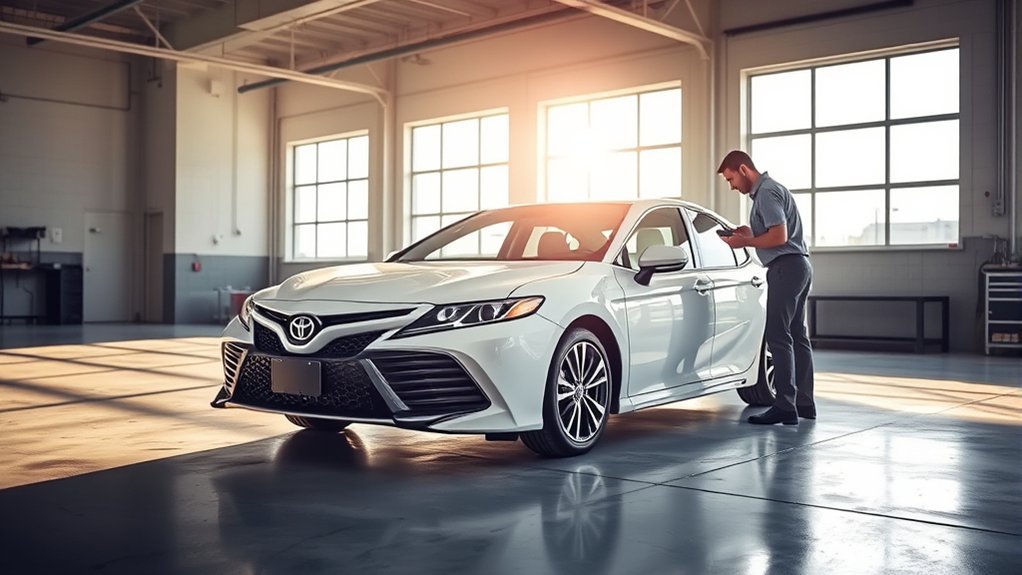
Following the scheduled-maintenance instructions helps keep the Camry reliable and makes it easier to show that a failure did not result from neglect. You do not need to treat every service recommendation as a warranty repair, but you should complete the required maintenance at the specified time or mileage intervals.
- Follow the model-year maintenance schedule: Use the intervals and severe-service qualifications in the owner documents.
- Keep detailed records: Save dated receipts showing the VIN or vehicle description, mileage, service performed, fluid specification, and parts used.
- Use correct parts and fluids: Parts do not always have to carry Toyota branding, but they should meet the specifications required for the vehicle.
- Respond to warnings promptly: Continuing to drive after an overheating, low-oil-pressure, or hybrid-system warning can turn a small problem into excluded consequential damage.
- Document recurring concerns: Have intermittent symptoms written on repair orders before coverage expires.
- Check recalls and campaigns: Use Toyota’s VIN lookup periodically to identify open safety recalls or service campaigns.
Independent maintenance does not automatically void the warranty. The owner should nevertheless choose a competent provider, use correct-specification materials, and retain proof of the work.
Additional Benefits of the Toyota Camry Warranty
The Camry’s protection extends beyond its 3-year/36,000-mile basic warranty. Depending on model year and certification, additional coverage can include:
- 5-year/60,000-mile powertrain protection
- 5-year/unlimited-mile rust-through protection
- 8-year/100,000-mile hybrid-related component protection
- 10-year/150,000-mile hybrid-battery protection for model year 2020 and newer Toyota hybrids
- Federal and qualifying California emissions warranties
- Separate restraint-system, accessory, parts, and service-part warranties described in the applicable guide
New Toyota vehicles also come with ToyotaCare, which is separate from the factory defect warranty. ToyotaCare provides eligible factory-scheduled maintenance and 24/7 roadside-assistance benefits under its own terms. Because coverage can vary by vehicle and program, confirm the current duration and exclusions through Toyota’s ToyotaCare and Maintenance Plans page or by entering the vehicle’s VIN.
Factory Warranty vs. ToyotaCare and Service Contracts
These products are often confused, but they serve different purposes:
- Factory warranty: Covers eligible defects in materials or workmanship during the stated period.
- ToyotaCare: Provides specified scheduled maintenance and roadside benefits under a separate complimentary plan.
- Vehicle service agreement: An optional paid contract that may cover listed repairs after or alongside parts of the factory warranty.
- Auto insurance: Covers qualifying collision, comprehensive, liability, and other insured losses rather than manufacturing defects.
Before purchasing an extended service contract, compare its covered components, exclusions, deductible, cancellation rules, administrator, repair-facility requirements, and overlap with the remaining factory warranty.
Does the Warranty Cover a Used Toyota Camry?
Remaining factory coverage generally depends on the vehicle’s original in-service date and mileage rather than the date a subsequent owner purchases it. A used Camry advertised as being “under warranty” may have less coverage remaining than its model year initially suggests.
Before buying, ask a Toyota dealer to verify the VIN, in-service date, current mileage, open recalls, service campaigns, and remaining warranty categories. Review the vehicle-history and maintenance records as well; a warranty does not correct prior collision damage, neglect, title problems, or poor repairs.
Is a Recall the Same as Warranty Coverage?
No. A factory warranty addresses covered defects during stated time and mileage periods. A safety recall addresses a safety-related defect or legal noncompliance identified by the manufacturer or government. An open recall repair is generally performed at no charge under the recall program even when the ordinary factory warranty has expired.
A service campaign, warranty enhancement, or customer-support program may also provide special repair terms for a particular condition. These programs have their own eligibility dates, VIN ranges, mileage limits, and procedures. Check Toyota’s official recall and campaign lookup rather than assuming a problem is excluded because the basic warranty has ended.
Frequently Asked Questions
What does a new Toyota Camry limited warranty cover?
It generally covers repairs required because of defects in Toyota-supplied materials or workmanship for 36 months or 36,000 miles, whichever occurs first. Routine maintenance, normal wear, accidents, misuse, environmental damage, and damage caused by improper repairs are generally excluded.
What is the difference between a warranty and a limited warranty?
A limited warranty provides specific protections subject to stated time limits, mileage limits, component lists, exclusions, and claim procedures. It does not promise to pay for every repair or maintenance expense.
What is the warranty on a new Toyota Camry?
A new U.S.-market Camry generally has 3-year/36,000-mile basic coverage, 5-year/60,000-mile powertrain coverage, and 5-year/unlimited-mile rust-through coverage. Current hybrid models also receive separate hybrid-component and hybrid-battery warranties.
What is covered under the Toyota Camry powertrain warranty?
The powertrain warranty covers specified engine, transmission or transaxle, and drivetrain components listed in the applicable Warranty & Maintenance Guide. It does not automatically include every electronic, emissions, cooling, or accessory component.
How long is the Toyota Camry hybrid battery warranty?
For Toyota hybrid vehicles beginning with model year 2020, the high-voltage hybrid battery is generally covered for 10 years from the original in-service date or 150,000 miles, whichever occurs first.
Will an independent mechanic void my Toyota warranty?
Using an independent mechanic does not automatically void the entire warranty. Toyota may deny a particular claim if improper service or a third-party part caused the covered component to fail, so retain records and use parts and fluids that meet the required specifications.
Does the Toyota Camry warranty cover surface rust?
Rust-through coverage generally applies to corrosion that perforates qualifying body sheet metal. Ordinary surface rust, paint chips, scratches, collision damage, and environmental corrosion may not qualify.
What should I do before paying for an emissions repair?
Check the emissions section of the warranty guide and ask an authorized Toyota dealer whether the failed component is covered. Keep any official emissions-test failure report and give Toyota an opportunity to diagnose the vehicle before authorizing a paid repair.
Conclusion
The Toyota Camry warranty provides several layers of protection rather than one universal expiration date. Basic coverage generally lasts 3 years or 36,000 miles, powertrain coverage lasts 5 years or 60,000 miles, and rust-through coverage lasts 5 years with unlimited mileage. Current hybrid Camrys also receive longer protection for specified hybrid components and the high-voltage battery.
The best way to protect your rights is to follow the maintenance schedule, retain service records, document problems promptly, and check the warranty guide before approving an expensive repair. When a claim is denied, request the reason in writing and follow the dealership and Toyota escalation process rather than assuming the first decision is final.
Sources
- Toyota Manuals and Warranties — basic, powertrain, rust-through, hybrid-component, hybrid-battery, and emissions coverage.
- Toyota 2026 Camry — current U.S. Camry model and all-hybrid powertrain information.
- U.S. Environmental Protection Agency: Federal Emissions Warranties — federal performance and design-and-defect warranty requirements.
- Federal Trade Commission: Warranties and Repair Restrictions — independent repairs, third-party parts, and warranty-denial principles.
- ToyotaCare and Maintenance Plans — scheduled-maintenance and roadside-assistance program information.
- Toyota Contact Us — official customer-support and warranty-escalation contact information.
