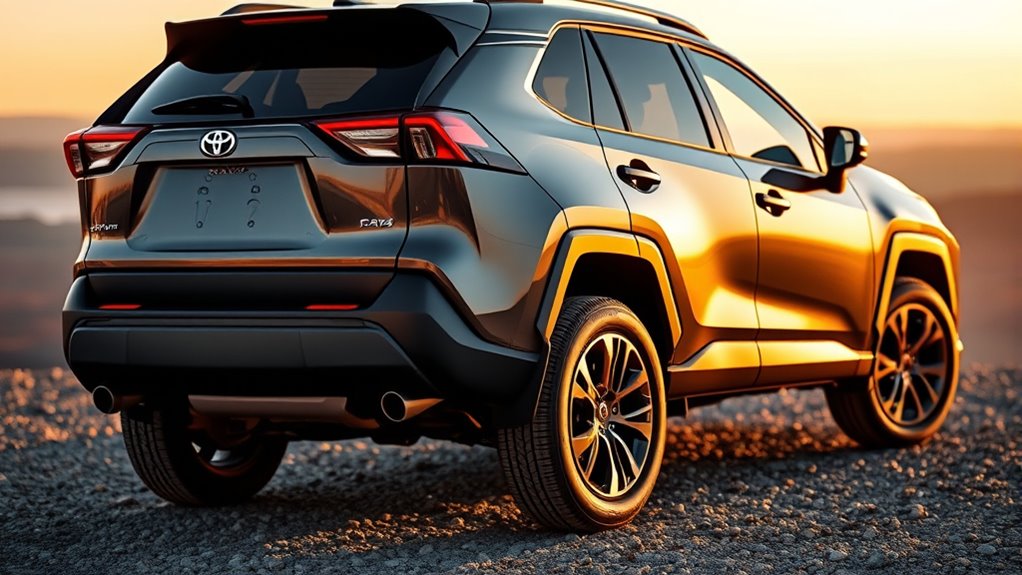
A Toyota RAV4 can be AWD or FWD, and the difference is not always obvious at first glance. The quickest checks involve the door-jamb label, rear badging, VIN details, and undercarriage layout. Each method reveals something different about the drivetrain. Some trims make the answer straightforward, while others require a closer inspection. The details matter, especially when comparing fuel economy, traction, and service needs.
How to Tell if Your RAV4 Is AWD or FWD
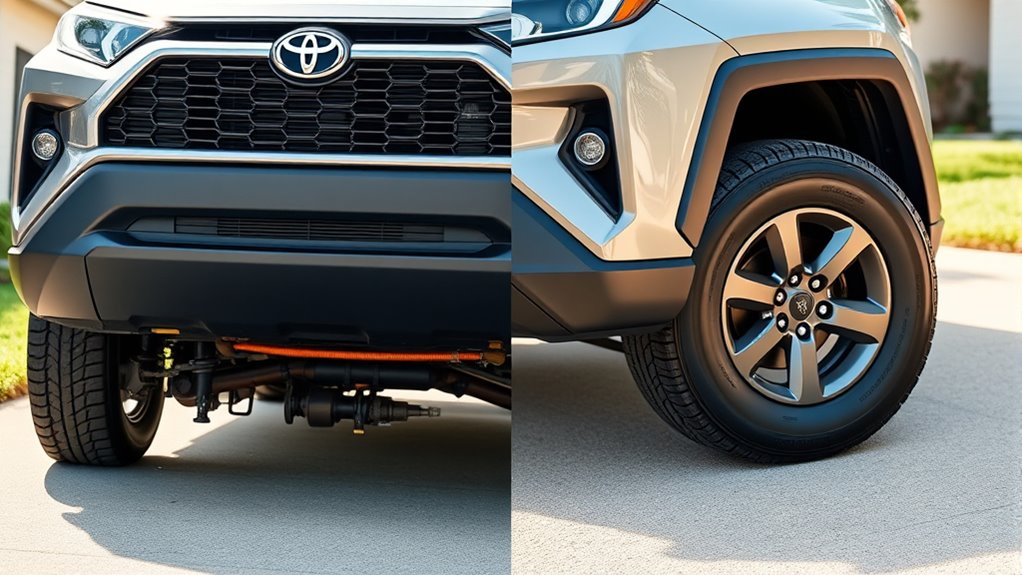
To determine whether a Toyota RAV4 is AWD or FWD, the most reliable starting point is the vehicle’s specifications label on the driver’s side door jamb, which typically identifies the drivetrain configuration.
This specifications label states whether the platform is AWD or FWD and removes guesswork from the initial inspection. If the label is missing, worn, or unclear, the owner’s manual should be reviewed for drivetrain details and equipment codes tied to the model.
For a more exact verification, the VIN can be entered into Toyota’s official resources or a dealer system to retrieve the factory build record.
A physical inspection of the undercarriage also helps: an AWD RAV4 usually has a driveshaft extending toward the rear axle, while a FWD model does not.
Together, these checks allow a direct, practical determination and support informed ownership without dependence on assumptions or external labels.
Look for AWD Badges and Drivetrain Labels
After confirming the drivetrain through the door-jamb label, the next visible check is the rear badging. On a Toyota RAV4, an AWD badge on the tailgate or liftgate typically indicates all-wheel drive, while the absence of that badge often suggests FWD, though verification remains essential.
Drivetrain labels in the owner’s manual and on the driver’s side door jamb provide the most direct confirmation, because specifications can vary by trim and model year. The 2026 Toyota RAV4 Hybrid may be configured as FWD or Electronic On-Demand AWD, and the RAV4 Plug-in Hybrid commonly lists AWD in its specifications.
When comparing inventory, the dealer should confirm the exact drivetrain configuration, since not every RAV4 is equipped the same way. For buyers seeking freedom through informed choice, badges and drivetrain labels offer a practical, low-effort method to identify the vehicle before deeper evaluation.
RAV4 AWD vs FWD: Key Differences
The Toyota RAV4’s AWD and FWD configurations serve different practical needs: AWD automatically distributes power to all four wheels for improved traction and stability on slippery or uneven roads, while FWD prioritizes simplicity and fuel efficiency for everyday commuting.
- AWD suits harsh weather, gravel, and variable surfaces.
- FWD suits city routes, lighter loads, and calmer driving habits.
- RAV4 Hybrid may be configured with FWD or AWD, affecting fuel economy.
AWD is mechanically oriented toward traction, using automatic power transfer to maintain control when roads degrade. FWD sends power to the front axle only, reducing complexity and often improving fuel economy.
For drivers seeking practical freedom from winter stress or rough terrain, AWD offers confidence; for those who value lower operating cost and predictable urban use, FWD remains efficient.
The RAV4 Hybrid follows the same logic, so buyers should match drivetrain choice to real driving conditions rather than assumptions.
RAV4 Hybrid and Plug-In Hybrid AWD Options
For the 2026 Toyota RAV4 Hybrid, drivetrain choice depends on configuration: buyers can select either front-wheel drive (FWD) or Electronic On-Demand all-wheel drive (AWD), allowing the model to balance efficiency and traction according to use case.
This RAV4 hybrid setup gives clear AWD options without forcing every driver into extra driveline hardware. In FWD form, the hybrid is estimated at 44 MPG combined, a strong figure for daily commuting and controlled operating costs.
The plug-in hybrid changes the equation: AWD is standard, and the system adds electric-only driving capability plus extra performance for varied road conditions.
Both models support independent selection based on practical priorities rather than assumptions. For accurate identification, the specific trim and powertrain configuration must be checked, since not all RAV4 variants include AWD.
This makes the drivetrain easy to verify and helps preserve fuel economy, performance, and mobility freedom.
Which RAV4 Drivetrain Fits Your Driving Needs
Which RAV4 drivetrain best fits a driver’s routine depends on traction needs, fuel priorities, and road conditions. FWD suits urban commuters who want lighter weight, lower ownership costs, and strong fuel efficiency.
AWD better serves drivers facing rain, snow, or uneven pavement, where added traction and stability improve control. The RAV4 Hybrid can be configured with FWD or optional AWD, while the Plug-in Hybrid uses AWD as standard, so the choice remains tied to the driving environment rather than brand prestige.
AWD better serves drivers facing rain, snow, or rough pavement, adding traction and confidence where conditions vary most.
- Choose FWD for daily commuting and city routes.
- Choose AWD for wet, snowy, or weekend adventure use.
- Evaluate the RAV4 Hybrid if efficiency and flexibility both matter.
A practical decision comes from matching drivetrain to use case. If the road network is mostly dry and predictable, FWD preserves freedom from unnecessary mechanical complexity.
If conditions vary, AWD offers confidence and control without sacrificing much utility.
Frequently Asked Questions
Is the RAV4 AWD All the Time?
No, the RAV4 AWD is not all the time. Its AWD functionality is usually on demand, sending power to the rear wheels only when traction control detects need under changing driving conditions.
This preserves FWD advantages in efficiency and lowers wear while improving off road capabilities when needed.
For proper use, regular maintenance tips include checking tires, fluids, and drivetrain components to keep the system responsive and reliable.
What’s the Most Common Problem With a Toyota RAV4?
The most common Toyota RAV4 problem is often engine issues, especially premature oil-pump wear, though some may expect transmission problems to dominate.
In practice, owners also report electrical faults, suspension wear, brake failure, and reduced fuel efficiency, all of which can affect reliability and operating cost.
A detached inspection of service history, warning lights, and fluid condition gives the clearest path to mechanical freedom and informed ownership.
Is RAV4 FWD Good in Snow?
RAV4 FWD is adequate in light snow, but not ideal for severe winter driving. Its snow performance depends heavily on traction control, tire choices, and road surface quality.
On plowed roads, handling characteristics remain predictable, and the driver experience is generally secure. In deeper snow or on ice, grip falls off faster than AWD.
For liberation from winter stress, drivers in harsh climates should prefer AWD and proper winter tires.
Does Toyota Have a Good AWD System?
Yes—Toyota has a good AWD system, especially for traction, stability, and confidence on wet or uneven roads.
Its AWD advantages include automatic torque distribution and strong AWD performance without driver input.
AWD disadvantages are added weight, cost, and slightly lower fuel economy versus FWD efficiency.
AWD maintenance is generally manageable.
FWD handling remains simpler and lighter, but Toyota’s AWD supports practical freedom in varied driving conditions.
Conclusion
In the little kingdom of RAV4 ownership, the crest on the tailgate, the door-jamb scroll, and the VIN oracle each serve as reliable heralds. When the hidden driveshaft is present, the vehicle has chosen the all-wheel path; when absent, it remains a front-wheel traveler. This distinction is not merely symbolic: AWD favors traction and control, while FWD prioritizes simplicity and efficiency. Confirming the drivetrain by label, badge, and records guarantees correct identification every time.

