
Yes, you can lift a Toyota RAV4, but the right setup depends more on exact fitment than headline lift height. A well-matched kit can add ground clearance and tire room. The wrong kit can cause rubbing, poor alignment, a harsh ride, warning lights, or driveline vibration.
Quick Answer
Yes. A Toyota RAV4 can be lifted with vehicle-specific springs, spacers, or complete strut-and-shock kits. Common fifth-generation kits add about 1.2 to 2.5 inches, but fitment varies by year, trim, drivetrain, and powertrain. Plan for an alignment, a tire-clearance check, and close inspection of CV angles and suspension hardware.
Key Takeaways
- Buy by exact model year, trim, drivetrain, and powertrain. A kit listed for one RAV4 version may exclude another.
- The all-new 2026 RAV4 starts a new generation, so a 2019-2025 kit should not be assumed to fit it.
- Spring kits, spacer kits, and complete suspension kits change ride quality and suspension geometry in different ways.
- A four-wheel alignment and full-lock tire-clearance check are essential after installation.
- Severe vibration, steering pull, rubbing, or warning lights are faults to diagnose, not normal lift-kit behavior.
Last updated: July 15, 2026.
Understanding Suspension Lift Kits for the Toyota RAV4
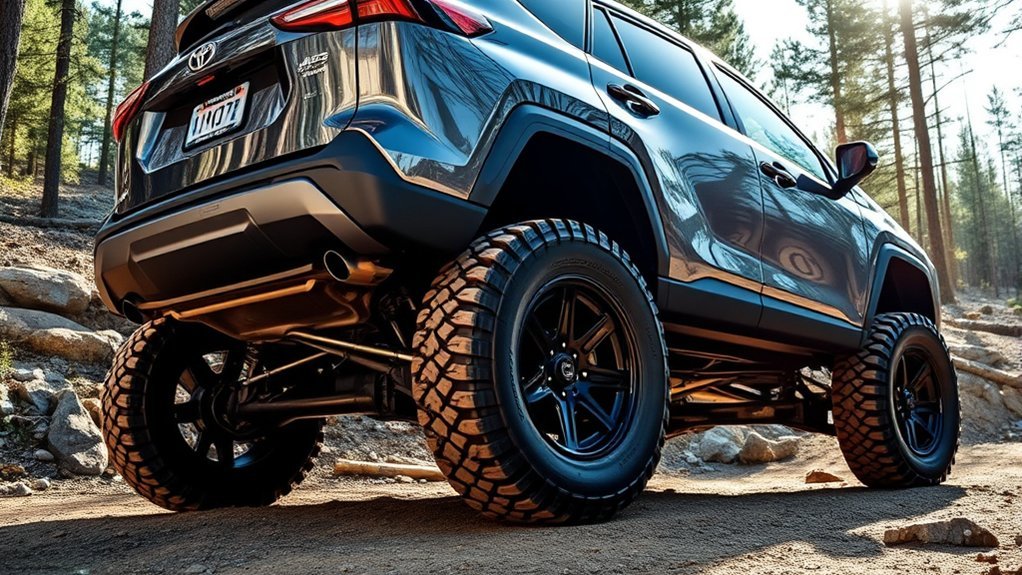
A RAV4 lift kit raises the vehicle by changing the springs, struts, shocks, mounting points, or a combination of those parts. Most RAV4 products are suspension or spacer systems. They are not traditional body lifts used on body-on-frame trucks.
The best design depends on how you use your RAV4:
- Lift springs: Replace the factory coil springs. They can increase ride height and may improve load support, but spring rate and ride firmness can change.
- Strut or shock packages: Pair dampers with springs designed for the new ride height. This can provide better control than mixing unmatched parts.
- Spacer or leveling kits: Reposition factory suspension components to add height. They can preserve much of the factory spring feel, but they do not upgrade damping or load capacity by themselves.
- Subframe or geometry-correction parts: Some systems include additional brackets or spacers to manage suspension, trailing-arm, or driveline geometry. Use only parts engineered for your exact kit and vehicle.
A lift can improve approach, departure, and breakover clearance while creating more room around the fenders. However, advertised lift height is not always equal to the extra clearance at every point under the vehicle. Tire diameter, suspension design, vehicle load, and the location of low components all affect the final result.
Check the Year, Trim, and Powertrain Before Buying
RAV4 lift-kit fitment is highly specific. Before ordering, match the product listing to your VIN-level configuration instead of relying only on the words “Toyota RAV4.”
| Check | Why It Matters |
|---|---|
| Model year and generation | Mounts, spring rates, suspension geometry, and electronic systems can change between generations. |
| Gas, Hybrid, or Plug-in Hybrid | Powertrain weight and chassis packaging can require different springs, dampers, or brackets. |
| FWD or AWD | Driveline layout and axle angles affect compatibility and post-lift behavior. |
| Trim | Adventure, TRD Off-Road, Woodland, and other trims may use different suspension tuning or equipment. |
| Permanent added weight | Bumper guards, skid plates, cargo systems, and camping equipment can change the required spring load rating. |
Note: Toyota identifies the 2026 RAV4 as the start of the sixth generation. Most established kits discussed below are listed for the 2019-2025 fifth-generation model. Do not transfer that fitment to a 2026 vehicle unless the kit maker lists your exact 2026 trim and powertrain.
Popular Lift Kit Options: Dobinsons, Eibach, and More
Dobinsons, Eibach, Rough Country, and LP Aventure offer different approaches. None is automatically the best for every RAV4. Compare the stated lift, included parts, load rating, and exclusions before deciding.
| Option | Listed Lift | Key Fitment Notes | Best For |
|---|---|---|---|
| Dobinsons customizable suspension kit | Up to 50 mm, about 2 inches, on the listed application | The official page is for 2019-2025 Hybrid models and offers stock-load or added-load spring choices. Its listed front struts are not compatible with Adventure trims. | Drivers who want matched springs and dampers with load-specific choices |
| Eibach PRO-LIFT-KIT | About 1.1 to 1.7 inches, depending on trim and axle | The four-spring set lists 2019-2025 Base AWD, Hybrid AWD, Adventure AWD, and TRD/TRD Off-Road AWD applications. Eibach says it was tested with factory dampers. | A moderate spring lift while retaining listed factory dampers |
| Rough Country 2.5-inch N3 kit | 2.5 inches | Listed for 2019-2025 gas FWD and AWD models. The manufacturer excludes Hybrid, RAV4 Prime, TRD Off-Road, Adventure, and Multi-Terrain Select applications. | Eligible gas models needing a larger, matched strut-and-shock package |
| LP Aventure RAV4 systems | Varies by product | The product range includes RAV4 lift and protection parts. Confirm the exact product page, model year, trim, powertrain, and included geometry-correction parts. | Vehicle-specific adventure builds assembled from compatible parts |
Dobinsons Lift Kit Overview
The Dobinsons listing provides front and rear coil-spring choices for stock loads or added permanent weight. That matters because a spring designed for extra bumper, armor, or cargo weight may ride too firmly or sit too high on an otherwise stock vehicle.
The available front struts and rear gas shocks let you build a more complete package instead of combining lift springs with worn factory dampers. However, fitment notes must take priority over a general brand recommendation. The same component set does not cover every fifth-generation trim.
Eibach Lift Kit Features
Eibach’s RAV4 PRO-LIFT-KIT is a set of four springs rather than a box of installation tools or a complete strut assembly. The listed lift varies by application. For example, the manufacturer shows different front and rear gains for Base AWD, Hybrid AWD, Adventure AWD, and TRD/TRD Off-Road AWD models.
Eibach states that this part was tested with factory dampers and carries a five-year limited warranty. That does not guarantee an identical ride on every trim or vehicle. Existing damper wear, tire weight, cargo, and alignment all affect the result.
Other Lift Kit Options
Rough Country’s current 2.5-inch system includes application-specific front struts, rear shocks, and rear coils, but its exclusions are extensive. LP Aventure also offers RAV4 lift-related products. Compare the actual parts and fitment notes instead of relying on forum popularity or broad claims that one brand always rides better than another.
Essential Parts of a Suspension Lift Kit for RAV4
A complete setup may include more than springs. The parts needed depend on the lift method and the geometry of your RAV4.
| Component | Purpose | What to Verify |
|---|---|---|
| Front and rear springs | Set ride height and support vehicle weight | Lift amount, axle location, trim, and permanent added-load rating |
| Struts and shocks | Control spring movement and ride quality | Extended length, damping match, mounts, and electronic compatibility |
| Spacers and mounts | Reposition the strut, spring, subframe, shock, or trailing arm | Material, hardware grade, orientation, and kit-specific torque instructions |
| Links, brackets, and correction parts | Maintain hose, sensor-wire, sway-bar, trailing-arm, or driveline geometry | Whether the manufacturer requires them for your lift height and trim |
| Alignment adjustment | Restore toe, camber, and steering behavior after ride-height changes | Whether factory adjustment range is enough or approved correction parts are needed |
Do not choose heavy-load springs simply because they sound stronger. Spring load ratings should match permanent weight, not occasional passengers or removable weekend cargo. An overly stiff spring can reduce comfort and available droop when the vehicle is lightly loaded.
Performance Benefits and Tradeoffs of RAV4 Lift Kits
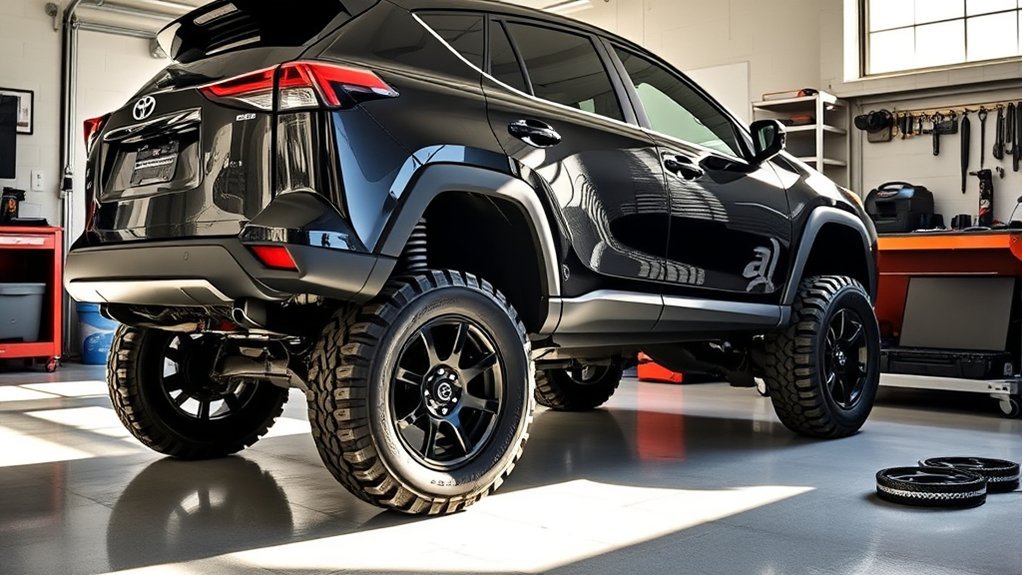
A properly selected lift can help your RAV4 clear ruts, rocks, snow, and steep transitions. It can also make room for a larger tire package and reduce sag when load-rated springs are matched to permanent accessories.
The tradeoffs deserve equal attention:
- Ride quality: Firmer springs, unmatched dampers, or spacer geometry can make the ride harsher or less controlled.
- Handling: Raising the vehicle also raises its center of gravity. Steering response and body roll can feel different during quick maneuvers.
- Fuel use: Added height, heavier wheels, aggressive tread, and larger tires can increase aerodynamic drag and rolling resistance.
- Braking and acceleration: Heavier or taller tires add rotating mass and can change effective gearing.
- Wear: Increased CV, bushing, ball-joint, and wheel-bearing loads may shorten component life if geometry or wheel offset is unsuitable.
- Electronic systems: Tire-size changes and altered alignment can affect speed readings, steering behavior, and the operation of systems that rely on wheel-speed or steering-angle data.
A lift improves capability only when the suspension, tires, alignment, and driving style work together. It does not turn a crossover into a purpose-built rock crawler, and extra height does not replace skid plates, suitable tires, or careful line choice.
What to Expect During Installation
At a Glance
| Time Required | Several hours, depending on the kit, corrosion, equipment, and installer experience, plus a post-installation alignment |
| Difficulty | Advanced DIY; professional installation is the safer choice for most owners |
| Tools Needed | Floor jack, rated jack stands or vehicle lift, socket and wrench set, torque wrench, and a suitable spring compressor when the instructions require one |
| Cost | Varies by kit, labor, alignment, replacement mounts, and any wheel or tire changes |
Warning: Compressed coil springs and an improperly supported vehicle can cause severe injury. Never work under a vehicle supported only by a floor jack. Use the kit maker’s instructions, correct support points, rated equipment, and specified torque values.
The exact procedure varies by kit, but a safe installation normally includes these stages:
- Confirm every part before disassembly. Match part numbers, sides, spring load ratings, mounts, and hardware to the vehicle.
- Measure the original ride height. Measure from the center of each wheel to the lower edge of the fender on level ground. This helps identify uneven installation or unexpected height.
- Inspect the existing suspension. Worn top mounts, leaking dampers, damaged CV boots, loose bearings, or deteriorated bushings should be addressed before the lift is installed.
- Install only as directed. Spring orientation, spacer position, fastener order, and final torque can differ between kits.
- Check hoses and wiring. Brake hoses, ABS sensor wires, sway-bar links, and other components must not stretch, rub, twist, or contact moving parts through suspension travel and steering lock.
- Settle and inspect the suspension. Follow the manufacturer’s guidance before final measurements or alignment.
- Get a four-wheel alignment. Ask for a printout and confirm that the steering wheel is centered and the vehicle tracks correctly.
- Perform a cautious road test. Start at low speed, listen for contact or looseness, and recheck the vehicle before highway or trail use.
Tackling Shudder, Vibration, and Rubbing
A lift changes suspension and driveline angles, but no reliable universal rule says every RAV4 will vibrate above one exact lift height or at one exact road speed. Risk depends on the kit design, trim, axle condition, wheel and tire package, alignment, and installation quality.
If a new vibration appears after installation, check the simple causes before assuming the lift height alone is responsible:
- Loose wheel nuts or suspension fasteners
- Incorrect wheel balance, damaged tire, or excessive tire runout
- Toe or camber outside the usable range
- Tire contact with the liner, strut, spring perch, or body at full lock or compression
- Stretched, twisted, or rubbing brake hoses and ABS wiring
- Damaged CV boots, worn CV joints, or excessive axle angle
- Incorrectly seated springs, top mounts, spacers, or isolators
- Worn wheel bearings, control-arm bushings, or ball joints exposed by the new geometry
Do not accept strong vibration, stuttering under acceleration, severe steering pull, clunking, or ABS and stability-control warnings as normal. Stop driving if the vehicle feels unsafe and have the installation inspected. A subframe, differential, motor-carrier, or axle-angle correction should be used only when the lift manufacturer specifies an engineered solution for your exact application.
Choosing Tires After Lifting a RAV4
A lift may create more fender clearance, but it does not guarantee one universal tire diameter. Wheel width, offset, tire construction, actual mounted diameter, trim, liner shape, and alignment all affect fitment.
For example, Rough Country lists a 235/70R17 tire on a 17-by-8 wheel with a +38 offset for its eligible 2.5-inch kit, while also telling buyers to test-fit the combination. That example should not be applied to excluded trims or a different lift.
Pro Tip: Test the complete wheel-and-tire package at full left and right steering lock, then check clearance through suspension compression. Include the front liner, mud flaps, strut body, spring perch, brake hose, and rear wheel-well edges.
Choose tires with an equal or greater load rating than the original requirement, keep all four tires properly matched on AWD models, and use the cold inflation pressure specified for the vehicle and approved tire setup. The NHTSA TireWise guidance explains tire labels, pressure, tread, and load information.
Larger tires can also affect speedometer accuracy, effective gearing, braking feel, spare-tire compatibility, and fuel use. A tire shop familiar with modified AWD vehicles should verify the final package.
Lift height is not a tire-size guarantee. Exact fitment depends on the vehicle, wheel, tire, alignment, and available clearance as a complete system.
Maintenance and Warranty Considerations for Lift Kits
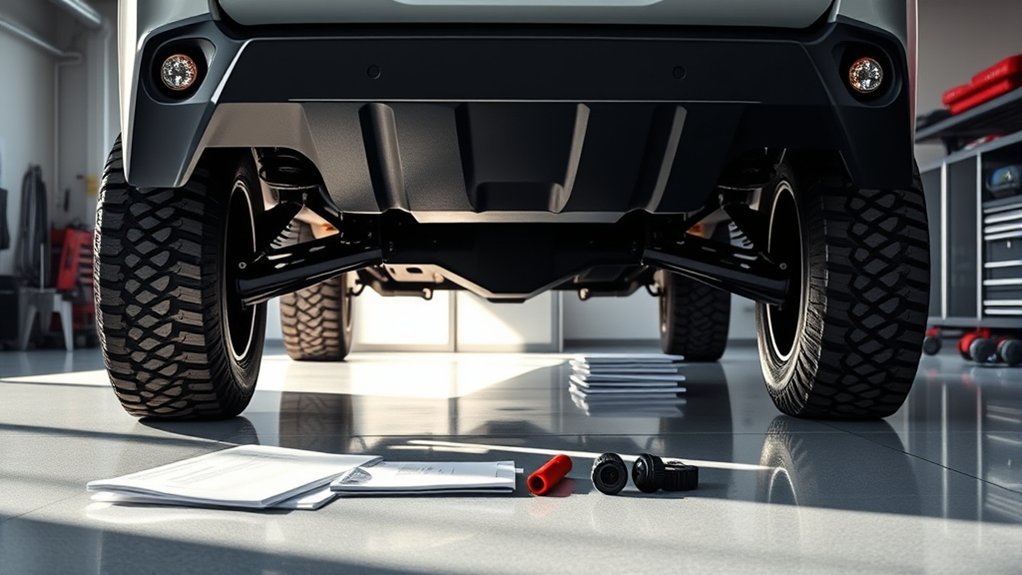
Inspect the vehicle regularly after lifting it, especially after the suspension settles or after off-road use. Follow the kit instructions for any required fastener recheck. Watch for uneven tire wear, new noises, loose hardware, damaged CV boots, leaking dampers, bushing movement, and contact marks inside the wheel wells.
Keep the installation invoice, alignment printout, part numbers, instructions, and before-and-after measurements. These records can help with product warranty claims and later diagnosis.
Lift-Kit Product Warranties
- Dobinsons: Its published policy covers coil springs, leaf springs, and shock absorbers against qualifying defects for two years from the invoice date. Other parts receive one year. Claims require written notice and inspection.
- Eibach: Its PRO-LIFT-KIT springs carry a five-year limited warranty for qualifying defects under the stated conditions.
A return policy is not the same as a product warranty. Dobinsons currently states that eligible returns are subject to return-shipping costs and a 20% restocking fee, while used, installed, or assembled parts may be ineligible. Read the current seller and manufacturer policies before installing anything.
Vehicle-Warranty Impact
An aftermarket lift does not automatically cancel every part of a U.S. vehicle warranty. The Federal Trade Commission explains that warranty coverage cannot be denied only because you used a third-party part or service. However, coverage may be denied for a failure or damage caused by that part or its installation.
Toyota separately states that non-genuine parts and damage or failures resulting from their use are not covered by Toyota warranty. Discuss the planned lift with your dealer, installer, and warranty provider before modification, especially on a newer vehicle.
Legal, Insurance, and Safety Considerations
Vehicle-modification rules vary by location. Check your state and local requirements for overall height, bumper and headlamp height, tire coverage, wheel protrusion, inspection, and required safety equipment. Do not rely on a generic claim that a certain lift is legal everywhere.
Federal rules also protect required vehicle safety systems. NHTSA explains that dealers and repair businesses may not knowingly make required safety equipment inoperative through a modification. Tell your insurer about material suspension, wheel, and tire changes so coverage questions are resolved before a claim.
Frequently Asked Questions
Will lifting my RAV4 affect its fuel efficiency?
It can. Added ride height, larger or heavier tires, aggressive tread, and extra accessories may increase aerodynamic drag, rolling resistance, and rotating mass. The change varies by setup and driving conditions, so compare fuel use before and after under similar conditions.
Can I install a RAV4 lift kit myself?
An experienced DIYer with safe lifting equipment, a torque wrench, and the correct spring-compression tools may be able to install some kits. Suspension springs store dangerous energy, and mistakes can affect steering and braking. Professional installation is the safer choice for most owners.
How will a lift kit affect ride quality?
Ride quality depends on spring rate, damper tuning, spacer design, tire construction, and vehicle load. A matched spring-and-damper package may feel controlled, while stiff load-rated springs or worn factory dampers can make the vehicle feel harsh or bouncy.
Do I need an alignment after lifting my RAV4?
Yes. Changing ride height changes suspension geometry. A four-wheel alignment helps restore tire wear, tracking, steering-wheel position, and handling. If the vehicle cannot be aligned within a safe range, use only manufacturer-approved correction parts or reconsider the setup.
Are lifted RAV4s legal?
Legality depends on your jurisdiction and the finished vehicle. Check local rules for vehicle height, bumpers, lamps, tire coverage, inspection, and safety equipment. A kit being sold online does not prove that every installation is road-legal in every location.
What tire size can I fit after lifting my RAV4?
No single size fits every lifted RAV4. The answer depends on model year, trim, lift design, wheel width and offset, tire construction, and alignment. Use the kit maker’s tested combination as a starting point, then test-fit at full steering lock and suspension compression.
Will a lift kit void my Toyota warranty?
Not automatically in the United States. However, Toyota or another warranty provider may deny coverage for damage caused by the lift, related parts, or improper installation. Keep records and discuss the modification with the dealer and warranty provider before installation.
Will a 2019-2025 RAV4 lift kit fit a 2026 RAV4?
Do not assume it will. The 2026 RAV4 begins a new generation with different configurations. Use only a kit whose manufacturer explicitly lists your exact 2026 trim, drivetrain, and powertrain.
Conclusion
You can lift a Toyota RAV4 successfully when the kit matches the exact vehicle and your intended use. Choose a moderate, vehicle-specific system, match spring rates to permanent load, verify tire clearance, and budget for professional installation and alignment. Afterward, treat vibration, rubbing, poor tracking, or warning lights as problems that need correction before normal driving.
Sources
- Toyota USA Newsroom: 2026 Toyota RAV4 — confirms the sixth-generation 2026 model and available powertrain configurations.
- Dobinsons RAV4 Hybrid suspension kit — supports lift height, load-specific spring choices, fitment notes, included component options, and warranty terms.
- Eibach XA50 Toyota RAV4 PRO-LIFT-KIT — supports listed applications, variable lift by trim, factory-damper testing, and five-year warranty.
- Rough Country RAV4 2.5-inch N3 lift kit — supports included parts, trim and powertrain exclusions, and its listed wheel-and-tire example.
- Federal Trade Commission warranty guidance — explains aftermarket-part warranty protections and damage-caused exclusions.
- NHTSA vehicle-modification interpretation — explains federal responsibilities related to modifications and required safety systems.
