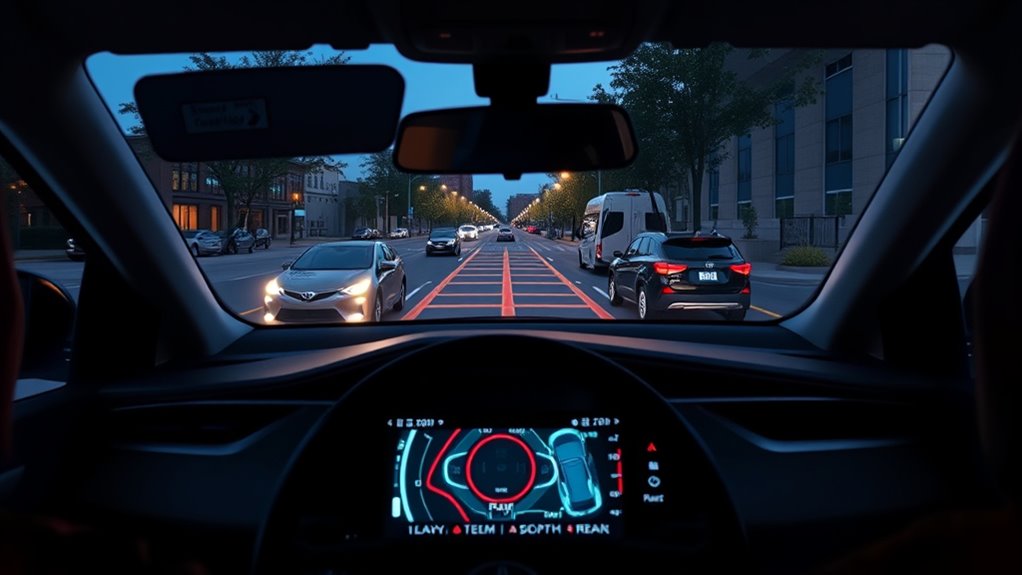
Yes. The RAV4 is equipped with Intelligent Parking Assist on many models, a low-speed aid that uses front and rear sensors to detect nearby obstacles while parking. It works below about 6 mph and shows sonar graphics with beeps on the Multi-Information Display. The system can help in tight spaces, but it does not replace mirror checks or looking around the vehicle. Sensor placement, limits, and activation steps make the full setup worth reviewing.
Key Takeaways
- The RAV4 includes Intelligent Parking Assist on equipped trims to help with slow-speed parking maneuvers.
- It activates below 6 mph and uses front and rear sensors to detect nearby obstacles.
- The system shows sonar graphics and sounds warning beeps on the Multi-Information Display.
- Park Assist helps in tight spaces, but drivers must still check mirrors and blind spots manually.
- Sensor performance can drop if dirty or blocked, so regular cleaning is important for accuracy.
Does the RAV4 Have Park Assist?
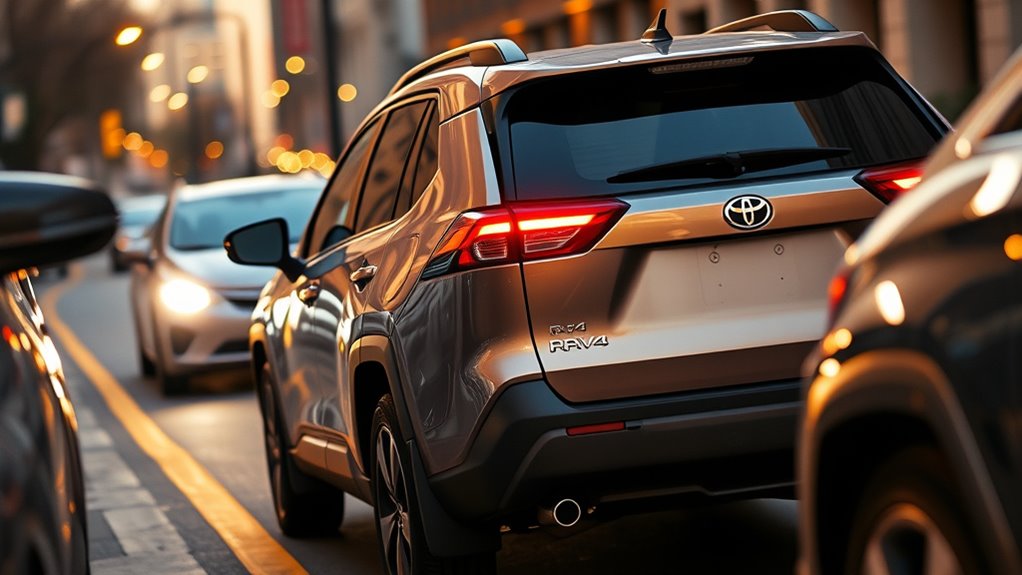
Yes—the Toyota RAV4 is equipped with Intelligent Parking Assist, a feature designed to help drivers park more easily in designated spaces with limited input. This Parking Assist system is intended to reduce the strain of tight urban maneuvers and support greater confidence when space is scarce.
It becomes available when vehicle speed drops below 6 mph, making it especially relevant during slow approach situations, including parallel parking. The RAV4 uses front and rear corner sensors to identify nearby obstacles and provide audio-visual warnings.
Activation occurs through a button near the steering column, after which a sonar graphic appears on the Multi-Information Display. That display presents guidance during the parking process, helping the driver maintain awareness.
The system assists, but it does not replace manual checks or mirror use, and attentive control remains essential for safe, independent parking.
How RAV4 Park Assist Works
RAV4 Park Assist activates when vehicle speed falls below 6 mph and the driver presses the designated button near the steering column.
Then, it uses the transmission position to determine which sensors engage. In Drive, the front sensors monitor nearby objects, while in Reverse both front and rear sensors operate and display sonar graphics on the Multi-Information Display.
Audible beeps increase in frequency as distance decreases, with a continuous tone indicating a critical proximity.
Though the system remains an aid that still requires manual checking of the surroundings.
Activation Steps
To activate Park Assist in the RAV4, the driver presses the button located just to the right of the steering column while the vehicle is completely stopped. Once engaged, the system becomes active below 6 miles per hour, and the Multi-Information Display shows a sonar graphic for Parking guidance. In Drive, it uses front sensors; in Reverse, Front and Rear sensors monitor nearby cars around the vehicle.
| Step | Action |
|---|---|
| 1 | Stop fully |
| 2 | Press button |
| 3 | Select gear |
| 4 | Observe display |
The process supports confident Parking without surrendering control. Beeps rise in frequency as obstacles near, yet manual checks remain essential. Park Assist is an aid, not a replacement for attentive driving or safety awareness.
Sensor Alerts
Park Assist relies on multiple sensors positioned at the front corner, front center, rear corner, and rear center of the RAV4 to detect nearby obstacles during low-speed parking maneuvers.
These proximity alert functions translate distance into visual graphics on the Multi-Information Display and beeping tones that quicken as objects get closer, with red marking the nearest risk.
Front sensors operate in Drive, while Reverse activates both front and rear coverage. The system works only below 6 mph, so it supports but does not replace manual checks.
If a “Parking Assist Unavailable” message appears, dirty lenses or harsh conditions may be the cause.
Practical sensor maintenance tips include regular inspection and sensor cleaning techniques to preserve reliable alerts and confident movement.
RAV4 Park Assist Sensor Locations
The RAV4 uses front corner, front center, rear corner, and rear center sensors positioned around the bumpers to support parking maneuvers.
Their detection zones vary by location and gear selection, with front sensors active in Drive and both front and rear sensors engaged in Reverse.
The multi-information display presents the alerts, while the center sensors cover ranges of roughly 3.3 to 2.1 ft. in front and 4.9 to 2.1 ft. at the rear.
Sensor Placement Overview
RAV4 Park Assist relies on multiple sensors positioned at the front and rear of the vehicle, including front corner sensors, front center sensors, rear corner sensors, and rear center sensors, to support obstacle detection during parking maneuvers.
These sensor types use sensor technology to inform the driver through the display, where graphics reflect nearby objects. In Drive, only the front units operate; in Reverse, both ends engage, broadening awareness.
- Front corner sensors monitor outer edges.
- Front center sensors cover central approach.
- Rear corner sensors assist backing alignment.
- Rear center sensors support reverse positioning.
Sensor maintenance means keeping surfaces clean and clear. Dirt, ice, or blockage can weaken performance, so regular inspection helps preserve dependable guidance and personal autonomy.
Detection Range And Zones
Sensor coverage around the vehicle is divided into front corner, front center, rear corner, and rear center zones, each positioned to support close-range obstacle detection during parking maneuvers.
Front center sensors typically register objects from about 3.3 feet to 2.1 feet, while rear center units extend from roughly 4.9 feet to 2.1 feet. This layout improves detection capabilities by distinguishing obstacles in real time on the multi-information display, where color graphics indicate proximity.
However, obstacle recognition can be disrupted by banners, branches, fog, snow, dirt, or ice. Sensor maintenance consequently remains essential to preserve accurate readings and avoid a Parking Assist Unavailable message.
Properly kept sensors help the system remain responsive, precise, and supportive of independent parking control.
How to Turn RAV4 Park Assist On or Off
Activating the RAV4 Park Assist system is straightforward: with the vehicle stopped and traveling below 6 mph, press the button just to the right of the steering column. The indicator light confirms engagement, and the Multi-Information Display shows sonar graphics.
Press the Park Assist button below 6 mph to activate sonar guidance and confirm the indicator light.
These Park assist features support controlled maneuvering without adding complexity, reflecting practical RAV4 technology for drivers who value autonomy. For successful operation, the transmission must be in a gear other than Park (P).
- Press the button to switch Park Assist on.
- Watch for the illuminated indicator light.
- Confirm sonar graphics appear on the display.
- Keep the vehicle out of Park (P).
- Press the button again to disable the system.
To turn the system off, press the same button again until the OFF indicator lights.
These Safety parking tips help maintain clear control while preserving freedom of movement in tight spaces.
When to Use RAV4 Park Assist
When the vehicle slows to below 6 mph and is fully stopped, Park Assist is most useful in tight parking spaces or crowded lots where precise maneuvering can be difficult.
In these moments, the system can support careful alignment with front and rear corner sensors, helping the driver move with greater ease and less parking stress. It is especially relevant when compact stalls, narrow aisles, or dense traffic make manual parking feel restrictive.
For best results, the vehicle should be fully stopped before activation, since the system is designed for low-speed use and may not engage otherwise.
Park Assist can reduce effort, but it does not replace driver vigilance. Manual checks of mirrors, blind spots, and nearby pedestrians remain essential.
Used at the right time, the feature gives drivers more freedom to navigate constrained spaces with confidence, while keeping control firmly in their hands.
RAV4 Park Assist Limits and Alerts
Although RAV4 Park Assist can help guide low-speed parking maneuvers, its limits remain tied to sensor range and environmental conditions. The system supports obstacle detection with front and rear sensors, but Park Assist limitations mean it cannot replace manual checks or full situational awareness.
RAV4 Park Assist can support low-speed maneuvering, but its sensor-based limits never replace careful manual checks.
It activates below 6 mph when the transmission is in a drive gear, and its alerts depend on sensor performance near nearby objects.
- Detection graphics on the Multi-Information Display shift by proximity.
- Red indicates a very close obstacle requiring immediate attention.
- Warning tones become faster as distance decreases.
- A continuous tone appears at about 1.1 ft.
- Noise, dirt, or angles can reduce sensor effectiveness.
These alerts are designed to preserve freedom of movement while keeping parking controlled, informed, and deliberate.
Tips for Safer RAV4 Parking
Safer RAV4 parking depends on using Park Assist with deliberate driver input and consistent attention to the surroundings. Before activation, the vehicle should be fully stopped, since motion can trigger errors and “not available” messages.
Effective Parking techniques include watching the sonar graphics in the Multi-Information Display and responding quickly when red zones appear, because they signal immediate proximity to obstacles. Auditory cues also matter: buzzer sounds quicken as distance closes, offering a practical layer of guidance.
Yet Park Assist remains an aid, not a substitute for judgment. Manual checks around the vehicle reinforce safety awareness and help detect hazards beyond sensor range. Sensor maintenance is equally important; cleaning dirt, ice, or debris from the sensors preserves accurate readings and prevents malfunctions.
With disciplined use, the system supports confident, independent parking while leaving responsibility with the driver.
Frequently Asked Questions
Which RAV4 Models Have Parking Assist?
RAV4 Limited, Adventure, and select higher trims often include parking assist, depending on year. This RAV4 features parking technology and driver assistance through automatic steering support, while drivers retain control of acceleration and braking.
Does the 2026 Toyota RAV4 Have Parking Assist?
Yes, the 2026 Toyota RAV4 has parking assist; yes, it offers parking technology; yes, it includes driver assistance. These RAV4 features use sensors, alerts, and display guidance, while requiring attentive manual control.
What Is the Difference Between a Parking Sensor and Parking Assist?
A parking sensor uses sensor technology to detect nearby obstacles and warn the driver, improving parking safety. Parking assist adds driving assistance by steering into spaces automatically, while the driver manages braking, acceleration, and awareness.
Which Car Has the Best Parking Assist System?
Mercedes-Benz is often considered best for parking assist, thanks to Advanced Technology, strong Safety Features, and refined User Experience. Tesla excels in automation, while BMW and Ford remain highly capable, especially in tighter urban spaces.
Conclusion
In the grand theater of modern parking, the RAV4’s park assist plays the humble assistant, forever keen to warn, beep, and occasionally save a bumper from an embarrassing meeting with a curb. It is not magic, merely a well-placed array of sensors and alerts doing their dutiful best. Drivers still must steer the show. Park assist helps, yes, but it cannot cure poor judgment, distraction, or the timeless human talent for misjudging a parking space.

